
Comments
-
Truly new and original ideas?
And how do you go about exploring that which is alien?explore that which is alien — Philosophim -
Problems of modern Science
I would agree that all of nature is more or less balanced for conditions to be dynamically stable under the circumstances within some limits. The deer population is balanced with the abundance of its food supply. Oak trees go through cycles of massive production of acorn and lean years. Many animals depend on that variance to maintain a sustainable population. People used to be part of that food chain but globalization and technology unbalanced our existence as a species. However, it doesn't take much for more powerful factors like climate change or a supervolcano to wipe out all that balanced stability.Whenever a virus effects a population of deer for example, there is underlying causes that would for example affect the immune system of the subject or an overpopulation. Nature as a whole is very intelligent and has many ploys to restore itself to homeostasis or balance. — Thinking
Seems that way.I hate to say it but it seems that we are more of a virus to this planet than COVID is a virus for us. — Thinking -
Fermi Paradox & The Dark ForestAs big as space is, when you crunch the numbers, you find that self replicating probes, generation starships etc could litter the Galaxy in a fraction of the Galaxy's age. — Mijin
Actually it took about 3.8 billion years, which is about a third of the age of the universe, for intelligent life to appear here. But even then, a super-aggressive extraterrestrial culture could have sent out self-replicating probes all over the galaxy just to say hello. According to Fermi, we don't see them because that never happened. Either advanced civilizations never existed or we are close to the first.
The cheapest way to find out whether there are ET's is to look for them and send signals to them by radio and other electromagnetic waves. EM waves travel at the speed of light and they are plentiful.
The problem is time. When signals are sent out in all directions, the signals travel as a thin growing bubble. Only for the small fraction of time as the bubble passes a planet is the signal detectable. If we aim a laser at a likely planet only 2.3 light years away, the light will pass there in 2.3 million years. If they happen not to be looking they'll miss our signal. Worse still, when we aim, we'll have to aim at a planet that will be civilized 2.3 million years from now, then wait 4.6 million years for an answer. -
Problems of modern Sciencemodern scientific methodology can only really consider what is measurable, what is quantifiable, what ‘yields data’. That is why it puts aside any notion of purpose, intentionality and so on. Those are purely methodological steps which are mistakenly then interpreted as ‘statements about reality’ — Wayfarer
Science doesn't put anything aside. Science, not some of the people who are doing it, does not have anything to say about reality as such because that is not defined scientifically to be surveyed or to be measurable. If purpose and intentionality could be studied then they would be. Purpose, intentionality, and reality are philosophical constructs in some philosophical languages.
even if we use science and technology in positive way it would not be a perfect worldview that is beneficial to humans or the planet. — Thinking
Is molecular biology not beneficial in having created vaccines for COVID? What about our much beloved smartphones? -
Fermi Paradox & The Dark Forest
There is no contradiction here because the universe is likely full of simple bacterial life which comprises over 99% of life right here on Earth. Bacteria is where molecular biology meets life. Highly evolved intelligent life is likely to be so rare as to be unique for practical purposes. We will never encounter or be discovered by another civilization given the short life expectancy of any intelligence and the incomprehensible vastness of space and time.There's no contradiction in positing a galaxy/universe full of intelligent life and our never encountering it, nor them us - it's that big and empty out there. — tim wood -
Dark Matter, Unexplainedit is believed that the visible universe, comprising baryonic matter - stuff made from atoms - comprises only about 4% of the totality, the remainder comprising dark matter and dark energy — Wayfarer
... and of that 4%, almost all physical matter is in the form of pure radiation and plasma (protons, electrons, helium), leaving only a trace amount for material substance in the form of gas, liquids, or solids. Which might make a difference for the strength of scientific realism that we hold. Should we care only about what is sensible on Earth, or also about a conservative comprehensible Newtonian scientific world, or do we leave our philosophy open to anything rapidly advancing theoretical physics agrees upon at any moment. How far out should we venture while following cutting edge physics? -
Keith Frankish on the Hard Problem and the Illusion of Qualia
But then you betray your cause.No I use my nose. — Janus
You 'used' your fingers means you do not believe that your fingers independently act of their own accord but are commanded by your mind. Or do you really believe your bodily organ brain commands you and your fingers? It's the other way around, you are the one and only unique 'I' that uses your body parts to carry out your intentions.
Philosophy uses words some ordinary some technical to convey its message. Unfortunately all words are loaded to a lesser or greater extent which with skill can facilitate begging the question in an argument. The podcast is loaded with skunk words to stink out its supposed opponents.
Edit: I reviewed the first 3 minutes of the Frankish podcast to show some detail.
@ :28 the introduction says "this podcast has a subjective impact ... for you",
and if there is to be anything to talk about this must be correct. It is the subjective character of experience that is to be explained or explained away.
@ 3:11 Frankish affirms that "qualia the way experience feels to you -- mental things within you -- something private" is to be the issue, one way or another.
To evaluate experience as a consequence of consciousness we must realize that experience can only be subjective and private to the first person 'I'. To propose tentative elements for that private subjective experience which may be discussed publicly by referring singular events to 'qualia' requires a third person public stance, something similar to what is done in the social sciences. To do so is hand-waving until it can be verified in public communication or practice.
Suppose we're invited to a wine and cheese blind tasting where 5 bottles of wine are in identical decanters marked only by numbers and 5 more decanters have custom blends of the originals. But the fun only starts when we are asked to note in detail the experienced taste and bouquet of each of the 10. Can you smell and taste the distinctions, and can you describe those sensations so someone else can appreciate and valuate the 10 samples just by reading your notes?
@ :46 According to Chalmers, "making sense of this is the hard problem of consciousness",
But by @ 1:01 Frankish is already talking of "the illusion of qualia"
'illusion' doesn't sound like a very objective introduction to me.
@ 1:08 "explaining 'consciousness' is the hard problem", so by now consciousness is a fixed material or physical object with properties to be picked out of a basket of Wittgensteinian apples
@ 1:24 Frankish has moved on to physical brain somehow causally 'producing' physical consciousness. Yikes !
@ 2:00 "how does the brain produce these experiences" , so experience need also be discrete objects to be physically 'produced'
The issue with Frankish is that to him the mind is nothing more than a brain in a beetle box. We can't see it, so we can't talk about it. True for Frankish, but maybe other people can open that box first before they talk about it. -
Keith Frankish on the Hard Problem and the Illusion of QualiaIf not the brain then what? — Janus
Did your fingers write that?
The brain is the medium that carries information that it does not understand. Think of printed symbols in a book. Do the book and the ink produce anything? -
Keith Frankish on the Hard Problem and the Illusion of QualiaMy position is that this sort of discussion only serves to further demonstrate the philosophical bankruptcy of qualia. — Banno
Qualia are not physical and the term qualia does not refer to anything physical either. Physicalists presuppose that only physical things exist and reality is just that. Should you choose to suppose that the brain is an instance of the physical then you will have no use for the now empty word qualia which refers to mental representations.
Are there mental events and mental representations that are in need of naming? Frankish agrees with you that there are not. What if you are both wrong? Shouldn't you allow those who work in psychology or phenomenology to coin concepts and words that are of use to them? -
Keith Frankish on the Hard Problem and the Illusion of QualiaI could equally well say that what we believe to be the facts is based on our presuppositions. As to "how much we are willing to pool into a common discourse", if what you are saying is based on presuppositions I don't share, don't accept, then "common discourse" may thus be limited. In the worst case we will be talking past one another, like ships passing in the darkest night. So, "a whole new language game" would need to be based on a sufficient commonality of presupposition — Janus
And, in science such common presuppositions can be called working hypotheses that need not be believed by any scientist involved. The argument is made, research is carried out, and everyone gets paid. The relevance of the research in terms of broader theories comes later by the way of review and assessment.
Most biochemical reactions happen too fast to be accounted for without near instantaneous motion such as in entanglement. — Enrique
Everything is quantum mechanical at magnification levels great enough to reach that deep, but the evidence that those physical processes have any bearing whatsoever on greater issues that we like to discuss are very difficult if not impossible to verify. The gaps between physical levels in terms of speed and range are very wide, and it may not be possible to leap past intermediate levels. -
The flaw in the Chinese Room
OK, let me say it another way,
The narrow conclusion of the argument is that programming a digital computer may make it appear to understand language but could not produce real understanding. Hence the “Turing Test” is inadequate.
Searle argues that the thought experiment underscores the fact that computers merely use syntactic rules to manipulate symbol strings, but have no understanding of meaning or semantics.
The broader conclusion of the argument is that the theory that human minds are computer-like computational or information processing systems is refuted. Instead minds must result from biological processes — SEP article
Consciousness can always be defined more or less stringently either to be included in or to be excluded from any finite set of experimental conditions. And if you define the Universe as a Turing machine, as you seem to do, then it has already computed everything there ever was. -
The flaw in the Chinese Roomconclusion that consciousness is bound to some kind of biological excretion is totally unwarrented. — hypericin
Searle's experimental conditions can always be tightened to meet specific objections. Also, words like consciousness, biological, and computer can be adjusted depending on the desired conclusion. Is a supercharged C3PO conscious even if it never sleeps? -
The flaw in the Chinese RoomFor car drivers, it is the accelerator pedal that is the mechanical switch which connects to their entropic desires. The symbol that is "in mind". — apokrisis
Isn't that overly simplistic in that the point of intentional action just triggers a whole range of prearranged links in the machine and unknown and at times unknowable interfaces with the environment? Just to try a couple of unlikely but conceivable cases, how does the scenario work in space or in a lake? -
Philosophers toolbox: How to improve thought?What happens when one kind of thought communicates with a different kind of thought? Is that, then, a different kind of thought again? — Pantagruel
Good point. Some thought would have to communicate between two entirely foreign processes that operate at distinct modes and speeds. Kind of like having both interpretive plus expressive phases going in both directions. I'm picturing an analogous problem of reading a book - how can those printed marks first represent and then be read as ideas? -
Philosophers toolbox: How to improve thought?
Thinking and focused rational thinking are not the same, they aren't even done by the same mental facilities. Thinking is an ongoing unstoppable act of all minds that we have in common with other animals. Focused thinking is the creative adaptive activity that goes on still at an unconscious level. Rational thought is only possible for mature humans and even there with imperfections. The latter two are the tools of the philosopher, artist, scientist. Which of these would you like to sharpen? -
Donald Trump (All General Trump Conversations Here)In early Thanksgiving news the White House turkey forgave Trump
-
Has science strayed too far into philosophy?I'm not sold either! It's just something else to ponder. The challenge is how to keep up with revolutionary progress in the sciences with static models. How do we explain even simple demonstrations of magnetism?
-
Has science strayed too far into philosophy?
Nope, that would be fun but the metaphysics isn't all mine.your definition of metaphysics is individual, and its name stands for anything imaginary, conceptual, or fictional — god must be atheist
I'm talking about a much more generalized version of Aristotle's systematic metaphysics which I did not invent. It's been around since antiquity but you really have to look to find it.
Aristotle starts with a strict logical principle, non-contradiction (think of as Socratic elenchus). This is also the logical equivalent of the principle of identity, just meaning closed, bounded objects. Then, he axiomatically specifies the same for both objects and propositions. Thus he creates a logical, metaphysical world, or imaginary formal reality, if that sounds any better. From that he develops a simple and powerful and very general philosophy from which his standard (not mine) ontology, epistemology, and ethics roughly follow. That's the 5-second guide to philosophy in a nutshell.
The historical development is straight-forward. Parmenides comes up first with this logic for his One object, Aristotle extends that to many objects. According to my probably wrong reading, Nelson Goodman and others extend this to a plurality of metaphysical worlds, a foam of Aristotelian philosophical worlds, which Goodman applies to the reality of all actual phenomena, especially in the arts.
Naturally, since I am here, I will extend this just one more simple step to non-Aristotelian worlds as well. In this case, the logic is not specified up front by Parmenides, rather each application sets its own axiomatic logic.
Where this comes into this thread is the philosophy of science where each sub-discipline has its own logic. Not just physics, but each science and its specialties.
:up: You're talking to a woke fan. I check the flow of high and low global winds and pollution each morning.dynamics in the complex plane - force (vector) fields that predict the movements of particles — jgill -
Has science strayed too far into philosophy?
Do you mean experimental physicists or perhaps engineers?theoretical physics emphasizes the links to observations and experimental physics — jgill -
Has science strayed too far into philosophy?
To speculate what if comes naturally to people. Imagined scenarios just convincing enough to elicit reflection and to enable change of conception or belief by the listeners go back at least to the earliest myths of mankind. Thought experiments need not be rational, just being conceivable is enough. For example, think of Pegasus or Icarus flying in the sky. Or the Wright brothers. Philosophers adopted this and other techniques to convey difficult abstract notions and theoretical and scientists followed suit naturally.We see more and more that science, mainly physics, has strayed into the realm of philosophy and though experiments. ... Do you believe science has become no longer the study of the world as it is, but as it may be? or do you see science as simply the persuit of knowledge no matter the form? — CallMeDirac
Think experiments create a mental model of what could be, and when you think about it not all that different from seeing it in person if that were actually possible. What science studies is always the form, a scientific generality, and not just this individual. The individual is treated as a representative sample of the form under study.
I don't know if you play or watch sports or games. Each one of these has its own logic and language. I'm a prisoners of COVID but I'm allowed to watch movies on the internet, and yes, each movie is its own imagined world. I'm not the romantic hero making love nor the spy who is impervious to the perils of the world, but for a short time I live in their world, their world is somewhat real to me, I speak their language, and use their improbable logic. Does music have any meaning to you? If yes, what is it?cite in normal language what inconsistent worlds i contain within that I am committed to? — god must be atheist
Sorry, those are mathematical inventions. But string theories are still incomplete, I believe, for lack of more advanced maths. Newton invented fluxions to formulate his mechanics.multiverses in cosmology or the many-worlds interpretation in quantum mechanics, then it's the other way around: mathematics is there from the start — SophistiCat
Well yes. It is usually cranked up to higher standards. But I'm not the inventor. Nelson Goodman did some brilliant and highly rigorous work along these lines. His work is sadly neglected.Identifying metaphysics with just any conceptualization is selling it a little cheap, don't you think? — SophistiCat -
Has science strayed too far into philosophy?Some thoughts,
Even speculative physics of other possible physical worlds is intended to be fully mathematical as soon as the needed maths are invented. Without mathematics what physics is there?There are theoretical physicists (hand waving) and mathematical physicists (mathematicians working in physics). — jgill
Exactly. Unfortunately, Galileo had to be more occupied with the speculative science of motion and change than with philosophy. Proposing a heretical philosophical alternative was clearly not his intention.Galileo was very much influenced by the Platonic revival — Wayfarer
I imagine that Kant would have agreed with that. But isn't open, inductive scientific knowledge very different in kind from deductive knowledge deduced from closed, purely logical systems?no knowledge derived from induction - just another name for science - could refute deduced knowledge — TheMadFool
Is it really possible to say anything whatsoever in any language that is not predicated on at least implied metaphysics?The underlying metaphysics of modern philosophy? Really? There is such a thing? — SophistiCat
is an imagined but logically coherentmetaphysical reality — god must be atheist
hypothesized philosophical world for the purpose of generating deductive consequences. The problem with the rejection of metaphysical worlds is that they create the idea and language of structure, objects, relations, facts, events, space, time, and many more, so that nothing can be conceived or communicated without them. BTW, this isn't just true for Aristotle's First Philosophy but for other philosophies as well. So, in saying anything, you have already committed yourself to some metaphysical world, or more likely a number of inconsistent worlds of your own.
I would guess that most of our discussions at TPF are disagreements about metaphysical beliefs. -
Has science strayed too far into philosophy?I have a feeling this will end badly. — Banno
Sorry, I just dropped the other shoe in answer to the OP. If physicists understood the underlying metaphysics of modern philosophy they would raise exactly this argument. Theoretical mathematical physics is Pythagorean-Platonic, and experimental and observational physics are technology driven and serendipitous, closer to Feyerabend than to anyone else, IMHO. -
Has science strayed too far into philosophy?metaphysics can't say anything, can't tell us anything we could actually make use of. — Banno
That's a circular argument. You start with completely reducing Aristotelian logical metaphysics to ontology of predicated things, then you claim that metaphysics is empty because it's missing. This is why post hoc metaphysics is nonsense. My argument is that Identity is not the only possible logic for philosophy, and that Identity based philosophy is way too limited to be of any use beyond metaphysics. Physics is a most obvious example, if you really think about it. -
Has science strayed too far into philosophy?
I think you are taking the problematic nature of the philosophy of physics too lightly. One can discover a thousand competent books and professional quality articles about physics that can be quoted by title, but the contents are either failed attempts to corral the issues or historical rehearsals of failed attempts to understand what is involved.
I am not sure if there are more than a few serious thinkers who deserve consideration, and they disagree what it is that they should be philosophizing about. Everything else is pulp. -
Has science strayed too far into philosophy?
If your question is indeed sincere and you are not just tossing my challenge to physicists back in my face then I have to assume probably wrongly that you are missing some very basic issues of philosophy that I take wrongly for granted.
The first is that philosophy is a logical enterprise, an application of some pure logic just as mathematics is. Like mathematics or other axiomatic systems, philosophy attempts to stay as simple as possible but not too simple and touches any other ground only as necessary to meet the demands of some arbitrary (strings, tiles, whatever) application domain. There are many possible mathematics and philosophies with the distinction being in their axiomatic choices. Thus, neither mathematics nor philosophy should be thought of or treated as monolithic.
If any of this makes any sense, then that is the rationale for my answer to question 5. above. Theoretical physics is very different from observational physics. They are totally different games by philosophical standards. Knowing the formula for the flight of the bumblebee says nothing about why I was stung when I stuck my hand in there or how I should whack one. -
Has science strayed too far into philosophy?As an aside just for comparison, it might be noted that mathematicians, while not particularly involved with philosophy since it seldom interacts with their mathematical efforts, are more aware of ancient beginnings and connections of mathematics.
I propose some tentative suggestions for thinking about the issue
-
1. Ought there be a philosophy of physics?
2. Is there a reasonable philosophy already, beyond that childish spiral diagram of 'the scientific method'?
3. Would a philosophy of physics be of any use and does that matter?
4. Can such philosophy be formulated without concern with what physics is actually doing and how that is progressing?
5. Shouldn't the philosophy of theoretical physics be different from that of the observational side?
One serious concern is that science makes steady and at times sudden progress. Most philosophy is still keyed on obsolete static categorization or Newtonian physics. How can we track that movement with our theories? -
Has science strayed too far into philosophy?Not physics, but the physicists. They're as big know-at-alls as we are here at TPF. I don't even see any physicists with a glimmer of understanding of the philosophy of their own field.
-
Joe Biden: Accelerated Liberal Imperialism
Take away eleven zeros and he is just an ordinary man: 1. He will be first ever to take it all with him. 2. His family are big spenders. 3. He plans to give it all backYou've yet to explain Putin's vast wealth. Please proceed to do so. — Hippyhead -
What does morality mean in the context of atheism?
I suppose shared reality would need to come from common human inheritance and traits or from close to uniform environmental possibilities and limitations everywhere. Should men and women have identical ethics or should differences be recognized and accounted for? Should we gradually phase in ethical norms by age?morality only arises in a community of conscious beings, and can only be as "absolute" as their shared reality. — Echarmion
The classical problem is an intolerant insistence on universal ethics to offer a cure against evidence that most people are not generally moral even by their own standards. Few of us are saints. Cultural differences are fading with globalization of social standards but they are still out there. Some countries are more caring than others.
Totalitarian governments are doing that already. What if there was only one nation in the future, would it be permissive of moral plurality?solve the problem by killing anybody that disagrees with you — Restitutor
Ancient Greeks were crude and unjust as measured by either their traditional religious ethics or by our modern standards. But it isn't fair to judge them in retrospect. American Vietnam veterans have been both heroes and monsters in different places in changing times. Anyway, ethics is not about what people actually are but what norms of belief and behavior they should hold up as ideals.in Ancient Greece women were not used for sexual pleasure, only procreation. Therefore the only way to enlightenment must be illegal relations with younger citizens. — Outlander -
What does morality mean in the context of atheism?
We and our society have privileged morality, there is but one true morality and it is ours. Unfortunately, others who disagree in the details also claim to be privileged.a) morality usually deals with social obligations, and while there are many examples of a connection to divine law or will, moral duties are rarely exactly fixed.
b) certain moral duties are consistent across different societies and times. — Echarmion
The only way to resolve this conflicts is to appeal to one absolute authority to grant us all absolute morality. If we can agree on one unique absolute authority. An absolute authority would need to have absolute foundations. Can logic, philosophy, science, or faith be that foundation? In ancient Greek enlightenment many thought that there is only one absolute and it's ideal logic, therefore the one God must be the god of logic. -
Incomplete Nature -- reading groupasking if we're projecting our nature onto Nature if we see morality in birds. — frank
I suppose so. Then we have to ask if the different patterns of behavior serve any purpose at all. Do they help the birds to survive, were these selected or are these a neglected folly of nature? Evolutionary dogma might overstate the case for evolution but here it could still be something else.
"Functional : of or having a special activity, purpose, or task; relating to the way in which something works or operates." — Gnomon
Functionality is contextual only to what we can see and perhaps that could open things up for purpose in things we can't see. -
The Road to 2020 - American ElectionsI really, honest-to-ever-loving-God, in all sincerity, mean it when I say - anyone who is not as critical of Biden as they were of Trump may as well be a Trump supporter. — StreetlightX... systemic conservative bias in the US and the huge disadvantage to the left that presents, ... [?] what the left can do tactically in hostile political circumstances to both gain some foothold in terms of policy and stave off another Trumpist-style administration. [/?] — BadenTime for a smarter approach. — Baden
Leftists start from the top of the ladder and climb down a couple of rungs, rightists start from the mud and climb up maybe a quarter of the way. Pragmatists have a smarter approach, they start in the middle with some facts then climb a bit both up and down. They can then make the claim and actually the appearance of pleasing both sides. Is Russia communist or fascist? I can't decide. -
Incomplete Nature -- reading grouppurpose cant be explained in terms of matter and energy? — frank
That's part of the argument under discussion. Most people are economic materialists, they are motivated by more goods, money, and power. Science offers no answer for matter and energy, so far. Maybe Deacon will show us how.
For liberal theism, this could be rephrased as how much purpose can be explained by mechanistic models? Morality cannot be so easily explained, any moral purpose if not inherent is intentional. I've always been amazed by wild birds' inherent ethics. Some species will strongly aid others of their kind at the risk of life. Others only protect their own young. -
Incomplete Nature -- reading groupEnd-directed forms of causality, or purpose, is clearly an aspect of life and consciousness — frank
Yes, but not magically all at once, as is usually implied by teleology. Nature is infinitely complex with many levels of complexity and we are rarely smart enough to look past just one level at a time. This is a valid reason to be suspicious of broad claims, even if eventually they turn out to be correct. For instance, impressed but not convinced, both Hume and Kant proposed their own alternatives to Newton's Laws.
Hemoglobin's ability to transport oxygen in the blood stream [p.9] can be understood either for the single blood cell or for oxygen transport functionality one level above. The cell is a structure that houses a hemoglobin molecule to fit oxygen like a glove and just the right amount of energy will cause the release of the oxygen at any peripheral organ. It serves until it dies. The functionality is to have enough working blood cells in total for all organs to survive.
The Zeno example of infinite divisibility may not have a philosophical solution. It was solved after 150 years of intense search by the greatest minds for mathematics as the Fundamental Theory of Calculus. For physics, quantization as Planck length-time guarantees a minimum step where division must end. To my thinking, unbounded lines and numbers are geometric and mathematical, infinites are unmanageably philosophical.
"absential" is supposed to pick out the object of purposeful behavior — frank
I'm still confused by absential. I understand what a key missing from a lock is, or that my pocket is empty, but that seems too specific for what needs to come later in the book. Absence should incorporate enough of the unknown background environment to explain symbiosis and forward evolution. -
The Road to 2020 - American ElectionsI love this, thousands protest the 'steal' in DC and Trump passes them by on his way to go golfing. — praxis
The golf course by the factory lay
So the boys could see the men at play -
Donald Trump (All General Trump Conversations Here)
Is this what you mean?How is it that you can’t see what’s happening? — Brett
The "Elephant in the Room" is the population explosion which is an exponential increase. Humanity is hurtling toward a population level that will not be a sustainable. The first thing to go will be the Welfare State, Economies, Rule of Law and Civilisation will collapse under the load, and technology will be too late. — Drazjan -
Anti-Realisma : conditions that are observed in the universe must allow the observer to exist
— called also weak anthropic principle
b : the universe must have properties that make inevitable the existence of intelligent life
— called also strong anthropic principle” — Michael McMahon
Or perhaps
a: conditions of the universe must allow at least one universe
b: Given this universe, such as it is, it is inevitable that bacteria exist
An epistemic argument can be formulated that only the Earth hosts intelligent life. If there ever was any other intelligent life we will never know due to the limitations on transmission of information from the cosmological past even with whatever technology we might develop in the future short life span of humanity.
In other words, bacterial life is just about certain, but if we can't discover extraterrestrial intelligence soon we never will. -
Incomplete Nature -- reading groupthat which is too novel or too demanding to be handled by automatic routine becomes escalated for a full brain attentional response — apokrisis
Is this the reaction to a bucket of icy cold water or a charging tiger which are animal responses held in common with a paramecium or an earthworm, or is it deliberated act of educated judgment, creativity, adaptation? -
Incomplete Nature -- reading groupattentional spotlight is what emerges from the active suppression of every other possible state of interpretative response. We are conscious of "something" because the brain has just filtered out "everything else" that might have been the case — apokrisis
Does this mean that experience is not intentionally directed but emerges as an act of subconscious attentional focus? -
Incomplete Nature -- reading groupIt seems to me that even behavior patterns of matter and their statistical tendencies for this or that, are still not quite getting at the question. It does provide interesting ideas for how biology can be considered information rather than mechanistic, but that's not answering the question I am interested in. — schopenhauer1
That seems to summarize the dilemma of the social sciences. When they study minute mechanistic processes they get funded and succeed with many small publishable results. When they study meaningful, experientially relevant topics the results are washed out by the inherent multi-faceted complexity of the subject matter and consequently lose funding.
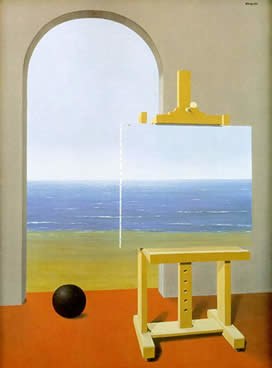
magritte
Start FollowingSend a Message
- Other sites we like
- Social media
- Terms of Service
- Sign In
- Created with PlushForums
- © 2026 The Philosophy Forum