
Comments
-
Can you delete your discussion?
I am wondering why you want to delete what you have said. It seems like ripping up diaries and notebooks.
I am sure that I have written plenty of inadequacies replies especially if I am in a dark place. Eventually any strands written recede into the background and if you stop writing your identity will fade into the background anyway.
But I am wondering why you are so afraid of what you might have said. I would be more afraid if someone wanted to delete my parts of a thread. It would seem like an ultimate rejection and as if I had been deleted from the book of life. I would feel that my own philosophy quest was a failure. Perhaps that is catastrophic think and I need a course in CBT. -
Help coping with Solipsism
I am not sure if my reply will be of any use, but I am just saying that I used to have a lot of soliptist fantasies, as a child mainly. I used to imagine that I was some creature and that all the other people in my own imagination. Then, I used to think to myself, 'don't be so ridiculous.'
So, when I came across the soliptist argument I realised that I was had not been alone and the fact that others had this thought was an argument against it.
But on occasions the soliptist fantasy does drift into my mind. Mainly when I feel isolated and lacking in helpful connections. I feel a bit of an outsider, looking at the world rather than participating at times. Perhaps you are an outsider. I recommend The Outsider, by Colin Wilson, which is my favourite book. It is not an actual introduction to philosophy, but there are plenty anyway. What Wilson does is gives an interesting way of viewing the human condition, especially helpful if you feel outside of the world, wondering if it is all a dream. -
What factors influence thoughts the most?
As far as I see it, the issue is how to focus thoughts. Some people dwell a lot on the past. I am inclined to worry about the future too much. I do tend to think a lot about the previous day whenever I wake up. It can be so easy to dwell on the little details of one's own life. Most days I try to read straight after breakfast as this enables me to direct my focus away from my own concerns. I like to dip in and out of a few different books, usually a mixture of fiction and dare I say it, a bit of philosophy.
Your core question seems to be about what factors affect the thinking in the first place which is more about thinking disposition. Of course, some people tend to think about certain things. It is probably the case that brain development does influence this. For example, some people are born worries whereas others are optimistic. But I am inclined to think that we choose what we think about.
In particular, while brain chemistry affects people who are depressed and is likely to lead to negative thoughts it is likely that the negative thoughts give a feedback loop and give rise to further depression. So it is important what we focus upon. It is difficult though, especially if alone for long periods of time.
I think we can achieve more consciousness direction in thinking through mindfulness. I don't practice it always but I have found some techniques helpful. However, that is not about switching off from thoughts but often about direct experience of the senses and it can be about observing one's own thoughts, which is about a certain distancing from them.
So, I am saying in answer to your question while certain brain chemistry probably influences the agenda of our thought we have a fair amount of freedom to choose what we focus upon. This freedom is a positive part of life because it gives scope for us to create and maneuver inner experience rather than simply be overwhelmed by any strand of thought entering conscious experience.
I expect some people are more image based whereas others think more verbally. But all of this can be moderated by us. -
How can I get more engagement with my comments on other peoples posts?
I am not sure if I have any tips but I think the people who seem to get the most replies are the ones who are most controversial. Often I don't get that many replies, especially to some posts I create and that is possibly because I can be a bit vague. I am inclined to be too sympathetic to others opinions and not fierce enough in my argument.
One thing I wonder about the name you have created. It sounds more like a name for a dalek than a character. With the people who have chosen names for themselves a lot of them evoke strong images whereas yours does not. I think this could go against the creation of your identity on this site. -
What Do You Want?
Some people seem to always know what they want. I remember even at school people who had really clear plans. I was never like that because I have always been a bit of a drifter and even I decide I what I want it often does not happen, or sometimes it happens so suddenly that I can hardly cope with the reality
But knowing what you want is probably important because there is the law of attraction I do think there is some truth to this idea because I do think I can see a relationship between what I wish for and what happens. Negative thoughts can sometimes lead to bad experiences and I am probably guilty of getting into this trap as well. I find that I have to get myself into the right mindset each day. Also, some days just seem to go badly from beginning to end while others seem great. It may be related to subconscious intent.
Of course, I expect some people do not believe in the law of attraction at all and of course they could be right. Perhaps some of us are just luckier than others. But having goals is important but I think that it is best to have some reserve ones too because the more one builds up hopes for a certain goal if it does not happen it can seem catastrophic. -
What are you listening to right now?I don't use Spotify but my current recommendations are a compilation by the goth band, Bauhaus, a bit of indie from the latest Lemon Twigs album , with a bit of prog steampunk prog from the band Gandalf's Fist.
-
Happy DyslexicsI guess that I just need to avoid typing responses when I am tired or had a couple of glasses of wine.
Others make mistakes but I am accountable for any I make, so I will just try to avoid any typing errors I make .My mistakes don't do me any favours although they can be the most fantastic Freudian slips. -
Side Effects of The Internet
I don't want to do anything at the present time. If anything, I was surprised that I was becoming famous after long periods in which I did not seem to exist at all.
But, at least, I am aware that I now exist on Google. I don't really wish to be a completely invisible and if someone is interested enough to Google me perhaps they should be entitled to my identity on a philosophlcal identity , because it is part of who I am as a person.
It is interesting more than anything else, but I thought it worth pointing out because others using the site might not be aware of this aspect of taking part in the forums. -
Side Effects of The InternetI do believe that the internet is a means of overcoming certain biases. However in some ways the issues of intersex, transgender and non binary identities can become diminished in a world in which the physical is no longer important as we only exist as digital identities.
-
History of Science Readings NeededI would recommend the writings of Fritjof Capra and the ideas of Rupert Sheldrake.
Best wishes,
Jack -
Should an ethics for the future be a mere return to traditional past?Perhaps this thread created late at night was too spontaneous. It was intended to get people thinking but perhaps it was too vague. In which case, I will try to reframe it and come up with a more solid question or answer for debate.
-
Happy Dyslexics
I just wish to add that I do not wish to add that I do not wish to project onto antinatalist and need to own my own carelessness and typos.
But, I will add that even doctors make their own errors. While working as a nurse I discovered that a doctor had written that a male patient had polycystic ovarian disease in error rather than polycystic kidney disease. But when I remarked about it the other members of the team did not see the funny side. What more can I say...... -
Side Effects of The Internet
I don't want to have to go that far. I did disclose a bit too much personally in my first responses but try to remain a bit cautious. The point I am making is that even on this site nothing is free speech entirely. -
Happy Dyslexics
I often make mistakes when typing on my phone. Sometimes it may be eyesight problems and even a bit of Freudian slips but I think others can be prejudiced.
I believe that I have dyspraxia but not dyslexia. Nevertheless , I think there are prejudices by those who believe that they are the most literate. I do wish to be a writer one day but realise I slip up somewhere, especially if I am typing on my phone late at night.
I am aware of many weaknesses in my writing but fear that the sheer perfection of the antinatalist will make them reign as the most superior on this site. -
Side Effects of The Internet
One thing I discovered recently was that everything we disclose on this site shows up on Google. I have disclosed quite a bit about myself and just happened to look myself on Google yesterday. I was a bit startled to see that everything I had written on this site, even my own photo, was showing up for anyone to read without anyone signing into the forum website. I don't blame the administrators of this site. It merely shows that Google, in England at least, is watching us at all times.
I do not see myself as an enemy of the state but I do feel fearful because I need to apply for jobs and don't want future employees to have instant access to my own private world. -
Is woke culture nothing new?I would say that a mixture of both. I am open about my interests in most situations, but have to be reserved if I am working. Also, I tone things down a bit when I am with my mum, who is elderly and a strict Catholic. Some of my own rebelliousness comes from my struggling with Catholicism which I talked about in my thread about worrying about the unpardonable sin as a teenager. But I am a bit eccentric in my pursuit of the edges of the arts and literature.
As far as being open minded, I am not an atheist, but I don't think one religion has a completely monopoly on truth. I certainly try to hold onto the spirit of compassion from Christianity.But I like dialogue with diverse opinions because I see life as an ongoing quest. -
Is woke culture nothing new?Surely, all versions of the truth are biased. It is not possible to be without biases. I will admit my own: art, punk, metal and alternative music, fantasy and steampunk, transgender, binary and intersex issues. These are some of the things that are important to me, so I am being open about my interests.
Often, the people who claim to have the truth and be free of bias are the most biased. They are not being honest with themselves. This is frequently done by projecting onto others, especially gay people and the spectrum of people who are 'different'.
Also, I don't think anyone has a completely open or closed mind. Both extremes would be a recipe for disaster. With a completely open mind a person could just be duped into believing anything and with a closed mind one would stagnate. So, even though I say I keep an open mind that is not strictly true because I have ideas which I adhere to rather than constantly changing them. -
Should an ethics for the future be a mere return to traditional past?
In a way you could say that all the circumstances of the current time are repeats of previous ones. Nevertheless, I think that the sum total of circumstances is different. I am referring to the world pandemic, climate change and potentials for nuclear destruction.
My questioning may be too broad and it was a spontaneous one in response to another thread discussion but I am suggesting that a whole new way of seeing and not saying that I have got the answers. I am simply suggesting that a new system may be needed drawing upon the positive aspects of many traditions of thought.
Such a system would merge ethics and politics and probably transcend the conflict between capitalism and socialism. My post is only a sounding point for others to think about because it is through such discussions that creative thinking may take place.
It could be a collaborative picture. Another thread writer spoke of a jigsaw puzzle and I just see myself as trying to open a box, with the philosophers all picking out the pieces with s hope of assembling the finest possible picture to hang on the bleak and dark wall facing us. -
Is woke culture nothing new?
I am not saying that I do not understand at all what you mean when you say that you wonder what is coming next. I think that we are at an atrocious point in history. I am starting to call it the post-apocalyptic age.
I also realise that you are not saying that you want a catastrophe, but think it is needed for rediscovering meaning.
But I am not sure that it is that simple. The language we have needs to be expanded to discover ways of reinventing the future in an expansive way, incorporating insights from traditional religious perspectives to the postmodern deconstruction of language. This applies to gender, but also to many aspects of culture.
The philosopher needs to be a visionary, not a romantic dreamer, but a shamanic traveller, finding radical healing solutions. -
Why are there hidden strands in addition to this discussion?I think I understand the categories now as I have entered the lounge for the first time.
-
Is woke culture nothing new?
I am not wishing to get rid of building blocks but I just think we need to look deeper and the idea of a binary has not been inclusive enough.
I think the last thing we need is another catastrophe. The events of this year have not brought us nearer to the meaning of life and it is more likely that a further catastrophe would spiral many into further despair.
I also wonder what catastrophe do you wish for?? -
The Reason for which I was forced to exist temporarily in this world
I think that you answered your own question in clause I in saying that the will allowed you something personal and special and it is up to you to get it or not.
This is based on the view that we each have a set of circumstances, including our strengths and weaknesses and we can choose to make our own destiny in the world. Of course there will be obstacles and some suffering but we learn in the process.
Also, just to say that life is temporary is not sufficient to say it is pointless. In fact, for the people who are suffering life can seem very long indeed. This can lead to suicidal ideas, but this can frequently be based on clinical depression and in some cases antidepressants can make a big difference.
Whatever, whether life is enjoyable or deep misery is all a matter of perspective. It may also be about intent because I have found that the more negative I become everything becomes worse and worse. And then, it takes a jolt from within, or outside oneself through some uplifting experiences, to break the negative cycle.
Ultimately, while we are in this life we create our own reality for better or worse, with the aid of the means available for us. -
Why be rational?
I think that we try to believe that we are rational but most of us are following the prompts of our subjective wishes, which are often far from rational. If anything, we try to justify our subjective intentions in a rational way as a means of self justification.
One possible means of living more rationally could be through cognitive behavioral therapy. I have never had CBT but have read a fair amount on the topic and did find that it helped me aware of inconsistencies in logic of my own interpretations of life experiences. If nothing else it is a means of exploring the lack of logic of one's own thinking in daily life. -
Is woke culture nothing new?
I think you replied to the wrong person because it was me who wrote the comment.
It is fine if you wish to hold onto conventional categories of man and woman. But not everybody wishes to be limited by these concepts to describe their identity. Who has the right to define our identity, our body and minds? -
Would it be a good idea to teach young children about philosophy?
I can't think that it would be more unpleasant than some other subjects. I can remember how miserable I felt at about age 10 to have a double period of Maths which I hated in contrast to the delights of Art or English.
Besides, philosophy would not have to be taught in a textbook, dry manner. It could be about every day concerns. It would require good teachers to make it enjoyable.
Of course, some children would take to it more than others, but that applies to all learning inside or outside of school classrooms. -
Would it be a good idea to teach young children about philosophy?
I think that it would be a good idea because it would enable ideas to be addressed openly rather than leaving children struggling alone with ideas.
In some ways philosophy is touched upon in religious education and some other studies, including literature. But this is often mystified.
Perhaps if people were encouraged to think for themselves by the introduction of philosophy at some point in education they would be able to develop more critical self awareness. This might enable them to develop more of an understanding of the world and enable them to think about the world around them and the future.
Surely, philosophy is just as important as other subjects, just as much as more abstract subjects such as chemistry. I have come across many very educated adults, especially those who have gone down the hard science direction and they often are not able to engage in the most rudimentary philosophy discussion.
Philosophy being part of children's education may enable a more balanced education and by encouraging it at an early age it may pave the way for great philosophers for the future. -
Is woke culture nothing new?
Your comment about gender seems really fundamentalist in saying God created humans as Adam and Eve, a primary binary construction. How about a gender continuum instead?
I do not necessarily believe in God in the first place, but would suggest that the whole argument about God has done a lot of harm to people who have been trying to construct gender identity in a meaningful way.
Of course, not all intersex and transgender people do wish to reject the binary construction of gender. They may wish to become Adam or Eve, while others may embrace both Adam and Eve together within themselves. -
Should philosophy be about highest aspirations and ideals?
I do consider think we are already in a post-apocalyptic age. The people I know are already in day to day survival mode.
At times I am tempted to cave into depression and despair on a personal level and in interaction with the daily world. But something inside of me, the life force perhaps, drives me onwards to struggle for a better way to live.
I hope that you are not right that the worst is yet to come. -
Has antinatalism increased in popularity the last few years
I am not an expert on antinatalism and have not read many authors apart from this site. I really cannot understand their point of view but realise this is my problem not theirs.
However, I am not entirely convinced of the genuine nature of the stance and wonder it could be more one which is for creating effect and sensation more than anything else. A desperate cry of protest in a world which is chaotic. I might be wrong and I could be accused of trying to psychoanalyse the antinatalist but in fact I would like to understand the position because it seems so pointless, claiming that it would be better if humans did not have to exist in the future. Better for who? -
Should philosophy be about highest aspirations and ideals?
I am not really in disagreement with your point about people will always be arguing that others are being treated unequally.
I think that the problems were around long before Covid_19. In a previous thread comment I said that at times I wonder if the Covid_19 situation and the whole lack of its management is in some ways a deliberate strategy to reduce population control. This may be a bit conspiracy theory but I do believe that there is more going on politically than portrayed in the media. I question it all really.
I would also say that I am not a complete optimist but I would like to see possible positive ways forwards. I get depressed and my whole approach is about personal and global healing. We all have biases and the need to acknowledge them is important.
I don't believe we can ever be perfect or that an exact utopia can be created but I would advocate a philosophy which can rise above the egoism of politics. I think we need a whole new type of vision and world leaders and if enough people awakened who knows what could happen. Surely, it is something to strive for rather than the antinatalism which seems to be at the forefront of this site. Surely, better ways of achieving sustainable living are more creative than collapsing into despair and nihilism. -
Should philosophy be about highest aspirations and ideals?
I don't think that it is all negative. The suffering of many in the world at the time of Covid_19 is leading to a lot of questioning. Nothing can be taken for granted any longer and even the politicians are not saying they have the answers.
Of course there are many social inequalities but these are not going to be eradicated easily. But people who have previously considered themselves as invulnerable are becoming vulnerable. People who would have never thought that they would have to seek support through benefits are having to do so.
There are many dangers of the current time, especially world wars. The fight could be over the vaccine for Covid_19. American government was first scapegoating China for the virus but if the vaccine launched works it could be a fierce political fight over resouces.
Perhaps the philosophers' role is to steer thinking in a way which is transformative rather than nihilistic. -
What does the Biblical 'unpardonable sin' mean?I have been rereading Huxley's Brave New World today and in the foreword I discovered that he says, 'in an age of advancement technology, inefficiency is the sin of the Holy Ghost.'
Returning to my topic of the unpardonable sin, I would say that this sums up the current position of life that performance is the be and end all of life as we know it now. Having worked in health care, I found that more important than inner reflection and self knowledge, performance markers and objectives were the main agenda.
Having entered the mental health profession, with my own experience of Catholicism and struggles with life, I wished to help individuals in their inner life. However, in the past few years I have found that in spite of mental health being supposedly about the inner life, the actual reality is not about that at all. What matters most is how governing bodies see quantitative evidence.
This sort of makes sense, looking back on the agenda of healthcare. The individuals are just part of what matters in the scheme of greater agendas, cost effectiveness.
In other words, from the health care provider's perspective the individual life and interior life is of very little significance in the scheme of it all. We are all parts of the machine. In the postmodern times, my interest in the inner world is the new unpardonable sin, so I am retro as we advance forward in the post apocalyptic Covid_19 world. -
Should philosophy be about highest aspirations and ideals?
But people are waking up to social inequalities more than ever in the time of Covid_19. Perhaps philosophy will be part of the ethical dilemmas of our time, especially the core values needed for the survival of many. -
It is more reasonable to believe in the resurrection of Christ than to not.
I think your point about St Paul's talk of the spiritual body is something that a lot of Christians do not take on board fully. Many seem to exaggerate the importance of a physical resurrection.
The only thing I would say is that I am not sure that there is a complete difference between the physical and spiritual bodies, but more a gradation of density. There is recognition of this in quantum physics with a recognition of physical matter being energy.
This would give a potential for understanding of a resurrection body and similar matters. In particular, the transfiguration in the Bible may indicate the blurry edges of reality.
Perhaps the whole for and against the resurrection of Jesus could be transcended if we acknowledge the limitations of classical understandings of reality, opening up to a vision of multidimensional reality. -
Is woke culture nothing new?
I think the whole social calls for equality are a bit different from previous ones because the people are more aware than previous generations in the first place. The calls for improvements are a refinement and greater attention to details.
The Black Lives debate comes at a critical time with Africans being more susceptible to Covid_19. Even the politicians have never dared to suggest that black people should self-isolate because it would be seen as clear racism while in former times this could have happened. This is only a speculation.
On the gender front people are becoming more aware of the entire spectrum. There have been steps backwards in easier gender recognition for transgender people but there is more open discussion at least. The areas of capacity to consent for young people for transgender adolescents is being raised. Also, transgender is being seen in more detail with the plight of intersex people and gender identities beyond the binary becoming more open for discussion in the media than previously.
Of course there is still prejudice and discrimination against many minorities people but at least in this time of pandemic the competitive values and needs of various sectors of the population is being debated, the vulnerable and the less vulnerable, who through poverty could become the new vulnerable.
So, what I am saying is that the current areas of awakening is about further clarification of rights for equality based on the older movements, but hopefully it is a progression. -
What does the Biblical 'unpardonable sin' mean?
Well, I was the sinner last night.
I was staying with my mum and while responding to a thread on this site my mum came rushing up the stairs and said the lights had gone out downstairs. I was a bit annoyed to be disturbed when I was in the middle of writing on my phone.
I stopped writing reluctantly and then discovered the source of the problem. I had left a tap on in the bathroom accidentally because I had been immersed in reading a reply to my comment on this site
I spent a long time in the night, with my elderly mum assisting, trying to soak up all the water. In the end I climbed up and have got the electrics working again, but the bathroom carpet is still wet
But responding to this thread led me to the sin of carelessness and although the wronged against, my mum, did not die she gets anxious, so will she forgive me? Probably every time I use the bathroom she will remind me to turn the taps off properly. -
Understanding the existential way in which we live our lives.
On the other hand, rather than conquering battles it is better to live extreme existentialist dramas as the raw material for artistic creation. Life would not be the same without the novels of Camus and the other existentialist writings. They say so much more than many dry writings of a lot of the philosophers.
I also recommend The Outsider by Colin Wilson if you have not read it because it gives a brilliant critique of existentialism and artistic creation. -
Understanding the existential way in which we live our lives.
So, are you saying that the existential understanding of reality is not helpful?
I find writers such as Nietsche, Sartre and Camus very helpful in enabling me to make sense of life.
Is this not an advantage of the belief, although it is subjective.
It depends on what you mean by advantage. Do you mean it is not of use in critical argument, the tool of the philosopher? I would say that the existentialist writers should be seen primarily as artists. While philosophy can be a critical, objective examination of truth it is also a part of an arts based search in providing subjective meaning for living. -
What does the Biblical 'unpardonable sin' mean?
The above response is a reply to your comment. -
What does the Biblical 'unpardonable sin' mean?Of course sexuality is the missing part of this discussion because it is the biggest shadow of religion.
When I was struggling with ideas of an unpardonable sin that was prior to my own adolescence. Later, I struggled immensely with issues of my own sexuality, especially in my twenties which led me to question religious beliefs much further.
The Catholic Church is the most repressive regime as far as sexuality. There have been so many instances of priests abusing children, while the official position of the Church condemns gay and transgender people, as well as forbidding abortion.
While I started out in life worrying about committing an unpardonable sin, the more real concern is the shadow aspects of the Catholic and Christian moral stance, especially those about sexuality.
Jack Cummins
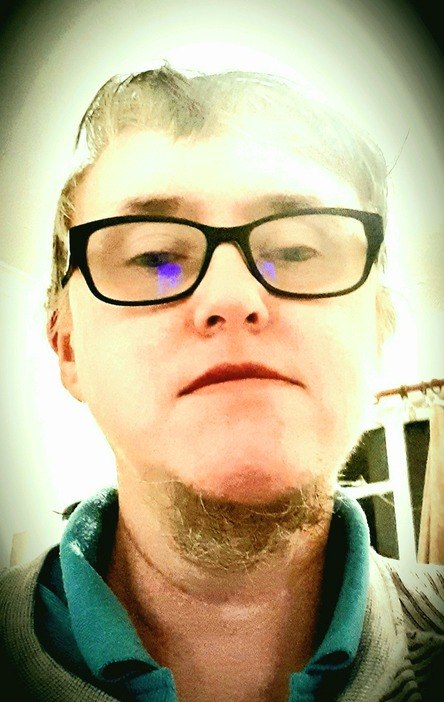
Start FollowingSend a Message
- Other sites we like
- Social media
- Terms of Service
- Sign In
- Created with PlushForums
- © 2026 The Philosophy Forum