
Comments
-
Enlightened self interest versus simple altruism.Not so much a marketplace then, as a battlefield, where rather than add value to the community, one seeks to take value from others. And a battlefield is a place that adds no value, but destroys it, and redistributes the remains on an arbitrary and unequal basis.
— unenlightened
Exactly. And that would be Fascism. — Galuchat
How does that make it anything resembling fascism? The is no market, to begin with in centrally planned economies. -
Enlightened self interest versus simple altruism.I don't know about that. We have a bunch of homeless people--a bunch of people who have no regular shelter and who have trouble acquiring food, we have a bunch of people who are unemployed or who can't find a decent job that pays well, we have a bunch of people with either no healthcare or who have to worry about whether they'll not go bankrupt should something happen to them that requires any sort of hospital stay, we have a bunch of people who can't afford a home, etc. If that's a good organization of labor and resources, maybe we should try a "bad" organization of labor and resources for a bit. — Terrapin Station
Applying undue duress on the system for not fixing every socio-economic problem is not fair. Besides, it's not specifically the fault of the system; but, rather of the political domestic policymaking that has failed (social expenditure).
Give UBI (universal basic income) a chance? -
Enlightened self interest versus simple altruism.'The market' conjures an image of some version of the miner selling ore to the blacksmith, who sells tools to the farmer, who sells food them both, and money or barter regulates supply and demand such that everyone provides value to others and receives equivalent value from others.
But obviously it is nothing at all like that. The miner, the farmer, the blacksmith does not get the value of his labour because things are not arranged as a market of that sort at all. Rather, the mine owner, the landowner, the 'entrepreneurs' literally take a cut between every exchange between others, impoverishing them all. The 'market' is institutionalised robbery. — unenlightened
The 'fee' from managers is minuscule compared to the fee you pay to the government for running the business. We're talking about 0.1-1% as a management 'fee' compared to 15-55% as a government 'fee'.
Furthermore, businesses need to generate revenue. Who pays for the initial upfront costs? Not the workers or the government; but, the business owners.
Being a worker is "100% risk-free". being a business owner or investor means it's possible for you to lose more $$$ than you invested. -
Enlightened self interest versus simple altruism.So psychopaths control the markets; tell me something I don't know. Is your friend Gordon Gekko?
http://www.imdb.com/character/ch0012282/quotes — Galuchat
Straw man!
Why waste time educating leaders? Just bribe, blackmail, or threaten them. There's plenty of money available for those kind of things, because it's not wasted on labour costs. — Galuchat
What kind of argument is that? Of course, it would be better to educate them and value the opportunity of free markets. The only reason why poor countries remain poor is due to poor leadership and corruption. -
Enlightened self interest versus simple altruism.
It can always be argued comparatively that the poor just have it worse off. That's not the topic though. But, if you insist, I would like to point out that every nation with a demographic of 'poor' individuals is/are always worse off than those who are relatively better or well off instead. I have nothing aginst some socialism for the poor, and I suspect any politician that runs for office in a noncorrupt nation will be answerable to the poor also. So, in the end, the poor eventually get what they need through work and voting. Which, brings to fray the need for strong and stable governments that encourage open markets and intellectual freedom.
In regards to your second point... I would argue that eventually, all externalities have to be accounted for in the end. Typically prices reflect the typical externalities accounted for. Sadly all externalities cannot be accounted for and if some are omitted, then the taxpayer is left to pick up the tab. -
Philosophy of depression.
It's a hydra from a Captain America. Not a fan of Captain America, just that I liked the image. -
Comey has been funYet it can confidently said that he was in the right place at the right time, for the American public.
-
TPF Quote CabinetThe "are" should be an "is" — Sapientia
Strangely enough, it was originally an 'is' instead of an 'are', but Grammarly corrected it to 'are' from 'is', and for whatever reason, 'are' sounds right to me...
and that last part, "...instead of entertaining new ones" needs to be reworded. Maybe "...instead of being used to entertain new ones" — Sapientia
Yeah, with that I agree. -
TPF Quote CabinetMaybe Q could have put it a bit more strongly and more interestingly by saying that we never turn our eye for logical fallacies on to ourselves, or something like that. — jamalrob
Well, that would only apply to a solipsist, wouldn't you say? Therefore, everything a solipsist says is a truism... -
Value theory, thoughts?Are you two related, x) @Terrapin Station & @T Clark?
It seems to me that the only things in life worth valuing are biological. Therefore, can anything be said about the abstract? Should we just do as the philosophers tell us and cherish what we have and all the amenities that we enjoy? -
Why Is Hume So Hot Right Now?Because Hume appeals to emotions and feelings, which can't be disputed unlike philosophical arguments presented through reason and logic. I'd just call it the 'normative' turn in philosophy in regards to the appeal Hume has to philosophers.
-
Value theory, thoughts?
I honestly don't even know what we're arguing over. Is it the subjective, objective, or something in between? -
Value theory, thoughts?I'm the opposite, though. I like virtue ethics, because that seems to be how people are: we value clusters of attributes or characteristics - virtues - and we disvalue other clusters - vices. Ethical judgment involves weighing them in any given situation, in a shared society. The shared society has many shared values, or it wouldn't function as well as it does. — mcdoodle
I have long been interested in virtue ethics; but, I had my issues with it. Let me present the case with the near perfect ethical theory made by Rawls, called Justice as Fairness, in which he invokes the veil of ignorance to resolve ethical dilemmas, this (the veil of ignorance) is the golden rule manifest. Now, I assume you have some knowledge about his 'veil of ignorance'. To be quite honest, there is no need for virtue ethics to come along and save an ethical situation. One needs only have a semblance of egoism and desire to be treated just the same as any other person in some ethical dilemma. Now, where is the need for virtue ethics? There is none because everyone wants to be treated fairly unless there's a pathological issue with said individual.
I hope I presented the issue somewhat clearly?
People who believe in an 'ism' usually find it hard, in my experience, to laugh at mockery of their ism because they don't see the absurd side of it. — mcdoodle
Well, with nihilism there is the negation of the very 'ism in it, subjectively and objectively. Does that make things redundant to human wants, preferences, and needs? I'm not entirely sure; but, to some extent, yes. -
Value theory, thoughts?They [nihilists] not saying that there's no value, period, because they belive there is subjective value. — Terrapin Station
Hmm, that's interesting. Though, I am sure you see the paradox in taking that stance? -
Value theory, thoughts?At any rate, I'd clarify this: "Nihilism trumps value by asserting that everything has equal value" so that it reads "Nihilism trumps value by asserting that everything has equal objective value." — Terrapin Station
Subjective doesn't refer to anything like "not hard-wired." If it's something the brain is doing as mentality, it's subjective, whether that's "hard-wired" or only winds up being wired via development, including environmental influences, etc. — Terrapin Station
I don't quite get the second quoted text. Are you say that to have a mentality is not subjective? If so, then yes, I would agree that in that aspect of human nature there is some objectivity in having certain beliefs about the world. Although, a can of worms opens up in assessing if the beliefs are in accordance with reality as to not make the term 'objective' indeterminate and not distinct from 'subjective', which is a tough thing to assess and validate if not by the scientific method.
I guess that should suffice to answer the ambiguity. -
TPF Quote CabinetI'll pull a Hanover and quote myself:
Knowledge of logical fallacies are more often than not used to defend one's own views instead of entertaining new ones. -
Value theory, thoughts?
So, you're blurring the line here with what is subjective and objective, I'm assuming?
So, what is it that you are disagreeing with here? I can say that we often think in opposites. There are an angel and a devil on my shoulder. I can count to 10 and -10 if I so want to. There are males and then females. The opposite of going down is up. The glass in half empty and half full. I think you get the point by now? -
Value theory, thoughts?And how does one go about making the distinction? — TheMadFool
Well, I think normatively is the only answer. So, if everyone likes oranges, then it's a property of us humans that we like oranges. But, since there is nothing that we can all 100% agree on that is a property of being the way we are, especially in matters of abstract concepts etc., then nihilism fills the void? -
Saudi arms trade bites back.
From what I've read, Iraq was paradoxically the safety valve in the region. Hussain did maintain order in the region through force and fear; but, it was effective. Iran, which borrowed from the West, what the West did in Afghanistan. The West only started something that was copied throughout the whole region, so they are at fault for starting the thing; but, are somewhat off the hook with how the concept took off.
Anyway, without Hussain, things just spiraled out of control.
EDIT: You don't hear in the media how ISIS is basically a new rogue state from within Iraq. Just goes to show how much we fucked the place up if we can't even bring the topic up in our great open/free speech news. -
Value theory, thoughts?
No, that's distinct from [asserting a value] (I like oranges) and whether [objectively there is value in your preferences and tastes] (good for you!). -
Value theory, thoughts?Have you had any luck? — mcdoodle
Not really. As of recent, I started valuing 'nihilism' for being so elegant and exact. It's hard to value anything when you realize that truth is the only thing worth valuing, and there seems to be an abundance of truth in nihilism and its derivative absurdism. I guess I'm taking a sociological and Nietzschean turn as of recent. -
Saudi arms trade bites back.This is relatively trivial compared to what happened when the CIA radicalized farmers and peasants (the predominant background of a Taliban/Mujahideen fighter) to fight for Allah and their land. Not only radicalizing the mind of people; but, also providing the means to make the whole sick and evil project complete. For the matter, the architect (whom I admire to some extent of the whole endeavor died a couple of days ago, Zbigniew 'Zbig' Brzezinski, you have to fight fire with fire sometimes).
I guess the fad finally caught on. -
Value theory, thoughts?
It seems there are different categories of 'value'. One can value certain things while disregarding others. To value the material, one becomes a slave to the means and the end of possessing said object of desire.
I'm wondering if someone can simplify this highly abstract talk about value. There are a plethora of things that we value, that are manifest in the political theories we subscribe to, ethical frameworks, identity, and so on.
Can anyone chime in and simplify this abstract concept to some logical simples? Are we to resort to Platonic forms, the value of truth, and love for knowledge in order to simplify this abstract thought, although it seemingly even becomes more abstract the more you want to ground what is of value to oneself.
Thoughts? -
Value theory, thoughts?
That's an interesting thing. There are many things to value in life. I suppose biologically we are indeed pre-programmed to like or otherwise have a predisposition to like or value certain things from an early age.
My idea is that the things valued non-materialistically are rather vague and well, metaphysical. Although great works of art presuppose certain things to be of value or to be held in esteem, they are otherwise quite useless as things that help us survive, or perhaps? -
Philosophy of depression.But what's nihilism value for you then? — Noblosh
Of it being True, what can have greater value than truth? -
Philosophy of depression.All this talk about value...
What a subjective thing value is.
Depression is a form of nihilism, which in of itself is quite an objective conclusion to arrive at.
Only the insane are never depressed.
One can be happy and depressed, methinks.
There is truth to depression. -
What will Mueller discover?The thing that gets me about American conservativism is how it has gotten rotten to the established plutocracy and elite (same thing basically).
We all know that conservativism is about free markets and deregulation. But, here comes along green energy, which is the fastest growing sector in the economy and soon to be the largest sector for the matter, and conservatives lose their shit and scream 'hoax', 'left-wing agenda', and such other nonsense.
These people have their heads up their asses and no amount of screaming will get to them, and what's worst, even hard economics isn't having any sway on the matter. I say fuck'em. Hope they die out soon enough. -
Is Putin doing a good job?Now, under Putin, they have no political freedom, and high unemployment and homelessness. It looks to me like, on the whole they were better off under either the Soviets or Yeltsin. — andrewk
I think we don't have to resort to judgments like those at the end of your comment. For the most part, given Russia's fat bottom pyramid demographics, people are happy with Putin's conservative leadership with the country. I think the only complaint (being on the whole, a positive thing) is that the country hasn't grown economically fast enough.
But, then again, China is in my view a country that can provide an example that central economic planning can be effective in concert with a free market. Perhaps, Putin would agree or looks favorably to what China has achieved in terms of economic development. The remaining question would be why hasn't Russia borrowed what homework China has done in regards as to why the Soviet Union collapsed. -
Is Putin doing a good job?Force always has the last say. The West is failing to realise this. — Agustino
How dark.
How do you explain the contradiction in your views for a country to develop rapidly, and the rather contradiction you see, as you described it, in terms of how Russia has been developing under Putin?
Also, in regards to the above quote, you seem to describe that force matters in the end; but, fail to point at the US as the supreme user of force in mitigating conflicts in the past. How come? -
Is Putin doing a good job?Wish we had some Russian members who could post what they think around here.
Would be nice to get a change in POV's about various issues.
But he could have your mother killed while you were having coffee with him, without batting an eyelid, and without your ever knowing what had happened. — Wayfarer
Yeah, these are the typical ad hom attacks mounted against Russian or post-Soviet leaders. I don't think they really mean anything, given how hypocritical a person from the US would seem to say such things. Well, at least that's what a supporter of Putin would say more-or-less.
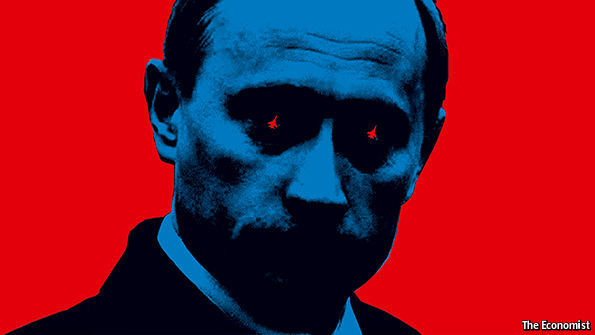
That said, The Economist says that Putin is not a terrible economic manager. They give him some marks for overall economic management and political prudence. — Wayfarer
I have a subscription to The Economist; but, haven't read their issue on Putinism (I think that's actually a word in the dictionary last I checked). I guess, he didn't score as high due to not being neo-liberal enough according to The Economist's standards.
Personally, I think Russian's are grateful first and foremost for stability, especially after the Perestroika and fall of the Soviet Union. Where Putin has failed, according to Western leaders, is in not liberalizing the market enough, and well, hoarding positions of power to a handful of elite. -
Climate change in a picture?
If it looks like a duck, swims like a duck, and quacks like a duck, then it probably is a duck. -
Philosophy of depression.To be frank, the placebo effect is still explainable in terms of chemistry. — TheMadFool
That depends on whether you're willing to make the strict claim that beliefs are all material. But, then if we suppose that for a moment, how do you explain the efficacy of some beliefs? In other words, how or why are they so effective? Makes homeopathy relevant at the dismay of the doctors. -
Philosophy of depression.In psychiatry depression is considered a chemical perturbation and is, obviously,treated as such. How much philosophers will subscribe to this interpretation depends on the degree of difference they see between mind and body. The body affecting the mind is scientific but the mind influencing the body is, as yet, psuedoscience. — TheMadFool
So, the placebo effect is just superstition gone wild? -
What does 'the future' mean to you, regardless of age?I guess this is just me whining about why people tend to appeal to ideals when the fact of the matter is that historically idealistic notions of governance don't stand the test of time. Perhaps only democracy, yet the concept of 'democracy' seems at odds with idealistic beliefs about governance.
-
What does 'the future' mean to you, regardless of age?Any "general thinker" should try to get a grip on as much past and future as he can manage: understand where we have come from (not an easy task) and where we seem to be headed (a more difficult path). Some cataclysm can create altogether new and unexpected possibilities for the future (like the meteoric hit in the Yucatan that ruined things for the big lizards and created an opening for us mammals). Cataclysms are rare, though. — Bitter Crank
Yet, you have some of the most prominent philosophers appealing to idealistic notions of governance or appealing to emotions (most notably Marx) about work conditions for the poor (despite the pretty accurate observation that a rising ride lifts most boats, even those of the poor). Clearly, this is a sign of a lack of balance between what a person thinks ought to be and what it actually is. Historicism, I don't know; but, Hegel did get the dialectical method spot on despite his most notable student perverting it.
We can be confident that if we do not preserve and enhance the environment we have (even though somewhat degraded) we reduce our chances of biological and cultural survival into the longer-term future. If our biological survival is quite likely--sex and DNA will take care of that--our cultural survival is only as certain as generation-to-generation maintenance. A full set of culture has to be successfully transmitted from one generation to the next. When the transmission is less than complete, the culture can be gone in as few as 3 generations -- maybe less. — Bitter Crank
I have thought about this, and to be honest we are barely touching the potential resources of this plant. There are precious minerals in abundance in the ocean. We have barely tapped the surface of this planet in regards to minerals and other natural resources. There's enough deuterium and tritium in the ocean to power us for an ungodly amount of time. I really do believe that the American ethos of progress, change, and expansionism has not been exhausted in any way by the lack of available goods at our disposal. Rather, it is the sick self-serving elite that has perverted the focus on the US to serve a small minority of people on the top.
When the western Roman Empire went out of business, a millennium was required to recover the cultural goods that had been everyday fare in the empire. A collapse of our culture--happening rapidly or slowly--might take longer to recover, likely not much less. — Bitter Crank
Yes, this is true. Globalism though has mitigated that fear along with the abundance of information at one's fingertips. I don't think a cataclysm would set back us as a civilization that dramatically. -
What does 'the future' mean to you, regardless of age?Not sure. Do you mean that most people have a bias towards the future, which fits in well with our culture's sense of progress? But, not everyone. — Cavacava
Well, I mean that any conception of 'the future' is dependent on some concept of the past by an individual. So, to answer my own question, so it would seem, that to have a concept about the future, some point of reference is necessary.
Thus, this somewhat justifies my sentiment that most philosophers are committing an error in omitting what the future may be like with respect to the past, and instead propose monolithic and idealistic conceptions of society and governance.
Shawn

Start FollowingSend a Message
- Other sites we like
- Social media
- Terms of Service
- Sign In
- Created with PlushForums
- © 2026 The Philosophy Forum