
Comments
-
Who here believes in the Many World Interpretation? Why or why not?1.There is only one wavefunction. — tom
2.All physical interactions are treated exactly the same. — tom
3.All physical interactions are local, having no effect on space like separated regions. — tom
The first quote gives me the impression that this one wavefunction is representative of all interactions between objects in space, which seems to go against quote 3.
Now, I'm having trouble understanding how quote 2 and 3 can coexist. All physical interactions are treated exactly the same relative to what?
I appreciate your responses and apologize if my questions are rudimentary. -
Who here believes in the Many World Interpretation? Why or why not?
Regarding that. Is there any distinction between local events and supra-local events in Everettian QM? -
Who here believes in the Many World Interpretation? Why or why not?
Sounds like something you say in a cult. Never mind me, I never got past understanding how one defines an or a ? 'observer' in QM. -
Who here believes in the Many World Interpretation? Why or why not?
I find it solipsistic and incomprehensible to view every entity existing in a multiplicity of states in the multiverse. Doesn't one wavefunction entail another or do these wavefunctions exist/evolve independently? -
Who here believes in the Many World Interpretation? Why or why not?Does anyone think the MWI, leads to notions of solipsism for any particular observer?
Kinda a reductio ad absurdum if you may... -
Who here believes in the Many World Interpretation? Why or why not?And every photon is happy in their own possible world.
-
WorkI've worked a couple of places and find work to be the most therapeutic thing one can do when confronted with problems. You basically have some measure of how well you function relative to other co-workers and that in itself (matching or even exceeding the performance of other coworkers) is healthy in its own right. The virtues of work are endless.
I applied for a job as a sanitation officer due to for some reason my liking of cleaning things, unfortunately, that didn't work out as planned and never got a callback. I have other sources of income and have been surprised at how little you can live off.
Guess, I'm in need of work now. Ho-hum. -
Why the shift to the right?I'm nor sure whether a causal link can be seen between Reagan/Thatcher and 2008. Reagan's administration was followed by 3 different presidential administrations (Bush I, Clinton, Bush II) for a total of 20 years. As much as I disliked Reagan, I'm not sure I can blame 2008 on him. — Bitter Crank
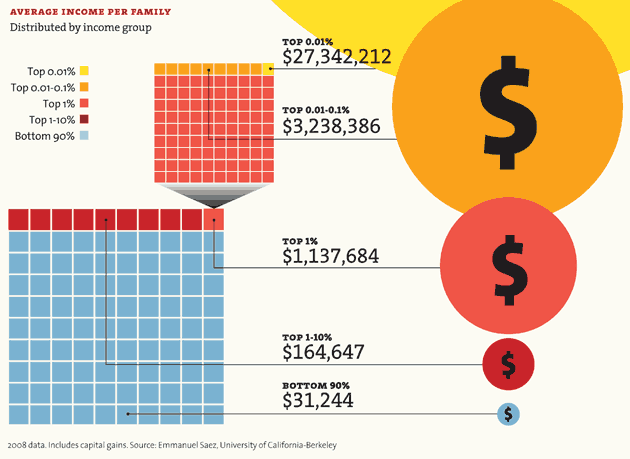
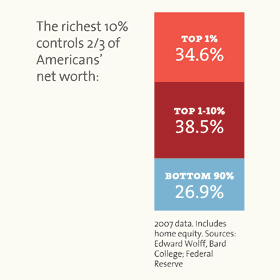
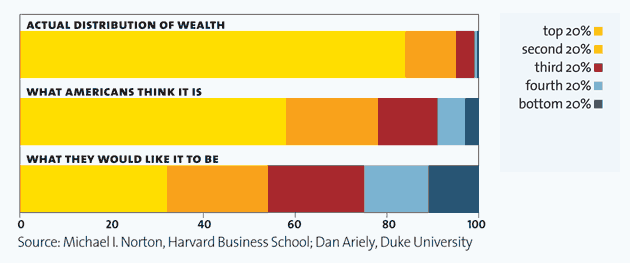
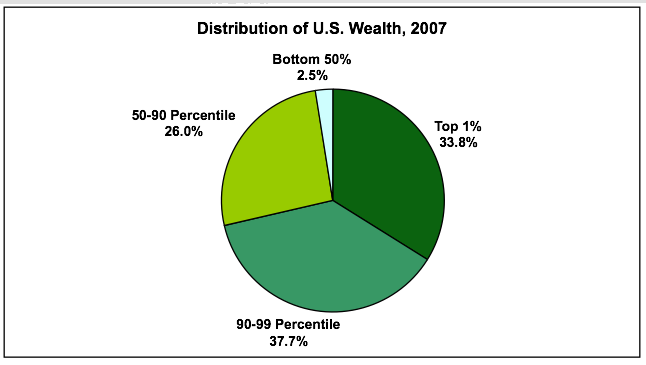
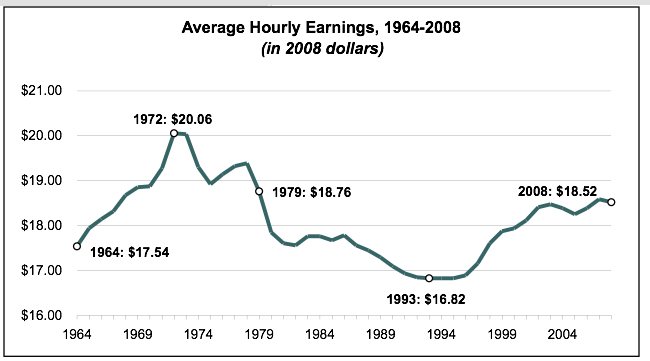
I don't think the wording was appropriate. Rather we've already had 4, with an upcoming 5'th administration that believes that the free market is best left to do its own bidding, along with some Ayn Rand lovers (scary stuff). While the pie might have grown, there is less and less of the wealth being created available to average day Joe's. That isn't a good situation to be in. -
Why the shift to the right?Possibly. That doesn't mean the free market is to blame, though. — Thorongil
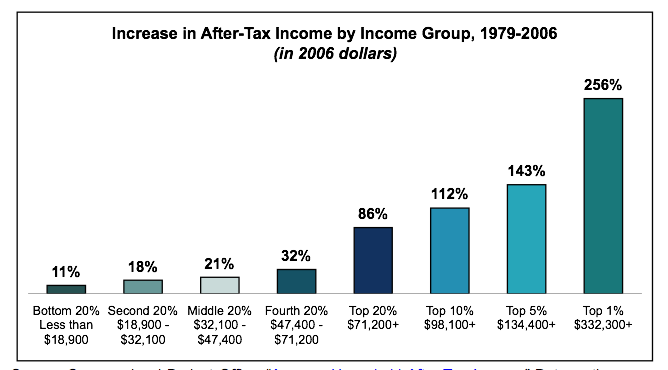
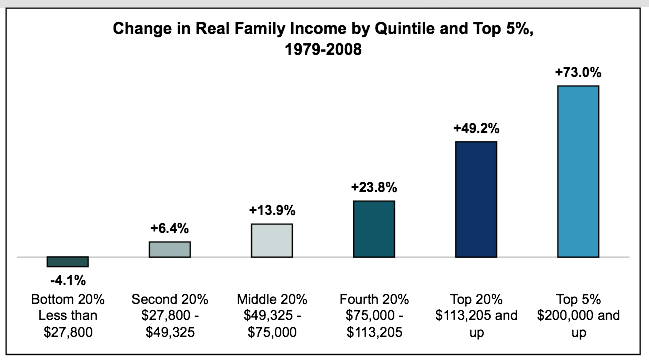
Possibly? Are you just being coy about this or really think that people are better off financially than 30 years ago?
The free market is not to blame per se; but, we've had neoliberal/laissez-faire/free market reign for a while now, during Bush, Clinton, and Dubya and now people are asking for more of it. -
Why the shift to the right?Then they shouldn't have gotten one to begin with. That's an easy one. — Thorongil
So, in reality, people are even poorer than expected or rather have become much poorer relative to where they stood some 30 years ago. Add some inflation over those 30 years and you have a serious dilemma for some homeowners.
Depends on your interpretation of history. For the matter, since you seem to think this is either capitalism or socialism, I don't think they are mutually exclusive. I would think even the most radical libertarian would have some elements of welfare, if not for moral reasons then out of pure economics of poverty being a major drag on any society.History refutes your feelings here. — Thorongil -
Why the shift to the right?
Well for starters people can't afford their mortgage despite enjoying tvs and air conditioning.
Also, moving up the ladder isn't good just for the individual; but, rather for society as a whole.
I meant to use the "invisible hand" in a non-pejorative manner. The issue I have with the invisible hand is that it does not care about people or individuals. For the matter, I am for eliminating welfare in its entirety and instead have a basic income for everyone. Sowell is one of my favorite authors for his common sense approach to economics; but, I do not think leaving the invisible hand to do its 'work' is safe or rational. -
Why the shift to the right?Given such disparities between the economic reality and the alarming statistics, it is much easier to understand such apparent anomalies as the fact that Americans living below the official poverty level spend far more money than their incomes–as their income is defined in statistical studies. As for stagnation, by 2001 most people defined as poor had possessions once considered part of a middle class lifestyle. Three-quarters of them had air conditioning, which only a third of all Americans had in 1971. Ninety-seven percent had color television, which less than half of all Americans had in 1971. Seventy-three percent owned a microwave, which less than one percent of Americans owned in 1971, and 98 percent of “the poor” had either a videocassette recorder or a DVD player, which no one had in 1971. In addition, 72 percent of “the poor” owned a car or truck. Yet the rhetoric of the “haves” and the “have nots” continues, even in a society where it might be more accurate to refer to the “haves” and the “have lots.”
Yes, these are all nice things that one can now afford due to technology and deflationary tendencies that technology and global trade incur.
However, the point still stands that people have less in purchasing power than they did at the time for basic goods due to inflation and goods not included in the basket that are invariably affected by inflation. It's nice having TV's and air conditioning; but, what about wanting to move up the socioeconomic ladder instead? -
Why the shift to the right?
So, maybe I was wrong about that claim.
What do you suppose are the reasons income has stagnated for the middle class, since 1980? -
Why the shift to the right?
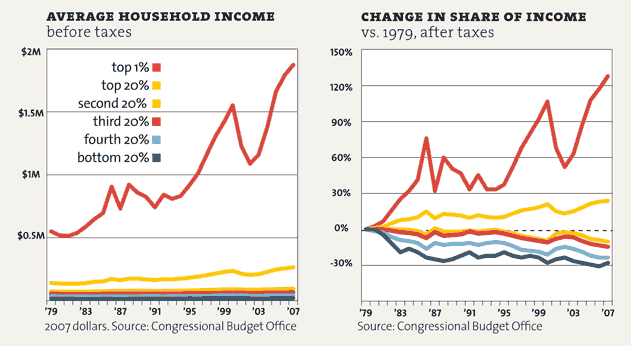
Well, I posted the links as per above. I'm open minded as to you explanation on the matter as to why income earnings have stagnated for the middle class and income inequality has risen. If all your arguments surmounts to is "correlation doesn't imply causation" then there's really nothing we can talk about or draw conclusions from such data. -
Why the shift to the right?
Yea; but, there is no better standard of measure of a nation than seeing how well the middle class and those in poverty can move up. And, de facto the middle class has been shrinking in size for a good while now. -
Why the shift to the right?
So, you're saying that the concerns of millions of Americans about the stagnating wages have nothing to do with the economic policies set forth and to a large extent continued under/after Reagan? -
Why the shift to the right?Well, since when they because leaders of their respective countries. I think you get the point?
-
Why the shift to the right?
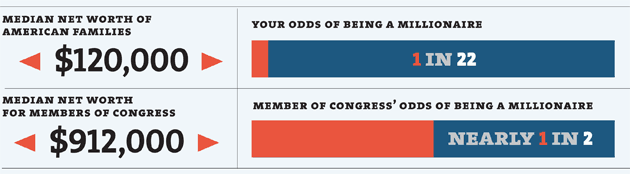
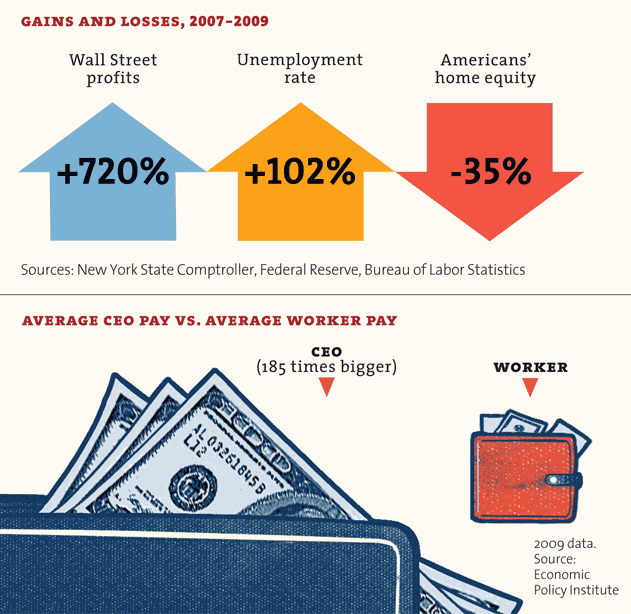
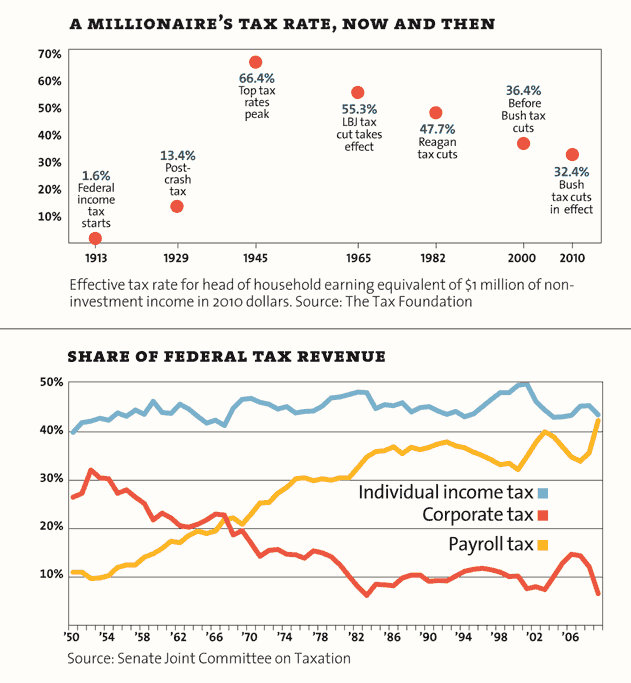
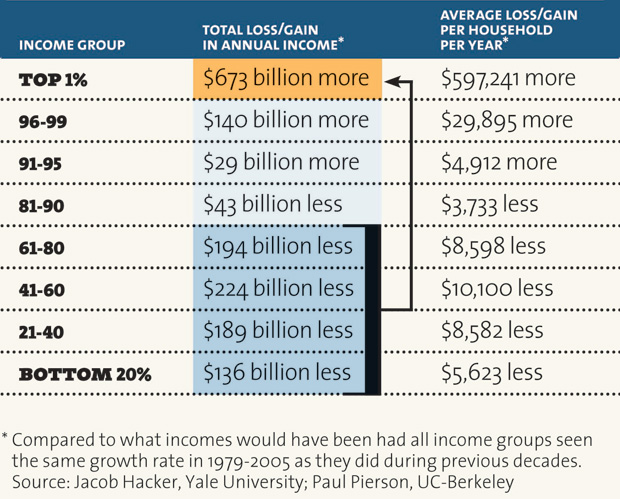
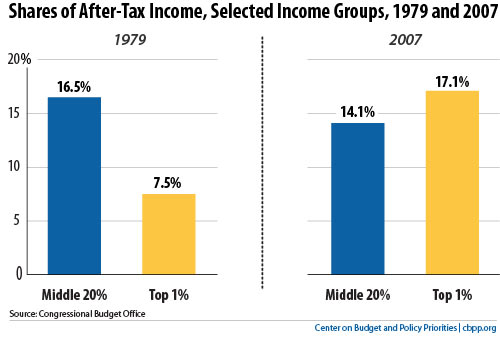
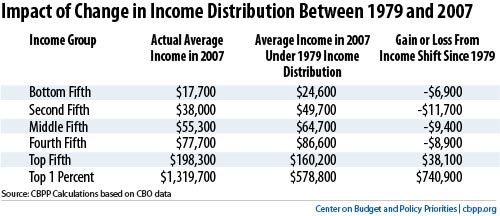
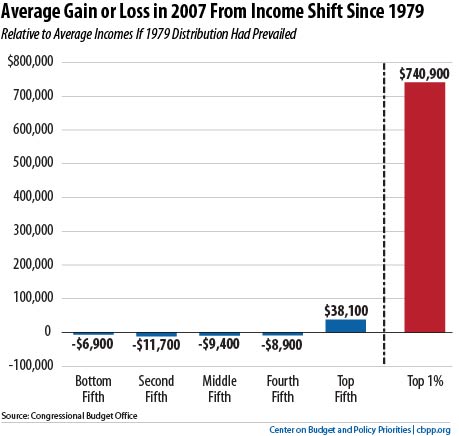
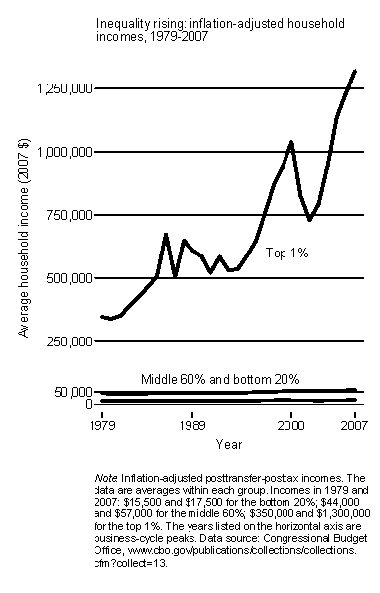
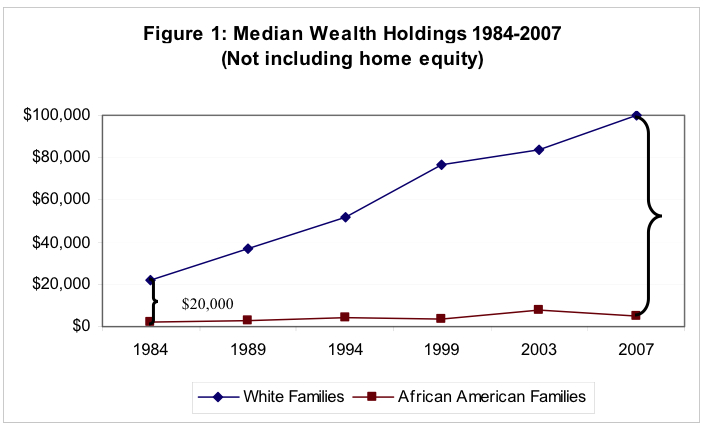
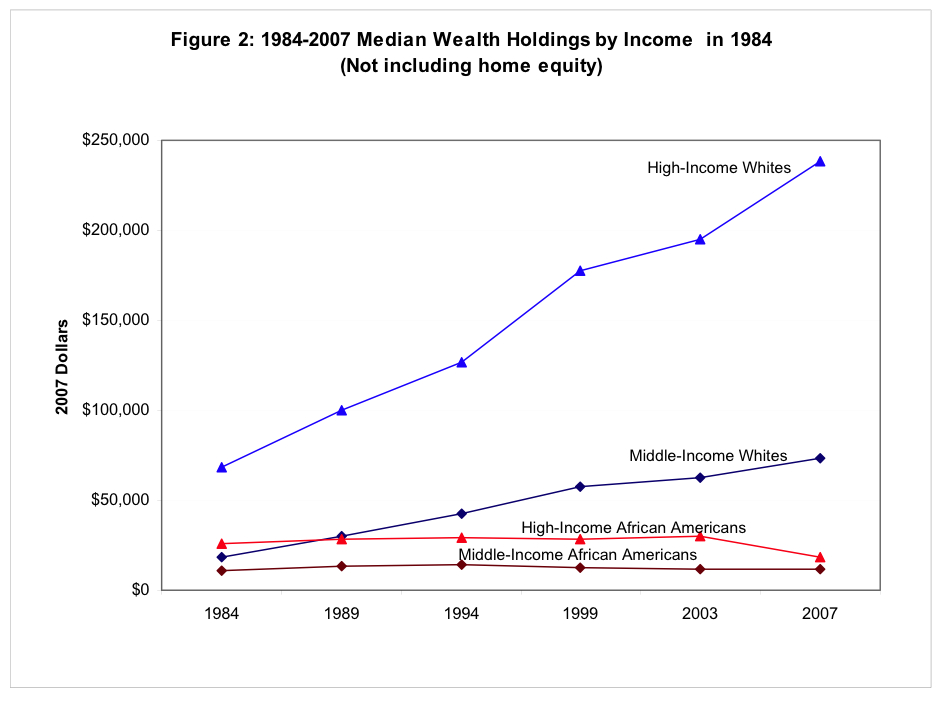
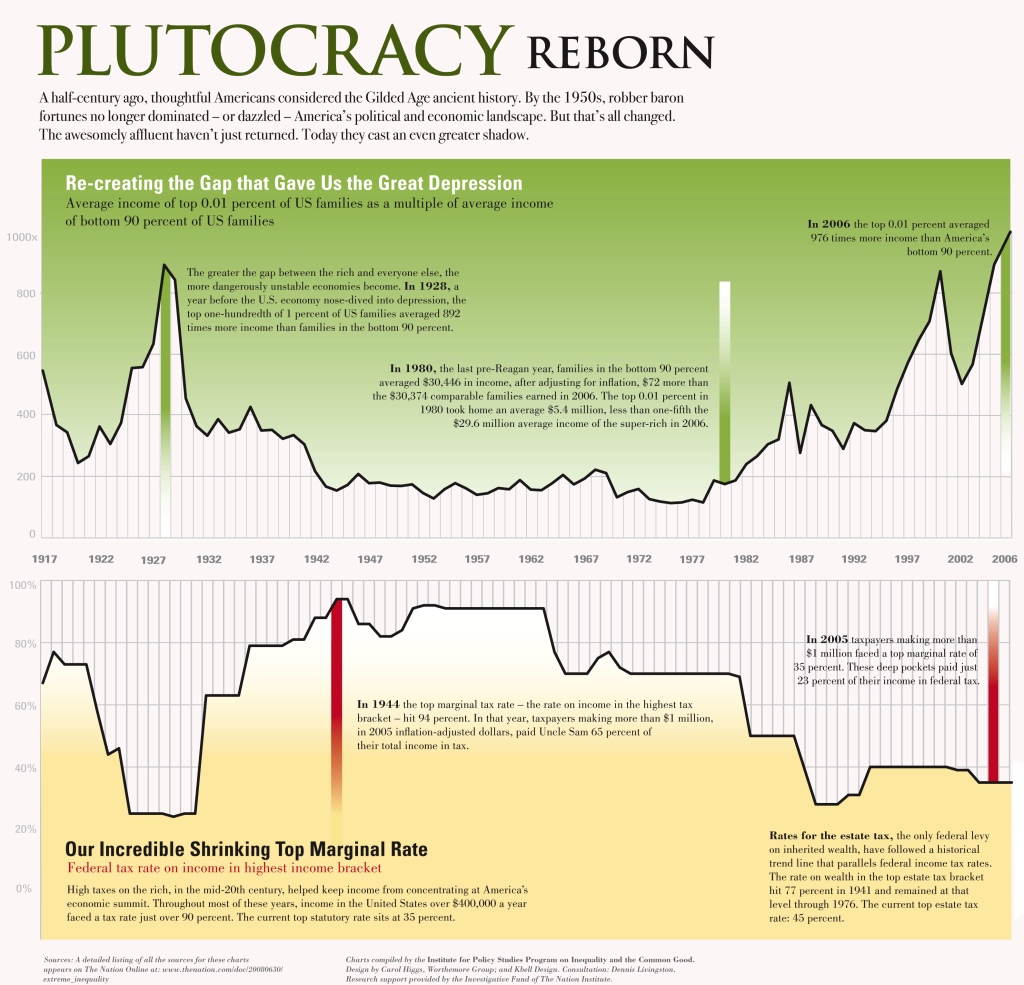
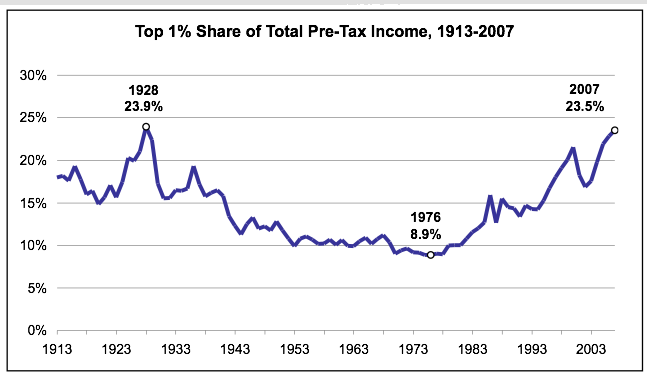
Income for the middle class has stagnated since the 70's, while the top 1 tenth of 1 percent has done phenomenally well. I don't think that is a bad illustration of whom such policies "work for" and for whom it does not. -
Who here believes in the Many World Interpretation? Why or why not?
I'm sorry; I should have stated that the other way.
What I meant to say in my non-educated understanding is wave function collapse. I don't believe the wavefunction does not collapse in MWI and decoherence is simply the wavefunction striving towards the mean.
I never bought into the idea that you can stand in front of an automatic machine gun and have realities in which it does not fire indefinitely/sporadically/once/none at all. -
Who here believes in the Many World Interpretation? Why or why not?I find the idea of decoherence too at odds with the MWI to take the MWI seriously.
Mind you, under the MWI, there is no decoherence. Every reality is essentially a decoherence from the original state (big bang) to the present.
I canno't grasp of a universe without decoherence given how macroscopic events are deterministic and at odds with the randomness and indeterminacy of QM. -
Who here believes in the Many World Interpretation? Why or why not?I posed an interesting question some time ago to those interested about whether QM obeys causality.
https://www.physicsforums.com/threads/does-quantum-mechanics-obey-causality.881156/
The opinions were interesting.
Never knew the CI was still alive and well. -
My PhilosophyDo away with the metaphysics and call everything Nature instead of
Ggod (with a lower case 'g'). -
So Trump May Get Enough Votes to be President of the US...Yeah that standard Republican economic agenda has been to push for unregulated global free markets, the continued dismantling of labor unions, the elimination of social services which provide a bit of a safety net for struggling citizens, and other such things. These have created the very conditions of anger and resentment amongst the populace which contributed to Trump's popularity and rise to power. I don't see how he can just maintain that business as usual approach after all he's talked about and promised. One thing is however certain: if anyone can be that blatantly dishonest and backstabbing, it would be Trump. — Erik
So, what are you suggesting? That the American public that elected him and with it the majority that the Republican party has in the House and Senate... are uneducated and misinformed?
That sadly seems to be my conclusion on the matter. -
So Trump May Get Enough Votes to be President of the US...
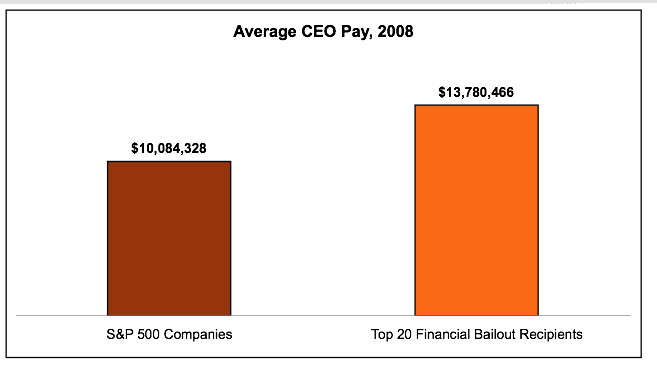
The thing is that we have hard data to look at and see the result of having Republican leadership at the helm and economic progress of the middle class. The data seems point out that the interests of the middle class are not aligned with the interest of special interest groups that practically dictate national economic policy. -
So Trump May Get Enough Votes to be President of the US...This may take the next 20-30 years if not longer (again, Trump will not be able to provide the long-term answer IMO), but that corrupt status quo of unchecked capitalism with its dominance by moneyed interests is thankfully over, at least for the time being. — Erik
This is so untrue on so many levels. I'm surprisd you would think that a Republican sweep would solve it if not exacerbate it. -
Why are superhero movies so 'American'?
Yes, that is the superficial explanation; but, there's more to it why it appeals to Americans (e.g the themes, values, and sense of justice presented). I think, there is a lot to learn about American culture via analysis of such a form of entertainment. -
Why are superhero movies so 'American'?
They are produced in America (well some filming locations are outside America). Most people who watch them are American, and, they (almost always) promote American values.
I don't think I could be any clearer. -
New Adam Curtis Documentary: HyperNormalisationWell, watched the whole thing and it is quite a scary picture portrayed in it. The problem is there really is no clear cut solution to this situation, by which I mean the simplified kinds of things that "just make sense" are "simple" and "pragmatic". The invisible hand tends to work most efficiently and striking some balance with free trade and capitalism with some hints of socialism seems like the best thing one can achieve as a form of social governance.
Regarding terrorism, as at least half of the whole documentary was devoted to it, one can hope that the U.S will get the fuck out of meddling with the Middle East once and for all and leave the place be; but, that doesn't support the notion of "maintaining our power / the system" in place so given Hillary will likely be the next successor to maintain the status quo we're going to only see escalating tensions in the region as usual.
Regarding technology. It doesn't seem too far a stretch that people would prefer to live in a solipsist word of their own making. So, what? Does that make the job of the ruling elite all the much easier to rule us 'sheeple'? Probably; but, there really isn't one can do anything about that to any significant extent.
Strangely enough climate change wasn't mentioned in the documentary; but, oh does it deserve a mention. The calamities will only escalate in the future, natural, man-made, and artificial to such an extent that I fear people might start behaving in the extreme.
Anyhow, I think the term 'hyper normalization' is accurate; but, neglects to mention the amount of cynicism and revulsion present nowadays. This sweeps under the rug the disenfranchisement people feel and how that can be utilized or serve as a catalyst as a positive force for creating a better system. Most people are fed up with the situation; but, really have nothing to do; but, grumble under their noses about the festering sore that American politics has become. The EU is not much better in this regard. Austerity doesn't work, and neither does stimulus. I for one hold the belief that people are easily spoiled and simply do not appreciate the amenities we derive from commerce, finances, and such matters. Who fucking cares if someone has a billion in their bank. I feel sorry for the fuckers, as they have no time to live life, just manage fictitious numbers on a screen.
I suspect real change will come with technological advancement. Either that or a real financial breakdown will bring any significant change as future generations will never be able to pay off the current accrued debt of this and previous generations. C'est la vie. -
New Adam Curtis Documentary: HyperNormalisationDownloading this.
But, I should say that there doesn't seem to be anything new here. And, if Curtis want's the invisible hand of the market to be actually some sort of puppet hand (in reality) of the powerful elites, then boo hoo. Or maybe his point is that the invisible hand is outta control and either needs to be controlled (by what?) or subverted to the needs of the people rather than the elite (therefore socialism?). Same shit different way of saying it. -
An analysis of emotionSo it is quite normal to get angry from time to time, (though it may not be necessary) and it is to be recommended that one bite one's tongue, and restrain one's fist. — unenlightened
I almost never express my anger. I keep it locked up inside and let it show in my passive aggressive behavior. If things don't go my way then to hell with it all, I'll lay in bed or be a pessimist about it all and deny anyone else the right to happiness in my behavior and world view. I resort to Stoicism to help me put a knot down in my belly that makes me lean towards Cynicism and eventually Nietzsche in my lack of power and resigned responsibility to others.
Is that healthy? It might be in my own disposition; but, to others I doubt so.
In all this, I see Nel Noddings ethics of 'care' as a solution to this problem. Unreciprocated (that is, a state of mind that does not require reciprocation to be maintained, something akin to being enlightened or love/compassion/desire in its purest form - without any material desire in return) 'care' or love or compassion without strings attached seems to be the ideal here.
As for the measurement of one's emotions. Perhaps school and other public institutions are apt in dealing with this. I have gone through both (school and military) and can't say I've learned much emotionally about myself or the world for the matter. Just where I stand and nothing more. -
An analysis of emotion
But, masking one's emotions is natural and real. My dreams are just as real as I experience reality. So too are emotions as real as the one's being masked. In other words, let's the ego/super-ego do it's job in masking the primitive aspect of one's psychology.
Is your solution to feel more or feel more adequately? How does one measure this all with the qualitative facets of emotions and their 'unreasonableness'? -
An analysis of emotionThat would be a wonderful world to live in where one can dissociate oneself from one's emotions like that; but, my intuition tells me that that is not the case. At least they way you presented the situation is overly strict in terms of an either or state; but, I agree that anger as you so aptly described it is a instant dissociation from the object or cause of frustration and the self.
I have been told many times that I have no ego, this is perhaps due to some event in my childhood that stunted its growth; but, that's another story. Obviously, it would be impossible for me to not have an ego entirely as I am no Buddha or Wittgenstein although I strive to be the latter, as in later, former Wittgenstein.
It's always 'I have a problem', and not 'I am a problem'. — unenlightened
This is tricky because one's self does not want to be in contradiction with itself in perceiving the problem as its own or simply take responsibility for it. This is classically portrayed in the prisoners situation where one will continue to electrocute an inmate at ever higher 'doses' as long as they aren't directly responsible for the welfare of the poor bastard being electrocuted in such a psychotic experiment. The problem as I see it is that we aren't solipsist beings and the necessary demarcation between 'being a problem' and 'having a problem' is very hard to delineate; but, obviously the bias will be towards saying that one 'has a problem' as opposed to 'being a problem'... But, then again to whom is this person a problem to? Is it to others or oneself? -
An analysis of emotion
Yes, I think the psychological concept of over-determination deserves a mention here. We tend to identify with the way we feel and that in turn causes a cascade of events to happen in the mind. One does wonder though, can one dissociate from the way they feel, for example being depressed over being depressed ad nausium. Or if dissociating oneself from their emotions is even a healthy thing to do and what does that in turn lead to...
I think the prominence of recognizing 'emotional reasoning' to borrow a term from CBT is important here along with some mindful awareness in getting a better 'feel' for some problematic situation; but, I'm not sure if you recognize that this also can be some sort of mental masturbation if emotions truly reign supreme. -
An analysis of emotionActually I think one cannot assume that. Rather one has to assume that we are talking about the same emotions that folks can have more or less of. Otherwise, we will be talking at cross purposes and without communication. So I do not agree that one can express love with anger, indifference hostility or malice. If you want to use words that way, then I'm afraid I cannot discuss with you meaningfully. — unenlightened
Yes, but just take the example of the cold father that masks his love. Certainly, this isn't an uncommon practice by many fathers to do so.
So, too can someone else mask his or her emotion including love being masked by anger. Although, this would be something that happens at a semi-conscious level as I can't imagine someone simultaneously feeling love and anger at the same time. -
An analysis of emotionOne can assume that people with a low amount of empathy or desensitized emotions, due to various factors, in fact experience emotions differently than the rest of the group. I mean, their brains are anatomically different on such a level that it impacts their capacity to feel adequately. Thus without the amount of empathy, sorrow, guilt, and other essential emotions of care, one simply expresses their 'love' with anger, indifference, hostility, and malice because that is what they feel is the only way to express their satisfaction with an object/thing/entity.
To think of emotions as existing in categories is a folly in my understanding. For example, a father might feel happy and sad (cognitive dissonance) about working to provide for his family and being a 'man', but not spending time with them, eventually leading him to chose which comes first and at what expense and so on. So too it is a folly to search for happiness as an idealized state of mind, which the Buddhists can lecture about. -
An analysis of emotion
Well, let's say one has been brought up in a harsh environment, with harsh not much loving parents also due to their own upbringing with all their fragmented and dissociated psyche's. A situation that is quite common even to this day...
One then becomes desensitized to their own feelings and sometimes empathy flies out the window too, given this occurs fairly early when one is impressionable, one does not even recognize the difference in himself and others if his (predominantly) or her intelligence is average.
However, in the case where one even has an above average intelligence (in the most notable cases), they might be able to recognize this trait in themselves; but, here is the crux, they more often than not exploit this facet of their personality and see it as a strength (comparative evolutionary advantage within game theoretic bounds) given therapy is a much more arduous, alienating, and astigmatic path to take which is further compounded by the fact that such individuals are desensitized to the process of learning via emotional reasoning. Coming to terms with being the way they are is often more off putting than accepting themselves and integrating with the rest of people. Often narcissism makes the task more difficult.
The common (calculative and analytical) mindset for such a person is to view people as objects interacting with each other to maximize their own utility. Now, if one feels compelled-given a desire to have children, as I doubt even such non-empathetic people are incapable of love albeit in a different manner, then they feel compelled to pass on what strengths they have found in themselves to their offspring and disguise their love in anger, frustration, indifference and all the other resultant emotions from a lack of being able to feel adequately or empathize.
Now, the whole thing becomes pathological if the offspring have a predisposition to such non-empathetic traits, although sociopaths are said to be a product of nurture, and the circle closes.
Shawn

Start FollowingSend a Message
- Other sites we like
- Social media
- Terms of Service
- Sign In
- Created with PlushForums
- © 2026 The Philosophy Forum