
Comments
-
Solution to the hard problem of consciousnessSo after a bit more reflection on questions like why does consciousness, this universe, or even existence "exists", I began to think that maybe it's our understanding of consciousness that makes the problem seem "hard". — Flaw
It's a kind of distortion or forgetting of history that this is called the "hard problem". During the enlightenment when Descartes, Hume, Kant and the like were producing masterpieces, the hard problem was "motion", that is the movement of objects. Newton was astonished that he could not give a physicalistic account of gravity.
For whatever reason, the "hard problem" of motion has been forgotten in terms of people even knowing it used to be a problem at all. Gravity's inconceivability has just been accepted. Now we have this specific articulation of the hard problem, which at the time of the 18th century had to be admitted, by some anyway: that matter thinks.
Yes Chalmers pointed to a hard problem, but we should not forget that gravity, electromagnetism, free will, causality and indeed a great portion of philosophy are hard problems too. Perhaps by contextualizing this issue, it will seem less specifically puzzling.
After all, we are acquainted with experience much better than the world out there. -
COP26 in GlasgowThey'll hang on to the bitter end. Look at where we are in the US congress. — Xtrix
Yes. Agreed. Maybe it is using a term too broadly, but I think this is tightly connected to the neoliberal agenda, which, during this Pandemic at least, has shown some signs of weakening a little. Not nearly enough, but it's something. As long as people keep getting diverted by cultural issues of little survival significance, then money will do as it pleases.
I mean people are screaming about AOC, about as milk toast "left" as you could be in a European country, at least until not so long ago. If that's how they behave with like 5 or 6 members of congress, what on Earth would they do if the left of the Dems actually had, say, 30 representatives or more? I shudder to think.
but the fact that the Republican party, still a party of climate denial, has even the possibility of being elected anywhere in the US is probably the death knell. Who knows. — Xtrix
Herein lies the key. These people are just the embodiment of ruthless "bottom line-ism", all cleverly cloaked under nice sounding, meaningless names. The only way I can think of moving Republicans a little to the center, is to make Democrats actually come to the center-left.
With so much propaganda and misinformation and everything else, the task looks galactic in scale. I know that it can't be that hard in real life, but, these mega-corporations have to lose some power or it's over. It won't be gifted, that's clear, but how to take it away, when leftists fight each other is... perplexing. -
Is personal Gnosis legitimate wisdom?
Apparently, now nothing. I don't expect insight from such a person in the form of propositions or articulable knowledge. Kind of trying to imagine what that would be like, but it's not really possible.
Simply curious to see how people inside these traditions thinkin about these things. -
Is personal Gnosis legitimate wisdom?An outsider definitely cannot recognize an enlightened person. — baker
Can an outsider spot a fraud, or do they camouflage themselves well? -
You don't need to read philosophy to be a philosopher
That's fine if you want to use that way, which is its normal use I think.
I think it could be used more fruitfully when applied to people who usually don't fit the common term. But that would be moving away from his thread.
But, you have a good case. -
You don't need to read philosophy to be a philosopherWhen I called myself an intellectual, I gave a specific definition of what I meant by that to avoid any confusion. As I noted, calling myself an intellectual "doesn't mean I'm smart, it means that my primary way of dealing the world is through my intellect, by thinking about it, talking about it. I am also a recreational thinker. It's fun. It's a game. It's what I'm best at." — T Clark
I agree. It's a fine use of the word.
I wouldn't be too serious about the label, not that you are. It's a legitimate use of the word. -
You don't need to read philosophy to be a philosopher
I think that's true in many cases, not here.
Why is the car mechanic who can fix a car engine that no Nobel Prize winning Physicist could not considered an intellectual?
Or a nurse that can help treat a patient who would die in the hands of much respected Journalist? That's not intellectual, being to able to know how to treat wounds and save lives?
On the other hand, many so called "intellectuals", specifically certain journalists, are the biggest frauds and liars of all. Aren't these the very same people who every time there's just even half of a chance to bomb a country in the Middle East, salivate and give all sorts of reasons as to why killing people is good for democracy?
So the word can be quite misleading... -
Is personal Gnosis legitimate wisdom?In some religions/spiritualities, the standard answer to the above is "It takes one to know one". — baker
So then it is evident to someone who's on the outside when a "fake" is speaking to someone who is enlightened?
Or do you need to be around such people to tell? -
You don't need to read philosophy to be a philosopher"Intellectual", that's quite a funny word. Can be used as praise, as an insult or even neutral sounding.
As far as I can see everybody is an intellectual, literally. Unless they're in a coma. -
COP26 in GlasgowWell, a bit of good news at least:
Dutch pension giant spurns fossil fuels as funds shift before COP26
https://www.reuters.com/business/sustainable-business/dutch-pension-fund-abp-sell-175-bln-fossil-fuel-assets-2021-10-26/
Much more of this, would be of some importance. -
You don't need to read philosophy to be a philosopher
Sure. A good portion of it depends on the teacher being able to make this stuff stand out, which for philosophy can be especially difficult, given many topics can be quite abstract. Ethics, perhaps less so and is more pertinent for the everyday.
It makes sense that older students would be more interested in these things.
Each person is unique and I surely was not ready for philosophy in my first year in college. Had I the mentality that I have now, I would've taken a lot out of my classes which I missed out on. I ended up teaching myself, which worked for me, but could have perhaps been made easier with a different mindset. -
Is personal Gnosis legitimate wisdom?
Absolutely.
The idea is to try to keep level headed about this stuff, otherwise anyone starts believing they have something that makes them really special over anyone else, and it goes both ways meaning mystical vs. scientist.
We do the best we can trying to be clear in our intentions, when possible. -
You don't need to read philosophy to be a philosopher
It's an interesting proposition and sounds different from what is usually associated with the term today but looks quite sensible.
I think self-learning can be excellent for some people, given the state of Academia in neoliberal terms, what with extreme competition, aiming for test scores, wanting flashy essays in journals only 2 people read, etc.
Na, just came to mind as something roughly reasonable.
There's a lot to be said about that. I mean, everybody's different, but learning that comes naturally, that is, reading and engaging in stuff you find intrinsically attractive and challenging and thought provoking, much more often than not stays with you in a way learning in a classroom rarely does. And it's also a lifelong thing.
Within the context of those figures quoted, it indeed was an act of rebellion and must have been liberating too.
Cornel West is fantastic. -
You don't need to read philosophy to be a philosopherSure, but Socrates was Socrates by doing the exact oppose the OP suggests - he most decidedly did not stay in his room and have the world 'writhe at his feet'. He literally wondered the agora looking for trouble. — StreetlightX
Didn't the Buddha sit and meditate for a long time under a tree? Parts of that tradition can be called philosophical. I do agree that sitting in a room doing nothing forever won't get you anywhere. So there is room for nuance here.
I agree. That's the cool thing about a forum like this, is that you can have philosophical discussions without being a philosopher. Most, if not everyone here, is not a philosopher. And that's OK. I also agree that philosophy should include lots of non Western-canon things - but I have never insisted that it should. — StreetlightX
Then what we have here is a matter of difference of how we are interpreting the OP. I think Cornel West makes a good distinction between "philosophy as a profession" and "philosophy as a way of life". We can add to that philosophy as a hobby or amateur philosophy, which needn't mean bad.
By now, if you aren't teaching in academia, it's hard for people to call anyone a philosopher. There are very, very few exception. Raymond Tallis is the only one that comes to mind and perhaps Bernardo Kastrup too.
But Socrates would not be called a philosopher today if he was not already in the tradition and it's clear that he was one. So that's problematic for the term.
I guess I'll I can call someone as a philosopher honorifically, while still accepting most of your concerns. -
Is personal Gnosis legitimate wisdom?And everyone knows it. I don't have it, I've never pretended to have it, I absolutely would not want it, and I've only seen it twice. But I knew when I saw it, and so did everyone else. Nobody fucks with those men; at least not with any quarter. — James Riley
Yes. Can confirm from my experience too.
When seen in this light, there is really no need for anyone to feel insecure or jealous or to mount their steed and coming charging at me with demands for logical proof of something I never teased them with in the first place. I don't pretend to the Dali Llama or some sage or zen master. Those boys are a different animal. — James Riley
I don't want to convey the impression that I'm asking for something I am missing. And I totally accept your feelings of insight, I've had them too, in very different circumstances from Eastern traditions. I mean, lots of people swear by these experiences, to the point of death.
I call these types of things "mystical", others can use "gnostic", or "spiritual", it matters little what terminology is used.
I do however also understand others who have not had this experience, ask for some articulation, and when it is not given, I understand the skepticism that comes with that. But, it is what it is. Not much too do about that. -
Is personal Gnosis legitimate wisdom?
Thanks for sharing that.
I think there's very much something to that "authenticity" feeling. It's a bit hard to pin down in words, but one can certainly feel it when around such people. It's a bit of a shame lots of these things can't be expressed well with words.
Then again, I suppose that's what makes it a challenge and interesting too. -
You don't need to read philosophy to be a philosopher
I agree. But I also think philosophy is different. It has branches in all fields of knowledge, which branched out of it. So fundamental issues in all domains, are often philosophical.
What was Socrates doing? He was asking questions to ordinary citizens. He's called a philosopher. Why wasn't he called a lawyer? Or a historian?
The problem with the feel-good 'we're all philosophers in our own way happy happy joy joy' bullshit is that it is safe, sanitized. Is it any wonder that the OP can be read simply as a post-hoc justification of simply being lazy? I don't think so. I think the OP is after validation, the coziness of doing nothing under the disguise of 'discussion'. — StreetlightX
I don't know where you're reading into my reply any "feel-goodness". I'm saying that if you look at many of the threads here, they are often made by people with little by way of knowledge of traditional figues, yet many times the question are perfectly legitimate and difficult.
I think T. Clark in general has interesting things to say. Perhaps he should've re-phrased his OP. That's fine, no additional argument from me on that end.
Things eventually sort out. "Woo"-people tend to leave or are ignored. So I don't see the problem. But feel-good is far from my intent in believing philosophy should include many traditions and perspectives not limited to the classical Western figures. -
You don't need to read philosophy to be a philosopher
No, it's fine. These are fair questions to ask. I should be able to reply or attempt to.
I don't think a bureaucrat or marketing manager would generally be puzzled enough about why there is something rather than anything at all or be bothered that things go down instead of going up. These things may, once in a blue moon, come to the fore, but these things aren't irritating to them a lot of the time.
That's my problem with all this feel-good inclusivity of "staring at walls is philosophy". What, exactly is philosophical about it? Where's the specificity? What makes this anything more than an attempt to turn a personal failing into a dignified quote-unqoute principled "philosophical" stance? — StreetlightX
Well, that's the thing: what is philosophy?
Can you specify what it is? Is philosophy what Descartes had in mind when he was writing? I'd say there's good historical evidence to suggest that his main concerns were what we now call "scientific". What we haven't surpassed or improved on his science is what we call "philosophy".
You can stare at walls for many different reasons. If you're staring at a wall because you don't like the colours, then you might either be an interior decorator or wanting to call one to change it.
If you look at wall and think, if this wall is a product of my mind why can't I step through it, then I think you are approximating philosophy.
I think the opposite "gate keeping" stance is more dangerous: it narrows the field to academia only, into debates about the ontological status of irrational numbers or what possible world isn't Nixon Nixon and so on.
Some of these are of some interest. But soon it loses the immediacy connected with the human condition and will keep people who might otherwise be interested very far away from topics most people should find interesting, because they are intrinsically interesting. -
You don't need to read philosophy to be a philosopher
I think you apply James. It's hard to set forth strict criteria, but something like:
1) Willingness to be puzzled at "obvious things"
2) Often being unsatisfied with answers given
3) Being able to articulate what you're thinking in a relatively clear manner
4) Have some interest in "philosophical issues" which can be highlighted in the arts broadly conceived and in everyday living
5) Being able to consider perspectives which are at odds with each other and consider the merits and problems of both views
6) Admitting mistakes in your reasoning
7) Engage in dialogue with others who share similar concerns often coming from completely different backgrounds into the same problems.
It may look like a lot, but I think this is sensible. Perhaps points 1-4 suffice. -
COP26 in GlasgowVirtually nothing would've been my response.
We'll get some nice slogans, some nice pseudo-commitments, which always get pushed back anyway. Almost certainly nothing legally enforceable, which is what should matter in these things.
We're running out of time. It would be nice if the 2030 date got pushed back, but nature is speaking. It will be interesting/horrifying to see (if one is alive) what these countries and companies will be spewing out circa 2025 or so. -
Phenomenology and the Mind Body Question
I'm much interested in expanding on the notion of the given. But I don't want to go through Sellar's route, way too much epistemology and not enough "metaphysics".
I very much like Lewis' ideas on the given, in which he attempts to clarify the notion of the given in relation to the a-priori. That's likely my next big personal task, to read that in great detail.
Whom do you recommend that speaks of the given? Remember that I tend to prefer clearer writing, in as much as possible. Although I'm aware that this topic is very hard.
Do you have any suggestions? I'm quite interested. -
Is personal Gnosis legitimate wisdom?
But did you meet anyone whom did not seem phony to you?
Because if not, then how can a "actual" enlightened subject ever recognize another one? If there is no way to tell, then everyone is only pretending to have something they in fact do not. -
You don't need to read philosophy to be a philosopherI think one problem here has to do with how a philosopher "speaks to you". You may read Descartes, Hume and Peirce and not really connect much with what they're saying. Yet there are people who build entire careers on the work of a single philosopher. But if you don't connect, despite giving it a go, I can't fault you.
It would be unlikely however, that you would not find a single Western philosopher whom you don't think is insightful. Again, I believe all you need is one to attach yourself to a tradition. And I think that's OK. We have to choose what makes most sense to us.
But I can't fault someone for not connecting with X historical figure. It happens. -
Meaning in life with finite or infinite life.
It's hard to say. Many intelligent people do argue that it's our temporality that causes us to reflect philosophically. Perhaps. Then again, the mere fact of being alive, might suffice many to ask questions as to why these things happen. Time adds urgency, sure, but it's not clear to me that it's determinate.
The problem with not dying (age wise, but we could kill ourselves, this scenario is what I have in mind) , as I see it, is that I think boredom will eventually become an issue. Maybe a few people will always find a way to be entertained or manage to maintain curiosity, but I suspect that, after X amount of time happens, things just lose meaning.
But, as it stands to reason, we'll never know. -
Is personal Gnosis legitimate wisdom?But I have noticed some of these folk do enjoy (if that's the correct verb) looking down on secular folk as unsophisticated yokels. That's what I would expect from the more strident atheist apologists for scientism. — Tom Storm
Yes. It's rather strange. It's as if the ends meetup in the same place. The hard line scientistic sides and the really far gone (vulgarized, popularized) Eastern types end up looking at you either as a lover of woo or as a dry closed-minded nim wit, respectively.
I maintain that Truth is a pathless land, and you cannot approach it by any path whatsoever, by any religion, by any sect. ... The moment you follow someone you cease to follow Truth.” — Tom Storm
He was interesting in several ways. He has a few good lines and spoke reasonably well. Sure, there's something to gain from most things. -
Is personal Gnosis legitimate wisdom?
It's very curious. I haven't seeked wisdom in East as it were. But I do know some Buddhists, who were kind enough and not in-you-face like many Christians, who can be really freaking' annoying.
But, I've also met a few of them who did try to show me stuff that supposedly led to enlightenment, or something like this. When I looked at the material, as it was, it looked to me like pretty low quality thinking. When I said this in a nice manner, they would take this attitude of "I have access to something you won't get". I did not like that.
On the other hand, people who practice Zen or who read classical figures seriously, don't bother me at all. They seem to me to be respectable enough. It's when others (less talented) try to ram it down your throat that it becomes a problem. -
The Problem of Resemblences
I'd modify that to matter, not materialism per se.
There is something about the nature of matter to which sight informs us best in relation to its effects, instead of some other sensory modality. -
The Problem of Resemblences
I thought I replied, but will look again.
What you say about say about time is true. Which is why it's often helpful to think of things as "events" as Whitehead and Russell do. That way we get around the persistence problem.
But nothing is coming to mind at the moment to add to what you are pointing out, other than agreeing.
This is true. We discovered the most surprising aspects of the physical world through sight, there is something about matter of which we can perceive best through sight.
As for space being responsible for this surprise, yes it could be. Space and time (as Kant and Schopenhauer pointed out) are quite special for everything really, we bring it to the world and think with them. But we can't as it were, go behind space and time to analyze them, we see only appearances.
But it's hard to articulate how space ties to vision the way it does. For me anyway. -
The Problem of ResemblencesDo you happen to know where Reid offers his formulation? — Cabbage Farmer
Here's the link for the entire book, for free:
https://www.earlymoderntexts.com/assets/pdfs/reid1764.pdf
One passage:
"Anatomy tells us that the wisdom of nature has assigned the mucus membrane, and the olfactory nerves that are run to the hairy parts of this membrane, to the sense of smell; so that a body can’t be smelled when it doesn’t emit any effluvia, or it does but they don’t enter the nose, or they do enter but the mucus membrane or olfactory nerves have become unfit to do their work. Despite all this ·knowledge that we have·, it is obvious that neither the organ of smell, nor the medium, nor any motions we can conceive to be caused in the mucus membrane or in the nerve or animal spirits, have the faintest resemblance to the sensation of smelling."
"I'm inclined to take issue with Reid's assessment as you relate it here, in part because the account of perception seems biased by disproportionate respect for visual perception. — Cabbage Farmer
Reid on Colour:
"So we have all the reason that the nature of the thing admits, to think that the vulgar apply the name ‘colour’ to the quality of bodies that causes in us what the philosophers call the ‘idea of colour’. That there is such a quality in bodies is agreed to by all philosophers who think there is any such thing as body. Philosophers have thought fit to leave nameless the quality of bodies that the vulgar call ‘colour’, and to •give the name ‘colour’ to an idea or appearance that the vulgar leave nameless because they never think about it or reflect on it. So it seems that when philosophers say that colour is not in bodies, but in the mind, and the vulgar say that colour is not in the mind, but is a quality of bodies, there is no difference between them about things but only about the meaning of a word."
What could be more "grass-like" than the gas we call the grass's odor -- which presumably contains molecules just like some of the molecules of which the grass itself consists, only lately transmitted from that grass to the air around it? — Cabbage Farmer
Perhaps a spray of some kind, which smells like grass, but lacks other smells that may interfere with it in real life, air pollution, dog manure, surrounding plants, etc.
Ordinarily, a horse looks and sounds horse-like. In this regard, the look and the sound of the horse are alike. Moreover, the look and the sound of a horse may be called "horse-like" in that they appear to us when we happen to be in the appropriate physical and perceptual relation to horses: This sound is like other sounds I have heard in a similar connection to horses. — Cabbage Farmer
When you look at a horse, I don't ask myself, how else could this creature look like? When the horse starts racing, it would not be evident to me that his hooves would sound the way they do. In this respect, you can recreate the sound of hooves with your tongue.
But, point taken in so far as I'm privileging vision. It seems to bother me somehow.
To say a resemblance is not immediately apparent is not to suggest that there is no such resemblance. To say a resemblance is roughly grasped is not to suggest it is not grasped. — Cabbage Farmer
You are correct. We construct the resemblance and then we say that sounded like a horse or that looks solid like a wall.
That aside, I suggest that feelings of pain are more like feelings of hunger than they are like exteroceptive modes of perception, and arguably deserve distinct treatment in the present inquiry. I might briefly expand on this point if you like. — Cabbage Farmer
Go ahead, sounds interesting.
What rationalist argument do you have in mind? — Cabbage Farmer
Let me quote Leibniz:
"What is innate is what might be called the implicit knowledge of them, as the veins of the marble outline a shape which is in the marble before they are uncovered by the sculptor"
And a few from Cudworth:
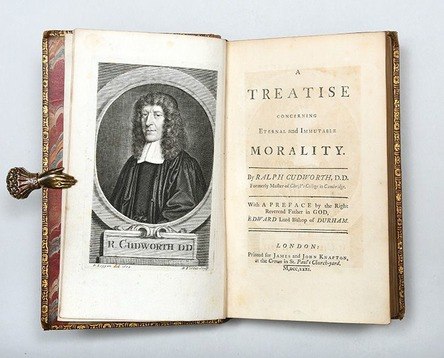
" The essence of nothing is reached unto by the senses looking outward, but by the mind's looking inward upon itself. That which wholly looks abroad outward upon its object is not one with that which it percieves, but it is at a distance from it, and therefore cannot know or comprehend it. But knowledge and intellection doth not merely look out upon a thing at a distance, but make an inward reflection upon the thing it knows... the intellect doth read inward characters written within itself."
"For knowledge is not a knock or thrust from without, but it consisteth in the awakening and exiting of the inward active powers of the mind."
It seems to me the capacities you point to here are not induced in us by the things we perceive, but are natural to animals like us. — Cabbage Farmer
You are right. I should have made it much more clear. It's not so much that Reid argued what I am saying, it's that I took what he was saying in this direction. His ideas caused me to take his arguments in this direction.
The objects incite in us an innate capacity to react to them the way do, because we are the creatures we are. We never see triangles in the world, we construct them out of imperfect figures. We don't see entire environments, but parts of it, we fill out the rest. We listen to sounds in a pattern which we call music, but which nonetheless are "just" sounds. And so on.
Apologies for the length of the reply, but I felt I had to respond in kind.
Great post by the way. -
You don't need to read philosophy to be a philosopherIn order to improve, to grow, one needs to interact with people who know more than oneself. — baker
Yes, that usually helps. And even people who "know less" in one particular area can also have much to say one wasn't aware of. You can learn from all places, but certain figures tend to more reliable.
the autodidact just sets the bar very low, and cuts himself off of everything that supersedes his current abilities and current knowledge — baker
There isn't one formula for everyone, just tendencies for better results. -
Do You Believe In Fate or In Free-Will?so I believe that there are certain things that it can do beyond our human understanding. — Lindsay
That has to be true. There's no other realistic alternative, I think.
But thank you for being so civil about it, not many people would be. This is the first post I've started so I appreciate that. — Lindsay
Sure! :cool: -
The Essence Of Wittgenstein
Sure, agreed.
Just pointing out that sticking to certain words like "justified true beliefs" can lead one to be captured by language. Which is true in many cases. -
You don't need to read philosophy to be a philosopherhuman relation to the world, which pretty much left the world out of the picture — Mww
I'd say that it forces us to think of what we call the "world" very differently.
As for the rest, excellent stuff. :up: -
The Essence Of WittgensteinWhy would Wittgenstein then say some philosophical problems are psuedo-problems, not real but actually instances of "bewitchment by language"? By the way, none of the articles I read on Wittgenstein provide concrete examples of this happening in actuality. — TheMadFool
Because philosophers get stuck in a word that may be totally misleading, thus getting stuck when a way out is manifest just by switching to another vocabulary. By switching such words, one switches one's way of thinking about the problem.
Take the word "thinking". We use it all the time, but it can be seriously misleading. Even though we use it, we're not sure about what it means. But if one assumes one does know, then one is infecting your philosophy to such an extent that you'll be willing to entertain the notion that machines can "think." If we don't know what thinking is for a human being, why apply it to machines, which are even further removed from us by many facts about nature.
Actually even the word "knowledge" is problematic, to such an extent that we even say that justified true beliefs constitute knowledge. But this is highly problematic. One can have a justified true belief, but not have knowledge:
Imagine you watch the finals in the NBA and team A beats team B. You saw it and reached this conclusion. Unbeknownst to you, what you were watching was a replay of a previos game in which the same team wins (team A) against the same opponent (team B). In the actual finals team A does beat team B, but you were watching a replay, not the actual game. So you had justified true belief, but it wasn't knowledge. -
You don't need to read philosophy to be a philosopherWell, whatever one thinks of Kant specifically is one thing, but to say he was concerned with words as opposed to the world is a mistake.
Yes he is very hard to read and it is a shame he couldn't be clearer in his Critique as it set forth a precedence of deep thought being connected to bad writing. This was then taken and abused by Hegel and company and is still an issue today. But Hegel pales to Kant.
Nevertheless, even if not Kant, the tradition he is involved (the Neoplatonist tradition which preceded him which said much of the same stuff) in and the problems he raised are substantial and of extreme philosophical depth, particularly the idea of "things in themselves" - to me anyway.
I think it would be unfair to say that he is stuck with confusing words with reality. -
Is personal Gnosis legitimate wisdom?
Knowledge is a problematic word, it's not very precise, it covers a lot of area and we can have it and not even be aware that we do, "knowledge by accident". So I agree with you in that one.
Yes, wisdom is a thing. The difficult part is in trying to express the insights you have into some form of coherent argument, in as far as that is possible at all.
It takes talent to do it well. Which is why my favorite part of all of Wittgenstein, for example, are the last few pages of the Tractatus, in which he kind of gestures at the mystical.
But expressing these things should not be impossible, in whatever manner one can.
Manuel
Start FollowingSend a Message
- Other sites we like
- Social media
- Terms of Service
- Sign In
- Created with PlushForums
- © 2026 The Philosophy Forum