
Comments
-
Psychological Impact of the Great DepressionMy father's ancestors were farmers. One of the features of farming in the late 19th into the 20th century is how often farmers moved -- not for better views, but because farms failed financially fairly often. Good land but bad economies. — BC
My ancestors were farmers too. They worked the land in Toledo and a region located in the south of Madrid, which no longer exists because it is urbanised. I understand what you are referring to -- farmers are often condemned to be here and there, like nomads. It is true that my family had never experienced a similar psychological impact to the Great Depression, but my grandparents recall the financial struggle after the Spanish Civil War or in the 1970s when Spain suffered an inexplicable inflation of prices.
Due to the reasons and circumstances expressed above, the next generations were always taught to avoid farming as labour or financial status. It is poorly treated and low paid. I don't know what your ancestors grew. Mine grew cereals and grapes. Very important products to feed the population, but they are paid very cheaply (as always), and the profits go to the supermarkets and intermediaries.
My point is that farmers have always suffered from failed financial status all over the world. -
What are your plans for the 10th anniversary of TPF?October 20th, 2015: I remember it well. — Jamal
Just over a month to go pals... :cool:
I think we might celebrate doing something. and all. -
Coronavirus
Exactly. My granny is 91 years old, and it seemed that the covid didn't even approximate to her. It is crazy how this virus works. Hopefully, we live in a very modern era, and scientists can overcome this virus quickly. -
CoronavirusI got infected with coronavirus. It is not the first time, though. Nonetheless, I feel this time it hit me stronger. There was a small wave of infections in Madrid for the last few weeks. I was exhausted as never before, and my muscles ached and cramped.
I thought: Fortunately, I am vaccinated. Otherwise, with this "new version" of Covid, I would be in serious trouble.
I will never understand anti-vaxxers. Do they wish to die from the coronavirus?
When the test marked that I was infected with coronavirus, I remembered all the people who sadly got infected before the vaccines were launched. What a complete tragedy the people suffered in 2020. -
What Are You Watching Right Now?This film shocked me in an indescribable way. What scared me the most is that it is based on a real-life story: the murders of Danish serial killer Dagmar Overbye.
The film is set on a black-and-white screen and in 1919 Denmark. The main protagonist did a very nice job, convincing. There are scenes which are "hard to swallow", and it might not be for all kinds of audiences.
Anyway, it is a great film.
-
What Are You Watching Right Now?@T Clark -- It's been a while since I recommended you a film. :cool:
I watched two amazing and unique Russian films this month. I am aware that Russian film directors are great and original, but I chose these two because of the difference in time span between them and the iconography used.
Come and See (Idí i Smotrí): a 1985 Soviet epic tragedy film directed by Elem Klimov. Klimov had to fight eight years of censorship from the Soviet authorities before he was allowed to produce the film in its entirety... The starring were two talented kids called Aleksei Kravchenko and Olga Mironova. The flim mixes surrealism with a bit of existentialism that we used to watch and read in Russian arts.
The other film is more recent but also interesting and worthy to watch. It is called Petrov's Flu.
Just before the start of the new year, Petrov's family gets sick with the flu. Then he meets a trickster named Igor who can mix the world of the living and the dead. The Petrov family begin to suffer surrealistic hallucinations and the line between reality and hallucination begins to disappear.
-
Currently ReadingBut I think this latest one is copied from el fin del mundo- it's the exact same town. — Manuel
Yes, that's true. I confused the titles of the books, sorry.
Absolutely, I enjoyed reading "comendador" and "crónica". I think "After Dark" is also really nice, and I've never read Norwegian Wood, which is one of his most famous works.
To be honest, I think Murakami is very good at writing short stories and essays. I read "Underground" last year, and it was amazing. He did a great job interviewing all the victims of the 1995 Tokyo Underground terrorist attack. However, when it came to novels, I (sometimes) believed that he wrote solely to please his fans and the Western market. -
Currently ReadingHad to drop the newest Murakami after reading 30% of the book, his quality has dropped quite a bit since 1Q84, this meditative side is very boring to me. — Manuel
I remember getting very sad and disappointed after finishing the book. He admitted in the book (Tusquets Spanish edition) that the new novel was a "cut and copy" from Crónica del pájaro que da vuelta al mundo.
I haven't read anything again from him since last year... -
Is a prostitute a "sex worker" and is "sex work" an industry?Recognizing it as an industry gives space for discussions about labor rights, safety, and respect, rather than just moral judgment or legal status. — PatriciaCollins
It would be hard for some to recognise and respect a sexual worker. For this reason, it is more important to give them [the prostitutes] a legal status. This can defend them from people who don't understand that prostitution is actually a job. Furthermore, it would help the girls to be more independent from the "pimps" or club owners. So, in my humble opinion, legal status goes before abstract ethical actions. -
Pederasty, Eros and Ancient GreeceShe suggests that one should be careful about taking everything Romans said about sex at face value. Romans, like everybody else, might exaggerate on occasion. (Well, everybody except me and thee.) — BC
Interesting!
Yes, I don't usually take the Roman writings as reliable. It is true that they exaggerate, and I don't think that the Roman soldiers in the Legion were the objects of endless orgies. For this reason, I wanted to take the Greek testimonials as more accurate to the time we discussed. -
Pederasty, Eros and Ancient GreeceThey probably did, but while the institution of man/adolescent relationships included a sexual element, it was also a civic mentoring relationship. It existed to reproduce the ruling class. Your local plumber in Athens did not take on an apprentice that included sex on the side. This was a ruling class activity, guided by rules, enforced (more or less) by other members of the elite. — BC
Furthermore, I also read that prostitution was low-class because the prostitute didn't have anything to offer but just sex. It is interesting to distinguish between those young boys who were sexual offerers and the young boys who were just "innocent" or learners of the old men. Surprisingly, it was accepted by the Greek culture the latter, because it was fine for the people to have sexual interactions with minora if they weren't "corrupted" in both spirit and body. While a young boy offering sex in exchange for money was not well seen at all. It wasn't until Plato that some basic sense needed to exist regarding the minimum age for that kind of relationship.
For the reasons expressed above, I think that pederasty, in an Ancient Greek context, could be seen from two different perspectives: ethics and aesthetics (eros). I think Plato explored the first option, and he got really mad at those vicious members of Crete.
Plato and Aristotle weren't writing for brick layers and plumbers; the Age of Pericles wasn't for the slaves or the free workers. That's pretty much the usual and customary relationship between culture and class throughout history, including the present moment. — BC
Yes, that's right, but according to those authors, the relationships were never forces; or there isn't proof of that at least. I think this is important, because it was a specific way of interaction, and philosophers were interested in it.
The high level of literacy and communication tools today allows for people like you and me (who will always have to work in order to live) to engage in discussions about 'elite topics'. But we aren't members of "the elite" because we lack the wealth, credentials, opportunities, relationships, and so on that characterize elites. We are not "movers and shakers" as the expression goes. The elites have always been the tip of the social pyramid. — BC
Exactly.
We just don't know much about what life was like in Greece and Rome for the vast majority of the population. The classical era's proletariate wasn't the topic of a lot of writing from the period. Alas. — BC
Do you think the erômenos (younger male) were part of the classical era's proletariate?
"Pederasty, Eros and Ancient Greece" — BC
Thanks! I am pleased with your replies and contributions to this thread! :smile: -
Pederasty, Eros and Ancient GreeceWhat in God's name were they thinking? — BC
I thought the same. But I ended with the conclusion that they were not ethically bad. It was a widely accepted practice amongst Ancient Greek society, and most of them considered it good and acceptable. Yet everything changed when Plato wrote about it in "Laws" when he argued that there should be a limit on the age of sexual relationships between men.
Nonetheless, everything really changed when the Greek Orthodox Church started to have more power in Greek culture and education -- they rejected any kind of sexual affair that wasn't just for procreation objectives.
It is important to show the art done by goldsmiths: they just represented what was commonly done in their era.
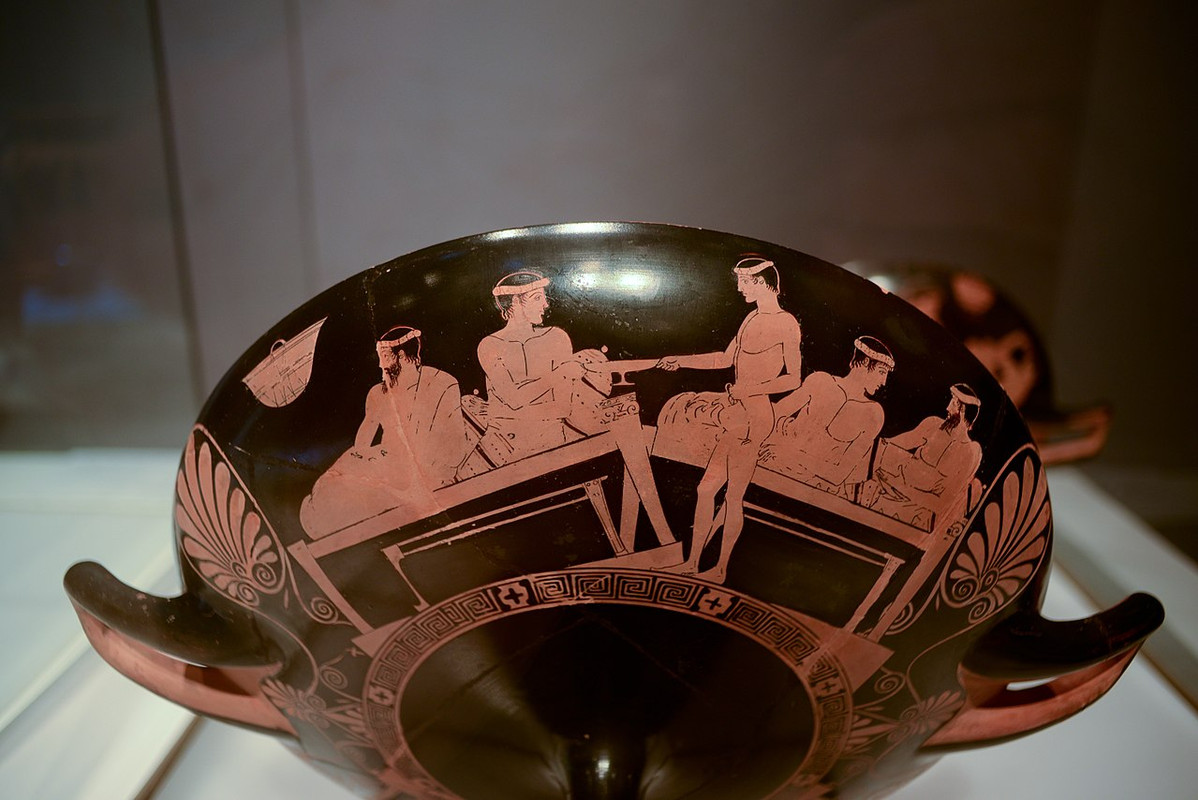
-
Pederasty, Eros and Ancient Greece
BC! I am pleased with your reply. I honestly thought about you when I started this thread because I know that you took classes on Ancient Greek. We talked about this in the past in the shoutbox.
OK -- coming back to the thread:
I agree with the point that rich and powerful men had affairs with young boys because they ended up bored in their marriage. Nonetheless, if they got tired of their respective wives, why didn't they pay for the services of a prostitute? This point is also explored in the books I quoted above. Perhaps it was more accepted amongst Greek society to be a master of young boys -- and these innocent kids pay them back with sex because it was the correct way to proceed.
There was a time-limit for the young man and older man: after the young man reached a certain age, he was supposed to take his place as a heterosexual man with a wife, etc. — BC
Exactly. When the young boys started to have beards or their voices turned deep, they ended up rejected by their "tutors" or old lovers. Some students and experts of Ancient Greece agree that the young boys were never forced to have those affairs, and most of them were in the teenage span. They were not kids.
The Greeks engaged in pederasty -- relationships between adult men and mid-to-late adolescents. — BC
And theese relationship were consented -- it wasn't an abuse of power by the adult men.
While a lot of Americans make no distinction among pedophilia, hebephilia, and pederasty... — BC
Hey! I had the same issue, so I had to read on the Internet the distinction between them. :sweat: -
Currently ReadingThe Transylvanian Trilogy: Volume III. You are torn to pieces. by Miklós Bánffy.
Excellent! I really enjoyed reading this trilogy. I learnt many things about the Austro-Hungarian Empire and why the First World War happened. A great compilation of witnesses from that period of time. :up: -
What is a painting?Another rabbit hole: constructed emotion theory and aesthetic experience. — praxis
A rabbit hole we can jump into, if you wish. :wink: -
The Philosophy Forum Files (TPF FILES) - The Unseen Currents of ThoughtIt comes when the time is right. I feel it could be sooner than later. I want to wait a little bit longer, to see what may happen before Entry 001. There is still potential in the air that could change it's direction or focus. I want to exhaust it before the start. The first entry is important, I believe and sets the path on its way — Kizzy
Understandable! Take the time you need, Kizzy. It is important to do the things right!
I will ask: Would you consider yourself a patient person, overall javi? How have you occupied your time the past few weeks, here? Any thoughts on the latest threads? — Kizzy
Those are very good questions.
1. I have never been a very patient person, to be honest. It is something that I could work out with time. I believe that the older you are, the more patient you become. I think I can consider myself a patient person right now, but it is true that it is hard for me to wait for something that interests me, like your files and this very interesting thread.
2. My past few weeks here were exciting. I even started a thread. I think I was very active in July all along. I had fun in different threads, but The Shoutbox conversations were my favourite part.
3. No, I don't have any thoughts on the latest threads. They are interesting but very complex to me. It is true that @kirillov's OP on suffering is very appealing because it stimulated me to reread Kierkegaard, and I very much appreciate this.
Do you know what thread you last bookmarked? Or what thread do you have a recent draft saved for? — Kizzy
I only bookmarked 'currently reading' thread. I think I have never bookmarked anything else.
No, I haven't saved any draft for the moment. -
The Problem of Affirmation of LifeNietzsche says bad readers haven't read him, — DifferentiatingEgg
OK. -
The Problem of Affirmation of LifeFolks keep posting thoughts and comments about Nietzsche or Schopenhauer when the OP clearly stated that their philosophy no longer satisfies him. So, there is no solution for the moment. He just asked us what to read now, not what you guys think about these German boys. :grin:
-
The Problem of Affirmation of LifeThis is Schopenhauer's point. — frank
Yes, but @kirillov doesn't see Schopenhauer's point as really satisfactory. I think the solution might be to recommend other readings or philosophers, as I did with Kierkegaard. Furthermore, I honestly believe that K is more relevant than Schopenhauer regarding the understanding of angst, dread, or suffering. But I guess that he is often not mentioned because some think he was actually a theologian. -
The Problem of Affirmation of LifeHello kirillov, welcome to TPF. If those ideas haven't satisfied you, I guess it is time to move on and search for new ideas that can inspire you. I see you have read both Schopenhauer and Nietzsche. Didn't you try Kierkegaard? And before him, there is also Hegel.
I understand that Kierkegaard could be complex. I admit that it took a lot to understand him, and not always satisfactorily! Depending on translations and context, I think it would help you his works on anxiety/dread/angst.
The Concept of Anxiety is one of his most known and notable works, yet I liked Fear and Trembling more.
Fear and Trembling speaks of many of Kierkegaard's most well-known concepts, such as the absurd, knight of faith, single individual, teleological suspension of the ethical, three stages, tragic hero, and so on.
On the other hand, if you enjoy reading novels, Dostoevsky is also a good choice. -
Currently ReadingUna magia modesta by Adolfo Bioy Casares.
A collection of fabulous short stories written with the excellence that Casares was known for.
Jungle Tales by Horacio Quiroga.
A beautiful compilation of fables. Some of them are infantile, but they are pretty good. Quiroga was one of the most important narrators of Uruguay. -
Why are 90% of farmers very right wing?Below are two maps (neither of them up to the minute current) that display the correlation between rural / conservative and urban / liberal — BC
Why is Alaska more conservative than the average? I thought it was a very cold, dry territory, far from being farmland, and the towns are necessarily urban to provide power to people. Furthermore, Alaska also has small islets, right? So it can promote the fish economic sector. I don't know. I believe the territory and circumstances of Alaska are different from Arkansas and Utah. -
The News DiscussionRIP Ozzy Osbourne!
He was a great musician, but we will remember him most for the bat incident.
Ozzy Osbourne is famously known for biting the head off a live bat during a concert on January 20, 1982, at the Des Moines Veterans Memorial Auditorium (now Iowa Events Center).
Osbourne claimed he thought the bat was a rubber prop and only realized it was real when he bit into it, leading to a significant amount of blood in his mouth. He later had to receive rabies shots, which he described as painful and unpleasant.
RIP mate. -
On Purpose
-
What is a painting?If that were so, then the intent of the chap with the roller is what decides if the wall is art or not... We would need to ask him his intent. — Banno
That's exactly what I personally think. We should ask the author if what he creates is art or not, apart from what we (spectators) may believe. -
What is a painting?Hmm... :chin:
Is it a painted red-coloured wall?
The main difference is that the first is intended to be 'art', but the second is just decoration.
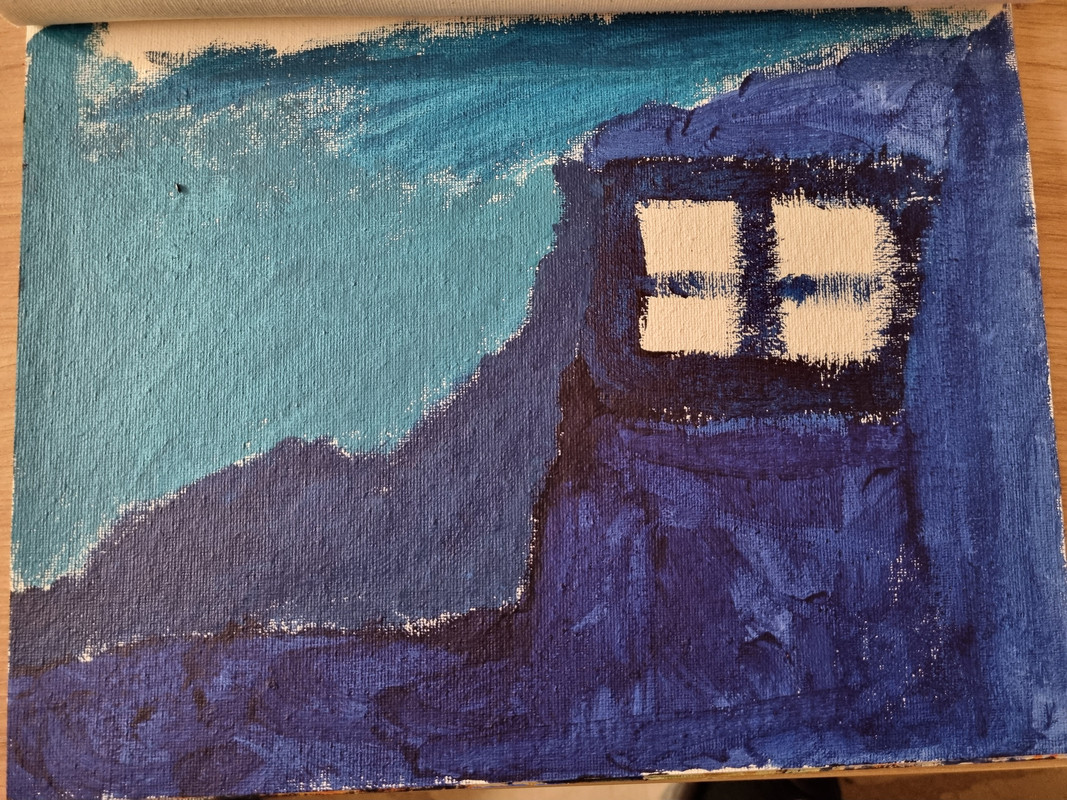

javi2541997

Start FollowingSend a Message
- Other sites we like
- Social media
- Terms of Service
- Sign In
- Created with PlushForums
- © 2026 The Philosophy Forum