
-
Ukraine CrisisEducation in Russia has some big problems, primarily funding. As the OECD overview I linked to says, "spending per student is still low, about half of the OECD average". And as you say, many rural schools have closed. I don't know for sure, but this latter fact could be associated with rural depopulation (which is obviously not to let the state off the hook in any way, if levels of education are deteriorating).
It's easy to miss the smaller communities/villages, rural and countryside areas of Russia when evaluating the educational system in Russia since most of what we see is the front view of the major cities and the illusion of national wealth that they demonstrate through that image. — Christoffer
"As of January 1, 2021, 109.3 million inhabitants lived in Russian cities, opposed to 36.9 million people living in the countryside."
https://www.statista.com/statistics/1009893/russian-urban-and-rural-population-size/
My point was about education, unbiased education as a foundation for people to be able to view their own nation's politics critically. If you get nothing but state-approved knowledge or live in a village where they shut down the school... what then? — Christoffer
So your point now is not the quality of education as measured by the widely-accepted standards of authoritative organizations such as the OECD. Your point is that Russian education doesn't allow or encourage students to be critical of the government. That's probably true, but that's not what you said. I think you built a Russophobic fantasy of ignorant subservient masses in your head and then attempted, and failed, to find academic studies proving it's true.
The best tertiary education is indeed concentrated in the major cities, and that's where all of the ministers and beaureacrats went to university. High quality education is no guarantee that students will be able to oppose the government. Those who are most loyal to the Russian government are among the best educated in the country. Your thinking on this is too simplistic. -
Ukraine Crisisin Russia students of 15 years of age demonstrate a level of knowledge “below average”
The paper you got this from is citing the Programme for International Student Assessment, which is an OECD study. The same study, for example, ranks Russia above Sweden in 2003–2015.
https://en.wikipedia.org/wiki/Programme_for_International_Student_Assessment#PISA_2018_ranking_summary
In the latest data Russia is around 30th. China is first. If you're wondering how Russia can change its politics, education isn't the primary problem.
See this PDF for an overall assessment of education in Russia: https://www.oecd.org/education/education-at-a-glance/EAG2019_CN_RUS.pdf
So, maybe not "little to no education", but I wouldn't call any of this quality. — Christoffer
I don't think you know what you're talking about. -
Ukraine CrisisBut a huge population in Russia has little to no education — Christoffer
Are you serious? -
Ukraine Crisis@Isaac @Christoffer
I asked you nicely many pages ago to be civil or else ignore each other. It’s hard enough to maintain quality in this thread. When you don’t comply I’ll delete the offending posts.
https://thephilosophyforum.com/discussion/comment/675963
If you have a problem with this, start a thread in the Feedback category. Don’t complain about it or attempt to justify yourself here. I’ll delete such posts. -
What are you listening to right now?If only authentic earthquake damage were desirable among record collectors.
-
The three philosophies underlying most Cyberpunk characters and plot pointsYes, it was similar for me. The only difference is that when I read them again decades later, the ideas didn't have anything like the same impact, and likewise the unbeautiful writing was more noticeable. I remembered that I'd been particularly blown away by one scene, but didn't remember any of the details. I never found that scene in my later reading.
-
The three philosophies underlying most Cyberpunk characters and plot pointsI think it makes sense, given that science fiction, including cyberpunk, is primarily about ideas.
-
Ukraine CrisisI can't access it. — baker
Yeah I don't know what's up with their website. It's been intermittently inaccessible for the last few days. I just kept trying and eventually got in. -
The three philosophies underlying most Cyberpunk characters and plot pointsI haven't read William Gibson or much else in the genre, so you should be highly sceptical about what I'm about to say.
After engaging with as much Cyberpunk media as I could find, I have been researching the intellectual and spiritual infrastructure that makes up these stories. — Bret Bernhoft
Those three philosophies are — Bret Bernhoft
ideals/philosophies — Bret Bernhoft
paradigms — Bret Bernhoft
It's interesting that you choose not to go down the literary route, where you would identify themes rather than ideals, philosophies, and paradigms. It's as if your analysis is "in-universe". So, you're looking at the stories from the point of view of the protagonists, or in terms of their motivations, rather than analyzing the stories as stories. This means that "whether any given force ... is working to support or destroy these ideals/philosophies" appears to be something merely incidental, something that gets in the way of the philosophies, but if you were analyzing the stories as works of fiction, in terms of themes, you would identify the theme of conflict as central--particularly between those who are denied cognitive liberty (etc) on one side, and high-tech capitalism, the faceless corporations, or whatever it is, on the other side.
Having said that, the "paradigms" or "philosophies" look good, and could stand as literary themes themselves. -
Ukraine CrisisIt's why there are eagles on the coat of arms of Russia.
As to what the prevaling myth of Russian exceptionalism is, I don't have any scholarly knowledge about it, I just sense the self-importance and absolute patriotism, which strikes a disaffected Brit as strange. I do know that the myth popularized by Dostoevsky of the special Russian soul is still popular. My mother-in-law told me I'd never really understand Chekhov because I'm not Russian. I say bollocks to that (I didn't say that at the time). -
Ukraine CrisisByzantium and Rome are much bigger in the Russian historical consciousness than you might think. The idea that Russia, particularly Moscow, is the successor of Rome, via Byzantium, has appeared now and then in Russian culture: https://en.wikipedia.org/wiki/Moscow,_third_Rome
It was especially popular when Russia was forming an empire, I think. It's quite significant. And I wouldn't be surprised if it had some currency today, with the revival of the church, but I'm not sure. -
Ukraine CrisisI see. Yes, there's some relationship there, in the Russian context, but I was just talking from personal experience about everyday people in everyday settings.
See, if you persist in your terse, cryptic style of posting rather than making clear and expansive arguments, you'll continue to confuse me. You still haven't told me which Western values caused the Russians to go a-conquering. -
Ukraine CrisisNotice how Marxists think of themselves as special — frank
Does that apply to everyone who thinks they have a good idea when that idea is not held by everyone? Need I mention the examples of the suffragettes, the Chartists, the 1790s Haitian revolutionaries, etc?
EDIT: I'm actually not sure why you brought up Marxists. The Soviet Union? When I talked about Russian exceptionalism I didn't have the Marxists in mind at all. Most of the Old Bolsheviks were internationalists opposed to all Russian chauvinism. -
Ukraine CrisisOne thing I kept coming back to with Russia was the way it's surprisingly similar to the US. They both have a strong apocalyptic streaks and that sometimes influences events. — frank
I keep coming back to that as well. Not particularly the apocalyptic streak, which I haven't thought about, but in other ways there are very strong similarities. It's mainly the exceptionalism, I think, and the assumption that they lead the world or should be doing so. (Obviously this is a gross generalization) -
Ukraine CrisisI meant that their greatest imperialistic efforts look more like an injection of western values than something home grown. Is that wrong? — frank
Peter and Catherine were famously influenced by Western Europe, and to the extent that their territorial expansion sought a status for Russia equal to the Western European powers, then I suppose you could say that Russian imperialism in the 17th and 18th centuries was influenced by Western values. But access to warm water and securing the mountainous bulwark of the Caucasus (although I think the latter was only completed in the 19th century, if it ever really was) seem more basic than that, and could be described as part of their competition with the West, as well as with other powers like the Ottoman Empire, rather than being driven by the West's values. In any case their embrace of Western values only went so far: Catherine resisted reforms as much as she enacted them, and doubled down on absolutism. But maybe you can explain which values you mean. So far you haven't really said.
This might be unfair, but I have a sneaking suspicion that your idea amounts to a kind of orientalism, sometimes found in popular English histories of Russia.
But I guess we're veering off topic. -
Ukraine CrisisYou need to read some good histories. Some aspects of Russian literature, music, and visual art require understanding the smoldering identity crisis that plagues the Russian culture. — frank
Thanks, I have read some good histories and understand the popular concept of the Russian identity crisis. I just didn't know what you meant when you said that "every time Russia has become imperialistic, it was because of European influence". You made an obscure or ambiguous comment, and yet you go on to assume, because I asked you what you meant, that you know more than me about Russian history. My knowledge of it might not be great, but I'm guessing it's at least as good as yours.
I don't see how, for example, Ivan 4's establishment of a tsarist empire can be put down to "European influence" any more than it can be put down to the existence of the successor states of the Golden Horde. But if you just mean that Russian imperialism has always taken place partly against and in the context of the actions of countries and empires to the West of Russia, then yes, of course--and later, against European empires competing for control in Asia (the Great Game). -
Ukraine CrisisIf you want to have your posts go uncontested write a fucking blog, this is a discussion forum, expect to have your comments challenged. — Isaac
This is what I mean, get lost. — Christoffer
Please either be civil to each other or ignore each other. -
Ukraine CrisisI think every time Russia has become imperialistic, it was because of European influence. — frank
I don't know if this fits with my knowledge of Russian history. But then, my knowledge of Russian history isn't great. How do you mean? Peter the Great?
It's a little counter to its basic nature to have to go out and conquer someone else, as you said, because of geography. — frank
I would think it's precisely because of its geography that its imperialism, defensive though it might significantly have been, has very much been part of its basic nature. Having said that, I don't know if it's useful to talk of a basic nature.
Anyway, although it hasn't had to sail around the world to do its conquering, and hasn't done it as much as some other European countries, even so, in its region it's done plenty of it, otherwise it would still be the land- and ice-locked Grand Duchy of Moscow. -
Ukraine CrisisI also read Russian comments to the effect that return to empire isn't possible in the short term, but they seemed to have the impression that that's Putin's goal. Do you think they're wrong about that? — frank
Yes and no. I think he wants a sphere of influence, and that to me can be described as imperialist, rather in the same sense as the USA has been accused of being imperialist despite their not having an empire as such. But bringing some kind of Russian empire back to formal existence is likely not a goal. Such geopolitical formations are an anachronism, too difficult to maintain in the modern world, and could not be tolerated internationally. As it happens I also suspect it's wrong to see the Soviet Union as merely another Russian empire, a continuation of the actual Russian Empire just with a different flag and ideology, even though the Soviet Union was obviously dominated by Russia. I'd probably have to do some reading to make that argument though.
I haven't come to a firm conclusion on the subject. Russian imperialism was always significantly defensive, due to geography (I feel I have to point out that this is a consensus among historians and not any kind of justification), and that is certainly a big factor in what is happening now. And then there's Putin's speeches denying the separate nationhood of the Ukrainians, which I think express his actual beliefs. So you could certainly see this war as a continuation of Russian imperialism. -
Ukraine CrisisI read it again. I'm not accusing you of anything. What I said was that Putin's noble sentiments about democracy and liberalisation haven't been at all mirrored in his actions. — Wayfarer
As I think you didn't miss, I made that very point.
So I think he was lying when he waxed eloquent about 'the importance of democracy' — Wayfarer
As I said, it's likely a bit of both. I think he really did at one time expect and desire that Russia go down the route of liberal democracy in the style of Western Europe. The difference in his explicit position on these issues between then and now is striking, and important to understand.
What perspective does it provide? He hasn't demonstrated any real commitment to democracy or liberalisation. — Wayfarer
He has shown commitment to economic liberalization, in that he has not significantly reversed the chaotic transition to capitalism that happened in the nineties, except for his authoritarian control of the oligarchs. But anyway, the perspective that it provides is, among other things, to put the widely distributed snippet of the speech in context, which was exactly what I wanted to do.
It also gives an insight into what he thought was important to convey to the Russian people and governing elite at the time, which says something about the political and social environment in 2005. There is much more to be drawn from it to enrich your perspective, but I won't bother going on. I get the feeling you genuinely don't want to know. Like a child with hands over his ears, you seem to hate seeing any reasonable-seeming words by someone you want to see only as a monster. But if you feel you have to falsify, or to hide or ignore important information, to make your point, that just detracts from the point.
And if his ambitions in conquering Ukraine are not imperialist, then what are they? — Wayfarer
I'm not saying his ambitions are not imperialist in some sense, but it's a complex question. My point was that the recreation of the USSR is a fantasy mostly of the Western media; that his mourning for the USSR was a conciliatory acknowledgement that Russia suffered in the nineties because of the bad handling of the Union's dissolution, rather than a clue to imperial ambitions. The context makes it clear that even if he does now have imperial ambitions, that quotation has nothing to do with it, i.e., it is not the seed of his later change of direction or of his secret plans.
No, it was an attempt not to lose sight of the actuality on the ground, for those living through it, which seems rather more important than a lot of the bickering going on. — Wayfarer
That we shouldn't lose sight of what's happening doesn't mean that's all we should be discussing, because there are geopolitical and historical aspects to it as well. You don't seem to have anything to say except to repeat the news, as if nobody else has seen it, and to express your outrage. I don't understand that. I mean, fair enough, carry on--but don't pretend that everyone who you might regard as not being on your side is denying what is happening in Ukraine.
I think you want to say that quoting a reasonable-seeming speech by Putin is supporting Putin, but you can't say it because deep down you know it's bollocks. -
Ukraine CrisisThat is a very weird response. I showed you the courtesy of presuming you were actually interested in a discussion. But anyway, I was really just using your comment as a prompt to talk about a quotation that has been thrown about a lot in the media recently.
You seem to be implying that I quoted the speech as some kind of defence or mitigation of Russia's actions. This is an ugly and stupid accusation, if that's what you meant. Perhaps I should go back to staying out of this thread.
I was explicit in saying that I wanted to put the quotation in context to reveal its meaning, and also to argue against the conclusion that some people draw from it, namely that Putin wants to recreate the USSR. It's important to try to understand the motivations of the Russian state if you want to understand the geopolitics. You can go on reminding everyone about the horrors of the invasion if you like, but please don't try to present me or others as defenders or deniers of this horror without evidence.
There are people just like us in Urkaine - parents with families, wage-earners, people just trying to get along, make a living, live their lives, whose homes are destroyed, loved ones killed, families separated, cities in ruins. And for what? Let's not forget that. — Wayfarer
Is this addressed to me? The patronising ignorance and sanctimony is insufferable. I and my wife have several Ukrainian friends both in Russia (whose families are in Ukraine) and in Ukraine who have been affected by this war, forced to leave their homes or to spend half their time in bomb shelters. And you lecture me about it? I confess I'm tempted to resort to StreetlightX-style invective at this point, but I won't.
We have all seen the news. This discussion, on the other hand, can be about geopolitics, history, and so on, if that is what certain members like me want to focus on. Don't accuse these members of defending Russia just because they're not interested, like you, in displaying their moral outrage. -
Ukraine CrisisAgreed. I thought it was worth putting it in context anyway, because it's thrown around so much by people who seem to have little knowledge of Russia or the Soviet Union--nor, sometimes, an understanding of the difference. (I don't specifically mean you @Wayfarer).
-
Ukraine CrisisMy view is simply that the Russian invasion of Ukraine is unjustifiable, unwarranted and fundamentally criminal. It has resulted in thousands of deaths already, massive destruction of cities and homes, and the displacement of millions of people. That is not 'western propaganda' ... — Wayfarer
I agree. I'd guess that Street and Benkei pretty much agree too (though they may have something to say about "criminal"), but their focus and priorities are different.
nor is the war a consequence of western foreign policy meddling - it came about solely because of Putin's resentment at the demise of the USSR and his vain attempts to restore elements of it into a greater Russia. — Wayfarer
The idea that the war happened "solely because of Putin's resentment" is unconvincing and I won't address it. What I'd like to look at is the oft-repeated idea that Putin mourns the end of the USSR. My point in a nutshell is that he probably mourns the loss of his country's power, but that he neither aims to recreate the USSR nor has any commitment to communism or socialism.
It mostly stems from this quotation: "Above all, we should acknowledge that the collapse of the Soviet Union was the major geopolitical disaster of the century."
How many of those who make conclusions based on this snippet have read the whole speech or know when this speech was made? Very few, probably, even on this forum.
I think it's worth looking at the speech to put the quotation in context.
The full speech, made in 2005, is in English on the Kremlin website: http://en.kremlin.ru/events/president/transcripts/22931
I consider the development of Russia as a free and democratic state to be our main political and ideological goal. We use these words fairly frequently, but rarely care to reveal how the deeper meaning of such values as freedom and democracy, justice and legality is translated into life.
[...]
Above all, we should acknowledge that the collapse of the Soviet Union was a major geopolitical disaster of the century. As for the Russian nation, it became a genuine drama. Tens of millions of our co-citizens and compatriots found themselves outside Russian territory. Moreover, the epidemic of disintegration infected Russia itself.
Individual savings were depreciated, and old ideals destroyed. Many institutions were disbanded or reformed carelessly. Terrorist intervention and the Khasavyurt capitulation that followed damaged the country's integrity. Oligarchic groups – possessing absolute control over information channels – served exclusively their own corporate interests. Mass poverty began to be seen as the norm. And all this was happening against the backdrop of a dramatic economic downturn, unstable finances, and the paralysis of the social sphere.
[...]
In those difficult years, the people of Russia had to both uphold their state sovereignty and make an unerring choice in selecting a new vector of development in the thousand years of their history. They had to accomplish the most difficult task: how to safeguard their own values, not to squander undeniable achievements, and confirm the viability of Russian democracy. We had to find our own path in order to build a democratic, free and just society and state.
When speaking of justice, I am not of course referring to the notorious "take away and divide by all" formula, but extensive and equal opportunities for everybody to develop. Success for everyone. A better life for all.
In the ultimate analysis, by affirming these principles, we should become a free society of free people. But in this context it would be appropriate to remember how Russian society formed an aspiration for freedom and justice, how this aspiration matured in the public mind.
Above all else Russia was, is and will, of course, be a major European power. Achieved through much suffering by European culture, the ideals of freedom, human rights, justice and democracy have for many centuries been our society's determining values. — Putin
NOTE: This is the Kremlin's official English translation and it has "the collapse of the Soviet Union was a major geopolitical disaster of the century", whereas most English renderings I've seen have "the major geopolitical disaster". Since Russian has no articles (no the or a) I don't know how the different senses in English are conveyed in Russian. My feeling is that the better translation is "the", because "the collapse of the Soviet Union was a major geopolitical disaster of the century" is subtly not conventional English. We might say, "the collapse of the Soviet Union was one of the major geopolitical disasters of the century", but that's not what he said.
From the same speech:
In my opinion a third important task is to pursue vigorous policy in promoting liberalization in private enterprise.
[...]
Stability of the right to private property is the alpha and omega of any business. The rules to which the state adheres in this sphere should be clear to everyone, and, importantly, these rules should be stable. This enables people developing their business to plan normally both this business and their own lives. This allows citizens to feel comfortable and conclude, without any apprehensions, contracts on such vital issues as the acquisition of housing or its privatization, which has already been almost completed in our country. In general, this encourages people to buy property and expand production.
[...]
And finally, one more crucial problem: Russia is extremely interested in a major inflow of private, including foreign, investment. This is our strategic choice and strategic approach.
[...]
I also wanted to raise another, very specific, issue here today, namely, what must be done to ensure that national television fully takes into account Russian civil society’s most relevant needs and protects its interests. We need to establish guarantees that will ensure that state television and radio broadcasting are as objective as possible, free from the influence of any particular groups, and that they reflect the whole spectrum of public and political forces in the country.
The speech is interesting in many ways. What's most striking is how his views have changed, and how absurd it is now to see his celebration of democracy, press freedom, and so on. It's also important to see how focused the speech is on Russia alone, not some possible union of formerly Soviet nationalities, which are barely mentioned, and never mentioned by name. And there is no accompanying claim of hegemony or pre-eminence over the Soviet republics, which, taken at face value, indicates that his regret about how the USSR fell apart is not at the same time a desire for its recreation.
To a Russian audience, the quoted line is simply an acknowledgement that the USSR fell apart chaotically and did a lot of damage to Russia. Gorbachev, a committed Leninist, is very unpopular in Russia for this reason.
But the central point I want to make is that if one takes the "geopolitical disaster" quote to mean that Putin was expressing a desire to return to the Soviet Union in a speech that sets out a plan for the consolidation of Russian capitalism and liberal democracy, one is taking it out of context and thus distorting its meaning, to put it mildly.
If one thinks he was serious about liberal democracy and capitalism, the "geopolitical disaster" quote couldn't have expressed a desire to bring back the USSR, but if one thinks he was lying, just telling people what they wanted to hear or justifying the enrichment and power of the elite, why then would one take seriously the bit about the "geopolitical disaster"?
I happen to think it was a bit of both, but mostly the former.
https://www.academia.edu/26869581/A_matter_of_honor_Russias_reaction_to_Western_sanctionsWhen the Soviet Union was dissolved, most of us didn't even have the feeling that the country was falling apart. We thought we would continue with our lives as in the past, but as good neighbors. Of course, we also believed that the West loved us and would help us, and that we'd be living like the Europeans in ten years. But everything turned out to be more complicated — Vladislav Surkov, former personal advisor to Vladimir Putin, in 2005
On the other hand, those who say that Putin wants to rebuild the USSR might mean only that he wants to re-create an empire, not that he's any kind of communist. But even this is doubtful, and pretty much dismissed as an impossibility by all sides within Russia, even the Communist Party of the Russian Federation, I think. A sphere of influence is not the same thing as an empire.
There is more to say, so it's just possible that I'll follow up this post with a part 2, but I probably won't. -
Philosophy of sexI agree with Tobias. If you're interested in the philosophy of sex:
https://iep.utm.edu/sexualit/
https://plato.stanford.edu/entries/sex-sexuality/ -
What type of figure of speech is "to see"'Cat's pajamas' is a figure of speech. — Bitter Crank
I've just realized that "the cat's pyjamas" means the same as "the dog's bollocks". -
What type of figure of speech is "to see"I think it's a conceptual metaphor. Another example is talking of time in terms of space: move the meeting forward to next week. In calling these conceptual, the claim is that this is not only how we talk--a set of convenient outward expressions--but also how we think.
The most famous theorist of this stuff is George Lakoff, who (with Mark Johnson) wrote Metaphors We Live By.
Here's a paper by Lakoff and Johnson (PDF): Conceptual Metaphor in Everyday Language. It gives an idea of how deeply metaphorical our language (and our thinking) is. -
PropagandaI see what you mean. But a propagandist aims to do more than get people to agree with him; he wants to make you do something, or go along with something. And surely it's also about the simplicity of the communication, its rhetorical, sloganeering nature?
Anyway, I'm not going to fight hard for the "neutral" definition. It just seems to work for the things I commonly regard as propaganda. -
PropagandaI don't think presenting only one side of the story, or trying to influence behaviour and gain support for a cause, are always bad, and in that sense the definition is neutral, as opposed to the pejorative definition under which propaganda is always bad.
Whether propaganda is always deceptive in some sense, I'm not sure. Groups of people fight for their interests, and part of that effort is spreading their agendas, without spreading those of their enemies. This is inescapable in societies that allow contestation. Of course, we might expect that, for example, journalists who are covering these conflicts should present both sides and avoid propaganda. -
PropagandaIdeally, education equips you with a wide range of knowledge and opinion, allowing you to make up your own mind. Propaganda is always one-sided. Of course, educational institutions and education policy can be used for propaganda purposes as well.
-
What is a SUPER literature work like and how to achieve itYeah it's really weird and surprising to me how many people on this forum cannot set out their paragraphs properly. All it takes is an extra hit on the Return key.
-
PropagandaI prefer the neutral definition of propaganda, under which it is not necessarily about spreading falsehoods, but is primarily meant to change minds, influence behaviour, or gain support. Public health campaigns fit under this definition. I find this anti-alcohol poster quite effective:
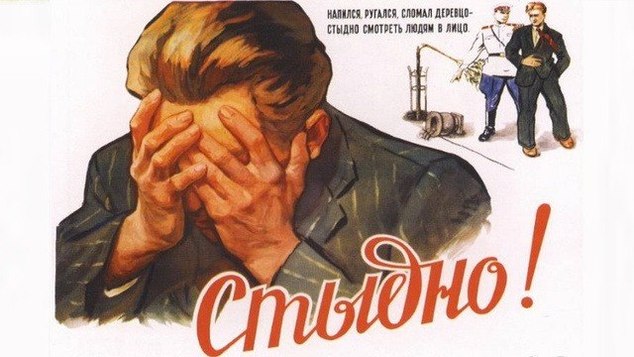
What shame! He got drunk, swore, smashed a tree and now he's ashamed to look people in the face
Although it's not spreading falsehoods, it does present only one side of the story.
Jamal
Start FollowingSend a Message
- Other sites we like
- Social media
- Terms of Service
- Sign In
- Created with PlushForums
- © 2026 The Philosophy Forum