
-
The Strange Belief in an Unknowable "External World" (A Mere Lawyer's Take)Bees perceived flowers differently to us.
Therefore flowers do not exist.
Something's missing. — Banno
No one has argued that.
What I'm arguing is that the approach of the OP is not naive (direct) realism. It sounds Kantian to me. Per the OP and subsequent clarifications there are said to be external objects and then there are perceptions. How the perception correlates to the external object is left to the unknown. It's being argued that bees have phenomenal states of flowers and people do as well, but they need not be at all similar.
I ask how this is not identical to saying the flower itself is noumenal and unknowablre, yet the experience is the phenomenal and all that is knowable?
The flower itself most certainly exists under this construct, but it's unknowable. That's what saves Kant from pure idealism as it does the OP.
I think something like the Thomas Reid quote better describes naive realism than what is argued here. -
The Strange Belief in an Unknowable "External World" (A Mere Lawyer's Take)For me, there's no "external world." There's a world of which we're a part. There isn't one world for us and another world for everything else. We see red because we're a particular kind of living organism existing in the world which, when interacting with certain other constituents of the world, see them as having what we call a "red color." That takes place in one and the same world. It's a function of what the world is and what it encompasses. — Ciceronianus
I don't take this to be direct realism/naive realism. It implicates the noumenal and doesn't correlate it to the phenomenal. If you allow that the actual flower is causative of the phenomenal, then the variations of perception among species can only be accounted for by how each mediates the external object, this leading to indirect realism.
Direct realism I take to be something like Thomas Reid's statement:
"The sceptic asks me, Why do you believe the existence of the external object which you perceive? This belief, sir, is none of my manufacture; it came from the mint of Nature; it bears her image and superscription; and, if it is not right, the fault is not mine: I even took it upon trust, and without suspicion. Reason, says the sceptic, is the only judge of truth, and you ought to throw off every opinion and every belief that is not grounded on reason. Why, sir, should I believe the faculty of reason more than that of perception?—they came both out of the same shop, and were made by the same artist; and if he puts one piece of false ware into my hands, what should hinder him from putting another? "(IHM 6.20, 168–169)
This eliminates any argument from reason that what you perceive lacks existence in the form in which you experience it because it refuses to allow reason to over-rule perceptions.
I'm not sure I find this persuasive, but this I take as a defense of the naive realist position. -
The Strange Belief in an Unknowable "External World" (A Mere Lawyer's Take)Of course the bees seeings and our seeings are not the same; but it does not follow from that that we don't see the same flowers as the bees — Janus
What is the flower other than how we perceive it? If it's something else, what is it? -
The Strange Belief in an Unknowable "External World" (A Mere Lawyer's Take)It's unsurprising that our interaction with a flower (which results when we see it, smell it, grow it, etc.) differs from that of a bee and a flower. The difference is the result of the fact we're entirely different creatures, but living in the same world. — Ciceronianus
What do you mean by "the same world"? This implies the flower is the same to me and the bee, but you've said otherwise. The question then is to describe those features of the flower that are the same regardless of the perceiver. -
The Strange Belief in an Unknowable "External World" (A Mere Lawyer's Take)All living things incapable of immediate experience of the universe, yet living in it. It's a remarkable belief indeed, one that is premised on a belief that we can't "really" know anything. We somehow stumble through our lives ignorant of the inaccessible real, it seems. — Ciceronianus
Only if you define knowing what a thing is as that which you can successfully interact with do you avoid the problem that bees perceive objects differently from humans, and perhaps treat and react to them quite differently than humans, do you avoid the problem that they know the objects differently.
It's undisputed that bees perceive flowers differently than humans, and it's undisputed that both are fully able to navigate flowers successfully. That a flower is X to a bee but Y to a person begs the question of what is a flower. Is it X or Y? Is it whatever I believe it to be so long as it facilitates my survival? -
From Meaninglessness To Higher LevelMeaning is what we discover when we look. Days pass and the years vanish, and we walk sightless among miracles.
I don't take credit for that last sentence. -
Receiving stolen goodsI'll just add in for whatever it's worth that there are distinctions from jurisdiction to jurisdiction within the states (under US law) and differences between pizzas and commercial paper (like holders of fraudulent checks). So, it just all depends.
You might recall when Bernie Madoff was handing stolen money from one innocent nvestor to another, they were required to return it to the rightful owner, so being a good faith holder of funds doesn't protect you just because you're in good faith. -
Torture and PhilosophyIt's a question of scale. — Banno
It's all a question of degree. All nations imprison people. Removing me from my loved ones, eliminating my ability to contribute anything to the world, dictating my every move, housing me with those who wish me harm, is that not the worst torture imaginable? Is that more humane than 20 lashes? -
The Problem with Monotheism?Still the question remains as a plurality of gods allows for more specific investigation though. — I like sushi
I'm not entirely opposed to the idea of metaphysical pragmatism where you posit the existence of something because a belief in that thing might make your life more meaningful or understandable, but I would reserve such pragmatics for instances where it would not violate other beliefs I adhere to.
What I mean by that is that typically we say something exists because we have some evidence of its existence. I believe the cup exists because I see a cup. I don't say that I believe a cup exists because I one day may need to have a drink, so it would be comforting to know there is a cup out there somewhere.
What you've done is to say you have no particular evidence of various competing gods existing in the world, but it would helpful in your understanding of the world to think that such gods do exist, so you therefore do. Such is pragmatism. The problem is that if you posit these actual physical gods engaging in battle with one another and existing in human form, you need to show them to me, tell me where they live, explain their reproductive systems, and all sorts of other matters. Because you can't do that, your positing their existence violates the epistemological system you use for knowing other similar matters. That is, you know the cup exists by seeing it, but you don't know these gods exist by seeing them; therefore, you have no consistent standard for knowing. I would not allow for a pragmatic solution that makes no sense when compared to my overall worldview.
And this is actually one very good reason for monotheism and a highly abstracted god. By not demanding any physical property or anything that would otherwise be provable in the mundane universe, a belief in such a god avoids violating the epistemological system you use to know other things in the universe. God, under this definition, would be unlike all else in the universe and could therefore be accepted as existing for pragmatic reasons without violating my epistemological system and so could be believed just because his existence makes your life more understandable.
I'd also point out that the acceptance of God for pragmatic reasons sounds as close to a secular basis for religion as might exist. It avoids mysticism or faith, but, if God is truly believed to exist for pragmatic reasons, it then must be actually believed. That is, you would say God exists in a true metaphysical sense just because you feel better thinking he exists. You would know God exists just like you know the cup exists. -
The Problem with Monotheism?In polytheism the gods engage and interact. They are alive and never completely right or wrong. They are relatable to human life. In monotheism we are expected to believe something beyond comprehension (which is contrary) whereas in polytheism we can view the theatre of the gods as reflecting human culture and express each human item more readily and carefully. The overarching problem of the monotheistic cultures is that they are considered ‘beyond’ human experience yet we’re meant to live by the rules and doctrines of that which is literally ‘above us’. — I like sushi
You are drawing a distinction between anthropomorphic gods and non-physical gods and perfect gods and flawed gods, but you are not drawing a distinction between polytheism and monotheism. It is entirely possible for a monotheistic god to have all sorts of flaws and to be in human physical form, and it's entirely possible for a particular polytheistic god (or gods) to be omnipotent and entirely non-physical.
Yahweh is given human characteristics in the Bible and it can be argued he was far from perfect. -
BanningsTo those concerned with being banned, I do want you to know that, barring some extreme behavior, it's usually a process where you receive a PM and there's a discussion and eventually a warning and then a ban. It's not like you're going to try to log in one day and not know why you can't get through. I say that just so you know we're not trigger happy and we do want people to be here and enjoy the site and we're not just looking for a reason to make your life difficult.
The internet is a great big place and not everyone comes here with the purest intent, so we have to police it for those who are here and want a quality place to visit.
The rules are pretty clear and getting banned takes some amount of intentional effort. We've not really had anyone surprised by their ban. -
Does reality require an observer?An observer is needed in order to make an observation.
Reality doesn't care if you are looking or not. — Banno
We know then that reality is unimpacted by the observer. Do we know whether the observer is impacted by reality?
Are reality and observations parallel universes are is there some interactionism between the two? -
Philosophy/ReligionIn such a sense we’re all religious. — I like sushi
That's only because you've defined religion as a worldview and we all have worldviews. I don't see the terms as synonymous. To say someone is deeply religious doesn't refer to someone who is deeply scientific. -
Philosophy/ReligionTrust me I don’t. — I like sushi
It's not a trust issue. I was referencing your use in your post. -
Philosophy/ReligionAnd religion is not particularly adept at conceptual clarification — Banno
The heart of the religious questioning (in my mind) is that of ontology — I like sushi
You guys use the term "religion" as if describes this single monolithic entity, as if Talmudic analysis is at all like Taoism. The same can be said of "philosophy," as if all it seeks the same thing.
If you're interested, you can find religious texts that endlessly describe distinctions and clarifications and that speak nothing of ontology, but just set forth commandments or that offer moral guidance.
Some theologies accept atheism and some philosophies are schools that offer best manners of living.
What I suspect you mean is that modern Western stereotypical forms of Protestantism don't offer specificity of terms and they treat questions of being as primary, thus making them distinct from modern analytic philosophy.
That I agree with, but there's more to religion and philosophy than just that. -
The only girlThe thought experiment asks whether there are a priori needs, desires, and knowledge. It's a scientific question really. I don't think that human social groups form due to learning, but it's part of being human to be a social animal.
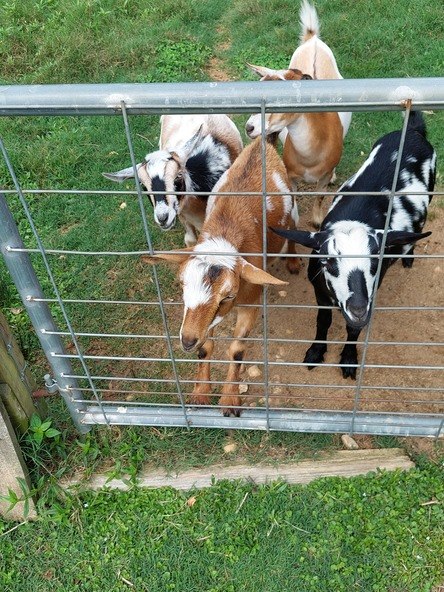
I raise goats. They are herd animals. When in fear, they pack tightly together, and they can't stand to be isolated from each other. That's not learned behavior. I can't see why it's impossible for humans to have social instincts as well. -
IQ vs EQ: Does Emotional Intelligence has any place in Epistemology?Wiki defines emotional intelligence as "Emotional intelligence (EI) is most often defined as the ability to perceive, use, understand, manage, and handle emotions." https://en.wikipedia.org/wiki/Emotional_intelligence
Research has shown that people with a high EQ tend to be more successful than compare to others who have a high IQ. So if a high EQ is the key to success why focus on Epistemology?
It seems to me, it is more useful to know how to navigate the emotional spectrum than understanding the purpose of thought. — TheQuestion
I don't agree with the breakdown of your question because it uses the term "epistemology" as somehow being the study of the purpose of thought or alternatively as having something to do with deciphering IQ. I see it simply as the academic study of how we know things about the world.
If the question is why should we put a premium on IQ when it is EQ that better defines success, the question comes down to what success means. If we want better bridges, I'd prefer the high IQ person even he's prone to temper tantrums. If I want a better neighbor, I'd prefer the high EQ person, even if he can't think his way out of a box. Ideally, we want both, where the person is both smart and civil, but if we're left with a choice of one or the other, I'd probably want a society of smart people. Agreeableness is boring, although maybe a really high EQ person would be quirky and edgy, just for me.
My cat is clever, but her EQ is piss poor. My dog is pretty stupid, but a gentler, kinder creature there's never been. Maybe this comes down to cat/dog people traits. I go with cats, but, you know, having a slap happy tail wagging dog can be a good thing too. -
You don't need to read philosophy to be a philosopherIs studying the history of philosophy the same thing as philosophical thinking? — Srap Tasmaner
You can organize the study of philosophy either by philosopher or by topic, which I assume you mean the former is a study in the history of philosophy and the latter as philosophical thinking.
A historical approach might be that you'll take a course in the pre-Socratics or in Aristotle or in Kant or in Hanover. You can then decipher all their nuances and maybe even learn about their odd quirks and where they lived and who they married. That historical approach would also require philosophical reasoning unless your professor was solely interested in your recitation of the works of those thinkers, but that's a fairly narrow approach to take. In a class on Kant, for example, you might be called upon to explain what some of the criticisms of Kant's ethical theory are, so you're not necessarily going to be protected from critical thinking in a historically based course. It just depends how it's done. Even if, though, you aren't being asked to exercise your own critical reasoning, you will require some philosophical intelligence to understand the arguments submitted by others.
On the other hand, you could do it by topic, and you could learn all about ethics, for example, but that wouldn't protect you from having to learn about Kant and knowing what the criticisms of his ethical theory are. That is, you are not going to be protected from the history of philosophy in a topic focused course either.
I suppose it would be possible to create a topic based course and to offer no attributions to any historical figure, but I'm not sure why you would do that because centering it around a person offers a reference point. It would be odd to teach Utilitarianism and never mention Bentham or Mill, for example, but it could be done if you had a need to rigidly keep history and topic seperated.
Logic is probably one topic that can be taught without reference to a historical figure, assuming the course is purely related to symbolic logic.
But anyway, I see the same sorts of skill sets being needed for either approach because at the end of the day you're being asked to understand and evaluate philosophical positions.
Is this what you mean by history versus doing philosophy? -
You don't need to read philosophy to be a philosopherthis is like arguing that the only way to get from your house to the Waffle House is by studying all the routes people have taken from their house when in search of a Waffle House. — Srap Tasmaner
The analogy doesn't hold. There's no debate over how to get to Waffle House and it's not a question that has stumped us for ages. If, however, the question of free will (for example) had an obvious and simple answer it would be unhelpful to spend 1,000s of hours reading about it and hearing other people's theories about it, as it might be to locate your nearest Waffle House.
That makes you an expert on what people have said about it, and that is not the same thing as rigor. — Srap Tasmaner
Assuming that other people offer no meaningful contribution, then sure, but I'm not assuming that. I'm assuming thoughtful responses from them. If other people can't offer thoughtful or helpful responses to your own thoughts, then why engage others or listen to others?You'll get a response that is more comprehensive, more informed of the current state of the academic study of philosophy, certainly. Whether it will be more "meaningful", whether it will be "better", is unclear. This is just "looking where the light is best", isn't it? — Srap Tasmaner
You're losing me here. This argument of yours is against not just the enterprise of academic philosophy, but of philosophy generally for any purpose. My basic assumption is that philosophical thinking yields meaningful results. If it doesn't, then let's stop here as we're just wasting time.
If we accept that we can arrive at meaningful results, then sharing those with other will also be helpful and having a professional class of those working on those issues will be an even more helpful way of gaining insight into those issues. However, if you're saying that philosophical thinking offers nothing on the individual, group, amateur, or professional level, then I agree there'd be no reason to study anything on the topic at all. Is this what you're saying?
Cornel West does claim that there is benefit to studying the great minds of the past, and makes that claim exactly in the context of a critique of the current state of academia. — Srap Tasmaner
I've not read the West article, but if the gist of it is that the state of academia is in a state of disrepair for whatever reason and needs to be reconsidered, I'll leave that to those who are intimately familiar with it., but that seems like a political and ideological gripe, dealing with poor decision making by those in leadership positions. That is, that doesn't seem to address the OP, which alleges the insignificance of scholarship. -
You don't need to read philosophy to be a philosopherIt is perfectly obvious how the professionalization of empirical disciplines advances them, as those require tremendous resources to make progress, halting and uncertain as that progress may be. It is not obvious, not to me anyway, that the same model has been well applied to the arts or to philosophy. — Srap Tasmaner
The question is whether philosophical thought is advanced by increased rigor, which would require one be intimately familiar with the underlying issues, the prior objections raised by prior philosophers, and what those responses have been. If I have the opportunity to speak with Person A who has read the pertinent literature and has taken course work and written papers with regard to Issue X or Person B who has only generally considered Issue X, but has read next to nothing and has taken no coursework and not written on the Issue, I'd choose Person A for the more meaningful response.
That is what professional philosophy is for.
In terms of empirical research, it really depends upon the particular field of philosophy. I would expect someone speaking on the philosophy of science to be knowledgeable of the history of scientific progress, for example. The same would be true of various other fields, often requiring some knowledge of neurology, evolution, or whatever the focus may be.
If we accept the notion that we're all on equal footing just by virtue of our natural intelligence and worldly wisdom such that any of us would do just as well as the other teaching our personal philosophy (as all philosophy is as subjectively valid as the next), then one must wonder why we're even here in this forum. Why listen to me and why listen to you? If we admit we may gain from one another, then we've contradicted our premise of the valuelessness of rigor. That is, if you can gain from listening to me, then it's time to dust off Kant's Critique of Pure Reason because we just might gain from reading that as well.
If rigorous analysis of the topic can be accepted as offering value, then rigor is what we need. I can think of fewer more rigorous approaches than hiring professionals who have committed their lives to their craft if one wishes to advance that craft. -
You don't need to read philosophy to be a philosopherI said that there is no standard of practice for philosophy. That would be a good subject for a discussion, not this one. Is there a standard of practice for philosophy? What is it? What makes good philosophy? — T Clark
Whether I can itemize the criteria, I don't know, but clearly there are journalistic standards that one must adhere to in order to be published.
Your standard, and I don't say this to be snarky, is that you object to rigor. You'll read the posts here and respond to them, but you won't read Kant or Nietzsche. The only difference I can see between what those established philosophers have to say and what we have to say here is the level of complexity and the volume. I don't even see this as an East versus West distinction because I would expect there are countless volumes of rigorous analysis of Taoist thought that you would also decline reading.
Back to my tennis analogy, I see nothing wrong with being a weak tennis player who enjoys being on the court and working up a sweat if that's what you want to do. Where it becomes nonsense is if you'd start arguing that you're just as a good a tennis player as the professionals, but you just play by a different set of rules, and who's to say which rules are the ones we ought to follow. -
You don't need to read philosophy to be a philosopherThere really is nothing like a standard of practice for philosophers. No licensing. If a philosopher makes a mistake... well, there's not really any way to tell. — T Clark
Except here you're wrong, which means you've engaged in bad philosophy and you've failed to pay attention. If we can't decipher our mistakes, we have no philosophy as a field and we have no basis for rational debate. If you're correct and I'm wrong here, of course, you can save yourself a reply, as you've explained we have no way to know if what you said made sense. Pay attention: you've just argued argument is a futile waste of time.
Philosophers not being licensed has nothing to do with our inability to distinguish good from bad philosophers. It has to do with politics and attempts to advance some interest, like all laws do. The way one determines the reason legislatures decide as they do is to research why they do as they do, as opposed to giving it a good think and declaring what sounds reasonable. -
You don't need to read philosophy to be a philosopherIs my philosophy half-assed? Take a look at the things I've written here on the forum, not just this thread, and judge for yourself. — T Clark
I've got no shade to throw your way, but I can say that your admission in this thread to your limited exposure to academic philosophy didn't come as a revelation to me. Do you come across as irrational or unreasonable, no, I wouldn't say that, but you're not erudite in terms of knowledge of academic philosophy. Where you do seem to show some interest in text is in Taoism, and you have an affinity toward poetry and inspiring visual art and photography, so as to that, I find your comments more substantive.
My point is that erudition is a positive thing and I do consider my lack thereof in whatever area a negative. Your position here I take to be the sanctification of ignorance (not in its pejorative sense), suggesting that philosophical discussion between the well learned and the unlearned will be on equal footing. Except in the unusual moments when the fraudulent professor encounters the unschooled prodigy, I disagree. -
You don't need to read philosophy to be a philosopherThe problem with your tennis analogy is that there is no determinable criteria of excellence in philosophy. Even the so-called experts, the academics, are deeply divided on the values of, for example, on the one hand, Heidegger or Hegel and on the other, analytic philosophy. There is no Nobel Prize for philosophy and that is telling. Philosophy is, paradigmatically, a matter of taste. — Janus
You overstate the subjectivity of academia (which could be alleged in any field except perhaps the hard sciences). I'd suspect that by and large (admitting for some occasional exceptions), there would be fairly consistent grading of examinations from professor to professor. "A" students typically get As across the board, as do C students typically get Cs -
You don't need to read philosophy to be a philosopherThat it doesn't work. I only said it hasn't worked for me. — T Clark
I read what you said to be that you made a half assed effort, gathered minimal gains, then quit fully trying, and then declared your approach as valid as any other.
I have a friend who played professional tennis. He refuses to give lessons, claiming no one is really willing to learn. Real lessons, according to him, require grueling hours of practicing a particular stroke before moving to the next.
I think he's right that his method is the true path to excellence, but the truth is I'd quit within minutes of that painful regimen and therefore never improve at all. I'd stay a hack, never even getting mediocre, much less the professional he expects. My method requires that I chip back shots for about an hour while goofing off. Anything else would bore me. I'd improve a little probably.
So, yeah, I get you've found the path to improvement, just be aware your method is ultimately inferior. -
You don't need to read philosophy to be a philosopherI’m interested in hearing other people’s thoughts on this. — T Clark
IWhat you describe is not what most define as philosophy. It's sort of this Zen state of understanding and harmony you're trying to achieve as far as I can see. For example, how do you meaningfully respond to metaphysical, epistemological, or moral questions by just sitting back and absorbing? Do we just wait together all in silence in this Kafkaesque ideal, or do you listen to others and form your own thoughts internally without contribution?
I also don't see these tacks as mutually exclusive. Why can't I spend time in silent contemplation, but also read philosophy? Is reading others' epiphanies corrupting of my own? Wouldn't learning from others advance my own progess?
To the extent you argue that some answers lie within and should be sought by contemplation, I do agree, but to the extent you argue that formal study is unnecessary or even inferior, I don't. -
Can we live in doubtPerhaps, but have you noticed that it depends upon what belief you are doubting? No one is traumatised by the notion that they doubt if the platypus is a mammal. Generally anxiety takes place if you are conditioned into thinking that certainty is possible and specifically that it is possible about 'supernatural' beliefs - for instance life after death and god stuff. The other belief that seems to preoccupy certain people is whether we are living in a simulation or not or if what we call reality is a fancy cover for some heavy duty idealism. — Tom Storm
I think people worry about all sorts of doubts, like whether the surgery will work, whether the job will remain, whether the relationship will continue, whether the team will win, etc. -
Socialism or families?. My 1940 Family Law book holding family responsible for family, no longer applies. Have we made this social change with much thought? — Athena
This is an absurd re-writing of history, as if there were a time in the past when rigid bright lines divided the family and society, where only through aggressive invasion could the powerful state impose its will on the family and provide for it food, shelter, clothing, education, and other means of social assistance. There never has been this dichotomy, with society properly "out there" while the family worked its magic independently and efficiently, leaving us now to lament a wonderful lost past.
If you wish to argue that society at large is taking too large a role in what could better be handled independently by families, that might be a sustainable argument, but I don't think you have a point when you try to harken back to a time that never was prior to all this societal interference.
In truth, secularized society is a fairly new idea in itself, with prior interventions being made by religious institutions. Regardless, you're talking about a time that never was and are trying to advance the ideal of a rigid family/social distinction. Appreciate at least that your ideal is fraught with all sorts of problems, as it allows the unfortunate offspring of disadvantaged families to remain disadvantaged despite the many resources the greater society could be providing them. You need to ask yourself why you would want to perpetuate such a system that allows inherited disadvantage when it so easily remedied.
This is all to say it's a matter of degree, with how much social assistance each person receives for family matters as opposed to whether there should be any at all. -
What should the EU do when Trump wins the next election?that be the case i think it's inaccurate to call him a fascist in the same sense that Hitler and Mussolini were fascist. — Wheatley
Yeah, but they were a bit hawkish. -
What should the EU do when Trump wins the next election?Perhaps with a threat of economic sanctions because Americans care passionately about their economy. It's better than tempting another world war (supposing there is an up-rise of right wing nationalism). — Wheatley
Oh please. The EU fears US sanctions more than the US fears the EU. Trump, despite his many many many flaws is dovish, if for no other reason than he's protectionist. -
YHWH & Language2) It still seems very intriguing to consider my theory that a single book in an ancient language, containing only consonants, could be many books all at once, each book emerging from the same text by using the correct vowel permutation. Perhaps there's a key in these texts itself. — TheMadFool
If you're looking for a deep religious reason for why no vowels in the OT, see: https://www.chabad.org/library/article_cdo/aid/3087993/jewish/Why-No-Vowels-in-the-Torah.htm
Choose to buy into that as you see fit. -
YHWH & LanguageBTW there are other ways of indicating vowel sounds in writing, without using separate letters. I think modern Hebrew does this, though I'm not sure. — jamalrob
Not just modern Hebrew, but the vowel marks have been in existence for over a 1,000 years. For example, the word for dog is (spelled right to left) "כלב", which does not contain vowels. An exact transliteration would be KLV. However, if you added the vowels, it would look like this: כֶּלֶב, with those dots indicating it should be pronounced kelev. The dot on the inside of the backward "c" looking letter indicates it is pronounced like a K as opposed to that throat sound you hear in Hebrew, without which you wouldn't actually know how it is to be pronounced. It's sort of like the C in English, which is sometimes an S and sometimes a K (although the French use the C with the cedilla ç to clarify). Our G and J can be ambiguous as well, but that rarely poses any confusion for the native speaker.
Even consider words like "thought" (and countless others) that are not phonetic, and even some Asian languages that are not phonetic at all, yet are easily read and spoken by native speakers. The point being there is nothing unusual about a written language not directly representing the sounds of the words when spoken.
When Hebrew is written among speakers, they don't use the vowels because it's not necessary to be understood. For example, here is a Hebrew version of a newspaper and it does not contain any of those vowel marks: https://www.haaretz.co.il/ When they choose to insert them and when not, I'm not sure, but I would assume the less sophisticated writings would be more likely to include them, considering it can be generally understood without them. -
The Problem of Resemblencessaw a black dog on the sidewalk, lying down but trying to move get up. It was disturbing. On closer examination it turned out to be a black plastic back being moved by a breeze. It was a strong resemblance until once examined, it was not. — Bitter Crank
I saw a dog beside a child outside a store and asked if his dog would bite. He said he wouldn't.
I pet the dog and he bit me.
"You said your dog wouldn't bite!"
"He's not my dog. "
Sometimes you hear things and they're not what you thought you heard. -
Who here thinks..The game of life" refers to a cellular automaton created by John Horton Conway. Since you are obviously not talking about the cellular automation, nobody really knows what you are talking about. — Wheatley
That's what you think of when you think of the game of life? We must have had very different childhoods.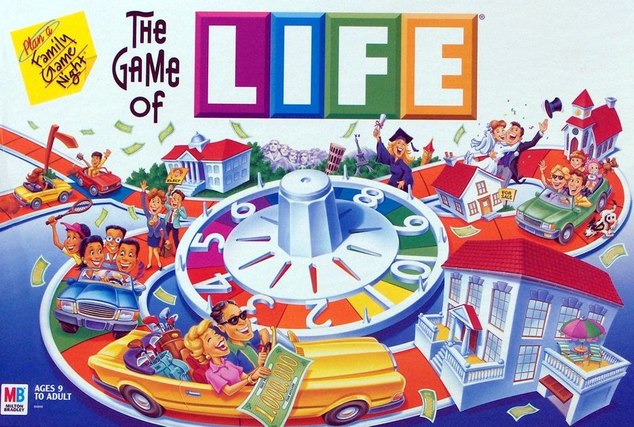
-
Who needs a soul when you can have a life?Back to the twenty first century, we are seeing more people break away from religion, and from my point of view, there is less religious talk. And instead of talking about souls, many of us are talking about our lives (at school or at work, for example). Which is more in line with twentieth century existential thought rather than traditional concepts of souls. — Wheatley
An atheist can be as or even more concerned about the future of humanity as a theist. Focusing on the here and now can also be the interest of the theist. -
RealismThe point I'm generally making here (and this goes for Hanover as well) is that no-one assumes all of their models are exact representations of an external reality, and no-one assumes none of them are. The choice over which we behave as if were true and which we approach with uncertainty is a psychological issue, not a philosophical one. — Isaac
You say this as if your responding to something I've said. -
Why being anti-work is not wrong.More importantly, whether a person will have a fundamentally positive outlook on life or not appears to be beyond a person's immediate control. It appears to be something that one must be born or raised with, but isn't something that can be learned later on in life. — baker
So he must be he and I must be me? Why seek to move the immovable with this thread then? -
Why being anti-work is not wrong.Anyways, no this isn't about me not cleaning the dishes or wanting to do "my fair share.." The whole point is that it is unjust to be put in a situation where you cannot opt out unless you die of depredation or suicide.. Hence I said (predicting your free rider snark): — schopenhauer1
Your point is that life isn't fair? -
Why being anti-work is not wrong.As to the OP, being anti-work isn't wrong if all you mean is you gripe about work. Hearing people gripe is annoying and I"d rather see you figure a way to a better job so I don't have to hear it, but being a complainer by itself isn't immoral.
But if you mean you are capable of contributing to your own care and even perhaps contributing some amount to others, but choose to be more a burden than need be, yeah, you suck and are therefore immoral.
If you're the guy who waits for others to clean his dishes, and we all do have dirty dishes, you're not the roommate any of us want, especially if you try to justify your sloth philosophically.
Hanover
Start FollowingSend a Message
- Other sites we like
- Social media
- Terms of Service
- Sign In
- Created with PlushForums
- © 2026 The Philosophy Forum