
-
CoronavirusIf Joe Biden wins, will the media forget the pandemic after January 20th 2021? — ssu
Absurdly parochial, ssu — Banno
It's not a parochial question as much as a political one. The emphasis of attention paid to covid, just like any issue affecting a population, is determined by political concerns. There are all sorts of issues impacting American society today that could be targeted like covid based upon the havoc they wreak. For example, we could look at the daily charts associated with motor vehicle injury and texting and driving and then rake our politicians over the coals in daily briefings asking why this tragedy should be permitted to persist. We don't though, as a political decision has been made to emphasize covid and the pain caused by it, but not so much with texting and driving.
@ssu's question recognizes a reality to covid, which is that its "cure" entails the disruption of the American capitalistic economic status quo, allowing its detractors an opportunity to make efforts to change the economic system and to attack Trump and his attempts to protect it. Should Biden win the election, covid will no longer be necessary as a catalyst for economic change, and perhaps, as SSU asks, will there still be a political demand to emphasize covid over other problems affecting American society. -
The Last WordHonduras Central America
Also known as the devil's asshole. But it it really a nice place. — Sir2u
We have the opposite thing going here. As the Covid cases started to increase, the major cities (Atlanta, Athens, Savannah) all started to impose more strict measures, one of which was mandatory mask wearing. The governor of the state declared the matter a state emergency and then entered an executive order that state law preempted all city law and stated you didn't have to wear a mask. Earlier, they tried to close the beaches, so he re-opened them. Recklessness appeals to me, so I kind of like it. -
The Last WordI am not at all happy about this freaking lockup or lockdown, whatever you want to call it. I have left the house only once in these last 3 months — Sir2u
I just flew from Atlanta to Salt Lake, drove to Utah, then went to Montana and Wyoming. Been working from the office every day since the pandemic started. Have eaten out, gone to the gym, gone shopping, and have hung out with my family and friends the whole time. My infection rate and the number I've infected stands firmly at 0. No harm, no foul. -
Why aren't more philosophers interested in Entrepreneurship?So why is it that most people that are interested in philosophy aren't interested in Entrepreneurship? — Gitonga
Most people generally are not interested in philosophy, at least the sorts of issues we talk about here. Unless you have data suggesting otherwise, I'm not convinced that entrepreneurs are less interested in philosophy than other types.
If the question though is why there aren't more entrepreneurial efforts to promote philosophy, the answer probably is that philosophy simply doesn't sell. -
Crypt payments for hosting and... moderators?Probably would have gotten bad reviews in the New York press and never made it on to Broadway from Off Off Broadway. — Bitter Crank
But instead we got such great songs as this:
-
Crypt payments for hosting and... moderators?What's the lowdown on Hooker, OK?
Got a lot of friends there? — Baden
From the photos, appears to be a shit hole.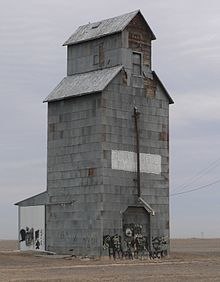
-
Crypt payments for hosting and... moderators?Yeah, well, I was looking at a map of Oklahoma just before I wrote that so makes sense. — Baden
Does make sense.
Factoid for you. The panhandle of Oklahoma was given to it by Texas in order to keep Texas entirely in the South so it could remain a slave state.
Lemme know if you need to know anything else about Oklahoma. I know things about the environmental impact of fracking on Oklahomians, the plight of the depression era Okie, and the Broadway smash hit Oklahoma to name a few areas of my expertise. -
Crypt payments for hosting and... moderators?Also, won't speak for the rest of the team but alls I want from y'all is y'all behave. — Baden
Odd mixture of dialects. Alls is Midwestern (https://ygdp.yale.edu/phenomena/alls-construction). Y'all is Southern (https://www.mentalfloss.com/article/12916/yall-youse-8-english-ways-make-you-plural).
G'day old chap. -
Causality, Determination and such stuff.The notion that the universe is determined fails. — Banno
I don't follow this conclusion from the Galton box example. The epistemological claim is obvious: I don't know where the ball will land. The metaphysical claim is not obvious: the ball's path is not predetermined.
With God like knowledge (even if we posit is impossible for any human to attain), we could know where the ball will land.
None of this is to suggest that metaphysical indeterminism doesn't exist at the quantum level. It's just to suggest the Galton box isn't an example of it.
I can predict with 100% accuracy the ball will land within the Galton box, and not, for example, on Mars. A newborn infant can make no such prediction. The point being that my ability to predict something about the ball, however limited, does speak to a metaphysical discovery about causation. I do recognize however that my limitations about what I might be able to predict about the ball are due to my infantile knowledge of the forces acting upon the ball. -
The four pillars of humanity.I’m interested in what anyone might have to add, change or clarify.
Poetry: the expression of human consciousness and the unconscious. Art is a product of this.
Politics: ideas of nationalism. Division. Ideas of opposition. Power, the rule of law and society are products of this.
Economics: value in things, profit and loss. Power and private property are the products of this.
Religion: metaphysics, belief, the unknown, the unsayable. The church, the priests and power are the products of this. — Brett
How is this claim philosophical? If we're asking what the four basic foundational pillars of humanity are, I'd suspect it'd be best addressed by an anthropologist with all sorts of references to the archaeological record and an analysis of various societies over time. I also find your definitions limiting and not really accurate. I see politics, for example, as existing as much in a family as a nation, and well before the concept of nationhood.
What religion is is variable as well. I'm not convinced ancient societies saw the gods as vague abstractions dealing with the unknown and unsayable. They were often human like entities doing battle with one another. -
CoronavirusThe treasury department sent $1.4 billion worth of stimulus payments to dead people. The direct payments, which were approved as part of the $2 trillion coronavirus relief bill, were sent to more than 1 million Americans who had already died, the Government Accountability Office said in a new report. - guardian — Benkei
The dead people ought to get the relief, especially those who died of covid. They'll probably get to vote too. -
CoronavirusHowever two antibody tests run on my Indian came back negative with a qualifier that it could be inaccurate. — ArguingWAristotleTiff
These inaccuracies aren't limited to coranavirus, so why take such a hard line on coronavirus specifically. Are you generally opposed to medical science?
Anyway, you've not pointed out a danger to the vaccine, but only suggested it might not work. -
CoronavirusJust out of curiosity: once "they" come up with a Vaccine with maybe a 25% protection, but not really sure of the long term side affects other than defying death, are you going to be at the front of the line?
And, AND those who do not get in line for a year? Are they going to be labeled "anti vaxer"? — ArguingWAristotleTiff
I don't think exercising caution with an untested treatment (as you've described it) is equivalent to idiotic claims that the measles vaccine causes autism.
My Indian said tagging people who have had the virus and is 'immune' is really close to dividing our society even further. I asked what makes him think that way and I got an eye roll from him when I had to be reminded of the Jewish tattooing of numbers.
I'm actually grateful that this next generation of leaders have not forgotten the past. :sparkle: — ArguingWAristotleTiff
Flagging Jews for extermination isn't a good analogy to identifying those who no longer pose a threat of infecting others. We do it already anyway. If you don't get certain vaccines, you're identified and kept from getting a public education. I don't believe in anyone's right to infect others. -
CoronavirusAlso, you should probably actually read the study. — Enai De A Lukal
I did. It's an encouraging study. -
Coronavirusleast until you actually read the study anyway — Enai De A Lukal
The anti-hydoxychloroquine group reminds me of anti-vaxers. -
CoronavirusAn exciting potential new treatment option for Covid: https://www.cnn.com/2020/07/02/health/hydroxychloroquine-coronavirus-detroit-study/index.html
-
Autism and spermdonationWhy are you opposed to providing potential parents knowledge of the genetic history of their sperm donor? Are you opposed to them knowing any of the history of the sperm donor, like race, educational level attained, criminal history, issues with physical and mental illness?
-
Least favorite moderators?I read all those words in your post and I'm not sure what I was reading. Although I'm not sure what those things were, I'll go on record as saying they are all stupid.
Can you create for me an audio file where you sing your favorite song and upload it here? I'd like that. I think we'd all like that. If you do that, I'll vote you as my favorite moderator. -
Does Philosophy of Religion get a bad rep?My last discussion with 3017amen about debating was at pp. 10-12 of the God Almost Certainly Exists thread, of loving memory. — Banno
I'll debate you as to whether Yaweh existed as a monotheistic god to the ancient Hebrews prior to Exodus.
Thiat is philosophy of religion in my opinion. Yours begins without even a definition of what you seek to prove or disprove.
I also suspect a debate phrased as you've suggested would meander from the topic of God to the topic of certainty and its distinction from other types of knowledge. Just a hunch. -
Does Philosophy of Religion get a bad rep?think that a lot of people here are tired of poorly-done philosophy done by a constant stream of newcomers with primarily philosophy of religion interests. That topic seems to attract that kind of person. But I personally don’t think there’s anything wrong with the topic itself, even though I too find that kind of poster tiresome. — Pfhorrest
I agree with this. Philosophy of religion can be really interesting. Theological systems, literary interpretation, archeology, sociology, mythology all come into play if done correctly, but oftentimes the posts are just of posters at a point where they're just trying to make sense of their personal religions and there's not much philosophical about that. -
A new subforum for novices/non-philosophers interested in philosophy?I don't like this idea, as the burden imposed on the staff here to prioritize the high volume of posts would be overwhelming, the objections from slighted posters would lead to all sorts of drama, and it would change the welcoming culture we have tried to cultivate into something elitist.
But should anyone wish to more kindly respond to a new poster who has made an elementary mistake or overlooked a well known bit of information by offering a helpful hand (as opposed to back handing them) that'd be much appreciated. -
The Will to be nurturedThe most fundamental truth of all, I’d say, is not the ‘will to power’, ‘will to pleasure’, ‘will to meaning’, or the ‘will to blindness’, but rather the ‘will to be nurtured’; for everything that comes into existence is either nurtured into fruition or starved and denied its prosperity. It’s the very first thing we come to know, unconsciously (from womb to infancy), and serves as an a priori truth throughout the entirety of our lives – that we must be having been nurtured by someone, or something, else, bigger than us, outside of our own individuality in which we remain connected, yet need not, necessarily, be able to identify with on a conscious level, thereby rendering trust moot to save its necessity. — Gregorius
There is a fundamental requirement for humans that they be nurtured until they are independent enough for self-survival. That's just to say that humans cannot survive as unprotected eggs waiting to hatch, but the child must develop inside the mother until birth, and then at birth, there will remain additional time for the child to gain the autonomy to exist on his own.
The will, as I see it, is a higher function in a person that arises after some degree of consciousness exists. An adult's will is formed by all sorts of complex motives, as opposed to an infant who simply feels hunger and cries. The will to be autonomous, to obtain power, or to gain higher degrees of freedom is where I see the higher function of the will, as opposed to focusing on the temporary nurturing stage that will slowly dissipate over time as the individual matures. -
Is the knowledge of good and evil, good or evil?Is the knowledge of good and evil, good or evil? — Gnostic Christian Bishop
The Hebrew ( עֵ֕ץ הַדַּ֖עַת ט֥וֹב וָרָֽע) clearly indicates an "and" between the Hebrew words good and evil.
There's a brief informative Wiki on this: https://en.wikipedia.org/wiki/Tree_of_the_knowledge_of_good_and_evil
How you interpret this phrase is dependant upon the tradition you start with, with Judaism, Islam, Christianity, and secular views imparting different meaning to it. You'll note that the secular interpretation doesn't even consider the knowledge of "good and evil" to refer to moral knowledge specifically, but to all knowledge generally because "good and evil" is interpreted as from good to evil, as in from A to Z. -
The Objectification Of WomenSeriously, if she is physically beautiful, she should not have to hide her beauty in order to be treated as a human being. And if she chooses to display her beauty in order to accumulate sufficient value to enable her to make choices for herself, then she is still a human being - it does not entitle anyone to treat her as an object, as someone with no choice in what happens to her. That some men will treat her as an object is not something she needs to just take with the job. — Possibility
I don't follow this. If the job description is that you will present yourself as an object for men, then that is just something you have to take with the job. If you don't like that job description, then you just don't take the job.
I think it's clear that the job description for the stripper is that you're going to be asked to present yourself as an object for sexual arousal where you'll be expected to gyrate in front of men so that they can see your body as you move about. I'm not judging the decision to accept that job, but that is in fact the job. It's also sometimes the job of the stripper to provide lap dances where the gyration leads to direct physical arousal. I agree completely that no woman is required to be treated as an object, but there are certain jobs where the woman is asked to do exactly that, which means she can choose to take that job or leave it.
Why can't someone hire a woman to be treated as an object if that is what they both want? Doesn't the woman have the right to contract to be leered at, groped, and treated as sub-human if that's what she wants? -
The Objectification Of WomenI find it uncomfortable as well. Sex without genuine connection seems to me like masturbating with someone else's body. You pretend to care so that you can use someone else.
And to know that another person doesn't care about you beyond your appearance, and to be okay with that, makes it sound like you don't really care about yourself. — darthbarracuda
This doesn't really describe my sexual interactions. I meet someone, go on a few dates, have sex, then maybe it moves forward a little, the infatuation wears off, and then things end. Did I really care about that person? Not terribly, but how could I after a few weeks? Were they just a warm sexual object? No, that wouldn't do them justice either. They were an object of attraction, but also a sincere effort at a relationship was being made. I think we both wanted something lasting, but, alas, not everyone is The One. There was no pretending. It was just two adults trying to form a lasting connection, neither of whom believing that love is required before sex.
Relationships have varying depth, and some come and go quickly, but I don't equate my best efforts at relationships with with what you describe, which sounds like lonely alley cats bumping into each other just to feel the warmth of another body, with no thoughts of ever seeing one another again. -
BanningsI read through quite a few of his posts (here and Facebook) to get a better sense of him, because I questioned honesty. I believe he’s sincere. And yeah, educated and intelligent, though emotionally... off, perhaps somewhere on the spectrum. — praxis
I didn't find him particularly sincere, but that became an aside once the racism reared its head. It's not bannable to create a fake persona and to provide all sorts of incredible personal claims, but it's not terribly endearing either. We do deal with people with all sorts of personal issues, and we try to be understanding, but we can have but one set of rules that have to be applied consistently. Whether he had some personal limitations, I really don't know, and my guess is that I'd be wrong if I speculated. -
Property and Community.The very nature of procedural justice (as opposed to distributive justice) is connected to issues of property. Because just like analytic knowledge is about following the correct steps in sequence from the assigned meaning of words, so too procedural justice is about following the correct steps in sequence from the assigned rights that who has over what, which is identical to the concept of ownership, i.e. to have rights over something is what it means to own it. — Pfhorrest
Read most of what you said, but it was really long.
Apply your theory to an actual case of disputed land, like the Palestine/Israel situation. Do you see Israel's right to Israel legitimate? What about to the disputed lands of the West Bank? If Israel follows its own rules in determining which land it settles does that matter? -
Property and Community.People had less property before the 20th Century and hence the laws especially in the US reflect this. Stealing a horse was a really severe crime back in the days. It's not so universally anymore. — ssu
Laws allowing deadly force for the protection of one's home are often referenced as castle laws. https://en.wikipedia.org/wiki/Castle_doctrine
These laws came to the US from England as part of the common law and were first enunciated in 1628 by the English courts (from the same wiki article):
"In English common law the term is derived from the dictum that 'an Englishman's home is his castle' This concept was established as English law by the 17th century jurist Sir Edward Coke, in his The Institutes of the Laws of England, 1628. ' For a man's house is his castle, et domus sua cuique est tutissimum refugium [and each man's home is his safest refuge].'"
The article also states, "The legal concept of the inviolability of the home has been known in Western civilization since the age of the Roman Republic." The Roman Republic existed from 509 BCE to 27 BCE.
That is to say that the right to protect one's domicile is not a 20th century American invention. -
Property and Community.Burglary is experienced as a violation almost like an assault - almost like rape. — unenlightened
As to property, there are legal distinctions between real property (land and it's attachments) and personal property. You can further subdivide personal property into tangibles (chattel, which would include your car, your books, and your dog) and intangible (e.g. intellectual property, stocks, and bank accounts).
In terms of real property, you can distinguish between your dwelling and all other items of real property. You have certain rights to your dwelling that exceed other items of real estate in terms of your right to protect it with deadly force, as it is considered an extension of you and your family. Your home is your castle. The same cannot be said of your barn, your business, or other items of real estate you might own.
Where you divide it this way:
A. Beings.
B. Goods.
C. Real estate.
D. Ideas.
I divide it:
A. Real Estate
1. Dwelling
2. All other forms of real estate
B. Personal Property
1. Tangible
2. Intangible
In terms of "beings," that would historically have been classified as tangible personal property (chattel). Fortunately, that is no longer the case. A dog remains chattel to this day. In terms of parental rights over children or a state having rights over inmates and whatnot, I would not consider those to be property rights at all, but that of custody, which I take to be a certain protective duty one has. We typically say that one has custodial rights to people, not possessory rights. -
Honor EthicsIt's a really bad habit. — unenlightened
I'll work on it. I think I'm incorrigible though. -
Honor EthicsYou didn't mean to put words into my mouth and then disagree with them, but that is what you did. "The way you summarised it", was prejudicial to me.
And I disagree with you that it doesn't matter and I don't deserve a retraction or apology. I realise I am disagreeing with something you haven't said, it's just the way I'm summarising it. — unenlightened
Oh good Lord. Whatever. I meant no harm. Bygones. -
Honor EthicsNor do I. Try and disagree with what I say rather than your guilty conscience. I did not call it primitive, and I did not call it antiquated. Your prejudice not mine. — unenlightened
My words didn't mean to criticize you for criticizing me. It's just the way I summarized it. -
Coincidence?Has anyone ever had moments when they noticed a random topic and had that very topic come alive around them? What I mean is hearing about one inconsequential thing and then having that thing become popular for no related reason. — Braindead
It's Siri. It listens in and then controls the world. -
Honor EthicsFor your purposes, I suggest that The US has developed an honour ethic well suited to 'the Wild West, and if you believe Pirsig, heavily influenced by Native American ethics. — unenlightened
Not disagreeing entirely, except that I think you paint too broad a brush when you speak of the US honor ethic. Most of my information comes from a book I read a while ago Cracker Culture: Celtic Ways in the Old South. A distinction is made between the South and North, and it's very evident when you look at the distinctions in ideologies of the New England states versus the southern ones and the types of laws the pass (especially as they relate to providing healthcare and other benefits). I suspect much could be written about the Scandinavian influences of the mid-west and we could likely go region by region in finding these variations.
An interesting study on this issue: http://cognitionandculture.net/wp-content/uploads/InsultAggressionAndTheSouthernCulture.pdf
This article describes an experiment where Southerners would walk down a hallway where a man stood in their way. The Southerner would give him a very wide berth and try to avoid him. The guy would bump the Southerner and the guy would call him an asshole. When compared to Northerners, the Southern guy gave a wider birth, would be more agitated, and when encountering the man for a second time on the way back, would give very little berth, and would attempt to provoke an altercation.
The Northerner wouldn't care and wouldn't remember.
Your description of the Southern honor culture as primitive or as in antiquated due to societal changes is commentary I don't agree with. I think if you have buy in by the citizens that this type of demanded autonomy is a moral virtue, it can and does work. -
Honor EthicsI'm not following the link you attempt to draw between the jungle and the city. It seems more a distinction between sparsely and densely populated areas, especially as it relates to isolated areas. If you live in small spread out communities separated by bonnie bonnie bens and braes, you're going to develop greater autonomy and a need for individualized protection because you don't have the defense of the group around you.
I also don't see how the culture of Germany is synonymous with the culture of Scotland and Ireland. The former suffered from a perverse sense of hyper-community, an out of control nationalism, and a rejection of anything slightly in variation of the norm. The latter strikes me as a hodgepodge of loosely affiliated people trying to eke out an existence largely clan to clan. The German government (and German people really) are a highly organized systematized unit. The Scotch-Irish not so much.
I just can't see how the ethic of the Scotch Irish could have ever led to a holocaust. One reason they couldn't arrive at such a plan is because they didn't have a peat covered hut big enough to meet in and most of the adult males were out fucking goats.
Hanover
Start FollowingSend a Message
- Other sites we like
- Social media
- Terms of Service
- Sign In
- Created with PlushForums
- © 2026 The Philosophy Forum