
-
Morality is Coercive and UnrealisticSelf-interest or self-preservation are themes inherent to coercion in general. There are many coercive aspects of morality, and moral themes, such as retribution, duty, revenge and justice, can manifest as strongly coercive environments. This thread is far from an exhaustive analysis on the subject, though perhaps it should've been. — Judaka
Okay, I just did a close read of the thread and I think I have a better grasp of what you are saying. Sorry, I should have done that earlier, but I figured that reading a handful of your OP's and skimming this thread would give me enough to go on.
My intent was that my previous post would've dispelled the notion that your summary had any validity to me... — Judaka
It has dispelled them. :smile: At least mostly. Here is one question I have that is related to my construal:
Having an acceptable moral defence for one's actions or stances is necessary and therefore coerced [...] One must retrospectively defend their position morally, even one that was formed outside of the moral context. — Judaka
Why is having an acceptable moral defense necessary and coerced? Is it the same idea you gave in your first reply to me, "...one is incentivised to make a moral argument for it..."? Is it more proper to call it incentivization rather than strict necessity? Or am I conflating two different things?
Although there are a lot of different related ideas, from reading the thread I would want to try to simplify it in this manner. "Morality is coercive" means that morality leads one person or group to force another person or group to do things. For example, a society which has a law against murder is thereby forcing its citizens to not murder. Is that the idea? Or at least a big part of it?
---
Let me respond a bit to the post I've neglected:
Unfortunately, it isn't. I can understand your conclusion, but those four OPs don't give a good sense of my moral views. — Judaka
Fair enough. And some of those OP's are dated, so I wasn't sure if your views have remained the same on all points.
Morality is an incredibly complicated topic... I have given a brief summary already in this thread, so let me quote it. — Judaka
Good, thank you. This was probably the bigger piece of the puzzle for me than anything else in trying to understand your view on coercion. Presumably you are using 'morality' in the first sense in your OP?
Your understanding of Aristotelian-Thomism falls into this third category, and I am sure that you found it appealing or true, and weren't forced to choose it. A-T would influence how you interpreted moral themes, and using this understanding, you could make rational arguments for your moral positions. — Judaka
Interesting. Usually when I use the word 'morality' I am pointing to the set of prescriptive principles and actions that a person (or group) binds themselves to. So with regard to that concept, "Morality is coercive," I would say that morality contains within it a coercive possibility. This possibility need not manifest, but it often does.
It'd be absurd to let a judge rule on a case where they were the defendant, right? — Judaka
Yes, and I agree with you that post-hoc rationalization often creeps into moral reasoning.
Thanks - Your clarifications have helped me understand what you are saying, and have quelled any objections I might have had. -
Aristotelian logic: why do “first principles” not need to be proven?If the LNC is something we recognize it does not follow that it is nothing but a recognition. In fact, it couldn't be: something must exist first in order to be recognized. — Janus
The same question persists even if we want to talk about the PNC as the thing recognized rather than a recognition:
- If X is something we recognize, can someone who has not recognized X still possess and use it?
(Note that you are the one who first implied that the PNC as a recognition involves exclusion, namely that because it is a recognition it is therefore not a presupposition.) -
Aristotelian logic: why do “first principles” not need to be proven?No, I haven't said or suggested that. — Janus
I claimed that the law of non-contradiction is a presupposition, and you have continually counter-claimed that it is a recognition, not a presupposition. So now we have this question before us:
- If X is a recognition, can someone who has not had the recognition still have X?
I would say that the received and obvious view is: No, someone who has not had the recognition cannot still have X. You seem to be saying that the answer is 'Yes'. You seem to think that the law of non-contradiction is "a recognition of something necessary to thought and discussion," and that people who do not have this recognition are still in possession of the law of non-contradiction. Does this position seem as odd to you as it does to me?
I haven't said or suggested that the LNC is a "relatively superficial linguistic tool" either; on the contrary it is the very basis of discursive or propositional thinking. — Janus
Okay, that is good to hear. -
Morality is Coercive and Unrealistic
(Permit me to ask for a quick clarification before responding to some of your points)
Thanks for correcting my misunderstanding and clarifying your view. I suppose I was trying to bite off a small piece of the OP, and I chose the notion of coercion. I tried to model the coercion in step 4 of that argument. Are you saying that the coercion comes from self-interest, and not from premise 1 of the argument I gave? I'm trying to understand your claim that morality is bound up with coercion - "A moral defence is a necessity, not a choice." -
Aristotelian logic: why do “first principles” not need to be proven?It is an indispensable presupposition which is in play whether you recognize it or not. — Leontiskos
As I said I see it not as being a presupposition, but as a recognition of something necessary to thought and discussion. — Janus
I'm not sure you are appreciating that the things that I am saying to you are responses to the things you have said. Hence, if you are right, and the principle of non-contradiction is "a recognition of something necessary to thought and discussion," then those who have not experienced the recognition are not making use of the principle of non-contradiction. Whereas, if I am right, they are presupposing it whether they have recognized it or not.
So are you of the belief that those who have not experienced the recognition are therefore not making use of the principle of non-contradiction?
(Again, the deeper problem as I see it is that you are underestimating the depth and importance of the principle of non-contradiction, as if it were a relatively superficial linguistic tool or else a device that is consciously deployed after recognition.) -
Aristotelian logic: why do “first principles” not need to be proven?As I said before I don't think it is so much a matter of the principle of non-contradiction being true as it is a matter of it being necessary for sensible discussion to be achieved. And i would see it more as a recognition than a presupposition. — Janus
Right, but for Aristotle the principle of non-contradiction is not something that you can take or leave. It's not as though you can say, "Ah, I feel like being coherent today, so I will don the garb of the principle of non-contradiction along with my other garments." The principle of non-contradiction is more than a linguistic tool or even meta-tool. It is an indispensable presupposition which is in play whether you recognize it or not.
There is nothing to say those presuppositions cannot change over time; we find new ways of thinking based on new presuppositions, which may even contradict those held previously. — Janus
@Paine was right to point to the principle of non-contradiction in response to this claim. Are you of the opinion that the principle of non-contradiction might change over time? -
Morality is Coercive and Unrealistic@Judaka,
For context, you should know I have only read four of your OP's:
- "Personal Morality is Just Morality"
- "Morality is Coercive and Unrealistic"
- "Morality=Sexuality"
- "The Inequality of Moral Positions within Moral Relativism"
When it comes to morality I tend to follow Aristotle and Thomas Aquinas. This position is sometimes referred to as Aristotelian-Thomism (A-T). On this view morality is intrinsically bound up with rationality and immorality is intrinsically bound up with irrationality. Ideally what I should do is write a new thread setting out the basics of the A-T view, because lots of modern philosophers would find it curious and also objectionable. Yet because I don't currently have time to field a full thread, I will just pull at a strand of the topic in this post.
[Original Post] — Judaka
Let me try to reproduce a piece of your argument:
- Our moral views are inherited and we do not have control over them. They are forced upon us.
- We are committed to our moral views.
- Our moral views must therefore be defended. {Follows from premise 2}
- Therefore, a defense of our moral views is something we are forced to undertake, not something we choose to undertake. {From 1 & 3}
- Therefore, moral defense is no more than "mental gymnastics" or post-hoc rationalization. It is a rational defense of what is non-rational.*
Is that a fair assessment of your view?
Here is is a central piece of evidence for this argument within your OP:
Even if one does speak honestly in a moral context, we can never be sure, because it's a coercive environment that forces people to take an unrealistic and unnatural stance. A moral defence is a necessity, not a choice. — Judaka
Now I am tempted to think that if we grant your position for the sake of argument, then it follows that no one can speak honestly in the defense of their moral claim. This is because a defense is a rational undertaking; morality is not rational; and it is not possible to honestly defend a non-rational thing by means of rationality. Or perhaps you are only saying that one could honestly believe--mistakenly--that morality is defensible apart from mental gymnastics and post-hoc rationalization?
Thanks,
Leontiskos
* It could be objected that reason should be distinguished from will or choice, but I here collapse them because the common view is that a defense of one's moral view is a rational defense and not a non-rational defense rooted solely in will or choice. -
Personal Morality is Just Morality
Thanks, that was a very strong post. :up:
I suppose my difficulty is that the only unflattering words in my post were, "have it both ways," and this phrase is precisely what he jumped on without giving any clear sense of his substantial objection. So in my opinion there was an undue escalation followed immediately by another undue escalation, both of which seized upon something out of context.
(Since I don't want to belabor this, this will be my last post on this tangent) -
The Argument from ReasonYours is a fair challenge. I will try to gather a proper response as I can. — Paine
Okay, thanks.
Aristotle puts a lot of emphasis on the priority of the being one encounters. The generality of being a kind of thing is a pale shadow of the actual being. If that is the case, how 'forms' work in hylomorphic beings is different in the various "Platonic" models. — Paine
I don't at all doubt that this is the case. In fact my assumption is that the critique would involve the claim that Gerson is projecting some variety of non-Aristotelian Platonism onto Aristotle. Of course Gerson also advances the somewhat controversial thesis that Aristotle is best seen as a Platonist, but although this is related I'm not sure we need to get into it right now. -
Personal Morality is Just MoralityWithout a doubt, what's being referred to here, are acts using morality as a justification, where those acts constitute unwanted meddling. — Judaka
Yes, but to @Isaac's credit, what did the <post> that started this exchange have to do with unwanted meddling or moralizing? Why did @Tzeentch launch off on a diatribe about moral meddling when there was no contextual warrant for such a thing? In particular, that final sentence, which is what Isaac quoted from:
What may make this disposition appear threatening to some, is that it avoids the common pitfall of using notions of morality as a means to meddle in the affairs of others, and it disarms those who would. — Tzeentch -
Aristotelian logic: why do “first principles” not need to be proven?Non-contradiction is simply a necessary condition for coherent and consistent thought; we cannot be coherent and consistent if we contradict ourselves. — Janus
But the further corollary is that anyone who believes themselves to be coherent and consistent is presupposing the principle of non-contradiction. That is, they are presupposing that the principle of non-contradiction is true.
One can attempt to bracket the question of coherence and consistency, but when one is already writing arguments in a natural language on a philosophy forum the bracketing is merely academic. They have already accepted the onus of coherence and consistency.
---
- Very good. :razz: -
The Argument from ReasonMy problems with his argument have nothing to do with this sort of speculation. — Paine
May I ask for your precise critique of his argument as it relates to this thread?
In a well-known argument Gerson claims that the immateriality of the intellect disproves materialism. In some places Gerson associates this argument with Aristotle, and it is this association that you seem to want to reject. But what exactly is it that you are rejecting? Which of Gerson's key claims, as presented in this thread, are non-Aristotelian?
I read all of your posts in this thread and this one seems to be most pertinent:
The "identity" with the object is not a simple correspondence of "forms". — Paine
For example, I would want to say, "What matters is whether the identity implies the requisite immateriality, not whether it is a simple correspondence of 'forms'."
If Gerson truly got this wrong then I should be interested to know how he got it wrong. -
Welcome to The Philosophy Forum - an introduction threadProbably for somewhere else on this site but I don't think a person's religious leanings help us understand anything about them. — Tom Storm
Whereas I would say that insofar as one understands a religion one will be capable of understanding many things about adherents of that religion, and that this holds for groups generally. But yes - for somewhere else! -
Aristotelian logic: why do “first principles” not need to be proven?Does anyone see a resemblance between Aristotle's 'unproven first principles' and Godel's incompleteness theorem?
'The theorem states that in any reasonable mathematical system there will always be true statements that cannot be proved.' — Wayfarer
There is definitely a resemblance. Aristotle's rationale was that syllogistic reasoning is not self-supporting, and requires non-syllogistic first principles. Godel was probably motivated, at least in part, by the recent attempts to develop exhaustive and definitive systems of formal reasoning, especially in the logical positivism movement. They may have both been responding to the same sort of error, but the error was almost certainly more common in Godel's day.
Whereas Godel was addressing a specific issue, Aristotle was treating the issue in the context of a larger whole. In order to understand how the intellect knows things, one needs to understand the difference between first principles and premises, demonstrations and arguments, etc. So for Aristotle this would be a small chapter in an introductory logic course.
(Is it okay to resurrect older threads? This thread is closely related to the current thread on BonJour's epistemology and 'intuition', so I thought it might be appropriate.) -
What is the Nature of Intuition? How reliable is it?You are oversimplifying it. Discursive knowledge didn't appear all of a sudden out of nothing. It was assembled - based on intuitive insights. No point arguing. The vast majority of the thread is from people who have a genuine interest in examining intuition. — Pantagruel
Indeed. As I said earlier, definitions are important when dealing with such an ambiguous term.
@Darkneos seems to be under the impression that by "intuition" we are talking about a knack, a kind of practical knowledge similar to phronesis. For example, he thinks the knack he has developed with respect to League of Legends is intuition.
Of course the word 'intuition' is sometimes used to convey a knack, but the OP is clearly not inquiring about a knack. The OP says:
BonJour includes intuition (or what he calls "rational insight") in his positive account of a priori justification. — Charlie Lin
What is being referred to here is grounded in speculative knowledge, and not merely in practical knowledge. Specifically, it is the simple (non-composite and non-discursive), speculative act by which BonJour grounds his epistemological position of Foundationalism. It is something like intellection. -
Personal Morality is Just MoralityThis is a rather uncharitable representation of those who follow a personal moral code, and one which I cannot agree with. — Tzeentch
If you understand the context, we were considering the separation involved in personal morality. Judaka proposed the idea that the separation is particularly useful to those who resent others' attempts to influence their behavior. I then proposed a motivation for personal morality: the conviction that one should not impose their beliefs on others.
The focus of the sage on self-cultivation is as old as philosophy itself, and perhaps older. We can judge by the nature of their behavior (asceticism, isolation, etc.) and writings that these were in fact genuine motivations towards self-cultivation, and not attempts to 'have it both ways.' — Tzeentch
Yes, but the sage does not adhere to personal morality as it has been defined in this thread. The sage teaches or writes in part because he wishes to influence the behavior of others. -
Personal Morality is Just MoralityYes. Moral views should also manifest in what kind of system one would advocate for or oppose, and how they treat others, in ways that constitute as going beyond the personal. — Judaka
That's right, and I tend to think that personal morality denies a common human nature, by denying that things which are intrinsically applicable to oneself are intrinsically applicable to others.
That's a fantastic insight, I've underplayed these elements. To lessen the blow of one's views on others, for whichever reasons, could motivate the "personal" characterisation. One's moral view might be deemed inappropriate, and mightn't be tolerated by others, and the personal characterisation makes sense there too. I've seen some very passive-aggressive cases of it as well now that I think about it. — Judaka
Thanks. I think that's right. I live in the passive-aggressive midwestern United States, so I see this often.
All that said, I do disagree with your view that "morality is coercive and unrealistic," but hopefully I will eventually find time to reply to you in that thread. :smile: -
Welcome to The Philosophy Forum - an introduction threadPerhaps! But I don't delve into religion too often on philosophy forums. I only gave my religious leanings so that others may better understand what sort of animal they are dealing with. :smile:
---
Very good. Christianity seems to be one of the primary inheritors of the Platonist tradition. And thanks, I will give those articles a read. -
Welcome to The Philosophy Forum - an introduction threadThanks! It is working fine now. I probably made a reading mistake when I received a barrage of notifications.
-
A guide to making discussion pages full-screenYou can obviously do a great deal more with Stylebot if you so desire. I enjoy the simplicity of the default styles for this website, but I did add a style to make the quotations more recognizable. If you want to try it out, just go to StylebotOptionsStylesEdit. You will want to edit the entry for " thephilosophyforum.com/discussion/** " and add this CSS to the bottom:
-
Welcome to The Philosophy Forum - an introduction threadOkay, so this is my first learning moment. BC quoted me without mentioning me, and I did not receive a notification. This presumably means that quotes do not trigger notifications, and that I should mention people whenever I quote them?
---
I heard that Tom thought that everything he had written was 'straw'. That was probably after a Dominican cook accidentally slipped some LSD into his soup. — BC
That he did, and that could be! He passed away soon thereafter.
---
I am hoping he forsakes his political aspirations. -
Welcome to The Philosophy Forum - an introduction threadI had to make it through the door first! :sweat:
I don't really know what it means either. I suppose it means that I am a contradiction. :naughty: More specifically, I am torn between the two. -
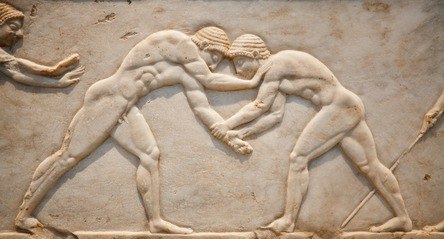
Welcome to The Philosophy Forum - an introduction threadHello, my name is Leontiskos, after the ancient Greek wrestler. It made a great deal of sense to me when I learned that wrestling and philosophy went hand in hand in Plato's Academy!
I am from the United States and am moderately conservative. I am a Christian of the Catholic/Orthodox variety. I most enjoy Aristotle and Plato. I also like Thomas Aquinas, especially because his concision is useful when space is limited. I studied philosophy as an undergraduate and have attempted to maintain the practice over the years.
'Glad to be here. It seems like a nice place with a strong community. Kudos to those who have sown the seeds to make it so. :smile: -
What is the Nature of Intuition? How reliable is it?But building the foundation of justification on intuition, which as discussed by Darkneos,Philosophim and other users is derived from knowledge, seems question-begging.
That is the reason why I thought the notion of intuition should be elaborated, mainly in epistemology discussion. — Charlie Lin
Intuition is a notoriously ambiguous term in philosophy, and in this case definitions will become especially important. BonJour calls it "rational insight," and I think he is getting at a basic dichotomy between two ways of knowing. The English derivatives for the two ways of knowing are 'ratiocination' and 'intellection'.
Ratiocination is the intellectual operation which consists of composition or synthesis, and decomposition or analysis. It is the operation of the discursive mind which puts things together and pulls things apart. All formal systems of reasoning and logic are meant as aids to ratiocination, and in our world today ratiocination is by far the dominant intellectual act. It is so dominant that when folks like BonJour reference intellection ('intuition') our culture tends to balk!
Intellection is the intellectual operation which consists of simple apprehension. It is that moment when you "see" something, or when the dots finally connect. It is a kind of intellectual perception. It can apply to simple concepts, but also to more complex relations which are understood immediately.
For those who doubt the existence of intellection, I would simply point out that ratiocination presupposes intellection, and could not exist without it. This is because syllogistic reasoning always presupposes terms and concepts. They are the atomic building blocks of syllogistic reasoning, and they cannot ultimately be known by ratiocination or discursive thought. For example, we can question the premises of an argument and require our interlocutor to defend each premise, but this process of questioning premises cannot go on to infinity. At some point there must be a simple, non-composite manner of knowing which is capable of grounding ratiocination and discursive argumentation.
Admittedly I am only skimming the surface, but I should also address your basic conundrum that intuition is fallible, and therefore could not be capable of justification. The first thing to note is that pretty much everything that is capable of justification is also fallible. Just because we can find an example where intuition goes wrong does not mean that intuition is inherently unreliable. The second, longer answer, is that the distinction which divides knowledge from opinion also applies to intuition, and it is just as difficult and subtle. Intuition can be mistaken just as opinion can be mistaken, but intellection* and knowledge cannot be mistaken. What is the difference between intellection and intuition? The difference is, I aver, as slippery as the difference between knowledge and opinion. Yet we must hold that intellection exists if we are to hold that ratiocination is possible.
* "Intellection" is merely the word I have chosen to signify X, where "X is to intuition as knowledge is to opinion." -
A basis for objective moralityNot all objective morality is the same, and the term "objective" itself varies in meaning, but perhaps you're better off not trying to create an ought. The desire to live weaves its way into our moral thinking, it manifests as our proclivity for ascribing value to life. While that doesn't create an ought, it does do something to ground moral thinking. "Ought" isn't built into us quite so explicitly as you may like, but our biology is designed in a way that naturally leads us to certain conclusions. While we don't "have" to do anything, what we will do is being influenced by our biology, as will what we think we should. You could expand on the idea from there. — Judaka
I agree with this. A morality could be objective without successfully bridging the is/ought gap. This would just mean that in order for the moral system to have normative force, one would need to first accept the objective rule. In this case the rule has to do with the goodness of life. Indeed, this is a reasonable rule that most people would accept, and it is objective because we are capable of distinguishing life from death. -
Personal Morality is Just MoralityThe concepts involved in moral thinking have universal applicability... — Judaka
Good OP. Although I myself wouldn't follow you towards emotivism, I think your general point is true and much needed. For me the question is whether "personal morality" is coherent.
I should think that this proposition holds true: <If something is moral/immoral for me, then it is also moral/immoral for others>. There are minor exceptions such as oaths and whatnot, but in general it seems to hold. This is the sort of thing that apparently underlies the Golden Rule.
The separation seems most useful to someone who resents the attempts of others to influence their behaviour — Judaka
Yes, but also and increasingly because there is a strong strand of secular morality which attempts to eschew traditional forms of morality, and even goes so far as to try to undermine normative behavior claims altogether. From this flows the idea that to call something immoral or wrong is passé. Surely this is rooted in the resentment you speak of, but it has become a force unto itself which shapes moral inclinations. Many now deem it mildly immoral to accuse someone of having done something wrong, and in some cases even the private judgment of wrongness is censured. In consequence we see the attempt to have it both ways: to have personal moral standards while at the same time professing that these standards are in no way applied to others. -
The motte-and-bailey fallacyFor instance, there are a wide variety of rhetorical strategies that manifest responses to the realization that oneself and one’s opponent are talking past one another, that is, are conceiving the terms of the debate according to incommensurable schemes. Seen in this light, Motte-bailey can be a useful and necessary means for finding a bridge, a code of translation , between the two worlds. — Joshs
I was thinking of something similar. I agree that the motte-and-bailey model is useful to overcome incommensurable schemes, but the motte-and-bailey approach may also be an integral ingredient in the natural ebb and flow of philosophical dialogue. If this is correct then it will be difficult to distinguish the fallacy from the natural ebb and flow of philosophical dialogue.
For example, upon reading Plato's dialogues we might reasonably conclude that the motte-and-bailey fallacy occurs on every page, but it is worth noting that this is also just part and parcel of philosophical dialogue. If such dialogue can be compared to martial arts, then there is a way in which each party is constantly alternating between attack and retreat. Part of this involves testing one's opponent by venturing into more controversial territory and then retreating back to a more easily defensible position. It is precisely this ebb and flow which produces philosophical knowledge and understanding.
That's not to say that there is no such informal fallacy as the motte-and-bailey, but it would be easily confused with acceptable ebb and flow. For this reason it is the sort of fallacy that would be useless in the midst of an argument. In the heat of argument the accuser will be likely to misuse the fallacy and the defendant will be unlikely to accept the charge. Yet when analyzing an argument from a third-party point of view the fallacy could be useful.
The core question would be whether the motte and the bailey are equivocal or "analogical" (i.e. interrelated and defensible). Since that question is already an essential hinge of the main argument, leveling the motte-and-bailey accusation in the midst of an argument would seem to be a form of begging the question. The fact that there is widespread disagreement about whether the example in the OP exhibits fallacious reasoning is a case in point. Generally fallacies need to be easily identifiable, and because of this I am wary of fallacies that are too subtle. -
Does ethics apply to thoughts?Mens rea. The so-called intention can lead to a harsher punishment. You’re right. I guess I’m trying to find out why, ethically speaking, this needs to be the case. — NOS4A2
Some ethical systems take thoughts into account and others do not, but most do—including, as you have noted, law. One type of thought that is almost always taken into account is the intention. The intention is important because it is the first principle of individual human actions. Every properly human act involves an intention, and the intention is the primary defining characteristic of an act.
For example, we might describe a behavior as, “Using a knife to cut into a man’s flesh.” But this behavioral description is insufficient for moral specification. Is he a surgeon, intending to save the man’s life; or is he a murderer, attempting to end it? The first is good, the second bad.
But again, as far as acts go, reasoning is the least consequential. It’s not as consequential as pulling a trigger, for instance. In fact it’s so inconsequential that we could never measure it, observe it, and all we can do is sift through its chatter, most of which comes after the event in question. Should this scant activity be applied to our judgement? Law says it should be. Again, I’m not so sure. — NOS4A2
Why think it is inconsequential? In one way it is more consequential than anything else. No trigger is ever pulled without a thought, without an intention. No human act ever occurs without a thought. Thoughts are a sine qua non for human action, and so if action is consequential then thoughts too must be consequential.
I think you may be entertaining the syllogism: <Because thoughts are less empirically measurable, therefore they are less consequential>. But does consequence really correlate to empirical measurement in this way?
I read elsewhere that someone was compassionate by virtue of what he wrote online, as if showing concern for others was something one could do entirely alone, tapping on some device or other. It evoked in me that tired platitude “it’s the thought that counts”. I’m not so sure. — NOS4A2
Thoughts are good or bad, but taken in isolation they are only good or bad in a minor way. “Virtue signaling” involves an overemphasis on mere appearances, and this is what makes it unappealing. If someone believes that thinking about saving a drowning man is as virtuous as saving him, then they are sorely mistaken. Nevertheless, it is still good to desire to save drowning men, and the act of saving a drowning man will always involve that thought/desire.
It is also worth noting that the absence of a thought can deprive mere behaviors of their moral nature. For example, if you are only doing something because there is a gun to your head, or because you don’t happen to possess Plato’s Ring of Gyges, then a good action loses its moral worth.
In short, moral actions require both: good actions propelled by good thoughts and intentions. On my view those who try to isolate thoughts and those who try to isolate actions are both mistaken.
Leontiskos
Start FollowingSend a Message
- Other sites we like
- Social media
- Terms of Service
- Sign In
- Created with PlushForums
- © 2026 The Philosophy Forum