
-
Ukraine Crisis
Exactly and well put.There is no secret about the pursuit of U.S. interests and their intention to support ties to the E.U.
This influx of support does not show that the revolution was engineered by outsiders.
Since the violence wielded by the Yanukovych regime was a decisive factor in the growth of the revolution, your planners would have had to have been behind that as well. Pretty crafty. — Paine
What the people here obsessed with the US fail to understand that diplomats and foreign politicians trying to influence events simply isn't the same as foreign entities planning and staging a coup.
And naturally this idea totally forgets that for example the "Right Sector", the basis for all neonazi accusations, lost heavily in the 2014 elections and were out of the government (which that then has changed again when Zelenskyi and his party got into power): -
Ukraine Crisis:100: :up:
In all, both revolutions were something quite Ukrainian. Not something planned and controlled from other countries, even if these countries wanted to influence and likely did influence the outcomes.
That academic work btw that you referred to simply brings sanity to the whimsical anti-US propaganda spout on this thread to the real light:
And this latter I would agree, as Ukraine had elections (which changed the power structure) not only in 2014, but afterwards which change the political landscape a lot.Foreign NGOs and IGOs did indeed provide some small levels of support to several independent news groups, and SMOs in 2013, but this was clearly ad hoc and recipient actioned. Moreover, as was explained by one Kyiv based embassy worker, most foreign actors, be they diplomats or NGOs focused on elite actors and attempted to help broker a deal (author’s correspondence February 14, 2014, NYC). Ukrainian political insiders, have informally also complained about the lack of initial interest and then later mismanagement of the EuroMaidan crisis specifically by leaders of the EU (and EU member states) and the United States. Thus it is difficult to discern the real influence these actors had on the mobilization process.
It is possible, as I have argued elsewhere, that our focus on foreign actors oftentimes over-exaggerates not only their role in the mobilization process, but also their ability to influence actors and events.
But some seem to go with Putin's delusional propaganda and think Ukraine is run by neonazis, which the US put into power years ago. I just hope it's simple ignorance about the actual history. -
Ukraine CrisisJeffrey Sachs was well referred in the article given by . But Sachs naturally can have his US-oriented picture of it all (as can have Marjorie Taylor Green, etc). And have to say when it comes to the topic of global povetry, Jeffrey Sachs has a lot interesting to say, so he is a smart commenter.
Btw everybody puts the start of the war there with the annexation of Crimea and the Donetsk and Luhansk uprisings. February 24th last year was a dramatic escalation.The United States played a role in the successful effort to stage a coup d'etat in Ukraine in 2013-2014 to overthrow Yanukovyc. Sachs marks this event and the subsequent invasion of Crimea in February of 2014 as the start of the Ukraine war. — Tzeentch
Yet even if US did play a role, I would disagree to call the Revolution of Dignity a "staged coup" starting with the Euromaidan protests. This wasn't some Operation Ajax, but naturally Russian propaganda portrays it to be so. That Yanukovych wasn't afterwards even accepted by the revolting Donetsk and Luhansk regions, which had been his core base, tells just how truly unpopular he was among Ukrainians. (Yanukovic heading Donetsk and Luhansk Republic etc. would obviously brought them legitimacy. Not like the people now: for example the ponzi-schemer that lead one of the "People's Republics".)
But of course, with the arrogant hubris of Westerners who see everything revolving around the US, actual domestic politics of foreign countries and their people don't matter, hence the finer details of the actual events are sidelined. But this has already been discussed earlier. -
Ukraine Crisis
If you would read correctly, it is about invading and annexing territories from neighbors. Hence when it comes to for example China, Vietnam can be worried about them (even if China hasn't called Vietnam an artificial country), but likely Portugal isn't worried so much about China. I think Mexico would mind if the US annexed let's say Baja California from them. And with US Presidents declaring Canada or Mexico to be artificial constructions.Are Canada worried? Is Mexico? America is the single most interventionist country in the world, by a long, long way. — Isaac
Russia has treated similarly it's near abroad as the US does with Central America and the Caribbean. And now, as Russia is stuck in Ukraine, the regional policeman role isn't working anymore, as I referred with the videos from Nagorno-Karabakh and Kazakhstan.
Classic case of a state annexing territory for defensive reasons. That still makes it so that Israelis have a map of their own while the other world accepts another map, which shows the discord. Even if Israel is a nation state and doesn't want to be multiethnic, it still has done things that are typical for imperialists. Right from it's inception.As to... "just has invaded in the past decades two of it's neighbors"... are Israel imperialist? — Isaac


Needless to go over all the states as many have their own special cases. But for example Morocco is in the same category of annexing territories with Spanish Sahara. Imperialism isn't surely just limited to the Western countries.Is India, Pakistan, Bangladesh Myanmar, Ethiopia, Eritrea, Djibouti, Morocco, Spain, Armenia, Azerbaijan, Sudan, Syria, Turkey... All of whom have been involved in military clashes over border territory in the last two decades. — Isaac
And yes, I will stick to the definition of imperialism given, for example, in Merriam-Webster dictionary:the policy, practice, or advocacy of extending the power and dominion of a nation especially by direct territorial acquisitions or by gaining indirect control over the political or economic life of other areas
You can continue to argue that the definition is false/meaningless or whatever. I'll leave you to do that alone. -
Ukraine Crisis
Likely Moldova, which has a frozen conflict and Russian troops inside it or do you refer to my country in the past? Well, I think I know what that means.Or neutral (double emphasis) border states - what Ukraine was and threatened to no longer be as a result of continued United States foreign policy. — Tzeentch
You really don't see the annexations of territory done through force as imperialism, really?there is no evidence for it, — Tzeentch
You have to first tell just why, if this all was an American provocation, why did Putin be provoked? That fact is that Russia is meddling similarly in former Soviet republics that aren't coming to NATO. And being member of Russia's alliance, the CSTO, doesn't work like you would think in a defense pact. In fact the picture of what you have of NATO and the US would be far more appropriate to the relation of Russia and the CSTO.I am entertaining the hypothesis that the United States intentionally sought to provoke long-lasting conflict between Europe and Russia. — Tzeentch -
Ukraine Crisis
Or for Russia. Already as the Russian military is failing in Ukraine, it is having ripple effect in the Caucasus and in Central Asia with the former Soviet Republics. If everything goes bad, it can be extremely bad.It seems inevitable that the only ending to this war can be great disaster - either great disaster for Putin, or great disaster for the whole world. — Wayfarer
A good summary of why now only after two years since the last war tensions are again rising in Nagorno Karabakh:
And then there's Kazakhstan:
-
Ukraine Crisis
There are many smaller countries who think so. Not every country is like the UK, Russia or the US.Wishful thinking. — Isaac
A country that just has invaded in the past decades two of it's neighbors and annexed territories from them? Yeah, well, you'll be on there on your own peaceful island, not sharing a border with Putin.No. The point was that your definition becomes pointless by being too inclusive. If Russia is 'imperialist' in your sense, then it's nothing to worry about. — Isaac
Nonsense, likely you have imperialism either in the woke category of things like "racism" or likely as the nearly religious satanism as it's used by the Marxists. Russia is basically still an Empire, so it's really no wonder that it has imperial aspirations.You want 'imperialism' to mean something so much more sinister. — Isaac -
Ukraine Crisis
To seek to acquire territory in pursuit of a national security has been the modus operandi for Russia basically for all it's entire existence.Why would it be impossible for a nation to seek to acquire territory in pursuit of a national security goal? — Tzeentch
As Catherine the Great put it plainly and simply “I have no way to defend my borders but to extend them.” Russian imperialism has always been viewed itself as a defensive posture simply because there is on geographic obstacle that would give a natural border for Russia...other than the goddam Pacific ocean. But that "defence" has meant colonizing other people and invading and annexing other countries. Which simply is imperialism, no way to say otherwise.
The error you seem to think is that somehow the Russian security goals and imperialism couldn't coexist. Yet basically they are part of each other. And that makes Russia so dangerous because it still is an Empire: Even just in the Russian Federation there are 35 regional semi-official languages and about 100 minority languages. There is something like 199 ethnic groups in the country. It's not actually something that you would call a clear nation state. -
Ukraine Crisis
A lot of countries don't want political and economic control of other states. They just want to sell stuff to them and have normal, working relations. Not meddle in their internal politics with the objective to control them.Then what fucking country isn't imperialist? — Isaac
But it's good that at least you noticed from the definition the part "Imperialism is the state policy, practice, or advocacy of extending power and dominion, especially by direct territorial acquisition" that @Tzeentch isn't willing or capable to pick up.
These actions should be obvious and evident, even without going into what Putin actually says, which makes it even more clear what Putin's objectives are. Just to take one example:
June 9 (Reuters) - Russian President Vladimir Putin paid tribute on Thursday to Tsar Peter the Great on the 350th anniversary of his birth, drawing a parallel between what he portrayed as their twin historic quests to win back Russian lands.
"Peter the Great waged the Great Northern War for 21 years. It would seem that he was at war with Sweden, he took something from them. He did not take anything from them, he returned (what was Russia's)," Putin said after a visiting an exhibition dedicated to the tsar.
In televised comments on day 106 of his war in Ukraine, he compared Peter's campaign with the task facing Russia today.
"Apparently, it also fell to us to return (what is Russia's) and strengthen (the country). And if we proceed from the fact that these basic values form the basis of our existence, we will certainly succeed in solving the tasks that we face."
Very directly said from the man himself.
-
Ukraine CrisisYes.
We have to face the uncomfortable reality that we haven't progressed from the 20th or the 19th Century to something else. -
Ukraine CrisisImperialism is the state policy, practice, or advocacy of extending power and dominion, especially by direct territorial acquisition or by gaining political and economic control of other areas, often through employing hard power (economic and military power), but also soft power (cultural and diplomatic power).
-
The Debt Ceiling IssueThis is something of a theater happening every now and then.
I think now the question is if the current Senate is so dysfunctional, so bitterly venomous, that they take the theater way out of the comfort zone and force (I guess in the summer) a government shutdown or even a missing of a payment (which is called a debt default).
If someone or enough people really, really want to make things hard for the Biden administration or then make minority leader Mitch McConnell to look even worse, by all means make this the new issue.
Yet in the end likely the whole financial system will crash. But that can take a while to happen... -
Ukraine Crisis
-
Ukraine Crisis
NATO membership, yes, because NATO membership could be and was easily thwarted like Turkey's long standing EU application.You've been claiming Ukrainian NATO membership was not the reason the Russians invaded. — Tzeentch
What your error is the idea that reason for the war is singular, NATO enlargement, and that the imperial aspirations are unimportant/fake. Unipolar reasoning for wars is typically incorrect. The obvious inability is to see that Russia a) wants parts of Ukraine and b) wants to dominate Ukraine. Yes, prevention of Ukraine slipping to the West is part of that domination. Controlling the "Near Abroad" isn't just about NATO membership, just ask the Moldovans. It all aligns perfectly well with the imperial aspirations. And the simple fact is that Russia has perpetually had a problem with it's borders.
And I've said years ago, far earlier than even this war started that in Russian military doctrine the number one outside threat was NATO enlargement. But when you can thwart that membership without a war, then you don't go to war just because of it. Russia achieved this well simply by waiting out the US in Central Asia. The US had bases all around Central Asia, the -stans, I think in Tajikistan even both Russia and US did had both military bases. And now the US is out.
Hence it isn't only because of NATO enlargement and to then argue that the war wouldn't have happened because NATO enlergement is incorrect. Pretext reasons could always be given. Russia could have easily gone to war let's say because stronger ties with Ukraine and EU. But of course an attacker disguises his aggression as a defensive measure.
-
Ukraine Crisis
I wouldn't actually call it significant number. And it will take months before they are on the battlefield.With a significant number of heavy tanks from the West now heading for Ukraine, including the Leopard tanks from Germany. Things just escalated! Much bigger booms coming or Russian bust? — universeness
Politicians want to meddle with the specifics, so they approve / disapprove what weapon systems are sent to Ukraine and what individual types are held. It's like the Johnson administration during the Vietnam war choosing some targets to bomb in North Vietnam and declaring others out of bounds assuming that for North Vietnam the war was some kind of diplomatic game of escalation (which was nonsense).
Basically with heavy tanks Ukrainian formations have the ability to make attacks and counterattacks. Of course there's more than just the tanks: there has to be enough artillery and rockets, enough other armoured vehicles and enough drones and a working battlefield intelligence and command and communication structure to have the ability to do maneuver warfare on the battlefield. One weapon system won't do it.
Russia has lost likely over 1600 tanks and Ukraine 400 tanks in the war. The US is contemplating to send 30 Abrams tanks, the UK 14 Challengers and Ukraine would be if it could get 100 Western tanks. That is basically enough for one armoured brigade and likely the tanks will be spread out and first used in the mobile reserve. It's not a game changer as the numbers are low. Ukraine likely would need three times more in order to take again the initiative in the war.
Leopard 2A4 and M1 Abrams
-
Ukraine Crisis
You really respond to what Mearsheimer said last November 2022 with a lecture that he has given in 2015 as a refutation? (The latter video isn't working)And as for Mearsheimer and his points regarding alledged "Russian imperialism", for which again there is no evidence whatsoever: — Tzeentch
Good that you finally acknowledge that NATO member states can stop NATO membership. (Just look at Sweden and Finland and the problems they have with Turkey and Hungary.)The United States clearly decides what happens in NATO, and even if NATO member states stop NATO membership, nothing stops and nothing did stop the United States from turning Ukraine into a de facto NATO member, which it did. The Europeans had no say. — Tzeentch
Well, in a defense pact that relies on nuclear deterrence and mutual defense, membership is extremely important. Otherwise there is no deterrence, only what we have seen: sanctions and tapid arms shipments. You have to understand the difference. We wouldn't call it start of WW2 if in response of the German invasion of Poland, France and UK had responded with sanctions and arms shipments to Poland, not with war declarations. Alliance and warm words are two different things.
Hence talking about "de facto NATO membership" is wrong. Far better would be to talk about Ukraine as a "US/NATO proxy" as it cannot be refuted that Ukraine crippling Russia's military works well for those East European countries afraid of Russia. I know now how it felt for Swedes when Finland defended itself in the Winter War, because Ukraine is doing it for many East European countries.
You have one expert, I take experts in plural and understand that they can different opinions and even if they can have good points, not all of them have to be taken as lithurgy.f you're not interested in the views of experts — Tzeentch -
Is pornography a problem?
It's a good observation how the two are similar.The production, deliberate lacing with addictive substances and aggressive advertising of "snacks" turns a necessary, healthy and pleasurable activity, eating, into the harmful consumption of junk. So does the commodification and vulgar packaging of sex turn it into trash. — Vera Mont
Snacks, junk food and porn are simply cheap substitutes that try to hide things that are important. Especially in porn the emphasis on casual sex is done on purpose: otherwise for those without an intimate, loving relationship, it would be a far too stark reminder of what they are missing if sex would be connected even in porn to long term relationships and attachment to another person. In snacks and junk food they might today desperately try to show that the food is actually healthy, has so and so many calories and so on, even if it is obvious that the food has to be as cheap as possible. And snacks simply ridicule the meal, you don't have time for eating properly. -
What’s wrong with free speech absolutism?
Problem is that many people don't want the truth and are interested in only power. Or see truth only as a powerplay, something that is used to get power. In fact, both woke activists and conspiracy theorists don't care so much about the truth as they see it as a tool of power. They have an agenda. Populism and conspiracy theorists are fighting against the evil elites, who dominate media and try to control the truth. Someone could assume that they would aspire then for an objective truth. Not so, especially if the truth is that actually those cabals don't have as much power as thought. That would be heresy and working for the enemy! It's not a debate, it's a competition who rules. And the post-modernists? I think you already know.Truth is really the only counter to falsity in every case. For this we need more information, more data, more debate, more education, more transparency, not less of it. The more and more people rely on a group of people to tell them what is true or false, like a government or corporation or church, the less and less they become able to figure it out for themselves, only compounding the problem to begin with. — NOS4A2
Never underestimate the lure of tribalism and all it's adverse effects. -
Ukraine Crisis
When you are saying that Europeans do not play a role of significance in this conflict, US can solely decide what countries join or not NATO when it's charter say something else etc. I think there's no use to engage in a discussion where you have things so wrong.You're grossly overstating the importance of countries who have no real power to speak of. — Tzeentch
And btw, you fail to give any reasons why you assume that " Ukrainian victory, obviously, which is going to involve NATO boots on the ground" even if asked several times, this discussion isn't really not worth wile.
No evidence...you are hilarious! Yeah, Don't mind taking into account what Putin says and the Russians have done earlier and are doing now, like annexing more parts of Ukraine to be part of Russia, just pick your quotes about NATO and insist there's nothing more to it.A nice theory, but there's no evidence to support it — Tzeentch
?- a point which Mearsheimer makes repeatedly. — Tzeentch
Mearsheimer argued earlier that Ukraine should have nuclear weapons, because otherwise Russia can attack it and thus it was a really bad decision to push Ukraine to give them to Russia.
And actual quote from Mearsheimer from November 17th 2022. Mearsheimer's response:
What we were talking about back in February was whether or not he was interested in conquering all of Ukraine, occupying it, and then integrating into a greater Russia. And I do not think he’s interested in doing that now. What he is interested in doing now that he was not interested in doing when we talked is integrating those four oblasts in the eastern part of Ukraine into Russia. I think there’s no question that his goals have escalated since the war started on February 24th, but not to the point where he’s interested in conquering all of Ukraine. But he is interested for sure in conquering a part of Ukraine and incorporating that part into Russia.
So your only "truth teller" that you have put on a pedestal is saying that Putin is interested conquering part of Ukraine and incorporationg that into Russia. Well, I would call conquering parts of another country and incorporating them to your own imperialism, but I guess that is semantics. That Russian jingoists has wanted Novorossiya to be part of Russia (and have that land corridor to the already annexed Crimea) has been something quite long known. Something that apparently came as a surprise to Mearsheimer. -
Top Ten Favorite FilmsHave to put this up.
Two absolute legends from the silent films, Charlie Chaplin and Buster Keaton together at older age in Chaplin's Limelight. Too bad the film was in many places in the US boycotted in 1952 as of allegations of Chaplin being a communist. A good film, even if not in the top ten category.
-
Top Ten Favorite FilmsAs Thin Red line was mentioned, I have to note that two of the best warfilms ever done aren't American, but German.
Der Untergang (the Downfall, 2004): Yes, you know it from the various memes from one specific scene from the film, but note that this is one of the historically most accurate war films as Apollo 13 (or films depicting real historical events) and Bruno Ganz make simply the best depiction of Hitler ever.
Das Boot (1981): submarine films don't get better as this and perhaps the best naval warfilm. Puts the sound of sonar in a totally different perspective.
Although I think the most grim warfilm, a film that really makes war as awful as it can be is Elem Klimov's Come and See from 1985, a quite rare film from the Soviet Union. Nowdays Russian warfilms are even more jingoistic than American ones were earlier.
Heven't seen that one. :lol: -
Top Ten Favorite Films
The Marx brothers are still awesome. As I child when I was in Seattle (for two years), my father took us to this incredible movie theatre showing black and white films. It's one thing to see on DVD Duck Soup and other all time classics. It's totally another to see the film in a movie theatre with an audience howling in laughter during the mirror scene. I remember laughing in the car when going home.I was also thinking about the best comedy movies: That's probably another at least top ten:
It's a mad mad mad mad mad mad world
Duck Soup
Are two of my favourites. — universeness
Duck soup's famous mirror scene:

Movies that made you laugh as a child and still make you laugh older are really precious.
How about High Noon?Westerns — T Clark
Or the epic Searchers by John Ford with John Wayne?

A bit older, but still. -
Top Ten Favorite Films
:up:And damn, I Jjust remembered The Thin Red Line. Has to be top ten. — Bradskii
A great reminder that film is art. -
Does power breed corruption or nobility?- Unchecked power breeds corruption. If you can get away with it, why not? Nobody notices, you would be a fool not to do it.
- A bureaucracy that doesn't work, doesn't deliver. This creates a reason/necessity for bribery: I'm in a hurry!
- Government officials who aren't paid creates corruption: somehow they have to make their income too.
- Government officials having the ability to decide if something is valuable or not creates the possibility for corruption: if a highly valuable permit needs the blessing of a low-income bureacrat or officials decide if one can build a shopping mall on farm land or not, someone may "oil" things.
- Nepotism: You have to take care of the family!
- Past corruption breeds present corruption: it's the norm of the land.
And usually: all of the above. And when it's something ingrained into the culture and the attitudes of people, it's not going away easily. -
Top Ten Favorite FilmsAs there are good lists, I would add perhaps
- One movie from Charlie Chaplin: Perhaps City Lights or Goldrush, The Kid, the Great Dictator...
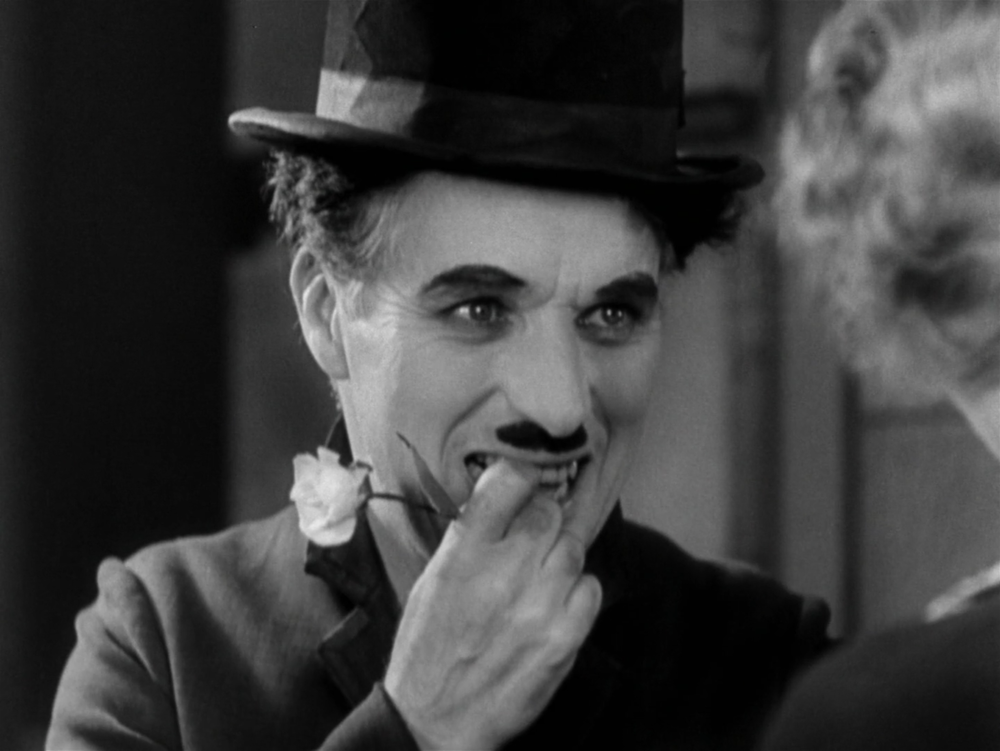
- Thin Red Line (a great poetic war film from Terrence Malick)
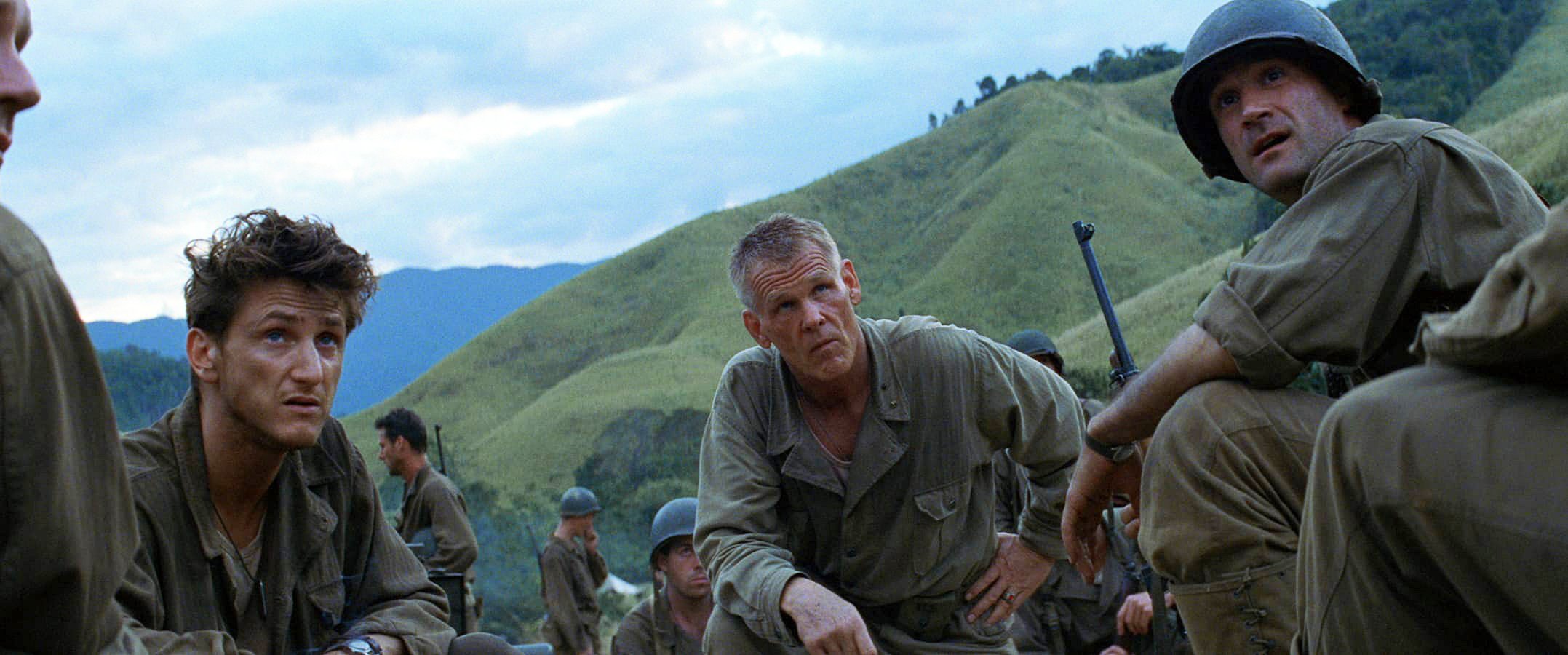
- Heat (a great Al Pacino and Robert de Niro faceoff, likely best film from Michael Mann)
-
Ukraine Crisis
It cannot. If the members oppose what the US wants, then the US has to forget the organization and go to bilateral defense agreements. That happened with CENTO and SEATO, if surely the US did want the organizations to continue. You simply have false ideas about how international organizations work: their charter is important on how they operate. The US didn't decide anything in 2008. The promises of US Presidents hold until a new President changes them. And no process, like with Sweden and Finland, has even been started with Ukraine.Of course it does. That's why the US decided in 2008 that Ukraine would become part of NATO even though that was against the will of Germany at the time. — Tzeentch
No, you miss the point. If one can stop a defense pact only with the threat of war, then you only maek the threat. Period. You don't go to war. It's called logic, @Tzeentch.You're just missing the point. Clearly had Ukrainian ties with the United States threatened to become like those of Israel, we'd be in the exact same position, with Russia invading before such a defense pact could be sealed. — Tzeentch
However if you want to reconquer a country and be again a Great Power, what better way to hide your imperial aspirations than by accusing others and try to convince others that your only acting on purely defensive reasons. Some idiot will always fall for it.
Just how can you be so sure?- it's all fine and good, but when the end result stays the same it was all for naught. — Tzeentch
Oh, that you must in your knowledge about the future know.Nice list. And where is Ukraine now? On a course to defeat. — Tzeentch -
Ukraine Crisis
Because why then Russia would attack? Mere muscle flexing in one large military exercise would have done it. No need to attack Ukraine.and that it somehow proves that NATO membership for Ukraine wasn't the driver behind this conflict — Tzeentch
And what I'm arguing is that what the other NATO countries thought about NATO membership for Ukraine is completely irrelevant, — TzeentchThis answer shows how little understanding of NATO you have.
It's a defense pact between members states which all have to accept new members. It's not just a sock-puppet of the US President as you think it is. Just look at how many times the US has gone to war without NATO and how many times US Presidents have been angry about the whole organization. And we should remember that it's sister organizations CENTO and SEATO have already sidenotes on history pages.
— Tzeentch
Now you are totally making things up: the US doesn't make NATO members. The US can give assistance, military aid, train together and have all kinds of relations with one country, but that doesn't make it a "de facto" NATO member. Israel isn't a NATO member and so wasn't Afghanistan before turning again to an emirate.because the policy that the United States pursued made Ukraine a de facto member of NATO anyway, whether the other member states liked it or not. — Tzeentch
Do not play a role?Coming back to my point, the Europeans do not play a role of significance in this conflict. — Tzeentch
That's simply utter bullshit.
Let's start with the real committers to this war: Estonia and Latvia have committed to Ukraine military and financial aid equivalent of 1% of GDP. Basically the Baltic States and Poland are throwing as much as possible as they can +the kitchen sink to help Ukraine. Yes, they are small, but the European commitment comes to be huge by aggregate: when you add all of the things provided by various nations together, it becomes quite substantial.
Let's take for example tanks and armoured vehicles. The US has given 200 armoured vehicles and no tanks. Only Poland has given over 300 tanks and armoured vehicles to Ukraine. Czechia has given 153 tanks of which 90 have been upgraded by Netherlands and over hundred other armoured vehicles.
And then let's look at what Germany has given and has now promised to give:
107 border protection vehicles*
4 mobile and protected mine clearing systems*
168 mobile heating systems*
20 rocket launchers 70mm on pick-up trucks with rockets*
15 armoured recovery vehicles*
13 tank transporter tractor Oshkosh M1070*
7 tracked and remote controlled infantry vehicles for support tasks*
143 Pick-ups*
216 generators
35 load-handling 8x8 wheeler trucks
26 reconnaissance drones*
36 ambulance vehicles*
36.400 wool blankets
12 heavy duty trailer trucks*
55 anti-drone sensors and jammers*
30 drone detection systems*
6 lift trucks*
Iris-T system and SLM missiles*
60,000 rounds ammunition 40mm*
18,500 projectiles 155mm
18 load-handling trucks 8x8
50 MRAP vehicles DINGO
3 bridge-laying tanks BEAVER*
10 unmanned surface vessels*
14,000 sleeping bags
Mi-24 spare parts*
ammunition for multiple rocket launchers MARS II
spare parts for heavy machine gun M2
20 frequency range extensions for anti-drone devices*
17 heavy and medium bridge systems*
5 multiple rocket launchers MARS II with ammunition
14 self-propelled howitzers Panzerhaubitze 2000 (joint project with the Netherlands)
200 tents
116.000 winter jackets, 80.000 winter trousers and 240.000 winter hats
100,000 first aid kits*
405,000 pre-packaged military Meals Ready
30 self-propelled GEPARD anti-aircraft including circa 6.000 rounds of ammunition*
67 fridges for medical material
counter battery radar system COBRA*
4,000 rounds practice ammunitions for self-propelled anti-aircraft guns
54 M113 armored personnel carriers (systems of Denmark, upgrades financed by Germany)*
53,000 rounds ammunitions for self-propelled anti-aircraft guns
20 laser target designators*
3,000 Panzerfaust 3 with 900 firing devices
14,900 anti-tank mines
500 Man Portable Air Defense Systems STINGER
2,700 Man Portable Air Defense Systems STRELA
22 million rounds of ammunition for fire arms
50 bunker buster missiles
130 machine gun MG3 with 500 spare barrels and breechblocks
100,000 hand grenades
5,300 explosive charges
100,000 m detonating cord and 100.000 detonators
350,000 detonators
10 anti-drone guns*
100 auto-injector devices
28,000 combat helmets
15 palettes military clothing
280 vehicles (trucks, minibuses, all-terrain vehicles)
6 palettes material for explosive ordnance disposal
125 binoculars
1,200 hospital beds
18 palettes medical material, 60 surgical lights
protective clothing, surgical masks
600 safety glasses
1 radio frequency system
3,000 field telephones with 5.000 cable reels and carrying straps
1 field hospital (joint project with Estonia)*
353 night vision goggles*
12 electronic anti-drone devices*
165 field glasses*
medical material (inter alia back packs, compression bandages)
38 laser range finders*
Diesel and gasoline (ongoing deliveries)*
10 tons AdBlue*
500 medical gauzes*
MiG-29 spare parts*
30 protected vehicles*
7,944 man-portable anti-tank weapons RGW 90 Matador*
6 mobile decontamination vehicles HEP 70 including decontamination material
10 HMMWV (8x ground radar capability, 2x jamming/anti drone capability)*
7 radio jammers*
8 mobile ground surveillance radars and thermal imaging cameras*
4 mobile and protected mine clearing systems*
1 high frequency unit with equipment*
To be delivered:
2 air surveillance radars*
40 infantry fighting vehicles MARDER with ammunition (from Bundeswehr and * industry stocks)
air defence system PATRIOT with missiles
100,000 first aid kits*
114 reconnaissance drones*
17 mobile heating systems*
26 load-handling trucks 15t
2 Pick-up
18 wheeled self-propelled howitzers RCH 155*
90 drone detection systems*
2 hangar tents*
7 load-handling trucks 8x6*
7 self-propelled Gepard anti-aircraft systems*
7 tracked and remote controlled infantry vehicles for support tasks*
6 mobile and protected mine clearing systems*
42 mine clearing tanks*
3 mobile, remote controlled and protected mine clearing systems*
5 mobile reconnaissance systems (on vehicles)
393 border protection vehicles*
1,020 projectiles 155mm*
156,000 rounds ammunition 40mm*
5 armoured engineer vehicles
3 heavy and medium bridge systems*
16 self-propelled howitzer Zuzana 2* (joint project with Denmark and Norway)
78 heavy duty trailer trucks*
3 air defence system IRIS-T SLM with missiles*
12 communications electronic scanner/jammer systems*
field hospital (role 2)*
20 frequency range extensions for anti-drone devices*
14 truck tractor trains and 14 semi-trailers*
2 tractors and 4 trailers*
10 protected vehicles*
vehicle decontamination system
5,032 man-portable anti-tank weapons
200 trucks*
13 bridge-laying tanks BEAVER*
In fact, the German military is now days so small, that it's surprising how much they have been able to give to Ukraine. (For example, Germany has 312 Leopard 2 tanks of which only 130 are operational. The older types Leopard 2A4 there are only 24. In 1989 they had over 5 000 tanks.)
This navel gazing and focusing just on the US is becoming ridiculous. -
Ukraine Crisis
Just the way as the Ukrainian defense minister admits it in the article: Ukraine is not de jure member of NATO, which means that Russia didn't attack NATO, Russia attacked Ukraine. And that is my point: it is Ukraine's war. Hence it is quite expendable. NATO Ukraine is either past lies of American Presidents or now Russian propaganda: both false and only political rhetoric without any connection to reality.Then how do you explain this: — Tzeentch
Hence Ukraine's situation is, with similar reasoning, the same as was for the former (now collapsed) Afghan Republic. With that country you could argue similarly that because Afghanistan and it's Former Afghan National Army were trained by the US and NATO, armed by the US and NATO and financed by the US and NATO countries and only having the exception to Ukraine that there were ALSO troops from the US and NATO fighting in the country, that Afghanistan was a de facto NATO country.
And oh by the way, that regime collapsed. And people just forgot about it's humiliating end.
Likely for the same reason you don't answer to all the questions I make you: limited time and these threads explode.Also, why do you only respond to half my post? — Tzeentch
Although I would like to hear just why you think Ukrainian victory will need is going to involve NATO boots on the ground, as you said here . -
What’s wrong with free speech absolutism?I think one can speak simply about free speech, because even if you want to make the difference with American free speech and the issue in other countries insisting on the "absolutism" of American free speech, you still have in the US laws against libel and slander, blackmail etc. And one of the largest security apparatuses keeping the taps on American citizens.
The problem of having to make limitations on free speech is basically an integral part of a society based on democracy and free speech. Just where we draw the lines on these freedoms, just like what ought to be decided by the government / collective and what should be left to the individual citizen, is a question that every society and every generation has to try to solve and likely will find different solutions.
We can hope that the solutions found will be as close to the ideals as possible and self evident for the majority of people. -
Ukraine Crisis
The assistance Ukraine got...which in earnest only happened only after Russia attacked Ukraine. Finland and Sweden have had for a long time have had training exercises with NATO, had the capability to operate with NATO and did participate in NATO operations ...and didn't belong to NATO and had no guarantees from NATO. And membership wasn't going to happen.What do you think such a statement really means, when the United States is already training and supplying Ukraine like its gearing up for another Vietnam? You need to get a sense of reality. — Tzeentch
And these were two EU countries, which Ukraine isn't.
The big difference is that they applied to NATO and vast majority of the alliance accepted in their own Parliaments and some NATO members have given security guarantees for both countries. Unlike Ukraine. Ukraine's NATO application simply was left aside. No NATO Parliament started to discuss it. You had only vague promises... because NATO couldn't accept that Russia have a veto-vote.
In fact, it is you who should get a sense of reality: with totally ignoring actual Post-Soviet history of Ukraine and Russia's huge influence in the country can someone say Ukraine was geared up like (South) Vietnam for war ...or everything happened because of US actions, like John McCaine visiting the country or Bush promising NATO membership for Ukraine.
In fact, the February 24th attack 2022 by Putin just shows how much Russians assumed to have Ukraine in their pocket. Last time when they invaded, the Chief of Ukrainian Navy changed to Russian uniform and Ukraine didn't oppose military the quick invasion. -
Ukraine Crisis
Why???When I say commit, I mean commit to a Ukrainian victory, obviously, which is going to involve NATO boots on the ground. — Tzeentch
Nonsense.At the onset of the Russian invasion Ukraine was already a NATO member in all but name. — Tzeentch
Being a member of a mutual defense pact means that other members come to your defense literally. No country has any defense agreements with Ukraine to come to help them in case of war. And Ukraine (foolishly) believed the words of Russia, the US and UK stated in the Budapest memorandum.
Wrong. The biggest European country saying NO to membership, with likely a lot more countries having similar doubts was evident and means a lot in NATO. Don't confuse the words of US Presidents (Bush etc) as being the same as NATO countries giving the green light.Statements by Germany at this point aren't worth anything, since Ukraine entering the US sphere of influence was a de facto reality. — Tzeentch
If you didn't notice, for example the war in Iraq wasn't a NATO operation. Hence NATO isn't a rubber stamp for the US.
And do notice, unlike now with Sweden and Finland waiting for Hungary and Turkey, no country made any bilateral defense agreements with Ukraine. -
Ukraine Crisis
Umm...nobody is committing themselves to Ukrainian defense except Ukraine itself and Germany surely isn't. If it sends Leopard 2 MBTs along all other stuff already there, it really doesn't do any difference. The US is sending Patriot missile systems and 150 Bradley IFVs to Ukraine. And they (the US) are training Ukrainian pilots to fly F-16 combat aircraft. So what you are saying doesn't make sense.The United States can not and will not commit itself to a Ukrainian defense, because getting involved in a protracted land war with Russia would basically cede world hegemony to China without a fight. — Tzeentch
Isn't the UK already giving tanks to Ukraine.The Germans know this, and they are none to keen on getting thrown the hot potatoe of taking leadership in that protracted land war instead of the United States. — Tzeentch
First of all, NATO and EU is actually committed to give arms support for Ukraine and Germany has already given military hardware for Ukraine. Now if Germany prevents other countries, like Poland to give weapons to Ukraine, that may further question the validity to buy armaments from Germany at the first place.
And basically it's just make supply and logistics worse when instead of one modern main battle tank you will have possibly three doing basically the same job. Leopard 2 would be the most logical choice.
The Germans actually only showed that this attack (February 24th 2022) wasn't at all about NATO: because German's openly before the attack declared that they wouldn't allow Ukraine into NATO. But guess what: Putin attack and tried to capture Kyiv.Thank God the Germans have some sense of how this game works. Merkel understood it too, that's why she blocked the American efforts to stir up a conflict in Germany's backyard. — Tzeentch
But perhaps the American effort you are talking about was somehow to make Putin argue that Crimea, Luhansk, Donetsk, Kherson and Zaporizhia are integral parts of Russia and Nikita Khrushchev's act of giving Ukraine Crimea was illegal and in any case the Communists made the mistake in the first place of having Ukraine not part of the Russian Federation. -
The Economic PieIf you count with that equation the "decent salary of all employees (bonuses, B)", that is a fixed term cost that cannot be easily change (or then you have to fire people), but P is basically what has happened earlier, not an estimation of the future.
Hence you are not taking into account the demand side, the buyer or consumer) or competition. Hence too many ceteris paribus assumptions. -
Ukraine CrisisSo Germany, or the German Chancellor, couldn't make up his mind about giving Leopard 2 tanks to Ukraine or even accepting that other countries like Poland and Finland could give few. Finland has stated that it will give some tanks if the transfer is an European one meaning naturally that Germany has to OK the move.
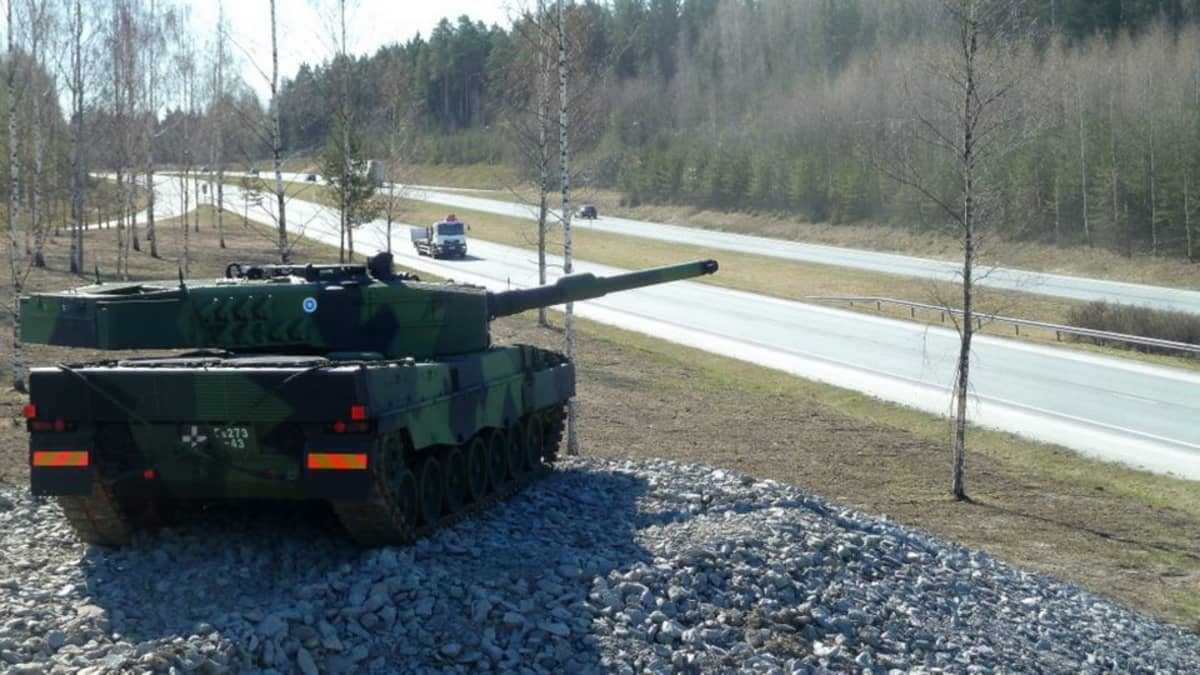
(Some spare. Finns have Leopard 2 tanks in the tank museum and even have put them as monuments on a highway where the armoured brigade is.)
The UK, which has it's tank force basically down to one regiment, is giving one tank company (14 Challengers) to Ukraine. On the other hand there are about 3500 Leopard 2 tanks produced with ample amount of older Leopard 2A4 tanks around, which still is quite potent.
Germany, for some ludicrous reason, is now waiting for the US to give tanks too before it will (could?) give Leopards too. Which basically is a farce: tiny amounts of three different main battle tanks which only two (Leopard 2 and the M1 Abrams) have similar main gun ammunition and all have different logistical systems. Leopard 2 would be the optimal role as a) many countries are willing to give them and b) the Abrams is more complicated to take care of. Likely Ukrainians can sustain them (as like the Patriot SAMs). Likely we are talking about the equipment to basically one armoured brigade, yet likely the modern tanks would be used in company-size battlegroups spread around the front.
Either it's the typical German feet-dragging or then Putin has bullied Scholz too much. Basically this is ridiculous political micromanagement when you already have committed yourself to support one side, but then make one single weapon systems quite a buffoonery. As if one weapon system would be either an escalation or some wunder-waffe that would change everything in a war where the combined arms is the real issue. -
Ukraine CrisisA Great article!
First have to quote that article on what it says about Russian propaganda, which has been prevalent in the discussion here too:
This Russian propaganda has been amplified and endorsed by an unusual assortment of people in the United States, including the Fox News commentator Tucker Carlson, Representative Marjorie Taylor Greene, the Democratic Socialists of America, and the Columbia University economist Jeffrey Sachs. The propaganda absolves Russia, blames the United States for the war, and has four main tenets: first, that a long-standing American effort to bring Ukraine into NATO poses a grave threat to Russian security. Second, that American shipments of weapons to Ukraine have prolonged the fighting and caused needless suffering among civilians. Third, that American support for Ukraine is just a pretext for seeking the destruction of Russia. And, finally, that American policies could soon prove responsible for causing an all-out nuclear war.
Those arguments are based on lies. They are being spread to justify Russia’s unprecedented use of nuclear blackmail to seize territory from a neighboring state.
Yet coming to the actual issue, this is simply obvious:
A Russian defeat in Ukraine would strengthen the nonproliferation treaty. Ukrainian success on the battlefield has been achieved with conventional weapons aimed at military targets—not with nuclear weapons causing mass civilian casualties. If the nation possessing the most nuclear weapons in the world is unable to gain victory, the importance of having nuclear weapons will be greatly diminished.
But to the core of the article, which is this:
If nuclear threats or the actual use of nuclear weapons leads to the defeat of Ukraine, Russia may use them to coerce other states. Tactics once considered immoral and unthinkable might become commonplace. Nuclear weapons would no longer be regarded solely as a deterrent of last resort; the nine countries that possess them would gain even greater influence; countries that lack them would seek to obtain them; and the global risk of devastating wars would increase exponentially.
In my view a Russian win even without the use of nuclear weapons will create a very severe Cold War and Cold War mentality. Putin has attacked his Poland, there's no going back to a "Munich settlement", a "reboot" of US-Russian ties as Bush, Obama and Trump all enthusiastically tried (of course, Trump could try again if elected). The attitude is shown in the article very well by quoting our prime minister Sanna Marin. What here should be noted that Marin is a social-democrat, and earlier Finnish social-democrat Presidents and prime ministers worked eagerly with Russia and it's leaders and made the very fabric of what now is truly a historical term, Finlandization.
(Finnish cartoon from the Cold War: President Kekkonen and social-democrat prime minister Sorsa on a well trodden route to Moscow. Current social-democrat prime minister and Finnish president (conservative) are different.)

Now Russian tanks and missiles are expended in Ukraine. The simple fact that now it is quite empty behind our border when it comes to the Russian military. The chief of Finnish military intelligence has estimated that it will take the 2020's for Russia to rearm: so large have been the materiel losses. Hence there isn't a threat right now, but with a victorious Putin, it's going to be very, very tense. Then the military buildup starts in earnest. -
The Economic PieFrom the first article:
Key to a more charitable consideration of Simons is to keep his overriding concern in mind: that an inconvertible fiat money system and the corporate form of the private business organization are inconsistent with classical liberal or libertarian premises. According to Simons, it is the combination of these two institutions which is mainly responsible for some of the more significant negative side effects of modern capitalist practice, like undue cyclical instability and excessive inequality of income and wealth.
Actually, this is a very interesting thought. But what should be noticed that this isn't about the basic principles of a corporation or company being, but basically also the economic surrounding (biosphere?) and the complex system that modern economies have grown into.
Yet a widely held view is that the current debt based monetary system with central banks cannot be called a free market as basically any market mechanism correcting excesses like speculative bubbles (which would mean a severe market correction, asset deflation, severely higher interest rates) simply isn't allowed by a system controlled by central banks and in the end governments (and those who control governments). That the price of money, interest, isn't decided by markets is one problem. And the perpetual asset inflation (or hope of) simply works in favor for the traded corporations.
Simply put it, calling it free market when you have socialization of losses and only profits being privatized isn't free market. A system which needs more and more debt in the long run cannot work. But life can be shorter for the individual perhaps, so why worry.
Of course, there is the problem of the corporate elite coming to be a class of it's own, especially when mutual funds and other institutional investors play such a dominant role. The Bill Gates or Elon Musk is the oddity, which you can find likely only in an new industry, where the original pioneers still have a role to play. When corporations can own corporations, all power can be (and usually is) with those who officially would just only have basically a similar role as any other worker.
While management is the agent for shareholders in the sense of being ultimately appointed by and accountable to them, it is also the agent for the corporation itself.
After all, in order to manage the corporation’s assets, management must legally represent the corporation as the titleholder to these assets. And because the corporation is an impersonal legal entity, agency for the corporation lends a significant degree of autonomy to the position of management, which is precisely why it has proved so difficult to make shareholder control over management more effective, despite the many legislative measures aimed at enhancing management accountability to shareholders. -
The Economic Pie
And what about then government owned companies? At least their owner is perpetual (or acts like it) and there is even less liability.For-profit corporations are the problem due to limited liability and perpetual nature. — Benkei -
Ukraine Crisis
It's basically an issue of time: Russia can transform it's military industrial complex to wartime in year or two. The idea that sanctions work is nonsense, especially in a country which does have the knowledge to produce missiles and tanks.Still, we are likely going to see primitivization of their weapons production, just as we are already seeing primitivization of civilian production (car manufacture, etc.) — SophistiCat
Classic example is Iran and it's F-14 Tomcats. The Shah had gone on an amazing weapons buying spree and then after the revolution the new regime had these state-of-the-art advanced fighters, which had their maintenance and spare parts banned. The standard rhetoric was that they will have to be grounded, because Iran lacks the spare parts. Well, these fighters were successfully used in the Iran-Iraq war and I think even today they fly. The ban has just prevented there to be any flyable F-14 in the US (as spare parts are banned).
Hence the talk that Russia will go out of missiles. or tanks, is false. What can happen (or did happen) is that for time they cannot use them as much as earlier, and the lack of armed vehicles put the Russian forces on defense for some months and incapable of large operaions in several locations. But in spring it can be different.
I think the problem is that we compare the situation of Russia to the situation of the US and West Europe. The error is that both the US and Europe are at peace time and every aspect of peace time arms manufacturing is present with all the red tape, the haggling and the limitations starting from the fact that the arms industry is made to produce small quantities highly costly equipment to equip a small peacetime army. It's not like you put the factory to work in multiple shifts 24 hours to feed the Moloch of a conventional large scale war. Hence when a weapons manufacturer claims that the production is x amount in a year, that refers to what has been produced at peacetime.
But once a society has gone into mobilizing civilians to the front, I can assume it can handle the military industrial complex with similar sweeping changes and gets full focus of the society. -
The Economic Pie
That were intended to make a profit.We had an industrial revolution based on partnerships. — Benkei
What's so bad about that? Profit is someone's salary, and at least workers were justified to get a salary. -
The Economic Pie
Economic/political ideas how to replace capitalism, which have been tried again and again, were not and have not been historially so good.his critique of capitalism is very good. — Benkei
Critique is one thing, what is given as the solution is another.
ssu

Start FollowingSend a Message
- Other sites we like
- Social media
- Terms of Service
- Sign In
- Created with PlushForums
- © 2026 The Philosophy Forum