
-
Religion will win in the end.Theists usually don't fit in very scientific fields well because usually people don't want to hire a scientist that believes the world is 10,000 years old for obvious objective and emotional reasons. — WiseMoron
What part of being a theist means that you must think the world is 10,000 years old? I have plenty of complaints about theists, but a lot of theists think the universe is around 13.1 billion years old (give or take 15 minutes). There are, sadly, millions of literalist inerrant-bible theists who do think that the world is 10,000 years old (if that old) -- and they would be self-excluded long before they got to their first particle lab job interview. -
Religion will win in the end.I am very reticent about what God is or isn't, or does and doesn't do, but I think heaven and hell are real, or represent something real. I have to believe that actions have consequences beyond this physical existence. — Wayfarer
I who was ranting about people claiming to have specific knowledge of God, should not then make opposite pronouncements, like "God doesn't do anything", since I claim there is no specific knowledge about God is available to us. So STFU, Crank...
Life Eternal, Resurrection, Heaven, Hell, Final Judgement, etc. These words resonate in my mind, whether I like it or not. The faith I was raised with was mainline (Methodist) Christianity. But mainline Christianity is where all those specific attributes for God came from that I find troublesome. So, when I try to salvage something of my spiritual up-bringing, I fasten on to God concepts that get God out of the job of solving our infinity of problems brought to Him in prayer. So, rather than expecting God to heal the pain, maybe God only shares our pain with us. God is eternal, (that does seem to be kind of necessary) but maybe not all knowing, all powerful. God has my OK on being everywhere, too. If He is going to be the Ground of Being, I guess he needs to be all over.
Like I said, I'm not really sure what the "ground of being" means. I'm not alone. Someone asked what it means on a catholic forum. The answer is from 7 years ago, and the person writing this has since been banned. Don't know if it was for heresy or not.
What does "God is the 'ground of being' mean?"
This is a good question and cannot be answered in words other than as an intellectual assertion not necessarily referring to the actual denotation of that phrase. That is because "God as the Ground of Being" is a mystically arrived at Understanding and is more of a hindrance as a concept than a help in such comprehension as may be had. Suffice it to say that in Western minds, save for the few who have an experiential clarity through diligent effort or through Grace, there is a grammatical inability to grasp the import of this Idea. English is inherently an ideological filter in this case that does not allow an easy grasp, as wonderfully useful as it normally is!
If the OP is sincerely interested in a dairy of someone who arrived at such a Realization, or in an exegesis of that experience in scholarly terms, may I recommend them to the following, both by Franklin Merrell-Wolff: there are many others, but these are likely the most thorough and succinct.
Though it may be a term bandied or even correctly used by some contemporary liberal religionists, the Understanding that prompts those words is the single consistent Insight that has appeared throughout history without regard to time, place, culture, gender, intellect, or any other factor, including the birth religion of the one realizing. On inspection it is even congruent with the words of the Bible, in particular those having to do with Identity.
That being the case, the referent experience is much maligned in the Christian world and the world in general due to its esoteric nature. Christianity is for the most part exoteric, and therefor unfriendly to this avenue of Understanding, though it is easy to see that most Christian mystics factor heavily in this expression, though in their own language. — TUNO, August 9, 2010 non-religious, not atheist, not theist, not agnostic
I to have used such a phrase before in order to illustrate Gods sovereignty over all creation. However, it is the context in which it is used that gives the sentence its full meaning. It appears to me that by saying that God is the ground of all being, this is meant in the context of ontological authority. God being a foundation; in other-words, God is that which is most fundamental to all reality in general. This means only that in order for there to be any kind of contingent reality at all, their must first be that which is a necessary reality. An analogy is thus used to describe the fundamental source of reality as being that which is holding everything up. Hence God is the ground of all being.
I don't think that the person intends to place God outside of the concept or predicate of being, as if to say that God is something more than being. That's logically impossible. If God is anything at all, God is necessary being. However, I am perhaps assuming to much and reading my Thomistic outlook in to it. — MindoverMatter2, August 13, 2010, Catholic
The thread on the Ground of Being quickly descended into bickering. Like, "BTW, there is a jewel of a little book used in many comparative religion classes, even Catholic ones, that has an elementary introduction to General Semantics and its application to religious studies. I will refer you to it if you like, Gregory I. But first, find How to Read a Book by Mortimer J Adler, and then other books might be of use to you. -
Religion will win in the end.Yes, they ask those questions, but still -- remission is remission, whether by divine intervention or the inchoate resources of the genome. (Further, while some 16th through 19th century physicians were fairly good observers, it would be asking a lot of these practitioners to differentiate a miracle from a remission or a quiet stage.
Take syphilis: One gets a sore on one's dick, on the roof of one's mouth, or in the vagina and it is a bit uncomfortable. Maybe there are some other troublesome symptoms, Then it goes away and sometimes nothing much happens for many years, at least that one would connect with the original sore. 3 decades later one may go insane from end-stage syphilis. Hepatitis B, on the other hand, can make one extremely ill, then clear up (spontaneously -- there isn't any treatment). Again, liver cancer may be a consequence down the line.
Herpes Zoster -- shingles -- can be excruciatingly painful and look like hell (large areas of skin covered with densely packed little red blisters, like the surface of a raspberry). It can, indeed often does, go into remission, sometimes abruptly. The herpes virus (chickenpox) that caused it in the first place, is still there, and may return. Without a knowledge of viruses (available only after the early 1900s) one would have a hard time explaining this.
Physicians didn't always know the difference between an infection (which they didn't understand until the late 1800s) a cancer (which they still don't understand fully) or something else--like a goiter. Cutting people open to see what was going on was often fatal, and they usually didn't understand what they were looking at, so they guessed. Well, some diseases do go away on their own, and if they were misdiagnosed in 1695, who would know the difference?
(It wasn't until the anatomist John Hunter dissected and studied about 1000 corpses in the late 18th century that some big hunks of the internal anatomy were figured out. Hunter was something of a one-off genius. It was quite a while before another anatomist picked up where he left off.) -
Religion will win in the end.the phenomenon of apparent miracles — Wayfarer
I can't stand here at this distance in time and kilometers and say Dr. Duffin (a hematologist) didn't know here ass from her elbow. In the case discussed in Wikipedia, she was asked to examined slides (which she assumed were part of a malpractice suit) from a patient with an aggressive form of leukemia. The woman's blood slides showed she had myeloblastic leukemia, “the most aggressive leukemia known.”
She assumed the patient had died in the intervening 5 years since the slides had been made. But no: the patient had, after a relapse, gone into remission, and had stayed in remission for 5 years.
Is this a miracle? The Vatican thought it was a miracle. But how would one differentiate a spontaneous remission (it happens once in a blue moon) from the intervention of a saint? And for that matter, how would the Vatican know that it was the prospective saint that performed the miracle and not an experienced saint?
You think a regrown leg is outlandish, but are badly deformed and undifferentiated cancer cells that become properly formed and differentiated any less outlandish?
The patient in remission has reason to rejoice and be exceeding glad, for she was whizzing down the chute to the grave, and then she was back home, doing whatever she does. But in 99,999 out of 100,000 cases, the unfortunate patient (with whatever disease they have) lands in the grave right on time, regardless of how many prayers are said.
I just don't believe in the God that periodically hears some prayers and acts, but in most cases does nothing. Rather, I prefer (it takes some effort) to believe in a God who does not intervene, perhaps can not intervene, but shares our suffering. I don't believe in the Grand Reward of Heaven, either, or Hell. God doesn't preside over a paradise spa, and didn't set up torture chambers in the sub-basement of the triple-decker cosmos (heaven up, hell down, us in the middle).
Now, for many people this is as good as no god at all, because they are pretty wedded to hell-fire, fluffy white clouds of heaven, the pearly gates (as revealed in many a New Yorker cartoon) and the bearded god on a throne. -
Religion will win in the end.Ding! Not being silent, just in case you thought I had an off switch.
-
Religion will win in the end.So, what's left of God if we don't/can't know anything about God? Well, God ceases to be a "person" with preferences, dislikes, total power, perfections, and all that? Either God just disappears, (and we are hard atheists) or God becomes non-personal, and does not have specific characteristics. It doesn't mean that God doesn't exist, it means that we can't put God in any sort of labeled box. — Bitter Crank
'what else do you have?' — Wayfarer
There is the Bible, which doesn't provide information directly about God. What it reveals is the testimony of people who believed that God existed. Such testimony is worthwhile in various ways, even if it doesn't reveal direct, objective information about God.
I would say if I was sure what I was saying, that the God who is not in the box (and never was in the box) is the "ground of our being". But like I said, I'm not sure, exactly, what that means.
Well, as a matter of fact, the annals of the process of canonization contains a considerable amount of evidence for miraculous healing. — Wayfarer
I don't believe it. What I don't believe is that someone was healed because the spirit of a dead person (like Mother Theresa or St. Catherine) thought that it was a good idea. I don't think God did it directly, either. What I believe happened in these situations is unexplained healing which has occurred periodically in cases where saints were not involved. People who take sugar pills, for instance, have experienced significant improvements in tumors, for a while. "For a while" was often what the actual drugs were capable of doing. Usually, though, patients receiving the placebo do not experience benefit.
Over the centuries, billions -- maybe trillions --of prayers have been addressed to the saints who did nothing for the subjects of the prayers. As one ex-Episcopalian priest put it, "Nothing fails like prayer."
And even if saints were actually behind various miraculous survivals, their good work comprises a body of action that is nothing if not arbitrary and capricious. Prayers rise to heaven for 1000 dying children; 2 children recover, 998 die forthwith.
I have heard more than a few testimonies about the miracles of God. One particular one was from a Lutheran Deaconess. An acquaintance of hers was working in Alaska and several men were being transported in a helicopter. The helicopter crashed, and 2 out of 7 survived. She proclaimed a miracle. Well, why no miracle for the remaining 5?
Why no miracle for all the victims of all the bad things that are continuously happening to good people?
Ah, well, all of a sudden "we don't know". We "know" that God performed a miracle in saving 2 out of of 7, but we are suddenly in the land of mystery when it comes to the dead 5.
If we think God is capable of miracles, if we identify miracles but can't explain the non-miracles, then we are doing a great disservice to God. We're putting him into a Mr. Fixit box for our own purposes. -
Religion will win in the end.You are right -- the title suggests the nonsensical notion that religion, itself, is a party that is running in the game.
-
Religion will win in the end.What do you say to those who claim not merely to believe, but to enjoy a personal relationship with their God? — John
If they ask me what I believe, I will tell them that I do not believe we can know anything about God, but that does not mean that I am, therefore, certain that God does not exist. I may tell them that I also don't believe that they have special gifts which enable them to know anything specific and concrete about God. I know from experience, that those sort of statements will likely lead to a prolonged discussion which will not be very productive.
Imaginary friend? But even if so, would it matter if it transformed your life? Are we really so certain as to what 'imaginary' means, anyway? — John
If people imagine that they have God as a friend, and this leads them to live an exemplary life, bully for them. Belief in the unseen (God) or the highly unlikely (Socialism in America) or the possible and terrible (fascist coup d'etat) is something that people can do with both hands tied behind their back. I am as likely as anyone else to entertain intense interest in the unseen and the unlikely.
Generally, I don't think believing in the imaginary is a good idea. Humans need to remain in touch with reality as much as possible. We are altogether too prone to drift off into some sort of nonsensical fantasy as it is. -
Religion will win in the end.I agnostically presume humans have no access to knowledge about God(s). — VagabondSpectre
You have stated what is the sum of my reasons for distancing myself from belief in God: God has been (usually is, probably will be) presented as a being about which we have specific knowledge. The knowledge isn't limited to the Bible, which I do not count as evidence about God. It's very good evidence of beliefs about God.
The churches also claim to have belief about God. Revelation didn't altogether come to an end when the canon was closed. For instance, The Catholic Church knows that the saints intercede on our behalf with God, even specializing in particular problems. I don't know how they know that, but they think they do. Evangelicals can channel the Holy Spirit and then translate what the Holy Spirit said. I don't know how they can do that, but they think they can. (I say "fie upon them")
So, what's left of God if we don't/can't know anything about God? Well, God ceases to be a "person" with preferences, dislikes, total power, perfections, and all that. Either God just disappears, (and we are hard atheists) or God becomes non-personal, and does not have specific characteristics. It doesn't mean that God doesn't exist, it means that we can't put God in any sort of labeled box.
God outside the box is just too far out for a lot of believers (in the God of personhood with preferences, priorities, prohibitions, perfections, powers, etc.) and one becomes some sort of diseased deviant pariah of disbelief in the eyes of the fundamentalists of orthodoxy. -
Three Things Marx Got WrongMaybe categorizing the bulk of white collar work as "petite bourgeoisie" is incorrect..... I guess the point is that are all these things a fatal blow to his ideas? Whether wage workers are not getting enough investments or not, if there is not enough agitation for the working class to feel exploited, then Marx was essentially wrong. — schopenhauer1
Traditional socialists like to stick with the three classes - working class (wage workers), middle class (professionals like doctors... and small business proprietors), and upper class (wealthy owners of the means of production -- factories, farms, mines, railroads, etc.) Almost no one sticks to this system.
The ruling class is till at the top (the wealthiest 5-10% of the population, at most). Most people think they are middle class, which now describes the consumption behavior of maybe 50%-60% of the population: They own or are buying a home; they have at least 1 car; both partners in a couple are working; about a third of this group is college educated. They have white collar or service jobs such as teaching. Many of the "middle class" work in businesses. Almost all of this so-called middle class depends on at least 2 regular wage jobs for income. The working class, which most people don't want to think of themselves as, occupy the bottom of the economic distribution, and the term describes their consumption behavior too: it's fairly restricted because they don't make much income at their jobs.
Personally, I think people call themselves "middle class" as a face-saving maneuver. They are not poor, but they do not have much security. They usually have quite a bit of debt. They often have little decision making authority at work, and their wages are inadequate to support the lifestyle they aspire to (which as far as I can tell, is often fairly modest).
The working class that thinks they are middle class really started to slip beginning after 1973 (the year of the Arab oil boycott). The boycott didn't cause--it just marked the beginning--of the economic decline we have seen, like the enormous transfer of low-cost manufacturing to Asia; the decline in workers incomes and actual purchasing power; the high rate of automation in factories and offices; and so on. Why has consumer debt gone up so much? Because people are trying to maintain a certain quality of life with credit.
For the people on the bottom, life is much less pleasant. -
Three Things Marx Got WrongThree Things Marx Got Wrong
The rise of the Office Space class. — schopenhauer1
Marx lived between 1818 and 1883. Office work was perhaps more skilled in his time, but clerks and bookkeepers were working class. They were not partners in business. When you think of office work in Marx's time, think of Bob Cratchit (A Christmas Carol)--as exploited and poorly treated as a factory worker, just not quite as dirty and injured as often. By the time of his death, the volume of business had expanded enough to require more types of paper and data processors.
During the 50 years between 1870 and 1920, industrial (and business) activity would expand greatly. More production, more production workers, more warehousing, more shipping, more sales -- all increasing the amount of clerical work. Some of the white collar work was "managerial" but not managerial enough to raise the worker into the petite bourgeois class. They were still working class (and still are).
The almost complete movement of mass production to the global East and South. — schopenhauer1
The movement of of mass production to the global east and south required the advances in science, industry, production, and consumption that took place between 1920 and 1970. By 1970, the boom of the previous century was spent. The potential of the industrial had been fully exploited in all of the basic manufacturing areas, but in the production of information and entertainment technology as well.
Marx would have had to have been a very far-seeing prophet of the future to predict television, radio, computers, hundreds of millions of automobiles, the Autobahn or the Interstate Highway System, airplanes, and space travel.
He probably would have understood the movement of manufacturing from England, Europe, or North America to South America or Asia, were he alive now, but he probably couldn't predict it.
A democratization of science and technology- — schopenhauer1
I think he would have understood this development especially well. The democratization of science and technology is an outgrowth of the manufacturing that put more knowledge and technology into the hands of working people. First, they used this technology on the job (computers, scientific equipment, etc.) and they could afford to buy it for use at home. If one watched all of the science programming on educational television (and some of it was even on the radio at one time) that one could find, and read general science magazines, in time one would become much more sophisticated about science and technology.
The bourgeoisie consists of large capitalists -- owners of factories, warehouses, office towers, rental buildings, railroads, banks, brokerages, and so on The petite bourgeoisie consists of small farmers that own their own land, small store owners, some professionals (lawyers, doctors, dentists), etc. and a few others. The difference between the bourgeois and the working class is that the bourgeoisie earns its income from the labor of others. The working class person is dependent on his ability to work to get paid. Working class people earn a wage; they are paid for time on the job. The bourgeoisie are paid by returns on investment.
Almost everyone is working class. The relatively small number of people who own high-value production properties are bourgeoisie. -
What would you do in this situation?How do you know yhumans don't exist? — Andrew4Handel
Because you made them up.
Imagine humans discovered a planet almost Identical to earth with a human like species yhumans. — Andrew4Handel
By the logic that people who died before smallpox vaccine was invented didn't reach their full potential, no one will ever reach their full potential because something new (in some category) will come along which might be construed as an improvement. Did William Shakespeare reach his full potential? He lived before smallpox vaccine was invented (and he didn't die of smallpox, either.) He was 52. Did Einstein reach his full potential? He died before Viagra was invented.
I'll grant you, if a young person dies before they reach adulthood they almost certainly will not have reached anything close to their full potential. Once one is an adult, the conduct of one's life leads one towards achieving full potential, or away from it. Many people--some through no fault of their own, others entirely through their own fault--fail to reach full potential.
I'm 70, and I have not reached my full intellectual potential (the physical peak happened decades ago). This is mostly my fault. I frittered away too much time on non-fulfilling activities. While life is not over, there are some things that I am just not likely to accomplish -- maybe never was likely to accomplish. I would have liked to learn Latin or Greek, and French or German. Didn't. I learned a little Latin and am trying to learn French. (L'univers des francophones maîtrisés frissonne d'horreur. The universe of fluent french speakers shivers in horror.) -
"Western Culture" and the MetricKentucky — SleepingAwake
I used to have some relatives in Corbin, KY; they're both dead now. I liked the area. My brother thought the politics in KY were appalling.
illiberalism — SleepingAwake
Yes, it is 'illiberal'. A lot of it is "identity politics" wherein groups who can form around an identity that can be made exclusive (something "our fellow Americans" can't be) list their grievances against the dominant groups. So you have blacks, gays, latinos, women, (who aren't really a defensible identity group -- neither are men) and various others whining, bitching, carping, complaining, demonstrating, etc. against the injustices imposed upon them by whites, straights, men, straight white male police, dead white male Europeans, and so on.
If these aggrieved groups are good at what they do, they'll put on a show good enough to attract the media. If not, they get ignored. Then they complain about being erased or being rendered invisible.
I'm a gay white male, but 70 years old. From my perspective, the gay rights movement has been over for quite some time. I wasn't and I am not a gay-marriage enthusiast. I'll grant that transsexuals have many challenges, but I don't think their struggle is the gay community's problem. It's their struggle, and they will make progress, or not, on the basis of how well they present their case to the public. -
What would you do in this situation?The reason people believe we can do better is because we actually can. — Andrew4Handel
I believe people can do better in reality, but not quite as well in reality as in theory. We are limited beings living in a limited world. We can not turn all of our wishes into our commands and see them fulfilled, at once! There may be unlimited beings living in unlimited worlds, who can do whatever they wish, but that is not us. -
What would you do in this situation?People were happy before the internet but does that mean those pre-internet people would not have wanted to use the internet? They were happy with less because that is all they knew not because they were living up to their full potential. — Andrew4Handel
It's debatable how much "more" the Internet has added. True, when I was growing up there was no YouTube, no FaceBook, no Google (I graduated from high school in 1964). There were other resources, however. For instance, there was the Readers Guide to Periodical Literature -- an index of magazine and journal articles updated monthly, There were encyclopedias, dictionaries, reference books, (reference libraries, even) general libraries, etc. A lot of the really useful information on the Internet is the same kind of stuff people have had access to at universities and large urban libraries for a long time -- it's just much more convenient now.
Am I glad there is an Internet now? Absolutely. Were people living up to their full potential before the Internet? Absolutely. And the "full" mark was just as high then as it is now.
The point I made is that the people on the other planet live for much, much longer and have much better lives in a way that is not obtainable here. — Andrew4Handel
The point I made is that "yhumans" don't exist, so a comparison between here and there is empty. It counts for nothing. If you said, "Human life in France and Norway is superior to human life in the United States", we could debate that. It may well be better there, and maybe Americans should stop having children since the French and Norwegians have much better lives. Or maybe life isn't better there. -
Religion will win in the end.This IS a very complicated thread -- some people burying corpses, some not, people running, philosophizing, and texting all the same time -- amazing -- or studying law on a phone while riding a moral train to defend the vulnerable: Saints alive!
This old psychopomps horse just can't keep up with the dizzying complexity of it all. -
"Western Culture" and the MetricDemocracy is a form of government, not an overall mindset of the populace, which is what we're talking about--culture. — SleepingAwake
Yes it is part of an overall mindset. A democratic government will perform poorly with people who don't think and live in a democratic style, whose culture isn't based on the spirit of democratic decision making. Whether it's the garden club or the Democratic Party precinct caucus, the township board or the U.S congress, democracy is an essential culture in a democratic country. -
"Western Culture" and the MetricIt's difficult for farmers to make a living because the overall cost of food has sunk in recent years, and as a result, they can't afford to hire the hands they'd need to get everything efficiently planted. — SleepingAwake
Not sure which part of the country you live in, but a couple of points:
The price the farmer receives for a crop (wheat, corn, potatoes, vegetables, fruit...) is fairly disconnected from the cost of groceries. The price the farmer received for grain is a small part of the cost of bread or corn flakes. Grains could practically be tended by robots. Those big combines, like trains, don't really need anybody in the cabin. Dairy is highly regulated and dairy support programs are not exactly rational. I love small dairy farms, but they are economically obsolete, at this point.
On the other hand, fruits (pears, apples...) row crops (strawberries, asparagus, lettuces, various vegetables, melons, and the like) take a lot of labor from seed to the harvest.
Transportation, processing (at the least grading, sorting, washing, drying, packaging, labeling... and at the other extreme, turning rough wheat into angel food cake), warehousing, marketing, and labor and profit at every step of the way adds most of the cost. A $6 angel food cake might have 25 cents worth of cake flour in it.
At lot of food practice doesn't make sense. For instance, I don't know why Dean Foods in Texas is selling dairy products in Minnesota, and Land O'Lakes in Minnesota is selling products in Texas. It's nuts. -
Does it all come down to faith in one's Metaphysical Position?Keep working on your metaphysical position. Sometimes it's a lifetime occupation.
-
Religion will win in the end.I am not the one who said that people in the Middle East should die because of overpopulation. — TimeLine
"Of course there are people dying in the middle east. As well there should be; it's over populated, like much of the world."
Oh, you know, like Dickens:
"Are there no prisons?"
"Plenty of prisons..."
"And the Union workhouses." demanded Scrooge. "Are they still in operation?"
"Both very busy, sir..."
"Those who are badly off must go there."
"Many can't go there; and many would rather die."
"If they would rather die," said Scrooge, "they had better do it, and decrease the surplus population." -
Does it all come down to faith in one's Metaphysical Position?Both of these observations are apt. For instance, if one is an ardent socialist, one may not see evidence of the goodness of unfettered capitalism. It just doesn't show up in the scans. As for free will, I agree - it is very difficult to prove that free will exists. I think that we have some capacity for free will, but I don't think I can define where determinism ends and free will begins.
-
What would you do in this situation?Your "evidence of better quality lives" was on another planet. Better quality lives can be created on this planet.
-
Does it all come down to faith in one's Metaphysical Position?Not possible. Totally hopeless. Or, maybe not. It depends. Can you be more specific? Like, what?
-
What would you do in this situation?Having seen what even ordinary people can do to their children, let alone what screwed up people do, I am all in favor of raising the standards for parenthood.
I would love to write music like Handel and Bach but they have already done it. — Andrew4Handel
Well sure, who wouldn't like to turn out a pack of Handel's oratorios or concerti grosso? But, as you have discovered, you can't repeat Bach or Handel, and you can't really repeat the worst composer there ever was, either (not quite sure who that would be--so many contenders). What you can do, should do, and can only do is be you. If people could have written just like their favorite composers, we might be stuck in early medieval music, and never gotten beyond that. Bach and Handel might never have appeared, perhaps. And if we got stuck on Bach and Handel, Beethoven, Mozart, and Haydn might not have appeared, and if we had gotten stuck on big band music in the 1940s, there would be no rock and roll -- and then what? No sex, no drugs, and no rock and roll for you. -
What would you do in this situation?But if in my scenario there is a perfect world somewhere else in the universe can we justify creating life here? It seems to me that there is no justification for creating unsatisfactory lives.
It seems like having children on this planet amounts to claiming that this is the best we can do. It seems to imply that this is the only planet with life on and there is no other planet in the infinite universe with a better quality of life.
In my specific scenario I was wondering if the existence of a perfect planet would deter people from procreating here but coming to think of it people procreate here in the face of gross inequality where there are billionaires with potentially incredible lifestyles.
But then we are told to be aspirational and aim towards that lifestyle. It feels to me like people are having children for self comfort (and sometimes sheer negligence) because they could improve the world and a child's lifestyle before creating a child. — Andrew4Handel
For me, this is warmed over anti-natalism. Threads have been running along these lines for years on the old Philosophy Forum and the current The Philosophy forum.
There are reasons for having children, reasons for having fewer children, and reasons for not having any children at all. We can judge those reasons good or bad based on the reality of the persons in question. I find your argument, that there is a perfect planet somewhere else, so why bother having children here, to be nonsensical.
There may be millions of better, even perfect, planets in the universe, but we exist here only, and this is the only place we will exist in the distant future. So any justification for our existence, or extinction, rests here.
I understand why some people who could reproduce decide to forego reproduction because they believe bringing children into THIS world would be wrong. They see this world as irredeemable, doomed to destruction, or a place of inevitable pain and suffering Fine. Those reasons are this worldly.
I used to be in favor of ZPG (zero population growth) but that was 2 or 3 billion people ago. At this point, we need less than ZPG, and that's harder to argue for, because it means strongly discouraging people from reproducing at all. People tend to resent the suggestion that the world doesn't need their offspring, or to put it more bluntly, the world will be better off without their children.
We are part of nature, and nature will persist whether we are around or not. Our disappearance would reduce the suffering of some species, and would make no difference to other species. This world is not a perfect place, and that condition will remain the case, no matter what.
So, if you want to argue anti-natalism, why not limit the parameters to this world alone? -
Religion will win in the end.Perhaps keep your psychopathic tendencies hidden under the rug, old horse. — TimeLine
Oops, word is out. Psychopathic.
So, what I was getting at was that there are not, to quote you,
millions upon millions dying in the Middle East. — TimeLine
who would not die in the normal course of events. There are thousands and thousands of people dying from violence (internecine* bombings and international bombings), aka "excess deaths", not millions and millions. There are various estimates, generally below 1,000,000, some way below 1,000,000.
It's helpful not to go overboard on estimates of deaths in the Middle East, just as it's helpful not to go overboard on terrorist deaths in Europe or the U.S.
*
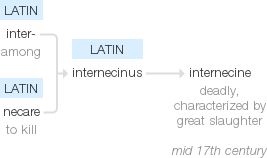
-
Religion will win in the end.I rather read them for myself, than have you tell me about them. — Jeremiah
Well, be my guest. -
"Western Culture" and the MetricAlso, thank you. Glad I'm fitting in this well. — SleepingAwake
I must be slightly drunk. That made sense to me, but I'm only this cynical when I drink alone. — SleepingAwake
Being slightly drunk may be one of the reasons you're fitting in so well. There used to be more beer drinkers than there are now -- or the beer drinkers have just stopped admitting it. I would drink more but I fall off my chair too soon.
Mostly, I'm referring to "property" in reference to social capital, rather than actual riches, although there are microcosms wherein modern marxists and BLM activists actually demand property be relinquished from white ownership and given to black people, based on a feeling of entitlement and "300+ years" of oppression (in quotations due to fuzzy number). — SleepingAwake
I'm in favor of dispossessing the dispossessors of their ill-gotten gains, but I'm not in favor of reparations because a rain of cash won't fertilize the soil. I will grant you that the descendants of slaves (slavery ended 150+ years ago) have experienced on-going disadvantage. Cash grants, however, will not repay the misery experienced, and it won't help the current living generations of slave descendants. Cash does not transform people.
The unfortunate descendants of slaves need to get their collective acts together, and this is a project which the black community has to be in charge of and carry out. They have done it before. Where the cash comes in is paying for actually equally good schools, actually effective job-training programs, tuition free access to higher education where appropriate, job creation in black communities, and so on and so forth.
Of course, it isn't only blacks who have suffered. Many working class whites have also gotten fucked over by capitalism. Whites, blacks, asians, and hispanics all need to join together for living wages, strong unions, better housing, fair tax law, high quality health care at affordable cost, excellent public transit, strenuous efforts to reduce CO2, end pollution of the land and water, and so on. -
What would you do in this situation?Humans are part of the natural world, and we are doing what we can to make it a better place for us. Over all, the proportion of people who die by human violence is lower now than in the past. We are, on the whole, healthier now than we have previously been.
True enough and most unfortunately, we are also messing up the environment on which we depend, but that's because we are an exploring, expanding, curious, active techno-species. Messing up natural environments is our thing. It's what we do. We've been doing it for a long time.
We don't live in a perfect world. In fact, it's unsatisfactory a good share of time, but that is just tough shit. We're tough, and we've survived worse -- much worse.
Do what good you can, don't make a bigger mess of your piece of the world than you have to, and enjoy being a human. Have a couple of children. Do a good job rearing them to be happy, productive adults. -
Religion will win in the end.You know, some people have done observational studies of faith and no-faith with respect to coping, and they show that people with faith seem to have better outcomes. It just may not be the religion that does the trick.
Older adult males (50 -75 years) do much better, and live longer if they are involved with other people, have a spouse, are engaged in a community, and so on. One of the obvious ways of obtaining those benefits is to be involved in a church.
Single males (50-75) who are isolated, unengaged, live alone, shun community activities, and so forth, tend to be sicker and to die sooner than men who have a varied social life and close companion(s). I could very easily be one of those self-neglecting isolated old men.
I'm not a believer, but I am involved in a church. It was a ready-made community which I could plug into. It gives me a level of social contact (not very intense, but steady) that I would be hard-pressed to find elsewhere. The gay community used to be a source of social involvement for me, but that was decades ago. A socialist group was also a source of community, but that has given up the ghost. So, God help this atheist, it's the Lutheran Church. I'm grateful. -
Solutions to the discontents the market creates.I don't believe capitalism can be made into what it is not.
"bad infinity"?
The best that can be expected in a capitalist economy with democratic politics is to control capitalism, and capitalists, to limit their rapaciousness. We have had episodes of restrained and unrestrained capitalist activity. Of the two, restrained capitalism was better -- but it was still capitalism.
Western Europeans have done a better job of restraining capital, allocating far more money than we in the US for social goods. This works especially well in boom times. Whether Europe will be as generous when hard times come, don't know.
There is nothing God Ordained or Eternal about capitalism. The demise of capitalism isn't the same as the end of the world. Capitalism might be especially inconvenient now and in the future as we attempt to ameliorate global warming. -
Religion will win in the end.religious people handle adversity better than atheists" Mongrel said. — Jeremiah
A statistical analysis would certainly be a good place to start. — Jeremiah
There are enough atheists, certainly, to gather a large sample, and more than enough religious people. I would hope whoever has done, is doing, or will do this kind of analysis succeeds in defining exactly what they are measuring, because (as I said above) religion is part of their integrated personality. For atheists, whatever set of beliefs they hold are part of their integrated personalities.
I think it will be difficult to prove that believing or not believing makes a difference because it won't be possible to isolate belief (or no belief) as a measurable variable. It will be found to be tied in with too many other factors.
For instance, I count myself as a non-believer, but I was raised in a devout Protestant family and didn't reject belief in God until middle age (30 years ago). If I do well or badly in a crisis situation, to what part of my history can that be credited? Some people have never formally abjured their faith, but on close examination they don't seem to ever have seriously believed or practiced it. There are people who have deep beliefs about God's power, their own righteousness, and the power of prayer, but when they get sick they go to the doctor--right away. Is their good health a result of faith or prompt medical attention? -
Religion will win in the end.Your standard for evidence is pathetically low. — Jeremiah
So Mongrel hasn't provided decent evidence that religion helps. Maybe her standards for evidence are low, but what kind of evidence would you accept?
We can look at surveys, we can look at long lists of anecdotal reports, and narratives that testify to the benefits of religious belief in times of disaster. It's something, but it's hear-say. There probably isn't any "proof" one way or the other. No brain scans, no blood tests, no behavioral observations or measurements.
For many, most?, religious people, "religion" is deeply integrated into their personality. It can't be pulled out as a single, measurable factor. It is the strength of the individual that gives faith the power to comfort them, rather than the other way around.
My own belief about religious relief is that many (most?) people get through disasters (or don't) on the strength of their personalities, and that religious comfort is, if not incidental, not the critical factor. Indeed, believing in prayer and divine intervention and then having one's children die must surely result in an additional burden of severe cognitive dissonance. "Why were my prayers not answered?" "Where was Jesus for my (son, daughter, father, mother, sister, brother, spouse...)?" "Why does God allow this to happen?"
On the other hand, some Nazis working at the Jewish killing pits in captured territory during the invasion of the USSR were humbled that, "The Jewish men walked to the pits like heroes." -
Religion will win in the end.Religion provides a ready-made framework in which to find meaning in events. True? — Mongrel
Yes, I think that's true. The problem that the ir-a-anti-non-un-religious have is composing a narrative without the gods to account for, and provide meaning to, the ghastly events that disrupt or end lives. I think it's a tough assignment to produce a de novo narrative that both explains the horrors of life and at the same time provides comfort to the survivors.
If one can't come up with a narrative (like, if one lacks knowledge of various religious and philosophical themes) then one is going to face the cold wind blowing from the future [The Stranger, Camus] without so much as a tissue of protection.
A well-read atheist could, for instance, turn to Ecclesiastes and read that there is a time to live and a time to die. The race is not to the swift nor the battle to the strong. Time and chance govern our lives. We are grieved, but we are the survivors. A live dog is better than a dead lion.
To lose a child (a spouse, a parent...) and be unable to place the loss in a larger context has to be chilling and caustic. -
Religion will win in the end.I don't have any scientific articles. — Mongrel
Research has been done into the relative success that the religious and non-religious people have in coping with adversity, prolonged stress, serious illness, and so on. I wasn't able to lay my hands on a specific reference just now.
If my memory (and common sense) serve me, the differences are not altogether unambiguous. For one thing, not all religiosity is the same, and not all ir-religiosity is the same, either. Some factors that might make a difference are not religious in nature. Supportive friends, for instance, make a difference. Ones psychological make up, quite apart from religion, has something to do with how well or poorly we cope with trouble.
Parents who stand at the bedside of their dying child acting like we're at a barbecue or something. they're atheists. — Mongrel
Parents standing by the bedside of their dying child (parent, spouse, dearest friend...) might be coping with the awful inevitability confronting them by displaying levity. Fatal illness and death can take a long time, and after months of being the pillar of strength and support, one might well give way to frivolous chatter.
There isn't any master narrative that defines how people should deal with the appalling misery of life. Mostly, we learn how to suffer and witness suffering through "on the job training". -
Religion will win in the end.I thought every school boy learned that the Indo-European language root of salvation was sol (whole).
-
Religion will win in the end.When you broaden your worldview, all you see are vicious idiots everywhere. It is not religion that is the problem. It is humanity. We are cancer. — TimeLine
Oh, come now. Take a laxative and calm down.
BC

Start FollowingSend a Message
- Other sites we like
- Social media
- Terms of Service
- Sign In
- Created with PlushForums
- © 2026 The Philosophy Forum