
Comments
-
Religion will win in the end.Then you have millions upon millions dying in the Middle East. — TimeLine
How many "excess deaths" do you think there are?
The world death rate is 100% -- and has been for a long time. Of course there are people dying in the middle east. As well there should be; it's over populated, like much of the world. And in Europe, Africa, Asia, North America, and South America people are also dying--millions upon millions. Do you realize that in our species' history, BILLIONS UPON BILLIONS of people have died?
You'll be sounding like Carl Sagan, before long. "Billions and billions..." -
Religion will win in the end.I don't think the conditions that require illusion are ever going away...not for long anyway. — Mongrel
You've stepped into rather deep water, there. -
Unconscious "Desires"Are you saying that "I" learned how to walk, or my motor cortex did? — Bitter Crank
"You" learned how to walk; the learning was largely accomplished in the motor cortex (which is part of "you"). "You" were never 'conscious' of the details of walking (proprioception, balance, adjustment of back, abdominal, and extremity muscle groups, etc.) but the conscious "you" was aware that you were moving about, and shared in the excitement, the pride, the thrill of moving about.
Yes, but I can focus on each breath I take and and change the rate of my breathing. — Bitter Crank
Indeed, "you" can. Controlled breathing overrides the automatic brainstem control of breathing. Controlled breathing requires the focus of the conscious mind. When "you", the conscious mind, is focused on breathing it can't focus on very much else.
What I am groping for is a way of saying that "you" are composed of many functions; one of which is the function of consciousness. There are other, equally important functions that are not conscious. The not-conscious functions are no less "you" than the conscious function is "you". To borrow a phrase from Walt Whitman, "you" contain multitudes.
If I have not answered your question, then I admit defeat in supplying you with what you want. I just don't have any more theory about how the brain works. I intuit that somehow the brain coordinates the many essential functions of our brain, including our experience of consciousness. I have not the vaguest idea of where or how that is done. -
Solutions to the discontents the market creates.The market alone doesn't breed wants faster than slums breed rats. What happened to the market to cause it to generate an infinity of wants was capitalism. Capitalism doesn't seem to aim for stasis: It aims for growth, and in order for growth to occur steadily over a long period of time, new wants and needs are absolutely required.
Cassette tape players, CD players, and MP3 players and their associated media were all new wants to replace the old want of 331/3 rpm vinyl records. Cell phones are a new want to replace land line phones. Fashion is 98% want on top of an ancient need for clothing to protect the body.
All the goods developed for new wants worked -- they weren't scams. Their necessity wasn't dictated by low quality; it was dictated by a need to destroy a former investment and offer a replacement investment. That's what keeps all sorts of firms solvent.
So, there isn't any solution to the rampant waste of perpetually new wants without abandoning capitalism. Abandoning capitalism means changing the way we live, which would entail some good things no matter what angle you look at it. -
"Western Culture" and the MetricI think "Liberal Capitalist Culture" is actually a fair descriptor. Or as the Soviets used to call us: "Decadent." That sort of thinking is actually QUITE present in the progressive circles, and it occasionally scares me. The whole "Property is Theft" and redistribution of wealth thing is coming back in thought, disguising its true nature. — SleepingAwake
Welcome to the forum, by the way. Your maiden trip out is doing well.
When it comes to decadence, the Soviets were in no position to accuse the kettle of being black.
The whole "property is theft" thing (Proudhon, French anarchist. 1840) is probably not coming back all that much. There are some members of the impoverished chattering classes that like the idea, but generally it isn't popular. Americans aspire to wealth earned the old fashioned way, through yankee ingenuity and ruthless exploitation. That most Americans aren't going to get anywhere close to wealth hasn't discouraged the aspiration.
I like the idea--property being understood in the Marxist sense as capital, not private property like one's small goods, and maybe a small house, a car, a wedding ring, etc. The property that really constitutes theft is the form owned by the to 5% to 10%: outright ownership or shares in factories, warehouses, rental properties, agricultural land, railroads, shipping, and so on.
Socialism is a piece of Western Culture, along with democratic or representative government, capitalism, free trade, pizza, single malt whiskey, martinis, and The New Yorker. -
Religion will win in the end.Religion is like opium. — Mongrel
It's always a good idea to go back to the original text from which Marx's "opiate of the masses" came:
Religious suffering is, at one and the same time, the expression of real suffering and a protest against real suffering. Religion is the sigh of the oppressed creature, the heart of a heartless world, and the soul of soulless conditions. It is the opium of the people.
The abolition of religion as the illusory happiness of the people is the demand for their real happiness. To call on them to give up their illusions about their condition is to call on them to give up a condition that requires illusions. The criticism of religion is, therefore, in embryo, the criticism of that vale of tears of which religion is the halo.
Criticism has plucked the imaginary flowers on the chain not in order that man shall continue to bear that chain without fantasy or consolation, but so that he shall throw off the chain and pluck the living flower. The criticism of religion disillusions man, so that he will think, act, and fashion his reality like a man who has discarded his illusions and regained his senses, so that he will move around himself as his own true Sun. Religion is only the illusory Sun which revolves around man as long as he does not revolve around himself. -
"Western Culture" and the MetricIs this sort of sarcastic, erudite, insightful answer what you were looking for?
-
"Western Culture" and the MetricIsn't 'Western culture' a term for global 'liberal' capitalist culture? GLCC — Wayfarer
That's a good term, certainly for the recipients of GLCC. We grew up in the bosom of global, 'liberal' capitalist culture, whether we knew what that was when we were growing up, or not. But culture is complex and is layered. We don't all live in the same layer, and we who grew up in the donor GLCC homelands were not 'recipients', at least not until recently.
and suddenly felt that I knew who I was — Wayfarer
One day when Wayfarer asked his mirror:
"Mirror, mirror, on the wall in the bath,
Who am I, really?"
It answered:
"You are a child of the global liberal capitalist culture, and you can leave those apostrophes out.
I will show you Californians; you are them and they know who they are. Behold a documentary.
They brush and floss daily. They wash their hands. They flush the toilet. They live in paradise.
Now, go to bed and leave me alone." -
"Western Culture" and the MetricWestern culture is the culture of contemporary Europeans (since 1400, + or - a couple of weeks) and parts of Asia (i.e., Australians, parts of Russia); North Americans, parts of South America; parts of Africa (i.e., South Africa).
Contemporary western culture has been strongly influenced (to a greater or lesser degree) by ancient Near East, Greek, and Roman cultures, and to a lesser extent, pre-Roman native European pagan cultures.
Western Culture is embodied in: languages, literary, plastic musical, and architectural art forms, jurisprudence practices, [edit: economic organization], behavioral norms, and religious traditions, is influenced by climates, geography, natural resources, and race.
Geography and natural resources have enabled several small European countries (some parts of European empires, such as the Hapsburg Empire) to have an outsized role in exploration and colonial activity.
I feel as though it was [is?] an umbrella term created to strawman all American and European ideas into being considered "bad" or "wrong". — SleepingAwake
This is a phenomena of affluent, naive, college educated, young people who have recently discovered that evil is resident in their own culture, and that countries with a lot of power can do things that weak countries can not do -- like dominate, exploit, and colonize. Various influences such as late-stage feminism, postmodernitis (a brain inflammation causing confused thinking and obscure language use), the cultural needs of corporate managers who wish to operate globally, a variety of marxist-inflected theorizing, and the like have produced this.
Trends come and go. Have patience. This, like a bad smell, will eventually dissipate. -
Islam: More Violent?Here is the definitive article.
There have been 1,516,863 gun-related deaths since 1968, compared to 1,396,733 cumulative war deaths since the American Revolution. That’s 120,130 more gun deaths than war deaths -- about 9 percent more, or nearly four typical years worth of gun deaths. And that’s using the most generous scholarly estimate of Civil War deaths, the biggest component of American war deaths. — Wayfarer
Does America have a gun problem? Yes, absolutely. A severe problem. I am only disagreeing on the details 1,617,000 deaths? Probably not, but even 500,000 would be too many.
Definitive? Punditfact?
Let's say there 33,000 gun deaths a year. We could say that since 1968 there have been 1,617,000 deaths. Reasonable assumption? Sure, if you assume that the same number of people were shot dead every year -- which isn't the case.
In 1950, the rate of gun deaths was 5 per 100,000. Ah, 15,000 deaths in 1950. No, 7,600 because the population was 152 million in1950, not 320 million. In 1950 and 1960, the rate of gun deaths was 5.1 and 5.0 per 100,000. In 1970, 1980, and 1990 it was 8.8, 10.4, and 9.4 per 100k, respectively, and the population was increasing each decade. In 2014 the rate per 100k was the same as in 1950, with twice as large a population.
Here is a chart from the Bureau of Justice showing the trends in homicide: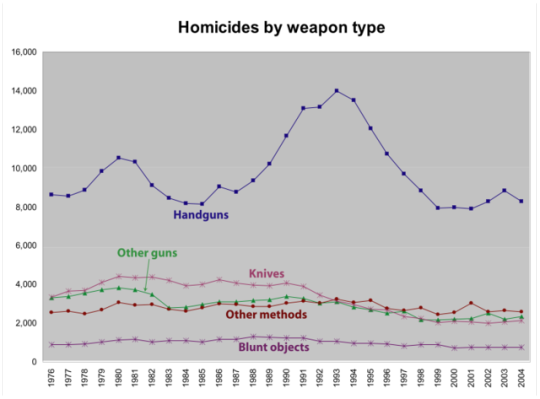
Not every death is a homicide. In fact, 2/3s of the gun shot deaths were suicides by middle-aged white males.
Further, homicides are not distributed evenly across the population. Young, black, males living in specific sections of specific cities in specific states account for a very disproportionate number of the homicide deaths. (Not that its OK that the largest number of homicide victims is young, black, and male. It's just that most demographic groups are not similarly violent. That the largest number of suicides is among middle aged white males is likewise very significant, even if most people have far lower rates of suicide.) -
Unconscious "Desires"It also stands that at one point in my early life, I couldn't walk. Are you saying that "I" learned how to walk, or my motor cortex did? — Harry Hindu
Learning how to walk when you were transitioning from crawling around on the floor to standing up to taking steps was DIFFICULT. If you had to learn how to walk as an adult (as happens to people who have had brain injuries) it would be VERY DIFFICULT.
Yes, but I can focus on each breath I take and and change the rate of my breathing. — Harry Hindu
That's a major hunk of yoga, right there. The reason why consciously controlled breathing is psychologically significant is that the conscious part of your brain normally doesn't deal with breathing. When you are thinking about controlling your breathing you have to stop thinking about your 401K, or whatever...
What I experience is a representation of me sending a series of coordinated nerve impulses to various muscles in my body so that I can walk, which is my will to do so and the conscious knowledge that I am walking. — Harry Hindu
Yes, your consciousness constructs that representation. But that representation and 50¢ won't get you a cup of coffee. The part of your brain that actually coordinates movement isn't accessible to the conscious mind, but (apparently) the motor cortex has access to the conscious mind--else it wouldn't know where you wanted to go.
OK, like I said, I'm "playing with this idea". I'm about at the end of what little I know to play with. I now need the assistance of a research neurologist. Do you happen to have one handy? -
Islam: More Violent?what makes terrorism such a massively significant political issue? Is it the death and harm it causes or the widespread outrage it causes as a result? — VagabondSpectre
In a previous post (neglected) I pointed out that important decisions are often made irrationally, or I'll add now, "apparently irrationally". The body count doesn't rationally merit the level of reaction we have seen. But note, without vigorous reaction and vigilance, we could have seen a lot more terrorist attacks than occurred. (That's not provable, of course.) People are irrational about certain kinds of accidents. They are cavalier about auto accidents and deathly afraid of their passenger plane crashing -- even though the former is vastly more likely than the latter.
Whites are afraid of getting shot by black men, even though white folks are not the usual victims of black killers. Blacks are angered at white police shootings of black men, when a far larger number of black men are killed by other black men.
People are more afraid of foreign terrorists than they are of domestic terrorists. The Oklahoma City court house bombing by Timothy McVeigh was, by any standard, very bad. Yet, there was less angst about that bombing than much smaller attacks by Islam-believing terrorists. Indeed, the US ATF task force that started the fire at the Branch Dravidian compound in Waco, Texas (that's way-co, not whacko) to which McVeigh was responding, supposedly, was pretty bad too.
On and on. People don't respond rationally to these sorts of events. What is really crazy, though, is that legislators who are elected and paid to make decisions that are more rational, and less irrational, than your average citizen's reaction, frequently fail to make sensible, rational policy. -
Islam: More Violent?I am in favor of rigorous gun control, suppression of ammunition manufacture, gun seizures, and a bunch of other repressive measures that could be directed against guns, gun owners, and gun users. That having been said, who produced the figure that more Americans have been killed by domestic gunfire than all the Americans killed in its wars?
Since the Revolution, 1,354,664 Americans have been killed in one major or measly war or another. War dead tend to get counted. How did they arrive at the figure that more than 1,354,664 Americans had been killed by gun violence since the nations founding?
If the annual death count was as high every year as it was in 2015, sure -- one could calculate out that in x years there would be over a million. But... the annual human harvest by gun fire hasn't always been as high as it is now. The population is larger now than it has been previously (of course). Who was keeping track of gun deaths across the country in 1907, for instance? 1853? 1799? Well, nobody was keeping track until relatively recently. -
Comparing Mental statesMost theories of perception accept that there is an external reality but claim with evidence that it must be represented to us in the brain. So on this picture What we are perceiving is a construct. I don't know how naive realism could explain the idea we could have direct unmediated access to an objective reality. In this sense reality might be hidden from us. At the same time I do feel I have immediate access to reality. — Andrew4Handel
So, this is one issue. I agree with this view. There is a real world (the cosmos on down to your room) which has real properties. We are immersed in this reality, but we can not apprehend it first hand. The "apprehender" is locked inside the skull and all it knows is what its senses tell it. We are always at least one step removed from 'raw reality'. We have a construct of this "real world" which works, most of the time. All life in the cosmos has to deal with this real world, and since animal sensory systems are a lot like ours, we can assume that senses work pretty well for creatures that are not, apparently, building 'constructs'.
I too think in terms of "my consciousness". We clearly have something called consciousness. It is self-aware. It is one facility in the brain, perhaps "first among equals" or maybe just an equal among other equals.
I am not suggesting that we have more than one conscious facility. It would be very confusing if there was more than one Speaker of the House. But other facilities in the brain (like memory) must have a direct tap into what the Speaker of the House is up to. Otherwise, it could not furnish information when needed. It would not be able to recall what the Speaker of the House heard yesterday while I was eavesdropping on the worker in the neighboring cubicle.
So, again:
Where do you suppose "thinking" is done in the brain?
How does the memory bring to the fore information that has not been requested for about for 30 years? And how does the memory manage to forget a meeting you (somewhere in there) didn't really want to go to in the first place?
The motor cortex has to receive a feed from the visual cortex to be able to move you through the world. It needs to know where the holes, curbs, bumps, and big cracks are--pretty much in a continual stream. If it doesn't have this information (and It has to receive other information too, like information about how slippery the side walk is. This doesn't come from the visual cortex, it's picked up by the sensory system in the feet and legs which detects surface texture (hard, smooth, and slippery).
We aren't aware of all the things that are going on, live, in our brains because (PERHAPS) we have a deficient construct of how the mind works. Maybe we have put way to much emphasis on the conscious mind (one part out of 100 parts) and not enough importance on those other parts which are neither un nor sub conscious. They just do their thing apart from the conscious mind, They may even share awareness and consciousness among themselves which the Speaker of the House (THE consciousness) just doesn't have access to.
I don't happen to have an fMRI machine or a high end EEG in the kitchen, so I can't test this theory. -
Comparing Mental statesHere's the word and the image:
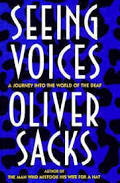
Sacks writes about language and the deaf, and how lacking and then receiving sign language changed their experience. I don't know if anything similar has been written about the blind. If someone had been blind since birth, they would not, could not, dream or think in visual images. How could they? For one thing, they wouldn't have any visual images, and much of the visual cortex would have been taken over for non-visual processing.
But, the blind would utilize other senses -- touch, taste, smell, and sound in their dreams. They might dream about a passage they read in braille and feel the braille words. It would be difficult for them to describe these dreams to a sighted - visual image dreamer, and visa versa. To each other, it would make sense quicker, better.
Because consciousness is our only access to reality. — Andrew4Handel
I wonder. I have lately been thinking that our consciousness, which we tend to think is like the pinnacle of the pyramid with the all seeing eye (image on the dollar bill reverse side). I've been thinking that maybe it is just one facility among numerous facilities that the brain operates. It seems like the pinnacle because what we hear and see, do, say, and think seems to be housed in the conscious mind. But maybe it isn't. (I'm not suggesting that mind transcends the brain; I don't think it does--at all.)
We know we have very Important, even critical, brain functions that we are not conscious of:
Memory; (we remember things, but we have no idea how memory is arranged; we have no way of auditing the contents of the memory.)
Movement; we have no conscious control--(except in a very difficult way, and then limited) over how to make our muscles move to produce coordinated and useful actions--like typing on a keyboard.
Vision; we have no knowledge and generally little control over how signals from the retina are interpreted and then integrated into a cohesive view.
Thinking; as I sit here writing this too you, the words are being fed to my fingers from a non-conscious source. I don't know how this happens.
Emotions; very important; we do not get to decide how we are going to feel about something a good share of the time. You meet somebody for the first time; you don't just like them, you fall for them head over heals. They turn you on every which way. You didn't intend this to happen, you didn't (perhaps) want this to happen, but it did. Or, try as you might, there are people that just strike you as disgusting.
and so on. I'm not saying our brains are not plastic; I'm not saying we are robots under the control of mysterious forces. I'm only saying that the Individual person has many systems between his ears not only keeping him alive but make him who he is, enable him to make his way forcefully in the world, and only SOME parts are accessible to, or part of, the conscious facility.
The motor cortex which moves us around, has to be aware of the world around it, has to know how the body is arranged in space from moment to moment, has to take directions from some other part of the brain (the way finding unit) and does this outside of our conscious mind. It receives information, makes decisions, and issues all sorts of instructions second by second--without telling us anything about it. We don't know and we don't need to know what is going on there.
A good share of our brain's always-on activity is not "un-conscious" -- it's just mostly not accessible to "THE consciousness where we live.
Take the "enteric brain" -- the nervous system that operates the gut. Do you really want to know, minute by minute, what it is dealing with? Probably not. Messages from the enteric brain to the cerebral brain are usually bad news: Alarm bell sounds, bright light blinks... Incoming message, red alert... "Contents of your gut are going to be expelled in 9 seconds, whether it is convenient or socially acceptable to you or not." and then it is expelled. Unless you were paying really close attention, you had no idea what was coming down the pipe, so to speak. -
Islam: More Violent?50 people dead from a terrorist attack is 'morally worse' than 50 people dead from a disease. But it doesn't follow, for example, that the US should spend 250,000 times more per death on terrorism than strokes ($500,000,000 vs $2000 each). Nor does it follow than it's a bigger threat to us. Nor does it follow that it's worse for society overall in a non-moral sense. — WhiskeyWhiskers
As The Onion reported recently, the death rate in America remains at the all-time high of 100%. All 320 million of us are going to die, and 1/3 of the deaths will be from strokes. So, at $2000 per stroke, we will be spending $200 billion. Feel better about the stroke budget? It's probably higher for cancer (1/3 of the deaths, roughly) and heart disease (another third down the drain).
Feel better?
Yes, a rational budget of alarm and financial expenditure would direct more money toward cancer, auto safety, strokes, heart disease, suicide prevention, firearm control, healthy behaviors, and so on. But you may be vaguely aware that humans make many important decisions on the basis of raw emotion rather than rational deliberation.
Raw emotion was drained out of traffic accidents a long time ago. (MY auto accident was horrible; yours was just background noise.) As one ages, more and more people one knows drop dead from cancer, heart disease, and stroke. Maybe it's sad (but then again, not all that sad) but it isn't shocking. It happens too often. And we have to die of something.
Terrorism is tuned to an unavoidably noticeable pitch. It happens rarely enough that it doesn't become background noise. -
Comparing Mental statesSomeone told me that they didn't dream in images — Andrew4Handel
Don't believe everything people tell you. -
Comparing Mental statesYou are quite right that we can not actually experience other people's mental states. One might debate whether we can even "experience" our own mental states, since our mental states are 'what we are'. But let's not go there.
People with shared language (which presupposed a great deal of cultural sharing) can communicate a great deal about what they are experiencing to each other, and from these communications we have built up the concept of what constitutes the usual human mental repertoire. We also know that some people's experience deviates from that averaged repertoire in fortunate and unfortunate ways.
Maybe you can meet someone briefly and remember their name and face for years afterward. Names and faces tend to fly out of my memory like alarmed pigeons (unless they are really hot, or something). You and I might both be totally crazy, and our craziness will be totally dissimilar. Or we may be geniuses, but not at all in the same way.
Words can effectively communicate what our mental states are like, but it takes a lot of words to do the job well. Just saying "he's manic depressive" doesn't tell us much. Labels are too short, usually. "Paranoid schizophrenic" just doesn't tell us enough about somebody's mental state, if we really want to know what that person is experiencing.
"You seem happy today." "Yes, I feel happy, but let me explain how and why. Have you got an hour?" -
Art, Truth, & Bull, SHE confronts FearlesslySometime you need to grab the bull by the tail and face the situation.
-
Unconscious "Desires"the motor cortex is not conscious — Bitter Crank
Let me clarify: The motor cortex, which operates the motion of the body, is fully aware of what your body is doing--otherwise it couldn't successfully move you around. The cortex is 'conscious' of proprioception, for instance. It has to be aware of that in order to keep you upright while you are walking.
The visual cortex in the rear of your brain is aware of the impulses coming from the retina. It processes those signals, and puts together a cohesive picture of the world--for your conscious mind, among other parts, to enjoy and make use of.
There are various parts of the brain that are aware of what they are doing, but your conscious mind isn't aware of them, most of the time. The enteric nervous system operates the digestive track--a very complicated batch of processes that your central nervous system is mostly (and happily) unaware of. You don't want regular dispatches from the bowels about what is going on there. When you do hear from the gut, it's usually bad news--like something is going to be expelled in the very near future whether it is convenient for you, or not.
So, various parts of your brain are aware and interacting in ways that your conscious mind is not a part of. That's a very good thing, because if your conscious mind were aware of all that stuff, you would have no time left to think. -
Unconscious "Desires"But then why do I experience having control of certain aspects of my body. — Harry Hindu
Because "you" are in control of your arms and your legs. It's just that "you" extend beyond the function of your conscious mind. Besides, your conscious mind doesn't actually do much in the way of controlling motor functions. Do you know how to send a series of coordinated nerve impulses to the various muscles of your body so that you can walk? No, you don't. I don't either. Walking is controlled by your motor cortex (it's on the top side of your brain) and the motor cortex is not conscious.
There is top-down processing happening, and it seems that there is also bottom-up processing going on as there are things that happen in consciousness that will did not precede in making it happen - like breathing. — Harry Hindu
Breathing, blinking, heart beat, etc. are controlled in the brain stem--one of the most 'ancient' structures of the brain. There are small clusters of cells that keep your heart ticking away, that make sure you keep breathing--until one fine day they don't, and then you're dead. There is also a small cluster of cells in the brain stem that send you into the oblivion of sleep and another cluster of cells that wake you up. When people have strokes that wreck this wakefulness center, they don't wake up.
The deep breathing of yoga is effective because it is a practice of your conscious mind over-riding something that is normally automatic and unconscious. You have to consciously decide to "breathe deeply" and selectively relax muscle groups.
But consciousness is where I'm aware of this stuff happening. Could it be said that I could be aware of these things without being conscious? If so, how? — Harry Hindu
When you are conscious you are aware that you are walking around, and you will that you walk to some particular destination (like to the mailbox). But your conscious mind is not in control of the physical details of walking. -
Art, Truth, & Bull, SHE confronts FearlesslyNot sure I understand what you are saying here, are you suggesting that women are treated equitably in corporate America? — Cavacava
"Neither males nor females, neither Jews nor Gentiles, neither gay nor straight, neither young nor old, neither caucasians nor negroes nor asians nor aboriginals" are treated equitably in corporate America. There are super-elites, elites, and sub elites (that's maybe 5% - 15% of the population), then there's everybody else. Everyone below the sub-elites down to the proles are subjected to various and fairly vigorous forms of inequity. Above the elites there is inequity too, but I am not concerned with how males, females, Jews, gentiles, gays, straights, whites, blacks, and asians are distributed within the elites. If a white woman graduate of Wellesley who was born with a silver or gold spoon in her mouth and who wants to be in the 1%-5% isn't hired into top level management or BOD at Apple or Exxon, I just don't care.
Doesn't this symbolic confrontation point to the shame of the social injustice inveighed against women in corporate America? — Cavacava
Corporate America is shame itself. Remember what the statue placement is about. It's NOT about women who are struggling to earn a living wage. It's about getting women on boards of directors. Who is invited into the corporate board/power centers? Jane Iverson from Scranton, PA with her BA in accounting from Scranton State College who has a not-appealing job in NYC where she can hardly afford to live? No. It's Vanessa Bush of Chicago's Gold Coast (and the Hamptons) who was worth a few million from the night of her conception, and who knows her way around the elites because she has always been a member of the elite. -
Art, Truth, & Bull, SHE confronts FearlesslyIt's disruption without a cause. Would that make a good movie? Who should the male lead be? Does it need a planetarium as part of the set? Maybe in this flick, the angsty guy could hang around one of those soulless corporate plazas in New York.
-
Art, Truth, & Bull, SHE confronts FearlesslyShe represents more of that silly feminist, social justice, anti-capitalist nonsense that will do and change absolutely nothing — Thorongil
She could represent that for you, and I would agree that as far as social justice goes, the whole thing is rank nonsense.
In fact, the object of SSGA and McCann was to speak in favor of the benefits of having women (not little girls) on corporate boards, because executives at SSGA think that corporations with some women on the board do better financially than boards that are men-only. One would not guess that by looking at the juxtaposition of the sculptures.
So, the origin of the project was not anti-capitalist. The folks who put it there are all about capitalism. On the other hand... Getting wealthy women on Fortune 500 corporate boards has nothing to do with social justice, and I would hope that serious feminists would not think that getting hundreds of wealthy women into the boardrooms was the goal of their movement. -
Art, Truth, & Bull, SHE confronts Fearlesslyas a work of art it must 1st be able to stand on its own as a work of art. — Cavacava
When we know the wherefore and wherefrom of an art work, we can't take it on its own merits without some mental gymnastics--which are, of course, well within our operational capabilities.
Had she been cast in Sofia, Bulgaria by an artist who had never heard of the State Street Global Advisors, McCann Advertising, or the Bull, we would be in a better position to say that the sculpture should be taken on its own merits. That isn't the case here, and it wasn't the case from the start.
The Bull, of course, isn't an art work that can be taken on its own merits either. Its wherefore and wherefrom preclude our naiveté. The bull-girl combo is mid-brow political messaging. -
Art, Truth, & Bull, SHE confronts FearlesslyIt's late for this information, but...
State Street Global Advisors, which manages some $2.5 trillion in assets, signaled its solidarity with the day’s demonstrators (International Women's Day march). The company installed a roughly 50-inch-tall bronze statue of a defiant girl in front of Wall Street's iconic charging-bull statue...
... Fearless Girl is part of State Street’s campaign to pressure companies to add more women to their boards.
The thinking behind the statue and its placement (which Adweek called a stunt) was engineered by McCann Ericsson Advertising (which had $7.6 billion in revenue 2015). It was art commissioned as part of a public corporate campaign.
Advertising agencies and their corporate clients deal in Truth, of course. It says so right there on the landing page of the McCann Ericsson:


Who needs philosophy when large, intellectual, ethical corporations reveal TRUTH as part of their mission? Move over, Aristotle, and make way for the Thought Leadership unit. -
Natural Law, Rights, and the USA's Social ContractErnest, it's hard to imagine a less felicitous way to interest people in your writing than the approach you have pursued here. Peevish to start with and it goes down hill from there.
-
Art, Truth, & Bull, SHE confronts FearlesslySo if the SOL is actually a male god, why did the sculpture supposedly use his mother as the model? Maybe either she / he is actually transgender?
-
Art, Truth, & Bull, SHE confronts FearlesslyI thought they ALL wished for the perpetual bull market.
-
Art, Truth, & Bull, SHE confronts FearlesslyBut it's unclear to me what, if anything, the bull was originally supposed to suggest. — Noble Dust
What do you think a horny, powerful, pawing, snorting, twisting bull would represent--little girl sisterhood and apple strudel? Cream cheese? Got Milk? No. it's clearly a symbol of aggressive financial optimism and prosperity. Bulls have balls, like the big-bad American Economy, so look out little girl, or you-know-what will happen to you. -
PurposeJust to clarify... It wasn't the observations of what went on in the toilets that was problematic. It was observing license plates, and then obtaining the name and address associated with the license plate, followed by a visit to the home of the license plate owner to do a survey on kitchen appliance purchase plans (or something like that). It was from the fake surveys that the demographic information about the public sex participants was obtained.
-
PurposeThat's right -- the scandal was about consent and subterfuge. No doubt about it, Humphreys' methods were extremely invasive.
Subject identities were not revealed, and could not have been accidentally revealed because Humphreys destroyed the records of who the subjects were before the study was completed. I do not know what rules with respect to informed consent prevailed in academic work in 1968-1970. I don't think Institution Review Boards (IRB) had come into the picture yet. (It was at least partly because of Humphreys' work that they did come into existence.)
On the other hand, I can't imagine the research being done if informed consent had been required. The purpose of the study was not to comfort anyone, but to characterize the population that engaged in anonymous public sex with males in St. Louis, MO park toilets. It turned out that many of the men were married with children.
I found that some of the men in Minneapolis adult books stores soliciting sex in the late 1980s were also married men. (I was doing HIV prevention work at the time, and was clear about why I was in the adult book store. I didn't seek anyone's identity.)
A University of Minnesota research project about behavior in barroom environments used wired participant observers. Informed consent was not requested of subjects, and they were not asked to participate; identities were also not sought. (They were measuring what factors influenced the amount of alcohol consumption.) This study had to get IRB approval.
I do admire the methodology that Humphreys used. Participant observation is a very useful research technique. I liked the chutzpah that it took to pull this off. I also think it was very worthwhile research. It helped reveal what Freud called the "polymorphous perversity" of sexuality. -
Art, Truth, & Bull, SHE confronts FearlesslyI don't live in NYC, so I never have to look at this. In that respect, I just don't care. On the other hand...
There are a batch of bronze sculptures in Minneapolis that I do like and see frequently. They were thoughtfully placed in a particular context, and the sculpture and its surroundings are unified. The meaning and cultural value of a given work could be "defaced" by placing something inappropriate or deliberately contrary to the sculpture.
What can legally be done, what should be done, what ought not be done, what is tasteful, what is tasteless, and so on are all too complicated to be settled quickly. I tend toward thinking that a sculpture that has been in place for at least a few years has priority.
The Bull should stand alone. The little girl should clear the hell out and stand somewhere else.
Cities tend to jumble things together, and the results are often unfortunate. Architects design buildings that are an affront to every building surrounding them--not because they are so good, of course, but because they are so bad. The design shouldn't have been accepted, and once built there is nothing that can be done about it. That's why sensitivity, taste, aesthetic skill, and such are important in public works.
Any sculpture, save that of a rampant bear, would be inappropriate in the vicinity of The Bull. -
Unconscious "Desires"I think you both are confusing consciousness with intent. — Harry Hindu
We are not. Intentions exist, of course. That's how it came to pass that some part of my brain is writing this sentence. It disagreed with you. (It's the pangyrus located under the anterior sulcus of the superior lobe.)
Judging by EEGs and other scans, the brain seems to be always on. We know from these scans that various functions are scattered throughout the brain, and are coordinated. We can see this happening (sort of--it's not like an annotated animation) on fMRI views of the brain at work. The brain is always on, doing all kinds of stuff that are critical to our existence, like breathing, way finding, not falling over, thinking, memory, and a batch of other stuff that we may or may not be aware of.
As I said, the ego - the conscious mind - the 'I' that speaks, the 'I' we address in other people (unless we are trying to manipulate them by going around the 'I' altogether) is just one of those functions. We tend to think of it as the SUPREME function, but it isn't. It's just the Front Office. It's the Public Relations Department. The 'conscious mind' does not manage the brain, the mostly invisible brain manages the conscious mind. The conscious mind is often the last one to find out what it is going to do next, paradoxically. It's a paradox because we think the conscious mind is 'in charge'. It's not.
I'm using the term 'invisible' to get away from the loaded term, 'unconscious'. The 'invisible' or 'non-conscious mind is represented, sort of, by the 9/10ths of the iceberg that is below the water line. -
PurposeHere are pictures of three of my intellectual heroes - David Riesman, Oliver Sacks, and Laud Humphreys
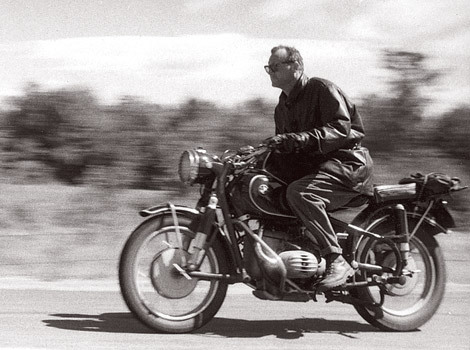
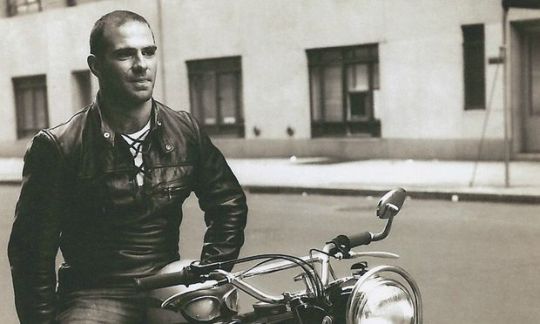
In an entirely different context, Laud Humphreys is also one of my intellectual heroes--Episcopal priest and scandalizer of the Sociology Profession.
This isn't Laud Humphreys, but it is what I think he should have looked like in his youth, and what he did look like a bit later in life. And then a picture of his profession-rattling book (which came out of his PhD dissertation):



-
PurposeI haven't read Fromm's Escape From Freedom for a long time. It was good, and a book I should revisit (time, time, time). That and The Sane Society. Those post-WWII psychologists and sociologists wrote some good stuff: The Lonely Crowd, The Power Elite, (David Riesman); Who Rules America (G. William Domhoff).
I am very glad, really, that I don't live in a "you just did as you were told - you were part of a clan, group, family and you had your appointed role" society. That would have been too much like the days of one's early youth, before one left home (at last!) and finally able to decide about roles. Not that I did a great job of it. Finding the right role took a long time (decades). So I had to spend a lot of that freedom trying to figure out what it meant to be free.
And so do we all. -
Philosophical implications of the placebo effect.How can the brain organize itself from a state of disorder to one of order — Question
What is this state of disorder that brains have to organize themselves out of? Doesn't the brain put itself in order from the get-go? Brains that are sick get disordered; otherwise, they stay organized. -
Purposehappiness and love is a feeling created in our brain by certain chemicals — joachim
No, events which make us happy and the appearance of the objects of our love come first. The chemicals follow to assist us in feeling happiness and love. Conversely, seeing a giant spider lurking on your keyboard might strike terror into your 'heart', but not until the appropriate chemicals are emitted, will you "feel" the horror and leap out of your skin. It doesn't take long at all for that to happen, which is why people get confused about what comes first -- the chemical and love, or the chemical and horror.
life everywhere is animated by purpose. It's only the rich inhabitants of so-called 'developed societies' who ever sit around and wonder what 'purpose' is. — Wayfarer
Right. Living things have to get on with life -- generally we don't have a lot of choice. It's get with the program or shrivel up and die. Creatures don't need to feel this purpose, they just need to do. And generally, that's what we do.
I'm not so sure, though, that it's just us spoiled brats living in London, New York, Tokyo, and Sydney that sit around and wonder, "Just what is the purpose of this fine-leather upholstered, well-fed, perfectly air-conditioned, high-count organic cotton sheeted, thick carpeted, beautifully dressed and groomed ocean-view existence for?"
I'm not so sure it's wealth that is the problem. It isn't just excessive leisure, either--it doesn't take long to wonder "WTF is life for?"
I think its much more the case that these highly industrialized, complex, and rich cultures find their purpose-defining-compasses no longer registering true north, or true-anything else. They are drifting without a sense of purpose. It's the death of god, death of reason, death of hope in the future, death of a lot of things that used to help people get their bearings. (I say "they are drifting"; maybe I'm really, really deluded, but I don't feel like I am adrift without a compass. But then, I'm not 19 years old.)
We don't necessarily want to take on the limited horizons of the callous-handed sons of the soil, either. It's one thing to be closer to the 'earth'; it's something else to be up to your eyeballs in dirt and back-breaking work that is never done.
BC

Start FollowingSend a Message
- Other sites we like
- Social media
- Terms of Service
- Sign In
- Created with PlushForums
- © 2026 The Philosophy Forum