
-
"1" does not refer to anything.Sometimes indeterminate forms come up, like 0 / 0.
In arithmetics, it doesn't really mean much.
In some cases, in calculus, it can.
Best not conflate, the angle matters, context matters.
If we only want to speak of intervals, non-zero durations, then what about the starts and ends thereof?
Are we going to toss it all out...? :o
Anyway, successful tested-and-tried application speaks for itself. -
"1" does not refer to anything.Time t has no context — Metaphysician Undercover
Sure it does, especially how we're talking about it here, other times, events, occurrences, you name it.
Actually, I'm not sure it's coherent to go all out context-free here.
The problem is that "time t" is not real — Metaphysician Undercover
Excellent.
I'm going to quote you on that next time I'm late for a meeting with my boss. -
"1" does not refer to anything., speaking of things at time t does not mean removal of context.
Velocity or momentum or some such vectors (at t) depend thereupon.
It's not like we have something appearing and vanishing at t, whether talking averages or differential calculus.
How/can you differentiate things at t in the two mentioned scenarios...? -
"1" does not refer to anything.Wait, I not well veresed with potential and actual in infinity, is pi a potential or actual infinity. — BB100Why does dividing things by three, into thirds, create an "infinite" number of threes after the decimal point, as if we can never get to an actual third of something? — Harry Hindu
Well, no.
π = 3.14159...
1/3 = 0.333...
Sure, the righthand side has unending digits, but don't confuse the representation and the number.
When you glance at your speedometer and it reads 60 mph, indeed that is based on an approximation made over a small interval of time. So you do have a point, although a rather insignificant one. — jgill
(y)
It's all contextual.
Similarly with differential calculus; if the plot has a sharp turn or just one point (which would have no context), then it's not differentiable, which would represent something we don't really see much in the world. -
"1" does not refer to anything.Take two hypothetical scenarios for something, in one it's still, in another it's moving.
Physics can differentiate the two at time t by different motion vectors, speed and direction; by momentum too for that matter.
If you can't, then you're missing something.
Simple school physics could plot out the different speeds at different times throughout the scenarios, and see acceleration/deceleration (change in speed) over time; the former scenario would be a bit boring.
If you can't, then you're still missing something.
Gravity expressed as acceleration (the equivalence principle): at time t, Earth gravity is a downward acceleration that we're subject to.
Without differential (and integral) calculus, physics would be impoverished, it's proven in action, so our philosophical musings best account for this, or we'd be missing something.
So the universe is not quite as you thought it was. You'd better rearrange your beliefs, then. Because you certainly can't rearrange the universe. — Asimov (1941, 1990) -
Proof against Infinite past or infinite events between any two events.Therefore there exists some event in the past that is an infinite number of events from the present — BB100
If you're going by the integers or some such, then no.
They're closed under subtraction (and addition).
Adding and subtracting any two integers gives an integer.
And ∞ ∉ N, by the way (Archimedean property).
The idea of time, I believe, presupposes a starting point from which to measure its passing — Sir2u
That's pretty much what we already do, yes?
Except, we place whatever markers we want, year 0 by the common Western calendar is a good couple 1000 years ago, epoch 0 commonly used in computing is 1970-01-01 00:00:00 GMT, we use 1 year day second as whatever, and go by that.
We only need indexicals, contextuals from which to proceed, and with those conventional markers we can (and do) go back and forward as we see fit, without being bound to any one particular marker or unit.
So, in that sense at least, we need not assume a definite earliest time altogether, if that's what you meant. -
Sleeping Through The Hard Problem of ConsciousnessDoes that specific entity have an internal state or How do I know other people have internal states? — schopenhauer1
I guess solipsism and the gap are related, proving one impacts the other. I wonder if, say, Searle's "Chinese room" and Jackson's "Mary's room" are impacted as well.
The hard problem of consciousness is the bedrock for all arguments for dualism for it addresses the issue of qualia directly, without resorting to imagined scenarios. Refute it and you undermine the significance of qualia and do that and all qualia-based arguments fall. — TheMadFool
Substance dualism simply declares "mind stuff" (irreducibly) fundamental or without any explanation in other terms, even in principle. An easy answer.
- say, some sort of physicalism (or maybe speculative realism) and qualia do not contradict, rather neither entails the other, hence the gap
- placing qualia (or whatever aspects of mind) as basic/fundamental/irreducible does not explain mind, but rather avoids explanation by said placement, thereby disregarding some things we already do know about mind
Plenty evidence pointing in one direction ...
- Brain makes decisions before you even know it (Kerri Smith; Nature; Apr 2008)
- Brain Scanners Can See Your Decisions Before You Make Them (Brandon Keim; WIRED; Apr 2008)
- Mind-reading program translates brain activity into words (Ian Sample; The Guardian; Jan 2012)
- Scientists Use Brain Waves To Eavesdrop On What We Hear (Peter Murray; Singularity Hub; from the Public Library of Science (PLoS) Biology; Feb 2012)
- Neural Decoding of Visual Imagery During Sleep (Horikawa, Tamaki, Miyawaki, Kamitani; Science AAAS; Apr 2013)
- Researcher controls colleague’s motions in 1st human brain-to-brain interface (Rajesh Rao, Andrea Stocco; University of Washington; Aug 2013)
- Brain decoding: Reading minds (Kerri Smith; Nature; Oct 2013)
- Mind-Reading Computer Instantly Decodes People’s Thoughts (Tia Ghose; LiveScience; Jan 2016)
- Device that can literally read your mind invented by scientists (Ian Johnston; The Independent; Apr 2017)
- After 15 years in a vegetative state, nerve stimulation restores consciousness (Cell Press via AAAS; Sep 2017)
- Computer system transcribes words users “speak silently” (Larry Hardesty; MIT News Office; Apr 2018)
- Amazing New Brain Map of Every Synapse Points to the Roots of Thinking (Shelly Fan; Neuron via Singularity Hub; Aug 2018)
- Our brains reveal our choices before we're even aware of them, study finds (Lachlan Gilbert; University of New South Wales; Mar 2019)
-
Sleeping Through The Hard Problem of ConsciousnessA different way to illustrate the problem (the explanatory gap / mind conundrum) could be to ask:
Can you derive what a bat's echolocation is like by examining the bat?
Can you derive those special formats of experience (qualia) from looking at an (alleged) experiencer?
We can guess and correlate of course; is that the extent of it?
Either way, I cannot experience your self-awareness, since then I'd be you instead. -
The principle of no sufficient reason?So, by the above, sufficient reason derives an infinite past.
Let's try a third application of the principle, an anecdote attributed to Wittgenstein † ‡ :
Wittgenstein overhears someone saying "5, 1, 4, 1, 3. Done."
He asks what that was about, and they respond that they just finished reciting π backward.
"But, how old are you?"
"Infinitely old. I never started, but have been at it forever and finally finished."
The moment they were done reciting seems random, no sufficient reason their recitation was done at one time and not another, any other.
And likewise for any of the other digits.
So, with our expectation violated, we tend to reject the thought experiment, and out goes an infinite past.
Now what?
† James Harrington
‡ Craig Skinner -
"1" does not refer to anything.Side note on ∞:
There's an anecdote attributed to Wittgenstein showing how an infinite past seems uniquely counterintuitive.
Wittgenstein overhears someone saying "5, 1, 4, 1, 3. Done."
He asks what that was about, and they respond that they just finished reciting π backward.
"But, how old are you?"
"Infinitely old. I never started, but have been at it forever and finally finished."
Not logically impossible or inconsistent, notes both James Harrington and Craig Skinner, but a strong intuitive argument nonetheless.
The moment they were done reciting seems random, there seem to be no sufficient reason their recitation was done at one time and not another, any other. And likewise for any of the other digits.
So, with our expectation violated, we tend to reject the thought experiment, and out goes an infinite past.
Anyway, looks like Wittgenstein doesn't accept ∞ as such.
Not sure I buy the rationale here, but intuitionist physics is a worthwhile pursuit I think:
Does Time Really Flow? New Clues Come From a Century-Old Approach to Math.
Natalie Wolchover
Quanta Magazine
Apr 2020 -
"1" does not refer to anything.As to "1", I suppose we may proceed from self-identity?
Wherever we deem some such, like we talk about and point at things every day, we say there's (a quantity) of 1 of that, regardless of whatever exactly it may be.
Could include hypotheticals and whatnot, too.
It'll take some conceptualization to get 2 (of those), but we may instead have 1 of this and 1 of that, thus having 2 of this or that together.
So, in the abstract, 1 (just 1) would denote 1 of anything, without referring to anything in particular, but still exemplifiable.
Seems to be how we typically use 1 anyway, no? -
The principle of no sufficient reason?, by "everything" I meant the lot, existence, it all, the complement-free, hence mentioning the composition fallacy, giving "everything and then some".
But yes, right, sufficient reason is a fine metaphysical thesis, it's just misapplication that's not.
Where do these fit in?
• the Casimir effect, virtual particle pairs, quantum fluctuations, radioactive decay, spacetime foam/turbulence, the "pressure" of vacuum energy, Fomin's quantum cosmogenesis (successors), Krauss' relativistic quantum fields, ..., the zero energy universe, the "edge-free" universe
• why anything at all?
• why this-or-that and not something else?
(As a side-topic here, Leibniz wanted to posit something necessary, going by what we now call modal logic, but I think anything necessary in general falls back on what all possible worlds have in common, i.e. more or less just self-consistency.) -
The principle of no sufficient reason?All or nothing...? :brow: (n)
Delineate means finding pre-conditions, exceptions, something like that.
What are your reasons for thinking that causality relates events rather than [...] — jkg20
The point was that I found
a property of matter-energy — TheMadFool
a bit odd.
directly contradicts the principle of sufficient reason — TheMadFool
There you go. (y)
Better ensure we don't apply the principle to everything/existence first, or we follow the haphazard structure of "everything and then some". (n)
Then there are those considerations of quantum mechanics. -
The principle of no sufficient reason?, not jettison, just delineate.
(E.g. there can't be anything (else) that's the reason for everything.)
I'd say causality is an event-relation, a cause and its effect are related. -
The principle of no sufficient reason?, well, you maintained sufficient reason, so that did away with a t=0.
But then simpler, though, when adding an extra cause (of causation)...?
Seems more like an article of faith than otherwise called for, causes and effects already being accounted for, cf composition fallacy.
For that matter, it might be "simpler" to delineate or do away with sufficient reason (search for cases with no sufficient reason or no applicability).
Haphazard application of the principle, delineation required:
There can be no (other) reason for existence, since then such a reason would then not exist (by definition).
Anyway, causes and effects are typically taken to be events, so applying sufficient reason, in this case, seems more like responding to different inquiries, say,
orWhy anything at all?
Why this-or-that and not something else? -
The principle of no sufficient reason?, isn't that a wee bit unparsimonious, extravagant, composition fallacy'ish?
-
The principle of no sufficient reason?, yeah, whole books have been written about the curious "nothingness".
But "nothingness" isn't something, isn't anything at all, but absence.
So, also absence of constraints, prevention, checkbooks and coffee.
Not much to talk about it seems, but physicists prefer at least something to talk about, like the Casimir effect, virtual particle pairs, quantum fluctuations, radioactive decay, spacetime foam/turbulence, the "pressure" of vacuum energy, Fomin's quantum cosmogenesis (successors), Krauss' relativistic quantum fields, ...
And that stuff (perhaps with the zero energy universe) suggests a different sort of "(ex) nihilo".
(EDIT: typo) -
CoronavirusHere's an old Danish poster from 1918 (attached), so just over a century ago. Let me try translating:
Precautions against spread of the flu
1. observe the best possible cleanliness
2. cover your mouth with your hand when coughing or sneezing
3. watch for anyone coughing, sneezing or speaking to you in close proximity to your face
4. keep the phone clean, in particular if used by many
5. vent rooms well
6. keep the healthy away from the sick as best possible
7. avoid unnecessary visits to the sick
8. do not get up too early after recovery
9. avoid places with many people
10. postpone larger meetings and assemblies
11. don't take the tram more than necessary
12. ensure the children get fresh air
The health board, 17th Oct 1918

More or less the same advice today. Old news. Common sense. -
CoronavirusPollution made COVID-19 worse. Now, lockdowns are clearing the air.
Beth Gardiner
National Geographic
Apr 2020
NO2 down in various areas, in the range of 20%.
Nevertheless, air pollution still kills more than 100,000 Americans every year. — Gardiner -
DefinitionsWith all these demands for definitions of words using other words, more words still, we're going to run out of words in the dictionary.
What'll we do then, how will we live? :D -
Questions about immaterial mindsIf the mind is causally connected with the rest of the world that does practice some form of conservation, then why wouldnt the mind? Thinking is hard work. Responding without thinking is easier. — Harry Hindu
The two are different categories.
Conservation is a temporal invariance in the first place.
Where does seeing your food go after supper?
The experience thereof came and went, the occurrence started and ended, was interruptible.
Temporal and process-like.
The conservation of the food isn't interruptible, and the food persisted throughout your experiences thereof, much like body persists sufficiently (structurally) throughout mind.
Spatial and object-like (left to right, top to bottom, front to back; we eat food, not experiences thereof).
I guess it's all interrelated in whatever ways, and the synthesis is where we might infer that, say, your mind depends on your body. -
Time ParadoxOn what grounds? — TheMadFool
Really? :)
There'd be more time than time?
I haven't mentioned anything about causality. — TheMadFool
My comment was really just about sufficient reason, much like the opening post but analogous, deriving a contradiction from sufficient reason instead. -
Time ParadoxSuppose, for the sake of argument, that it all had a definite earliest time, or "time zero" as it were.
By free, perhaps lax, application of sufficient reason, we'd then expect a cause.
An "outside", "atemporal" cause.
(This is more or less the kalam cosmological argument.)
By another application of sufficient reason we get something else.
A definite earliest time means an age, like 14 billion years, say.
Yet, with an "atemporal" cause of the universe, there's no sufficient reason that the universe is 14 billion years old and not some other age, any other age in fact.
We'd then expect an infinite age.
At a glance, both of these appear to have some intuitive import, except they render a contradiction.
Hence, the principle of sufficient reason and the like are not applicable in this case.
An antinomy? What gives?
(Besides, spacetime is an aspect, or are aspects, of the universe, and "before time" is incoherent. Causation is temporal, and "a cause of causation" is incoherent.) -
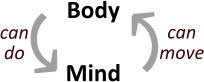
Questions about immaterial mindsMind is "immaterial" in the sense that thoughts (for example) are occurrences.
There's no conservation involved, like there is with the food we eat.
My supper is movable, my experiences thereof are interruptible.
And it so happens that my mind is uniquely associated with my body when occurring.
Consistent with evidence:
-
CoronavirusThe US apparently have a problem with childishly defiant adults:
Florida Pastor Arrested After Defying Virus Orders
Patricia Mazzei; The New York Times; Mar 2020
Dumbasses (pardon my French).
Meanwhile, India has run into problems related to resources, logistics and such:
Hungry, desperate: India virus controls trap its migrant workers
Tish Sanghera; Al Jazeera; Apr 2020
Organizing stoppage of the virus isn't easy.
Hopefully COVID-19 can work as an exercise to learn from. -
CoronavirusDid Gates get it right?
Here's what Bill Gates once said we needed do to prevent a crisis like the coronavirus, and what we need to do to stop the next pandemic (Sinéad Baker, Business Insider, Mar 2020)
This is what Bill Gates had to say about epidemics, back in 2015 (Samantha Sault, World Economic Forum, Mar 2020)
Bill Gates warned us of a COVID-19-like pandemic — watch his TED Talk from 2015 (Taylor Soper, GeekWire, Mar 2020) -
CoronavirusOK, now I am getting worried. :worry:
We are going to be on lock down from midnight for an indefinite period. :gasp:
Will 3 cases of beer, 2 bottles of rum, 2 baileys lookalike, 2 of whiskey and several other partially used bottles be enough? :chin: — Sir2u
Dude, disaster in the works.
Some have apparently hoarded toilet paper, we grabbed some coffee, but is it enough? -
CoronavirusThe crazies have their own "news bulletin" out.
ISIS issues travel ban on fanatics and tells them to ‘put faith in God’ to combat coronavirus
Niamh Cavanagh
The Sun
Mar 2020 -
CoronavirusHe Has 17,700 Bottles of Hand Sanitizer and Nowhere to Sell Them
Jack Nicas
The New York Times
Mar 2020 -
CoronavirusAny thoughts on how this whole toilet paper craze got started? — Echarmion
Maybe someone had nightmares?
Reveal
-
Divine Command Theory versus Skepticism About Moral RealityMy 2 cents on this fine Thursday evening.
the dichotomy between variations of divine command and skepticism about moral reality — Aleph Numbers
Depending a bit on what's meant by "moral reality", why would those two together be exhaustive?
FYI, Carrier has a few things to say about "Prager University" aka Dennis Prager.
If you can pass moral judgment on rules (and the like) in scriptures, then they don't define morals. Since you can, they don't. If you refuse to (or somehow can't) pass moral judgment on scriptural narratives, then choosing them as all-foundation wasn't a moral choice, but morally arbitrary. So, either way, scriptures themselves don't define morals. And, in any given situation you still have to personally decide if following them is the right thing to do; no manner of faith or stories themselves can absolve that.
Life (as an autonomous moral agent) isn't always easy, huh? :)
Regardless of whatever dictum you're told, it's still on you to decide whether following it is the right thing to do; Yahweh/Bible is redundant. Yahweh doesn't appear to tell us what the right thing to do is and why, anyway; Yahweh/Bible is useless in the matter. Scriptures and law books don't define morals, rather they're supposed to be moral.
Say, if, in your head, you have accountability to an imaginary friend rather than your fellow man, then what should others expect of you? This could be exemplified by the Slender Man stabbing in 2014 resulting in decades-long sentences, and is principally comparable to allegiance/accountability to someone/something rendered by faith and/or textual narratives alone. Fortunately, such folk are rarely entirely consistent (non-hypocritical) in such a sentiment, or they would have thoroughly forfeit autonomous moral agency.
Divine command theory (and theological voluntarism) is of no use and doesn't exemplify autonomous moral agency in the first place. (Along with the Euthyphro and the Epicurean problem, all this stuff quickly becomes purely academic-theological hand-waving.)
"Alexa, lights off" Zzz -
Secular moralitySo the problem secular morality faces, is, I think, that it is the successor of religious moralities where morality was founded in metaphysics, with God as the pinacle of that metaphysics. Every tradition not only had it's prescriptive rules, but also it 'discriptive' myth where the morality flowed from. Now this is important I think, not only did they say "you have to do this because God says so", they invariably embedded it in a story so people would buy into it more readily. So the purpose to all of this, is to give a morality authority. You need to follow it because it's true. — ChatteringMonkey
If you can pass moral judgement on rules in scriptures, then they can't define morals.
Since you can, they don't.
Conversely, such rules may just have forced some societies into a kind of sufficiently stable social cohesion over time, that they became culturally embedded (at least in a conservative sense).
Could something analogous be said of biological evolution, if only to account for morality (not define)?
Many scriptural narratives and other writings mention the Golden Rule or similar in some form or other.
Seems there are some trends that many will recognize as "good rules of thumb".
Yet, such rules "set in stone" themselves, don't absolve anything; in any given situation you'd still have to personally decide if following them is the right thing to do.
Life (as an autonomous moral agent) ain't always easy... -
What should religion do for us today?public-school indoctrination camp — alcontalilarge-scale imbecilization factories — alcontaliBut what exactly is knowledge? — alcontali
I call bullshit.
It is Allah's punishment for adopting false, pagan beliefs. If these people refuse to accept the truth, then [...] — alcontali
"the truth"?
If, in your head, you have accountability to an imaginary friend rather than your fellow people, then what should others expect of you?
Exemplified by the Slender Man stabbing in 2014 resulting in decades-long sentences, and principally comparable to allegiance/accountability to someone/something rendered by faith and/or textual narratives alone. (Fortunately, such folk are rarely entirely consistent (non-hypocritical) in such a sentiment, or they would have forfeit autonomous moral agency.)
We don't derive/define morals from laws, scriptures, etc. Rather the opposite, laws are supposed to be moral. Whatever dictum has been set out, every one of us still has to personally figure out whether to follow it or not, and no manner of stories/faith can absolve that. -
About This Word, “Atheist”I'm not real clear on the question, other than any proposition or judgment represents some form of belief/system — 3017amen
Check the comment above (doxastic logic).
You may believe (even know) that exactly one of p or its negation holds, B[p ∨ ¬p], and yet not believe either one of them, ¬Bp ∧ ¬B[¬p].
Oddly enough perhaps, believers, by implication, also lack beliefs (like agnostics), as they cannot (coherently) harbor belief in the contrary.
Anyway, I guess there's lots more to be said on that stuff, e.g. beliefs are not mere matters of "free choice". -
About This Word, “Atheist”Where B is the operator for belief, you can be without or with beliefs for proposition p:
1. someone does not believe p: ¬Bp
2. someone believes not p: B[¬p]
3. someone does not believe not p: ¬B[¬p]
4. someone believes p: Bp
Those are the possibilities in doxastic logic.
2 and 4 contradict (with). 1 and 3 do not contradict (without). 1 and 4, 2 and 3, contradict (with and without). 2 entails 1, and 4 entails 3 (with belief entails without belief in the contrary, and the converse does not hold). Each can be exemplified, they're jointly exhaustive of belief and the proposition, and no two are identical.
Differentiating a couple categories:
- the elaborate religions with scriptures and stories of supernaturals, rituals, commands, fate designations, fulltime professional advertisers, often apologists earning a living from writing thereof, mutual inconsistencies, etc
- unassuming deism, non-descript panpsychism, some varieties of Buddhism, entertaining some sort of (unknown) superbeing(s), etc
The latter is typically of less concern, and epistemically more on par with The Matrix, Bostrom's hypothesis, Zhuangzi's butterfly, Māyā of Indian fame, deus deceptor, dream thought experiments, Kafkaesque silent hidden superbeings, perhaps even solipsism, you name it. (Maybe Spinozism?)
"Whereof one cannot speak ..." and all that?
Seems the term atheism is commonly used about someone technically agnostic towards the latter, and with doubt/disbelief in the former.
Are you saying that there are no gods? — Frank Apisa
I was suggesting that absence of theism and doubt/disbelief therein does not comprise a belief system (any more than disbelief that Santa is real does). -
About This Word, “Atheist”Having a belief that no Gods exist translates into a belief system much like Religion — 3017amenAtheism is NOT a religion...but for the most part it IS a "belief system." — Frank Apisa
Like disbelief that Santa is real is a belief system?
Like a clean bill of health is a disease?
• absence of theism: newborns, the Pirahã people, some pygmies, ...
• doubt/disbelief in theisms: some pagans, some panpsychists, Hitchens, Russell, ...

jorndoe

Start FollowingSend a Message
- Other sites we like
- Social media
- Terms of Service
- Sign In
- Created with PlushForums
- © 2026 The Philosophy Forum