
-
Time and such, scientific models are descriptions (contrast with prescriptions). Evidence is the justification. I don't really think it's reasonable to ask for a tutorial on relativity here; there's plenty good material (including on the Internet), that you can read up on. If you find these models wrong, then feel free to write your objections down, and post (perhaps in a new opening post, depending). Meanwhile, relativity isn't controversial or anything.
-
Time and suchThe idea that Einstein provides a "better" explanation of time is what is laughable. You define "better" in relation to what, more useful, or more truthful? — Metaphysician Undercover
Not Einstein, the evidence. Relativity is the most accurate description to date within this domain. -
Time and suchWhat does the "is" mean then, if not that it exists in the present tense? Either something is, was, or will exist so in what other way is the block universe said to "exist"? — Alec
I'm thinking it just means that our language can be confusing. We're not accustomed to tense-less chat. So, the block universe = what was, what is, and what may yet come to be.
We have (possibly confusing) double-temporalpropositionpropositions like “it is true now, that it rained the other day”. -
Time and such, in the link, observer A found the lightning strikes occurred simultaneously, and observer B found they didn't.
However, after applying the Lorentz transformation, they both agree on that (their different observations).
Check Relativity of simultaneity » Einstein's train thought experiment (Wikipedia article).
By physics, simultaneity is meaningful for reference frames, not universal as such, and the Lorentz transformation tells us how it differs among reference frames.
Exactitude is a different problem.
Might be worth noting that retro-causation remains impossible according to relativity:
if the two events could be causally connected (i.e. the time between event A and event B is greater than the distance between them divided by the speed of light), the order is preserved (i.e., "event A precedes event B") in all frames of reference — https://en.wikipedia.org/wiki/Relativity_of_simultaneity#Explanation -
Time and suchI don't get the fuss over McTaggert's A and B series. They simply are not incommensurable. Any A-series event can be made a B-series event simply by indexing it. — Banno
(Y) -
Time and suchThe usual spacetime stuff in brief:
• where: left ↔ right, up ↔ down, forward ↔ backward (indexical "here")
• when: past → present → future (indexical "now" = present)
• same when, different wheres: simultaneity
• same where, different whens: place
• same when, same where: identity (indexical "here-now")
• different when, different where: motion or non-identity
It's common, everyday stuff:
• it takes time to get to work in the morning (duration)
• work is elsewhere (distance)
• we get to work about the same time in the morning (simultaneity) as agreed prior (past)
• we have meetings at work (place)
Figuring out simultaneity, for example, is a matter of applying the Lorentz transformation (or more complex varieties, depending on acceleration/gravity and such). Figuring out duration, so that we can largely agree at least, is a matter of stable quantification across applications, to which physicists have come up with caesium fountain atomic clocks (so far).
Duration and simultaneity together seems to suggest dimensionality of some sort, which goes well with relativity and other contemporary science. Does that suggest a (growing) block universe? -
Time and suchJorn, what is your opinion of Shoemaker's claim that time without change is possible? — andrewk
Not sure what to make of it. As thought experiments go it's interesting enough.
If we were to entertain reified abstracts (à la Platonism), then inert, timeless entities exist, along with our temporal, changing world. (Not really my cup of tea, admittedly.)
Could something changeless coexist with something that changes? A free photon?
Well, if all change ceased entirely, and somehow resumed, then what would the difference be, from not having ceased? Doesn't seem like a difference to me.
Either way, with micro-chaos, the universe can't be quiet.
That's related to duration. Simultaneity is also of relevance. -
Time and suchThe above is something I'd once typed in elsewhere, and seeing a few posts about time, I thought I'd post it here as well.
Comments welcome. -
Atheists are a clue that God exists
-
Atheists are a clue that God exists@Henri, this far you've ... made a number of bare assertions, declarations and postulates, shifted the burden of proof, admitted that you can't actually demonstrate, rather you "just know", but also postulated that you have vast amounts of clues, declared that it doesn't matter that you have nothing to show us, been a sharpshooter too somewhere, employed a misrepresentation/strawman (maybe two), and declared it unreasonable to disagree with you. :D Might have moved your goalposts too (like other posts it's not quite clear). Oh, and begging the question?
So ...
1. you just know
2. therefore anyone that differ are just wrong
3. done
Did I miss anything? Could you put some philosophy in here? -
Atheists are a clue that God existsWhat is the evidence for this "Hitchens' razor"? It doesn't provide any evidence for it's claim, so it can be dismissed without evidence. — Henri
Nonsense. Every example of imaginary or fictional things you can come up with, and every example of evident things, comprise evidence. (But was your post an admission that you don't have evidence for your claims...?)
If the failure of proof of nonexistence is taken as proof of existence, then we must conclude that all exist. — Asimov
Prove that a human has to understand everything about reality. — Henri
Prove? Of course we're not omniscient. I'll take that as an admission that you don't know either. (Y)
Back to shifting the burden of proof? Otherwise please go ahead.
As an aside, do you then take the story of seeing things in the cave above, to be literally as postulated later by (non-Christian) believers? -
Atheists are a clue that God existsAnother brief story for your reading pleasure:
1400-or-so years ago a warlord walked into a cave in the countryside by himself. He stayed in there for some time (and on a few occasions by the way), and when he came out he reported having "seen things". Weird things, though related to the local culture, folklore and mythologies of that place and time. Others liked it all, and wrote things down — fantastic "from beyond" kinds of things.
Later this became like "the story of legends", supposedly with critically important messages for all of mankind, from a deity. An all-powerful, all-knowing, all-good, all-creator deity no less, or so they say.
Can anyone make sense of this? Why on Earth would a supposed all-powerful, all-knowing, all-good deity impart critically important messages for all of mankind in such an obscure way, that can't be differentiated from hallucinations, delusions, whatever cognitive shortcomings, ...? That's setting the stage for failure, delivering implausible, crucial messages ineffectively, even requiring humans to do the dirty work (which is where indoctrination becomes useful, if not crucial). Going by the stories, it's like deceit, clashing with other such stories. (And what on Earth is up with those countless Hindu pilgrims voyaging to the Ganges regularly?) Yet, today those believers claim that their belief is like a prerequisite for eternal joy, and avoiding eternal suffering. If this stuff doesn't raise some red flags and suspicions, then I suggest trying to acquire an understanding of larger contexts. -
Atheists are a clue that God existsNothing you wrote on this thread provided any reasonable argument for atheism. Maybe you can go back to the OP and provide an argument for atheism [...] But as I said, there is no reasonable argument for atheism, so distraction is next best thing [...] — Henri
Check up on shifting the burden of proof. You have some work ahead apparently, as also suggested earlier:
Anyway, we can't talk about atheism without first having talked about theism: You make some fantastic claims. You call yourself theist. I don't believe your claims. You call me atheist.
Indeed ...
[...] an unreasonable behaviour. — Henri
[...] there are basically two options - Christianity on one side and everything else on the other. [...] Bible is much more complex that any other text I have read or examined, it is in a different league. — Henri
This stuff reads a bit like an obsession. How would you suggest differentiating? -
Atheists are a clue that God existsNot that God personally causes suffering but God allows suffering to exist. — Henri
It would seem that we humans sometimes do our best to do away with unnecessary suffering. Maybe we're just better at it than this God you keep mentioning. It's almost as if your God does not exist. I wonder why. ;)
Everything you mention as humanity's effort - for example medical research, educated veterinarians and social care workers, negligence laws put in place, etc - is given for us to do as part of God's decree. — Henri
Decree? For that matter, The Hippocratic Oath predate Christ by some 400 years. (If we're to take some of those stories as history.) Whatever you may attribute to your God, others may not.
And that's a big subject, not for this thread. — Henri
It's your opening post. I'll just have to ask: does your big subject involve quantum mechanics?
Anyway, not much philosophy in this thread this far, mostly just some assertions and stories and such. :s -
Atheists are a clue that God exists, why do you just defer to The Bible? :o
What's wrong with all these texts anyway...?
(As an aside, I'm kind of partial towards The Silmarillion myself.) -
Atheists are a clue that God existsDoes this make sense?
Fortunately debilitating depressions hit less than, say, half the world's population.†
Therefore they're not necessary conditions.
Therefore unnecessary suffering exists.
† that's not the actual number, it's just for the sake of argument
Some measure of relief can be attained from medical science or whatever research.
Humans can sometimes help, where indifferent nature (or some supposed deity) has produced unnecessary suffering. -
Atheists are a clue that God existsHey , I notice you didn't quite respond to the dilemma; it consist in two incompatible possibilities.
Which one would you like to entertain, the strong or the light assertion?
(By the way, the problem of evil is different.)
Is all suffering (without exception) part of the plan of this supposed deity you mention, or is it up to us to come up with relief as best we can (e.g. medical research)?
I can tell you what's readily evident, you can't miss it: we already do medical research, educate veterinarians and social care workers, put in place negligence laws, etc; sure doesn't seem that relief from schizophrenia is "coming from above" as it were.
But, hey, maybe you can somehow justify that all suffering (without exception) is warranted?5. consistent with a largely indifferent universe, and non-teleological biological evolution
(If so, then what the heck is the deal with teratoma anyway?) -
Atheists are a clue that God exists, the opening post mostly seems like some (self-serving?) postulates without justification.
Anyway, we can't talk about atheism without first having talked about theism:
You make some fantastic claims.
You call yourself theist.
I don't believe your claims.
You call me atheist.
1. there are good people and other animals suffering
2. either all suffering, without exception, is warranted (strong assertion, all instances)
3. or there exists some unwanted suffering to do away with (light assertion, some instances)
4. it stands to reason that there is unwanted suffering, that can possibly be relieved by humans (like some has been)
5. consistent with a largely indifferent universe, and non-teleological biological evolution
Other than civilized societies, what — anywhere — cares about me/you/us? -
The actual worth of an "intellectual"Well, the gravitational effect of Mars on you, around the time of your birth, was significantly less than the spoons you were fed with. Likewise for other effects.
Don't see many spoonologists, though. I guess astrology is just more esoterically mysterious'ish, and has a bit of (murky) history/tradition, something like that.
So, it's back to "some nebulous unknown force or influence", or whatever, that can't be differentiated from "anything goes". Having been embraced by New Age'ers, along with numerology and such, should be an indication.
astrologers have more influence than the stars do — http://skepdic.com/astrology.html -
The actual worth of an "intellectual"
-
The actual worth of an "intellectual"In history:
♍ Virgo | Aug 23 to Sep 22
You will die alone, unmourned, and unloved, but because you do it on live television, you'll still manage to be considered a success.
♑ Capricorn | Dec 22 to Jan 19
Someday in the future, humanity will have a healthy attitude toward sexuality, but until then, you have an idea that could make you incredibly rich.
♒ Aquarius | Jan 20 to Feb 18
You are about to embark on a great journey across an infinite ocean of possibilities, unless of course the more cynical theories about the afterlife are correct.
Astrology. What's not to like? -
The actual worth of an "intellectual"Your Horoscopes (courtesy of America's Finest News Source)
♓ Pisces
You will never be able to explain to anyone's satisfaction how all those chickens could just appear out of nowhere.
♈ Aries
Your fear of change means that spending the next few centuries in a block of ice will be extremely soothing, at least until the New Reformed Xalfraxian Alliance thaws you out. -
Why can't I doubt that I am doubting?If you can doubt, then doubt can exist.
If doubt cannot exist, then you cannot doubt.
If you're doubting, then doubt exists.
If doubt doesn't exist, then you're not doubting. -
The Moral Argument for the Existence of God@cincPhil, how would you justify 1 and 2? (They seem kind of creative or inventive, depending on definitions alone.)
That is why I prefer to say, "Independent of human opinion." — cincPhil
Note, though, liking freedom and disliking harm are not opinion, not arbitrary or ad hoc, not mere whims of the moment or discretionary. There are shared, involuntary elements involved.
Should I let the child die because I dislike pain, and I want to live? Similarly, should I let the child be captured beacuse I do not wish to relinquish my own freedom? — cincPhil
It's not just you that like freedom and dislike harm, it's us. Morals are social, and not reducible to self-interest alone. But their existence are dependent on a minimum degree of (individual) moral awareness. Suppose the assailant in your scenario is a lioness, and instead of you a grizzly is present. Then, due to absence of moral awareness, moral action become moot.
I don't know that it's possible to come up with a set-in-stone cost-benefit analysis that would determine what action to take. :) It's simple enough to determine that the child ought remain free and unharmed, however. The trolley problem, for example, seems to show that moral actions in general are not decidable. Implications for the hypothesis that there are objective morals?
Anyway, I'm thinking that an evil mass-abuser in your scenario would find themselves in trouble. -
The Moral Argument for the Existence of GodOn common usage, subjective is roughly mind-dependent, and objective mind-independent.
1:
The conditional seems like a non sequitur, and requires justification.
Some define God as a mind, implying that morals are subjective.
(Barring special pleading and word magic (trying to define things into existence).)
2:
Requires justification.
We can assume that anyone likes freedom by default. (Including non-humans.) This informs morals.
We can assume that anyone dislikes harm by default. (Including non-humans.) This informs morals.
Liking and disliking are subjective.
Thus, morals are subjectively informed (in part at least).
Moral awareness is a prerequisite for moral action.
Awareness is (part of) mind.
Thus, morals are subjective.
3:
Objective versus subjective morals is misleading, possibly irrelevant. -
Idealism pollGo figure, @Wayfarer, it's almost like there is no capable, knowing, willing hotel manager. I wonder why.
Poor kids. At least St Jude is picking up the slack (please don't tell them you're arguing that the kids' suffering is actually warranted).
Suffering is an inevitable aspect of physical existence, because whatever is physical is necessarily subject to decay, disease and illness. — Wayfarer
Evidently so. Just what you'd expect of a largely indifferent world.
Incidentally, going by common theism, there exists a heaven that's free of suffering, implying that suffering is not a necessary condition, albeit just reserved for some (or so it is claimed by some, those very same ones).
But, this was just an example of not arguing by deduction alone. -
Idealism pollDeduction alone can only explicate what’s already contained in premises, yes?
So, in a sense, of course valid reasoning is begging the question.
Though it’s interesting when surprising conclusions are reached, or something implicit in the premises is laid bare.
Mathematics tend to go by revisable axioms with rather complex implications, that are not clear from the get-go.
An example of an argument that’s not purely deductive (copy/pasted from elsewhere):
1. There are good people and other animals suffering [†]
2. Either all suffering, without exception, is warranted
• strong/comprehensive assertion (all instances); heavy onus probandi
• a large number of human activities are unwarranted [‡]
• if your doctor/veterinarian/dentist tells you that all suffering is warranted, then what will your reaction be?
• if someone tells you that all activities such as those mentioned under [‡] should cease, then what will your reaction be?
• poorly justified, possibly unjustifiable (indiscernible) (N)
3. Or there exists some unwarranted suffering
• light/limited assertion (some instances); modest onus probandi
• a large number of human activities are warranted [‡]
• justified by available evidence and obtainable consensus (discernible) (Y)
4. Thus, it stands to reason that there is unwarranted suffering
• what else is there to go by?
• consistent with a largely indifferent universe and non-teleological biological evolution
• where the contrary involves disproportionate appeal to “the unknown” (all, not just some)
Soberly considering available evidence uniquely suggests an indifferent universe. Other than civilized societies, what — anywhere, including the Moon, the North Pole, Sahara, the Mariana Trench — cares about me/you/us?
[†] The Black Death, The Spanish Flu, “the child missing out and suffering due to cancer”, “the priest wasting away due to debilitating migraines”, HIV/AIDS, schizophrenia, epilepsy, depression, suicide, delusions, infant epidermolysis bullosa, crippling birth defects, polymelia, Alzheimer’s, Parkinson’s, dementia, teratoma, toxoplasma gondii, … — this includes animals other than humans
[‡] Doctors, nurses, dentists, social care workers, veterinarians, hospitals, medical science, research efforts towards relief, WHO, UNICEF, WWF, negligence laws, The Hippocratic Oath, … — not many doctors would state that “the child missing out and suffering due to cancer” [†] is warranted — among these there are caring, loving, willing (but not omnibenevolent), capable (but not omnipotent), knowing, aware (but not omniscient) people — there are present moral actors -
Idealism pollI already know that I can be the only solipsist, whether solipsism is or is not the case.
Solipsism is a performative contradiction, for example:
1. morals are social
2. solipsism is not social
3. morals are inconsequential to a solipsist -
Idealism pollSelf-reference is among the usual suspects (read: pitfalls) of idealism.
As mentioned somewhere, mind is typically used as an umbrella term, including the likes of, or synonymous with some of: (1st person) experiences, qualia, (self)awareness, consciousness, sentience, thinking, ideation, feelings, pain/joy/love; mind = such activities of our individuated selves. So, mind is the means by which we understand things, talk about the world, etc, in the first place.
Idealism then strides right ahead and situates mind as the fundamental constituent of literally everything, i.e. self-elevation, since it's already a prerequisite for any thinking about non/idealism and such cognitive activities.
Is there an alternative to self-identity, in this context? Not as far as I can tell.
For that matter, we already know self-reference can be troublesome (like paradoxes).
Either way, consciousness comes and goes, starts and ends, and there isn't anything in particular that unconsciousness is like. The bulk of available evidence (by far), will have it that mind is contingent on something else. When some think that they themselves, or their mind, is persistent/ever-present, they're evidently wrong. -
The ontological auctionSuppose we've found some adequate and sufficient understanding of something, for now at least.
It seems conceivable that we could then come up with numerous other (much) more complex, but otherwise adequate and sufficient, accounts.
We could even keep on inventing some, just for the heck of it, perhaps with increasing complexity.
We might also find a simpler, adequate and sufficient account.
Simpler typically means less chance of error / higher chance of subsequently discovering errors (and easier to comprehend).
While considering all this, it seems like parsimony is a reasonable heuristic.
Not a guarantee of getting things right of course, but reasonable nonetheless. -
What happened to the Philosophy of Science forum?Yeah, I hear ya' @SophistiCat, though it's kind of a gray area.
There are definitely lots of psychoceramics out there, and some (are bound to) seep into here as well.
My first thought is to have a sub-forum where fringe, questionable posts and such could go.
But of course moderators are humans too; having experts in every area around isn't feasible. -
Does infinity mean that all possibilities are bound to happen?I think the inquiry requires further demarcation to be answerable.
If "possible" means logically possible (or non-contradictory) alone, then no, not everything logically possible is bound to be the case. An analogy:
1. in an infinitude of numbers, there are every kinds of numbers
2. there are infinite whole positive numbers {1, 2, 3, ...}
3. therefore there are negative numbers among them (from 1)
4. contradiction, 1 is wrong (however intuitive it may seem)
Same argument for the negative whole numbers {..., -3, -2, -1} and 1, the even numbers {0, 2, 4, 6, ...} and π, etc.
It goes further than that. As it turns out, ∞ is ambiguous if you will. In fact, there are infinite different kinds of ∞, of all things.
If, on the other hand, we're talking our (physical) universe alone, then things become much more complicated. We don't know exactly what our universe is, let alone what's (physically) possible for our universe. -
Is 'information' physical?Our understanding of nature is indistinguishable from nature. — Hanover
Well, my understanding of the rubble in the driveway is part of me, the rubble is not.
I guess me being rubble-omniscient might be a different story. -
Quantum Idealism?That said, I am continually nonplussed by the general hostility toward idealism displayed by the philosophical and scientific communities. The only explanation for it that I can see is that most philosophers and scientists are positivists who lump idealism in with what they would regard as "magical thinking" or what have you. — Thorongil
Nah, I think there are several reasons.
Mind is typically used as an umbrella term, including the likes of, or synonymous with some of: (1st person) experiences, qualia, (self)awareness, consciousness, sentience, thinking, ideation, feelings, pain/joy/love.
Idealism, in short, will have it that everything is mind, rather than minds being parts of the world.
Why would anyone think so?
This old post incidentally gives a bit of context.
Anyway, mentioned "Quantum Idealism" (and proof of The Trinity) seems over the top. -
Is 'information' physical?Apart from what the messages are about (ships, distance), is there anything other than their representations (inscriptions, morse) and their mental renditions (sentry, officer)? — jorndoe
No - but there doesn't need to be, for the point to be made, which is that the physical form and the medium in which the information is transmitted can be entirely changed, but the meaning remain the same. How, therefore, could the 'meaning of the information' be physical? — Wayfarer
So, the representations fall into Landauer's category. What about the mental renditions thereof? (Don't they have "physical" dependencies at least?) -
Is 'information' physical?Apart from what the messages are about (ships, distance), is there anything other than their representations (inscriptions, morse) and their mental renditions (sentry, officer)?
-
Order from ChaosWhich ones, for instance? The one that is said to only be able to account for 4% of what must be 'out there'? Or the one which posits infinite multiverses beyond any hope of detection? Or the one that posits infinite parallel worlds? Were any of them the ones you had in mind? (Incidentally, the word 'cosmos' originally meant 'ordered whole'. I think the fact that this definition is now contested, actually mitigates against your claim.) — Wayfarer
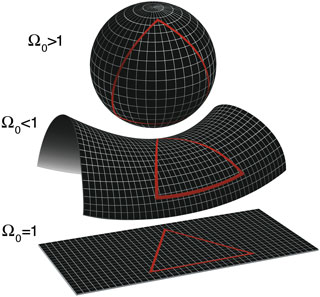
Relativity, inflation, Hertzsprung-Russell diagrams, ...

(I'm not big on appeal to etymology.) -
Order from ChaosIn return don't confuse storytelling with science. — Rich
(Y)
Since I just posted this elsewhere, here's a (really) brief summary:
- science is self-critical, model-disproof-seeking, bias-minimizing model → evidence convergence, where tentative hypotheses can be derived from the models;
evidence, observation and experimental results accumulate, models converge thereupon;
methodological;
per se the most successful epistemic endeavor in all of human history
These days we have some pretty good cosmological models.
The methodologies carry no promise of omniscience. - science is self-critical, model-disproof-seeking, bias-minimizing model → evidence convergence, where tentative hypotheses can be derived from the models;
-
This Debunks Cartesian Dualism
What might "a metaphysical reality" be? And "a separate energy source"? :oIf these experiences do reflect a metaphysical reality, as I believe they do, then it seems that consciousness itself doesn't reside in the body at all, but resides and is dependent upon a separate energy source. — Sam26
(I'm guessing you're using the terminology differently from what I'm used to.)
(Y)
The extra stuff isn't quite the same as mind, as best I can tell. I tend to use mind as an umbrella-term, covering the likes of experiences, qualia, thinking, ideation, love/feelings, headaches, self-awareness, consciousness, all that.But why address this as “extra-stuff”. It is no more extra than is the mind-stuff causally tied into the brain-stuff. Question then is, can the normal stuff of mind yet be when separated from the normal stuff of body to which it is normally causally tied into. — javra
The sensation of the headache is mind stuff (and phenomenological, part of you); the scan is not mind (more empirical if you will, not part of you). Does that differentiation work? If yes, then what of that extra stuff?Suppose you’ve gotten yourself a headache. No aspirin at hand. Instead you go scan yourself, fMRI or whatever the latest may be, doesn’t really matter. You now have two different angles, the experience of the ache, and a visual overview of your gray matter (need not be visual alone). If only the angles differ, in an ontological sense, then what makes them different? Understanding the scan, in this context, would converge on understanding the headache; a straight identity is not readily available, or deducible. The headache itself is part of your self-experience, or, put simpler, just part of yourself — bound by (ontological) self-identity, regardless of any scans or whatever else. Others cannot have your headaches (identity), but others can check out the scans (non-identity). Hopefully the scan will not reveal a tumor or the likes, which would otherwise explain the headache. -
Order from ChaosThere is no way anyone knows what happened when it happened before any recorded history. In fact, I dare say it is impossible to say what happened an hour ago. — Rich
Don't confuzzle knowledge and certainty.
To know something you don't have to know that you know that something (ad infinitum?).
Seems a bit impoverished to turn to Last Thursdayism as an argumentative device. :)
jorndoe

Start FollowingSend a Message
- Other sites we like
- Social media
- Terms of Service
- Sign In
- Created with PlushForums
- © 2026 The Philosophy Forum