
-
Are the laws of nature irreducible?>:O >:O >:O >:O
What does this mean? Does this mean that if I go in a straight like I will return ultimately to the point I started from? Yes it does. Therefore the Earth not being flat is a model for the underlying reality. The underlying reality is what you experience directly - ie returning to your starting position if you go in a straight line.the Earth really is not flat — tom -
What are you playing right now?
Well I dislike movies and TV completely. I almost never watch. Movies are only fun if you watch them with someone you're close to - then it's like living through an experience together, it's interesting. But I'd much rather play video-games by myself than watch movies or TV by myself. I haven't played video games though for probably many many years now though lol. I used to be an addict though as a teenager, played the whole day sometimes lol...Games are more engaging than movies or tv, I have a hard time paying attention to them, and particularly sitting through a whole movie. Particularly these days... fucking 2-3 hours... — Wosret
But playing video-games feels to me like not engaging with reality, so that's why I gave it up. In my spare time nowadays, I read, I play poker/chess/go, and otherwise do some sport (martial art stuff mostly) or simply relax. -
What are you playing right now?I think video-games for example aren't great (I don't play any myself), but they're preferable to doing a lot of other worse things. So a joke which encourages people to do worse things, instead of playing video games, really misses the point I think. I don't know, I personally don't like humour which encourages immoral behaviour, as I've said before. Being funny or witty aren't the only criteria by which I judge humour.
-
What are you playing right now?Okay, yeah, I had a look and quick read of that. Anything more? :s
-
What are you playing right now?Personally I don't think humour should be used in ways that encourages immoral behaviour... but to each his own.
-
What are you playing right now?Right, and playing video-games is certainly a bigger timewaste and more detrimental than:
:-} :-dvandalism, golf driving ranges, BB target practice, and boisterous drunkenness — Hanover -
Are the laws of nature irreducible?entanglement — tombig-bang — tom
You realise all these are nothing except useful fictions which we have invented in order to conceptualise our measurements, and create a system which enables us to make conceptual-based predictions? There is no big-bang, entanglement, cosmic-microwave background, etc. above and beyond their effects and predicted effects. We could re-name and re-conceptualise all of those. The Big Bang could be a Small Whirl, etc. There's an infinity of re-conceptualisations which we could use, and which could predict the same things.cosmic microwave background — tom
Again - this is pure concept, it has no reality. It's useful because it helps us think about a model, and thinking about the model helps us predict the world.gravitational waves — tom
Big-bang, CMB, etc. are concepts, not realities. They are pieces which together form a coherent whole, which is our scientific model of reality. Nothing more.And don't forget cosmology takes us to times before the big-bang, whose signal is revealed to be within the CMB. — tom
I see nothing revealed there about reality.No, theory clearly reveals nothing. — tom -
Are the laws of nature irreducible?
:-} http://thephilosophyforum.com/discussion/comment/54437#Post_54437Apart from entanglement, the geometry of the universe, the big-bang, cosmic microwave background ...
Sure, the laws reveal nothing. — tom -
Most over-rated philosopher?
To add a bit more about this - I think some thinkers were fundamentally right - maybe not right in the details, but fundamentally right, regardless of the time when they wrote. I think for example that Plato, Aristotle, Spinoza, and Schopenhauer (to name just a few that come immediately to mind), were fundamentally right. So I disagree with Hegel - there is no world-historical dialectic going on. Plato/Aristotle are fundamentally right, and Descartes is fundamentally wrong, regardless of the fact that he came long after them.looked at dialectically — John -
Are the laws of nature irreducible?Very strange, I was never warned about your message here at all. First time I see it was now, accidentally while browsing through.
I've never said this. I've never said through the laws we know nature as it appears to us, nor have I ever implied such a noumenon/phenomenon distinction. In fact I said quite the contrary - the laws themselves do not even reveal the phenomenon to us.If we are not knowing nature-as-it-is through the Laws and they are merely predictive models that tell only about how nature appears to us — John
This is true.then our understanding of nature through science tells us nothing about 'what really is', nothing of ontological or metaphysical significance — John
Not so, because it's something that we observe phenomenally directly. We observe how the self is given birth and arises out of nature and out of our community.On that assumption the notion that the self would seem to be groundless — John
Why not?The self as we experience it to be cannot be understood by rational and empirical means — John
That would depend on what you consider its essence to be I think. If you consider its essence to be the special significance of the Trinity, or man-become-God and God-become-man and such Hegelian notions then I'd agree with you. If you consider its essence to be love, then I don't think it's contradictory at all, except in showing that God cannot love us the way we love God. But I don't see why that's so bad for Christianity. Furthermore - it is utterly rational and undeniable, so given that philosophy is such and such, we have to shift our religious understanding by its lights.Spinoza's philosophy, for example, which you say you so admire is completely incompatible with any reasonable conception of Christianity, with any conception of it that does destroy its essence; its uniqueness as a religion, that is.
:s — John
Your version of Christianity seems to be quite Protestant - do you consider yourself a Protestant Christian by the way? -
Most over-rated philosopher?
Ah I see, okayActually, I was just referring to this — John
Well yes, objectively it doesn't matter. Imagine for a moment you are Bill Gates, you are so rich, you don't need to work for another day in your life, and there's nothing that you have to do. What would you then do? Would you sit around doing nothing, just staring blankly at what is in front of you? Why wouldn't you? Likewise you probably wouldn't sit on the couch watching TV all day long day after day. Why not? Because you found something better to fill your time with. So we all have some limited time until we die that we fill in with whatever we deem and judge to be worth filling it with. Objectively, it doesn't matter. It only matters to us. Objectively, we're all just wasting time.Sounds to me that you are saying it doesn't matter what we do, and therefore we are just killing time until we die. Perhaps I misinterpreted your meaning? — John
Why do I, or you, do the work we're currently doing? To survive. Why do we want to survive? Because again, we have nothing better to do. Why do we enjoy studying, learning, gaining knowledge? Because there's nothing better that we can do with our time. All of us are just filling time, waiting to die. As Democritus says in my profile - you came, you saw, you went away ... -
Most over-rated philosopher?
Well see, this is what I don't like about Hegel personally. I don't view history as having a direction - as being a dialectic headed somewhere. It's not headed anywhere - we and the rest of the world are going absolutely nowhere. I mean there's so many strange things that occur in history - so many unexpected twists and turns. It's always easy to read some story into the past if we don't look in detail... if we look just in big brushes... but then we eliminate the sea of differences and twists and turns which don't actually fit our story - we reject them, as anomalous points, and thus we truncate reality.In any case, looked at dialectically he was not so much wrong, as the first to realize and actualize a particular phase of dialectical possibility. For that he should be despised and belittled? :-} To see him as "wrong" is simply another of the many conceits of modernism. — John
I see you're spying on what I'm saying in other threads :PI disagree though, that what is done makes no real difference to the spirit; what is done is 'objectively' right or wrong, 'objectively' conducive to spiritual development or not, just as great works are 'objectively' more or less great, only in this sense. I must say you seem to be slipping back into a kind of nihilistic slumber with this talk of killing time until you die. — John
Nihilism in this sense is pure freedom. We can only be free if we're not compelled to do any particular thing - if all we're doing is killing time. If there's actually some goal - we can never be free, for we are always servants to that goal. And I'm talking empirically now. As I said morality still stands - but morality is self-chosen. We choose to be moral.
Yes, just like my birth is determined by things that aren't in my control. So? "My control" enters into the world through those things which give birth and power to it. I am given power from the outside. I don't give power to myself - I don't pull myself out of the water by my own boot straps - but that doesn't mean that once given power, I do not have that power, and I do not use that power to cause things around me. So yes, my powers aren't ultimately determined by me. But that doesn't make me a slave to those causes - for once I have the power, I can use it to cause other things, in accordance to my own nature (and hence my own freedom). There is only determinism, not pre-determinism.The powers of the "causal agent" are determined by other powers that are not under his or her control, according to Spinoza — John
No he didn't believe freedom to be an illusion. He attacked the traditional metaphysical idea of freedom and replaced it with another. Our freedom is limited - it's limited by the powers we have acquired and been bestowed with. But we do have freedom in-so-far as we have power. The rock also has freedom, but a lot less freedom than we do. Sure it is true that that power is ultimately not ours, and will in the end be taken away. But this isn't to say we don't currently have it.That's why he makes the analogy with the stone rolling down the hill that would, if it was sentient, feel itself to be free, Spinoza believed that freedom is an illusion due to our inability to be aware of all the forces acting upon us to determine our every action, just as the stone feels itself to be the free source of its own movement. — John
Absolutely no - Spinoza is against predeterminism. Predeterminism means that we are puppets - we have no power at all, we're not causal agents at all. Things are settled regardless of what we do. This means that all we can do is watch what happens, but not influence it - we're not even causal agents within the chain, we're just observers. This was anathema to Spinoza - this is the homonuculus in the brain - Spinoza would be horrified by this (mis)interpretation.To be consistent Spinoza must believe that every single action is an absolutely necessary and actually predetermined manifestation of the absolute necessity of God's nature — John
Yes - God cannot create arbitrarily - by free will - he necessarily creates as a result of his infinite and overflowing nature. Contingency (creation) necessarily exists in other words. The only necessity is the necessity of contingency. That's what you're missing when you accuse Spinoza of absolute necessity - yes, it is a metaphysical and logical absolute necessity, which grounds the empirically real contingency. You treat his metaphysical and logical absolute necessity to be equivalent to empirical absolute necessity.Spinoza specifically says somewhere, if I remember aright, that God does not have free will — John
No, for Spinoza freedom consists in being true to one's self - being determined by one's own powers, instead of by powers external to oneself. If I wear a red hat because others wear a red hat, I'm not free, because my actions are determined by causes outside of myself. If I wear a red hat because I want to wear a red hat, and doing so is me being true to myself, then I am free - I am determined to act so by my own nature and powers.I understand that for Spinoza a kind of freedom consists in absolute acceptance of one's nature — John
Why do you think this freedom is irreducible? And why do you think moral responsibility must be grounded in such a freedom as this?but this is not the Christian understanding of freedom, the kind of freedom that can coherently ground the idea of true moral responsibility. That freedom is irreducible, though; a discursive account of it cannot be given, because such an account would necessarily be in causal terms as all our accounts are, and that would deny the very freedom it is giving an account of. The greatness of Kant is that he was the very first to recognize this. — John
We are in "His image" because he is the source of our personhood.Where does personhood really exist except as a characteristic of persons? Sure you can say there may be a part of God that is absolutely unknowable, like the Kabbalistic notion of the 'ein sof', but how can the world of persons have their existence in God in His image, if God is not also a person. — John
I honestly don't know to tell you the truth :-O That's a theological, not a philosophical question. As I said before, I'm not very big on those things. I never think about them. The way you phrase these issues sounds very Barfield/Hegel like. I don't like it much lol O:) :PHow is the personal relationship with Christ-as-God, as conceived in Christianity, possible, if Christ is not a person? — John -
What are you listening to right now?I mean, especially if she has this Mojo...
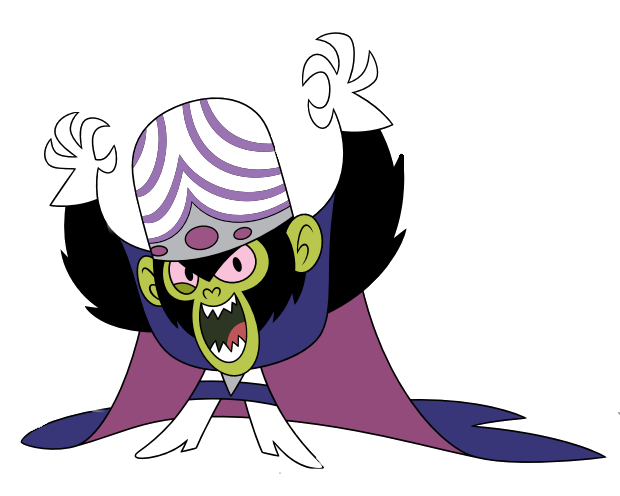
You don't really wanna meet that guy now, no? I mean if he grabs you with those sharp claws or teeth... :-x
>:O >:O >:O -
Resisting Trump
Are you purposefully playing dumb? :PSavages? What have they got to do with it? — Michael
I went to page 20 and saw talk about the practices, rituals and traditions of savages there. -
Resisting TrumpWell I knew that progressives are actually reactionaries wanting to go back to our days as savages, only that I didn't want to say it ;)
-
Most over-rated philosopher?
So for being an idiot, he gets called a genius? :Pby being spectacularly wrong about it with his substance dualism which highlighted the 'interaction problem' — John
Kant wasn't as revolutionary as you and Wayfarer make him sound like, I lean towards TGW here. Of course I don't agree with TGW, because I think Kant was actually a genius, but certainly not as great as you guys make him out to be. As TGW said, a lot of Kant is prefigured in earlier thinkers. However, I do admire Kant and I've taken a few insights from him - the Kingdom of ends, treating others as ends in themselves (persons) instead of means to ends (objects), the a priority of space/time/causality, the co-dependence of subject and object.the great revolutionary solution offered by Kant (which sees neither mind nor matter as prior, but something (discursively at least) unknowable which manifests as a world consisting of bodies and minds). — John
Not only it could be said, this is actually the case.Although it could be said that Spinoza's system is a neutral monism that achieves the same outcome — John
No, priority isn't given to extension... I don't understand where you're taking this from. Also you misunderstand what Spinoza means by absolute necessity... Certainly he doesn't mean absolute necessity as it would be empirically understood.absolute necessity to deus sive natura, tends to objectify it and give priority to material existence — John
In fact, Spinoza being an acosmist does quite the opposite - he gives priority to God, not to the empirical manifestations of the world. Priority is given to the unmanifest source of the manifest.
No, Spinoza doesn't understand mind as epiphenomenal if that's what you mean to say.mind understood as a secondary function, or even, really, as a phenomenal parallelism — John
No, this doesn't follow. Absolute necessity is not incompatible with freedom. Absolute necessity is a metaphysical postulate of one reality - because it is one reality, it is absolutely necessary. Freedom exists because one has the power to cause other things, being an element within the causal chain, with its own powers. Determinism doesn't mean that there is no freedom - determinism isn't fatalism. Determinism simply means that the causal agent is embedded within the causal chain - within the same reality and hence not transcendent - this is the absolute necessity. But because the causal agent has powers which determine other things, he plays a role, and to the extent that he plays a role in determining what happens, he is free.It also involves an ultimate denial of the possibility of genuine freedom — John
How can God be a person? How can the ground of person-hood be itself a person, except perhaps analogically in order to say that personhood merely emerges from it? Can the eye see itself? Can the conditions which make any experience possible be found within experience or must they be a priori? Can that which makes personhood possible be a person, or must it be prior to personality?Spinoza's denial of person-hood (which is so essential to a proper understanding of mind) to God — John
This doesn't follow, as I showed above.leading to seeing it (person-hood) as a kind of illusion. — John
But this isn't knowledge at all - merely finding a way for one to live in the world. Finding what to do with one's time until that time is up and death comes knocking on the door. That's a personal choice - something that is inherently subjective indeed. There's nothing objectively that has to be done. But since one has this time anyway, and suicide is pointless precisely because death is inevitable, what is one to do with their time, and how are they to choose this? That's the "art" that you speak of. But that's not theoretical knowledge, but practical application.But the 'wisdom of the human' can never become a science; it must rather become, as Berdyaev contends, a fully developed art. The reason it can never become a science is that the 'knowledge' obtained mystically can never be subject to intersubjective strategies of corroboration; verification and falsification. — John -
Resisting Trump
Same.public education — Wayfarer
Same.public health — Wayfarer
Same.social equity — Wayfarer
Nope! X-)free trade — Wayfarer
Yes.scientific progress — Wayfarer
Yes!I don't believe in open borders — Wayfarer
Nope! Guns are good, how else are folks gonna defend themselves?I oppose gun ownership — Wayfarer
Same. Only that you're not very vocal about it...I support traditional marriage — Wayfarer
Yep.action on climate change — Wayfarer -
Embracing depression.I'm with him on this:

Life is what you do while you're waiting to die. There's no point in suicide, because you're going to die anyway. Why the fuck would you hurry? What's the reason for doing that? You will die anyway - there's no point in committing suicide, death will come by itself. Until then, you have a little bit of time that you can use to do whatever - or nothing at all - until death comes and takes you. Again - this is the fundamental fact of existence. There's nothing you have to do - you are free - that's what being free means. There's no imperative - it's up to you what you will do.
This isn't to say that there is no morality. Of course there is morality, only that it's your choice to follow it, just as it's a choice not to follow it. If there was some imperative, then there could be no freedom of choice. Because there is no imperative, there is freedom of choice.
By understanding what I just wrote. Suicide is pointless precisely because death is inevitable. Why would you hurry to be dead? It's not like you could even avoid it.but how can I achieve this mindstate? — rossii
Great, so then don't hurt yourself, your family and your friends. What would be the point of doing that?Deep inside I don't want to hurt myself, my family and friends, but also I am extremely suicidal and don't know what to do. — rossii -
What are you listening to right now?
Oh dear... :-O Im not sure I ever want to woo this real woman with a mojo ... Im not quite sure what that is supposed to mean to be quite honest >:OBut, if you want to woo a real woman with a mojo, — TimeLine -
Embracing depression.
This sounds much like the slave who, when his master decides to free him, cannot bear to be freed, and begs for the chains not to be taken off :PFirstly, depressed and/or suicidal individuals often keep on living precisely because of their illness - their depression becomes what sustains them, not so much what occurs, as Question alluded to, outside of the bed, or the shower, or the house. In other words, some depressed people live to be depressed, not to live a life of love...not that such people choose that "lifestyle." — Heister Eggcart
Personally, I've suffered of depression, and the one thing it taught me was that there's not much to gain out of life, it's a zero sum game. All that really matters is whether you are a moral and loving person, there's nothing "big" you can get out of it. Careers, money, girlfriends, etc. nothing is of real importance ultimately. So nowadays, I wouldn't even think of attending something like a party for example. Many young people are obsessed about partying, as if that would make their life better somehow - or it would make life worth living. I don't buy that shit - life is worth living in and of itself, it doesn't require any particular thing. So I'm skeptical about "cure all" solutions. The human condition doesn't have a cure, because it doesn't need one. Once you become satisfied with the idea that you can't gain anything out of life, and therefore neither can you lose, you are finally free... you are just left to fill your time until you die with whatever you think is good and important. -
Embracing depression.
Fuck it man, what's the reason not to go on living? What's the reason to quit life? Living is your default state. You need a reason to change something. You don't need a reason to leave things as they are. There's no "why" to going on living. You go on living because you are alive, simple. That's not a reason for it, simply how things are.but why go on living? what is the rational reason? I just don't see one. — rossii -
Scholastic philosophyOh my days Thorongil, I consider myself quite a literate person in philosophy, and I have never even heard of those two figures! :-O Thanks for the references :D
-
Resisting TrumpBC's argument is like: you can take all your economic concerns, just give us our sexual concerns >:O
-
Resisting TrumpSuck it up Wayfarer - it's not about people being scared at all, it's just that some forms of social organisation ain't working. When I want to control my country's immigration I'm not being scared at all - I'm being reasonable. Just as reasonable as I am when I refuse to engage in injecting drugs and the like - I'm not being scared at all in such circumstances.
You mask yourself as a social conservative, but the truth is you are a liberal and progressive through and through. You don't want to talk about social conservatism using the excuse they are "hot button topics" because you're not a social conservative at all - you're a liberal. At least have the shame and decency to admit that. -
Most over-rated philosopher?
Yeah I don't agree with the "extra-mental" part, which is extra-rational, simply because it doesn't make much sense to me what that would be or could be. So that's why I would agree with Hegel that everything that is Real must be Rational.I think your memory is pretty good. That sounds like something I would have said. Perhaps the end of history can be equated with the completion of the dialectic. Steiner claims that this is the completion of rationality, but not of what he calls "extra-mental" understanding; in fact it sets the stage for the latter. Of course, Hegel, would not have agreed with this, since he thought the "Rational is the Real". — John
It's altogether too fashionable these days to indulge in Descartes-bashing — John
>:O
I personally don't see much in terms of valuable ideas in Descartes at all, and it has little to do with Descartes bashing. Maybe I just haven't read his Meditations carefully, who knows. -
Should I get banned?
If you work at a research institute, or know someone who does, you can pretty much get free access to any of them :Pyou'll have to do extensive research by reading tons of academic papers (usually needing subscription) — FLUX23
I agree with the rest of your points. -
Most over-rated philosopher?
How can you do that? :s I can never listen to philosophy while I do work - if I do that, then I don't understand anything of it. Is your work in the garden mostly planning work, or is it actual work in setting it up, or is it management work? If it's actual physical work, then maybe I can see how one can listen and understand something and do physical work at the same time. But for me, I tried many times to listen to philosophy lectures while writing, working, thinking, designing, and I end up not understanding anything of what I listened to afterwards >:OAlthough I did listen to a podcast featuring him, while I was hard at work maintaining a garden a while ago — John
I remember us having a talk with regards to Hegel and the end of history, and you telling me (after you told me I don't understand Hegel >:O ) that the end of history doesn't refer to an actual end of history, but rather to the completion of the revelation of Spirit in thought and in the world or something of that sort. But I may be wrong as well.Sure, if it's not too much trouble, I am curious as to what you are referring to. — John -
Scholastic philosophyI don't have much time now, but basically a few comments:
That's an argumentum ad hominem - not an intellectual reason for disagreeing with Scholasticism. You may not like organized religion, and indeed think organised religion is a problem for the world, but that has little or nothing to do with reasons for disagreeing with Scholasticism.Its inherent connection to organized religion — darthbarracuda
Emotional reactions - not valid intellectual reasons.My personal aversion to all-encompassing, systematic Theories of Everything — darthbarracuda
Okay so what? Scholastic philosophy itself has the means of distinguishing mistakes. For example, masturbation is an evil that is done only to oneself - you only harm yourself. Rape harms you and the person raped. Therefore rape is worse.I believe it was Aquinas who thought masturbation was basically as bad as rape — darthbarracuda
Homosexual sex may be immoral - what's wrong with that? Scholasticism doesn't argue someone having homosexual attractions is immoral, only that a certain activity - having sex with a person of the same sex as you - is immoral.Or that homosexuality was extremely immoral — darthbarracuda -
Most over-rated philosopher?Sure, but you yourself educated me what he meant by that. Shall I remind you by searching for a quote? >:)
-
Most over-rated philosopher?
But philosophical history ended with Hegel, so then Chomsky is irrelevant. Not worth studying, according to Hegel himself. So to study him would indeed be to stick to the smaller pond :-OIt's interesting to note that, under that interpretation, reason can be seen as either a larger ocean or a smaller pond. When the whole tradition is seen dialectically, as Hegel saw it, then it is certainly a larger pond. — John -
Most over-rated philosopher?
No he can't. A Pyrrhonist doesn't doubt in the absence of reason(s). He must have reason for that doubt, the mere logical possibility of it isn't a reason for doubting, because it's equally a reason for believing (and Kant has provided positive reasons in addition to that for believing it)And so no proof of necessity has been given. Note that the Humean Pyrrhonist can say the same thing. — The Great Whatever
Sure, I can agree with this. But again - this has nothing to do with Descartes unfortunately... if it had, then Descartes would indeed have been worthy of the name genius ;)But the two are, as I recall, deeply related. The unity of the world is related to the unity of the self. — The Great Whatever -
Most over-rated philosopher?Since that's where I am mentioning swimming, hence the idea of a pond in your response. If so, then what other meanings could it have given this context? — Agustino
However, I suppose you being the smartass you so often are actually meant that as a way to mock my lack of knowledge with regards to Chomsky and my lack of desire to learn or study him :-* O:) :P -
Most over-rated philosopher?
True, but that we cannot even possibly understand how it could be otherwise is an indication that we have no reason to think it could be otherwise.As we find ourselves experiencing – but this 'finding ourselves' – the faculties we happen to have, for no discernible reason, are still potentially contingent, and Kant admits we can't even sensibly answer questions about what things would be like otherwise. This doesn't mean that he's showed such a necessity, only that he is committed to claiming we can't answer (or possibly even understand) certain questions.
Note that it's always necessary that given something is the way it actually is, it actually is that way. — The Great Whatever
Why did he call it synthetic unity of apperception then? I remember as being that which makes the self and the world possible.Are you wording this from the text itself? My memory of the unity of apperception has to do with the fact that it's only intelligible to have a thought insofar as one can at least in principle intuit that it is 'mine.' This is roughly the move made in the cogito as Descartes qualifies it. — The Great Whatever -
Most over-rated philosopher?
Well I take it to be a response to:Yes, that's one possible interpretation. — John
Since that's where I am mentioning swimming, hence the idea of a pond in your response. If so, then what other meanings could it have given this context?In modern academic and popular culture circles, and I swim in none of those. — Agustino -
Most over-rated philosopher?
Well I certainly prefer the smaller pond of reason, than the larger pond of bondage to lust, greed, etc. if that's what you mean :PA polysemous rejoinder I will leave you to ponder...or not..I don't want to take the fun out of it. — John -
Most over-rated philosopher?
Yes he would obviously deny it, but he would have to provide additional argument for it. That's what it means when something isn't certain. Kant created a framework in which this was certain.I think a classical rationalist would deny this. — The Great Whatever
I think his analysis of experience shows that experience - as we find ourselves experiencing - necessarily will follow those necessities - we cannot even imagine it being otherwise. But of course, it could be possible.In fact Kant didn't show that – he postulated it, but there's nothing to show that the way our faculties happen to be are necessary – it's only that given that we have faculties that enforce necessities within them, such necessities obtain – well, within them. — The Great Whatever
I tend to agree with this. The contingency was well noted afterwards with the advent of modern physics. Our synthetic judgements, while a priori, aren't necessary. This may sound shocking but it basically means that we're in all cases, a priori, having a form of say space, imposed on our experience, but how we conceive of this space (Euclidean, non-Euclidean, etc.) can be different, and indeed can change. What cannot change is that we must have some sort of conception - ie space is an a priori form of experience. It's the necessity of a particular conception which vanishes.So there is a deeper contingency to Kant's system, even if you take his positing of such faculties as justified. — The Great Whatever
I don't know who it was addressed to, but I do remember reading about Descartes not taking the cogito as a syllogism but rather as an intuition. Fine. So how does this show that "any thought that was had must be 'my' thought (which is the unity of apperception)"? How is 'any thought that was had being "my" thought' equivalent to:I had in mind his response to Hobbes (I think it was) when he claimed that the cogito wasn't a syllogism as such, but a sort of bootstrapping intuition on which allowed one to conclude that any thought that was had must be 'my' thought (which is the unity of apperception). — The Great Whatever
:san unexperienced synthesis of self and world that occurs prior to experience and indeed makes experience itself possible — Agustino -
Most over-rated philosopher?
Can you please provide me with a citation for this? Has René shown that there is an unexperienced synthesis of self and world that occurs prior to experience and indeed makes experience itself possible?Descartes – synthetic unity of apperception — The Great Whatever
Agustino

Start FollowingSend a Message
- Other sites we like
- Social media
- Terms of Service
- Sign In
- Created with PlushForums
- © 2026 The Philosophy Forum