
-
The significance of meaningThat'd be for you to decide. Systems theory alters the boundaries of what we think of as 'conscious'.
-
The significance of meaningI’d love maths and science to have an explanation for everything; but perhaps some things are ineffable. Perhaps maths, for all its fundamental beauty, is the scaffolding rather than the building. — Chris Hughes
Actually non-linear dynamics goes a long way beyond what standard calculus and probability can do. It's worth a look if you like math, especially when applied to highly complex and living systems. -
How should we react to climate change, with Pessimism or Optimism?Optimism and pessimism are both inherently goal-directed, i.e. they both inherently transcend the existing context towards some future state of affairs. One is optimistic that things can be improved; one is pessimistic that things cannot be improved. Therefore both optimism and pessimism natively move towards some future state of affairs. Since optimism is melioristic (things can be improved) I opt for optimism, always. Either way, the fundamental orientation (choice) is sufficient to address the opening question as is.
-
How should we react to climate change, with Pessimism or Optimism?I see that you are taking liberties with the unambiguous concept of pessimism. If you want to create some ad hoc, doctored up definition of some emotive/motive state that is fine, just don't call it pessimism. It derives from the latin meaning "the worst." An optimist actively looks for the best, a pessimist actively looks for the worst. Those definitions are adequate and complete in and of themselves. As to why people are pessimistic, that indeed may be up for grabs, but the simple fact of "being pessimistic" is what it is. You are conflating the causes and the results of pessimism with the state of being pessimistic.
-
How should we react to climate change, with Pessimism or Optimism?Alright, Sir Righteous. Seems you know exactly what you're talking about. /s — Swan
A little too uncompromising was I? Maybe so. I think I am just losing patience with philosophizing by way of equivocation. Start with a premise X, then start arguing as though X means Y. Pessimism is not a "broad" term. It literally means, 'tending to see the worst.' The normative denotation is already built in to the term and it is negative. So optimism vs. pessimism? Easy choice. -
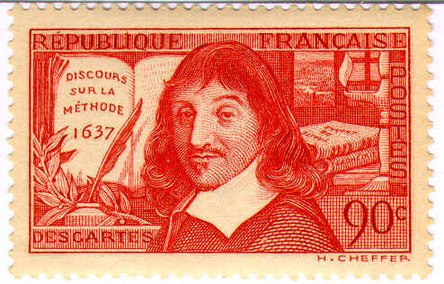
Intellectual honesty and honest collaborative debateAgree one hundred percent. Unfortunately, when it comes to behaving according to a standard of reasonableness, most people tend to feel they do, imputing defects to the other side when friction (inevitably) arises. Pretty much what Descartes says in "Discourse on Method":
“Common sense is the most fairly distributed thing in the world: because everyone thinks he is so well endowed, that even those who are hardest to satisfy in everything else, have no habit of desiring more than they have. What it is unlikely that all are wrong, but this shows that the power of judging well and distinguishing truth from falsehood, which is properly what is called common sense or reason, is naturally equal in all men, and as well as the diversity of our opinions does not come from what some are more reasonable than others, but only that we conduct our thoughts in various ways, and do not see the same things . For it is not enough to have a good mind, but the key is to apply it well. The greatest souls are capable of the greatest vices as well as the greatest virtues..." -
How should we react to climate change, with Pessimism or Optimism?What if optimism tells us, "hey, God will save us all, don't worry, we are made in his image, just forget it." — god must be atheist
If the difference between success and failure is a healthy attitude then perhaps that is enough. We are speaking in generalities, after all. -
How should we react to climate change, with Pessimism or Optimism?Pessimism just means preparation in short. Optimism prohibits, if not severely reduces being prepared. How does "optimism" prepare or equipped you for the realism of dire situations? It is a false hope. — Swan
Optimism is not gambling, it is a fundamental attitude that underlies a perspective in which one is positively motivated. Likewise, pessimism is not caution or care, it is a fundamentally negative attitude, an orientation.
I would never presume to argue with someone who feels pessimism is more productive than optimism. I think the juxtaposition of the two terms speaks for itself. I know if I had to choose between being stuck in a situation with a pessimist or an optimist which I would prefer. -
How should we react to climate change, with Pessimism or Optimism?If pessimism and optimism represent free choices, then I would endorse always taking an optimistic view. My wife's cousin was visiting this summer. I'd never met her before so she was telling me a bit about herself and she said, "I'm a bit of a pessimist." I said, "Interesting. Is that by choice?" Made an immediate impact. She said she'd never thought of that.
I think some people are pessimistic by habit, but optimism I believe is overall a healthier frame of mind and probably does equip us to make better choices. -
How much philosophical education do you have?What about the entire pragmatism movement? — Isaac
Sure. Pragmatism is all about actual effects in the world. I don't see that implying any kind of relativism though, if that is what you were suggesting? -
Should we be going to Mars or using the tech required on Earth?Agreed. Exploration is a valid driver of culture.
-
How much philosophical education do you have?Interesting. I would assume that anyone professing any interest in philosophy would already have come to terms with the non-negotiability of truth.
-
How much philosophical education do you have?Thing is, everyone knows something. Even if they don't know why that knowledge is justified.
Think about the classical division between coherence and correspondence theories of truth. Let's assume a debate between a strong coherence theorist and a strong correspondence theorist. Both can't be correct, yet both possess knowledge. The inability to codify or explicate the foundations of knowledge doesn't militate against the acquisition of knowledge. -
Marx's Philosophical and Economic Manuscripts (1844)A good share of humanity is simply irrelevant to capitalism — Bitter Crank
Just so. That's why Polanyi advocated 'substantivist economics' which considers all aspects of human existence, instead of simply monetizing life. A great idea. -
Voluntarism: will v. intellectDilthey says the intention to understand precedes conceptual cognition. I'd go along with that. If it's a chicken or an egg thing then I'd say it is a primitive 'will to understand' that comes first.
-
How much philosophical education do you have?Technically a minor but only one credit short of a major, with all core courses, so I voted for bachelors :)
-
Ego Death and the Collective UnconsciousWell, Jung has an entire book based on his "confrontation with the unconscious," The Red Book, which is a compendium of paintings, dreams, fantasies, etc. He says "The knowledge of the heart is in no book and is not to be found in the mouth of any teacher, but grows out of you like the green seed from the dark earth."
So I guess the "experience" of the unconscious has at least that much significance in Jung (for Jung).
:) -
Is physical causality incomplete?The higher-level feature of human consciousness is clearly causally effective in the world around us: we live in an environment dominated by artifacts that embody the outcomes of intentional design. The issue is that the present-day subject of physics has nothing to say about the intentionality resulting in the existence of such objects. Thus it gives a causally incomplete account of the world. — Matias
Yes, consistent with a systems theoretic interpretation. Physics (and all physical science) operates by limiting the scope of experimentation in order to obtain accurate results. The world/universe, on the other hand, clearly is comprised of "open systems." This doesn't take anything away from physical science, it just suggests that it needs to be augmented. Successes in the applications of non-linear dynamic systems theory to a wide variety of fields and problems substantiate this. -
Systems Philosophy?I'm also currently reading Dilthey. His project involves understanding "objectifications of spirit" and the extraction of "spiritual content from the various manifestations of life." Interesting that this fits exactly into a systems theory approach in which mind is embedded in matter. Hallmark of a good perspective I guess.
-
"...He'd like to get to know you - but he thinks it would blow your mind!"And yet suffering can seem like an eternity. More so if others appear happy. Perhaps contemplating a change of attitude is more palatable?
-
Systems Philosophy?Sorry, I missed some of the replies! Since posting this I've read 3 books, the seminal texts by Laszlo and von Bertalannfy, and a recent survey/synopsis by Capra. I'm pretty comfortable with the conceptual role of non-linear dynamics, although the book I just started "Chaos and Complexity in Psychology: The Theory of Nonlinear Dynamical Systems" is pretty technical I have to admit.
So, I worked on a model of personality cybernetics in the 90's, basically assuming that
1. We are actively engaged in a project of evolving self-creation
2. This is enacted as cybernetic feedback loop wherein we modify/correct our cognitive functions based on experimental interactions with our environment
3. The ego tends to become an impediment to cognitive growth (and knowledge) at a certain point
Joseph Sirgy's self-congruity theory has a lot to say about personality cybernetics, with respect to assumption three.
I've pretty much put a pin in that, but it was my initial attempt at generalizing a systems approach.
For example, take this excerpt:
"Preamble - What am I?
First and foremost, I am a conscious, thinking thing. Not the states of my body, not my possessions, not any of the circumstances of my material environment, none of these things is important to me, except insofar it contributes to my conscious experience. As a thinking being, the most obvious and important factor in my self-recognition is the extent of the conscious control which I exert over my own thoughts. Different factors, material circumstances, body-states, etc., may recommend themselves to me as being "worthy of attention now" - perhaps even strongly recommend themselves - but the simple fact of the matter is that I possess a theoretically absolute discretion over what I shall choose to attend to at any moment."
Now from a more mature systems perspective, I no longer embrace this clearly dualistic approach. What I think is actually going on is that
1. Much of our cognitive processing is "pre-formatted"
2. However we can and do actively re-structure the elements involved in this formatting
From the humanistic perspective you could describe this as a "soft-determinism" or a "confined voluntarism," but the key for me is that it is a systemic perspective that synthesizes the material-mind dimensions, what systems theorists call "biperspectivism". -
Why do people choose morally right actions over morally wrong ones?
Are you asking why some people actually do choose "right" over "expediency"? Clearly because that coincides with a higher value in their personal schema. It sounds more like you are wrestling with the question, "how can there be a higher value than expediency?" That is quite a different question though.
Nevertheless, the evident fact is that some people do choose to act "morally," to the extent that is captured by the description "enacting a non-expedient value." -
Ego Death and the Collective UnconsciousYou want me to explicate Jung's entire theory of the unconscious for you?
He repeatedly describes how dreams and religious experiences link to the symbols of the collective unconscious. Take a look at Aion maybe? -
Ego Death and the Collective UnconsciousYes, the definition is, but is its extension? Sure, the collective unconsciousness houses transpersonal archetypal symbols and material, but who is to say what are the limits of the experience of those materials? I've read lots of Jung and he talks extensively about the embodiment of this material in primitive animistic religions and rituals. I really don't think you are correct in saying Jung explicitly denies this aspect.
-
Ego Death and the Collective Unconscious
Does Jung actually say it has nothing to do with this? Certainly Jung writes about oceanic feelings and having such experiences. -
The Problem of ExistenceI would characterize this as the challenge of uncertainty. How is it that what is presentationally and logically most given is reflectively most elusive?
-
Currently ReadingFormation of the Historical world in the Human Sciences
Dilthey's Selected Works, Volume III -
Why are We Back-Peddling on Racial Color-Blindness?The original PC-acuity. I like to say, if you push special treatment for minorities to its logical conclusion, we all become minorities, at which point we all become equal again. Which is the way it should be. So much less complicated and more effective!
-
Atheism is untenable in the 21st Century
Based on the sum total of my experiences (which may not coincide with yours) I have sufficient evidence of connectivity which transcends the domain of ordinary scientific discourse. Trivially, neural networks operate by leveraging 'hidden dimensions' of connectivity also, so while this may not rise to the standard of scientific proof, it is evidence, nevertheless. And I certainly extend my hypothesis to include the strong possibility of there being forms of consciousness far more advanced and therefore toto caelo unlike ours. Possibly not limited in space and time like ours. And I conceive this to be 'close enough' to the most general form of the notion of God.Right. But we can exchange reasons and debate them. It's not a matter of faith, after all. If you have an argument for God that you find convincing, I'd be happy to take a look at it. — Echarmion
As was said, it all depends how you define "God," doesn't it? -
Atheism is untenable in the 21st CenturySince there is thus no good reason to assume God exist, the reasonable thing to conclude is that God doesn't exist — Echarmion
That is just Daniel Dennett's argument and I didn't find it convincing when he delivered it. Reasons for believing are ultimately contingent on the entire body of an individual's knowledge. If I find a good reason to believe it is sufficient for me. If Dan Dennett (and you) don't, then you speak for yourself. -
Atheism is untenable in the 21st CenturySame thing with the whole debate about the oranges growing inside of toothpick crystals etc.? — Terrapin Station
Of course not. I established my criteria of epistemic adequacy and cumulative knowledge already. You're statement is just...flippant. -
Atheism is untenable in the 21st CenturyThe whole debate hinges not on the actual existence of God, only the possible existence of God.
-
Atheism is untenable in the 21st CenturyFor me the biggest single argument is the cumulative nature of knowledge. Knowledge about quantum fields would be meaningless to a mesolithic hunter. Is the argument that God is unknowable in practice, or in theory? If you argue that God is theoretically unknowable, then you would have to concede the possibility that (S)he exists. If you argue that God is unknowable based on the current state of our knowledge now, then the same thing.
Atheists must assert that they currently possess adequate knowledge to be able to comprehend everything that is possibly knowable right now, before declaring that God does not exist. Which is of course absurd! -
Sushi - A mini-essaySorry, that was an FB rant, I try not to tirade in here
since you are interested though
"Capitalism is the philosophy of the rich. And it is working: the rich are definitely, undeniably getting richer.
So if capitalism is working, then why hasn't it solved the world's problems? Because obviously, money is not the answer.....
Just because having enough money is good does not mean that having even more is better. Wealth is an addiction, just like crack cocaine or heroin.
I am not anti-capitalist, I am pro lets eliminate poverty and pollution." -
Psychologically Motivated Suicide Is Not A RightIf you are in your eighties, and your partner of many decades passes away, you should absolutely have the right to follow. I think that counter-example is intuitively simple, real, and solid.
-
Atheism is untenable in the 21st CenturyDid you know that probabilistic calculations actually don't apply to some natural systems?
I just finished reading a section in "The Systems View of LIfe" describing the creation of artificial cells. Basically, they dump a minimal set up proteins along with an encapsulating agent (a lipid) into a container. Cell formation requires that all the components become encapsulated together. The number is about 90 and statistically, this should never occur (i.e. all 90 elements becoming encapsulated in the tiny spaces involved.) However it does happen. What occurs is that some membranes have NO encapsulated elements while others get the full set.
The hypothesis is that what is going on is a non-linear dynamic system, the formation of the cell aligning with what is called a "strange-attractor" which represents a stabilized condition of the overall system.
So statistical/probabilistic computations do work for classical closed thermodynamic systems, but not necessarily non-linear ones.... -
Sushi - A mini-essayIndeed. My latest rant is that capitalism is working, because it is making the rich richer. What capitalism is NOT doing however is solving our problems.
-
Does the Welfare State Absolve us of our Duty to care for one another?Isn't the welfare state an expression of our mutual obligations?
Mill believes that obligations of 'perfect justice' create duties which give rise to 'corresponding rights in assignable persons'. Seems a reasonable characterization. -
Marijuana and Philosophy
Another tidbit you might find cool. After doing a lot of reading on cybernetics and neural nets, something struck me. Neural nets are "trained up" by a trial and error (or self-correcting but same thing) process of matching specific inputs to desired outputs. What this implies is that there must be "hidden connections" existing between specific data in our cognitive fields. In other words, the dimensions of our perception and/or cognition are much more limited than the actual dimensions in which events occur.
So, in this context, you can really see how relaxing the constraints on cognition could potentially be very...enlightening.
Pantagruel
Start FollowingSend a Message
- Other sites we like
- Social media
- Terms of Service
- Sign In
- Created with PlushForums
- © 2026 The Philosophy Forum