
-
What does "real" mean?There are two definitions:
* Belief Independent
* Authentic
Conflating them will only lead to confusion — hypericin
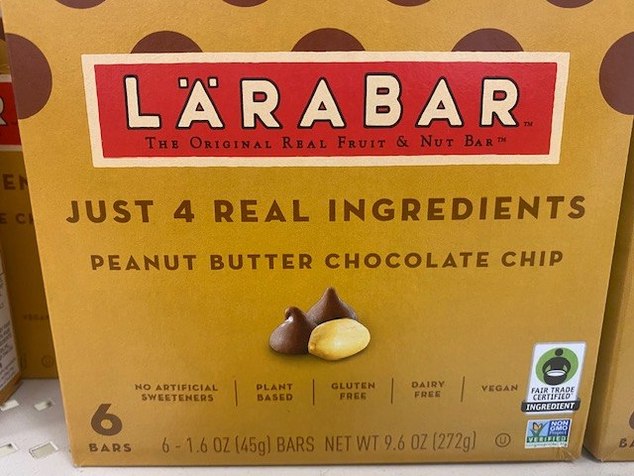
Just 4 real ingredients. — Tom Storm
Isn't the contrast here real against artificial? — Banno
Yes, I know the difference between real and real. I posted the photo because I thought it was amusing. -
Form Versus Function in ArtBut I didn’t intend the thread to specifically be about music; my threads just tend to go there because it’s what I know the best and I use music to try to illustrate my points. If you have any thoughts about these ideas in relation to another art form (or even something not specifically art) please feel free to bring it up. — Noble Dust
I understood that, but I don't think I understand your distinction between function and form in music enough to compare it to something I'm more familiar with, e.g. poetry or fiction. Besides, I'm enjoying hearing you, @Dawnstorm, and the others talking shop. -
Poem meaningI can recommend the same recommendation that was given me -- don't worry too much about the scholarly side, just feel it like you would any other poem. — Moliere
That's generally how I approach poems when I read them. If they get to me enough, I'll put more effort into subsequent reads. That's why I'm enjoying this thread. It gives me motivation to dig deeper. -
Poem meaningWhile browsing for poems -- I have never before ventured down the path of The Wasteland until now. And I really did love it. — Moliere
Oh, geez. Now you're going to make me read "The Wasteland." It may take me a while. I did have an experience perhaps similar to the one you describe at the beginning of your post. I remember reading and hating Elliot in high school, in particular "The Love Song of J. Alfred Prufrock." About six months ago I decided to take another look and I was surprised to find I really enjoyed it. I'll try to keep that in mind as I read "The Wasteland." -
Form Versus Function in ArtAm I missing something? Is there a sense in which artistic function is bottomless/eternal, or am I right in demarcating it's beginning and end points? What do your opinions say about your philosophical predisposition on what art does and is? Just my semi-annual art rant. — Noble Dust
As you probably know, I am very interested in art - how it works, what it does, why it matters. You and I have discussed in the past that music is the art form I have least to say about, not from lack of interest but from lack of knowledge. That being said, I'm really enjoying this thread. I've read all the posts and I'm just allowing it to percolate rather than trying to figure everything out. I don't have much to contribute, but the passion and knowledge of you and the other participants is inspiring. -
What does "real" mean?But that’s full of mental phenomena, I don’t see a way around that. Take your atime example of an apple in front of you: you’ll say this is real. Perfect. Now I’m not in front of it, so I have to take your testimony as accurate and I have to imagine that what you mean when you say “this is an apple” will evoke in me, a similar object to what you are seeing. Likewise if I look out my window and say I see a car, a real car, not a toy car, you would have to imagine a car in your head, unless you look at a car. What’s the issue here- this looks to me like “ordinary, humdrum reality”. What’s your concern in such a situation? — Manuel
I don't have any problem with what you've written. I'm not saying the memory of an apple is not real. Is it "ordinary, humdrum reality?" Let's see... I guess if you put me in thumbscrews or on the rack and forced me to make a definitive statement as to what everyday reality is, I'd say it is something physical, something made of physical substance, matter or energy, something you can observe directly with human senses.
Thank you for forcing me to say that. Your use of torture devices is forgiven. I didn't realize that's what I think till I wrote it out. -
What does "real" mean?Right, that's the point. We consider whether or not the thing being measured (through sensation) is real, and we naturally conclude that if we are measuring it, it must be real. But prior to coming to this conclusion, isn't it necessary to do our due diligence toward understanding the thing which is doing the measuring? If the thing doing the measuring isn't real, then what validity does "if we are measuring it, it must be real" have? — Metaphysician Undercover
It's a pretty standard thought, at least in eastern philosophies, that the self is an illusion. -
What does "real" mean?Is it meant to lead anywhere — Amity
Not necessarily. It's meant to go where it goes. Which it seems to be doing pretty well from my perspective. -
What does "real" mean?
I think you've laid out the types of situations that have to be evaluated in determining what is and what isn't real. As I noted, everyday, humdrum reality is my benchmark. The others should be evaluated in relation to that. That's what's important to me. I don't think the other situations, e.g. mental states or fictional phenomena, matter as much in themselves. -
What does "real" mean?However the tension you raise with option 3 arises is especially acute with the Wigner's friend thought experiment. From the friend's point-of-view, she observes a definite result. From Wigner's point-of-view, he observes interference effects which indicates indefiniteness. — Andrew M
I've read through an explanation of Wigner's friend twice and can't figure it out how it applies beyond just plain old "quantum weirdness." -
What does "real" mean?The term 'real' is used in various ways and to some extent it may come down to commonsense picture, or that which is confirmed intersubjectively. Even within psychiatry, while there is some acknowledgement of cultural beliefs and differences, there is an adherence to a general realist worldview. This is the basis for ideas of what is delusional and, for example, if one believes that they have magical powers they are likely to be seen as delusional. To some extent, there may be a shared understanding of delusion in the psychiatric and philosophy perspective in Western culture. — Jack Cummins
I came at this question from a philosophical rather than psychological perspective, although I think your point is relevant. As you note, "adherence to a general realist worldview" is a baseline against which other ways of thinking about reality can be compared. That being said, I don't necessarily exclude delusions, hallucinations, or other mental processes from consideration as real. I left that question open in my OP. -
What does "real" mean?Yeah, my bad. I was speaking from an ontological perspective (reality is....), you were speaking from an epistemological perspective, (making sense by relation). — Mww

-
What does "real" mean?Can you not articulate what the potential difference is? — frank
As I noted, that is the subject of this thread. -
The face of truthFor something to be true.. It must exist. — Benj96
As I noted elsewhere, truth applies to propositions, not to things in general. I think that's an important distinction. How can an apple be true?
For something to be true.. It must be knowable. — Benj96
Hmmm... I'm not sure about this. I think you'll probably hear from people who disagree.
the truth doesn't change. — Benj96
Well... sure it does, depending on how you look at it. The statement "Today is Tuesday," is true here in the eastern US as I write this, but it won't be true tomorrow. You talk about
And such a fundamental constant/ law/ principle as truth - which is unchanging.. Must therefore be inaccesible to systems that change/are under the influence of change. — Benj96
What kind of thing is not subject to the influence of change? Can you give some examples. Fundamental rules of reality, e.g. the law of conservation of matter, have to change when we find out new things, e.g. nuclear fusion. Nitpicky things like my example about what day it is change.
And because the truth cannot change fundamentally or it wouldnt be true - it must have something to do with energy and time — Benj96
I don't understand this. -
What does "real" mean?Since science is epistemic, not ontic, I don't see what "QM" has to do with "reality" as such (i.e. map (QM) =/= territorry (reality); therefore, interpreting one in terms of the other seems to me a category error), and puzzles me why (the Mods allow) so much pseudo-quantum graffiti to deface these fora. — 180 Proof
I agree, which is one of the reasons I brought this whole thing up. How much of quantum "weirdness" is metaphysics and how much is physics? -
What does "real" mean?Reality is that aspect of being we notice. — Moliere
Or maybe it is the aspect of being we can notice, even if we don't right now.
Being is that which has no distinction. If it were distinct then it'd be individuated then it wouldn't apply to some existence. — Moliere
Funny - "that which has no distinction" is what Lao Tzu would probably call "non-being."
And, more generally, we are free to set out what we mean by reality. It changes depending upon the philosopher. — Moliere
Agreed. I guess that's the point of this discussion - if you're going to use the words, make sure you let us all know what you mean. -
What does "real" mean?OK, call it a pragmatic point of view. Philosophy as a way of life...
You don't need to buy it. — Amity
No, but I'm allowed to express an opinion. -
What does "real" mean?what is generally accepted as reality or rational argument."
What about the definition are you questioning? — frank
"What is generally accepted as reality" is not necessarily the same as reality as viewed from a philosophical perspective. -
What does "real" mean?The words on the page of the Tao Te Ching or the Bible are open to interpretation as literature. We can read and share what the words or The Word mean to us if anything.
Hallucination: a sensory perception not accessible or real to those other than the sufferer.
Delusion: a fixed, false conviction in something that is not real or shared by other people...
It's important to recognise the distinction between different kinds of reality and their consequences. — Amity
I recognize the distinction you're making, but I'm not sure I buy it, at least not from a philosophical point of view. -
What does "real" mean?Aren't delusions unreal by definition? — frank
That's one of the questions on the table. -
What does "real" mean?I used to think of reality as having a relationship to existence as having a relationship to being, where "the real" refers to lived experience, existence refers to judgments of statements, and being does not refer but is the most fundamental -- one might be tempted to say there's a Hegelian relationship between being and the other two. Something rougly along those lines. — Moliere
I don't think I understand the distinctions you're making. After some thought, I generally think of "being" and "existence" as the same thing. As I noted in the OP, I see "reality" as being related but not the same. I didn't define how they are the same and how they are different because I'm not sure I can. Maybe I think of "existence" and "being" as more abstract than "reality." "Reality" is somehow more normal.
To stretch my mind a bit -- I might say reality is related to the self in the selfs projects or pictures, or more fundamentally, in the selfs enjoyment of grasping the world for itself. — Moliere
I don't understand this. -
What does "real" mean?So of course, the philosophical question that comes to one is: how do I know I'm not in Ketamine? — frank
An alternative philosophical question - to what extent is the delusion real? -
What does "real" mean?"Real", as is used in English is an honorific word, adding little substance to what is being discussed. — Manuel
You may be right, but it comes up often in our discussions here on the forum. That's why I started the thread.
Are unicorns real? Well, they're not objects in the world, but people can surely speak about them without much problem, within an appropriate context (mythology, storytelling, etc.) — Manuel
Yes, this is the kind of question that usually comes up when we talk about what is real. I haven't taken a position one way or another. -
What does "real" mean?Reality is that which corresponds to a sensation in general; and that, consequently, the conception of which indicates a real being in time, that is to say, a representation of that sensation, and the sense it makes is proportional to the manifold of representations contained in the conception, and the relation of them to the sensation, and to each other. — Mww
I didn't say and I don't believe reality is what corresponds to sensation. I said reality only makes sense in comparison or relation to sensation. Yes, my way of saying it is vague and weaselly, intentionally so. I wanted to leave it open what exactly the relationship is.
Because I say so, yes, and it is knowledge a priori that I say so, but knowledge of reality, by means of sensation, is of empirical objects, so not a priori knowledge. — Mww
Sorry. This was intended as a joke.
I’ll define “reality” as the state of being real.
— T Clark
Agreed, in principle, the caveat being the state of being real does not necessarily imply reality. Non-reciprocity kinda thing, doncha know. — Mww
I don't understand. -
What does "real" mean?If reality only makes sense in relation to human sensations, then why wouldn't you be concerned with the sensations themselves, hearing, feeling, tasting, and smelling? — Metaphysician Undercover
I didn't say that the sensations themselves aren't real.
If the sensations are what are real, then we have two conditions, that which is sensing, and that which is sensed. — Metaphysician Undercover
I don't think the sensations are "what are real", i.e. all that is real. I think they are the measure, or at least one measure, of what is real.
If we start from human sensations, shouldn't that which is sensing be just as real as the thing sensed? — Metaphysician Undercover
Are you asking if we, our selves, are real? It's a good question. I didn't address that in my OP, but I didn't intend to exclude it from the discussion. -
What does "real" mean?Reality and what is real are defined by the ability of elements and their structures to interact with each other and being registered by our observations.
There is nothing we can say, hypothesize or theorize beyond that "ability" of "real things". — Nickolasgaspar
I think this definition is a good one. It gets at some of the confusion about the reality of quantum events. What's real is what's "registered by our observations."
A brain state is real and can be observed... So the mental experience of an apple is real, but a physical apple doesn't exist in there. — Nickolasgaspar
This makes sense, although I'm not sure it answers all the questions. I think for some, it is not only the mental state that is real, the imagined apple is too. -
What does "real" mean?Oops - apologies, TC, if I've been clogging your OP with unrelated frivolities. — Tom Storm
Thanks, although I found the back and forth inoffensive. -
What does "real" mean?For me when I ask myself what is "real".. I think of that which is "true". That which exists. — Benj96
I think "real" and "true" mean very different things. I came across a discussion of the difference on the web while putting together the OP. Truth applies only to propositions. If you buy the correspondence theory, the truth of a proposition is determined by its consistency with reality, but that doesn't mean they are the same thing. I don't think that's a nitpicky distinction. -
What does "real" mean?This too is how I tend to view 'reality'. What is 'real' to someone, e.g. experiencing hallucinations, is only real to me in that I understand the person believes their 'sense', 'perception'. Also, any belief or delusion that they are God or have a special status or knowledge e.g. receiving messages from the television.
However, the actual content of this mental state is not 'real' to me; I can't access what the other person sees. — Amity
I think it might be reasonable to include hallucinations and delusions as real. They certainly exist here at everyday human scale. That's one of the things for discussion in this thread.
Whether fictional or no, the content is 'real'. This time it is accessible. We can read and 'feel' it...there is a mental connection. Of course, our own experience/interpretation can be compared and perhaps found wanting by others but it's real, no? — Amity
I see you are making a distinction between delusions and experiences associated with reading fiction. If I understand correctly, the difference is that fiction is open for examination by everyone while delusions are purely personal. I'm not sure I buy that distinction. -
What does "real" mean?In quantum mechanics realism usually refers to counterfactual-definiteness, which is "the ability to speak 'meaningfully' of the definiteness of the results of measurements that have not been performed (i.e., the ability to assume the existence of objects, and properties of objects, even when they have not been measured)." — Andrew M
I'm trying to decide the best way of dealing with the ideas of "real" or "reality" are, given quantum mechanics. The options, as I see them 1) Reality only applies at the classical level. 2) Reality exists at the quantum level, but it is a different kind of reality. 3) There is a broader meaning of "reality" which encompasses both classical and quantum scales. 4) There is no such thing as reality.
I'm willing to go with 3 as long as we keep in mind that it has to remain consistent with our everyday reality. I'm not even sure that's possible.
No physicist questions the reality of the experimental equipment that they are using when performing these experiments, or of the measured outcomes. — Andrew M
I wonder if that's true. -
What does "real" mean?This "idea" is pragmatic, or existential. — 180 Proof
I have been accused of being a pragmatist.
Reality is ineluctable and, therefore, discourse/cognition–invariant. Thus, it's the ur-standard, or fundamental ruler, against which all ideas and concepts, knowledge and lives are measured (i.e. enabled-constrained, tested). — 180 Proof
"Ineluctable" is defined as "Not to be overcome by struggling; irresistible; inescapable; inevitable.
Impossible to avoid or escape; inescapable, irresistible." And yet, here we are struggling and resisting. I guess that makes us philosophers. -
What does "real" mean?I don't find myself needing or using the world real much in the 'real world'. — Tom Storm
Probably because of the sense of permanence and solidity regular people feel and don't see the need to undermine with philosophical folderol. -
What does "real" mean?All well and good. The point of departure for me is, despite all I've said, that an objective reality does, most likely, exist. So it would appear I'm now disagreeing with myself. I'm fine with that. What's important is that whatever seems to be "real" to me is, again, a product of my own personal world. The possibility that something "more real" might exist outside of my perception is not only plausible, but probable, given my own failure (within my own limited framework) to perceive or derive any sort of plausible objective relativity. My own inability to derive the objective says nothing about the reality of the objective; and the sheer way in which we speak about philosophical problems presupposes the existence of the objectively real. Call it apophatic Theology if you like. We are dumb creatures of hubris. — Noble Dust
As I've said enough times to drive even me crazy, I don't think whether or not objective reality exists is a question of fact. I think it's a metaphysical question with no truth value. Please everyone, I don't want to go into that here. On the other hand, the question "Is this apple real?" asked as I hold up a normal everyday apple, has a meaning and an answer. Not to keep you in suspense, yes, the apple is real. -
What does "real" mean?...while Austin shows that it has different meanings (uses) depending on context - it's not a real dollar note, it's a forgery; it's not a real tree, it's an illusion; and so on. The pattern is "it's not a real X, its a Y". Austin goes on to add a tool for analysing metaphysical notions of "real", by finding a more appropriate word, or dismissing the argument if one be not apparent. — Banno
Yes, I agree. Real has lots of different meanings or shades of meaning. For what it's worth, it was not my intention to exclude imaginary or conceptual phenomena from this discussion. On the other hand, I think "Is that tree real" is a different question than "Is that a real tree." Seems to me the first causes more philosophical agita. -
What does "real" mean?The wile of the metaphysician consists in asking 'Is it a real table?' (a kind of object which has no obvious way of being phoney) and not specifying or limiting what may be wrong with it, so that I feel at a loss 'how to prove' it is a real one.' It is the use of the word 'real' in this manner that leads us on to the supposition that 'real' has a single meaning ('the real world' 'material objects'), and that a highly profound and puzzling one. Instead, we should insist always on specifying with what 'real' is being contrasted - not what I shall have to show it is, in order to show it is 'real': and then usually we shall find some specific, less fatal, word, appropriate to the particular case, to substitute for 'real' — Austin
I'm not sure whether or not this contradicts what I wrote. I suspect not. -
What does "real" mean?Not quite? I don't like the binary question. I think individual human experience determines our perception of what we think is "reality"; why else would we all disagree so much and with so much brash confidence? Our personal algebra leads us to beliefs about reality that solidify over time to the point of being nearly unmovable. Whether these ossified perspectives have anything to do with some "objective" external world would, then, logically, be something we couldn't know about. Theoretically. Based on this given framework. So, within this view, how can I move to the point at which I have knowledge about some sort of external objectivity? — Noble Dust
I have no problem with what you've written. I've made the case many times that the idea of objective reality is a convenience that allows us to talk about the world we live in. I think it also reinforces an important and reassuring idea - that our world is consistent and endures over time. That's probably indispensable for animals trying to predict the future.
I don't think I said that; just that a modern westerner, when reading it, is trying to interpret an ancient esoteric text, translated from an ancient and obsolete language, the content of which is arcane and mysterious to ears hearing it thousands of years later through an unknown amount of filters that have distilled it to what you're reading in the English in the year 2022. — Noble Dust
I don't have any problems with that. As I wrote in our previous conversations, I don't see it as an insurmountable obstacle. -
What does "real" mean?Contra Clark, the imaginary is "real" — Bitter Crank
You have misstated my position. I wrote:
Example - an apple is real. A memory of an apple, an imagined apple, or the taste of an apple may or may not be real. — T Clark
The expansive physical properties of the world which make up the 'solid ground of our being' are real. Our "reality" is tested on those properties. "Testing" has, over time, reduced the scope of the "imaginary world" of spirits. — Bitter Crank
I think this expresses the position I was advocating very well.
Sherlock Holmes and the old fashioned Celtic 'fairies' are not real because (per Clark #2) they have no existence independent of mind. Zeus, Brahma, Allah, God, Beowulf, Hogwarts, et al are hatchlings of the imagination. They are not real -- they have no existence apart from mind. — Bitter Crank
I wasn't necessarily endorsing any of the definitions in the list I provided. I was just trying to give an idea of the range of what people normally mean.
T Clark

Start FollowingSend a Message
- Other sites we like
- Social media
- Terms of Service
- Sign In
- Created with PlushForums
- © 2026 The Philosophy Forum