
-
What is a philosopher?Some though, by clever tactics and strategies, try to ride along for free or are way overdue. — EugeneW
I was only talking about what I thought you needed to do to call yourself a philosopher, not necessarily what you need to do in order to be a good philosopher. -
Ignorantia, Aporia, GnosisIs it going to pit language against philosophy, à la Wittgenstein? — Agent Smith
You'll just have to wait to see. -
What is a philosopher?I think he's saying if you have to "pay your dues" to be a philosopher then how does he know if he's paid his dues? The example was studying over a line in Plato that you may consider mystic for decades and come out with the idea of objective justice after all that? In this sense they're using time and effort in established philisophy to see if that's paying dues. He was hoping for a very specific answer and finish line. — Shwah
I'm kind of lost. Tired Thinker asked "What is a philosopher?" I gave my answer. It seems a pretty straightforward answer to a straightforward question. I thought the answer was clear. If it doesn't work for you, that's fine. Happens all the time. -
What is a philosopher?But there is no relationship between the philosopher and the history of philosophical problems. How do you not spend your life devoted to problems long resolved? How do you avoid reinventing the wheel? What if you spend years contemplating what it is we can know with any certainty only to end up with a variation of 'I think therefore I am'? — Tom Storm
The question is "What is a philosopher?" That's the question I intended to answer. Seems like you want to know how to do philosophy. Not a bad question, but not the one I was answering. -
What is a philosopher?I agree, but I am wondering what those dues would look like. — Tom Storm
Given that the career path for a philosopher is much less well defined than that for an engineer, I thought I spelled it out fairly clearly. -
What is a philosopher?So in your view to be called a philosopher you probably have to be a professional? — Tom Storm
I don't mean professional as in academic and I don't think you necessarily would need to have any specific education. I committed my life to being an engineer. I went to school, found a job as a junior engineer, worked with more senior people, gained more seniority and responsibility, became certified, and tried to do my work in accordance with the standards of my profession, especially my responsibilities to my clients and the public. I paid my engineering dues. A philosopher should pay their philosophy dues. -
What is a philosopher?What does more on the line look like? — Tom Storm
More time, attention, effort, discipline. More risk associated with failure; e.g. loss of money, status, reputation. Just like any other profession. -
What is a philosopher?Is a philosopher only a person with at least a master's in philosophy or who has certain published words, or who has created a whole logic system for world order? What is necessary for someone to call themselves a philosopher? — TiredThinker
Let's think of philosophy as a profession. What do other professions require? I was an engineer for 30 years. What standard did I meet?
- Appropriate education
- Experience as part of a professional community
- Competence with specific skills
- A sense of the responsibilities and ethics of the profession.
- Certification.
That doesn't really work for a philosopher, but it gets at some principles. Let's try this:
- Commitment of your life to practicing philosophy to the exclusion of other important aspects
- Ability to express your thoughts so other people can understand them
- Submittal of your ideas to other philosophers and competent laymen for evaluation
- Ability to competently defend your ideas
Generally, doing what we do here on the forum does not make you a philosopher. You have to put more on the line than we do. Again, that's a generality. -
Women hateWhile consulting the latest Wyylde / Ifop survey published yesterday, I came across this data: — Olivier5
Ah, yes. Wyylde. Motto - Join the Pleasure Party. "Wyylde is the first social network where you can express your sexuality freely." Here, take a look at the source of your data:
https://www.wyylde.com/en-us/ -
Aristotle: Time Never BeginsDo you think Aristotle's argument is sound or valid? Why or why not? — Kuro
You can tell this is a good topic by all the thoughtful answers you got. Not a smarty pants in the bunch. I like quoted text a lot. Is it convincing? Yes, actually it is. Does it convince me? Well.... I'm with @Bob Ross "To be completely honest, I am not sure if I agree or disagree." So, I agree that I can't decide if I agree or not.
I have never assumed that time was anything much more than a human construct to help us make sense of and order our version of 'reality'. Notions of cause and eternity similarly are ideas we use to explain things and to some extent map onto terrestrial events as we view them. — Tom Storm
I agree with this, but I also find the argument convincing. Does that mean that I've violated the Law of Noncontradiction? So..what are you going to do about it?
The interval of real numbers (1,2) has 'no number on the right', as it does not contain its least upper bound ( 2 ), you'd need to look 'outside of it' (in the real numbers themselves) to get that. — fdrake
Aristotle says that time must be eternal, not that sequences of numbers must be. Numbers are ideas. while time is real. Except that it isn't. See above.
Time count begins when something changes. A void with no space-time has no time. Time starts at the mark of a change. "Universe and no-time" don't go together. — L'éléphant
Agree.
I also challenge the claim that motion defines time. It does not. Motion makes time measurable, but it does not define it. Time exists outside of motion. — god must be atheist
Disagree, although I might say "change" instead of "motion."
Time cannot exist without change. — Harry Hindu
In other words things change relative to each other. The relationship between one change and another is time. — Harry Hindu
Agree.
This is fun. -
Rasmussen’s Paradox that Nothing ExistsI wish this were more widely recognized. A succinct formulation of a key idea. — Tom Storm
In a sense, I think it is a summary of all the things I've written about on the forum. At bottom, they all have this in common. -
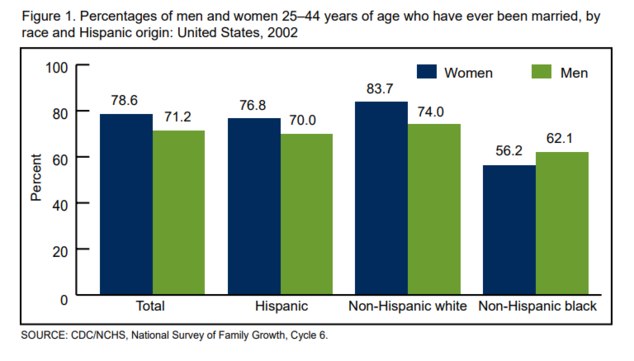
Women hateI don't have any particular point to make by posting this graph, but I think it's interesting.
-
Rasmussen’s Paradox that Nothing Exists
-
Rasmussen’s Paradox that Nothing ExistsThe Principle of Universal Explanation (PE): everything must have some explanation (in terms of something else). — lish
I'm not sure, but it seems that you might be making a distinction between everything having an explanation and everything having a cause. Is that true? Please believe I'm not being ironic when I say this - can you please explain why that would be true. I can't see any difference between the two. As for causation, it is has been a commonplace for more than 100 years that it is not true that everything has a cause. I don't mean that it is fully established or not controversial. I just mean it has been proposed seriously by eminent philosophers, e.g. Bertrand Russell.
Within his argument, Rasmussen defends PE by saying everything we are exposed to in this world has an explanation. — lish
I'm not even certain what this statement means. To me it is self-evidently false. The world is full of things for which we don't have explanations. Explanations are human things. Reality is not human.
The Principle of Unexplained Existence (PU): reality in total cannot have an explanation (in terms of anything beyond itself). — lish
It is not clear to me that "reality in total" is even a thing. Seems a lot like objective reality. Is it the same thing? There are good arguments that the idea of objective reality is not a very useful one. -
Entanglement, Synchronicity and ConsciousnessThere is no science that it doesn't either. In fact, the very theory advocated here says it does. — EugeneW
As I noted, the theory advocated here is not science.
Now, if you'll just let this go and don't respond, I'll go away and won't come back to this discussion. -
Entanglement, Synchronicity and ConsciousnessAn inquiry for any of you who are familiar with quantum entanglement and relativity: has progress been made on identifying mechanisms of entanglement and contrasting them with the theoretical dynamics of an extremely fast-moving object within a relativistic reference frame? — Enrique
As usual for your threads, I'll say this once and then go away. There is no science that says there is any connection between quantum entanglement and relativistic behavior. There is no science that says either of these have anything to do with consciousness. The suggestion that these kinds of connections do exist is pseudo-science. Pseudo-science does not belong on this forum. You should take it to a science forum where it will get the reception is deserves. -
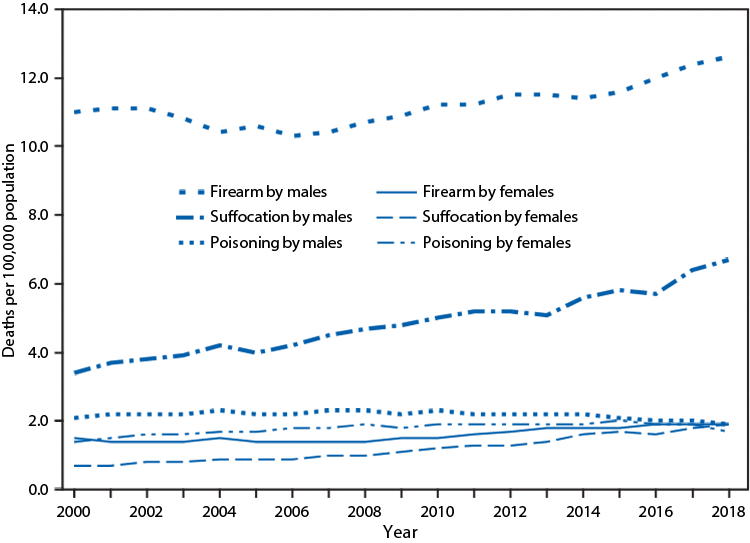
Women hateWhere can you see the suicides in the graphic? — EugeneW
The graph represents rates of suicide in the US. Here's a link:
https://www.cdc.gov/mmwr/volumes/69/wr/mm6909a7.htm -
Women hateYou know, folks do do that... Rates of youth suicide and attempted youth suicide in Western societies are quite high. — Olivier5
Correction - Rates of male suicide are very high:
-
Meta-Physical versus Anti-MetaphysicalOK, perhaps. But will one of them speak up? — lll
There's an entire thread about this currently active:
The Unequivocal Triumph Of Neuroscience - On Consciousness — Deleted User
Although I did not pay close attention to this thread, I did notice that you participated in it.
Also, I guess you might put me in as "one of them." As I see it, the mechanisms that produce mental phenomena are purely biological/neurological. That's not the same as saying that mental processes are nothing but biological/neurological phenomena. There are metaphysical and scientific reasons to recognize that mental processes are different from biological processes. This is discussed in another recent thread:
Reductionism and the Hierarchy of Scale — T Clark -
An objection to a cosmological modal argumentThere is no good evidence that humans will understand ultimate truth
— Tom Storm
There is very good evidence, I might say. We understand most parts of the universe, so why not the fundaments? What we will never understand is where the fundaments themselves come from. And that's where God comes walking in. — EugeneW
There is no good evidence that humans will understand ultimate truth or that ultimate truth is even a thing. — Tom Storm
I think Tom Storm's second possibility, that there is no ultimate truth, is probably correct. -
Meta-Physical versus Anti-MetaphysicalI was not criticizing you, but the "claim" that you were noting. — Gnomon
I understood that. -
Meta-Physical versus Anti-MetaphysicalThere are many here who will defend the claim that ideas are merely neurological states.
— T Clark
For the purposes of objective scientists, that claim may be acceptable. But philosophers are more interested in the subjective meaningful aspect of Ideas. — Gnomon
I don't want to get into this again. You and I've beaten it back and forth enough. I was responding to @lll and all I said was that there are many people who believe that ideas are merely neurological states, e.g. our late lamented friend @Garrett Travers. -
An objection to a cosmological modal argumentI’ve been searching for theist arguments that seem to hold the most promise. Recently, I was presented with the following argument — tryhard
I'll go line by line:
1. For any possible limit, there’s a possible external explanation - I'm not exactly sure what this means, but...ok.
2. Explanations aren’t entirely included in that which they explain - I'm not exactly sure what this means, but... ok.
3. Having limits is a limit - I'm not exactly sure what this means, but...ok.
4. Therefore, there is a possible explanation of having limits - Again... ok.
5. The only possible explanation of having limits must be in terms of something without limits - I don't see why this is true. If you come to my house for dinner and I tell you that you can go anywhere in the house except the living room because it is being painted, I have set limits in terms of something with limits, i.e. my house.
6. Therefore, it’s possible that something has no limits - I don't see how this follows logically, but I do believe that it is possible that something has no limits, e.g. it is my understanding that the most accepted model of the universe is that it is finite but unbounded.
7. Whatever has no limits is of supreme nature - I'm not sure what you mean by "supreme" in this case. Be that as it may, I don't think this follows from anything that has been postulated previously.
8. Therefore, it is possible that there’s a supreme being - I think it is possible that there is a supreme being, but I don't think it follows logically from anything that has been postulated previously.
9. A supreme being is either impossible or necessary - I don't see why this would be true. Do you think it's self-evident? It's not.
10. A supreme being is not impossible. - Yes, I've agreed to that.
11. Therefore, a supreme being is necessary - No.
These types of so-called "rational" arguments for God seem wrong-headed to me. I haven't ever read one that I found even slightly convincing. -
Pascal's WagerI find it fascinating that something that feels like obvious nonsense to me can be believed by so many people. I think to get to bottom of it, you'd have to peel back your world-view, but the more you peel back the less is left to do the peeling. It's not really just about God, it's just the most prominent and most frequent topic. I feel similarly about topics like "free will", for example, but the topic doesn't have as much real life relevance. — Dawnstorm
I find the idea of God interesting also. Although I don't follow any religion, I find that the idea, the experience, of having a personal relationship with the world a natural one. On the other hand, I have no trouble seeing why people reject the idea. I'm not sure how free will fits into that mix.
All those proofs of God? I think they're incomplete if you only consider the logic of the argument. There's always something behind this; something you either live or don't, some sort of intuition. — Dawnstorm
Whatever God is, I don't think there's any rational way to show it exists. You say "some sort of intuition," I say God is an experience. I think we're probably talking about the same thing. -
Meta-Physical versus Anti-MetaphysicalBut they just don't see anything non-physical about Reality. For them, Ideas are merely neurological states. That's like saying the Function of an automobile is a steel structure.
— Gnomon
But where are such rascals hiding ? Will anyone here defend that claim? It's so loopy to see nothing 'non-physical' in reality that misunderstanding is far more likely than your straw man with a vacuum tube for as hole. — lll
There are many here who will defend the claim that ideas are merely neurological states. -
Meta-Physical versus Anti-Metaphysical
-
Currently ReadingJust arrived - a nice set, although I wish it didn't have the Apple Tv logo on the covers. It's been forty years since I read the original trilogy. — Pantagruel
Like you, I've only read the original three books, but for me it was about 55 years ago. They meant a lot to me. I think the realization that there could be really, really big ideas was what fascinated me. -
Meta-Physical versus Anti-MetaphysicalYet, I'm not so much trying to defend my "idiosyncratic" personal philosophy, as to defend a besieged moderate position in a polarized world. — Gnomon
In the arguments you have provided, you are defending one particular position that you characterize as moderate. If I say that I don't find your argument convincing, that doesn't mean I reject the idea of moderation.
Therefore, my middle-of-the-road position may be sympathetic with some mind-based Eastern philosophies (not religions), but it is still compatible with (post-Quantum) Western matter-based science. Unfortunately, from the polarized perspective of Scientism, "East is East and West is West", period. So, I'm fighting an uphill battle to change that binary & exclusive attitude. — Gnomon
No, not really. You are fighting an uphill battle to defend one particular view. One that I, and some others on the forum, don't find convincing. -
Pascal's WagerI'm an atheist, and I can't make enough sense of the concept of God to motivate myself to even think "yeah, I should belief." — Dawnstorm
I intend this as a serious question and not at all as a criticism of what you've written - If that's how you feel, why get into this particular discussion at all? Most atheists here on the forum have a bone to pick. You don't seem to.
I always say that I am not a theist or that I'm not a follower of any religion. I don't say I am an atheist. I come to discussions about God for two reasons. 1) It's a place where people who call themselves rational come to show off their ramshackle rationality. Their arrogance pisses me off. And, more importantly 2) There is an aspect of humanity's relationship to reality that is at least acknowledged by religious or spiritual understandings that is denied by more rationalist approaches. -
Pascal's WagerSometimes I think we can. People have tried to rationally justify a belief in God at least since the ancient Greeks.
— T Clark
Raitionally justifying belief can help you if you're seriously consider the belief. — Dawnstorm
I could, for example, decide on a fake-it-till-you-make-it approach, — Dawnstorm
I was serious when I said "Sometimes I think we can," and it was "fake-it-till-you-make-it" I was thinking about. -
A "Time" Problem for TheismNuff said... — EugeneW
Hey!! "Nuff said" is my catchphrase! Me and J. Jonah Jameson. -
Meta-Physical versus Anti-MetaphysicalI understand your confusion. — Gnomon
I didn't say your position is confusing, I said it is difficult to defend.
How would you characterize that approach ? Does it seem confrontational, or adversarial? — Gnomon
There is nothing wrong with the way you express your thoughts. You are generally civil and even-tempered. "Difficult to defend" just means I'm not convinced.
So my lack of sophisticated technique results in a crude seat-of-the-pants approach to the give & take of dialog. Consequently, I may seem like a bull-in-a-china-shop. — Gnomon
Again, no - we're all, or mostly all, amateurs here. I have no problems with the way you present your discussions. As I said, I'm just not convinced. I don't find focusing on information a useful approach, at least not the way you do it.
Yet, since moderation is often mistaken for weakness, a firm stand is necessary to avoid being blown-away by the Trolls on both sides. — Gnomon
I don't see a lot of trolling in the responses to your posts. Your ideas just get the typical dismissal that all mystical/spiritual ideas do here. People here can be arrogant jerks. Welcome to the forum. -
A "Time" Problem for TheismI can wrap it up in a Christian-Judeo-Islamic tradition but that doesn't make the evidence stronger. — EugeneW
You just called it evidence. What more needs to be said? I can see why you call the evidence weak, but weak evidence is still evidence. Evaluating the quality of the evidence is part of a reasonable discussion of the issue. Rejecting the evidence out of hand is not. -
Pascal's Wagerthe greatest flaw is that the logic is built on fear. — stressyandmessy
the person will believe in God they are doing so because of fear and not because they believe in the values that God provides. — stressyandmessy
Making a decision based on fear is a common and rational reaction.
The reason why this is problematic and an issue is because the belief is not genuine and instead of believing in God for the values that they offer. — stressyandmessy
You're right. That is a problem. Can we just decide to believe something? Sometimes I think we can. People have tried to rationally justify a belief in God at least since the ancient Greeks. I guess Pascal is just a theological pragmatist. That's probably a good reason to reject his argument. -
A "Time" Problem for TheismI think the question for atheism is not the lack of evidence for god/s so much as the reliability of the evidence provided. — Tom Storm
I agree and that's my problem with many atheists. Just because you don't think the evidence provided is reliable, that doesn't mean there's no evidence. Questioning evidence is part of reasoning. Rejecting evidence without that reasoning is not good philosophy.
Unfortunately personal accounts of religious experience offer very little to others who haven't had this experience and/or doubt its veracity. — Tom Storm
I acknowledge there are verification issues with personal reports. As I said, that's a reasonable argument for doubting them as evidence. On the other hand, we use them all the time in the real world.
Religious experiences also cancel each other out - the Muslim, the Christian, the Hindu all have 'unique' experiences that to them 'prove' the authenticity of their version of god/s and how we should to live. — Tom Storm
I don't find this a convincing argument. Actually, the reverse is probably true. The fact that experiences of God are found in so many different cultures and which apparently developed independently is evidence that the experience is a common human one. Is it really surprising that the specific interpretations and expressions of that experience differ from culture to culture? I don't think so.
The claim 'there is no evidence for god' is false. — Tom Storm
Yes. I think this is important. -
A "Time" Problem for TheismThen what's the evidence? A personal experience? God talking to us in our mind? What's your measure of evidence? Someone saying he/she has seen them? — EugeneW
I was pretty clear in the post you are responding to. -
Meta-Physical versus Anti-MetaphysicalI'm merely trying to dissociate Metaphysics (the mental aspects of the world) from that prejudice. — Gnomon
I don't consider metaphysics as "the mental aspects of the world," and I doubt Aristotle did. Admittedly, that opinion is based on what I've read others say Aristotle said, not on a personal reading. -
Why does time move forward?Normal matter is fairy dust in a universe where all moves opposite. The laws of TD are asymmetrical in time not because fairy dust is involved but because of initial conditions. Why are they not the reversed end conditions? Why not is the end of our universe a begin in reverse? Why not is the end the begin and aren't we heading back to the begin? What's so special about the begin? That its ordered? But why is that special? Does a reversed universe heading for the singularity needs incredible finetuning? So the stone jumps from the floor, together with broken glass and reversed sound, a window gets healed, and the stone is caught by a boy? — EugeneW
I wrote "Nuff said" six hours ago, but here I still am. Ok, this time I really mean it. Nuff nuff said.
T_Clark

Start FollowingSend a Message
- Other sites we like
- Social media
- Terms of Service
- Sign In
- Created with PlushForums
- © 2026 The Philosophy Forum