
Comments
-
Beautiful Things

An instagram posting from a former friend or maybe way more than that. Real life American beauty: -
Do you consider yourself a Good person?"Now that I've seen the penis you have in store for me, I'd love to go out with you," said no girl ever.
-
Do you consider yourself a Good person?Having a love for yourself is not synonymous with being selfish, that it is ok to say that you respect who you are or are trying to be a better person. — TimeLine
This is consistent with The Golden Rule, to love thy neighbor as thyself, which requires first self love, and second offering to others a love equal to that. If you don't love youself, your neighbor should receive that same disregard if you love him as yourself. Deriving pleasure from pure self sacrifice is the definition of masochism. -
Do you consider yourself a Good person?I'm a good person, and I suspect most here are as well. I never bought into the Christian view of us all being sinners or that humility demands we accept we are failed beings. I also don't buy into the liberal view that we're all guilty of some remote wrong committed just by our existence. As long as you're out trying to do your best, you're good in my book, even if you comparatively suck.
-
On anxiety.how do you protect love, status, belonging, friendship, peace, self-regard, esteem, and so on? — Bitter Crank
With a big warm hug. Now come over here you big lug. -
On anxiety.There is a distiction between generalized anxiety (and depression) and situational anxiety. If I lose my job, my insurance, become sick, get evicted, etc., I will be anxious, but that would be normal. If I weren't, that might be a bigger problem. The problem lies with those whose anxiety arises from no particular event and cannot be controlled and it interferes with their well being. It's for that reason that advising someone who is anxious to simply eliminate those anxiety rendering events from his life isn't terribly helpful. Some simply don't have identifiable events. I'd expect there are methods to reduce the anxiety, but elimination would be doubtful for the truly afflicted.
-
If Hate Speech Doesn't incite Hatred, Then Where Does Hatred Come From?Research on the relationship between "message" and "behavior" doesn't support the view that certain kinds of talk leads to certain kinds of behavior. — Bitter Crank
Speech is behavior. For that reason, as a growing acceptance of homosexuality occurs, one should expect both violence towards it and negative speech about it to reduce. I wouldn't expect speech regulations to reduce violent behavior, but I could see both speech changes and violence changes symptomatic of the same underlying change of growing acceptance. -
Is Calling A Trans Woman A Man (Or Vice Versa) A Form Of Violence?She needs guidance and protection. I worry that the increased ease in using the transgender designation will make it easier for people like her to make this kind of decision without reflection or an understanding of the condequences. — T Clark
There's also the problem that sexual reassignment surgery is not therapeutic and doesn't reduce depression or suicide. http://journals.plos.org/plosone/article?id=10.1371/journal.pone.0016885. -
The Last WordYes, it had six cylinders and I welded a 7th in there and got all the timing right. It was a feat of engineering that cost me my marriage, but it fucked up the windshield cleaner squirter thing, so I parted it out and bought a Big Mac. No regrets.
-
The Last WordI've never heard the x-ray analogy, but it's so poignant. You know I melt when you reference diagnostic studies, especially old school plain films and not the new fangled MRIs. I'm so choked up, I must allow Willie to speak for me. https://youtu.be/DDGiSoLIG8I
And should you find it in your heart to return my spark plug, that'd just be too sweet. The racket the Camaro makes when I pull into the Piggly Wiggly from running on 7 cylinders is such an embarrassment. -
The Last WordIf you have trouble again, just let Hanover know and he'll whistle you a lullaby. His angelic lips sing as sweet as a siren. — TimeLine
It takes divine inspiration to bring forth such melodies, only from a nymph capable of speaking directly to the magpies, the most spectacular of all the breeds.
We've already established how I best sleep, nestled in a warm embrace, serenaded by giggles at my jokes, with my head being petted slowly. Doesn't that work for everyone? -
Trump and "shithole countries"But imagine if such accusations had come out about Obama or Hillary? — Michael
Only Fox would report about it. -
Why we should feel guiltyWhat'd I do if King, is put all the wealth in one bucket and then divide it equally among all (except the Dutch will only get 1/3 of a share obviously) and then the resultant economic collapse and starvation would Darwinistically cull the herd, ironically creating super humans better equipped at dealing with guilt.
-
Trump and "shithole countries"
You built an entire argument upon the false premise that referring to a country as a shithole implied the citizens were the cause of their status, then you jumped on your high horse and lectured us about how the citizens were victims as if we didn't know that, and then in exasperation you declared those disagreeing with you racists that you had no time for.A man with a guilty conscience, hey? Well, some hope for you perhaps. — apokrisis -
Trump and "shithole countries"If you can’t see through your own shitty rationalisations then that’s on you. — apokrisis
Nope. You're diverting the conversation with irrelevant sanctimony. We're all opposed to oppression and abuse. You're not special in that regard, and your comments are off point. -
Trump and "shithole countries"To put it in comparison, after Katrina New Orleans was a shithole, and to call it a shithole would probably be an accurate thing to say. But it would be awful of the Mayor of some nearby, but not affected, city to say "we don't want people from that shithole coming here." — Michael
New Orleans was a shithole before Katrina though, and that's why Houston didn't want New Orleanese coming there. -
Trump and "shithole countries"You do have those Dan Quayle moments — TimeLine
I'm still adorable though, right? -
Trump and "shithole countries"It is no secret why there are so many failed states around the world. To shove blame on the victims is indeed just shameful racism. — apokrisis
An irrelevant point. A country is a great or terrible place regardless of why. If I live like a king because I'm a ruthless murderer, I'm still living like a king. -
Trump and "shithole countries"Why would anyone want the Dutch? — Bitter Crank
I want Benkei Dutch or not. -
Trump and "shithole countries"Ok Miss Geography, how about correcting Mr. Politically Correct who called Africa a country?
-
Trump and "shithole countries"The reality is the US is either a) a pretty Fucking racist country or b) entirely partisan. Either way a shithole country. — Benkei
Regarding (a), who preceded Trump? -
Trump and "shithole countries"It might not be racist to say "Africa is a terrible country to live in" but it is racist to say "we don't want Africans coming here." — Michael
So, Mr. Politically Correct, how many Congoians would you want coming to the UK versus how many Dutch would you want? -
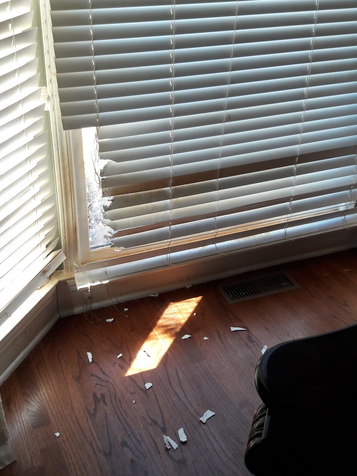
A game with curious implications...I'd suspect that eating the blinds and not cleaning up after yourself is evidence of supreme leadership, but should we make it a formal rule?
-
Trump and "shithole countries"The problem most Republicans have with Trump's comments is that he made them, not that they disagree with them. It is more offensive to pretend that all nations are equal than it is to proclaim America is exceptional.
-
When is an apology necessary?This is a matter of etiquette not morals. An accidental infraction isn't blameworthy, so the apology isn't offered to alleviate guilt. It's offered to express concern and compassion.
-
A game with curious implications...I had such high hopes for Fred as Supreme Leader, but he just drank the toilet water and started chewing on the wall, so I'm not sure he's the intellectual I thought he was.
-
How are some intelligent people so productive?Lots of hard working dumb asses and lazy ass genuises. Nerds hanging out pissing around playing video games while migrant workers reroof their house.
-
A game with curious implications...My rule is sexually abhorrent. Let me know if you're interested in hearing it.
-
It is fair, I am told. I don't get it.Volunteering in the U.S. Peace Corps is one--one--goal I have had that whole time. Is that asking too much? I — WISDOMfromPO-MO
What is the status of your application? -
Are you Lonely? Isolated? Humiliated? Stressed out? Feeling worthless? Rejected? Depressed?I agree with much said here. I have noticed two types of love, the first being a neediness, a possessiveness, something filled with expectation and obligation, something that is measured, scored, and constantly being tested and evaluated. It's critical, demanding, and corrected by retaliation, manipulation, and withholding of affection. It is a type of love that seems to me to bring nothing but misery to both parties, yet I see people cling tightly to such relationships, I guess for fear that they might have to eat their lunch all by themselves.
The other is altruistic, accepting, caring, and to a point unconditional, causing tremendous vulnerability. It is the love a parent (a good parent that is) has for his or her child, and if it can be extended to another person, the rewards are limitless. Consistent with that personality profile would be someone who is likely involved in service projects, volunteerism, and who watches out for strangers. I don't know, but there's a clear distinction between the two. And I don't pretend that this altruistic profile is masochistic or involves self-suffering at the expense of other's happiness. It is in fact the source of happiness and contentment, meaning that selfishness ironically is one of the surest paths to self-destruction.
I stated in another post that I believe a significant amount of unhappiness is caused by bad parenting, and I really believe that. I think we have kids out there who really don't know what real love is, having never experienced it, but instead being bounced between mom and dad and watching and hearing their hatred towards one another. Of course, mom and dad probably know no better either.
We live in a society that has automated and systematized most jobs, so that the average person is relegated to mindlessly pushing buttons and being measured against some standard, never being motivated by a manager, but instead only being audited by him with productivity charts and graphs. And when he or she arrives home, he or she is measured by his or her spouse against the time of arrival versus the time of expected arrival and perhaps against all sorts of other metrics. Obviously, should both know true love, the failure to live up to the various concrete standards wouldn't be of as much concern as would be the concern for the other's suffering. That is to say, I never needed a reminder to feed my child, and I never asked myself whether his contributions warranted his being fed, nor did worry about whose turn it was to feed him, or whether I fed him disproportionately. My only concern would be that he not be hungry. Should I feel my contributions were significantly greater than my spouse's, it wouldn't be anger that I felt in having the excessive workload, but it would be concern of her lack of concern over me and our child, which would be a signal of her lack of love, or perhaps worse, that she is of the former type I described that does not know what love is. -
Are you Lonely? Isolated? Humiliated? Stressed out? Feeling worthless? Rejected? Depressed?The Cure is Change, and let me be the first to admit great difficulty achieving the kind of change that I really needed to make. — Bitter Crank
I was disappointed to hear the cure, but then not to hear the specifics. I'm not being sarcastic. You pointed out that unhappiness seems to be linked to being stuck with prior bad decisions, perhaps to be in a rut, to be living out a monotony. What specifically were the changes that freed your from your depression?
I've been situationally depressed from family deaths and personal life issues and things like that, but I have very fortunately not been subject to what I hear others describe, which is a depression that seems to linger, to have no specific cause, and therefore no specific solution. For that, I think people turn to drugs (Rx and otherwise) to help alleviate the pain because it's not clear what else to do. But I'm wondering if you're suggesting that the stimulation of variety is perhaps a solution to even long term depression.. -
The TreeI was never taught anything religion and growing up alone, my enthusiasm for biblical exegesis is completely independent, but I usually avoid discussions of such a kind because lacking such bias, it is difficult for those who did grow up with a religion to understand how I interpret the parables and symbols within them; their interpretations are usually legitimised by either dogmatic values or the lack thereof and thus it is more about the institutional practice and less about the subjective quality in the meaning. — TimeLine
You needn't struggle with it, the work has already been done for you. Here are the 613 commandments of the Old Testament. https://en.wikipedia.org/wiki/613_commandments
As for the latter part of your idea, there is a schism of this feminine in both Proverbs and the Book of Revelations, which I think serves as a warning for the desire that compels one to become wayward from moral virtue. — TimeLine
And bringing us full circle, it was a woman who brought about the fall of man by having him eat the apple. The woman, like Satan, is often portrayed as one who tempts, or a temptress. -
Beautiful ThingsI'm disappointed in the USB ports and earphone plugs on the front of the radio. It's faux retro. I like the hum of real vacuum tubes.
-
The Tree
I would think democracy, to the extent it's truly practiced would ameliorate the oppressiveness and injustice of a master morality. I also don't think that Nietzsche really laid out an ethical theory as much as he simply described what he considered to be the state of things, and I'd like to think it best described how things were more than how they are. The concept of no person being above the law, where even the most powerful are subject to the same rules and as the common man is the ideal. I'm not naïve in thinking that happens, but I do believe that is system we strive for.As you correctly pointed out to others, I was referring to Nietzsche who denied any universal morality due to the limitations of our capacity, unless we are able to transcend those in power who drive beliefs. It is the strong who are the drivers of change, including any understanding of morality or of good and evil — TimeLine
But, back on topic. The tree story is central to Christianity. It describes the fall of man and original sin, and posits the depravity of man, leaving a single path to salvation to cleanse one of this sin through Jesus Christ. Original sin is antithetical to Judaism, on the other hand, as it posits that the ethical life is achieved through one freely choosing to live one's life by the biblical commandments, creating no need for salvation and no suggestion of the inherent sinfulness of man and placing the burden on the person's free will. It's for this reason, and many others, that I objected to Agustino's (and others) suggestion that religions were all reducible to the some central common essence. I find them very different in worldview.
I also did not mean why God planted the tree, but what the other trees in the Garden of Eden were (other than life and knowledge of good and evil) and why we could eat freely from them. — TimeLine
I'd assume that the writers of the bible simply recognized that humans alone seemed to live by ethical standards that the lower animals didn't (or primitive peoples didn't appreciate animal social structures), and to have this divine knowledge of what truly was good and evil was something that must have been received by man through some special means. I'm just guessing. What I am pretty sure of though is that Genesis was not written with the thought of the tree representing original sin that could only be cleansed by the son of God thousands of years later.
Divine command theory deserves consideration because it historically has been and continues to be a primary justification people give for their behaviors. What it likely represents is a recitation of what our ancestors considered to be right and wrong and then it was attributed to the gods to make it holy. As far as this discussion goes, divine command theory is central because it informs us of what constitutes the "good and evil" that is found in the flesh of the fruit of the tree we keep talking about. I don't really think deciphering the commandments laid out in the Bible is all that difficult. It's easier to follow than Kant actually. I think the problem people have with the biblical commandments isn't that they are hard to decipher, but its that they represent an outdated morality that is sometimes hard to make applicable in a modern world.I grant that you are correct in pointing out my sloppy writing, but perhaps you can enlighten me as to why divine command theory requires any merit in the first place, especially considering the difficulties of interpretation. Kant would likely agree. — TimeLineIn the Book of Revelations, the 'New Jerusalem' is symbolic of a woman who is a newly married bride, but she is based on a location (Ezekiel describes this) and it is there that the Tree of Life is referred to as a her. "In the midst of the street of it, and on either side of the river, was there the tree of life, which bare twelve manner of fruits, and yielded her fruit every month: and the leaves of the tree were for the healing of the nations." Rev 22, and when you read it, the "twelve" is the same woman with twelve stars as a crown on her head, the twelve precious stones that is also referred in Isaiah 54 (where the New Jerusalem is weeping but eventually grows strong) and in 2Esdras 9:38 (crying woman who turns into the city of New Jerusalem). The feminine qualities are a language of peace, of producing fruits of righteousness and healing from the hunger of oppression. I think that is quite clear in Proverbs 3:18. — TimeLine
So, they didn't teach the New Testament in the school I attended, and so I never took that rag seriously. It is likely the Greek pronouns work the same way with Greek being a masculine/feminine language like Hebrew, but I don't know. I agree with the basic notion that womanly qualities relate to maternalistic nurturing and manly qualities can relate to paternalistic disciplining and control. But that's not to say that the bible has only positive qualities to say about women: "It is better to live in a desert land than with a contentious and vexing woman." Proverbs 21:19. . וַיֹּאמְרוּ כָל-הַקָּהָל אָמֵן
And the congregation says Amen. -
Please allow upvoting and downvotingI think each user should be permitted to turn on or off the ability to receive up/down votes in their profile so it'll be up to the member to decide if he wants to be subject to the scrutiny of his fellow posters.
I also think we should have an auto up vote feature where it automatically sends an upvote to every post for those posters we like and just know in our heart of hearts only has upvotey things to say.


Hanover
Start FollowingSend a Message
- Other sites we like
- Social media
- Terms of Service
- Sign In
- Created with PlushForums
- © 2026 The Philosophy Forum