
Comments
-
A beginner questionDoes "everything" include potential entities that could and could not happen, exist in our world or not exist, and are abstract, fictitious, or imaginary?
Do we include "everything" in addition to material things, non-material things, spiritual things, etc.? — wax1232
Alexius Meinong thought that abstract, fictitious, imaginary things really exist, and the early Ludwig Wittgenstein thought that facts in logical space are the world and that they determine both what is and what is not the case. -
Why We Never Think We Are Wrong (Confirmation Bias)..disagreements are mostly over how we see the evidence or facts — Sam26
If seeing something is the evidence, then the disagreements are not over how we see it but how we interpret it. The question "How we see it?" is already answered: "By seeing it", referring to how anything is seen. -
Are there things that our current mind cannot comprehend, understand or even imagine no matter what?A civilization hundreds of millions of years in front of us would be something that we simply cannot understand it? — Eugen
I don't think the mere passing of time would prevent us from understanding what a civilization is like in the future. Do you know of something that would prevent it?
A civilization is..any complex society characterized by urban development, social stratification, symbolic communication forms (typically, writing systems) and a perceived separation from and domination over the natural environment by a cultural elite. ... — Wikipedia
If an animal doesn’t have the notion of consciousness, that civilization would have a ,,super-consciousness” that we simply cannot literally comprehend or even imagine its functions and purposes? — Eugen
It seems fairly clear that most animals can identify whether others are conscious or unconscious (e.g. asleep or dead). In this sense animals are both conscious and have the notion of consciousness.
..a civilization hundreds of millions of years more advanced than a civilization hundreds of millions of years more advanced than us would be incomprehensible for the second one and so on? — Eugen
Would a large number of years make things incomprehensible or unimaginable? How?
Or there might be a ultimate state from which things are understandable and could be imagined even if technology is much more advanced? I would like arguments please.
Thank you! — Eugen
The "ultimate state" from which things are possible to understand and imagine is, obviously, the state of having the capacity, which is biological. Human as well as non-human animals have it; it enables us to identify what our current environment is like, and what it might be like in the near future. That's how we can adapt to our environment, improve it even, build homes, buildings, cities, organize our knowledge, use symbols, predict things, imagine alternative things, or fiction, and construct a civilization which is sustainable enough for future generations.
I find it relatively easy to imagine possible civilizations in a distant future, there is a literary genre for it, science fiction, in which some are more or less convincingly described. -
Persuasion - Rand and Bernays..it's worthwhile to arm oneself with as many anti-Randian tropes as time and nausea allow. — ZzzoneiroCosm
What's the threat? Does Rand's statement make sense even?
It might be worthwhile to note, however, that by pretending to take Rand seriously Ryan & Co appear to understand something that their opponents don't, and thus cannot criticise, or their criticisms can be arbitrarily dismissed as "misunderstandings". -
It's a noit's more than likely the last chance of that kind to come along. — Wayfarer
Better luck next time when other kinds of chances come along.
Whenever a major project gets cancelled or the economic cycle stagnates we sometimes invent our own projects in hope to attract investors. In case we fail, or don't get paid, we can at least recycle some of the results and knowledge in future projects. -
What are we allowed?..so you think a skeptic would say there are forbidden things? — Kai Rodewald
Lots of things are forbidden, that's why we have laws against them, deterrent penalties, shared as well as personal morals.
Forbidden by whom? — Kai Rodewald
I forbid my cat to steal the chocolate because of the consequences. My duty forbids me to poke her in the eye. It is often easy to find out whether something is right or wrong by research, or hypothetical deduction, for example, in relation to its consequences or our duties.
Right and wrong are found, they don't suddenly appear out of nowhere for no reason inside the head of some authority (disregarding the trigger happy moderator who deleted our first exchange of posts). -
Bang or Whimper?I don't think I suggested that intelligent life in the cosmos was going to get wiped out -- just here. — Bitter Crank
The phrase "end of the world" seemed to refer to something more fundamental than the end of intelligent life here.
The assumption of a perpetually life-sustaining local environment seems improbable anyway. But organisms adapt, and by the time our sun burns out we might have already moved to an artificial planet, or space ships heading towards other habitable planets. Likewise, it does not seem improbable that intelligent life on other planets have already found ways to adapt to a universe in which suns burn out. -
Bang or Whimper?That doesn't mean anything alive, or once alive, will survive along with it.
I think it's safe to say that, oh, maybe 20,000 air bursts would generate enough widely distributed radiation and dust to cause some pretty seriously problems for the biosphere. — Bitter Crank
So if 'the world' doesn't refer to the world but biological life in the world, then the idea of a decisive end to it is still dubious, because if life is possible here, then it is possible elsewhere in millions or billions of planets that orbit suns under the same or similar conditions. It is improbable that all of their biospheres would get polluted at the same time and forever. -
Bang or Whimper?I heard someone mention that if all of today's nuclear bombs would explode now on the same place the explosion might correspond to an earthquake of a magnitude of 9 on the Richter scale. That's a big earthquake, but the world wouldn't end. The atmosphere might get polluted for a while, and parts of the oceans, but the world wouldn't end.
If the world ever ends, it might require the converse of the Big Bang, say, a cosmological implosion, a Big Slurp. -
Language games..a more clear way of expressing the rule I think you are referring to is that metaphors must be 'apt'. rather than 'true'. — unenlightened
At least they ought to be apt, but some metaphors are less apt than others. I think they can be metaphorically false even.
For example, a rose is thorny, beautiful and fragile, and so is love; hence a rose seems apt as a metaphor for love, or at least a certain kind of love. But other kinds of love are neither thorny nor fragile, but smooth, big, strong, or burning, in which case solid rocks, burning flames, or fire might be more apt as metaphors.
This reassignment of words relative to what the metaphor refers to is, I think, ultimately set by the features of the kind of love that one refers to. In this way the reassignment of words can be more or less apt, or metaphorically false. For example, it might be metaphorically false, or at least misleading, to use a thorny, fragile, old-fashioned rose as the means to refer to a burning modern love. -
Language gamesTruth is one of the rules of some of the games. ... It's not a rule of "Story-telling" or "Poetry". Thus one does not ask if the ring of power was really destroyed in Mt Doom, or in what way my love is like a red red rose. — unenlightened
Is not metaphorical truth another rule? -
Philosophy ClubSo... what is the first rule of Philosophy Club? — Banno
If a club is an association of people united by a common interest or goal, then Philosophy Club is a club whose members are not united by a common interest or goal, a club without members. Its first rule might, therefore, be that it's not a club. -
Bang or Whimper?Do you think that our species will be extinguished in the next 500 years? — Bitter Crank
We arose from a world without us, so if we all die, then chances are we'll arise again, on this planet, or other planets. Perhaps we already have cousins on other planets. -
Does might make right?I think you have to elaborate as to how "right makes might", since in my experience might can take many forms — dclements
Sure, for example, when the explanatory power of an argument trumps someone's will power, then right makes might. -
Does might make right?If might makes right, then even wrong is "right" if might makes it so: anything goes.
Unsurprisingly it can be in the interest of the mighty and their lackeys to make everyone believe that might makes right, as a means to maintain their might.
Another kind of might, however, is the might of being right: when right makes might. -
Mary's Room & Color IrrealismSo then where is the color we experience? Is it identical with some biological process, or does color supervene on the entirety of visual perception? — Marchesk
Neither.
What constitutes your colour experience is located in your head: a firing of neurons. But the colour that you experience is located outside your head, in the physical processes that reflect, transmit, absorb or emit light.
So, the experience is not just a firing of neurons but reaches out to the external objects and state of affairs that set the content of the experience. The internal experience that you have is, in this sense, inseparable from the external object or state of affairs that you experience.
A physical pigment of what, though? I take it you don't think rocks have color experiences. That would be panpsychist. — Marchesk
A pigment..is a material that changes the color of reflected or transmitted light as the result of wavelength-selective absorption. — Wikipedia
If in the future we fully simulate vision, would the software have color experiences? Is there a way of arranging the bits such that they are conscious? — Marchesk
Who knows? If we can make artificial hearts pump blood, then perhaps in the future we can make artificial brains that have colour experiences, and their experiences would then be just as intrinsic and ontologically subjective as for humans. So, in this sense you might as well redefine us humans as "biological machines", and our visual systems as "software" that "simulate" colour vision.
A rearrangement of the syntactically arranged bits in a computer, however, won't make it conscious. Computers have no semantics, and as long as their instructions are observer-relative (e.g. programmed to mimic the behaviour of a conscious human) then I don't see how they could have any experiences of their own. -
Mary's Room & Color IrrealismHow many violins can you build out of a pile of bricks? Does it depend on the size of the pile? The quality of the bricks? Brick technology? Some yet-to-be discovered brick? — Wayfarer
Bricks? :-}
Well it would have to be a problem in principle: that subjective reality in principle can't be reduced to objective reality, that this is a category error. — Cavacava
What is a "subjective reality", and who says anything about reducing it to an "objective reality"? In your use of the words 'subjective' and 'objective' dualism is assumed, so no wonder that there arises a "problem in principle" for you.
I don't think there are two realities, and the problem does not arise as I use the terms 'subjective' and objective' in the following way: an experience exists in a subjective domain in the objective reality, and as speakers we have the possibility to communicate our subjective experiences with the help of epistemologically objective descriptions.*
* On the distinction between ontologically subjective and objective, and epistemologically objective etc.. check out Searle, for example on YouTube.
The argument is really simple, actually. Physical concepts are objective. Conscious concepts are subjective. — Marchesk
Lol that's simply an assertion of dualism in which the distinction between the physical and subjective amounts to dualism.
It really goes back to Locke and his primary/secondary property distinction. If you use only the primary properties to describe the world, your explanation will leave out the secondary ones.
You don't get color, smell, etc from shape, number, etc. This isn't a problem until you need to explain the mind, since it's part of the world.
That's why it's a problem for physicalism. — Marchesk
Only under the assumption of property dualism: the dubious idea that the colour wouldn't be a physical pigment for instance but some mysterious entity lurking inside your consciousness. Hence the appearance of a "hard problem" of consciousness.
But it is simply false to say that it would be a problem for physicalism, for not all physicalists are property dualists. -
Mary's Room & Color Irrealismhe thinks every single version of physicalism fails, which is why he says he was led to endorse a form of property dualism. — Marchesk
Looks like he was "led" from assuming dualism to endorsing dualism.
Chalmers isn't like a theist arguing for God. — Marchesk
But how on earth could anyone know that every single version of physicalism fails to account for consciousness? He even looks like a christian rock musician O:) -
Get Creative!On my first computer that I bought back in the 1990s I got to play with a fractal generator that would generate drawings of a type called "Drunken Architect".

-
Mary's Room & Color IrrealismSure, and Chalmers discusses several versions of physicalism. Physicalism might be the case, but questions of consciousness and intentionality still remain puzzling. — Marchesk
:-} Chalmers is a dualist, recall, and the alleged puzzle arises from taking dualism for granted.
You don't get to talk about a hard problem of consciousness with people who don't take dualism for granted. -
Get Creative!One more, an unfinished proposal for a market hall in Sweden. Lots of triangles in this one o.O

-
Get Creative!Here's a photo of a project I did at architecture school some years ago, a theatre on a piazza in northern Italy.

-
Mary's Room & Color Irrealism..the term "qualia" can play no role in the "language game" (in this case, the language game that is philosophy) - it is irrelevant and can be cancelled out. — SophistiCat
Right, one might add that Dennett and his opponents are therefore not even wrong. :D
Experiences are, indeed, qualitative, they are what things are like under such and such conditions of observation. An experience exists 'here and now' for the observer, which amounts to an ontologically subjective domain of the objective reality. But little prevents the observer from making his/her experiences accessible via epistemologically objective descriptions. -
Mary's Room & Color IrrealismWell let me ask you if... ..your experience of a red firetruck is a passive affair, that its givenness is the content of your experience of it... — Cavacava
It is hardly passive, nor is a 'red fire truck' given as its content.
What constitutes the visual experience is, as you probably know, a firing of neurons in your head when your eyes get exposed to the electromagnetic radiation that is reflected by the truck. The content of your experience, i.e. the coloured shape that you see, is set by the truck's design and pigments as they absorb and reflect certain wavelengths of the available electromagnetic radiation. Within an interval of 700–635 nm they are, under ordinary conditions of observation, experienced as red.
How we talk about the experience, however, is learned. For example, that the colour is called 'red', and the shape is recognized as a 'fire truck' and so on.
..the red firetruck is your representation of what is out there, and any statement such as 'it's a red firetruck' is the only content of that experience, that we are in fact responsible for how we take things? — Cavacava
It is typically in our interest to take things for what they are, and for what there is to see, and not explain it away as an illusory representation of something invisible out there. -
Mary's Room & Color IrrealismTo say things are separate/independent of the mind, I think is problematic, since a mind is needed to posit them. — Cavacava
What our statements refer to don't necessarily need minds. Likewise with experiences. From the fact that we perceive objects with our minds it does not follow that the objects would somehow depend on our minds. An overwhelming amount of the objects that we perceive are real, not hallucinated. -
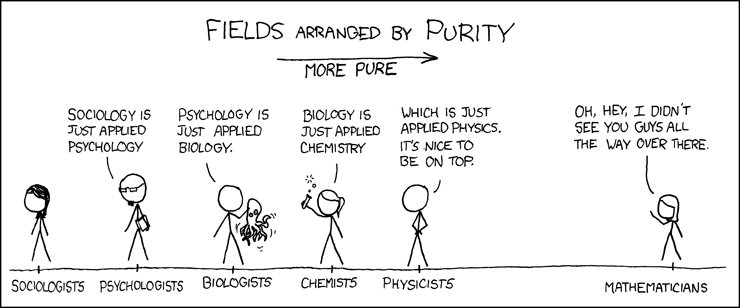
Mary's Room & Color IrrealismA reductive physicalist account of biology would mean that biological facts aren't fundamental. — Marchesk
-
Mary's Room & Color Irrealism
What is an example of realist or physicalist / materialist literature in which the reality of biological facts would be rejected? -
Mary's Room & Color IrrealismWhich doesn't address the question of whether physics is the correct ontology of the world as physicalism claims. — Marchesk
What ontology would do that? I suspect you are talking about some ideology passed for "physicalism".
The hypothesis was that the ancients did not have blue pigment to color things, and blue is only rarely found in nature, with the exception of the sky or water on a clear day. So maybe they lacked the color discrimination for blue. — Marchesk
Lapis Lazuli was the blue of antiquity.The ancient Greek temples and statues were coloured in blue and red like so:

-
Mary's Room & Color IrrealismMatter is all there fundamentally is has been replaced by physics, which means that matter-energy, fields, spacetime is all there is. — Marchesk
Being complex and of no interest to fundamental physics isn't a failure to be "real" (Hilary Putnam). -
Mary's Room & Color IrrealismStudies of people, born blind, who then suddenly become able to see (such as those who undergo cataract surgery), suggest they have to learn how to interpret what they see,.... — Cavacava
Interpretation is a use of language, recall, and unlike language you don't learn how you ought to see things. You see what there is to see, and retrieving a previously lost or reduced capacity to see is quite different from learning how to interpret what you see. Unlike different interpretations the object that you see is the same regardless of whether your capacity to see it is reduced or not.
A child has to learn that the toy truck is red, just as Mary has to learn that what she is experiencing is red, — Cavacava
What exactly do you expect them to learn? Would they be seeing a grey toy truck until they learn to use the word 'red'? :-} I don't think so.
Mary should already know that what she is experiencing is called 'red', and she would probably use her colour meter out of habit like we use our direct experience.
For example, I've never been on the moon, but I've learned indirectly to know what it's like to be on the moon by reading other people's descriptions, seeing pictures and so on. On the moon I would hardly need to learn how I ought to experience what it's like to be on the moon. -
Mary's Room & Color Irrealismwould any amount of indirect facts tell us what bat sonar experience is? — Marchesk
It is simply the experience of the location of objects that reflect sound. You don't have to be a bat to know what that is, and the experienced location of objects is the same for humans and bats. Some blind people navigate by echolocation, and they use sounds that are easier for humans to produce and hear.
If we don't perceive color as an objective property of light or objects, then there is a problem for physicalism, since all the physical facts leave out the color experiences. — Marchesk
Experiences are biological facts. Talk of physical facts tend to leave out things which are not so relevant in physics, such as biological facts. How is that a problem for "physicalism"? -
Mary's Room & Color IrrealismWhat Mary lacks is not the knowledge of what it’s like to see a particular colour but the possibility to acquire that knowledge by seeing it directly. She can still acquire it indirectly by other means, via our division of linguistic labour, a use of colour meters and so on. That's how we get to know what things are like in places we haven't experienced ourselves, and a lack of direct experience is no good reason to reject the knowledge.
-
There is no consciousness without an external realityIs it possible to have consciousness if there is no external reality? — Purple Pond
External to what? The possibility to have consciousness is already assumed in talk of reality being external or internal to consciousness.
To have consciousness is to have the capacity to identify things in a network of things to be conscious of. We can call this network 'reality', and say that it includes things "external" to consciousness (e.g. the things we discover in our shared environment), as well as things "internal" to consciousness (e.g. thoughts and perceptions of things). -
We Do Not See Objects We Detect ObjectsThat doesn't answer the question. — Wayfarer
Right, it dissolves the question, since it makes little sense to ask "How do you get from ions being passed across synapses, to meaning?" when meanings are elsewhere. -
We Do Not See Objects We Detect ObjectsWe don't know what any other organism sees or does not see. — SteveKlinko
Your skepticism arises from the assumption that each organism would see their own sensations instead of the objects in our shared environment.
But if it is a Conscious type of seeing then there is a Big Explanatory Gap that needs to be filled even if the organism has a more simple Brain. — SteveKlinko
All seeing is conscious.
Again, the idea of an explanatory gap arises from assuming dualism or representational perception. Not so with direct realism.
Ok forget Dualism, how exactly does seeing arise from biochemistry? — SteveKlinko
Ask a biochemist or neuroscientist. It's not a philosophical question. The philosophical question is as far as I know whether seeing presents objects in your conscious awareness or represents images of what you don't see. If the latter, then your skepticism would be entailed. -
Religion will win in the end.:-} By assuming that religion would be an integral part of the human psyche it is unsurprising that it appears to "win". But religions are cultural constructs, recall, systems of worship. To psychologize it, or describe established habits or methods in science as similar to religious rituals is not only exaggerated and seditious but false. Atheism, for instance, is not yet another religion.
-
We Do Not See Objects We Detect ObjectsHow do you get from ions being passed across synapses, to meaning? — Wayfarer
Meanings just ain't in the head! — Hilary Putnam

jkop

Start FollowingSend a Message
- Other sites we like
- Social media
- Terms of Service
- Sign In
- Created with PlushForums
- © 2026 The Philosophy Forum