
Comments
-
Joe Biden (+General Biden/Harris Administration)
Joe Biden was pretty sure that the Afghan government would not collapse. Events like in Saigon wouldn't happen. They happened. For starters.I don't know about the "officially saying one thing and anticipating another." — James Riley
I assume then not going to Afghanistan would have been the best Presidential leadership decision. I agree.Regardless, the couple of weeks of getting out the way and when we did was the best Presidential leadership in Afghanistan in 20 years. — James Riley
If you would have given the Emirate of Afghanistan the Doha terms right back in September 2001, I guess they would have happily agreed. And even given OBL with it. And the 20-year war wouldn't have happened.
And then there would not have been this "global war on terror". Which is now likely to continue for at least a decade.
Only thing you would have had then are furious Americans hell bent on getting rid of the chicken-livered weasel of the President who was such a weak dick that didn't bomb the goddam terrorists that killed 3000 Americans, but only negotiated with them. What injustice!!! -
Joe Biden (+General Biden/Harris Administration)
So officially saying one thing and anticipating another. But that anticipation didn't go deep enough and hence the withdrawal was chaotic. It's telling that military people or retired military people have as independent citizens tried to arrange for the evacuation of Afghans that they worked with. So marvelously was this evacuation anticipated by the administration.No, no, no, I agree they are part of the Biden Administration. — James Riley
Well, everything is about perception and nothing is about reality. Because who cares about reality? Besides, there really was no effort at all from Biden here. For Joe Biden the Afghan war had been a lost cause for years now. It's telling that the last call was made in the middle of the July. And when the collapse happened, Biden didn't even bother calling his allies. Who cares if there were more of their troops in total than US troops on the ground?
What we now should forget, according to this administration:
-
Madness is rolling over AfghanistanHere is good discussion about Afghanistan.
Rory Stewart, Former Secretary of State for International Development of the United Kingdom, is one of the people who have gotten it right for a long time is here talking with Dr Greg Mills, Dr David Kilcullen, adviser to Secretary Condi Rice and General David Petraeus. I would recommend listening to the whole debate. It may be so that the Biden gave more reason for the War on Terror going on for a decade more.
Stewart (starting from 28min 42s) makes the correct conclusion that basically the politicians (and generals in the case of Afghanistan) aren't in the job of describing reality, but are there to sell a story, either pump up the moral and win support home. Talking about the reality on the ground and about realistic goals, that at best Afghanistan could be like Pakistan, wouldn't simply have cut it. Hence crazy optimism takes over and the discourse is totally lacking realism. Why so? In my view what likely happens that this propaganda, repeated over and over by so many of the leaders turns those implementing policy to think that this is the reality. Hence lofty goals turn into actual policy implementation on the ground.
This explains why from the naive optimistic "we are turning the page" outlook in the Afghan discourse earlier and also why Biden has gone to extreme opposite describing Afghanistan as a failed caused and a forever war. Biden's approach is natural as he wants people not to understand what an embarrassing policy failure he (and Trump) have done. He has to repeat and repeat this line that nothing else could have been done in Afghanistan for the midterms. Again, the only issue here is the American voter. What other effects this line has in the US foreign relations doesn't matter at all. Unfortunately, there are broad consequences.
Former national adviser and general H.R.McMaster has called the phenomenon "strategic narcissism". This happened, which I agree, because of seeing the end of the Cold War as a victory for the US and the easy success in the liberation of Kuwait. McMaster writes (in 2020):
In retrospect, those victories, which held the promise of so much, marked the end of an era. They led to overconfidence and complacency. Many leaders forgot that the United States had to compete in foreign affairs and embraced three flawed assumptions about the post-Cold War era.
The first assumption was that the arc of history guaranteed the triumph of free and open societies over authoritarianism, making the expansion of liberal democracy inevitable. The second assumption was that the old rules of international relations and competition were no longer relevant, and that global governance and great power cooperation would displace historical rivalries. The third assumption was that America’s unmatched military prowess would guarantee victory over any potential enemy.
All three assumptions proved false.
Those that remember (the neocon) Francis Fukuyama and the "end of History" argument, will notice that McMaster is totally correct above. McMaster continues:
The flawed assumptions we made at the end of the Cold War stemmed from strategic narcissism: the tendency to define problems as we would like them to be rather than as they actually are. In its extreme form, strategic narcissism can lead to the pipe dream of easy war (as in Iraq in 2003) or the delusion that wars end when one side decides to leave (as in Afghanistan today).
(As McMaster wrote this last year, his forecast proved correct: the war continued ...and now the Afghan government lost)
When you combine Rory Stuart's and H.R. McMaster's insights, the madness in Afghanistan starts to make sense ...as madness can be understood. Selling the agenda to a leery domestic audience, be it the Congress or the US voter, gives the incentive. To believe the rhetoric, to justify the rhetoric, you need that strategic narcissism. Events in the past created the hubris that lead to actions that brought us here. -
Joe Biden (+General Biden/Harris Administration)
Now it seems you are separating the state department and the Biden administration.That is true. But what I'm talking about is the last few months in anticipation of what happened:
https://www.washingtonpost.com/opinions/2021/08/30/how-evacuation-americans-is-going/ — James Riley
And one could argue similarly that it was a success that only 13 US servicemen died and about 100 or so Afghans also. Plus those who died falling after clinging on to the undercarriages of C-17s (which has a cruising speed of 906 km/h).
Yet I think the real thanks for that above goes for the Taliban honoring the Trumpsurrendpeace deal. Unlike some commentators argue, the Emirate didn't brake any terms of the Doha agreement (yet). Because with my reading of the short 3,5 page deal (link here), there was absolutely no part where the Taliban would have been made to stop to fight the Afghan administration. Only that it would engage with discussion with the government in talks. Well, I think they sat until in Doha with the Afghans...not doing anything.
So, should we similarly thank the Taliban for the minimum casualties for overtaking the country? -
Joe Biden (+General Biden/Harris Administration)
I think Afghanistan has been on the official "do-not-go, try-to-avoid"-list for years now.Any one who wanted out could have gotten out, when they were told, pleaded with, begged, months ago. — James Riley -
Joe Biden (+General Biden/Harris Administration)
Unfortunately a kidnapped US citizen is a "threat to US interests".As long as the terrorists aren't threatening US interests, nobody cares. — frank
1. Policy
The United States is committed to achieving the safe and rapid recovery of U.S. nationals taken hostage outside the United States. The United States Government will work in a coordinated effort to leverage all instruments of national power to recover U.S. nationals held hostage abroad, unharmed.
The United States Government will strive to counter and diminish the global threat of hostage-taking; reduce the likelihood of U.S. nationals being taken hostage; and enhance United States Government preparation to maximize the probability of a favorable outcome following a hostage-taking.
That's why the question as obviously guys like ISIS-K are looking for them.
Well, the truth is that the Trump-Biden way to handle Afghanistan is a disaster. To argue that "any withdrawal would have been similar" is simply not true. This was immensely badly conducted. It's obvious from what Biden and his administration stated earlier this summer.The argument reeks of *if only more was done or at least in another way!!!* — Shawn
Classified assessments by American spy agencies over the summer painted an increasingly grim picture of the prospect of a Taliban takeover of Afghanistan and warned of the rapid collapse of the Afghan military, even as President Biden and his advisers said publicly that was unlikely to happen as quickly, according to current and former American government officials.
By July, many intelligence reports grew more pessimistic, questioning whether any Afghan security forces would muster serious resistance and whether the government could hold on in Kabul, the capital. President Biden said on July 8 that the Afghan government was unlikely to fall and that there would be no chaotic evacuations of Americans similar to the end of the Vietnam War.
Even the Soviets withdrew in a far better way. Their proxy, the Najibullah regime, collapsed only as the Soviet Union collapsed. Even the Obama withdrawal, that after ISIS actually didn't happen, was itself planned better.
And there are a lot of consequences.
As Kit MacLellan notes:
The problem is that the idea of a kind of universal multilateralism now looks more utopian than ever, especially when it comes to conventional security matters (as opposed to, say, climate change). Any hope the world had that Joe Biden would herald a new era of dialogue and trust in allies has been dashed by recent events.
I don't think that the World will be safer with present American unilateralism and disengagement. Biden is just following in his peculiar way Trump's foreign policy. -
Joe Biden (+General Biden/Harris Administration)And America has left Afghanistan before the deadline. — Shawn
In Washington, Gen. Frank McKenzie, head of U.S. Central Command, announced the completion of America’s longest war and the evacuation effort, saying the last planes took off from Kabul airport at 3:29 p.m. EDT — one minute before midnight Monday in Kabul.
“We did not get everybody out that we wanted to get out,” he said.
So how many American citizens were left to Afghanistan? -
Joe Biden (+General Biden/Harris Administration)
I'd say Trump & Biden are a toxic mix of US unilateralism and bad policy.Of course I expect you to blame others for the failings of your guy. — NOS4A2
Of course, Biden upheld the surrender deal that Trump did with the Taliban. And naturally we go on from here to drone strikes. As obviously that unilateral counterterrorism works so well without any feet on the ground. Everything can be interpreted from a drone flying high above, as we know. :roll:
And the marvelous Leon Panetta said it all:
'We're going to have to go back in to get ISIS. We're probably going to have to go back in when Al Qaeda resurrects itself, as they will, with this Taliban. They've gave safe haven to Al Qaeda before, they'll probably do it again.'
He added: 'I understand that we're trying to get our troops out of there, but the bottom line is, we can leave a battlefield, but we can't leave the War on Terrorism, which still is a threat to our security.'
Ah yes.
I think the ex-national security advisor H.R. McMaster said it well. The US didn't fight a long 20-year war in Afghanistan, the US fought a one year war twenty times over in Afghanistan. And now Biden IS BACK TO THE GEORGE BUSH TALKING POINT: The US will only to fight the terrorists (and only with drones or so) and the US isn't going to "nation build".
Yeah, that worked wonders. But if it works in Hollywood movies, it has to work in real life!!! -
Afghanistan, Islam and national success?
When it comes to Afghanistan, you should start by defining what success would be.I am hoping people who are better informed than I am, reply to my question of the chances of any Islamic group turning Afghanistan into a successful nation. — Athena
Yet basically Saudi-Arabia has it's legal system based on Sharia law and uniquely in the Muslim world, Sharia has been adopted by Saudi Arabia in an uncodified form. So basically yes, an Islamic group could theoretically turn the country into a successful nation. Saudi-Arabia has been run for a long time by Islamists. Then there's Iran as the other example.
(Saudi universities at least have money...even if there is sharia law.)

In realistic terms, this is extremely unlikely. Several reasons:
- The multitude of internal problems Afghanistan suffers from (that are too lengthy for this answer).
- That the West is totally against Taliban rule and will see the Emirate of Afghanistan as a "terrorist haven".
- That Pakistan basically wants to have a weak controllable Afghanistan. It's basic worries are that a) India might get a foothold in Afghanistan and have close relations with it and b) the Pashtuns, living on both sides of the Durand-line will create problems for Pakistan as there have been skirmishes all the time at the border and the Tribal areas of Pakistan (see here).
- The West has basically confiscated the foreign reserves of the country and the Emirate will see likely immediate economic problems. The banking sector has been already shut down.
- The Emirate of Afghanistan (the Taliban) is already burdened with a huge former Afghan government, which the country has no ability to pay for. This is the reason for the collapse of the Afghan government, basically similar happened with the pro-Soviet Najibullah regime.
- There is one of the biggest brain drains in anywhere in the World in Afghanistan as doctors and engineers are trying to leave the country. Not a promising start for a future "success".
- Joe Biden has reverted back to the old way of simply using drone strikes to fight "the Global War on Terror" already. It's quite likely that the attacks against ISIS-K aren't the last ones.
And finally, it's usually that the most radical, most fanatic elements of a group take power or have a far bigger role than the so-called "moderates". So back to home for women in Afghanistan, which will severely hamper the economic prospects of the country. -
How can there be so many m(b?)illionaires in communist China?
Let's remember that there still is "the old" capitalist China. It's name is Taiwan.This is true, but I think it is more to do with the deep culture of China, I suspect, than anything else. They got a lot more history and politics than we do, and rather less of an obsession with individualism, such that communism makes more visceral sense. — unenlightened
I think the prosperity and the success of Taiwan clearly shows what the Chinese are capable of and so is also what Communist China has done. I think the real cause are the people themselves, not their "visionary" leaders. So I agree with you on the importance of Chinese culture. It's true we cannot say what would have become of China if the nationalists had won and Mao's insurgents would have been defeated and ended up as a footnote in history as did Soviet Bavaria. But with Taiwan we do have a glimpse.
Now it seems that Chinese leadership is viewing that they should now tighten the grip of the economy and the push they got form capitalism and the West can be now limited. I personally would call the Chinese model classic fascism, the tight control of industries important to the state. The "missing bilionaires" in China is a symptom of this: something similar to Putin reigning in the oligarchs in Russia. China won't either tolerate billionaires to be active in politics (in opposition of the CCP line). The street vendors can naturally have their "free market capitalism". Time will tell what will happen.
(Just look at Taiwan! But poor North Korea, even if it's stats might be too rosy here...)
-
Why the ECP isn’t a good critique of socialism
:roll:Second, the whole Bundeswehr leadership from corporal to general were handpicked for their allegiance to the European project. — Apollodorus
"Ich gelobe, der Bundesrepublik Deutschland treu zu dienen, und das Recht und die Freiheit des deutschen Volkes tapfer zu verteidigen."
Hardly allegiance to the European project, but if to "loyally serve the Federal Republic of Germany and to courageously defend the right and the liberty of the German people" is according to you the European project, so be it.
Apollorodorus...that is too thick! :snicker:The Bundeswehr was expressly designed with a defensive role in mind and its armed forces were smaller than those of France. It had no capability for large-scale offensive warfare at any time in its existence. — Apollodorus
In the 1980s, the Bundeswehr had 12 Army divisions with 36 brigades and far more than 7,000 battle tanks, armoured infantry fighting vehicles and other tanks; 15 flying combat units in the Air Force and the Navy with some 1,000 combat aircraft; 18 surface-to-air-missile battalions, and naval units with around 40 missile boats and 24 submarines, as well as several destroyers and frigates. Its material and personnel contribution even just to NATO’s land forces and integrated air defence in Central Europe amounted to around 50 percent. This meant that, during the Cold War, by the 1970s, the Bundeswehr had already become the largest Western European armed forces after the US armed forces in Europe – far ahead of the British and even the French armed forces. In peacetime, the Bundeswehr had 495,000 military personnel. In a war, it would have had access to 1.3 million military personnel by calling up reservists.
Yeah, according to you an 1,3 million strong army with 7 000 tanks and 1 000 combat aircraft has "no capability for large-scale offensive warfare".
I remember in the conventional arms reduction talks the Soviets officially saying that "West Germany can produce tanks as they can produce sausages".
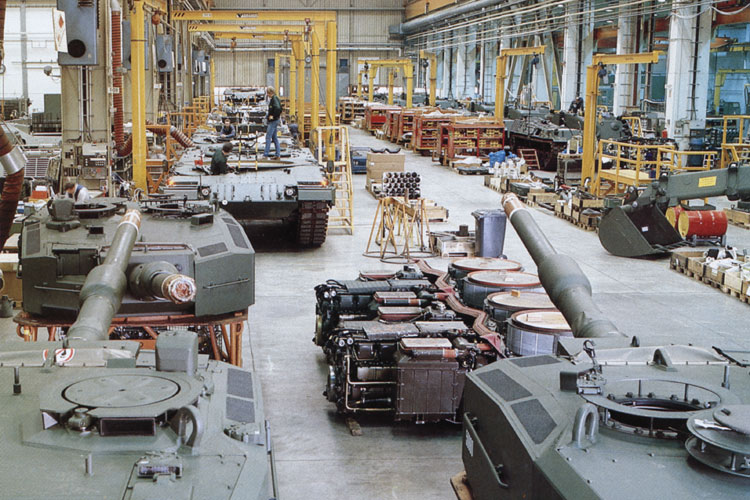
-
How can there be so many m(b?)illionaires in communist China?Call it mass delusion, but I genuinely think that the CCP members, especially the leaders, believe what they are saying. They truly think that they are Marxists.
For example, the current leaders Xi Jingping's father was one of the founders of the CCP. This meant that naturally under Mao his father was imprisoned during the Cultural Revolution (what is usual to all dictators) when he was 15 years old. Xi tried to join the CCP seven times before he was accepted (thanks to his father's imprisonment). Just like the Soviet leaders, they were communists. Yet the Soviet Union collapsed, Communist China didn't, but prospered.
Fast forward to the present when nobody cannot deny the historical advances China has made under the leadership of CCP. We might say it's the result of China's export industry, all the investments the West has made and capitalism and using markets rather Soviet style central planning. For the Chinese communists, this perhaps is the necessary "adaption to current situation", just like what we call the "socialism for the rich" many see as necessary to "help" free market capitalism.
So yes, there are words politicians like to claim, but the fact is due to the bubble they live in, they start to believe their mantras. -
How can there be so many m(b?)illionaires in communist China?Then why do they sing the Internationale every year and is their flag that with a star? Why is the country called communist? — Prishon
Except that the CCP think of themselves as true Marxists.It isn't. But whatever it is called (by foreigners) and whatever song is sung, does not make it one thing and not another. — unenlightened
They are what Marxists have become in China. It is Marxism in the Chinese context, socialism with Chinese charasteristics. It's simply the extreme hubris of some Westerners that say the CCP isn't socialist or marxist. Those who say so don't simply understand their own silly hubris.
You see, just as the central banker who saves the banking sector by printing money, will firmly say that he believes in free market capitalism, so will the Chinese leader say and truly believe he is a Marxist.
Just read what Xi Jingping said on the 100th Celebration of the CCP:
We must continue to adapt Marxism to the Chinese context. Marxism is the fundamental guiding ideology upon which our Party and country are founded; it is the very soul of our Party and the banner under which it strives. The Communist Party of China upholds the basic tenets of Marxism and the principle of seeking truth from facts. Based on China's realities, we have developed keen insights into the trends of the day, seized the initiative in history, and made painstaking explorations. We have thus been able to keep adapting Marxism to the Chinese context and the needs of our times, and to guide the Chinese people in advancing our great social revolution. At the fundamental level, the capability of our Party and the strengths of socialism with Chinese characteristics are attributable to the fact that Marxism works.
On the journey ahead, we must continue to uphold Marxism-Leninism, Mao Zedong Thought, Deng Xiaoping Theory, the Theory of Three Represents, and the Scientific Outlook on Development, and fully implement the Thought on Socialism with Chinese Characteristics for a New Era. We must continue to adapt the basic tenets of Marxism to China's specific realities and its fine traditional culture. We will use Marxism to observe, understand, and steer the trends of our times, and continue to develop the Marxism of contemporary China and in the 21st century.
We must uphold and develop socialism with Chinese characteristics. We must follow our own path-this is the bedrock that underpins all the theories and practices of our Party. More than that, it is the historical conclusion our Party has drawn from its struggles over the past century. Socialism with Chinese characteristics is a fundamental achievement of the Party and the people, forged through innumerable hardships and great sacrifices, and it is the right path for us to achieve national rejuvenation. As we have upheld and developed socialism with Chinese characteristics and driven coordinated progress in material, political, cultural-ethical, social, and ecological terms, we have pioneered a new and uniquely Chinese path to modernization, and created a new model for human advancement.
On the journey ahead, we must adhere to the Party's basic theory, line, and policy, and implement the five-sphere integrated plan and the four-pronged comprehensive strategy. We must deepen reform and opening up across the board, ground our work in this new stage of development, fully and faithfully apply the new development philosophy, and foster a new pattern of development. We must promote high-quality development and build up our country's strength in science and technology. We must ensure it is our people who run the country, continue to govern based on the rule of law, and uphold the core socialist values. We must ensure and enhance public wellbeing in the course of development, promote harmony between humanity and nature, and take well-coordinated steps toward making our people prosperous, our nation strong, and our country beautiful.

Understand that Chinese communists are proud on what they have been able to do. If they call it Marxism and someone in the West (enjoying the fruits of a Western mixed economy) has a problem with it, it's not the problem of the Chinese, but the Westerner himself or herself.
What people don't notice is the small line "We have thus been able to keep adapting Marxism to the Chinese context and the needs of our times".
For a country that has gone through the debacles of "The Great Leap Forward" and "The Cultural Revolution" and then been able to rise up as they have done, has really had to do some serious adapting of "Marxism to the Chinese context and the needs of our times". -
Why the ECP isn’t a good critique of socialism
Not only Finland, but the Eastern members too. And what about Spain, Portugal, Greece? You see, EU enlargement has gone far forward from the start from the EEC.Finland may have preferred to be under EU domination than under Russian domination. But the EU is not about Finland. — Apollodorus
Really? Cold War Bundeswehr had even nukes for a while, actually.If there has been no war, it is because Germany has no armed forces — Apollodorus

Now they have "enjoyed the peace dividend", but still have armed forces.

I do.There is no connection between one and the other. — Apollodorus
And many of those Europeans who have been for European integration, have seen that closer interaction and cooperation among the different sovereign states has brought peace. The simple fact is that there have been many reasons for the European integration, many proponents for it for different reasons.
Let's look at Eastern Europe, not just the Balkans. After the fall of the Austro-Hungarian empire, there is quite a lot of possible problems in Eastern Europe. Just to give one example, Romania has a minority of over 1 million Hungarians inside it's country. This could be a possible problem. Luckily it hasn't been:
In 1995, a basic treaty on the relations between Hungary and Romania was signed. In the treaty, Hungary renounced all territorial claims to Transylvania, and Romania reiterated its respect for the rights of its minorities. Relations between the two countries improved as Romania and Hungary became EU members in the 2000s.
Compare this to Latin America. Peru and Ecuador have had the Cenepa war in 1995. The simple fact is that economic and political integration does improve relations between countries. They aren't afraid of each other as otherwise they would be. And Latin America hasn't had similar integration, even if it has it's own organizations. -
Why the ECP isn’t a good critique of socialism
Nobody is saying that they don't a role. It's one group that supported integration, but not the only one.If US bankers and industrialists and their European partners played a major role, then that role needs to be acknowledged, not dismissed as "conspiracy theory". — Apollodorus
Well, bankers usually do fund various projects.Bankers and industrialists do not always exert influence directly. Most of the time they do it through lawyers, academics and other intellectuals, and politicians. Of course, Europeans were involved, but key actors like Monnet and Kalergi, for example, were funded by bankers and industrialists. — Apollodorus
At least in several countries, just like in my country, there was a referendum to join the EU. So you are incorrect. Or it's the part of history that you just brush aside in your argumentation.Ordinary, independent Europeans were not involved nor did they ask for a United States of Europe to be created for them. — Apollodorus

Define success.As regards the EU's success, I can see why a country like Finland is pro-EU, but I see no evidence that the EU has been an unmitigated success. — Apollodorus
That there hasn't been a war or threat of war between the EU members would be one issue that would come to mind after looking at European history in the long term.
And unlike the COMECON, it hasn't been dissolved and now has survived longer far longer. Isn't that success in Europe?
Many countries have an ageing population. Yet I think it's quite clear that these countries would have similar demographic trends with or without the EU. This isn't a problem because of the EU.1. The EU has an ageing population. — Apollodorus
Yeah. If you make the argument because China and India have risen, this doesn't make sense. It's actually very good thing that Asia has catched up with the EU and the US. Again something that isn't actually happening because of the EU.4.The EU is in long-term economic decline. — Apollodorus
Over one billion people would be so. Hopefully India will too grow so much that it overtakes the 320 million Americans. When that happens the per capita GDP would be still one third from the US, not even half!5. The EU’s largest trading partner used to be America. Now it’s Communist China! — Apollodorus
And if the US continues the way it's doing, I think this going to be a genuine issue. Trumps remarks of the US leaving NATO didn't go unnoticed. This of course is a debate that isn't talked about openly: nobody dares to say how fucked up US foreign policy is now. All this repeat the mantra they have learned, but I think especially now there is going to be a lot of thinking. Afghanistan was also a huge failure for NATO, even if US unilateralism is the decent scapegoat.6. The EU has no defense forces. The only EU country with a proper military is France. Other EU countries are totally dependent on NATO. And NATO only defends them when its leadership has a political or economic interest to do so. — Apollodorus -
Madness is rolling over Afghanistan
Never heard of Boko Haram in Nigeria? Or the Benghazi attack in Libya and the present situation in the country? Or Al-Shabaab in Somalia? Or about Nusrat al-Islam, the Al Qaeda branch in Mali?You're painting with a broad brush. There are no active warzone's in Africa or South Asia... — Shawn
Africa does have warzones and Islamist terrorist groups. US Special Forces personnel have died there in combat in Niger. Mali, Somalia, Nigeria, Libya continue to have quite active insurgencies. (And do notice in the map it's "counterterrorism training" Indonesia.)
If we assume that the "Global War on Terror" has ended, let's look at reporting from this year 2021 just what it is like in other places than
Here's a good report from Iraq. Now Biden is happy with Iraq. Somehow the model was accepted in Iraq, but not in Afghanistan. That model is that a small contingent of US forces gives intel and training to local forces and also air support. As the armed forces are trained to fight as the US forces, they rely on US air support. Iraqi leadership want US combat troops to be withdrawn, but likely the US personnel interviewed (or their counterparts) won't be leaving the country anytime soon:
And then Somalia. Trump withdrew US forces from Somalia. Yet the airbase in Djibouti is quite active. The withdrawal is seen as a victory by Al-Shabaab.
Then there is Mali. A country that was nearly captured by Islmamists (after Libya collapsed to anarchy) and a rapid French military intervention put the islamists on the defense. In Here's a documentary, again from this year, of British troops being sent to the war torn country.
That's only three countries that aren't in the news. There are more: Syria, Libya, Nigeria etc. So in all, the Global War on Terror is quite active; alive and kicking. Even if people don't know it anymore. -
Madness is rolling over AfghanistanPlease keep in mind that were in the final stages of the 20 year war. The fact that ISIS-K is now some blip on the radar is interesting. — Shawn
Yet the war was actually the Global War on Terror, which Afghanistan was only part of. Notice that you have fought that war also Iraq, Syria, Yemen, Somalia, Libya, Mali, Niger. And so on...
So withdrawal from Afghanistan (and hence the Afghan mujaheddin can claim victorious about both Soviet Union and the USA) will surely boost the moral of quite a few islamist groups. Not just ISIS-K, I assume. -
Madness is rolling over Afghanistan
I think there is and ought to be experience. Yet it simply doesn't matter. Those deciding don't have the experience, even if the establishment has collective knowledge.Lack of experience probably. — frank
Yes, the US lacks the long term planning as China, but in the end the Foreign Policy is quite similar if the political rhetoric is put aside and real policy decisions and actions are viewed. Notice how Obama continued the war on terror of Dubya Bush. And how when it came to Afghanistan, Biden continued with the Trump surrender (called a peace deal) with the Taliban. Trump bitched about many things, but in the end actual policy implementation was quite the same, excluding the Doha peace deal.
When you listen to Foreign policy analysts or the people that ought to know, they do know. Yet the closer they come to the TV media discourse, the less do they talk the same lines. Domestic policy or the political debate in the US simply brushes away any smart thinking.
The message is dumbed down to few punchline that actually don't make sense (if you have an idea of the reality), but sounds good for the ignorant. Then this punchline becomes policy. -
Madness is rolling over AfghanistanThe real interesting question is why such idiots as the neocons, like Wolfowitz, did get into power?
There's really something wrong with the "Blob", the Foreign Policy establishment of the US. -
Madness is rolling over Afghanistan
That apparently happened when the US left SE Asia (Vietnam and Thailand etc.) Even if, we have to admit, they have been in South Korea (and Japan) all the time.It was supposed to build into a democracy snowball the way it apparently did in SE Asia. — frank
(The US in South Korea)
/cloudfront-us-east-1.images.arcpublishing.com/mco/KJPSWHF6HJCWTB3P7BDSO42VLY.jpg)
-
Free Markets or Central Planning?
Ummm.. should we call this representative democracy and forming new political parties?I keep coming back again and again to a simple goal: organization. Getting involved, on the local level, with anyone willing to listen and join in, or joining in with something already happening -- and there are some things happening here and there. But not particularly well, and not particularly prevalent or effective. Still, it's worth trying. — Xtrix
Don't think you are bound by law to have just two. Even if they masquerade their "primaries" as part of the system, they are just two dominating parties and there is only one elections. -
Madness is rolling over Afghanistan
Yes, but as I've pointed out earlier, you had a lot of same Republicans that managed the Gulf War quite decently: objectives were met, UN and Soviet Union showed green light, not only NATO participation, but a large coalition of muslim countries participated (even Syria). Above all, the US listened to it's Arab allies and didn't invade Iraq.Still I think the hubris of the Bush neo-cons was disastrous. It was far too macho, too aggreived, too driven by rage. Unlike others here, I don't see the USA as an evil power, but I do wish they could be better than what they often are. — Wayfarer
So basically during "dad" Bush, everything seemed to be "normal". Same actors were rational. Then it changed. Then somehow what earlier was brushed off as "would be a quagmire" became the line that "Iraqis would greet the US with open arms". The small cabal of neocons simply took the center stage and the more thoughtful and cautious US diplomacy and foreign policy was thrown out.
And I think once the boat veered off and the US invaded Iraq, nobody could put it back anymore to the earlier route. The train wreck has happened. And it's only getting worse.
Now with US servicemen being killed in Kabul among with Afghan civilians, for example.
-
Free Markets or Central Planning?
You can see that obviously there is this sense of things not being right. There is this underlying anger in the country that can sometime erupt. The question is how it is vented out and by whom. Trump was basically this middle finger from part of the voters. Obama was someone that other people pinned their hopes. I remember when my friend had visited the US just when Obama was first elected, there was a lot of hopeful thinking. Yet unfortunately, this isn't something that just a President can change.The anger is not articulated well, but it's right under the surface because they live it every day. They sense something is wrong with this world and would like to see it changed. It's not envy, it's not entitlement. It's a sense of fairness in a world where the rules aren't at all fair. But who or what is to blame? — Xtrix -
Madness is rolling over Afghanistan
It's very well documented how Cheney and the neocons pushed for the war in Iraq.But then Cheney said straight out that Afghanistan wasn't a big enough target, they had to go bigger. That was the beginning of the 'Sadam's nuke's' fiasco and the invasion of Iraq. The whole thing was driven by machismo and wounded pride. They would put together whatever rationale they needed to get what they wanted. Like the roaring of a demented and crazed lion. — Wayfarer
I think the extreme hubris came from the fact that then there wasn't any other player that they had to anticipate countermoves from and the ease that Desert Storm had played out (let's remember that the US generals were anticipating many thousands of US casualties when pushing out Iraqi army from Kuwait). It all went to their head. And now you reap what they sowed.
You would have still gone in to Afghanistan. Madeleine Allbright, who had a prominent position in the Clinton/Gore team, admitted that they would have gone in too.Remember that W only beat Al Gore by a couple of hundred hanging chads in Florida. WHat might have been, we'll never know, of course...... — Wayfarer
But this outcome still then could have been avoidable. Intervening in the Yugoslav civil war was rather successful. -
Free Markets or Central Planning?
When Norway, lead typically by social democrats and having a huge wealth from oil revenues, doesn't spend as much money as the US does in health care per capita, you know there is a problem. And everybody else spends less than the US and Norway.A Bernie Sanders style social democracy would solve a lot of this and is way better than the neoliberal bullshit we’re dealing with now, but is it sustainable? F*ck no if you ask me (and I’m sure you probably know why) but is revolution going to happen any time soon? Also no. I’m interested in hearing some more pragmatic solutions and your thoughts on this. — Albero
I think for a rich country as the US the Bernie Sanders style health care is quite sustainable. As long as you keep the private sector as competitive as it is now and take care of your financial system. The secret to social democracy is to keep the cash cow in good health! And not to shoot the cow (like the communists would do). -
Should the state be responsible for healthcare?
That's a perfect example of an actual company getting close to a monopoly situation. Add there just how Microsoft became to be so important.A case where a central plan emerged spontaneously is computer technology. The IBM scheme came to dominate partly because they didn't patent their design. Anyone could build an IBM clone, so it became the standard by virtue of popularity. — frank
I don't know how to compare healthcare to those things. How would you? — frank
I would always look at the history how the healthcare sector has been organized in a country. It tells a lot just why the health care systems are the way as they are. And in that historical narrative you find the major actors, the political parties and elites who have driven through the decisions. Also you then might understand better sometimes a very confusing system. -
Free Markets or Central Planning?
One should remember that a lot of this public discourse is what in the old days is called propaganda. Or jargon, lithurgy. Intended for some target audience for some reason.I'd love to, if not for the fact that they run the world -- and that's not an exaggeration. This dogma (really more akin to a religion) is espoused by corporate and political leaders to this day. The dogma says that markets know best, that they should not be interfered with by the pesky state, that anything negative in history can be reduced to state interference, and so on. It's all very self-serving, especially when a "market" has been very good to you. — Xtrix
Let me give you another example,
When there still was the Soviet Union, Finnish politicians and businessmen were quite apt in speaking "the lithurgy", the politically correct way to speak publicly (or to the Soviets, how to speak with any westerner) by allways praising the brotherhood of the nations, noting always the Agreement of Friendship, Cooperation, and Mutual Assistance between Finland and Soviet Union and so on... This made the discourse totally confusing to an outsider, but it was of the uttermost importance when talking to Soviets! If you know anyone who has lived behind the Iron Curtain, they will remember it quite well. Now it's hilarious.
And I think this is happening here too now ...when people speak publicly, on the record. Have them speak privately and you can see they usually are totally aware of the problems and call them by their actual name. -
Madness is rolling over Afghanistan
It's not about speed. It's about having some sanity in what your objectives are and taking into account the objectives of the participants.Yes you are right that it can bring chaos and war. And there are situations where its better. One has to be careful though not to introduce western democracy too fast. — Prishon
Let's talk about the insanity in the Afghan policy, the true madness here:
Perhaps the madness in Afghanistan is best seen how delusional some commentators are on the role the US played. Because the idea that "The US came just to hunt Al Qaeda and after the Osama was killed, the US should have walked away and not gone with the nation-building humbug." is really insane. Unfortunately some people don't see the insanity.
Let's make a thought experiment. Assume that homicidal Narco leader with close ties to the Mexican government gets so angry for some reason at the US that he orders and some in his narco organization to make a hideous terror attack in the US.
The US then responds with vowing to hunt the narco leader down and because he is so close to the Mexican government, the government has to go also. And just in case, the US attacks Mexican armed forces to destroy their combat capability. After all, they are untrustworthy. Then the US send combat forces to hunt down the narco leader and his organization and while doing it, why not all the drug organizations. War on drugs, you know. And a new Mexican government is installed with Mexicans that have made their life in Washington, so they are trustworthy and fluently speak English. Because, that's more easy.
Then after few years the narco leader is finally caught hiding in an outdoor lavatory and killed. Yet the violence, the bombings and US troops being killed doesn't stop. So the US politicians get frustrated why this is so.
Finally they make a peace deal with the "narcos" and the "remnants of the old Mexican government" and promise to leave Mexico only with the condition that they promise not to attack the US. As it was only this homicidal psychopath that attacked the US in the first place, the Mexicans have problem to give such assurances.
After this the new government put in place by the US quickly falls and seeks asylum and the old regime takes power again. And commentators in the US are horrified in that now the narcos have taken over Mexico and can attack the US. Because decades ago this insane m**f*cker of a narco leader did this hideous attack. And then there is a debate in the US where did things go wrong, and some say after killing the narco leader they should have left. That the US backed regime would have collapsed then also isn't remembered.
So let's just remember what George Bush really said in October 7th 2001:
Good afternoon. On my orders the United States military has begun strikes against al Qaeda terrorist training camps and military installations of the Taliban regime in Afghanistan. These carefully targeted actions are designed to disrupt the use of Afghanistan as a terrorist base of operations, and to attack the military capability of the Taliban regime.
To strike against military installations and to attack the military capability of the Taliban regime is an act of war. The US has been, right from the start, at war with the Emirate of Afghanistan. But this is conveniently forgotten. This is the madness, the hubris, to deny that the US has been in a 20 year war with a country and that the enemy has been, from start, the Taliban government.
This insanity isn't reality, it's just believing your own propaganda. It's like Soviet propaganda declaring literally in 1939 that the Red army will free the workers of Finland from their cruel oppressors and the Finnish proletariat will welcome them with open hands. The truth of course is that the Finnish proletariat fought for the "oppressors" just as everybody else did and the puppet regime got as far as a few kilometers inside Finland to declare themselves as the "rightful government of Finland".
(The Afghan president who fled the country, Ashraf Ghani, a Fullbright scholar, not only was in Berkeley and Johns Hopkins, but also even attended high school (Lake Oswego High School) in the 1960's. He basically made his career everywhere else than Afghanistan. And why not? Afghanistan a scary place!)

-
Should the state be responsible for healthcare?I think I got it now.
It's basically about individualism and collectivism. What things are understood to be a collective effort, basically being financed with taxes and service given to everybody. Defense is quite universally understood as this kind of collective service. We have no trouble understanding that defense and policing is something that the state has a monopoly over. Anyone with a clear head understands just why this is so and how absolutely insignificant the market argument is in this case. If you would have competing military services, likely they would start fighting each other.
Hence we understand that defense is different. The real question is if health care is different too?
Is this basically what you are asking? -
Madness is rolling over Afghanistan
Do notice that I was questioning the reasoning itself.Then they shouldnt have put the first domino brick upright in the first place. Why is a first stone put up? — Prishon
Let's not forget, intervention and the now so-hated "nation building" worked in the Balkans. Bosnia is peaceful. Croatia is peaceful. And so on. Now how many years would have that conflict which killed over 100 000 Europeans have gone on without the US taking charge.
The idea that any involvement in wars and crises is a doom attempt and will bring only more chaos and destruction is simply wrong. Especially UN operations can have been successful. They have been successful when the sides do agree in principle to have peace, yet have trouble to find the trust needed. The most successful operations are usually then one's people have never heard of.
Let's think about for example UNTAG, the operation in Namibia when the country finally got it's independence:
the de facto but illegal occupying Power, South Africa, and the United Nations, in which de jure authority reposed but which had not previously been able to establish effective administration in Namibia, were to work together to enable the Namibian people to exercise their right of self-determination. The central objective of the United Nations operation was to create conditions for the holding of free and fair elections for a Constituent Assembly which would draw up a Constitution under which Namibia would proceed to independence as a free and sovereign State. The process, all of which was to take place under United Nations supervision and control, would move step by step from a ceasefire in a long and bitter war to the final moment of transition, that of independence. Every step had to be completed, in a democratic manner, to the satisfaction of the Secretary-General's Special Representative.
At its height, nearly 8,000 men and women - civilians, police, military - from more than 120 countries were deployed in Namibia to assist this process. Every step was followed with the closest attention, not only by the people of Namibia themselves but by the members of the Security Council, who had set the process in motion, by the international community at large, by the media and by a multitude of non-governmental organizations.
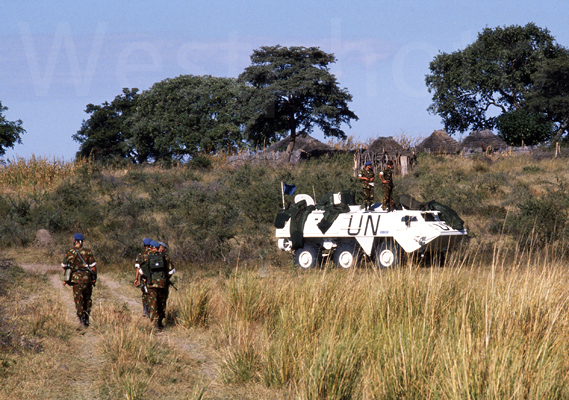
Were the Superpowers behind this? Oh yes:
In May 1988, a US mediation team – headed by Chester A. Crocker, US Assistant Secretary of State for African Affairs – brought negotiators from Angola, Cuba, and South Africa, and observers from the Soviet Union together in London. Intense diplomatic activity characterized the next 7 months, as the parties worked out agreements to bring peace to the region and make possible the implementation of UN Security Council Resolution 435 (UNSCR 435). At the Ronald Reagan/Mikhail Gorbachev summit in Moscow (29 May – 1 June 1988) between leaders of the United States and the Soviet Union, it was decided that Cuban troops would be withdrawn from Angola, and Soviet military aid would cease, as soon as South Africa withdrew from Namibia.
Result? No news from Namibia, which is good news. The country has been quite peaceful since then. Just compare how difficult it has been for it's northern neighbor, Angola.
Since independence Namibia has successfully completed the transition from white minority apartheid rule to a democratic society. Multiparty democracy was introduced and has been maintained, with local, regional and national elections held regularly.
So some times these things work... -
Should the state be responsible for healthcare?And you perfectly show with that example that in the US it isn't pure "free market" health care. The government and the public sector still has a huge role. That's why the opposition to universal health care is so puzzling. (It isn't if you just assume that the sectors that benefit from the current system oppose any reform)
-
Madness is rolling over AfghanistanDo notice that if a large player leaves the scene, it likely will cause a power struggle of the void it leaves behind even if nobody actually wants a power struggle and would have been happy as things were.
Just as we saw with the war in Yemen, actually countries in the Middle East don't need the US to start wars. They can do it on their own. It's long time since the Middle East was a playing ground for the two Superpowers ...or earlier the victors of WWI, France and UK.

-
Madness is rolling over AfghanistanOther G7 country leaders urged the US to prolong the deadline, but Biden will go with the 31st deadline.
Several European leaders had openly lobbied Joe Biden to extend the August 31 deadline that the US president imposed for the total withdrawal of American forces, including British Prime Minister Boris Johnson, who acknowledged after the summit that he wasn't able to sway his American counterpart.
“We will go on right up until the last moment that we can,” he said after the summit. "But you’ve heard what the president of the United States has had to say, you’ve heard what the Taliban have said."
Earlier in the day, UK Defence Secretary Ben Wallace warned that "we’re not going to get everybody out of the country" in time. There have been similar statements from German and Spanish ministers.
But the Taliban have insisted that Western forces must complete evacuations by the end of the month.
A senior French official, speaking anonymously in accordance with the French presidency’s customary practices, said President Emmanual Macron had pushed for extending the Aug. 31 deadline but would “adapt” to the American sovereign decision. “That’s in the hands of the Americans,” he said.
French Foreign Minister Jean-Yves Le Drian said on Monday he was "concerned (about) the cutoff date. An extension is necessary to see through the operations that are underway".
German Chancellor Angela Merkel said at a press conference after the virtual meeting that "of course the United States of America has the leadership here"
"Without the United States of America, for example, we — the others — cannot continue the evacuation mission," she added.
Her foreign minister, Heiko Maas, had said on Monday that Berlin was in talks with the US, Turkey and other allies to keep Kabul airport open for evacuations beyond the deadline.
I think there are extremely large implications here just what is happening. Not only that every radical islamist group is likely to be emboldened by the victory over the US that the Taliban de facto got. Or that tens of thousands of US arms likely now go to the various militant groups or those who pay for them (as obviously the Emirate will be short of cash).
The issue is that now twice in row US Presidents have resorted to quite unilateral decisions. During the Trump administration there was serious discussion about the possibility that the US indeed leaves NATO. Trump being Trump might be understood. But now the unilateralism continues. Now it starts to be obvious that European country simply cannot put their faith in the US that is spooked from it's own shadow and rely that it will back up it's own team as it did earlier. Also it's very likely that the US will now avoid any international operations afterwards. Although nobody will dare to say it, US leadership is quickly eroding.
It's likely that several countries will look at having at least the capability that France now has for limited interventions. Especially if the 31st of August comes and goes and this ends in a larger debacle as it is now.
There can be even the possibility of NATO going the way as CENTO or SEATO, which were disbanded and the US later followed with bilateral defense agreements with it's former pact members.
As European countries have integrated their defense into NATO, it's likely then that the solution is a more a European lead NATO equivalent. Some might think this is a good thing. -
Free Markets or Central Planning?
When anything becomes to be worshipped, just ignore the worship and the worshippers. What you are describing is when it has become an ideology, a pseudo religious mantra. Then it's just basically a religious sermon, a declaration of faith, what these people preach. Hardly worth listening, because these people aren't open to discussion or any new ideas.My problem is with free market fantasies, and the very idea that markets are something to be worshipped. They should be one small part of a society, and nothing more.
Markets are elevated to the point of holiness by a merchant mentality, where everything is about transactions, monetary value, and profits. I think we can aspire to more than that. — Xtrix
And it's a kneejerk response usually to suggestions of supervision of market participants or simply about upholding existing laws. Have you actually noticed that the most vociferous defense of the free market is given as a response to defend basically either a monopoly or a tight oligopoly situation?
Comes to mind what an economic historian who had written the history of British Petroleum (BP) remarked: when BP is doing good and the UK government thinks about taking more profits or doing something other with the company, the company reminds of it being an independent corporation. When BP is in a tight spot, let's say a possible take over bid is looming, the company reminds the government who how strategically important it is to the UK and it's government. -
Should the state be responsible for healthcare?
Yes. And let's remember that also part of the money goes to for example medical malpractice insurances and bureaucracy. Or it could be explained simply: when something is intended to make a profit, it naturally means that the costs will be higher than when the intention is just to cover the costs.Research shows that a lot of the money in American healthcare is actually going to all the bureaucracy involved in funding, which is another reason to consider government control. It would allow those funds to go to preventative care which would mean. Americans might not be so sick when they get to a doctor and so outcomes would improve. — frank
Things like preventive care are those things that are extremely difficult to do without programs that cover all the population. And preventive care is naturally far cheaper.
It's not just one data point. It's a multitude of data. Now I don't want to bash the US and of course we can talk about the UK health care system, the French system, the Swiss system or my country's system (Finland), but I gather that many here are Americans.It's just one case study tho. Why are you trying to extrapolate from one data point? — frank
And it's an interesting issue that the Worlds richest country has this kind of health care system. There are underlying factors just why it is so and they do start from issues like how the responsibility of the individual is seen. -
Should the state be responsible for healthcare?
Don't you see the link? I think it's obvious.How do you see that relating to the OP? — frank
Cooper examines and links a series of policy domains in which the traditional family was explicitly adduced to substitute for multiple aspects of the social state. In her telling, market privatization of social security, health care, and higher education involved “responsibilizing” individual men, rather than the state, for teen pregnancies, parents, rather than the state, for the costs of higher education, and families, rather than the state, for the provision of every kind of care for dependents —children, disabled, the elderly.". — frank
If you have market privatization of health care, it is very likely that the services of doctors salaries are higher.
Think about it.
If you are ill and can die if you don't get treatment, then I guess you have a real incentive to put down some serious money to get good treatment. If you have money, that is. And usually people do have that when it's their own life (or their health insurance is able to afford it). You can always sell the house and live more modestly. -
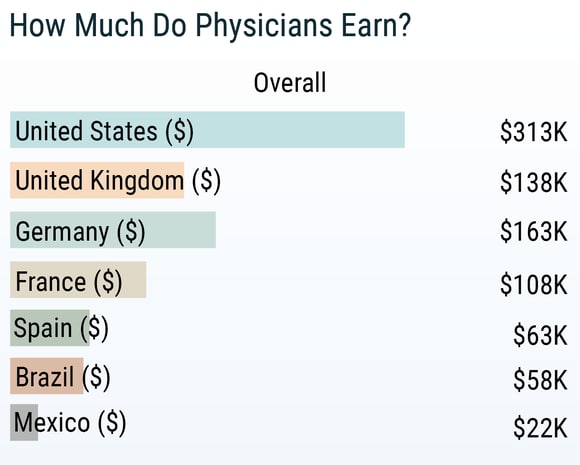
Should the state be responsible for healthcare?This is from a website commenting on how wealthy nonprofits are like they don't have to plan for the future. Their CEOs do make insane salaries, tho. — frank
Well, it's not just the CEO's that have good salaries. Overall, the US health care sector enjoys good salaries...which basically makes it so expensive. (duh!)

-
Should the state be responsible for healthcare?Yes, as opposed to the issue being what's wrong with the USA. — frank
I think that in every country it is an issue just where to draw the line with personal responsibility and where public funding is used. Naturally not all services are paid / subsidized by the government. I assume that primary first aid to bee free is quite universal. -
Free Markets or Central Planning?
Then perhaps it's better to make a more specific questions. Let's look at markets. They can either function well or not so well in an economy. And there can be a plethora of reasons why it is so. Is the market controlled by a monopoly or by monopolistic competition. Are there functioning institutions or not? Are there logistical problems? Who are the suppliers and how do they perform? How integrated the market is to the outside? Are there subsidies or other forms of assistance, transfer payments being given or gotten? What are the political aspects of the market?Some of the poorest are also mixed economies. Why? Because nearly every economy in the world is mixed -- from China to India, to Japan and New Zealand, to Canada and Belize. — Xtrix
The question how much the government controls or supervises some market is only one limited question. It broadly starts from issues like just how well the society itself functions. -
Should the state be responsible for healthcare?No. The question was about responsibility. — frank
Isn't that the issue?

ssu

Start FollowingSend a Message
- Other sites we like
- Social media
- Terms of Service
- Sign In
- Created with PlushForums
- © 2026 The Philosophy Forum