
Comments
-
Ukraine Crisis
Satellite technology isn't limited as it was in the 1970's. When there's a will, there's a way.There's also a matter of US intelligence. — jorndoe
Either way, European cooperation, sooner rather than later, seems the way to go. — jorndoe
Hope this happens. The worst thing is simply to deny what just happened or then think that the best way would be to wait for Trump's term in office to run out.
Well, of course it can be "fake news", but here's the source. Wikipedia gives similar statistics (here)You're giving my calculator a headache — magritte -
European or Global Crisis?
Social media and it's algorithms is one thing to blame. But yes, I would encourage people to be active in politics. Even more active than I am.Part of it is their indifference - some of which comes from past disappointment. Part of it is that representatives are not readily accessible in person. But the incumbents do - in my riding, anyway - send around periodic newsletters with their contact information at the constituency office as well as the one in Ottawa or Toronto. — Vera Mont -
European or Global Crisis?Joke from the old 'communist' Russia: Two men are standing on the corner, waiting for a streetcar. A Mercedes goes by, shortly followed by a Lada. One man turns to the other, "Tell me, comrade, which is the better car?" The other answers without hesitation, "The Lada, of course." "If you think that," asys the first man, "you don't know cars." "Oh, I know cars. But I don't know you," — Vera Mont
It's a reality that I experienced in my youth. I have told this, but I'll tell it again. My parents were scientists and they invited many visiting scientist to our house. Twice were there scientists from the Communist bloc, which both encounters taught me a lot. First came two Soviet women. In pairs, of course, as they had to check each other. At first the dinner table conversations were science and family and how lovely places are in the summer. Then came Glasnost, openes, and the second time only one came. And basically the first thing she told to us was "Did you know that Stalin killed my father?" Her father's mistake was that he had been an aircraft engineer and had studied in Germany, which naturally made him a spy. In the 50's her mother had been informed about the death of his husband and said that it had been an error. The other example was a lively latino man from Cuba, named Jesus. He could visit Finland as he was a card carrying member of the Communist party of Cuba and a staunch believer in Castro. It was 1989 and I asked him what he thought about the events in Romania (which was having it's revolution). My father tried to show with his hand that this wasn't a good topic to talk about. But Jesus got so excited, yes, he had been in Romania and Ceaucescu's secret police, Securitate, had jailed him for a while. Because, he obviously was a foreigner as he didn't look Romanian. And we had a lively discussion on Cuba, Finnish economic history and how he hoped that Cuba could be like Sweden. When I was taking Jesus back to his hotel (I had just gotten my drivers licence), Jesus admitted that he had been for years in East Germany and in the Soviet Union and never had he talked about politics with foreigners. Never.
Those encounters made a huge impact on me. Now people are usually friendly and nice, but once there is this authoritarian rule forced down upon them, it does change things how they behave. And of course now Russia has gone back to those days of the Soviet Union. Russia has far more political prisoners now than during the time of Brezhnev or later. Expats are really frightened what has happened to their country.
Hence this is one of those true alarm bells, a "canary in the coal mine": when open political debate dies, when politics becomes too heated, too divisive or people become too scared to talk politics with people they don't know so well, the foundations of a democracy are threatened. -
What should the EU do when Trump wins the next election?
The migration issue has naturally been a similar discussion as in other parts of Europe, however the True Finns -party, which is the local populist party, is and has been accepted into coalitions and actually is now in the present administration. However unlike the typical populists, they are all for Ukraine. Here is the party leader giving a speech to the Ukrainian parliament and getting a standing ovation:Even if Finnish politicians are as virtuous as you claim (the rise of right-wing populism in Finland, pro-Russian sentiment and problematic future of NATO makes me doubt Finns are immune from growing political polarisation and controversies), — neomac
If you would listen to the speech (with English captions), you think this populist favor what Trump just did? Heck, the guy has been fined for "hate speech", so we know the woke police too that painted him as the dangerous far right. Sorry, but here in Finland we do have also unity, and not braindead polarization at all levels, even if the culture war issues have been discussed(agued).
Quite confusing what you say here. First of all, domestic politics should be left to sovereign states. You don't start messing in others own politics and work with all administrations from one country. It's an issue that at normal relations you wouldn't touch at all (unlike Vance did). But to get wider cohesion, well, basically Finland got Sweden also to join in NATO, even if Sweden had to haggle a lot with Turkey.But, more to the point, how much of their satisfying political performance compared to other states’ leaders, does actually empower Finnish politicians to instill wider social cohesion among nations, make them understand the utter peril of political polarization and get the real support of their people, genuinely answer to the worries of the people, and that the best thing is to tell things how they are, don't lie? — neomac
First, do cut down with the sentences. Very hard to read.In other words, as long as the information flow in Western-style democracies has certain features that by institutional design can be hacked by authoritarian regimes against Western democracies themselves (not vice versa), and independently from Western people or politicians’ best intentions or education, prohibiting social platforms from collecting data won’t off-set this asymmetric advantage which authoritarian regimes are benefiting from as authoritarian. — neomac
Secondly, a functioning democracy, a republic, needs a lot from both it's citizens and it's institutions. Those institutions have to function so that the citizens appreciate them, which isn't something that you get only with free elections. Those countries incapable of having a functioning republic will have the extremely stupid idea of authoritarianism being the solution. It won't be, it will make just things far worse, because an authoritarian state can easily just let loose unrestricted corruption, oligarchy or nepotism.
That's a path to hell. And the US has chosen that path. At worst, they really might have the civil war looming in the future. The more likely outcome is that the US is more like the countries in Latin America.So turning authoritarian can more easily offset this asymmetric advantage: I think Trump is on this path. — neomac
-
European or Global Crisis?
I think this is absolutely crucial for the whole system of democracy to work. It's not boring and above all, it's crucial that people actually do have a link to the actual political system. I don't think people especially at the communal level are weasels or are trying to make a career out of it. It's many times that these people have more of a duty. So if the conservatives are bad, then meet your local labour, go really to listen to them.No. I didn't realise the importance of politics until late in life. I found it boring.
I only knew that Tories were bad! I didn't have that education that is sorely needed. — Amity
I cannot overstate the effect of what it means to really have a small discussion about political issues as we have here with members of parliament. They usually are quite sane and far more intelligent and aware than you get from the media.
Far too easily politics and those involved in it carry like a stigma. At worst, they really in the Third World are thugs, who use violence. It's the alienation of people from the system that drives them to people like Trump or the populists, who depict other parties as the enemy.
One crucial issue is that you can talk about politics even with strangers. That's the first thing that happen in real authoritarian regimes: nobody talks politics. It's far too dangerous. -
European or Global Crisis?
It's only a very bad option.Just standing by isn't an option, is it? — Amity -
European or Global Crisis?What Ukraine needs are REAL security guarantees, not "peacekeepers" especially if there is no peace. Starting with the Budapest memorandum, I would think that Ukrainians don't trust papers with signatures so much.
IFollow-up. What can be done to improve democracy?
Compulsory voting? — Amity
No. It's only a right and can only be a right.
Yes. Starting with an education system that educates how the democracy works and general knowledge about the economy, history and international relations. You cannot have a democracy with ignorant citizens.Education of the citizens. — Amity
It's up to the people themselves. How strong are your institutions? Is your population engaged in politics.But then, what recourse if things don't turn out as expected. If chaos ensues.
How do we make rogue, criminal Presidents accountable? — Amity
Just ask yourself: Have you been active in your country's politics, are you a member of a political party or have been at least a candidate in elections? Or among your friends and family, do you have these people?
I haven't been active myself, other than consistently have voted. But I have friends that have been candidates and know from childhood one member of Parliament and have in my work several times met and discussed things with members of Parliament. -
What should the EU do when Trump wins the next election?Trump is simply living in a delusional world where he can make solutions like the Mar-a-Gaza or have Canada be the 51st state. That the US can elect such idiots is the problem.
There's still sanity in Washington DC, just like Republican Senator Wicker, who chairs the Senate Armed Services Committee
As he said: "Putin cannot be trusted. He is a warcriminal and should be in jail for the rest of his life, if not executed."
That's the correct thinking.
Trump can perhaps see everybody else as his rivals, except Bibi's Israel or Victor's Hungary. But he lives in his ignorant senile dreamworld were his enemies are his friends and the Allies of the US are it's enemies, because they got so well with Obama. -
Ukraine CrisisIndeed it was and we learnt about it only later. Unfortunately, nuclear weapons are a serious topic now for Europe to discuss. Europe can easily get it's conventional gear to defend itself, but what is lacking is the nuclear balance. And how will the nuclear deterrence be formed? UK and France have about 500 nuclear weapons, but they are for national defense.
It's totally possible. Germany already hinted at how this is done. The American way: just increase the debt, and you don't have to cut social welfare and other costs.Baerbock let it slip the other day that the EU is prepairing €700billion aid package for Ukraine. Apparently it was being kept quiet until after the German election. Looks like Europe is going to step up to the plate after all. — Punshhh
Actually, Trump was crucial here. All the pivot talk to Asia was one thing. Even in Munich Zelenskyi was told by a delegation of Democrat and Republican senators that Ukraine will have the backing of the US. Now Trump has shown his real intensions of simply giving Ukraine on a platter to Russia. Trump is now basically doing a deal about Eastern Europe as Ribbentrop did with Molotov, which surely won't go unnoticed in countries that were divided back then.It was always going to happen, with or without US help. The day Putin threatened Europe with nuclear attack the day of the invasion, European history changed. Now they will re-arm and take care of their own security. — Punshhh -
What should the EU do when Trump wins the next election?
Trump going to bed with Putin will likely have the opposing effect on Europe. It all depends if European wake up. We are quite aware of the threat that Russia poses and so is Poland, it's countries like Germany, France and the UK that should respond and approach their people. The silliness of this being "warmongering" when Russia is making hybrid attacks on NATO countries is simply Russian propaganda.The US is extricating itself from the Ukraine debacle, while Washington sycophants like NATO Secretary Mark Rutte are preaching that 'Europe must prepare for war!', even though public support for deeper involvement, or indeed any involvement at all, is and has been thin, and is thinning further still. — Tzeentch
Russia will negotiate peace only when continuing the war can lead to a worse situation for Russia. Trump handing over Ukraine on a silver platter to Putin isn't a solution, and luckily the Ukrainians understand this. The Trump surrender plan won't go anywhere. This surrender monkey gave the Taleban Afghanistan, so we have to understand that he wants to surrender Ukraine to Russia. Time to have that spine, Europe!
The aid given to Ukraine has been very small, and Europe has already given more than a half of that aid to Ukraine. Russian advances have been minimal and it's incapable of now rapidly taking over Ukraine.There is no greater threat to European security than for it to involve itself directly into a conflict with Russia while Uncle Sam is standing on the sideline harboring ulterior motives. — Tzeentch -
What should the EU do when Trump wins the next election?
Well, that multinational leadership was what the US had, and this is what they are trashing here.Maybe they do, but perhaps they only need to create sufficient confusion and division to paralyze disjointed multinational leadership. — magritte
Trump simply doesn't understand the backlash his arrogant and contemptuous behavior is having. Ukrainians are rallying around their president in the spat that Trump and Zelenskyi are having and even Trudeau's popularity have risen thanks to the 51st state nonsense. -
What should the EU do when Trump wins the next election?
No.Is this normal in tone and content coming from an ally? — magritte
But very normal from a populist politician who will talk to his base all times and who doesn't give a speech on his role or on what the subject issue of the conference is about.
They want the MAGA revolution to happen in Europe too.Who would benefit from the resulting confusion among the European leadership? — magritte -
What should the EU do when Trump wins the next election?Four years would do it. Perhaps when Trump is 82 years old and sworn in for his third term. Then we can discus this again. Hopefully you or I will find this thread and continue it then.
-
Ukraine CrisisWell that was a tight brush with destiny. But remember that then Russia had only a few intercontinental missiles back then. That's why somebody like general Curtis LeMay was for having that round with the Soviets. Just a couple of million Americans would have died, so what's the problem? By the 1980's it was different and then it really was a different number of the ICBMs. So when Able Archer '83 came around and the Soviets nearly went to nuclear war (anticipating that Reagan would make a surprise nuclear attack), that was in my lifetime too.
And Hey! We all lived through a pandemic, remember? That wasn't so bad. According to one statistic, only seven million deaths in the world and one million in the US. And since your old, but having this discussion with me, likely you have had the flew and didn't die (obviously). Trump cannot get us to WW3, he will fail even in that. :wink: -
What should the EU do when Trump wins the next election?
No. It's not our only choice. It's not something that China would be so enthusiastic about either. We can have normal ties to China and if they go all imperialistic, then we can do our share. But you don't need to be allies with them and likely they wouldn't be excited about the idea either. Russia is a containable threat and the US isn't a threat. It's just Trump that is annoying.If you mean they need to further integrate, I think they will, with China as an ally. It's their only choice. — frank
The EU (+ UK and Norway) could easily give twice as much as they are giving now. They just should really build the defense industry up, simply put it. They could easily make the investment to defense, if they think defense is an important matter. Heck, Sweden ALREADY had actual nuclear weapons! It's not so hard.
It's hard to believe, but that was the fact. I already posted this, but it's history that usually isn't well known.
Why not? It's just allies of the US getting closer to each other and contemplating on how to respond to a situation where Americans have these fits of Trump.Not a chance — frank
We are just one month into MAGA paradise. We haven't even had the trade wars. Americans have not tasted the victory of tariffs when they buy food at the local grocery. Believe me, a lot can happen with Trump around. Like living another month in MAGA paradise.I think Vance comes next, and he much younger and smarter than Trump. — frank -
Ukraine Crisis
I sleep quite well here on the border to Russia. Doesn't effect my sleeping. My country's military has already been for years preparing for war. Ci vis pacem, para bellum.If Trump invites Putin back into the fold, and it seems likely, it will thrown Putin a lifeline, just when the Russian economy was really beginning to fold under the impact of sanctions. Then if the US signs off on a 'peace deal' that gives an inch to Russian demands (as you can bet they will), Putin will say that he's had a major win, even if he didn't succeed in totally occupying Ukraine as per the initial aim. Then what? Do Ukraine and Europe try to continue the fight against a revitalised Russia without US support? Will the US say then that Ukraine are not observing whatever treaty they've tried to impose? If the UK puts 'boots on the ground' and the other European nations follow suit, it looks awfully like a war between Europe and Russia, with the US at least tacitly supporting Putin.
This is the stuff of nightmares. And it kept me awake last night. — Wayfarer
Yes, Trump is rescuing Putin from a defeat. Actually the dire situation of Putin can be seen from that he is even willing to participate in talks. Then he can look at how the "peace keepers" behave. Shoot them with a tank. First say it was an accident (or something as crazy). Then wear them down. Or have you buddies China there and then venture into Ukraine to get some "war criminal" or something. Behave in Ukraine as Israel behaves in Lebanon, or something like that.
Then get Trump to withdraw forces from the Baltics. Have Trump talk down on the Balts, by how badly they take care of their Russian minorities or so. And behold what do you know? You will have ethnic violence in the Baltic states and Russia has to send peacekeepers to defend the ethnic Russians there, or there simply go "volunteers", just as for years before 2022 Russian "volunteers" were fighting in the Donbas with tanks and artillery.
And because it's a "domestic crisis" and not an "invasion" and the Balts are anyway nazis, so why would the US lift a finger. EU members shouldn't get involved, they should first get their democracies working, as JD Vance said. -
What should the EU do when Trump wins the next election?
Well, in my country politicians do act like that.Not only, you are 100% unable to find politicians that do what you wish them to do. Not only, you are also 100% unable to persuade enough people to make win politicians which would do what you wish them to do. — neomac
For starters, they understand that they will get to power only by forming a coalition. Now if they go on and personally attack other politicians ad hominem and basically dehumanize other parties, they will surely now that the party won't have anything to do with you and the politician will be your enemy for the rest of your life. The kind of attacks and then total turnarounds that happen in US politics would be treated as utter dishonesty and spinelessness. Sorry, but we don't have that fake Professional wrestling theatre that State side Americans have and love so much.
It's the US that has a severe problem with it's citizens thinking that their real enemy is their own government. That's just a bizarre, unhealthy state which leaves you prone to attacks by your enemies. We here know what a real enemy looks like. We might not like everything the government does, but it still isn't the enemy our grandfathers fought.
In a philosophy forum politicians performance should be assessed objectively. You can go to social media and talk with your friends about what subjectively they mean to you.This truth should curb any temptation to assess politicians’ performance more subjectively, namely based on what we think it’s desirable independently from what they actually can do. At least in a philosophy forum. — neomac
Yes. And that's why in some countries politicians kill each other and are surrounded by armed gangs. We might call the warlords, but actually they are politicians.Secondly, politicians do not move in a vacuum of pre-existing contingent cultural and historical factors that constrain and shape their options. — neomac
And that has actually been discussed here on the forum, if you haven't noticed. January 6th was the only a deer-in-the-headlights moment for other politicians. But now Trump is far more ready in what he tries to do. What now he doing is simply bypassing everything and using executive power as a king, and the whole system is getting again this "deer-in-the-headlights" moment and calling "he cannot do it". And that's why it seems he's doing so much, because there isn't any "separation of powers", the Congress is just an annoying speed bump and it's power, just as the courts, should be taken away.If Trump has been elected despite being a “fascist douche” and is now able to centralise power in his hands maybe as no other American president could in the past, it would be more enlightening to dig into the pre-existing historical and geopolitical circumstances which favoured his rise to power. — neomac
So have that civil war everybody has wanted and talked so much about.
Europe should get it's shit together at first.Europe just needs to work on developing its relationship with China. — frank
I really think that Europe should first approach Canada, as they have to take the same shit from Trump as we do and don't want to cut all relations with Americans. Remember that Trump won only a narrow victory, and there are many Americans that don't like Trump either. -
Donald Trump (All General Trump Conversations Here)Yep, Zelenskyi and the Ukrainians clearly wanted to be part of that thing.
Next one to try the tight rope walking will be UK's Keith Starmer. As if Trump would be interested in hearing what Starmer says. But hey, Trump hasn't yet met the new King (or at least Charles as a king), so I guess that there's something that Trump would be interested in the UK.
I think the basic problem is that too many European leaders act if Trump would be a normal political leader, which he isn't. They ought to simply be far more tougher, because with that they'll get the idiot's respect. Publicly humiliating him won't work. -
What should the EU do when Trump wins the next election?
And that's what Trump doesn't understand. If a leader of one nation directly goes to badmouth another nation, out of nowhere it creates resentment and hostility. And especially when you don't know just what the hell you are talking about.The only thing I dislike is that I perceive that there are still some negative prejudices against us. The coronavirus crisis was a good example of that. I remember Mark Rutte and the Finance Minister of The Netherlands saying very negative comments on Spain and Portugal. — javi2541997
There's on saying about the British, they just love to criticize their Royalty, but a foreigner criticizing their royalty? Now way.
So then Trump repeating Kremlin talking points and making the deals with Putin on Ukraine and seems also Eastern Europe won't fly so well. But naturally he doesn't know what the Molotov-Ribbentrop agreement meant to Poland, Finland, The Baltic States and Romania. But they will, once the media in these countries will report things as they are. -
European or Global Crisis?
Europe gave 50% of military aid to Ukraine and actually more than the US when all aid is considered.Peace at the price of sacrificing a Ukraine. — Vera Mont
It's the time of our awakening: do we continue supporting Ukraine when raging Trump stops all aid to Ukraine? Do we let Ukraine fall?
I genuinely hope that Europe really awakes and does support freedom from tyranny and imperialism. -
What should the EU do when Trump wins the next election?
Or then, they can try toFrom a geopolitical competition point of view a key problem is that Western democracies have open social media that anti-Western authoritarian regimes can troll and intoxicate with convenient fake news, but Western democracies can't do the same against them. Western democratic regimes are compelled to compensate this asymmetry one way or another, but unfortunately the easiest way they can do it is by turning authoritarian as their rivals. — neomac
a) Instill social cohesion, understand the utter peril of political polarization and how cheap shots at your competing parties can backfire when the political sides don't respect them. Get the real support of their people, don't just assume that if they won some election, they don't have to think about the people until the next elections.
b) genuinely answer to the worries of the people and take these seriously on both sides of the aisle.
c) and the best thing is to tell things how they are. Don't lie. Have the ability that if the country finds itself on really tight spot, the opposition can and the administration can set differences aside and agree on the large issue, even if this naturally gives a lot of points to the ruling parties.
d) Avoid gerrymandering and avoid situations when one party can take all the power. Coalition governments are usually better than one-party governments, especially those that can pass through the representative all kinds of laws. -
Ukraine Crisis
Actually, Trump is indeed irrational as this is bonkers. There's no rationality here. What kind of "negotiator" Trump thinks he is? Look, I think we are close to the fact that Trump will leave NATO, because those nasty Europeans took the side of Ukraine and wouldn't go along with his (Putin's) great Nobel-peace award winning peace plan. There's no "adults in the room" to save this from Trump. So he can go back to a trade war stuff.For the most part, Trump isn't being irrational here, he's simply being amoral, valuing only money. He believes profits will be maximized by supporting Putin. Although blaming Ukraine for failing to give Putin everything he wanted is bonkers. — Relativist
I think the whole Trump peace deal didn't get even further than this.
And Putin has is achieving his greatest victory by Trump ruining the groundwork for US to be a superpower. I think he will just use the hapless idiot Trump for as long as he can, as he quite can now that things can change in the US, because not everybody in the US are braindead. Putin's agenda is to crush the US and get it go back to it's own Continent and then stay their eating it's apple pie. And it's really working well. So he will happily enforce Trump's hallucinations of a US-Russia axis, as if he would give away China and put his cards with a lunatic like Trump. -
What should the EU do when Trump wins the next election?
But we do understand it. It's a happy confederation of sovereign states, that tries desperately be something it cannot be, a real federal union.Joining the EU means give part of sovereignty and many things. I get it. But that's the point. Share the best of each country. We were in war for centuries, and look now. That's what I wish Europeans could see and understand. Our old continent already suffered from wars and dictatorships, so no one is entitled to give us lessons of how we should do the things up. — javi2541997
Let's go through just what we get from EU and the monetary union:
1) With the euro, the country risk is lower, hence we have far lower interest rates than we would otherwise have. That's a plus. We cannot use the devaluation cycle to prop up our export industries (and in your case, make Spain cheaper for tourists). That a plus, that also has minuses.
2) We don't face our problems alone and have to negotiate all as smaller entities. We don't have to face either Russia, but also the US as far more smaller countries.
3) Moving here or especially pensioners moving from here to sunny Spain has it plus sides. These people do bring jobs to Spain, they aren't there to use your welfare programs. This is a plus when open borders that we have don't make a problem. And surprisingly many Spaniards work in Finland.
4) And then the obvious: other Europeans countries aren't there cut us into pieces if we have internal problems. Just think how lovely it would have been, when you had your internal Constitutional Crisis of 2017-2018 and the other European countries would have sided their favorite side as during the Spanish Civil War. Some would have backed Catalonia and some Spain because, why not? Time to squeeze some benefits from your dire situation. And once you kill the first people, then people adapt to the "new reality" of OK, this is war. Last time in your civil war about half a million perhaps died. Well, that didn't happen and in the EU didn't happen. And we aren't thinking that our EU members would be thinking of starting a war with us, just as we know Sweden isn't going to declare us an "artificial country" and start to preach how the natural state is that Finland is part of Sweden as it has been in history. Or something similarly crazy, as we are now hearing from Putin on Ukraine.
So there are indeed benefits to the EU already. -
Ukraine CrisisDaily Mail and Sun seem to running with this Trump "peace plan", which obviously is made in the Kremlin. Sceptical if it really would be so. What is missing is the part that Ukraine has to choose somebody else than Zelenskyi in the next elections. But US troops withdrawing from the Baltics is ominous.
 [/img]
Molotov-Ribbentrop pack II. -
What should the EU do when Trump wins the next election?
Let's remember that membership either to NATO or the EU is voluntary. Norway was in talks in joining the EU, did weigh the pros and cons and decided to be away. Just as Switzerland, I can understand them: they would be paying much and not getting much. And Norway was in NATO.On the other hand, I would ask Norway to join the EU. It is not understandable that this country had a NATO secretary, but their citizens have no voice in European chambers. How can we allow that? Furthermore, they are very clever at managing natural resources, as they usually do with oil in their sea. — javi2541997
If NATO goes into the dustbin of history, I am sure that Norway will then do a security arrangements with Europe.
Europe has to wake up is the unreliability of the US as an ally under Trump. Heck, even some Americans are saying this to us in this forum. The unfortunate thing is to try to simply avoid this fact and think that everything is just fine, when it surely isn't. Especially not to do anything, because it would upset Trump. -
What should the EU do when Trump wins the next election?
Well, if Germany won't be willing to stand up for it, then they'll not make a huge issue with it. You would have to respond to it. Do you take it up to NATO?It's amazing such news isn't picked up more broadly. I hadn't heard about those sabotage attempts. — Benkei
Remember that for example the Eagle S episode when Finland intervened, boarded and confiscated the tanker, it happened during Biden's watch. Finland got a lot of praise for that. But that was the NATO with the US under Biden.
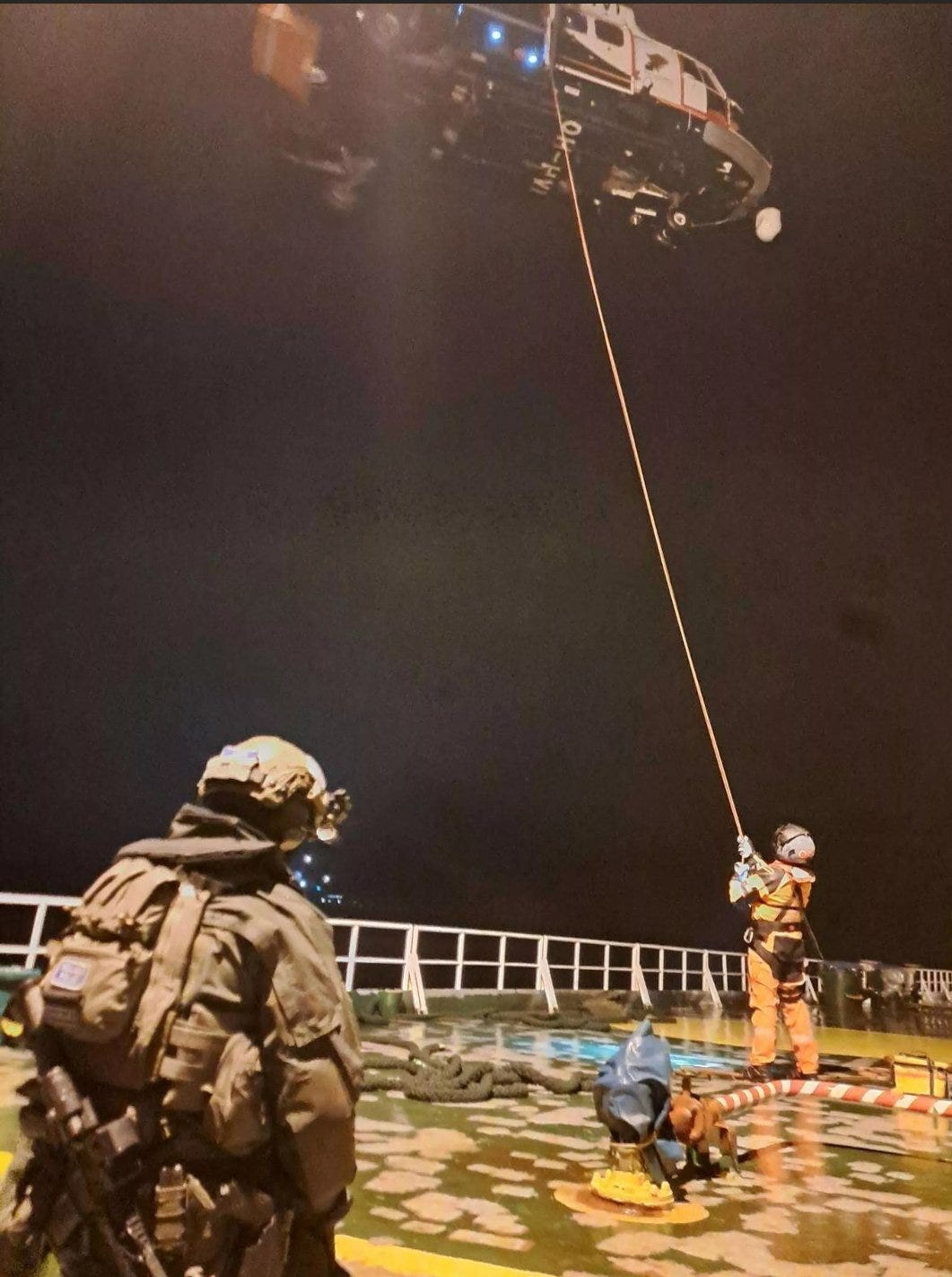
It's clear as day whose behind the cabal cutting and it cannot be "an accident", because cabal cuttings of cabals didn't happen at least in my lifetime in the Gulf of Finland, and not with the frequency of today. Yet the investigations "are ongoing". Finland won't say that Russia is behind it. Just as Germany won't say Russia is behind the sabotage of it's surface combatants.
Why?
Because you have the real Putin-apologist in Trump, who likely would lash out to Germany or Finland of trying to break his peace negotiations with Putin. Remember that he has never criticized his friend Putin. All this nonsense that he would be tough on Russia is absolute horse shit. When you have already Trump saying that the war was the fault of Ukraine, how do you think he'll go with Germany whining that their navy ships are sabotaged?
Wouldn't go well with the "Putin wants peace" message that Trump is repeating. Trump wants ties to Russia to be opened, to get Russia to the G8. That Russia would be sabotaging those annoying allies wouldn't go so well for Trump.
I have to remind that there are sane people in the US. Many Republicans still hold the view that Putin is a warcriminal and the US should stand with Ukraine. Likely Marco Rubio is trying to do his best to make of the situation. But nobody, nobody will stop Trump.
Europe should understand that the US is an untrustworthy ally that under Trump will fuck everything up. -
Donald Trump (All General Trump Conversations Here)
Aligning itself with Putin against NATO is the real issue here. But Trump simply doesn't get it.So this is it. The great betrayal has begun. The USA will walk away from Ukraine and align itself with Putin against NATO. This is, of course, even to Republicans, a complete outrage, but who's going to stand up? — Wayfarer
At Doha peace talks Trump made a disastrous peace treaty (which Biden then fullfilled). Yet that was just Afghanistan. And then the US had already lost Central Asia to Russia. Now if Trump makes another disastrous peace treaty (or overtures for that), next in line is Europe. -
Donald Trump (All General Trump Conversations Here)
What do you mean by that? Just remember that if Brussels or basically EU bureaucracy is whimsical and inefficient, the integration process still does have it merits. Especially after we witnessed what happened to the UK and the absolute disaster that was. Nope, post-Brexit UK was a proof that in the end, the positive aspects overlie the negative ones.No matter who leads, I bet they’re beholden to Brussels. — NOS4A2
Do not fall in with your populism ideology on everything. European integration wasn't made because it serves financial gains to someone, it emerged because of the millions of Europeans killed in two World Wars. Our continental civil wars had just become so lethal that a dramatic change had to be done.
Actually, there hasn't been anti-US sentiment in Europe, just as there hasn't been anti-US sentiment in Canada. Of course, that can change, even in the country you live thanks to Trump.I don’t know why they never disengaged years ago, especially given the thankless anti-US sentiment which seems regnant there. — NOS4A2
Just what governments are you referring to? The US with the totalitarian Trump administration which doesn't care a shit about the separation of powers? Perhaps.And now, given the totalitarian trends of those governments, it seems like the perfect time to wean yourself off the tit. Don’t you think? — NOS4A2
I would think that now as Trump is hellbent in ruining everything, the EU should approach Canada and perhaps also Mexico. These three entities should start working on trade between themselves in order to compensate for the damage Trump is doing. I think it's extremely reckless to trust the US on anything. Trump isn't a glitch, it's what Americans want and that makes the US a very untrustworthy trading partner.It’s bad when Trump does it but we’re silent when the EU does it, it seems. All they have to do is be fair and they have nothing to fear, but I don’t think fair trade is in their capacity. — NOS4A2
Canada could join the EU? Perhaps! :grin:
-
What should the EU do when Trump wins the next election?
Do not forget the hybrid war that is going around. That is far more serious than the information war. We are already having hybrid attacks here quite constantly. And where do you put the fact that the German navy has come out and said that it's naval vessels have been sabotaged:Really, one of the first things we ought to do, isn't to focus on the physical wars but the information war. — Benkei
(See here)(The Maritime Executive) The German Navy has confirmed that unnamed saboteurs have attempted to damage more than one of its warships, and media reports from Germany suggest that at least two vessels have been affected.
In 2024, a German Navy minehunter was damaged by unknown personnel while in shipyard in Rostock. Several cable harnesses were severed, and an investigation is under way into a suspected sabotage attack, according to Spiegel. The Rostock prosecutor's office has confirmed that it is investigating the case.
Late last year, an unknown saboteur dumped dozens of kilos of metal filings into the oil sumps of the main engines aboard the brand new corvette Emden, according to multiple German media outlets. The contamination was detected and cleaned out, but if it had not been spotted, it would have quickly destroyed the engines.
Last week, German Navy Vice Adm. Jan Christian Kaack told the press that "more than one unit" had been sabotaged, without going into specifics. Troublingly, he added that German naval bases have reported a pattern of attempted security perimeter breaches, both from the shoreside and from the waterside. He added that uniformed German Navy personnel have been approached in public while en route from base to their homes.
"The growing threat from Russia is more urgent at the beginning of 2025 than it was two years ago," Kaack told reporters, without specifying whether the suspected security threats within Germany were Russian.
The suspected attacks are just part of a broader pattern of sabotage targeting Europe's security forces and its infrastructure. In early 2024, three German-Russian dual nationals were arrested on suspicion of planning an attack on the U.S. military base at Grafenwohr, a training facility for Ukrainian servicemembers. The main suspect, identified as Dieter S., stands accused of plotting an extensive series of arson and explosive attacks within Germany, with targets including rail lines and a manufacturing plant.
This will only increase now. It is telling if the news like above won't be picked up by mainstream news. And when it comes to information warfare, we have to remember that the information war has effect when the topic is actually something that the people would feel to be changed even without the topic. One of the things the populists and especially the Trump administration will try to do is portray Europe as being stuck in pre-2016 thinking. For example the migration issue. Never will they admit that actually that European countries have changed their policies. Greece doesn't allow refugees coming over Turkey and we even have closed our border totally with Russia. Our prime minister admitted that yes, it is problematic for our laws and international agreements, but it has to be done because of security. And were we reprimanded by the EU? Of course not. But JD Vance can scold Europe for not handling the migration crisis, naturally. As if the populists would be the only one's taking this seriously.
I think that we as Europeans on this forum would really need quite many new threads because yes, it has been worse than even you anticipated. Like should the EU have it's own nuclear deterrent? Quo vadis NATO? -
The Musk Plutocracy
Presidents giving executive orders simply shows their lack of capability to put through actual legislation.How is it possible that all of Joe Biden's executive orders were wonderful and all of Trump's are evil? — philosch
No, I do notice the pro-democrat bias. That has been for a long time, yet it simply doesn't matter so much if you take just a little bit of time to look at things yourself. Best way is simply to read the actual speeches of the politicians, not the commentary of journalists what the politician said. In the time of internet, that isn't so hard to do. I've always been skeptic when some party is called "fascist" or "extreme-right". The true extreme-right cannot hide itself. Even the populist comes in many levels and how they respect laws and norms of a republic differs.
Many try to desperately promote this view, but I think it's wrong. Trump really means what he says. Once you look at his actions from this viewpoint, it actually makes sense. Likely he won't go so far to order a military operation against Denmark, but likely Denmark won't give a message that it's ready defend it's territory even by military means. Denmark is just desperately hoping that Trump will move on and forget the whole idea (just as Panama hopes). That got Denmark off the hook last time.As for the State of Canada or Greenland or Gaza, I think that is all silliness, I believe he's trolling to get people to soften up for negotiations. — philosch
But have any journalist ask Trump about his aspirations about Greenland, and he will, until the last day of his presidency, say that it's on the table and the means to get Greenland are open too. He won't back down.
Or just look at what Trump wanted for Ukraine to sign to:
(Meduza) The agreement proposed by Donald Trump’s administration granting the U.S. access to Ukraine’s natural resources would give Washington control over the country’s mineral and oil and gas reserves, ports, and unspecified “other infrastructure,” The Telegraph reported, citing a draft of the contract.
The Trump administration is seeking 50 percent of Ukraine’s current revenues from resource extraction, as well as half the value of “all new [resource extraction] licenses issued to third parties.” Such revenues would be subject to a lien in favor of the U.S. “That clause means ‘pay us first, and then feed your children,’” The Telegraph quoted a source close to the negotiations as saying.
The agreement also states that “for all future licenses, the U.S. will have a right of first refusal for the purchase of exportable minerals.”
The Telegraph notes that Ukrainian President Volodymyr Zelensky proposed granting the U.S. access to Ukraine’s resources back in September, hoping to attract American investment that would make another Russian invasion more difficult. Some of Ukraine’s mineral deposits lie near the front lines in the east or in Russian-occupied territory.
“He probably did not expect to be confronted with terms normally imposed on aggressor states defeated in war,” The Telegraph wrote. “They are worse than the financial penalties imposed on Germany and Japan after their defeat in 1945. […] If this draft were accepted, Trump’s demands would amount to a higher share of Ukrainian GDP than reparations imposed on Germany at the Versailles Treaty.”
Zelenskyi refused the paper, especially not being given any kind of security assurances. So there's your ally in Trump. But perhaps this should be reported more favorably and more positively for Trump. -
Donald Trump (All General Trump Conversations Here)
That was the former prime minister Sanna Marin, a social democrat, quite a clueless character, yet let's say an average politician that handled COVID and NATO-membership well:Last I heard your president was raving with celebrities and taking drug tests. — NOS4A2

Our new President is Alexander Stubb, a conservative, studied in the US, ex-foreign minister and ex-prime minister and a far better politician that is quite apt in international politics.
It's like confusing Alexandria Ocasio-Cortez with Marco Rubio. But hey, both are American politicians with Latin heritage, so not much difference anywhere in their political views or abilities, right?
You think this stupid culture war rant goes anywhere near the severity of basically what just happened? How clueless can you really can be here? The country that is by a straight line 9 kilometers from myself is hellbent on building it's lost empire back by attacking it's neighbors and cutting sea cabals connecting my country to others just 40 kilometers from me. Yet then culture warrior JD Vance calls that "Russia isn't our threat", but the stupid brain dead culture war? Oh, because there's these excesses that have happened to individuals, all that culture war DEI stupidity as that would be the most important this and then he's rooting for German party of his liking?JD’s historic speech wasn’t for Europeans, it was for the stuffy bureaucrats in the room, many of whom were wearing military uniforms for some reason. In fact Vance defended the European citizens who were roundly silenced by the weak commissars of European governments for the smallest of speech and thought crimes. Does anyone in the EU do the same? — NOS4A2
Above all, this was a security conference, so that's why there were so many military people around, which shouldn't come to you as a surprise to NOS4A2. What I found was that Vance, as Trump, isn't interested in security policy. Nope, fuck it. Put the comments of Vance, Hegseth and Trump together and Europe has to understand that at least for this time, the US has by itself given up on it's Superpower status and seems to be doing the bidding of Putin.
Europe really has to take care of itself and has to simply to stop listening to Trump. The US is no more the leader of the West so we really shouldn't listen to it at all. Just let him alone with his tweets and tantrums. Likely Trump will get his way and get out of NATO.
The only thing the EU should do is to approach Canada and get a trade deal with it as to deal with the inevitable Trump tariffs hitting. We absolutely cannot rely on US gas exports. Canada would be a far better and trustworthy trading partner. -
European or Global Crisis?It's an effort to bring the kind of political polarization to Europe that is happening in the US.
Unfortunately, foreigners openly rooting for one political party may backfire quite much. Just as it would backfire if Europeans would be openly rooting for Democrats and accuse just like Vance of everything that Trump is doing. The simple fact is that many democrats wouldn't like it. -
Donald Trump (All General Trump Conversations Here)I disagree. It has very much engaged the Europeans. — Amity
Especially at the German elections, which rather upset both the acting administration and the opposition (only with the AfD cheering for the support they).
Well, perhaps European countries should start to root for the Democrats to take back their country from the threat of tyranny of Trump and Trump's efforts to dismantle the Republic. That I guess would warm the Atlantic ties, right?
People try still to be diplomatic and to work with the Trump government. That's the point here. -
The Musk Plutocracy
Really? Lol.They are only making recommendations. — philosch
https://wolfstreet.com/wp-content/uploads/2024/11/US-government-TIC-2024-11-18-share.png
Just to give ONE example:
An air traffic controller told the Associated Press that workers affected at the FAA included radar, landing and navigational aid maintenance.
Spero said messages began arriving after 7 pm on Friday.
'We are troubled and disappointed by the administration’s decision to fire FAA probationary employees PASS represents without cause nor based on performance or conduct,' he said.
'Several hundred employees have been impacted with messages being sent from an ‘exec order’ Microsoft email address, not an official .gov email address.'
One FAA worker alleged he had been targeted because of comments he made about Musk's companies.
'Before I was fired, the official DOGE Facebook page started harassing me on my personal Facebook account after I criticized Tesla and Twitter,' Charles Spitzer-Stadtlander wrote on LinkedIn, describing how he was fired after midnight on Saturday.
'Less than a week later, I was fired, despite my position allegedly being exempted due to national security.'
The dismissals come at a critical time for the FAA, which already faced a shortage of controllers.
For years, officials have warned that overworked and understaffed air traffic control systems were an accident waiting to happen.
But you live in your dreamworld of DOGE just making "recomendations".
So the media shouldn't report on what Trump is doing by executive orders, not by following things as they are usually are done in a Republic with separation of powers?I'm not even a Trump supported per say, just don't like propaganda and agenda driven reporting on either side. — philosch
Do notice, that many commentators do agree that there is waste. Here it's really about the method.
And where do you put the ideas of Canada being the 51st state or the US annexing Greenland, even possibly by force? Or how about the Mar-a-Gaza proposal? -
The Musk Plutocracy
Well, if you can or will save your Republic.- my prediction is that DOGE will come to be seen as the most egregious and idiotic blunder in the history of the government of the United States of America. — Wayfarer
It can also seen as the shrewd radical way to dismantle government bureaucracy... as the Trumpists will hope it to be. Who cares that it doesn't go "by the book", Congress is the problem, right?
Because the way in a Republic, the thing would have gone like this: Trump would have made Elon and the other guy to look through government spending. They would do this for several months. Then they would forward their findings to the President, who then would approach the Congress to change the existing laws and spending by new legislation, that should pass both houses. And this would take time. Far more than the less than a month that now has gone. But this would be the case, if Trump and his followers would want the Republic to operate as the Constitution says.
But they don't. The don't give a fuck about the Constitution.
As I've said, the Republicans will embrace the separation of powers, the role of Congress and it's oversight and the fundamental structures of a Republic ONLY if they lose the Presidency. Yet otherwise they are totally happy in turning the President to the role of a Caesar. It's really remarkable as how it's playing out in the US compared to the history of Rome turning from the Republic to an autocracy. (Of course you simply cannot talk about Caeser or Augustus in the same level as Trump)
Yet the rules in a Republic sould be same for everybody, which ultimately shows that Trump-Republicans have absolutely no respect for the Constitution of for what a Republic stands for.
Every American who doesn't understand that the country is in a Constitutional crisis is either ignorant or simply doesn't care at all about their own Constitution. -
Donald Trump (All General Trump Conversations Here)
History or reality begs to differ.Nothing — frank
Monetary economics is something that people should know. It truly impacts everybody. -
Donald Trump (All General Trump Conversations Here)
Think about it. If all the debt that you put out is bought by your own central bank, what will that mean to the dollar?What? — frank
And by all means this isn't just about the US. Everybody is doing the same. -
Donald Trump (All General Trump Conversations Here)Think again where the public debt is.
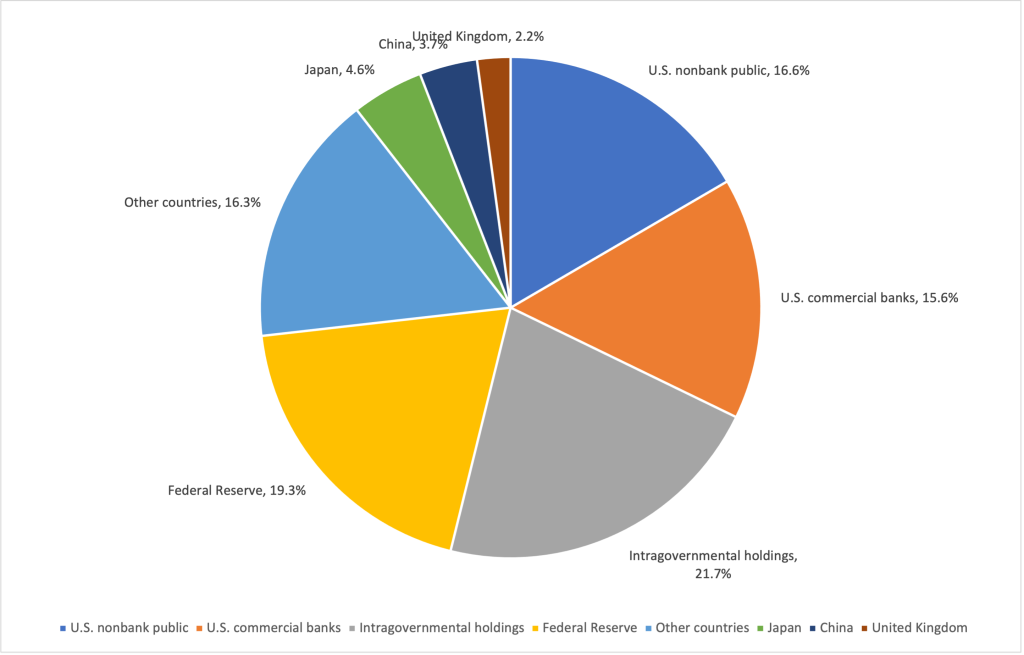
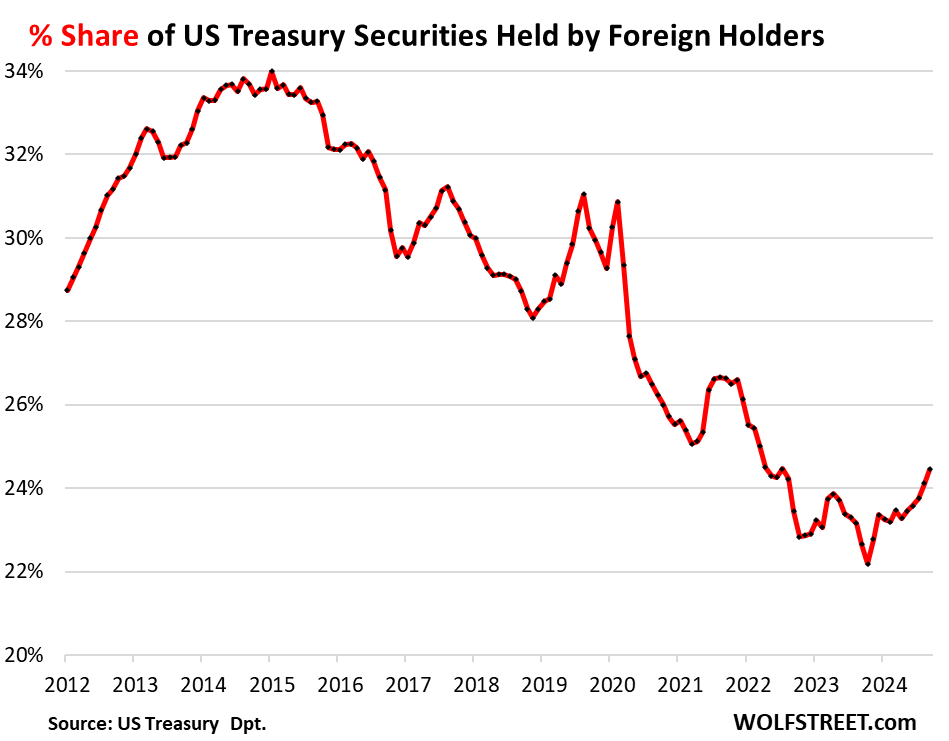
Do notice, that already the largest owner of US treasury debt is the Central Bank itself. When that is the majority ownership, guess what happens at some instance?
ssu

Start FollowingSend a Message
- Other sites we like
- Social media
- Terms of Service
- Sign In
- Created with PlushForums
- © 2026 The Philosophy Forum