
Comments
-
Deluded or miserable?Well, no matter how "seasoned" he is, he better have someone watching! — Janus
Back in the day, we always had someone on acid to mind us while we were straight, because while a tripper might leap of the roof thinking he can fly, only straights start wars.
And that's it really, most of us are so fucked up that a bit of brain scrambling is actually an improvement. But for myself, I discovered a long time ago now that if you take the acid test, you fail. So I now maintain my lunacy unassisted. -
What is an incel?Thinking about the peculiarities of the medium, I see straight away that it radically equates doctoral theses and bar-room banter; everything is preserved and disseminated. This taking seriously of every passing thought is exactly like psychoanalytic therapy - except we are all as much therapist as patient.
So what is exposed is a lot of unconscious thoughts and feelings, much more so than previous media. It is the medium of the collective unconscious. Sex, and more sex, and even more sex. On the one side the activities of the powerful, who have always lived out their fantasies, and on the other, the frustrations of the powerless who have not. Incels are just Weinsteins with no power, but the web treats them equally, and exposes both.
We are exposed to ourselves, and the posturing of politicians about their weapons of mass orgasm and who's going to emasculate whom, the sexual sadism of ISIS, everything that was already there but hidden, is now arrayed before us as what we vote for, what we take seriously, what we have always secretly wanted. Tic Tacs are date rape pills of the imagination. -
Am I being too sensitive?This isn't a who's funnier contest. The question was whether certain jokes should be censored. Until you say that aristocrat jokes must be censored, we have no point of contention.
4 hours ago — Hanover
I don't remember that being the question. I thought it was some people moaning about the kids these days. Some people think you're a bit of a dick - get over it. -
Am I being too sensitive?I guess that's just how things are and I should shut up and fall in line. — Posty McPostface
Not at all! You have made a new line, and people have not just fallen, but jumped in it. Congratulations! Viva la revolution! -
Am I being too sensitive?Maybe more posters should do that. — Baden
Oh dear! Maybe that thread should be closed, if it is such a problem? Or maybe people who are over-sensitive should go somewhere else? Or possibly, moderators should be a bit more moderate. -
Am I being too sensitive?Would you want that on your conscience? — Baden
Yes please! One only knows one has a conscience when it carries some weight. It is one of the difficulties of being very nearly perfect.
Or to put it another way, the same joke endlessly repeated is really tedious.
But otherwise, I like that people invest some identity into their positions, as if it matters who has the right of it. -
What is an incel?Can one criticize the botched, perverted, and sadly mass produced/manufactured Jungian collective unconscious, at all? How does one reason with this insanity? — Posty McPostface
C.G. Jung „The Archetypes and the Collective Unconscious“Whether primitive or not, mankind always stands on the brink of actions it performs itself but does not control. The whole world wants peace and the whole world prepares for war, to take but one example. Mankind is powerless against mankind, and the gods, as ever, show it the ways of fate. Today we call the gods ‘factors,’ which comes from facere, 'to make.' The makers stand behind the wings of the world-theatre. It is so in great things as in small. In the realm of consciousness we are our own masters; we seem to be the ‘factors’ themselves. But if we step through the door of the shadow we discover with terror that we are the objects of unseen factors.
To know this is decidedly unpleasant, for nothing is more disillusioning than the discovery of our own inadequacy. It can even give rise to primitive panic, because, instead of being believed in, the anxiously guarded supremacy of consciousness - which is in truth one of the secrets of human success - is questioned in the most dangerous way. But since ignorance is no guarantee of security, and in fact only makes our insecurity still worse, it is probably better despite our fear to know where the danger lies. To ask the right question is already half the solution of a problem. At any rate we then know that the greatest danger threatening us comes from the unpredictability of the psyche's reactions. Discerning persons have realized for some time that external historical conditions, of whatever kind, are only occasions, jumping-off grounds, for the real dangers that threaten our lives. These are the present politico-social delusional systems. We should not regard them causally, as necessary consequences of external conditions, but as decisions precipitated by the collective unconscious.
In other words, these people are manifesting the symptoms of our insanity; there is no "one" with the capacity to reason, living outside and immune from 'the factors'. Indeed the delusion of externality, and rationality is the most dangerous of all, as @Bitter Crank describes. Advertisers and politicians know what works, but have no idea of what work it does beyond the measure of 'sales' and 'votes'. -
What is an incel?...How different is the logic of capital and sexual accumulation Elliot Rodger articulates from the proper values of our society? What makes it pathetic when Rodger wears Gucci sunglasses to get laid and perfectly normal when his father, or Harvey Weinstein, or Donald Trump do so? Why do we, ostensibly well-adjusted bourgeoisie, think it is so absurd that Rodger expects that these commodities entitle him to sex and affection when we exhibit and encourage the same behavior ourselves?". — StreetlightX
Not different at all.
I'm still trying to reason through where the incel has gone wrong in his beliefs. — Posty McPostface
Clearly, the incel has failed to deploy the Tic Tacs. Or, just possibly, he has deployed the Tic Tacs, and they failed to do what it said on the tin. Because after all, he wasn't worth it.
These, I think are among the casualties of the psy-ops we call 'advertising', along with the anorexics, shopaholics, gambling addicts, and so on. Fear, jealousy, hatred, are easy to invoke and manipulate and powerful motivators; tied to sexual frustration and negative identity - you're only worth what you can spend.
Try a site for anorexics for comparison. I'm not linking one here, but have an article instead. I think it would be a mistake to blame social media for this, just as it is a mistake to blame it for terrorism. The extremes are always logical extensions of 'normality'. This is what we have made; these are the values we live. -
The Poverty of TruthAll I see happening here is a shifting of the location of truth, not any proposition that philosophy is not striving for it. — Pseudonym
All I see here is the epistemological frame. How does one identify the 'right frame', when the frame is what establishes what is right? I thought Banno had beaten this one to death ages ago.
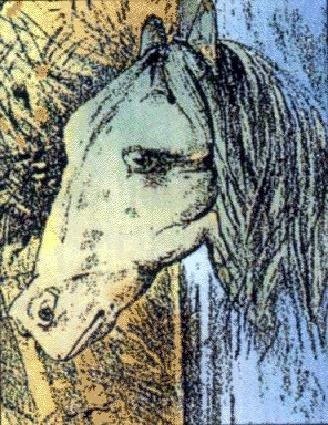
Duck or rabbit: which is the right way of seeing it - the truth of the thing? -
The Poverty of TruthIt does seem as though folks fall into a a response of agree or disagree, as though that conceptual frame (my understanding is that frames are conceptual rather than propositional), and it is closely associated with the objective/subjective frame, is one they cannot step out of for even a moment.
I notice that the notions of frame, framed and philosopher are themselves framing concepts that afford a particular view of philosophy, and so by its own criteria, criticisms tend to look like an unwillingness to adopt the frame rather than refutations.
Other philosophies of course see philosophy otherwise.
So the question one ought to consider is not whether this is the best, the only true, the real view of philosophy, but what it enables one to do. And it does seem to me that it offers a way of looking at the incompatibilities of, say realism and idealism in terms of their conceptual frames, rather than seeing merely two philosophical armies fighting under the banners of duck and rabbit. Which might make a pleasant change, if nothing else. -
What do you think "American" or "European" means?Thought I'd just leave this here where @StreetlightX won't find it.
https://www.academia.edu/36644050/HORROR_VACUI_THE_MEANING_CRISIS_OF_THE_GLOBALIZED_WORLD_THE_CASE_OF_THE_EUROPEAN_UNION_._A_JUNGIAN_APPROACH -
Thoughts on love versus being "in love"Assuming rational self-interest here, there is something being derived from the fact of having a baby of my own. — Posty McPostface
Dude, assuming rational self interest is assuming no love at all. They are opposed. One might have children to ensure someone to change one's nappy in one's dotage - but that is prudence, not love. -
An Open Letter To Ireland - Why Morality Sides With "Yes"Perhaps we all have a right to be fed and housed, and when there is a society where everyone is reliably fed and housed, it might start to make sense that a foetus has those rights too. Don't hold your breath.
-
Thoughts on love versus being "in love"Not a transaction, not a deal, but a gift. Love is what it's all about, it is an overflowing, it is a passion, the passion. Love is taking pains, and giving without consideration, it is not counting, and so unaccountable. It is what you need, and all you need. Don't expect to catch it in a thread, or limit it to definition. My song is love unknown.
-
Dealing with people who choose to sufferWhen a truly kind man does something, he leaves nothing undone.
When a just man does something, he leaves a great deal to be done.
When a disciplinarian does something and no one responds,
He rolls up his sleeves in an attempt to enforce order. — Lao Tzu -
Mathematical Conundrum or Not?If the correct answer is 25%, then the correct answer is 50%.
If the correct answer is 50% or 60% then the correct answer is 25%
Therefore, the correct answer is 0% which is correct because it is not a choice on offer. If one could choose it, randomly or deliberately, it would be wrong. It's an amusing self-referential paradox, but I don't see anything special about it. It would have been more amusing, and neater, if one of the options (C) had been 0%
One expects there to be a right answer on offer, but there may not be.
2 + 2 = ?
A) 3
B) 203
C) 42
D) 8.73
Expect to get low marks in such tests, however hard you revise. -
Self-awareness. Boon or Curse?it is the ego that is the source of suffering. — TheMadFool
Can I unpack this just a little? Let's say that ego is a centre of identification. I am... a philosopher, a husband, a Scotsman, a fine fellow, etc. More importantly, there is an identification through time, of joy and pain remembered, and current, and imagined in the future. So we can distinguish pain, as being present or absent, from suffering, as being a thread through time of moments of pain remembered, and foreseen. (I am currently suffering from a dentist appointment tomorrow, associated with remembered childhood dentist trauma.)
Thus more precisely, ego makes suffering from pain. One could also say that it makes pleasure from joy, but the language is more ambiguous here. So what I am suggesting is that animals and the enlightened have pain and joy from time to time, but not pleasure and suffering which are the stuff of egos. the stuff of identification. -
Self-awareness. Boon or Curse?Neither. I see it rather like being a teenager: a fucked up phase one has to get through on the way from sensible childhood to sensible adulthood. But perhaps that's just me. :nerd:
-
Emile Durkheim on Social EnvironmentYes. There are forces that give importance to these bits of metal and paper, such that the individual cannot find food or shelter without them. I like to have money, I believe in the value of money because the nice people at Asda collect it, and will give me food if I bring them some. And they collect it, and value it because they can do stuff with it because everyone else likes to collect it, and so round and round. But apart from our belief, known to economists as 'confidence', it has no value to anyone of itself. It is a huge force that dominates our lives, but it is constructed in our minds.
A passport is another magic piece of paper that allows one to cross a magic line on the ground that is guarded by special people who do it all day and night. Both the line and the magic paper have existence only in our minds, cats ignore them completely.
To do sociology, one has to try and recognise these forces that impinge on one's own world, and not mistake this for some kind of 'primitive' condition that sociologists are immune from. This is why I tried to steer you away from 'religion', as if we sophisticates can manage without such things. The rules of the road, the whole of the law, are things of the mind that we have to believe in because everyone believes in them; and without that belief, and the actions that flow from it, they have no existence. -
Emile Durkheim on Social EnvironmentTake money, for example. What a lot of time we spend exchanging little bits of metal and paper. Or marriage, or nation,
-
Is objective morality imaginary?Sometimes folks do not do what they ought to do, and thus what ought to be is not.
Given that what ought to be cannot reliably be found in the world, one has to ask, if it is 'objective', where it can be reliably found? Perhaps one has to take God's word for it, or perhaps there is an innate sense of what is right and wrong, that can be developed with practice or left to atrophy. This latter seems likely, because we have just established that we can tell that what ought to be is not always what is, and so we have already told the difference, and we would need such a sense to even recognise the word of God.
Or perhaps we just happen to like some stuff and not other stuff, and being social beings like to impose our taste on everyone and everything. And being broadly similar creatures, our likes and dislikes are similar. This is the nihilist position.
But equally considering equal interests is so demanding that it is impossible to achieve. Still I do not find some alternative that I can call objective. — Atheer
Can we call that 'justice'? I think we understand what it is, that it ought to be, and that it is not except to the extent that we realise it. Perhaps our understanding is exactly this, that my joy and suffering is no different to another's joy and suffering despite the I feel the one and not the other, just as I understand that the world goes on beyond what I sense of it in every other way. And that is what I mean by objective - that which is independent of me.
But let me suggest some other values: life, and freedom. The justice of universal annihilation, or of universal coercion do not seem to have much value. So things are more complex. -
Books for David HumeI always find it odd that folks who like, " you can't get an 'ought' from an 'is'," can't accept "you can't get a 'will be' from a 'has been'," - and vice versa.
And each thinks Hume has a killer point against their opponent, and a ridiculous folly against themselves. -
I'm becoming emotionally numb. Is this nirvana?Sounds more like depression to me. Sounds bad. Find someone to talk to about it in meatspace. I could be wrong, I hope so.
-
Animal Ethics - Is it wrong to eat animals?In my back yard, I am a vengeful god, raining down terror and armageddon on the slugs and greenfly, fighting the cats and seagulls to protect my patch. As for the tomatoes, beans and salads, I exploit them ruthlessly. If I cut down a tree, millions die. If I clean the toilet, it is a genocide.
Such is life, even for the righteous vegan. He must clear the forest, fence out the rabbits and leave them to starve because he scruples to include them in his ecological exploitation, as I scruple to eat seagulls and slugs, and as most folks scruple to eat human flesh, even of those who have died - as we all do.
One sees from the lofty height of man, created in God's image, a hierarchy of life descending all around one, and measures one's moral obligation according to the level of being. Of gods and superior beings, one is not in a position to judge, but only be judged.
But the horror of myxomatosis was visited on the rabbit on behalf of the crop grower, not the animal husband. And it is a horror only because they are cute and cuddly. The destruction of half the insect population of Europe evokes no sympathy, but only a concern for the pollination of our crops.
The guinea worm is almost extinct, thanks largely to the efforts of one man. And I am celebrating, and not volunteering to host this endangered species. Life is just complicated, and morality has to be too. -
Cat PersonBe careful. You might have the basis for an interesting story there... — Baden
And the sequel. Disbarred therapist relates the story of how he was trapped by a sociopathic female client under the rubric #notmetoo. To cries of "fake abuse!" Some guy called Robert is his only sympathiser.
Joyce, though, is a whole other league. There is menace; there is attraction.
Edit: that somehow turned into a link to the void - how appropriate. -
Cat PersonIt's not art anyway, that's for sure. — Baden
It reads to me like one of those stories told to a therapist to avoid confronting the real issues. Here's a reframing alternative ending:
"So Margot, why did you manipulate your flatmate into taking responsibility for ending the relationship, why did you manipulate your friends into treating Robert as some kind of threat, and why did you contrive to get him to lose his temper with you? You made up that last bit, didn't you? I'm seeing a pattern here." -
Games People Playwhen you said this previously:
n this way, self-consciousness is always necessarily a fragmented condition - and in saying that, I am taking the third position of analyst, or God. What I think people feel the loss of, is what I have called authenticity, which is a whole-hearted, un-reflective condition which does not name itself, and does not perform itself in the sense of conforming itself to an ideal
— unenlightened
If we are radically at odds, how exactly does the above-mentioned differentiate from my saying that authenticity is thus a type of ideal? — TimeLine
Well aside from the explicit denial in my last sentence, hardly at all. I am inauthentic, because I am fragmented. So on the one hand I am irritated that you cannot see what is as plain as day on the page, and on the other, I am conforming to an ideal of patient explanation. And on the third hand, I am performing authenticity by laying out the conflict. This is the mode of being of philosophy, and from this fragmented mode, it is not even possible to say what would constitute an authentic response, if I was not fragmented.
But this is not it. This is just that performance of an ideal of non-performance that is a performance and not the ideal, which is not a performance.
(Knots.)They are playing a game. They are playing at not playing a game. If I show them I see they are, I shall break the rules and they will punish me. I must play their game, of not seeing I see the game. — R.D.Laing -
Games People PlaySo we're on the same page [... ] Authenticity is thus a type of ideal — TimeLine
No, we're not on the same page at all. We are radically at odds, which might explain why you find me cryptic.
Variously attributed.The most important quality in a politician is sincerity: if you can fake that, you've got it made.
Here is a Gordian knot for authenticity as an ideal. One conforms to, ie copies and performs an ideal, well or badly, so whatever one achieves can only be a likeness of authenticity, which is the betrayal of authenticity, as I said earlier. And the pinnacle of achievement in this direction is to manage to fool oneself. Then one is truly lost.
And this is why, when I introduced Authenticity as a character, I was at pains to point out that she does not know herself as such. And it is why whenever you hear people going on about how they 'really mean it, honestly and sincerely' you can take it for granted that they are lying toe-rags. -
Have I experienced ego-death?My mistake.
I should have said, "aporia is in the business of issuing certificates, but I wouldn't bother to apply." -
Have I experienced ego-death?When reading about ego-death, I remembered this feeling and it kind of described what happened back then.
Is this feeling I describe a brief ego-death? Is it even possible to randomly experience a brief period of ego-death without drugs? — Regi
I don't think the name of the experience matters, and no one is in the business of issuing certificates of authenticity. What happened was clearly possible, and it is unsurprising that you want more. But it is wanting more that ends it, so the way back is blocked. Now you have to take the long road of discipline, meditation, hard work and sacrifice. Good luck to you. -
Games People PlayI am saying that authenticity is a state of mind — TimeLine
I don't think I'm being particularly cryptic, so probably, I don't know what I'm talking about. Nevertheless, I am fairly clear that authenticity is a state of congruence between state of mind and behaviour. And this aligns with the authenticity of a work of art, if it actually created by the person it is purported to be by, rather than a forger. So my smile is authentic if it is an expression of my happiness or amusement and inauthentic if it is a cover for my anxiety or anger, or whatever. Thus the inauthentic state is a divided state between what is portrayed and what is felt, whereas the authentic state is wholehearted.
On the face of it, such authenticity is not hard to achieve, but as one finds it necessary or convenient to be inauthentic, one tends over time to lose contact with ones own feelings, to the extent that one sometimes needs help to make contact with oneself. -
Games People PlayThere are clear limitations in authenticity — TimeLine
Perhaps we are talking about different things. I mean something close to real as opposed fake. More of an on-off thing. -
What is Wisdom?Yes, because I asked "What is wisdom?" — Noble Dust
And you expect something other than folly? I don't believe you. -
What is Wisdom?Because philosophy means "the love of wisdom"? Seem's lamely prosaic. — Noble Dust
Did you expect to be given wisdom as a response?
While one who sings with his tongue on fire. Gargles in the rat race choir. Bent out of shape from society's pliers. Cares not to come up any higher. But rather get you down in the hole. That he's in. — His Bobness
There you go. -
Games People PlayIt's not how I usually use conversation, except when I want to be manipulative.
I don't think that's quite what he meant, though a certain kind of manipulation -
I think what you're talking about - can definitely be an outgrowth of that. I think it would be expressed better like this: a conversation is a way of two people trying to be ok in one another's presence. He included silence in that as well, so maybe its a loose meaning of conversation. Trying to be ok was probably the wrong way to put it because it also includes just being ok. But naturally there are unpleasant ways this kind of dynamic can play out as well. — csalisbury
Manipulate as in handle, not necessarily unpleasant. It is how most people go on most of the time, giving each other little strokes - 'good boy', 'who's a clever boy then'. 'Have some flowers and chocolates', 'have a nice day', thank you very much and the same to you' . It's what passes for an eduction system. Sometimes it is actually dangerous not to play. Verbal grooming.
I ran a village shop for a few years, back in the day, and my life was filled from 8AM to 6PM with endless pleasantries. For years afterwards, people would greet me as if I was their best friend; as if the automated patter was intimate conversation. I think I know well enough what he and you mean, and there's a lot of nervous chatter about, a lot of filling the void. Which is why a Quaker meeting is a revelation.
Someone like you
If I had my way, use of this phrase would be a banning offence. Sometimes you have to handle people, but you don't have to glue the handles on. -
Games People PlayUncharacteristically at ease. at some point he said : almost all of conversation is just a way to try to be ok with being in the presence of the other person. — csalisbury
It's not how I usually use conversation, except when I want to be manipulative. But you bring us neatly back to transactional analysis - I'm ok, you're ok. -
Games People PlayI am unsure of several aspects to your argument here, in particular whether self-consciousness is this self-awareness (transcendental apperception) or whether it is that doubt and constant preoccupation to ourselves that is largely formed because of society (Rousseau)? In addition, why would people desire authenticity? They are being authentic the moment they desire authenticity since the latter is a state of mind, self-reflective empirical psychology or the way that we approach the contents of our cognitive states. — TimeLine
I wouldn't dignify it with the term 'argument', and what the fuck 'transcendental apperception' is when it's abroad I have no idea. But it is a mere observation that quite often people do feel inauthentic, that they do feel trapped in a role, if not in a hall of mirrors where their sense of their own unreality is disquieting. Perhaps this is authenticity, but it doesn't feel like it.
So my theory, such as it is, is that there is a process of identification whereby one separates oneself from one's condition in order to name it, describe it, analyse it. So when I identify myself as frightened, I have split into a frightened self and an identifying self who is not frightened but critical. In this way, self-consciousness is always necessarily a fragmented condition - and in saying that, I am taking the third position of analyst, or God. What I think people feel the loss of, is what I have called authenticity, which is a whole-hearted, un-reflective condition which does not name itself, and does not perform itself in the sense of conforming itself to an idea.
Let us take that to an individual level and pretend you have deep feelings of insecurity that make you follow and do everything your partner does. It takes away your responsibility to make your own decisions, you are saved from your emotional instability and feelings of worthlessness because your are getting someone else to think for you and thus artificially enabling a sense of security. You tell yourself that you are not copying, that in fact you do have your own identity and personality, but your imagination comforts you with this to overcome the sorrow of being unable to be authentic about your motives. If it takes away this self-consciousness and preoccupation or doubt - thus the anxiety and unhappiness - is this discourse between you and your partner not a positive thing? — TimeLine
'Hanging on in quiet desperation is the English way. ' Whatever get's you through the night.' What's positive in relation to where we are pretending I am, is something I'd want to judge from there, not from here. But the real difficulty is that 'there' is anyway a conflicted place, in which what is positive for one fragment is negative for the other. So perhaps I stay with my wife, but come to hate her, or perhaps I resist following submissively and end up in arbitrary contrarian assertiveness. Or something else, I don't know.
I present authenticity as 'that which cannot be performed' - not that people don't pretend to it, but that to claim it is to repudiate it. So it can only be theorised as other, because to make it an identity is to betray it.
unenlightened
Start FollowingSend a Message
- Other sites we like
- Social media
- Terms of Service
- Sign In
- Created with PlushForums
- © 2026 The Philosophy Forum