
Comments
-
Enlightened self interest versus simple altruism.Freeze-dried papaya? Freeze dried peaches are crunchy tasty.
-
Enlightened self interest versus simple altruism.'enlightened self-interest' — Question
I wish I knew what "enlightened" self-interest was. Is that what guides "enlightened despots"? -
What makes something beautiful?it is lovely indeed.
"Cavatina" is a 1970 classical guitar piece by British composer Stanley Myers written for the film The Walking Stick (1970). Widely popularised as the theme from The Deer Hunter some eight years later.
The piece had been recorded by classical guitarist John Williams, long before the film that made it famous. It had originally been written for piano but at Williams' invitation, Myers re-wrote it for guitar and expanded it. After this transformation, it was first used for the film The Walking Stick (1970). In 1973, Cleo Laine wrote lyrics and recorded the song as "He Was Beautiful", accompanied by Williams.
It has been very popular (sometimes you can underestimate people's taste).
Following the release of The Deer Hunter in 1978, Williams' instrumental version of "Cavatina" became a UK Top 20 hit. Two other versions also made the Top 20 in the same year: another instrumental recording by The Shadows, with an electric guitar played by Hank Marvin, released on their album String of Hits with the name "Theme from The Deer Hunter" (number 9 in the UK singles charts and number 1 in The Netherlands); and a vocal version (using Cleo Laine's lyrics) by Iris Williams. (This is all Wikipedia; I didn't know all this.) -
What makes something beautiful?Yes, all those boxy building blocks massed together become visually more spectacular.
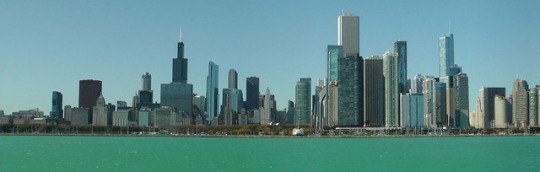
-
What makes something beautiful?(1)I see a beautiful person and become attracted to them.
(2)I see a beautiful architectural structure and praise its form.
(3)I see a beautiful sky and revel in its hues and clouds.
(4)I see a beautiful flower and am entranced by its colors and shape. — River
Whenever I hear or see something or someone that is "beautiful", there are always other aspects of the object or person that come into play. For instance, a person who is "beautiful" might also be very sexual in ways which, taken alone or applied to someone else, would obscure physical beauty. Sexual appeal sometimes is not beautiful, it's on an altogether different wavelength.
A beautiful building needs to also be visually interesting. If it isn't interesting (in it's visual form) it probably won't be beautiful. The trouble with some modern, international style office buildings isn't that their forms, claddings, and settings are not attractive, they are just not very interesting. They are too smooth, too regular, too similar to other buildings of the same style.
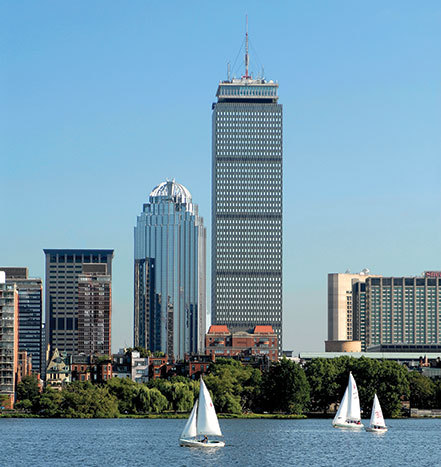
Take these four buildings: Inland Steel in Chicago, Prudential in Boston, and the Seagrams and Lever buildings in New York -- all outstanding examples of their style:


Compare the Seagrams Building and Lever Building (New York). Both are definitely attractive (they were fairly early examples of their style), they are faithful to the urban, international style (maximization of usable space, minimal decoration, regularity of design, and so on. I like both of these.
Take the Prudential building in Boston. Privileged to stand alone out on a previously industrial/railroad site between Boylston and Huntingdon Avenues in the back bay, it had no visual or social competition for two or three decades. It's just a concrete box, and up close it is decidedly not beautiful--it's attractive only at a distance. It is probably even less lovely now, but I used to like the building, because I liked the area.
The Inland Steel Building in Chicago features very shiny stainless vertical elements and green-tinted glass. It's a striking building, day or night. I find it very interesting, but it's effect is corporate-cold, whether seen in January or July.

Is the Eiffel Tower beautiful? Billions have warm feelings toward it because it represents Paris, and it curves upward, rather than rises like a spike. It's structurally complex (ornate?). I haven't seen it first hand.
The thing is, whether it's music or buildings or poetry or people, is "beauty" one aspect of the whole, or is a summation of the whole? There are many pieces of music I love, but "beauty" isn't first in line. Sometimes it is power, or intricacy, or inspiration (as in, inspired instrumentation and melody, say). The Choral finish of Beethoven's 9th is beautiful, but as a summation of many aspects--melody, harmony, massing of voices, instrumentation, rhythm, text, etc.
-
The Future Belongs to Christianity?That is an important issue, but I'm not sure if it is relevant to the point I was trying to make. Do you think so? — T Clark
Yes, I think it's relevant -- that's why I posted it.
You were discussing charts of relative GDP over time. That's important, but it isn't the only operative factor in the way wealth affects cultural trends, including economic trends (see Piketty). The point I was making is that a very small number of people -- from a number of countries, including countries like Mexico--not a top GDP player itself--control a vast amount of wealth, wherever it is coming from.
If wealth were equitably distributed, then GDP would be of paramount importance, but wealth isn't evenly distributed. You know about the 1% in the US, but in the world it is far less than 1%. We could assemble the richest people in the world, put them in a large ballroom, and they would have room to move around--get to the drinks and hors d'oeuvre tables, do some slow dancing, and do whatever the richest people in the world do together -- I don't know what they do, maybe sit around in a circle and jerk off. This group would control more wealth than maybe 70% of the world's population (just a guess, could be more).
Rich people have always pushed their own agendas -- what's the point of being rich if you can't do that? -- and that includes religious agendas. For instance, the Saud family which more or less owns Saudi Arabia, are quite rich and can regretably pay for the promotion of ultraconservative Wahabi Islam. -
The Future Belongs to Christianity?a lot of religious people aren't particularly religious — Heister Eggcart
True enough. Perhaps we differ in what we mean by "religious'. If religion refers to the rituals of the church (kneeling, genuflecting, saying certain creeds, praying certain prayers, singing certain responses, etc.) then sure, a lot of people aren't religious.
However, if you mean by religion that they enact the beliefs of the faith (the various corporal acts of charity, unconditional generosity, etc.) then you find far fewer pseudo-religious people, because people aren't unconditionally generous, usually, unless they really are motivated by good feeling toward others. In fact, you probably don't find a lot of genuine believers, period, because following Jesus or Buddha is hard.
how many religions would even survive without a community component — Heister Eggcart
I'd go so far as to say a religion which doesn't foster community (people together) isn't worth having or saving. -
The Future Belongs to Christianity?No, but I have read some of Luther (little catechism) and read some other books about him, and of course sung some of his lyrics.
Interesting aside... Luther represented his childhood as quite poor. It wasn't. Luther's family was fairly well off. They were in the mining and smelting business. -
A Case Against Human Rights?It would be worthwhile to read over the Wikipedia article on the Universal Declaration of Human Rights. The article includes some objections which have been made--for instance, that some Moslems believe the UDHR is incompatible with Sharia law, and...
The American Anthropological Association criticized the UDHR while it was in its drafting process. The AAA warned that the document would be defining universal rights from a Western paradigm which would be unfair to countries outside of that scope. They further argued that the West's history of colonialism and Evangelicalism made them a problematic moral representative for the rest of the world.
They proposed three notes for consideration with underlying themes of cultural relativism:
"1. The individual realizes his personality through his culture, hence respect for individual differences entails a respect for cultural differences",
"2. Respect for differences between cultures is validated by the scientific fact that no technique of qualitatively evaluating cultures has been discovered", and
"3. Standards and values are relative to the culture from which they derive so that any attempt to formulate postulates that grow out of the beliefs or moral codes of one culture must to that extent detract from the applicability of any Declaration of Human Rights to mankind as a whole. — Wikipedia
As one might expect, the document is the work of a committee, and numerous additions to explicate the list of "Four Freedoms" which the Allies in WWII had agreed to:
Freedom of speech
Freedom of religion
Freedom from fear
Freedom from want
The UDHR is 30 planks long -- it could probably be 10 times 30, and not cover every angle. I would prefer a shorter list, closer to the Four Freedoms, and of course, if it doesn't have legal force, then it is only a document for moral education. -
The Future Belongs to Christianity?Firstly, that you're either Lutheran or Methodist, considering the bitterness of your tenor at present. — Heister Eggcart
I was being bitter at present? (Hrumphs bitterly to himself... O the fickleness of the world!)
but tu, Bitter Crankus? No, I like you. You seem like a good, upstanding gentleman. — Heister Eggcart
I'm far more of a cultural Christian than an ardent believer. Whether I even believe in it is unclear. I hang around a Lutheran church because it is near by (across the street) and it helps me maintain a little community with other people. I would prefer a bit more community, and would like to have more gays and oddball outliers among my circle,. But success in seeking oddballs and outliers in Lutheran churches is contraindicated. -
The Future Belongs to Christianity?You cannot expect Western values to remain afloat when you tear apart the very institutions, ideas, and beliefs that they stand on. You can't have the West without God, it is as simple as that. — Gust
I agree with what you said, and as distressingly stupid as some POMO 'texts' are, in all fairness I don't think POMO, a few French Philosophers and American graduate students are responsible for the Decline of the West.
My personal opinion is that economics has done much more damage to the family, religion, and other important institutions than any philosophical strand could have. Concentration of wealth has resulted in a concentration of power, and in both cases, most individuals lack both wealth and power -- sometimes having too little to keep body and soul together. -
The Future Belongs to Christianity?They're as rotten and sinful as everyone else, so there's definitely an outward, superficial aspect there that you had best not get lured in by. — Heister Eggcart
They also have as much integrity, interest in salvation, and are as attentive to the teaching of Jesus as everyone else.
I have had lots of interaction with conservative and liberal Catholics, mainline Protestants and evangelicals. Sincere and earnest believers are all pretty much alike, as are lukewarm believers, whatever their denominational membership.
I also think that Lutherans and Methodists and all other bland ass, more leftist Protestant denominations are as fake as the evangelicals. — Heister Eggcart
My, such a glittering generality. What, actually, do you know about Lutherans and Methodists?
What is your idea of the Genuine article? -
The Future Belongs to Christianity?Atheists don't need to reproduce! All babies are atheists — VagabondSpectre
True. Rather than the term "atheist" I think "secular" and "secularized" is better. Secularization is an active process brought about by urbanization, technology, communication, prosperity, education, and other factors. Of course, urban, techno-sophisticated, plugged in, prosperous and educated people may be religious, but they are more likely not to be, certainly less likely to be traditionally religious. -
The Future Belongs to Christianity?Unpredictable, indeed. In 1950 the future of Christianity in the United States looked very bright. Everything pointed toward the enduring popularity of Christian faith and institutions. Then, in the 1960s, there was an abrupt mass exodus. The hippies left? I suppose the hippies left, but the millions of Catholics, millions of Methodists, Lutherans, Presbyterians, et al who left were mostly very conventional people--not outliers. They left, and they didn't come back. Nuns and monks left the orders in droves. Seminaries started retrenching, as vocation applicants shrank.
The Christian church in the United States is certainly not dead, and it isn't dying--it is diminished. Fewer adherents, and adherents with more varied theological stances, but adherents none the less.
From the experience of the last 60 years we can not conclude that the church will continue to shrink, or that it will suddenly start expanding again. We will just have to wait and see what happens. -
The Future Belongs to Christianity?Worthy is Atilla and his band of jolly Huns, but you know there weren't any hand grenades in 5th century Hungary, right? How the Germans became associated with the Huns is another story -- they were not associated in any way, shape, manner, or form. Also, Hungary wasn't Christian at the time -- not for a few hundred years.
-
The Future Belongs to Christianity?One of the variables which has changed in the last 10 years is the percentage of wealth a small number of people control. "Eight men own the same wealth as the 3.6 billion people who make up the poorest half of humanity, according to a new report published by Oxfam today to mark the annual meeting of political and business leaders in Davos." If you take the richest 2000 people, there isn't much left.
Yes, these figures are open to various interpretations. "The Oxfam report calculates the wealth of the richest individuals using the Forbes Billionaires list and the wealth of the poorest groups from the Credit Suisse Global Wealth Report." When various caveats are figured in, it isn't 8 people that have more wealth than 50% of the world's population, it's about 60 people. 8, 60, 120, 500, 1000, 2000 -- what difference does it make? It's all very disproportionate.
And, chances are it will stay that way, because that much wealth controlled by a few people, the wealth can hardly avoid increasing at a generous rate. Poor farmers just can't generate new wealth for themselves quickly, unless they unearth a gold mine. And if they do unearth a gold mine, chances are that it will be taken away from them. -
The Future Belongs to Christianity?There are a couple of factors which seem to have been left out of the projections.
One factor is the tenor of the two leading religions. In their local manifestation, either/both of the religions can be fiercely militant or accommodating, and have been both. The distribution of militant and accommodating believers coupled with demographics will matter a great deal. Some Christians and some Moslems are hot, cold, and lukewarm.
Global warming looms over all predictions. No area of earth will be untouched, but some will be touched more than others. How severe the effects of global warming are (and not just warming per se, but other consequences like drought, insect vectors and disease distributions, flooding, unpredictable rains and dry periods, food production, etc.) is going to result in disruption of population predictions and familiar climate conditions.
Now, people in North Africa, the Eastern Mediterranean, Western Asia, and Southern Asia are (sadly) unlikely to become Christians, Buddhists, or Atheists just because the weather is bad, but they may not be as successful in reproducing as they have been. The water crunch in the Middle East has not really hit hard yet. Their aquifers have been overdrawn (just like aquifers in the US great plains have been) and will be recharged only in the distant future. As oil production diminishes (owing to diminishing supply) the amount of income in the Middle East could be insufficient to support massive desalination projects and food imports.
So, projections of population growth may not be fulfilled.
A third factor is change in religious tenor. Christianity has gone through periods of decay and rejuvenation. In the colonial period, religiosity was not very intense. This changed in the early part of the 19th century in the unpredicted "great reawakening" episodes, the effects of which were long-enduring. I don't anticipate a great reawakening in Europe or North America, but it isn't at all inconceivable.
A new religion might appear; that would not necessarily be a good thing. There are possibilities that are quite unsavory. -
Is patriotism a virtue or a vice?Songs, like Patriot Game and With God on His Side influenced me quite a bit. Music can be more persuasive if the lyrics are clear (and sung clearly) and the melody compelling.
Here's another that I like very much, and is stirring: The Ballad of Jean Deprez by Robert Service, sung by Country Joe McDonald. Some of Service's songs are clearly antiwar, and dismissive of the patriotism that feeds war. This song celebrates the courage of the French soldier -- the zuave. The Prussians are not so esteemed.
-
Is patriotism a virtue or a vice?God might be on our side, but certainly not yours. Dylan wrote the song and recorded it, but, you know, his performance of his own song (in 1988, at least) was so gawd awful I couldn't stand it.
-
Is patriotism a virtue or a vice?Billy Bragg's Internationale, the theme song of the revolution. Better than the old red square version.
-
Is patriotism a virtue or a vice?Come all ye young rebels, and list while I sing,
For the love of one's country is a terrible thing.
It banishes fear with the speed of a flame,
And it makes us all part of the patriot game.
My name is O'Hanlon, and I've just turned sixteen.
My home is in Monaghan, and where I was weaned
I learned all my life cruel England's to blame,
So now I am part of the patriot game.
It's nearly two years since I wandered away
With the local battalion of the bold IRA,
For I read of our heroes, and wanted the same
To play out my part in ththe patriot game.
This Ireland of ours has too long been half free.
Six counties lie under John Bull's tyranny.
But most of our leaders are greatly to blame
For shirking his part in the patriot game.
They told me how Connolly was shot in his chair,
The wounds from his battle all bleeding and bare.
His fine body twisted, all battered and lame
They soon made me part of the patriot game.
And now I am dying, my body all holes
I think of those traitors who bargained ones soul
I'm sorry my rifle had not done the same
To traitors who sold out the patriot game. -
Is patriotism a virtue or a vice?I served two years in the US domestic peace corps program in 1968-70. Most of the projects were interesting, challenging, and all of them were paid at a nominal level (low enough to be a real earnings sacrifice). Most of the people in the program were young, college educated and mostly very liberal. It was not an escape from the draft.
Most of the volunteers worked very hard and took pride in the fact that they were serving the needs of their country. (We also understood we were the primary beneficiaries of the program.) We were uniformly against the war in Vietnam, but we were also patriotic.
I am also a qualified nationalist, in that I believe the US system of government, as well as its laws, values, and culture, to be superior to other forms of government and other laws, values, and cultures throughout the world and in history. I also believe the US should be independent and sovereign over its own territory. — Thorongil
We were also qualified nationalists. Here's the confusing part: one can be very critical of one's government's policies, methods, and objectives; one can loathe the presidential candidates (back then our preferred much loathed POTUS candidate was redneck George Wallace, a segregationist) and still feel that one's country is superior. We did a lot of bitching and carping about the way things were run, but we also recognized that we were in a good place to both do interesting work the nation needed to have done, and have our bitching and carping tolerated. -
Is patriotism a virtue or a vice?I thought this thread is about patriotism, like when you identify with a country and choose to serve it. — Noblosh
It is about patriotism.
he political yet again? — Noblosh
"Patriotism" can not be a-political or non-political because it's a virtue or vice depending on the definition. Many people think Snowden was a traitor -- betraying his country by revealing government secrets, like various spies have done in the past. Daniel Ellsberg (of the Pentagon Papers having to do with the Vietnam war) might be considered a patriot or traitor too. Various others.
It's simple, liberalism is the opposite to conservatism and thus rejects all that is conservatism specific. — Noblosh
Come now, you surely don't expect to get away with that, do you?
Why is nationalism (?) specific to conservatism? Because it aims to preserve and perpetuate existing values, seems obvious to me. — Noblosh
This holds water in that "nationalism" is based on "my country right or wrong", as Cavacava's quote from Harris points up. But liberals and leftists also find values in national life that they wish to perpetuate. For instance, liberal-leftists tend to prefer that civil liberty principles be interpreted as generously as possible, rather than as restrictively as possible.
I agree, though, that the pattern of what conservatives want to preserve is usually distinguishable from what left/liberals want to preserve. (Except when it really isn't.) -
Is patriotism a virtue or a vice?Is Edward Snowden a Patriot? — Cavacava
Yes, Snowden is a patriot (in my value system) because he revealed a program of data collection which, because of its immense scope and immense means, prepared the groundwork for American government agencies (NSA/CIA ET AL) to secretly track the activities of American citizens. My assumption is that they were not YET tracking ordinary citizen interactions.
The government agencies were (are) acting under the cover of defense against terrorism. The ostensible objective was to find and track terrorist plots. They should be doing that very thing, but the appropriate means is labor intensive police investigation, not wholesale surveillance. For purposes of discovering terrorist plots, the ratio of productive anti-terrorist leads to meaningless chatter is far, far too high, in favor of the meaningless.
Presumably, he didn't reveal unknown secrets to other nations (like China and Russia)--which would fall into a decidedly unpatriotic category. -
Is patriotism a virtue or a vice?I did conflate the two. "My country, right or wrong", and "Love it or leave it" are two slogans that have characterized the American nationalist. These slogans (and others) also seem to be the province of the pro-military viewpoint and at least many conservatives.
Thomas Jefferson's statement, "I tremble for my country when I reflect that God is just" is more likely to be cited by left-liberals then ex-melitary members of the VFW or American Legion right-conservatives.
From my highest, most left-cosmopolitan view, nationalist and patriotic games are equally suspect. From this viewpoint I admire the European Community's de-emphasis of national perspectives in favor of a regional unity. From the perspective of my midwestern American value-set, there is something unwholesome about diluting national characteristics and the patriotism that not-very-long-ago went with it.
From that highest, most left-cosmopolitan view, most people in a given nation have very little stake in nationalist interests. Trade deals are generally not made in the name or interest of the working class; they are for the benefit of the ruling class which pretty much owns the country of (fill in blank here).
On the other hand...
For many left liberals, patriotism is inverted and becomes the occasion for self-flagellation. The past sins of national interest (the European colonization of much of the world, of which the proto-American state was one of many results) involved many trespasses upon the occupants of real estate which had been declared AVAILABLE.
The facts of how peoples and nations get ahead tend to be ignored by both patriots and self-flagellators alike. As often as not, our advancement is at your expense. The winners may be thieves, but that is generally the way expansion works. -
Everything and nothingI do think that some discussions involving "being" and "nothing" make for good "literature." — visit0r
Not if the author has NOTHING on the ball. -
Everything and nothingI have two questions:
1. Is nothing part of everything?
2. Nothing is something? — wax1232
Nothing is no thing. Null. Zero. Zilch. Empty. Nothing from nothing leaves nothing. Nothing plus nothing is nothing.
-
The Pornography Thread...all cocaine users are addicted on the first hit — Noble Dust
This is a common fear/misconception--the one-hit menace.
The fact that argues against one-hit addiction is that in fact, addiction is a process which changes brain chemistry and it takes time. Recreational drugs either block neurotransmitters (e.g., heroin), or they resemble the neurotransmitters too closely (meth). Either way, neurotransmitter output and uptake doesn't change so fast that one can get addicted from one use.
Another fact that argues against one-hit addiction is that most people do not get addicted to psychoactive substances that they use fairly often. Take alcohol. Many people drink regularly but don't exhibit any sign of addiction (like reduced sensitivity to alcohol).
However, some people are more prone to addiction (might be heritable) and exhibit reduced sensitivity and drug seeking behavior fairly quickly (meaning over months time).
With respect to pornography (or any other pleasure producing behavior) most people won't develop an "addiction" to the pleasurable behavior, but some people will. People have developed a dependence on aspirin. Aspirin isn't addictive, but compulsive personalities feel they need it, and tend to take it even when advised not to (like, before surgery, with bad consequences). Laxatives are abused by some compulsive personalities, too. It isn't the aspirin and laxatives that trigger the abuse -- its the compulsivity in the personality of the abuser. -
What are we trying to accomplish, really? Inauthentic decisions, and the likeSchop, I hope you noticed the pun in my post. Auntie Mame / Anti Mame... and that bucket of dirty gray slush. You should get rid of that stuff.
-
What are we trying to accomplish, really? Inauthentic decisions, and the like
Auntie Mame (in the musical by that name) says "Life is a banquet and most poor suckers are starving to death."
You, schop, are kind of the "anti-mame". "Life is a starvation diet and why are those poor suckers waiting for a banquet?" But they also served who tended the bucket of dirty gray slush to dump on the party, and you do your job well.
You don't have to believe everything Sartre said. I've noticed that John Paul had the highly inauthentic behavior of always looking his same mousey self--smoking, nicotine-stained fingers, ugly hair, rumpled clothing, palpable stale clothing and body odor, writing consistently depressing books, and hanging around with that woman, Simone.
I'll grant you that our lives contain inauthentic elements, though I would raise the bar for consideration way above getting one's haircut at the same place all the time and having to do laundry regularly. (And, in any case, you do freely choose to get your hair cut and do your laundry, right?) Let's worry about major inauthenticity.
The labor of everyday life (the 9-5 job) is loaded with inauthenticity with far more consequence than getting your hair cut short once or twice a month. Politics is infested with inauthenticities, as is religious endeavor, artistic enterprises, and lots of other stuff. We might be capable of authentically and freely choosing each and every options in our lives, but a necessary part of being human is limiting the occasions when deliberation is required. Habits are part of successful and authentic life. Habits enable us to use our limited resources to make important decisions when they arise. -
The Pornography ThreadAre you aware that watching an excessive number of TED talks will cause your dick to fall off?
Look TED talks are not the equivalent of a peer-reviewed journal, or even just serious science journalism. The presenters may be experts in their field, but they are presenting a combination of "speech to inform" and "speech to persuade". So all of these fairly brief, quite punchy, slick, fast-talking lecturers are all over the Internet, and the lion's share of what they have to say is being taken at face value.
One of my favorite Ted talks, A STROKE OF INSIGHT by Jill Bolte Taylor is really informative and inspiring. BUT, a paragraph of fine print is missing from the talk. After her massive stroke, Ms. Bolte Taylor couldn't tell shit from shinola. It took her something like 8 to 10 years of intense therapy to recover her mental skills. She did not remember the stroke that she is talking about. Rather, the experience was reconstructed. All this is explained in her book.
The point isn't to knock Bolte-Taylor; the point is to suggest caution about swallowing everything in a TED talk, hook, line, and sinker.
Maybe there is less there than one thinks there is. -
The Pornography ThreadPorn has long-standing effects on the brain, which have been neuro-biologically studied. — Agustino
It is the case that Porn has effects on the brain, but -- quite seriously -- so does everything else. Learning French, driving a car in heavy traffic, walking in the forest, swimming in a lake, arguing with your boss, feeding a baby, writing a book, singing, studying music -- it all has an effect -- and quite possibly an enduring effect. "And all these effects have been neuro-biologically studied"
Not only that, but everything you have ever done so far had a significant effect on the brain, and THERE IS NOTHING YOU CAN DO ABOUT IT. The brain contains a record of our lives so far.
So, porn having an effect on the brain is saying no more than riding a bike for 2 hours has an effect on the brain,. -
The Pornography ThreadI heard a good example of degrading commentary on a recent radio news program. The announcer/reporter was discussing budget negotiations between the legislators and the governor and, because the process was slow, suggested that the state legislators were behaving "like children playing in the sandbox".
This comment was made on a different frequency than references to the legs of political leaders, but has the same effect of 'taking them down a few pegs'. -
Green Mcdoodle's take on global warmingI think this points again to the need for a centralized and large scale approach. — Mongrel
I agree. The transition away from petroleum and coal is a very large scale process involving individual actions--yes, but millions and millions of individual actions--and very large macro-economic actions. Amory Lovins, co-founder and chief scientist, Rocky Mountain Institute, notes that industrial change can occur very rapidly because investors will shift from old industries to new industries before the rank-and-file consumer does.
The impression one would get from some media is that nothing is happening. Not true. In the state of Minnesota, for instance (and we are not an outlier) renewable energy now produces from 20% - 25% of electricity used in the state--mostly wind, some solar. That's up from a little over zero maybe 15 years ago
Granted, we are no further along than any other state in diminishing private auto use. Most heat is produced by fossil fuels (gas and coal). Agriculture practices in corn, soybeans, and canned crops (corn, peas, tomatoes, squash, etc.) could be substantially improved.
Small is beautiful (small car rather than a land barge) and more efficient is even better -- mass transit over the small, individually owned, individually driven car, no matter how small better still. car sharing and more car-on-demand services could help end the gross over-production of vehicles. Far fewer cars, more intensively and efficiently used... -
The Pornography ThreadI don't care about the exploited workers at McDonald's.... so, why would I care about exploitation in the porn industry?" — anonymous66
Honestly, anonymous66, I've tried very, very hard to get off watching industry films of exploited McDonald's workers, and try as I might, I didn't get even a tingle in my dick. I didn't get a tingle in my conscience either, because it isn't the case that McDonald's employees are necessarily exploited. They are doing relatively skinless work for (usually) less than an 8 hour shift less than 5 days a week and their wages are often quite adequate for that kind of work.
A parent may not be able to support themselves and a child on McDonald's wage and hourly arrangement, but that is becoming increasingly true of many low-skilled jobs. Under capitalism, one should keep one's expectations low. If you want to pursue great expectations, then you should become a socialist like me.
Wouldn't the world be a better place without them? [edit: the seven deadly sins] — anonymous66
It would certainly be a better place without some of them, at least. Any chance of getting rid of them? -
Could a word be a skill?(a) Do we think these losses are better described as losses of ability or losses of knowledge. — Srap Tasmaner
Probably more as a loss of ability. Injury or stroke may deprive someone of speech. They can't talk to old friends, but they can respond non-verbally, nodding confirmation that they understand (as long as their language-reception circuits are functioning). Interestingly, people who are aphasic (can't speak) can usually swear fluently. Cursing happens to be handled outside of the main speech area. Intelligence (the ability to solve problems, way finding, carry out tasks, etc.) is not usually impaired by aphasia.
I know that the issue has been studied--I don't know the upshot--how do you assess someone's state of knowledge if they can't speak? If received language is disrupted, then it would be even more difficult to distinguish ability from knowledge.
(b) Do we have other reasons for thinking, whatever we think of the descriptions, that what we're talking about here must be knowledge, or must be an ability. (I'm thinking of how it might fit with other parts of a model, other theories, that sort of thing.) — Srap Tasmaner
It's not either/or, it's 'and'. People who have received poor nurturing as children and little formal education generally will not have much verbal knowledge. They may have small vocabularies (relative to other people) and may have very poor ability at formulating expression. They just sound stupid. Here, it's clearly a lack of knowledge and underdeveloped ability.
People who have received good nurturing as children and poor education may demonstrate very skilled ability, and not too much knowledge. They won't sound stupid, just uninformed. Well nurtured and at least adequately educated children have the whole package: ability and knowledge, wrapped up together.
If you were to map out the various human abilities and fields of knowledge just with respect to communication (like, words) you would end up with a complex chart -- before you started bringing in other matters (like personality, memory, intelligence, etc.) Spatial relationships, mathematic ability, linear thinking, blah blah blah -- would require still bigger, even more complicated maps. -
Could a word be a skill?BTW, I have no idea where in my head written speech is generated. I am sitting here, fingers moving, but I am not consciously generating this content. Somewhere upstairs it's getting put together and then dropped into the chute and out it comes.
"I" don't very often consciously sweat over a text. Usually I just open the spigot and out it comes. Were I to write something in French, it would be all sweat, all conscious deliberation every inch of the way. -
Could a word be a skill?But what about understanding? — Srap Tasmaner
The ability to hear or read speech and interpret it accurately -- and vividly -- is huge. It takes time and practice to achieve it. High schools students, or college students, even English majors god forbid like me 50 years ago, may not be skilled in reading vividly -- that is, animating the emotive and symbolic content of written speech. (It took me a long time to develop)
We have distinct, and separate, verbal (word) skills. Among those are...
hearing words and understanding the sound and the meaning
reading words and understanding the shape and the meaning
the facility to generate written language
the facility to generate spoken language
the facility to think verbally
Some of these skills are resident in specific brain locations. Damage that specific part of the brain and
-- might not be able to understand language
-- might not be able to generate language
-- might not be able to think verbally
Even without damage, some of the word skills are fixed to one communication channel. There are words that I can understand (written and verbal) that I never use myself. There are words that I think with that I can't readily transfer into spoken language. There are also styles of composition that I can't generate (like long passages of rhymed iambic pentameter.).
Some people don't understand written, or don't understand spoken language as well as they might like. Fortunately, these skills can be improved, however difficult it might be.
BC

Start FollowingSend a Message
- Other sites we like
- Social media
- Terms of Service
- Sign In
- Created with PlushForums
- © 2026 The Philosophy Forum