
Comments
-
Ukraine CrisisRussia’s Lavrov warns of ‘real’ danger of World War III
Russian Foreign Minister Sergey Lavrov has said that peace talks with Ukraine would continue, while warning there was a “real” danger of a World War III.
“The danger is serious, it is real, you can’t underestimate it,” Lavrov told the Interfax news agency.
He also criticised Kyiv’s approach to the talks, adding: “Goodwill has its limits. But if it isn’t reciprocal, that doesn’t help the negotiation process.”
https://www.aljazeera.com/news/2022/4/25/russia-fm-lavrov-warns-of-real-danger-world-war-iii-liveblog -
Atheism
Surely, not everything natural is good. Earthquakes are natural, but suck for people. Hemlock too if used in certain ways, so it's not as if natural is somehow sacred or benign.
There are things called "supernatural", stuff like ghosts, auras and the like. I think these things are based on faulty judgement of perceptions and evidence for these things is shaky at best.
Even if suddenly there is good evidence for these phenomena, why call them supernatural? I mean, we can't find 95% of the universe, but we don't call that "supernatural". -
AtheismI hear this. The only issue, which I don't think is entirely trivial, is that we don't know what the limits of what "the natural" are. By this I do not mean science and scientific enquiry, but nature in general. We are creatures of nature, so our thoughts, feelings, emotions and reasons are also natural.
But this covers an immense amount of territory. So why postulate something beyond "the natural", if we don't know just how big it is?
It would be a different story if we somehow knew that the natural only covers, say, non-conscious things. Then we would be forced to say that everything mental is supernatural.
But then we are merely stipulating definitions and not discussing the content of these terms. -
Logical Necessity and Physical Causation
More on the contrast in epistemology, but with these sources you've given me (and Wayfarer too), I have some things to look into. -
Logical Necessity and Physical Causation
Perice was an extreme genius. And would agree with him (and you) about universals. But as I said, I'm very much into Hume these days, reading a good deal.
And it seems to me that, despite the many flaws in Hume's arguments, one can certainly see why he woke Kant from his slumbers. That's not something that can be said about many people.
It's a very complex topic, and while we can say that, as Schopenhauer pointed out, we have some idea of causation from the inside, attributing to the outside world, is still as problematic as Hume pointed it out to be.
I hope Peirce has stronger arguments than what I've seen, but the literature appears to be scant.
Absolutely, nominalism makes no sense. -
Logical Necessity and Physical Causation
Yes, I skimmed that one, I suppose I'm more interested in the causation argument, and there is a paper on that, which is OK, but surely there is more to be said. Nevertheless I'll read this carefully. I'll continue my search.
Many thanks.
Check out http://www.commens.org/ — Wayfarer
Very cool, will surely check it out, looks quite interesting. Thanks! -
Logical Necessity and Physical Causation
Hey man, sorry for this brief interruption, but you're exactly the person I want to ask.
I'm trying to find literature on Peirce's reaction to some of Hume's ideas. I know there is a manuscript in which Peirce argues against Hume's argument against miracles, but surely there must be more topics discussed, such as causation, or Hume's general phil of mind.
Currently, I only have Peirce's vol.5 and 6 of his CP on hard copy.
Any idea of where to look for more info? Google isn't being particularly helpful here, or I'm searching badly. -
Currently ReadingHume's Skeptical Crisis by Robert Fogelin
The Village of Eight Graves by Seishi Yokomizo -
Logical Necessity and Physical CausationIncidentally which book deals with this topic in a comprehensive manner? I have read one by Henry Allison, but It left me wanting more. The article linked here by Wayfarer is also good, though I'd prefer a book on Kant's response to Hume.
Anyone have a suggestion here? -
Psychology Evolved From Philosophy ApparentlyIt's true. There are many figures involved, including the psychoanalysts, which may be considered "pre-scientific".
But, one has to speak of William James here, he made important contributions that stand the test of time very well. -
Is self creation possible?Well. If we accept cosmology's standard answer, i.e. the Big Bang, then, perhaps, something like this can happen, something out of nothing. It makes no sense of course, but, the universe has no obligation to make any sense to us, which is a bit of a shame, it could be more considerate.
If out cosmology turns out to be wrong, say, the Big Bang is a cyclical process that goes back forever. If this is true, then, there is no creation. That also makes no sense. So, regardless of what is true in cosmology, it doesn't make much sense. -
Ukraine Crisis
Well, yes. Ukraine's destruction is pretty much a given, how destroyed is an open question and depends on the relevant actors, mostly Russia.
It's excellent PR for most Politicians in the "West", but, the fight is broader. Ukraine could not defend itself without Western support, they'd be done by now.
The sanctions are very, very harsh. Some of them make sense, particularly to the oligarchs and Putin. Not to the general population. My fear here, and it is still stuck in my head, that they'll put Russia in a spot in which it will go crazy. And they may.
Russia really messed up going into this one, but, the outcome can be devastating. -
Ukraine Crisis
Obviously not Baden, but, I think chances could be better. It could be worse, but, not by much.
This is going on way too long. And these sanctions could destroy Russia and the government, in a way that, though may be "satisfactory" for people who dislike Putin, is not wise. They'll go down in flames before giving up power. -
Ukraine Crisis
Sorry, I was distracted. I mean, perhaps. I think some explanations I've seem to verge on jingoism. But this whole "bad faith" stuff, it's not worth more than one or two replies.
If they're going to twist your words or say something very silly, I'd just go talk with someone who has a point which I think is good, may be a bit misleading, etc.
But to keep this "Anti-America", "Pro-Putin", "Pro-Democracy", and all these labels, is kind of meaningless. For me. -
Ukraine CrisisI don't see the point of arguing after a certain amount of posts. It's roughly clear what each person thinks. But we do "reduce" each other into categories, probably unavoidably.
-
Logical Necessity and Physical Causation
I've only read half of Leibniz's New Essays before I figured I should read Locke before I finished this, and haven't got back to it.
With what I can recall, I don't think Leibniz speaks of noumena. He would probably be against such concepts, given his intellectual optimism.
I think Kant was arguing that Leibniz' monads were the kind of thing of which we could not have knowledge of, nor know how they could be possible.
So I'm thinking Kant was using monads as an example against the idea of "positive noumena". -
Logical Necessity and Physical CausationNo human can even THINK a particular noumenal object, much less perceive one, and if neither of those are possible, they do not even enter the cognitive system. — Mww
Well, it's arguable that Leibnizian Monads could be categorized as such. But we don't know how they would be possible.
Perhaps Cartesian souls too.
Just lookin' for an argument with you. Not much. :cool: -
Israel killing civilians in Gaza and the West Bank
You mean human shields?
According to the article, Israeli intelligence do not believe this will escalate to war.
I hope they are right.
But in a few days, such comments can age like milk. -
Israel killing civilians in Gaza and the West Bankhttps://www.haaretz.com/israel-news/rocket-sirens-sound-over-gaza-border-1.10749254
Israel Intercepts Gaza Rocket After Sirens Sound on Border
2022, huh. -
Logical Necessity and Physical CausationYou could say that it was Kant who pointed out that the empiricist's ideas of the 'blank slate' were fallacious. — Wayfarer
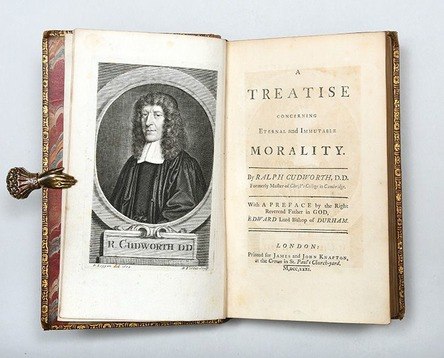
"Here we have a wide ocean before us, but we must set our sails. Were sense knowledge and understanding [against Hobbes] ,then he that sees light and colours, and feels heat and cold, would understand light and colours, heat and cold, and the like of sensible things... Whereas the mind of man remaineth altogether unsatisfied, concerning the nature of these corporeal things, even after the strongest sensations of them, and is but thereby awakened to a further... inquiry and search about them, what this light and colours, this heat and cold...should be; and whether they be indeed qualities in the objects without us or only phantasms and sensations in ourselves."
- Ralph Cudworth
EDIT:
"The essences of light and colours’, saith Scalinger, ‘are as dark to the understanding as they themselves are to sight’. Nay, undoubtedly so long as we consider these things no otherwise than sense represents them, that is as really existing in the objects without us, they are and must needs be eternally unintelligible. Now when all men naturally enquire what these things are, what is light, and what are colours, the meaning hereof is nothing else but this, that men would fain know or comprehend them by something of their own which is native and domestic, not foreign to them, some active exertion or anticipating of their own minds…"
- Cudworth
I shouldn't keep out Henry More, either:
"That the exact Idea of a Circle or a Triangle is rather hinted to us from those describ'd in Matter then taught us by them, is still true notwithstanding that Objection, that they seem exist to our outward Senses carelessly perusing them, though they be not so. For we plainly afterward correct our selves, not onely by occasion of the figure, which we may ever discern imperfect, but by our Innate knowledge, which tells us that the outward Senses cannot see an exact Triangle, because that an Indivisible point, in which the Angles are to be terminated, is to the outward Sense utterly invisible."
- Henry More
"But now for other Objections, That a Blind man would be able to discourse of Colours, if there were any Innate ideas in his Soul, I say, it does not at all follow; because these Ideas that I contend to be in the Soul, are not Sensible, but Intellectual, such as are those many Logical, Metaphysical, Mathematical, and some Moral Notions. All which we employ as our own Modes of considering sensible Objects, but are not the sensible Objects themselves, of which we have no Idea, but onely a capacity, by reason of the Organs of our Body, to be affected by them. The reason therefore of a blind man's inability of discoursing of Colours, is only that he has no Substratum or Phantasm of the Subject of the discourse, upon which he would use these innate Modes or frame of Notions that are naturally in his Mind, and which he can make use of in the speculation of sundry other sensible Objects.”
- Henry More
EDIT EDIT: No more edits, promise! @Mww, this might pique your interest. These are the people referred to by the great philosophy historian Arthur Lovejoy, as having articulated Kant's philosophy (some important parts of it at least) by several decades, yet these are barely known at all. I learned about it through Chomsky.
In any case Lovejoy, for some unknown reason, was very Anti-German, so, his opinion on German philosophers are to be taken with a grain of salt. Still, he makes a valid point. As I said, maybe this is the type of stuff you find interesting. I don't know. -
Logical Necessity and Physical CausationThere's a world of difference between habituated responses, which any creatures exhibit, and reasoned inference, which are the sole prerogative of h. sapiens. — Wayfarer
There sure is, you're correct.
Just pointing out that Hume was very much an innatist, contrary to popular belief. But his innate mechanisms are very weak, compared to Kant, or even Descartes. -
Logical Necessity and Physical Causation
Sure.
Everything ultimately emerges from our minds. The hard thing is to determine what is innate at birth and how to best phrase and understand these factors. -
Logical Necessity and Physical Causation
For Kant, relativity.
Kant spoke of "space" and "time" as forms of sensible intuition, because he thoughts these were absolute.
Now we know they're not. We should speak of "spacetime". -
Logical Necessity and Physical Causation
Hmmm.
It looks to me as if it were a sub component of perception. So yes.
Of course, Hume and Kant were heavily influenced by Newton, but now we may have to take into account the new physics, if it be relevant to the discussion, which is not always clear. -
Logical Necessity and Physical CausationWith Kant, you frequently get a good deal of technical jargon, which, to my mind, is not always needed - it can tend to obscure his point, or at least makes it much more likely that someone will not read him properly.
So let's grant what Kant argued, that causality is something through which we interpret the world. Fine. Makes good sense. Hume said something similar but called it an "animal instinct", this is the reason why we believe in causality. Nevertheless, it is true that the mechanisms by which Kant and Hume spoke of causality were quite different.
Ok. The issue is, as I see it, that the problem is not solved. How are we guaranteed that future experience will necessarily be like past experience? That we attribute cause to the world because it is a part of the way we view the world, does not solve the problem. -
Ukraine Crisis
I can't even keep up. It's way too much.
I mean, IF this war is over, we should breathe a BIG sigh of relief. Cause' this can turn from very ugly to apocalyptical at any moment. It's hard to comprehend - or be scared through all of it either - one shuts down otherwise.
But yes, extremely dangerous. Stupid (and criminal) from Russia, the West ain't helping much either. -
Logical Necessity and Physical Causation
Ah.
I argue that Kant does not solve the problem of causation, nor that of object constancy. I think it makes sense to say that causation is something we bring to the world, but we cannot be sure future experience will be the same as past experience. Nor do we know if causation applies to the object themselves, absent us.
You think he does? -
Logical Necessity and Physical Causation
Hey man. Nice to be able to talk about something fascinating.
I haven't read the OP in detail, will do so later, but I'd like to see what you make of my argument.
I've been reading the actual Hume and some very, very good commentary on him. He's intoxicated me, can't believe it took me so long to read. Obviously he has errors that cannot be fixed given the theory he works with.
But I've been thinking a bit about Kant's response to Hume. I mean, I think Kant takes the logical step in creating all these categories. But I don't think they solve the issue of causation, nor do I think they solve the issue of the perceived consistency of external object.
In other words, Kant created a space in which to do metaphysics, I agree. But I do think that many of the problems Hume's point out are really, really hard. Maybe insoluble. -
Chomsky's Mysteries of Nature: How Deeply Hidden? Reading Group@Mods
If you think this goes against the rules, in terms of reviving an old thread, please delete. If not, I'd like to share something here.
Here's a very good discussion w/ Chomsky on philosophy, were he explain very clearly all the confusions which arose here, in my opinion:
https://www.youtube.com/watch?v=xNXqAaF_cxU -
Localized Interaction and Metaphysics
I mean if people actually read Locke and Hume, instead of reading about them, they'd find a lot of material on these things, of the highest quality.
But, putting that aside, the important thing here is the destination, not so much the journey, and I agree, these are very big problems. I think that perhaps physics does show promise of being about the world and not limited to an idea only. The other special sciences are different in crucial respects.
But I don't think there's a way to get out of our "ideas", any more than it's possible to get out of bodies to look at whatever exists absent us. -
Localized Interaction and Metaphysics
Well we would be us judging ourselves, so it would make sense to be impressed with what we know. Which, I admit, is quite a bit. For an "evolved" ape, it's very impressive.
But there's no reason to believe that we have all the faculties needed to know everything. That would be almost religious, God-ish thinking, imo.
We are natural beings, with limitations, as all are creatures in nature. It has to be the case.
If we had no limits, we wouldn't have any scope. Thus we wouldn't be able to do any inquiries.
Manuel
Start FollowingSend a Message
- Other sites we like
- Social media
- Terms of Service
- Sign In
- Created with PlushForums
- © 2026 The Philosophy Forum