
-
Philosophy is for questioning religionStudies of extant hunter gatherers and forensic anthropology converge on incredibly high homicide rates for humans in a "state of nature," at around 2,000 per 100,000. This is 44.5 times higher than the highest nations today, higher than the total death tolls of many major wars. However, a homicide rate of 1.8-2% isn't particularly at odds with what we see for the species from which we descended, so perhaps it isn't that surprising. Slavery, rape, and cannibalism are ubiquitous in human history and only slowly became anathema.https://www.nature.com/articles/nature19758 — Count Timothy von Icarus
One of the theories for why we have twice as many female ancestors as male is that ancient warfare was the norm. It seems like the remains of ancient humans they find are always covered in brutal injuries. Life was tough.
Biology also suggests this progress may be taking place. Modern humans retain far more juvenile features into adulthood than their pre-agricultural ancestors. Human beings appear to have undergone a process akin to domestication over time. — Count Timothy von Icarus
I thought all the members of the homo genus display neoteny. Did it progress even more in our species? -
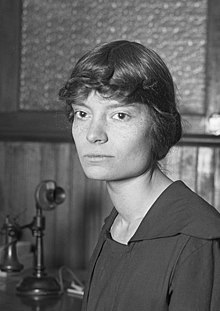
Philosophy is for questioning religionI greatly admire Dorothy Day, and find her writings of great value, particularly: The Long Loneliness (autobiography), Loaves and Fishes (about the Catholic Worker Movement), The Duty of Delight: The Diaries of Dorothy Day, and All the Way to Heaven is Heaven: selected letters of Dorothy Day. She was a pretty tough woman. She will probably be sainted someday--over her dead body! "Don't make me a saint -- I don't want to be dismissed that easily."
She modeled what following Christ means in the 20th (21st) century. — BC
She was amazing! -
Philosophy is for questioning religionNote that the word is questioning, not combating. You can question X without being anti-X, just as, for example, Adorno and Horkheimer questioned enlightenment without being anti-enlightenment.
That’s not to say it’s necessarily bad or unphilosophical to be anti-X. Nietzsche and Marx went further than polite questioning, and I regard their thought as extremely philosophically interesting. So there’s a spectrum of intensity and motivatedness in criticism, but it’s just criticism as such that I was emphasizing in the OP. — Jamal
Speaking of Nietzsche, I think he'd say your approach shows that you're from a Christian culture where a premium is placed on revealing truths. Christianity was originally about questioning Pharisaic Judaism, especially the emphasis it placed on ritual over the well-being of real people. Protestantism was a re-enactment of Christianity's beginnings, where the prevailing wisdom was called into question. -
Philosophy is for questioning religionI didn't say anything about people loving their traditions, troll. — praxis
Goodness. Somehow I managed to get your goat. :razz: -
Philosophy is for questioning religion
So your point was that religions make people dependent on religious traditions.
A religion is a set of traditions.
Religions endure because people love their traditions. Not sure which part of the earth you're from that you didn't know this. :grin: -
Philosophy is for questioning religionHow does that demonstrate independent thought or action from within that tradition? — praxis
I don't think it does. It shows that this statement:
religion is hellbent on making human beings as dependent as possible, — praxis
is not always true. Dorothy Day represented the Catholic Church. She worked to liberate minorities. Minorities are human beings. So she wasn't trying to make human beings as dependent as possible. She was trying to help them become independent.
Planet Earth. Why is that significant? — praxis
I was just curious. If it's Top Secret, that's fine. I don't have that clearance. -
Philosophy is for questioning religionGenerally speaking, a good exemplar would think and/or act in a way that demonstrates independence. If you're suggesting that fighting for women's suffrage somehow defied the church, then you appear to be wrong. — praxis
She's the representative of religion here. She worked to help emancipate minorities.
Could you answer my question though? When did you first hear of Dorothy Day? Just curious. -
Philosophy is for questioning religionThat doesn't make sense. — praxis
That's weird. It does to me. -
Philosophy is for questioning religionHardly seems at odds with the church in any way. Can you explain? — praxis
She wasn't at odds with the Church, so she serves as an example of how
religion is hellbent on making human beings as dependent as possible, necessarily limiting their moral development and any other sort of development that would result in more independent thought and action — praxis
isn't always true. -
Philosophy is for questioning religionAnd religion is hellbent on making human beings as dependent as possible, necessarily limiting their moral development and any other sort of development that would result in more independent thought and action. — praxis
That's not always true. -
Transgenderism and identityDo you think women would be alarmed to see the person in Michaels picture, walk into a female toilet in the hot summertime with his top off, because he has a vagina? — universeness
I couldn't care less. -
Transgenderism and identityOr 3) let people use the toilets they're most comfortable using. — Michael
With your magic wand. Awesome. -
Transgenderism and identityWhy are chromosomes relevant? How would we even know what someone's chromosomes are? We don't DNA test people before letting them use the toilet. — Michael
You have two choices:
1. You can accept that this is a question that will have to be answered at local levels.
2. You can work to establish that a trans person's rights are being violated if they can't use the toilet of their choice. Now you have a crime that's being committed and you can protest it, and work to get it changed.
I don't think much is accomplished by just asking why chromosomes are relevant. Do you?
And what about people who are neither XX nor XY? Or someone with XY gonadal dysgenesis, who although has XY chromosomes, has a defective SRY gene on their Y chromosome and so who's outward appearance is that of the typical XX person? — Michael
Ahhhh! You got me!!!
If you're a trans person who goes to work in Saudi Arabia, you will be very careful about using facilities in such a way that it doesn't bother anyone. For instance, you'll stay in the American compound. If the Saudi authorities find out you used the wrong restroom, they'll fucking kill you.
Local sentiment wins. Yay!!!!! -
Transgenderism and identityHe has XX chromosomes. — Michael
Then in a society that requires people who have XX chromosomes to use the women's toilet, yes he can use the women's toilet. -
Transgenderism and identityIt's a question, not a point. — Michael
In a society that doesn't allow people with XY chromosomes to use the women's toilet, yes, he'd have to pee somewhere else. :up: -
Transgenderism and identitySo if it's just a matter of born biology, does this trans man have to use women's toilets? — Michael
For the life of me, I can't discern your point. -
Philosophy is for questioning religionGeneralizing even further, philosophy is—or is part of—enlightenment, a means by which humans are freed from domination, whether by nature, myth, religion, governments, whatever it happens to be:
Enlightenment, understood in the widest sense as the advance of thought, has always aimed at liberating human beings from fear and installing them as masters.
— Adorno & Horkheimer, Dialectic of Enlightenment — Jamal
I think Russell claimed that philosophy started as a counterpoint to mystery religions and snake oil salesmen. But that kind of reaction has to be rooted in a larger story that's being played out in society.
If you study art history, it's all going to be about how art was expressing the social events of the time. Probably the same with philosophy.
I notice that I'm driven by a need to puncture the image of the brave subversive philosopher by saying "You couldn't have achieved any of that if society hadn't been ready for it." I'm sure they were brave, though. -
Transgenderism and identityWomen's spaces and identities are for biological women. If a trans woman is in a womens toilets, or prison or sports they are no longer single sex areas. No one can or has changed sex so you are giving away women's rights and spaces for no reason. (And gaslighting them in the process) — Andrew4Handel
I don't think anybody's really being gaslighted. We live in a diverse society. There are going to be people who can't accept trans and non-binary people, but for the most part, the American society has made room for them (except cases where they don't know where to pee.)
I would never sexually or physically assault a woman so should I be allowed to use the womens toilets? — Andrew4Handel
This is something that would have to be worked out at the local level. There are places where women really aren't going to care. Believe it or not, women, especially the ones who have given birth, don't really have a lot of body-shame.
If we don't let trans people go to the bathroom I'm guessing a few cases of peeing on the floor or explosive diarrhea on the sidewalk should bring the locals around. :razz:
earlier confused gay men with internalised homophobia have removed their penis and testicles because of this ideology and now live with deep regret. — Andrew4Handel
That's something they'll have to work out with a psychologist. Society in general can't be held responsible for the terrible challenges certain individuals face. -
Transgenderism and identityThat was a warning not an assurance it was about to happen. The warning if heeded assures it won't happen. But leaving that aside, your passive aggressive "contributions" aren't helpful or welcome. — Baden
OK. Although it wasn't at all passive aggressive. It was all entirely genuine. -
Transgenderism and identityNo, don't say fuck us, just come up with some reasonable arguments instead of ranting. You've done that bit already. — Baden
I guess. It's just that after you've been assured you're about to be banned, you might be more inclined to say fuck you. -
Transgenderism and identityPeople are misrepresenting other people's concerns on this so it is pointless having a discussion based on false premises. — Andrew4Handel
Don't worry about it. There are plenty of people in the world who are able to listen to you without bias. If you can't find that here, just say "fuck them" and move on. -
Transgenderism and identity
It really appears to me that you're misreading him. He's saying that there are angry people on both sides. He has a very personal stake in the issue, and has complained that his interlocutors are refusing to listen to his concerns. I don't see the problem with listening to him. -
Descartes Reading GroupIt might help to examine the assumptions and conclusions he makes as he goes along.
“ I should also withhold it from ones that are not completely certain and indubitable.”
His criteria to assent to a truth is certainty and absence of doubt. Of course his ideal is a mathematical certainty. Wittgenstein later will show that this requirement is why philosophy overlooks our ordinary criteria for every different thing we do. — Antony Nickles
So let's look at the opening lines one more time.
"Some years ago I was struck by how many false things I had believed, and by how doubtful was the structure of beliefs that I had based on them. I realized that if I wanted to establish anything in the sciences that was stable and likely to last, I needed – just once in my life – to demolish everything completely and start again from the foundations. It looked like an enormous task, and I decided to wait until I was old enough to be sure that there was nothing to be gained from putting it off any longer. I have now delayed it for so long that I have no excuse for going on planning to do it rather than getting to work. So today I have set all my worries aside and arranged for myself a clear stretch of free time. I am here quite alone, and at last I will devote myself, sincerely and without holding back, to demolishing my opinions." — frank
Anthony, what would you conclude the object of his project is? Is it to withhold assigning truth to anything that isn't certain in the way the conclusion of a mathematical proof is? Or is he putting aside his certainty for the sake of reexamining foundations? What do you think? -
Transgenderism and identityNo, but I think that conservatives think that the line between protecting trans rights and promoting trans lifestyles is blurred. Of course their unofficial spokespeople rarely manage to say anything about the subject without sounding like a-holes. — Baden
:up: -
Transgenderism and identityA more accurate analogy might be that for the U.S. establishment to publically espouse the virtues of Islam, including in media, schools, and society generally would virtually guarantee more converts to Islam — Baden
But that would be a violation of the first amendment. I don't think any government agencies are actually advising people to become trans, are they? Protecting their rights might make them come out of the closet, but I don't think it inspires people to make that kind of change. Is that what the conservative is arguing?
To not want diversity for the sake of diversity or change for the sake of change is just part of the conservative mindset. Liberals sometimes neglect to recognize their own ideological commitments here in order to paint opposition to them as bigotry. — Baden
Well, the first amendment protects everybody. If a conservative is disturbed by trans people, it's their right to speak up and let that be known. If liberals want to cry "bigot" they can do that as well.
Yes... but let's recognize they don't operate in an ideological vacuum. (Let me emphasise again, I'm being devil's advocate here to a degree.) — Baden
I understand that. I don't know of an ideal solution to the problems of young people who want to transition. I wish I did. -
Transgenderism and identityOk, to steel man this, I think a conservative would say that opening up more space for what anyone can be can't be separated from enforcing what some people will be.
(Active social engineering dressed up as passive social accommodation.) — Baden
Affirming your right to be a Muslim is tantamount to forcing people to be Muslims? :chin:
Maybe it would help to know that Native Americans had transexuals, although they obviously didn't have hormone therapy or surgery. But apparently members of either sex could transition to the social role of the opposing sex. As for the surgery and hormones, what would be wrong with allowing that to work it's way out naturally? If it's really something good for people, that will become apparent. If it's a danger to them or society, that also will be revealed?
Another way to state their case is that there is a kind of ethical retrojection going on here. Liberals are fostering the grounds for a problem for which the solution is its own problem from a conservative point of view. — Baden
If anything, the woke outrage is a sideshow. For the most part, trans people do have rights. Large corporations in the US spray diversity education upon their employees to make sure they have fashion forward images. It's good for the bottom line, which means the ship has already sailed. All that's left is to worry over what children in Florida are taught about pronouns and the sensitive, but fairly rare problem of minors.
On the specific point of suicide and mental illness, they might claim utilitarian grounds that overall these tendencies may increase with availability of treatment according to a relative rather than absolute sense of deprivation. — Baden
I guess that's why I favor state patient advocates and psychologists. Let them figure it out. -
Transgenderism and identityI think what conservatives fear is some kind of cultural shift that becomes self-fulfilling in that it leads rather than follows science. — Baden
That's an amazing insight. You're saying conservatives aren't just being assholes, but they have a legitimate concern.
But when it comes to minors, I think we're all stumped about irreversible interventions. I think we'd all like minors to wait until they're older. The concern that's been raised is that we know they become suicidal and they do commit suicide. If it means saving a person's life to allow gender reassignment? I'd say the answer is obvious.
What would a conservative say? -
Transgenderism and identitySeems to me there's a legitimate debate over what to do with minors, if anything, to best help them navigate their sexual identity — Baden
A lot of states have patient advocates for minors. I would leave the question with them and psychologists. Like with abortion, there may be cases where a person has to travel to get a surgical intervention. -
Transgenderism and identityTransgender women are men. Caitlyn Jenner produced six children with "his" sperm and acknowledges being their father Anyone claiming to be living as the opposite sex is simply impersonating them. It is categorically impossible to change sex.
Being male or female is not a choice and womens spaces and sports were not intended for people's mental self perception but biological sex. — Andrew4Handel
I would strongly defend your right to express this view even though I basically disagree with it.
It would be incredibly cowardly of me to try to silence you, as if trans people need censorship in order to thrive. -
Transgenderism and identitythink philosophy and social studies have played a substantial role in this by attacking the notion of truth.
They make ludicrous exaggerated claims about things that we can actually be very certain of to imply an unjustified level of skepticism that is inappropriately applied. Which has made ripe ground for denial of biological reality. — Andrew4Handel
I know a trans man who was trans for a good decade before all the hype. She's a prominent surgeon, and surgeons are huge money makers for hospitals, so she has the leeway to do what she likes. Everyone gave her space to be what she wanted to be. It wasn't a problem.
The drama about acceptance of trans and non-binary is partly an internet phenomenon I think. -
The motte-and-bailey fallacymeaning theysuffered from from extreme confirmation bias. — Hanover
An example was on the coronavirus thread where the bailey was "people don't need to take the vaccine" and the motte was "drug companies are making a profit off of it."
If you're strongly inclined to connect those dots, you'll be persuaded. Otherwise it makes no sense. -
Descartes Reading GroupI'll posit that most of the time, we're all foundationalist. We only back off of it when it gets problematic for us.
-
The nature of man…inherently good or bad?But man must eventually learn right from wrong good from evil and hence morality. — invicta
Yes, but that happens at the end of the story. The meat of the story has to be about adversity and horrific shit for the reasons Schopenhauer explained.
You can't have a happy ending without fear, grief, rage, and pain. -
Descartes Reading GroupSo how is he going to demolish his opinions?
"My reason tells me that as well as withholding assent from propositions that are obviously false, I should also withhold it from ones that are not completely certain and indubitable. So all I need, for the purpose of rejecting all my opinions, is to find in each of them at least some reason for doubt. I can do this without going through them one by one, which would take forever: once the foundations of a building have been undermined, the rest collapses of its own accord; so I will go straight for the basic principles on which all my former beliefs rested."
The glaring principle here is foundationalism:
"Foundationalism is the view that if there is any knowledge or justified belief then that knowledge or justified belief rests on a “foundation” of knowledge and justified belief that does not depend on inference from anything else known or justifiably believed.". here. -
Descartes Reading GroupHowever, I cannot help feeling he had a certain enduring angst about the church and it's power. And might have cautiously framed his views in a fashion pertinent to church agreeability, at compromise with absolute unadulterated free thought. — Benj96
He seemed to be optimistic that he could win them over and bring reforms to the Church.
I was never too interested in his proof of God until I read that B. Russell said his proof works.
Thanks for coming aboard to read it! -
Descartes Reading GroupSo in even the act of writing his thoughts, Descartes was asserting the usefulness of his insights to others. And thus assuming such. A lack of doubt. As doubt prevents one from communicating if they have intense doubt as to what they are imparting, — Benj96
Absolutely. Descartes wasn't a solipsist. Notice his reasons for starting this project:
Some years ago I was struck by how many false things I had believed, and by how doubtful was the structure of beliefs that I had based on them. I realized that if I wanted to establish anything in the sciences that was stable and likely to last, I needed – just once in my life – to demolish everything completely and start again from the foundations. — Descartes
He's saying he feels he's been bamboozled and wants to start fresh, not just for himself, but for science
He lived at a time when the Catholic Church made decisions about which math problems were proper to examine and which shouldn't be. When he says "the foundation" it appears he's talking about something anyone could discover, not just clergymen. Do you agree with that? -
Descartes Reading GroupI particularly like the last line:
"I am here quite alone, and at last I will devote myself, sincerely and without holding back, to demolishing my opinions."
This piece is one of the first important works of philosophy not written in Latin. It was written in French. Bibles were starting to be written in vulgar languages so the common people could read it. In keeping with this, Descartes wanted everyone to be able to read his work.
"Descartes said that he wrote in French so that all who had good sense, including women, could read his work and learn to think for themselves.". -- britannica.com. -
Descartes Reading GroupThese are the opening words of the first section:
FIRST MEDITATION: On what can be called into doubt
"Some years ago I was struck by how many false things I had believed, and by how doubtful was the structure of beliefs that I had based on them. I realized that if I wanted to establish anything in the sciences that was stable and likely to last, I needed – just once in my life – to demolish everything completely and start again from the foundations. It looked like an enormous task, and I decided to wait until I was old enough to be sure that there was nothing to be gained from putting it off any longer. I have now delayed it for so long that I have no excuse for going on planning to do it rather than getting to work. So today I have set all my worries aside and arranged for myself a clear stretch of free time. I am here quite alone, and at last I will devote myself, sincerely and without holding back, to demolishing my opinions."
frank

Start FollowingSend a Message
- Other sites we like
- Social media
- Terms of Service
- Sign In
- Created with PlushForums
- © 2026 The Philosophy Forum