
-
On anti-Communism and the "Third Camp"
I think in the clearest case it was.Was it in fact a 'war'? — Tom Storm
One side just got beaten so that general Powell, later the secretary of state, thought it was "unchivalrous" (or something similar) to pounce the fleeing remnants of Saddam's army. But wars seldom are as conventional as that one. -
On anti-Communism and the "Third Camp"
The basic problem is that communist revolutions don't have safety valves: they don't limit the powers of the revolution and I'd say the attitude towards democracy is at least biased. They have the enemy what they are revolting against, which is a class of people. Figure out how democracy and freedoms of the individual fit with that. And the response to violent uprisings is usually violence. It the social democrats who want to "work within the system", not revolutionary communists! And especially in 1919 this would have been totally evident. This means that the Lenin/Trotsky/Stalin types are quite predictable to rise to power just as Maximilien Robespierre was in the French Revolution to "salvage" the revolution. Tough times bring up the no-nonsense tough guys willing to use violence.This is all historical speculation, but I think that council communism could've turned out a lot better than the Soviet experiment. I come from a particular set of factions within the libertarian Left, none of whom have ever been in a position of power. It's easy for a libertarian communist, Autonomist, Communization theorist, Anarchist, or libertarian socialist to say that, comparatively, they have an immaculate human rights record because of that they have never been given the opportunity to vitiate it. Of council communism, most people tend to either given them the benefit of the doubt or to be fairly cynical. You can either see it as having been a considerably less authoritarian alternative to Bolshevism or kind of a sectarian distancing from it that paradoxically somewhat fanatically puts forth effectively the same praxis, as, if you ask any Trotskyite about council communism, they will tell you that it is just a rehash of workers' soviets.
I think that Rosa Luxemburg was relatively free of any implicit authoritarianism or intransigence, though, and, so, am willing to give them the benefit of the doubt. She's often cited with the quote, "Freedom is always and exclusively freedom for the one who thinks differently.", which is from a critique that she wrote of Lenin's authoritarian nature leading up to and during the October Revolution. — thewonder
In 1919 I don't think that those being opposed to Communism would have noticed any difference in council communism to Leninist bolshevism. If it wouldn't have been the German government, likely then the council communists would have faced the Allies, just as, in a small way, did Soviet Russia, which had earlier been an allied country. Germany naturally would have been geopolitically far more important for the Western allies than far away Russia.
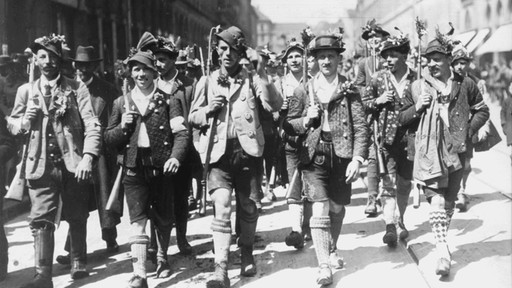
And let's remember that in Germany there was another Communist Revolution, that went a bit (few more days) further than the Spartakists: the Bavarian Soviet Republic, which lasted from 12th of April until 3rd of May 1919. Here again we see the transformation of hardliners taking the helm with which is so typical to communist revolutions with the playwright Ernst Toller (who talked about the "Bavarian Revolution of Love") being replaced with Eugen Leviné, a Russian emigrant, who had gotten his blessings from Lenin. Again something that would be typical later: the interest of the Soviet Union in other communist revolutions. (This brief encounter with communism, which the Bavarians then referred to Schreckensherrschaft, the "rule of horror", made Bavaria quite anti-communist.)
Any Communist revolt in 1918 - 1919 was to see immediate response and would right from the start mean wartime for the communist revolution. How much different council communism would have been after that kind of encounter seems questionable, fighting the allies with with Soviet-leaning bolsheviks stabbing in the back by trying to take over the council communists.
Yes, indeed pure speculation, but one can look at how these revolutions have gone down in history and draw conclusions.
(These guys won in Bavaria)
-
On anti-Communism and the "Third Camp"Sometimes that something doesn't matter to you is equivalent to denial.
I remember Jean Baudrillard writing an article "The Gulf War did not take place". Of course, the war actually was the most conventional war that the US armed forces built up during the Cold War and especially during the Reagan era then ended up fighting before the "Peace dividend" cut backs started to have an effect in the later 90's. -
Solutions For A Woke Dystopia
And countries with more efficient economies end up being prosperous and those that aren't end up constructing trade barriers that make them even worse off. And even if it's separate companies that nowdays are multinational, people still see it like a competition between countries.In economics, efficiency is EVERYTHING. It's what drives the entire system. The more efficient, the more productive. The more productive, the more profit (which can be used to pay higher wages, invest in technology, or saved for other purposes). — synthesis -
On anti-Communism and the "Third Camp"
So instead of having later just the Soviet Union and Red China we would have earlier a Soviet Germany and Soviet Russia? That likely would have just made WW2 happen far more earlier. Or for WW1 to continue well into the 1920's.Personally, I may have even supported the Spartacists. Surely council communism would've been preferable to the collapse of the Weimar Republic. — thewonder
Of course, one never knows, but the bottom line typically has been that as the emphasis has been on the revolution with a clear ideological and political class enemy, these experiments lead to authoritarian rule with a strongman emerging just to keep the whole thing from collapsing. And the Spartacists where as their name they adopted quite bellicose from start. Without those safety valves as the American revolution created for itself, many revolutions end up going the way the French Revolution went.
A good question is if the Soviet Union would have been able to exist without Stalin. The standard leftist narrative is that it was great when Lenin was in charge, but unfortunately then Stalin took power. Yet it might be that it was Stalin the Soviet system needed. Or Mao in the case of China.
Yet doesn't that fit perfectly post-modernism? Truth doesn't exist and it's all a power play!Agree. In life the interesting question regarding beliefs is who really believes what they say they believe and who is holding the belief for other reasons (posturing, peer group, fashion, controversy). — Tom Storm -
On anti-Communism and the "Third Camp"
Well, it's said that being communist was hip in the 20's while in the 30's it had already passed as the informed noticed what Stalin was doing in the Workers Paradise.The leftists I have known in academia and publishing mainly renounced their support of Marxism and the Soviet project in 1956, when the Soviet tanks invaded Hungary. The rest of them were well and truly out of it by 1974, Solzhenitsyn's book taking out the last of the naive or (look the other way) apologists. Some of these former radicals of course became neocons, a whole different problem for the world. — Tom Storm
I'd say many intellectuals denounce (or renounce) their actual beliefs they had ten to twenty years ago. I'll argue that many now of those who are woke will be in the 2030's proclaiming that they have all the time been against wokeness of the 2010's and 2020's. Assuming there's a new trendy way for the intellectuals to be. -
On anti-Communism and the "Third Camp"
Nordic countries? How?I, too, like the Nordic Model, but the Social Democrats just have to cope with the political legacy of a different totalitarian regime, being the Third Reich. — thewonder
Swedes luckily stayed out of the WW2, Denmark and Norway were occupied and my country after being narrowly saved by German assistance in the summer of 1944, had then to fight them. I remember that my grandfather told how the withdrawing German forces methodically destroyed everything useful in Lapland (even telephone poles were blasted into firewood) and some soldiers got mine-shocked due to the amount of mines planted nearly everywhere. Luckily they weren't then made of plastic, as then they would be going off even now under the feet of the unfortunate wanderer. German pünktlichkeit. -
On anti-Communism and the "Third Camp"
Of course social democracy movements have not been historically any friends to the communists, yet otherwise you are right. But as social democrats have been a lot in power in the West, being a communist has it merits in academic and intellectual circles and they do use this denial.One thing I've noticed on the part of the Left is to just simply deny any affiliation with the former Soviet Union whatsoever — thewonder
The right wing totalitarian ideologies don't have this ability (which is a blessing). You can obviously notice the difference even here on PF. Anyone claiming on this site that "Hitler simply got National socialism wrong, but it otherwise it's a valid workable ideology" would immediately get banned. To ponder about the Marxist ideology can easily done without any reference to what the historical outcomes of these experiments have been.
I think there's a simple reason for this. In the Cold War era the Soviet system looked like an alternative and it's doom wasn't at all evident. Hence try criticize Western capitalism by being a supporter of Marxism-Leninism was a totally viable and tolerated position in the Western intellectual and academic circles. And after the collapse of the Soviet system these people continued with their careers as if nothing happened. Now many of them can indeed criticize the past quite well (perhaps with a selective memory). There were no American tanks in the Red Square and we don't have a New Russia hell bent on de-Sovietification and going after communists and the Soviet times as (West) Germany has had against nazis and the Third Reich. The German phenomenon of self-criticism and active separation from the past isn't there. If it would be in Russia so and we would be constantly barraged by a Russian media showing the misery and violence of the Soviet system, then the attitudes even in Western academic circles would be different.
And of course, China still is lead by communists, who now seem to be limiting the capitalist cat's ability to catch mice, that for thirty years or so has done a great job.
-
Solutions For A Woke Dystopia
The basic fact is that if technological advancement will, as it has in history done, solve the problems of today, that won't happen in a World with less energy production. And that doesn't have to come from fossil fuels, but it has to come from somewhere.I don't believe wind and solar will ever be sufficient to meet our needs; and it's only a policy of diversification of energy sources since 1973, that's allowed wind and solar to even be considered worth building. Wind can take the edge off carbon emissions, produce some energy, but it's inefficient, insufficient to our current needs; and all thought of sequestering atmospheric carbon, desalinating water to irrigate land, hydrogen fuel and total recycling - is out of the question without sufficient clean energy to power them. — counterpunch
How many, and for how long, have we needed "Manhattan Projects" to do this?
-
Solutions For A Woke Dystopia
The libertarian might be perhaps happy about this. Let's take the example of how suddenly US became again a major producer of oil.But SSU's point is that there has not been, and there is no sufficient / minimally adequate policy planning for future energy production. If there were, we would see radically different government, industry, and consumer behavior. Once one acknowledges the severity of our situation, one can see the world's elites (economic, political, social, etc.) busy doing pretty much nothing. — Bitter Crank
Was the shale oil & horizontal drilling revolution truly a part of US energy policy?
Was this increase something that happened because of the government?
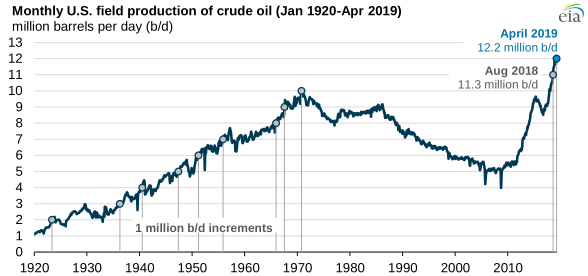
I think not. It happened from industry itself. And this is where the market-oriented person would be happy, because the US industry can create things new things without any (or very late) government involvement. And basically US production has only replaced falling production in other places. Yet we shouldn't be content with this as
Let's look at US electricity production and how it has developed:

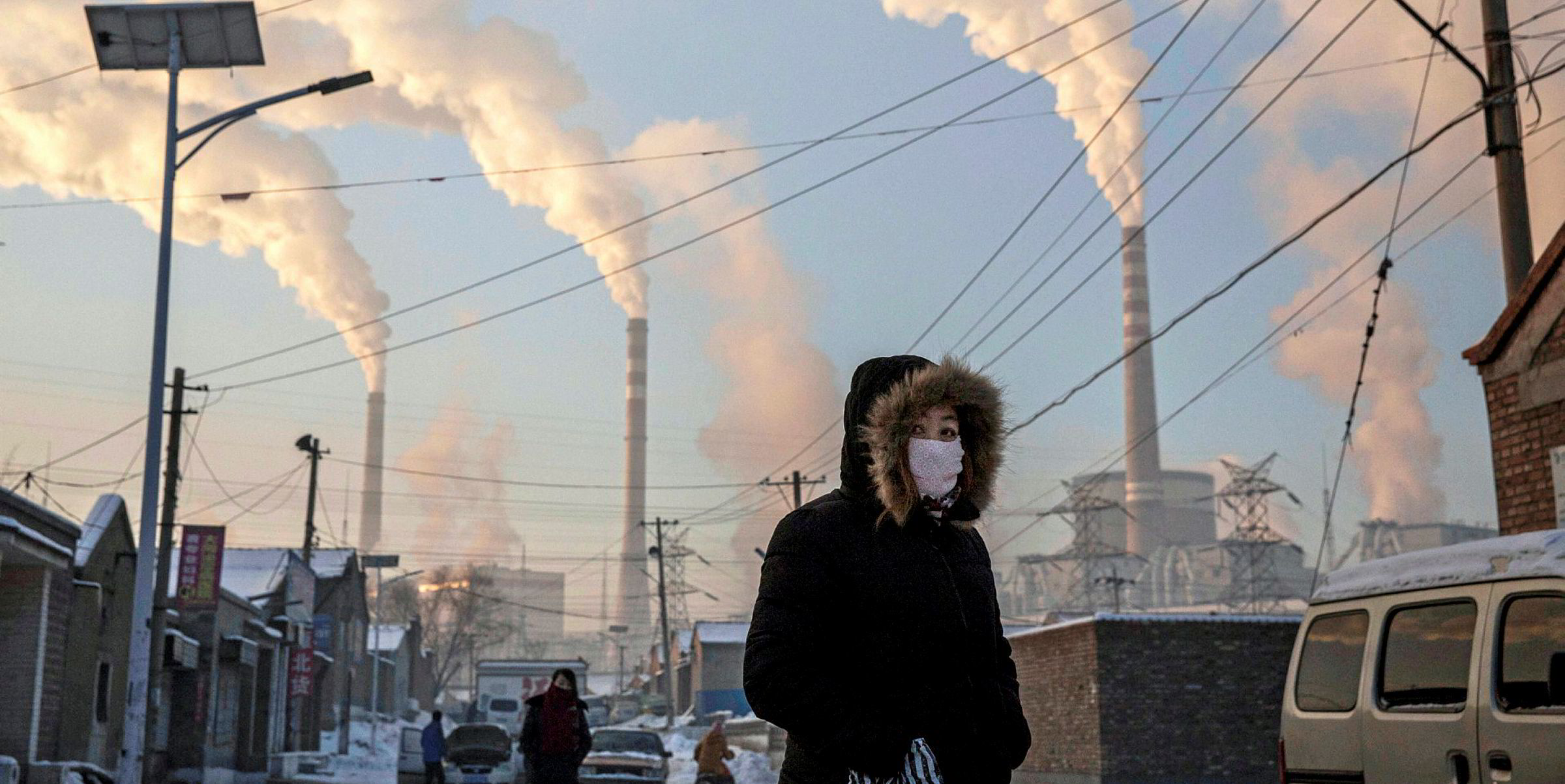
Then compare it with Chinese electricity production:

The US electricity production has leveled and the real change has been the transformation from coal to natural gas, wind and solar. Yet the Chinese production has rapidly grown. Such growth does need a real government policy, it won't happen just with market forces. The current problems with blackouts doesn't show that the electricity production is just fine and especially when we assume how much electricity demand will increase in the future. -
Solutions For A Woke Dystopia
That's exactly so.Deep down the elites don't give a rat's ass about liberation, identity, fairness, equality, and so forth among the masses. — Bitter Crank
Yet they do give far more than a rat's ass if their wealth and power would be challenged. And hence when the focus is on tiny minorities like the transsexuals, it's perfect! Who wouldn't be against racism? That's easy. But to address the income inequality, that's different. -
Solutions For A Woke Dystopia
And that would be the truly important discussion.The technologies I refer to are those necessary to sustainability; starting with massive heat energy from magma, limitless clean electricity, carbon capture and storage, desalination and irrigation, hydrogen fuel, and recycling technologies. — counterpunch
But have you noticed the absence of a down-to-Earth and realistic debate about long term energy policy? Can you define the actual US energy policy since the 70's to the present?
It might be discussed somewhere, but not much about it is heard in the media or the public discourse.
Isn't that what the new culture is about?As a signal of your virtue, that's very helpful. Thank you! As a means to secure a sustainable future, worse than useless, but at least we know that you are morally superior! — counterpunch -
Solutions For A Woke DystopiaWhat do you mean by the elite giving room for wokeness? — praxis
I mean that the elite is totally OK with the "woke" agenda and discourse being on the center stage of the public discourse. That corporations and organizations are keen embrace it and not dismiss it and especially not to be against it is what I had in mind when talking about "giving room". The reason is that the woke agenda doesn't actually threaten the corporations or the power elite. Just think about how a tiny minority are transsexual people? Likely the tiny minority group is happy to get heard, but in wider realm these issues of what could be described as part of the "culture wars" are simply a distraction. -
Solutions For A Woke Dystopia
But now you are praising technology and saying that it can be an answer and that doesn't sound nice. It sounds awful. Technology. Boo!!!Malthus argument is instructive, even though it's not correct. It's proven false by 200 years of technological progress that now sees more people better fed than ever. That's because people are not just consumers of a fixed quantity of resources. We apply technology to multiply resources. Understanding why Malthus is wrong focuses our attention on application of the technologies necessary to produce sufficient resources sustainably - and those technologies exist. That so, the problem is not over-population, but the application of technology. We can support large population sustainably if we apply the right technologies. — counterpunch
No, we have to rip our toga's and sprinkle ash on ourselves, reject our hedonistic materialism and technological imperialism as the sin we indulge in thanks to our privilege. We have to show penance. Then we must chant the newest smart sounding eco-friendly mantra that doesn't go against the Malthusian ideas and still resonates in the correct circles in order to show that we stand with the correct group of people. And there you have it.
Embrace the liturgy! -
The “loony Left” and the psychology of Socialism/Leftism
They had good ideas just what the scientific method was about. 200 years ago, that is.It sounds like your view of what science does is based on the ideas of one of those philoaophers who have been dead for 200 years — Joshs
No need for a post-modern approach on that. -
Solutions For A Woke DystopiaThe point of this thread (until it was hijacked by my friend, Magma-tron :) was that the entire woke enterprise is really bad-news (which goes against my "equal amount of good and bad in everything" idea), but I simply cannot find any redeeming value in anything woke. Even the legit things they might offer are cloaked in such moronic garb that nobody could take anything they say seriously. — synthesis
I think the real issue is that the US has really serious socio-economic problems as the middle class isn't growing, and people aren't happy about the corruption both on the left and right. And things obviously are going to get far worse with the selected monetary & fiscal policy. So it's good for the elite to give room for in the end rather silly wokeness and have it divide people in new ways. When the lower classes are deeply divided and hate each other, it's better for the ruling elite. Worst thing would be that someone came and united the medium to low income Americans! -
Solutions For A Woke Dystopia
I'll blame Malthus.The argument not being made is that capitalism can overcome this problem. I'm not blaming Malthus. I'm pointing out he was wrong, and for obvious reasons the left are blind to the fact, while the right retreat into denial. It's not necessary to hide from the climate and ecological crisis. History suggests we can solve this. The science suggests we can solve this. You tell me, why aren't we solving this? — counterpunch
His theories were have been so successful as the intelligentsia took it to heart. Doesn't matter if it hasn't been correct model of what will happen. If the correct circles love it, it's all that matters. -
The “loony Left” and the psychology of Socialism/Leftism
I think that many believe that it's only the small details that are open questions now. They assume that the big questions have been already answered and now it's only for the fine print to be accurately written. Few understand that there are large questions to be answered out there. That for starters we have little idea what infinity is, just to give one example. Starting from "simple" things as that in mathematics, our logical system does still have holes that some aren't ready to admit. Then there's the problem of subjectivity in science that tries to be objective. Again a logical puzzle that we have not been able to go around. Or some view as a hostile attack against the scientific method altogether.A more important question is how many believe that everything cutting edge in science has already been produced by people that have been dead for ages.
I would say almost none. And yet they think there can be this disparity between scientific advancement and innovation in philosophy. — Joshs -
The “loony Left” and the psychology of Socialism/LeftismSorry, I think I don't get your bottom line, could you rephrase that what you said?
-
The “loony Left” and the psychology of Socialism/LeftismWell, being "post"-everything is so hip. Who wants to admit that everything they think has already been thought by a person that has been dead for ages?
-
The “loony Left” and the psychology of Socialism/LeftismWhat is true in the present or the future depends how things go. One might describe very accurately a specific narrative that would happen what in the end, because of a minor issue doesn't happen, and get it wrong. Or then by accident describe what actually happens straight to the letter. How the butterfly happens to fly does have an effect on what happens,
-
The “loony Left” and the psychology of Socialism/LeftismPrimary thing to learn: never believe that people are like the stereotypes portray them, it's all just partly true. But not all true.
-
Morality of Immigration/Borders
Or perhaps explaining your reasoning? People are quite open to new ideas here in PF.I have given up on anyone understanding the less exciting subject of bureaucratic order and what it has to do to fundamentally changing our experience of life. — Athena -
The “loony Left” and the psychology of Socialism/LeftismLol.
I think that you just assume that this site is leftist. That's the typical stereotype of a "Philosophy Forum". Sure, there are some who would call themselves Marxists, but they aren't the majority. Yet with stereotypes you go only that far.
Don't underestimate the people you are talking to. -
What is the Problem with Individualism?
Defining everything in it as something good and creating a juxtaposition between individualism and collectivism. Those who promote individualism often see any traces of collectivism as something bad. Yet not all collectivism is bad: that our society works there has to be some kind of collectivism, even if many collectivist ideologies do indeed have been disasterous.So what, then, is the problem with individualism? — NOS4A2
And that individualism often boils down to hedonism and narcissism. -
What do you NOT know
All those things I'll never know or come aware during my lifetime. Those things really exist.So, then, what is it that you think you can't really know or figure out. Perhaps the limits of the scientific method? Or else besides? Answer below. — Thinking
Not the limits of the scientific method, but simple logic. -
The “loony Left” and the psychology of Socialism/Leftism
Well, the Chinese aren't alone in that field...Well, the cyber activities of the Chinese Communist Party division called "United Front Work Department" are well known. Ask the CIA and MI6. But I don't need to tell you. — Apollodorus
If this was a top discussion board I guess then it would be different, but PF is backwater. -
The “loony Left” and the psychology of Socialism/LeftismNo, simply when people start forgetting too much of the negative aspects of the totalitarian system. So much that their view isn't in line with the historical facts. It happens rarely, but does happen sometimes.
-
The “loony Left” and the psychology of Socialism/Leftism
I really doubt that. Especially as this forum isn't so popular, actually. Only few people read this.But you better be careful how you talk about Marxism-Leninism these days or else you'll be heading for that reeducation camp in Xinjiang before you even know it. — Apollodorus -
Morality of Immigration/Borders
The thing is that few explain the present by referring to the 19th Century, where you really had Prussia. I think you correctly understand that late 19th Century America sought example from Prussia / Germany, but in the post WW2 era this idea is very rare. Basically the present start post WW2, where the US finds itself in the dominant position (with nearly every other possible competitor in ruins). This causes the focus to be in the purely domestic scene and other countries being influenced by the US.I think it is futile for me to continue giving this explanation because obviously the problem is my prejudice against the Germans/Prussians and there is nothing to say about them but to praise them. — Athena -
The “loony Left” and the psychology of Socialism/Leftism
How much is it about culture, how much about past events? Things what we look as "our culture" are quite positive things. So why political differences can lead to violence in some places where in others the issues are handled cordially. History plays a crucial part.Norms are inculcated , but every one of us interprets those norms in slightly different ways in relation to our own outlook. We never simply , blindly internalize ideas from the culture. We are not vacuum cleaners , we are interpreters. We make use of the informational resources of our culture , and that limits us , but we can only select from those resources what is consonant with our own system of understanding, even when it seems at a distance like an entire community is in lockstep with each other. — Joshs
Let's think about this from the viewpoint of attempts in political secession in the case of UK and Spain.

In the UK the secessionist movement in Scotland has been peaceful, where the secessionist movement in Northern Ireland had a long and very violent past, even if the UK government has very smartly depicted basically an insurgency as "the Time of Troubles". In Spain the secessionist Catalan movement was put down with violence and the secessionist politicians ended up in jail whereas in the UK the former IRA terrorists with much blood on their hands live still as free men when the justice system didn't find enough evidence to prosecute them.
Why the bloody history in Northern Ireland, whereas Scotland everything has been civilized? In my view the real difference here is that the wars between Scotland and England are ancient history and the idea of both being British was quite successful, while the Irish never did get used to being British and still the Irish war of independence was something quite current and very relatable. In Scotland the opposite sides "stay" or "independence", never were depicted as the side of the English and the side of the Scots. And that is crucial. In Northern Ireland, the situation is different even with religious differences. And so are the way to obtain independence. The Provisional IRA, even if with quite different political ideologies from the "old" Irish Republican Army, still has roots in the IRA of the Irish war of Independence, the organization that then basically morphed into the current Óglaigh na hÉireann, the Irish Defence Forces, even if the "Provos" had little to do with the Irish Defence Forces.
When Catalonia tried to gain independence from Spain, the attempt lead to violence. Here I think again the memories of the Spanish Civil War and it's aftermath, the dictatorship of Franco, had a part to play.
The sight of Spanish national police beating voters, and politicians being jailed, revived disturbing memories, for some, of the Franco dictatorship.
And if we compare this to worst current European tragedy, the break up of Yugoslavia with over 100 000 killed in the bloody civil war, the trauma from the past is even more evident. In Tito's Yugoslavia what happened during WW2 wasn't dealt with and the past came to haunt the present in the worst way possible. -
The “loony Left” and the psychology of Socialism/Leftism
Something that people should be reminded when their views of Marxism-Leninism become too rosy, I should add.This is not a helpful observation; it provides almost no insight. — Tom Storm -
The “loony Left” and the psychology of Socialism/LeftismIn the end there's a golden rule: understand the limitations of your methodology.
There's really nothing wrong with using psychology in looking at politics if we have a broader understanding about what effects politics and how politics works. Hence the better researchers are quite subtle and tactful on just what implications can you drive from let's say evolutionary political psychology, the field concerned with the application of evolutionary psychology to the study of politics. Psychology can say something, but it doesn't explain everything. People can easily accept that, but especially when they are ignorant of the subject at hand, this fact can be forgotten easily. At worst, the dubious researcher will make broad claims, which then catch the public eye.
You can get an insight using social psychology on how some segment of the voting population behaves. Yet their voting behavior will be influenced far more by the economy: if either the economy is roaring and people are better off than before or if the economy is collapsing and everyone feels it can explain more the behavior in the voting booth than personal traits of the voters. The real misuse happens when one forgets or sidelines other factors (like the economy) or basically forgets history itself, everything that has happened before. This typically happens when the broader context isn't so familiar to the researchers themselves and when complex developments are explained by simple causes.
A well known example of this the "Great stirrup controversy", where a historian called Townsend White argued in his book from 1962 "Medieval Technology and Social Change" that feudalism took hold because of the spread of the stirrup in the cavalry. The argument went that the stirrup enabled heavy cavalry and shock combat, the cavalrymen could fight better from the saddle with stirrups, which in turn prompted the Carolingian dynasty of the 8th and 9th centuries to organize its territory into a vassalage system, rewarding mounted warriors with land grants for their service.
It's a quite eccentric claim, starting from the fact that there had been armoured heavy cavalry in Antiquity (Romans called them aptly oven men) and "shock combat" wasn't anything new. I think the reason why the argument came so popular was because few historians ride horses and even fewer understand that stirrups aren't so essential as Townsend White argues. Likely the Princeton professor wasn't an avid horseman himself, but appears to have made a bunch of surprising claims. Yet here you can see that minor details can capture the eye and the imagination of the public. -
The “loony Left” and the psychology of Socialism/Leftism
Seems that we have to use statistics to get the attention of Apollodorus.However, if that someone has the statistics to back up his conclusion then his investigation can hardly be dismissed as "nonsense". — Apollodorus
Better yet, let's use regression analysis. It's even more scientific! -
The “loony Left” and the psychology of Socialism/Leftism
I will surely bet that those that are either for or against universal healthcare differ in their personal traits. The views that they hold on universal healthcare most likely depends on their own experiences of the system and the government/private sector.So what is your opinion? If a person prizes a free market above the availability of healthcare, is there a personality trait in that? — frank
If system works, people usually are OK with that. If the system doesn't work, they likely are unhappy with it. Hence them being for or against a system doesn't depend on their individual personal traits, but on the performance of the system.
As I said, owning as a pet a cat or a dog might say something about you, but it doesn't say much about your stance on health policies. But someone might make a nonsense investigation and come to the conclusion that if you have a rabbit as a pet, you likely vote X. -
Marxist concept of “withering away of the state”
And fortunately (or unfortunately) to those that waited for the revolution to happen, it never came as the problems and the largest injustices were dealt with. Yet those demands from "socialist agitation" were taken to heart by other political factions too.I too live in a Nordic country, and if I compare to life in the 19th century, there is simply no way to get around the fact a large part of the demands of "socialist agitation" of the 19th century is realized in these countries. — boethius
Yet from the 19th Century the government and the public sector has grown in every Nordic country.
I'm not so sure about that, when you look at the actual history in these countries or in Europe in general. Who created the first state social insurance program? Bismarck. Not a socialist, on the contrary.Capitalist or even just state agents sent to stop your "socialism but not" agitation would not at all care about whatever distinctions you are trying to make. — boethius
Yet the individual confronts that administrative process in his or her life. It's only optional (luckily!) to take part in the democratic process, the laws and the norms of the state aren't optional.Power is not simply administrative process, power is the ability to effectuate desired change in the real world. — boethius
I agree. And how effective was that power of absolute monarchies in the 18th and 19th Century or earlier?The effective power and who has it in Finland is simply in no way similar to the absolute monarchies of the 18th and 19th century — boethius
The issue was that they had to rely on the threat of violence as the central power was actually so weak. They didn't have an efficient modern organization as now the state enjoys. The Sun King Louis the XIV tried to get accurate statistics of how much trade was going through an important port (was it Rouen or Le Havre, I don't remember) and didn't get it in his lifetime. The court in Versailles was a way to control the aristocracy, which had been a problem for his father.
The real nightmare can be perhaps Xi's China, when you have an authoritarian power elite with the resources and the capability to use modern technology to create the police state of the new millennium. Luckily no political parties in our countries are such authoritarians as the Chinese communists. All I'm saying that the state isn't withering away in the Nordic countries. -
Marxist concept of “withering away of the state”
?We can easily interpret the "withering away of the state" as the social democratic process of Europe. — boethius
Living in one Nordic country and knowing all my life the local Social Democracy, I'd say this is not true.Individual citizens in Switzerland and Nordic countries for instance, can genuinely be argued to be free from state oppression and managing their own affairs through fair, or then fair enough, political process. As local awareness increases and local political entities take more active rolls of government management, the "state" becomes less and less relevant to political life; — boethius
The central government might transfer authority to local communities, but that hardly takes away the role of public authorities, likely it simply increases it on another level. Great, you don't have to ask permission from a central ministry, but your local communal authorities.
Yet this doesn't decrease the power of the public authorities, be they on the communal level or not. You see, to decrease the role of the state /public sector would simply mean to give freedom for people to act when before they had to ask permission from an authority. To do away with previous supervision and control. This isn't what modern Social Democracy has as it's objective.If we carry this social experiment of Switzerland, the Nordic's, New Zealand, forward, it is possible to imagine "the State" becoming less and less important, until it is, maybe nominally there as an administrative body of regional issues, but does not and essentially cannot exercise any real oppressive political power. — boethius -
The “loony Left” and the psychology of Socialism/Leftism
Depends on the question you have in mind.Is it possible that there are some personality traits that are statistically more commonly shared by liberals than conservatives and others more common to conservatives? If so, is there any value in identifying them? — Fooloso4
You can see perhaps differences in the personality traits among people who have as pets cats opposite to dogs or then have rabbits, but likely people will just draw stupid stereotypes from the information. A lot of people in PF had cats as pets. Hmmm...
In politics more important might be the actual politics, the implemented policies and so on. -
What ought we tolerate as a community?
The most effective way for any society is simply to disregard or think that the person is crazy, or has obviously some personal problems. Of course crazy people can be harmful to themselves and to others, but we treat them and the whole situation differently.. I think you're right that "thought crimes" shouldn't be prosecuted or met with any type of legal penalty, but I'm more talking about soft power measures like doxxing or something along those lines. — BitconnectCarlos
I think here at first it's important to think about this in a broader sense:
When is the situation so alarming that we ought to take drastic action in what otherwise would be in the category of "freedom of thought"? And there the answer is again when someone takes or some people take these issues to physical actions. Just some crank having crazy thoughts won't do. It's the situation when we understand that the views are widespread and not just people with personal problems cherish them. Still, there has to be a true breakdown in social cohesion in the society and likely political and economic turmoil. Then people can get "crazy". Then "hate speech" etc. can really be dangerous. As the saying goes, when people don't have anything to lose, they can lose it.
I think the real problem is that we are too adaptive. If someone is killed in our neighborhood we are shocked. If another person is killed the next day we aren't so shocked anymore as we have already adapted to the fact that people do get killed in our neighborhood. We see then the past having this idyllic peace that has been shattered and that a new reality has taken over. In fact, to state that some horrendous crime has been "an unfortunate yet a rare singular event", especially when the perpetrator is caught and put behind bars, draws harsh criticism for the security minded people who advocate that this is the new normal.
And we have a model for the worst possible outcome, a genocide, in Zombie-movies. Because in order for a true genocide to happen, people simply have to think of those being killed as zombies, not being humans. Or simply there being a war and the others being the enemy. -
Morality of Immigration/BordersTalking so much about Prussian militarism and Prussian bureaucracy, it should be noted that one of the most important pillars of the modern science and humanities oriented university, which integrates arts, humanities and sciences and uses a holistic combination of research and studies comes from Prussia. The idea of the Humboldtean university and the Humboldtean model of higher education with the Humboldt University in Berlin is one of the real things Prussia gave to this world. This university was the preeminent university for natural sciences in the 19th and early 20th Century and had alumni and teachers Albert Einstein, Karl Marx, Max Weber and Georg Wilhelm Hegel.
If Prussians revolutionized the military, so did the but in totally different way the Prussian educators with Wilhelm Humboldt leading the charge and the Prussian Reform Movement (that abolished in Prussia serfdom and was based on Enlightenment ideas).
And in the heart of Prussia.
Wartimes give one way to see things, but I guess now days the focus is on the competitive advantage and that education is viewed as literally as an investment to increase economic growth. It's not a militaristic view, it's more of a capitalistic view. Higher education is viewed as a hub that creates innovative new tech companies, creates new industries. I think that's the dominant view.
ssu

Start FollowingSend a Message
- Other sites we like
- Social media
- Terms of Service
- Sign In
- Created with PlushForums
- © 2026 The Philosophy Forum