
-
What is Information?
Yes. Quantum Theory has made the old Atomic theory obsolete, except in the sense that it is much more intuitive for non-scientists. A Quantum Field is not made of a swarm of atoms, but of a mathematical pattern of relationships.The very idea of "physical stuff" is what the idea of "physical patterns" is meant to replace. — apokrisis
What you refer to as "statistically emergent regularity" sounds similar to my own metaphysical notion of "Order from Chaos", to explain how Something (objects) could emerge from Nothing (potential). Plato's myth (likely story) of CHAOS (uncertainty) described how the Real World could magically appear as-if from nowhere, by organizing the disorderly randomness of Chaos. Aristotle seemed to think of "Potential" simply as an abstract Principle, but ultimately, the word "principle" refers back to Princeps (ruler, lawmaker).A metaphysics of statistically emergent regularity can replace that by starting with the "everythingness" of a vagueness or uncertainty. — apokrisis
That hypothetical speculation still sounds reasonable to me, since the Big Bang theory implied that the world (Where) had a sudden beginning, along with its inherent Space & Time, from Nowhere or "who knows where?". Although the theory doesn't speculate on what came "before" the Bang, it seems to assume that at least Energy (creative power) and Laws (orderly patterns) were eternal.
Creative Chaos :
For Plato the primeval chaotic stuff of the universe has no inherent preexisting form that governs some course of natural development toward the achievement of some goal, and so the explanatory cause of its orderliness must be external to any features that such stuff may possess.
https://plato.stanford.edu/entries/plato-timaeus/
Note -- His implicit "explanatory cause" was an intentional being, but not a typical Greek god.
Yes. Colloquially, the term "chaos" now implies a complete absence of pattern. But for Plato, Chaos was empty of actual (physical) things, but it was full of creative "Potential".Even chaos ain't just chaotic but a specific kind of natural pattern - one described by fractals, criticality, powerlaws, Levy flights, 1/f noise ... that kind of "mathematical stuff". — apokrisis
Chaos :
In ancient Greek creation myths Chaos was the void state preceding the creation of the universe or cosmos. It literally means "emptiness", but can also refer to a random undefined unformed state that was changed into the orderly law-defined enformed Cosmos. In modern Cosmology, Chaos can represent the eternal/infinite state from which the Big Bang created space/time. In that sense of infinite Potential, it is an attribute of G*D, whose power of EnFormAction converts possibilities (Platonic Forms) into actualities (physical things).
http://blog-glossary.enformationism.info/page12.html
Chaos theory states that, under certain conditions, ordered, regular patterns can be seen to arise out of seemingly random, erratic and turbulent processes. . . .
"It turns out that an eerie type of chaos can lurk just behind a facade of order - and yet, deep inside the chaos lurks an even eerier type of order" -- Douglas Hostadter
http://www.patternsinnature.org/Book/Chaos.html
Yes, The Catholic theologians gave “metaphysics” a bad name, as far as Enlightenment science is concerned. But Quantum Theory and Information Theory are making the idea of something “beyond” (meta) physics (atoms, matter) more plausible.What Aristotle likely meant by prime matter before the Catholics subsumed his metaphysics into their theology, — apokrisis
Quantum Theory has forced us to think in terms of cloudlike “fields” instead of hard little “atoms". And Information Theory has given us a new vocabulary (e.g. bits & bytes ) for “mind stuff”. I call my personal metaphysics : “Enformationism”, as an update to Atomism and Materialism.So the need - as cutting edge physics moves on to a unified quantum gravity theory - is to find a suitable metaphysics which can measure both lumps of formed matter and the backdrop spatiotemporal void in the same fundamental units. — apokrisis
I envision that “radially uncertain” state in terms of Plato's Chaos. And the “stabilizing” “necessity” is what he implied was Divine Intention. Some kind of Intentional Lawmaker is necessary, unless as some physicists imagine, the Laws of Nature were just floating out there in Eternity before an accidental quantum fluctuation lit the fuse of the Big Bang. Plato was somewhat ambivalent about the Lawmaker, in some cases referring only to an abstract principle of LOGOS, and otherwise to a Demiurge. To account for the necessary "intention", I ambiguously label the Lawmaker as "G*D", which is not the Jehovah of the Bible. In place of the workman, following orders, I simply call it "Nature" or "Evolution" or "The Program" :nerd:It is how the radically uncertain becomes stabilised by the constraining necessity of achieving a generalised self-consistency. — apokrisis -
What is Information?
Yes, Of course, those abstract terms can be used to describe the statistical energy state of material substances. But, in that symbolic sense, they are mathematical "objects". And what physical stuff is mathematics made of?Yep. Entropy and information aren’t metaphysical substances. — apokrisis
Philosophically, I tend to think of Information, because of its ubiquity and universality, in terms of Aristotle's essential "Substance" -- which is not physical, but meta-physical. Moreover, the core concept of the term "information" recalls Plato's Forms, which were abstract definitions of real things. In modern terms we might call Platonic Forms "Programs" for the production of physical products. But those programs contain nothing but the metaphysical Information necessary to create a final physical product.
Spinoza also came close to describing the modern (all-encompassing) notion of Information in his assertion that "Substance" is the only thing that exists. And some cutting-edge physicists have concluded that even physical Matter is made of metaphysical (abstract) Information. That's why I think of Generic Information as a shape-shifter, constantly forming new things, and transforming old things. :cool:
In what sense do mathematical objects exist? :
Whereas the natural sciences investigate entities that are located in space and time, it is not at all obvious that this also the case of the objects that are studied in mathematics.
https://plato.stanford.edu/entries/platonism-mathematics/
Mathematical Objects :
Platonism about mathematics (or mathematical platonism) is the metaphysical view that there are abstract mathematical objects whose existence is independent of us and our language, thought, and practices.
https://plato.stanford.edu/entries/platonism-mathematics/
Substance :
Every being in any category other than substance is a property or a modification of substance. For this reason, Aristotle says that the study of substance is the way to understand the nature of being.
https://www.britannica.com/biography/Aristotle/Physics-and-metaphysics
Substance Monism :
The most distinctive aspect of Spinoza's system is his substance monism; that is, his claim that one infinite substance—God or Nature—is the only substance that exists.
https://iep.utm.edu/spinoz-m/
Information Realism :
Indeed, according to information realists, matter arises from information processing, not the other way around. Even mind—psyche, soul—is supposedly a derivative phenomenon of purely abstract information manipulation. But in such a case, what exactly is meant by the word “information,” since there is no physical or mental substrate to ground it?
https://blogs.scientificamerican.com/observations/physics-is-pointing-inexorably-to-mind/
Everything is information :
Physicist Vlatko Vedral explains to Aleks Krotoski why he believes the fundamental stuff of the universe is information and how he hopes that one day everything will be explained in this way
https://www.youtube.com/watch?v=QfQ2r0zvyoA
Everything is Information, and Information is Everything :
Note -- not really about the philosophical implications of universal information, but the title says it all.
https://www.kmworld.com/Articles/White-Paper/Article/Everything-is-Information-and-Information-is-Everything-123561.aspx
Generic Information :
5. Information is the Promethean power of transformation. Information is Generic in the sense of generating all forms from a formless pool of possibility : the Platonic Forms.
http://bothandblog2.enformationism.info/page29.html -
What is Information?
What I said was : "Shannon defined his concept of Information in terms of the absence of energy (entropy)". I didn't mean to put words in his mouth, but was merely using my own terminology. As I tried to explain before, Shannon was not thinking in terms of Energy when he borrowed the concept of Entropy from Physics to define the distinction between meaningful information and meaningless noise. For him, Entropy was simply a mathematical statistical measurement of potential to carry content (an empty vessel). And since he was mostly concerned with impediments to communication, his measurement focused on the negative.So where did "information is a lack of energy" come from? — frank
So I'm the one who interpreted his definition in terms of Energy -- the opposite of Entropy (Negentropy). For me, "information value" can be defined in terms of positive-potential-for-meaning versus discharged potential -- as in your phone's battery (energy storage). Your cell phone presents that value in terms of percentage of full charge. And it shows the potential for information storage in terms of percentage of memory capacity. Do you see the inverse relationship?
Anyway, the positive association of Energy & Information came later. In my understanding of the broader Information theory, Energy (order, potential, certainty, life) and Entropy (disorder, impotence, uncertainty, death) are two sides of the same coin : Thermodynamics, Causation, Action. Energy can be defined in terms of the mathematical ratio between Potential and Impotence. The best illustrations of that reciprocal relationship, that I'm aware of, is Sagan & Schneider's Into The Cool. :smile:
Entropy :
a thermodynamic quantity representing the unavailability of a system's thermal energy for conversion into mechanical work, often interpreted as the degree of disorder or randomness in the system.
https://www.google.com/search?client=firefox-b-1-d&q=entropy+is
Communication Entropy :
The basic idea of information theory is that the "informational value" of a communicated message depends on the degree to which the content of the message is surprising.
https://en.wikipedia.org/wiki/Entropy_(information_theory)
Negentropy is a construct drawn from physics that can be conceptualized as the opposite of energy losses associated with normal organizational life.
https://link.springer.com/article/10.1007/s11528-019-00448-5
Entropy :
A quality of the universe modeled as a thermodynamic system. Energy always flows from Hot (high energy density) to Cold (low density) -- except when it doesn't. On rare occasions, energy lingers in a moderate state that we know as Matter, and sometimes even reveals new qualities and states of material stuff .
The Second Law of Thermodynamics states that, in a closed system, Entropy always increases until it reaches equilibrium at a temperature of absolute zero. But some glitch in that system allows stable forms to emerge that can recycle energy in the form of qualities we call Life & Mind. That glitch is what I call Enformy.
http://blog-glossary.enformationism.info/page8.html
Into The Cool :
Scientists, theologians, and philosophers have all sought to answer the questions of why we are here and where we are going. Finding this natural basis of life has proved elusive, but in the eloquent and creative Into the Cool, Eric D. Schneider and Dorion Sagan look for answers in a surprising place: the second law of thermodynamics. This second law refers to energy's inevitable tendency to change from being concentrated in one place to becoming spread out over time. In this scientific tour de force, Schneider and Sagan show how the second law is behind evolution, ecology,economics, and even life's origin.
https://www.amazon.com/Into-Cool-Energy-Flow-Thermodynamics/dp/0226739376 -
What is Information?
Yes. They see the world as they are. :smile:The unit of measurement is the human mind, as in "Man is the measure of all things". :smile: — Gnomon
Does that include madmen, fools and dreamers? — apokrisis -
What is Information?
For a communications engineer (Shannon), it wasn't about the energy. But for more recent information theorists, their topic has much broader applications & implications than just 1s & 0s. For physicists, it's all about the energy. :smile:It's not about absence of energy. — frank
What is the relationship between forms of energy?
So when energy is exchanged between two systems, information is also exchanged (see Figure 1), but the dynamics of energy exchange does not uniquely determine the information exchanged. For the same amount of energy, different amounts of information can flow in or out of a system.
https://arxiv.org/ftp/cond-mat/papers/0501/0501014.pdf -
Why is so much allure placed on the female form?
I think that assessment misses a significant distinction between the motives of males and females. Natural selection for reproduction decided that one sex will be the "aggressor". In some species, it's the females.Why is this so? Who decided the female form was more alluring than the male? — Maximum7
In terms of perspectives, human males think like predators, while females think like prey. Males do the stalking, but females are vigilant toward that predatory gaze. Ironically, depending on the circumstances, that appraising gaze may be welcomed or avoided. For example, females are portrayed as willing prey for vampires, even though his bite may have dire consequences, such as unwanted pregnancy. The bottom line is that males are all-in, while females are more ambivalent, hence their reputation for coyness. But, for reproduction of the species, some appreciation for the male form is necessary to overcome the appropriate fear of predation. :smile:
A man chases a girl until she catches him
He runs after a girl until he's caught
He fishes for a girl until she's landed him
It all comes out exactly the way she thought
Uncertain, he tags along behind
Uncertain, till she makes up his mind
A man chases a girl until she catches him
But don't run too fast while you are saying "No"
And once you've caught him don't ever let him go
___Irving Berlin
PS__I suppose my obscure point above is that the male is more analytical about his prey, focusing on delicious body parts. Meanwhile, the female is more holistic : either he's after me, or he's just not that into me. :joke: -
What is Information?
Don't get me started. I have a webpage and a blog devoted to exploring that equation. Shannon defined his concept of Information in terms of the absence of energy (entropy). But the math works both ways. Here's a link, not written by me, that might point you in the direction I'm looking. :cool:In my view, it is the essence of both Energy and Matter . . . — Gnomon
Why do you think that? — frank
The mass-energy-information equivalence principle :
https://aip.scitation.org/doi/10.1063/1.5123794 -
What is Information?
The unit of measurement is the human mind, as in "Man is the measure of all things". :smile:What is your unit of measurement? You forgot something. — apokrisis
To Measure : from Latin "mensura"; mens- (mind) -
What is Information?
Information is not only fundamental to the universe, it is ubiquitous. In my view, it is the essence of both Energy and Matter . . . . and Mind. Some would interpret that datum as proof of a Universal Consciousness. But I prefer to remain agnostic about any "mind" that I can't converse with. Instead, I tend to use the less grandiose term : "Universal Enformation". That keeps me more grounded in empirical observations instead of unfettered speculation. Although, I can't help but conjecture from "what is" to "what if?" :smile:This validates the view, that gnomon and myself have been advocating in our own way. That information is in the fundamental mix. — Pop
Universal Consciousness (redirected, here, as Universal Mind) is a concept that tries to address the underlying essence of all being and becoming in the universe. It includes the being and becoming that occurred in the universe prior to the arising of the concept of “Mind,” a term that more appropriately refers to the organic, human, aspect of Universal Consciousness. It addresses inorganic being and becoming and the interactions that occur in that process without specific reference to the physical and chemical laws that try to describe those interactions. Those interactions have occurred, do occur, and continue to occur. Universal Consciousness is the source, ground, basis, that underlies those interactions and the awareness and knowledge they imply.
https://en.wikipedia.org/wiki/Universal_mind -
What is Information?
The difference is specific Intention versus general progression. Evolution is a process of enforming, by which general laws "select" the fittest forms from among those produced randomly. You could say that Nature "sculpts" new species from the raw material of old "stuff". Human intention (design) creates novelties much faster by eliminating most of the randomness. We "select" the best elements for our creations by applying personal values, rather than by rolling dice. Come to think of it, you might say that Natural Laws are the cosmic values that fashion turbulent amorphous matter into the stable natural forms that we know and love. :smile:What would be difference between a wood carver carving away his mental image in his brain into a woodspirit carving, and something taking physical shape in the universe via / caused by "information"? Could they not be simply described as the same form of manifestations? — Corvus
PS__If that sounds teleological, I'll just say that's one way to interpret the evidence. :joke: -
What is Information?
For what it's worth, here's couple of my attempts to define the ancient & modern meanings of the term "information", and the act of "enforming". :smile:I did search for the origin of the world "information", and the standard dictionary definition of information. — Corvus
Information :
According to the Oxford English Dictionary, the earliest historical meaning of the word information in English was the act of informing, or giving form or shape to the mind (i.e. meaning), as in education, instruction, or training. ___Wikipedia
The English word was apparently derived by adding the common "noun of action" ending "-ation" [Hence, En-Form-Action]
http://enformationism.info/enformationism.info/page2%20Welcome.html
Note -- A "Form" is a meaningful pattern, as contrasted with random chaotic noise.
What is Information? :
The Latin root “informare” meant to give recognizable (meaningful, significant) shape to something. In that sense a sculptor “in-forms” a blank slab of marble with a physical shape to represent a pre-existing image in his mind. In other words, a mental image somehow “causes” physical raw material to take on a shape that, in turn, “causes” cognition in another mind. Another way to put it is to say that “Information Creates Meaning”. Hence it is an integral component of Sentience, Consciousness, and Cognition. It is the raw material of Reason, the essence of Knowledge, and the structure of Mind. The ancient Greeks referred to the whole spectrum of information as “Logos”—often translated as “Word”, but more specifically the conscious motive behind an act of speech: Intention.
http://enformationism.info/enformationism.info/page2%20Welcome.html
En-Form-Action :
A coined term referring to an ultimate principle in the universe, which functions as the “formal” cause of all physical and meta-physical things. The creative act of En-formation, causes something new to emerge from pre-existing, unformed Chaos.
http://enformationism.info/enformationism.info/page9.html
Ideal vs Real Forms :
The theory of Forms or theory of Ideas is a philosophical theory, concept, or world-view, attributed to Plato, that the physical world is not as real or true as timeless, absolute, unchangeable ideas. According to this theory, ideas in this sense, often capitalized and translated as "Ideas" or "Forms", are the non-physical essences of all things, of which objects and matter in the physical world are merely imitations. Plato speaks of these entities only through the characters (primarily Socrates) of his dialogues who sometimes suggests that these Forms are the only objects of study that can provide knowledge.[6] The theory itself is contested from within Plato's dialogues, and it is a general point of controversy in philosophy. Nonetheless, the theory is considered to be a classical solution to the problem of universals.
https://en.wikipedia.org/wiki/Theory_of_forms
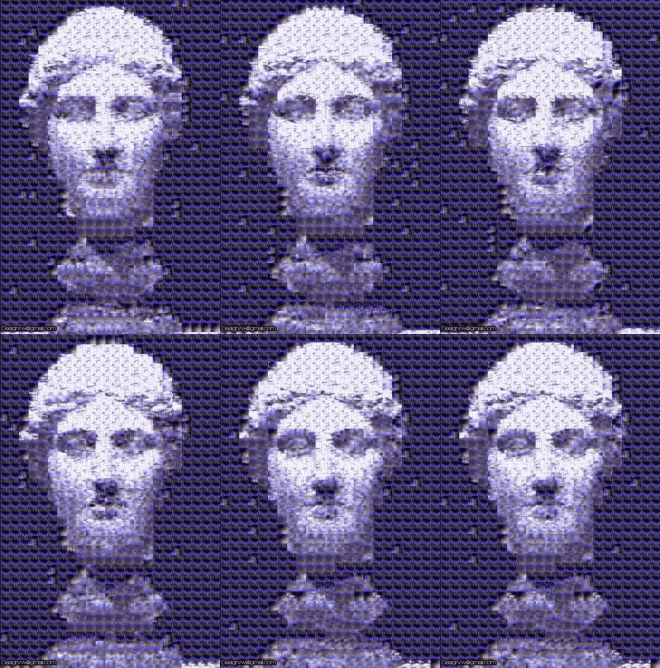
UNFORMED CHAOS
ENFORMING IMAGE
-
What is Information?
I'll butt-in here to suggest that what Wayfarer meant by "cut itself off" was not a literal or physical operation, but merely metaphorical or metaphysical dissection. In my imagination, I place my "self" into a different logical category from "other" -- which is everything that is not-self. This figurative notion is what Buddhists sometimes dismiss as an illusion. But if we didn't make that distinction, we'd be unable to make sense of the world. Nevertheless, philosophers should be able to admit that the "line" between "us" and "other" is subjective, and somewhat arbitrary -- though necessary. Did I just confuse or clarify the question?How can the system cut itself off from what it is interrelating with. Sorry, it makes no sense to me. — Pop
If it didn't, it wouldn't be 'a self'. — Wayfarer
:chin: -
What is Information?
This thread has been unusually calm & rational & broadminded, perhaps because Pop himself is calm & rational & broadminded. However, the philosophical implications of modern Information Theory lie primarily in the general Ontological and Epistemological realms. But this thread has been mostly focused on narrow technical details. Just mention Realism versus Idealism, as in the Antirealism thread, and you'll see a more hotly contested, and interesting, philosophical debate break out. Remember the Chinese curse : "may you have an interesting life". :cool:Wouldn't you say that is interesting philosophy? — Pop
Whenever there is a new OP, if everyone all agrees to it, or says nothing, then that is not philosophy either. We must see, and discuss the points from all sides of angle. — Corvus -
What is Information?
I also think of active Information (EnFormAction)in terms of Logos and Tao. It's not a physical thing, but a process of organizing and integrating disparate things into novel holistic systems. It's like a physical Force that we know only from its effects, not from observation of a particular thing. In other words : "creativity".What is the source of order in the universe? That which integrates the Universe integrates us! — Pop
It bears resemblance to the idea of the Logos, the Tao, Dharma - a principle of organisation which can only be discerned in its effects, never in its essence. — Wayfarer
I just came across a statement in SKEPTIC magazine -- on the topic of a trial & error process that leads to success (e.g. Evolution) -- which, though in a different context, illustrates the relationship between Information, Integration, Organization, and Holism :
"This is an example of a holistic group, integrating diverse knowledge to create more than the sum of individual contributions" --- Trial, Error, and Success ; Sima Dimitrijev ; SKEPTIC v2, no 2
A force is an act or cause, not an object. But Information can be both. As Einstein noted, causal Energy (the push or pull) and passive Mass (the pushee) are interchangeable. Likewise, Information (idea) in a human mind (sculptor) can be translated into a causal creative force (behavior) that results in something new (sculpture). By the same reasoning, Evolution is not a physical object, but a creative action which causes diverse things to integrate into what Darwin called : "endless forms most beautiful". :grin:
Logos :
In Enformationism, it is the driving force of Evolution, Logos is the cause of all organization, and of all meaningful patterns in the world. It’s not a physical force though, but a metaphysical cause that can only be perceived by Reason, not senses or instruments.
http://blog-glossary.enformationism.info/page14.html
Logos :
Greek term meaning “word”, “reason”, “proportion”. It was used by philosophers in a technical sense to mean a cosmic principle of order and knowledge. In ancient Greek philosophy and theology, Logos was the divine Reason implicit in the cosmos, ordering it and giving it form and meaning.
http://blog-glossary.enformationism.info/page14.html
EnFormAction :
Ententional Causation. A proposed metaphysical law of the universe that causes random interactions between forces and particles to produce novel & stable arrangements of matter & energy. It’s the creative force that, for unknown reasons, programmed a Singularity to suddenly burst into our reality from an infinite source of possibility. AKA : The creative power of Evolution; the power to enform; Logos; Change.
http://blog-glossary.enformationism.info/page8.html -
What is Information?
No. It's Epistemology, and Ontology -- hence, appropriate for a Philosophy Forum. Your comments might be more appropriate on a Physics Forum.:smile:That is more theology than physics. — Banno -
What is Information?
Our physical Senses are able to detect Information (meaning) only in its "entangled" or embodied physical form. But human Reason is able to detect Information in metaphysical (disembodied) form (ideas; meanings). Like Energy, Information is always on the move, transforming from one form to another. Likewise, Energy is only detectable by our senses when it is in the form of Matter. For example, Light (photons; EM field) is invisible until it is transformed into some physical substance, such as the visual purple in the eye.that the information "always" exists entangled in a substance, and so this leads to a monistic understanding. — Pop
However, since Information/Energy can exist in both forms, physical (actual) and metaphysical (potential), it transcends those dualistic (either-or) categories into the monistic (both-and) class of Universality. :nerd: -
What is Information?
Since Claude Shannon formulated his definition of "Information" as an empty mathematical vessel for carrying meaning from one point to another -- specifically over telephone wires -- its practical utility has been exploited in a thousand ways. It has even transformed the discipline of Physics, from manipulating matter (mechanics, Chemistry, atoms) to manipulating abstract Ideas (relativity, statistics, fields). And IT (information technology) has revolutionized both Science and Philosophy.What are your thoughts, queries, arguments, definitions, and insights? It would be great to have a general understanding of information on this forum. — Pop
Formerly, "Information" was simply loosely defined as "mind stuff", and associated with metaphysical Consciousness, Minds, and Souls. It was the intangible (and passive) stuff that life-risking spies could carry in their minds, or on bits of paper, or on magnetic tape. But now it is known to be an active agent in the real physical world. That's why I coined the neologism "EnFormAction" (EFA) to combine its activity (Energy) with its products (Matter & Mind). Plato's "Forms" were merely abstract Ideas (theoretical designs) that could be trans-formed into the en-formed stuff that our physical senses detect. Forms are merely Potential, but en-formed things are Actual (acted upon). As Pop summarized, "every Thing is information". Yet, every Idea about things, or possible things, is also information.
According to Einstein's definition of Energy (E=MC^2), that immaterial power-to-en-form is what gives physical form to the real stuff (matter) that we interact with in the world. In its dynamic/active form, Energy (EFA) is merely invisible & intangible Potential (a possible but not actual thing). But in its stable/passive form, EFA is the tangible massive matter that we know as Reality. With Einstein's equation in mind -- where C is the speed-limit of light -- I like to think of Matter as slowed-down light vibrations, compressed into the sedate wave-forms we know as physical substance. In other words, as mass-less Light decelerates from its max-velocity in a vacuum, it condenses into various forms of massive Matter. This is an oversimplification of course, but useful as a way to understand the relationship between Light (the essence of Energy) and Matter (the substance of Energy).
But, what about Information as the essence of Mind? If it's true, as Pop says, that "information is everything", as a corollary, we could also say that everything is Mind. For some people that notion makes sense. But for others, it violates the basic premise of secular Materialism. That's because it seems to support the ancient worldview of Panpsychism, and even Pantheism. The latter has been explained in the concept that our Real World is actually an idea in the Mind of God (Idealism). So, I think Shannon, as a pragmatic engineer, would be surprised at the novel forms that have evolved from his revival of a old worn-out word -- for the metaphysical contents of human minds -- applied to the mundane physical problem of traffic jams on phone wires. That technical term has subsequently ramified into an all-encompassing concept of both Reality and Ideality. :nerd:
Everything is Information :
Physicist Vlatko Vedral explains to Aleks Krotoski why he believes the fundamental stuff of the universe is information and how he hopes that one day everything will be explained in this way
https://www.youtube.com/watch?v=QfQ2r0zvyoA
Information is Everything :
We are now living in the information age and physicists are now wondering whether the universe must be seen as a kind of super computer or large information system.
https://hagedoorn.org/en/everything-is-information/
Information :
The English word "Information" apparently derives from the Latin stem (information-) of the nominative (informatio): this noun derives from the verb īnfōrmāre (to inform) in the sense of "to give form to the mind",
https://en.wikipedia.org/wiki/Information
Panpsychism is the view that mentality is fundamental and ubiquitous in the natural world. The view has a long and venerable history in philosophical traditions of both East and West, and has recently enjoyed a revival in analytic philosophy. For its proponents panpsychism offers an attractive middle way between physicalism on the one hand and dualism on the other.
https://plato.stanford.edu/entries/panpsychism/
Pantheism :
At its most general, pantheism may be understood positively as the view that God is identical with the cosmos, the view that there exists nothing which is outside of God, or else negatively as the rejection of any view that considers God as distinct from the universe.
https://plato.stanford.edu/entries/pantheism/
“There is grandeur in this view of life, with its several powers, having been originally breathed by the Creator into a few forms or into one; and that, whilst this planet has gone cycling on according to the fixed law of gravity, from so simple a beginning endless forms most beautiful and most wonderful have been and are being evolved.” ― Charles Darwin, The Origin of Species
Note : To enform via direct acts is to create or to organize. To enform via natural laws is self-organization or evolution -
Presuppositions
I don't mean to harp on one note, but I didn't interpret the topic of this thread as referring to pragmatic mathematical axioms -- that are "rationally adequate for a reflective task". Instead, I thought it was referring to presumptuous beliefs and attitudes. Which implies an unshakable faith in what is True and Real.Absolutely not. Presuppositions that ground what you say and do, and absolute presuppositions that stand in relation to those things as being like axioms. Nothing whatsoever unwarranted or biased about them. — tim wood
Although Kant asserted that ultimate Reality is beyond the scope of human senses, I didn't get the impression that he was being Presumptuous. But merely making an unprovable Supposition for philosophical purposes. We can reason to hypothetical "facts" (conclusions) that we can't actually see or touch. As with Darwin's real-world observations, the "real" evidence may only add-up to a reasonable "theory" much later. Even then, it's "only" a theory, not an observable fact.
Maybe your debate with 180 about seeing a tree is based on presumed meanings applied to different contexts. "I see a tree" versus "I believe there is a tree behind that wall". One statement is grounded in sensory data (real), the other in imagination or memory (ideal). :smile:
Presumptuous :
1. The definition of presumptuous is taking things for granted or being overconfident.
2. (of a person or their behavior) failing to observe the limits of what is permitted or appropriate.
"To my mind, a philosophical expression amounts to a supposition – 'Suppose X, then possibly Y' – that is, a proposal for reflective consideration (e.g. dialectics, gedankenexperiment, daily (fitness / therapeutic) praxis, etc) tested only by its comparatively rational adequacy for some reflective task, and not a proposition asserting what is or not a fact of the matter." — 180 Proof -
Presuppositions
Point taken. I may have missed your intention in the OP. Yet, in my experience, the term "presupposition" is typically used as a negative assessment of someone else's unwarranted beliefs. However, in the usage by Christian Apologists, it is intended to imply a positive meaning : faith in the Judeo-Christian God.Absolutely not. Presuppositions that ground what you say and do, and absolute presuppositions that stand in relation to those things as being like axioms. Nothing whatsoever unwarranted or biased about them. — tim wood
However, I suppose the positive or negative inflection is, as usual, in the mind of the Apologist, or Denier for the belief in question.. Anyway, I would tend to use "Axiom" as a more neutral (and scientific) way to label a self-evident assumption that is taken as true, prior to (pre-) empirical evidence. For Christians, the existence of God is axiomatic. Therefore, to me, "absolute presupposition" implies unshakable faith, not subject to counter evidence. Which may also be the case for mathematicians, who believe that mathematical "objects" absolutely exist as metaphysical ideals. :cool:
Do Mathematical Objects Exist? :
I am slowly working on an article for Skeptical Inquirer about the ways in which religious apologists use mathematical arguments in their rhetoric.
https://scienceblogs.com/evolutionblog/2012/10/02/do-mathematical-objects-exist -
PresuppositionsThis thread has strayed from the OP topic of "Presuppositions" --- presumably referring to "unwarranted assumptions" and "biased beliefs" --- into the Epistemological questions of "what can we know, and what can we never know?" But I just came across a relevant description of the "Begging The Question Fallacy" in the current issue of SKEPTIC magazine. Rather than insert my opinion here, I'll just quote a few lines from the article : 25 Fallacies in The Case For Christianity, written by a trial lawyer.
"Begging the question is assuming the very thing you are trying to prove as a premise of your article. . . . A presuppositionalist begins with the assumption that Christianity is true and should be accepted unless definitively proven impossible. . . . . Being a presuppositionalist means never having to admit you're wrong, because you begin with the non-negotiable premise that your are right." ___John Campbell
Fortunately, we don't often encounter that kind of overtly biased argument on this forum. But posters sometimes seem to suspect, and to imply that their opponents are closet preuppositionalists, even for debatable scientific concepts. :cool:
Presuppositionalism meaning ... (theology) A school of Christian apologetics that presumes Christian faith is the only basis for rational thought
https://www.yourdictionary.com/presuppositionalism -
Presuppositions
Yes. The paradox of human Reason is that it is the mechanism by which we come to know Reality, but it is also the ability to imagine worlds that don't exist in reality. So, it's the job of Philosophy and Science to sort-out the real from the unreal. But, it's a hard job, and there's still a lot of gray area for us to quibble about. :nerd:In this, knowledge is constrained, bounded by, and limited to what reason can present. — tim wood
Don Hoffman's : Why Evolution Hid the Truth From Our Eyes
From his studies, he has concluded that our sensory perceptions have “almost surely evolved to hide reality. They just report fitness”. Even so, humans have also evolved another form of “perception” that we call “conception”. And that’s where the philosophical debates divide. Via conception, we can imagine things we can’t see, and we sometimes find those subjective “ideals” to be more important than the objectively real objects of the physical realm. That sometimes leads to Faith, in which we “believe in things unseen”.
http://bothandblog6.enformationism.info/page21.html -
Presuppositions
I agree that Nescience is just as rare as Omniscience. So I muddle along somewhere in the middle, consoled by the knowledge than even Socrates admitted that "one thing I know is that I know nothing". But that was an intentionally paradoxical statement.That's so. We know that to be the case. But this doesn't mean that there is in all cases something not only outside the scope of our senses, but something we can never know. — Ciceronianus the White
For Kant to say that, not everything, but merely the ideal ding an sich is unknowable, may sound defeatist to you. But to me, it's a wise form of philosophical humility : to avoid the self-conceit of a know-it-all. For an humble philosopher, most of the universe's potential knowledge is unknown to him. On the other hand, to know that there is much you don't know, leaves you with plenty to explore -- including the notion of Transcendence. :smile:
Socratic paradox :
Socrates begins all wisdom with wondering, thus one must begin with admitting one's ignorance. After all, Socrates' dialectic method of teaching was based on that he as a teacher knew nothing, so he would derive knowledge from his students by dialogue.
https://en.wikipedia.org/wiki/I_know_that_I_know_nothing
"All knowledge and understanding of the Universe was no more than playing with stones and shells on the seashore of the vast imponderable ocean of truth." — Sir Isaac Newton
"Ah, but a man's reach should exceed his grasp,. Or what's a heaven for?" ___Browning
Epistemology, the philosophical study of the nature, origin, and limits of human knowledge.
Transcendence : existence or experience beyond the normal or physical level.
"the possibility of spiritual transcendence in the modern world"
___Oxford
PS__I too, am skeptical of most claims about paranormal knowledge. But to claim that there is nothing "beyond the normal" leaves you open to be blindsided by a Black Swan. :cool: -
Presuppositions
Hence, your negative reaction to the notion of Transcendence. I will agree that denial of the mundane Reality of our direct experience is unjustified. But to deny that there is also something beyond the scope of our senses, is also unreasonable.There certainly are limits to human reason, but to claim the real is forever beyond our knowledge seems, to me, excessive, and unjustified. — Ciceronianus the White
For example, scientists today accept many concepts that lie beyond (transcend) our direct knowledge, and must be taken on faith in the experts : String Theory, 11 dimensions, Parallel Universes, etc. I have no experience of such transcendental things, but I don't deny their possibility. I just don't have much use for that kind of transcendence.
However, the general notion of Transcendence, as a philosophical concept, is not a problem for me. And it can make sense of some perennial philosophical mysteries, such as : what existed "before" the Big Bang gave birth to space-time? :nerd: -
Presuppositions
Like many philosophers, Kant could be interpreted, and quoted, from both sides of the religion question. Nominally, he was a conventional Lutheran. But some of his ideas would make his fellow Christians uncomfortable. It's true that his Critique of Human Reason, allowed room for Faith. But, he could also be critical of some religious beliefs.And just here a mini-lesson in the dangers of reading and relying on secondary sources, and even more on quoting excerpts. — tim wood
My comment was only intended to show Ciceronianus that his interpretation might be looking only at one side of Kant's religious views : the notion of that which "transcends" reality. Which has been a common view among philosophers for thousands of years. Yet Kant was writing during a revolutionary transition period away from Idealism & Transcendentalism, toward Realism & Mundanism. And philosophical worldviews have swung back & forth since then with each new generation. Personally, I have no problem reconciling both views from the perspective of the BothAnd Principle. So, my worldview is both Ideal and Real, both Transcendental and Mundane. :smile:
PS___Since I have never met Kant, or read his works in the original language, all of my sources are secondary.
Thus Kant demythologizes the Christian doctrine of original sin.
https://iep.utm.edu/kant-rel/
Both/And Principle :
http://blog-glossary.enformationism.info/page10.html -
Presuppositions
I think you are over-reacting to presumed implications of Kant's Transcendental Idealism, which was not a denial of a real world, or affirmation of a heavenly realm, but a critique of the limits of human Reason. And his Idealism is not necessarily supporting traditional Religious or Spiritualist worldviews, Descartes also seemed to acknowledge our ability to deceive ourselves -- or to be deceived by a hypothetical demon -- about reality, in his "cogito ergo sum" expression : all I know for sure is the contents of my own mind. In that sense, Reality transcends my abbreviated and subjective world model. You may not go so far as Plato, to imagine an Ideal world from which our reasoning abstracts it's own version of Reality. But for scientific purposes, it's necessary to accept the limitations on our ability to know and to model Reality. :cool:We're not outside the world looking in. What we think, what we experience, what we do or don't do, all take place in the world. — Ciceronianus the White
Kant’s Transcendental Idealism :
In the Critique of Pure Reason Kant argues that space and time are merely formal features of how we perceive objects, not things in themselves that exist independently of us, or properties or relations among them. Objects in space and time are said to be “appearances”, and he argues that we know nothing of substance about the things in themselves of which they are appearances. Kant calls this doctrine (or set of doctrines) “transcendental idealism”, and ever since the publication of the first edition of the Critique of Pure Reason in 1781, Kant’s readers have wondered, and debated, what exactly transcendental idealism is, and have developed quite different interpretations. Some, including many of Kant’s contemporaries, interpret transcendental idealism as essentially a form of phenomenalism, similar in some respects to that of Berkeley, while others think that it is not a metaphysical or ontological theory at all. There is probably no major interpretive question in Kant’s philosophy on which there is so little consensus
https://plato.stanford.edu/entries/kant-transcendental-idealism/
Kant’s Philosophy of Religion :
Kant has long been seen as hostile to religion. Many of his contemporaries, ranging from his students to the Prussian authorities, saw his Critical project as inimical to traditional Christianity.
https://plato.stanford.edu/entries/kant-religion/ -
PresuppositionsBut to skeptical scientists and philosophers, and some poets, it does make a difference to know what is real and what is illusion. — Gnomon
My response was that my understanding of the claim being made is that we can't know what's real. If that's a misstatement of your position, let me know. — Ciceronianus the White
Do you really know what's real? My position is similar to that of Kant : our senses are probing the presumed reality outside our heads, but the picture we construct from those bits of data is a mind-made (subjective) representation (symbol), not the ultimate (objective) thing, as known to omniscience.
Hoffman is making a similar point, but using the metaphor of symbolic icons on a computer screen (interface). The philosophical problem here is to distinguish between Perception (one person's incomplete view of the world) and Conception (the seemingly complete model of reality constructed from incomplete information).
I am not confident that my world-model is an accurate depiction of Reality. That's one reason I dialog with people on this forum : to compare my subjective model with the variety of models held by other observers of Reality, in order to fill-in the gaps of my worldview. Some think that Matter is the ultimate Reality, while others think it's the immaterial Relations (invisible interconnections -- patterns) between things. "Which is real, and which illusion?" :nerd:
Ding an sich :
(in Kant's philosophy) a thing as it is in itself, not mediated through perception by the senses or conceptualization, and therefore unknowable.
https://en.wikipedia.org/wiki/Thing-in-itself
Interface theory of perception :
Now, cognitive scientist Hoffman has produced an updated version of Kant’s controversial Occult Ontology. He uses the modern metaphor of computers that we “interface” (interact) with, as-if the symbolic Icons on the display screen are the actual things we want to act upon. For example, by clicking on a pixelated folder symbol, we emulate the physical act of locating and opening a manila folder with important documents. For our practical needs, such short-cuts are sufficient to get the job done. It’s not necessary for us to be aware of all the intricate details of internal computer processes. From his studies, he has concluded that our sensory perceptions have “almost surely evolved to hide reality. They just report fitness”. Even so, humans have also evolved another form of “perception” that we call “conception”. And that’s where the philosophical debates divide. Via conception, we can imagine things we can’t see, and we sometimes find those subjective “ideals” to be more important than the objectively real objects of the physical realm. That sometimes leads to Faith, in which we “believe in things unseen”.
http://bothandblog6.enformationism.info/page21.html
Example of incomplete model of reality : people had been seeing real ponds for thousands of years, but Leeuwenhoek's microscope revealed a formerly unseen miniature reality in a drop of pond water. Now, a few centuries later, our microscopes and particle smashers have revealed the almost unreal foundations of reality, in quantum models, not of atoms or sub-atomic particles, but of mathematical "fields" of Virtual or Potential particles. So, when you speak of reality, are you speaking from knowledge of the totality of Reality, or from your own custom-tailored representation of the Universe?
Thirty spokes share the wheel's hub; It is the center hole that makes it useful.
___Lao Tzu
Is the hole real? -
'Ancient wisdom for modern readers'
Objectivity may be "honored more in the breach than in the observance". A succinct statement of ancient philosophical wisdom is Socrates' epigram : "know thyself". Which requires enough self-directed insight to "see" your own personal biases and ignorances. Perhaps we could rephrase as : "the fear of self-deception is the beginning of wisdom". :smile:Postmodernism announces (loudly and often) that a supposedly neutral, objective rationality is always a construct informed by interests it neither acknowledges nor knows nor can know. — Does Reason Know what it is Missing? -
Presuppositions
Who said it was? What I said was, "A major feature of wisdom is to know what you don't know." Do you disagree with that assertion? The point of wisdom is to be aware of the potential for Black Swans in any risky endeavor. :smile:I wouldn't describe the belief that only the unknowable is real as wisdom. — Ciceronianus the White
Fitch's paradox of knowability is one of the fundamental puzzles of epistemic logic. It provides a challenge to the knowability thesis, which states that every truth is, in principle, knowable. The paradox is that this assumption implies the omniscience principle, which asserts that every truth is known. Essentially, Fitch's paradox asserts that the existence of an unknown truth is unknowable. So if all truths were knowable, it would follow that all truths are in fact known.
The paradox is of concern for verificationist or anti-realist accounts of truth, for which the knowability thesis is very plausible,[1] but the omniscience principle is very implausible.
https://en.wikipedia.org/wiki/Fitch%27s_paradox_of_knowability
Unknown unknowns are risks that come from situations that are so unexpected that they would not be considered.
https://en.wikipedia.org/wiki/There_are_known_knowns
The Black Swan: The Impact of the Highly Improbable :
the book discusses what can be done regarding “epistemic arrogance”, which occurs whenever people begin to think they know more than they actually do.
https://en.wikipedia.org/wiki/The_Black_Swan:_The_Impact_of_the_Highly_Improbable
Black Swan Wisdom :
https://www.cnbc.com/video/2010/12/02/black-swan-wisdom.html -
'Ancient wisdom for modern readers'
Yeah. I know. I was just poking fun at his ancient philosophy of "how to drink like a Cynic". :cool:In actual fact, I think his comment was directed at the post he replied to, which I realised after I made that snide remark, which is why I removed it. I know for a fact 180 holds those authors in high regard. — Wayfarer -
'Ancient wisdom for modern readers'
Don't let contrarian posts deter you. He's probably been imbibing too much of his namesake beverage. Which makes everything seem pointless. :joke:Yeah, Seneca, Cicero, Aristotle - all hacks. I'm wondering why I bothered posting it. — Wayfarer
Alcohol proof is a measure of the content of ethanol in an alcoholic beverage. The term was originally used in England and was equal to about 1.821 times the percentage alcohol by volume.
180 proof = 100% pure brain cell poison??? :100: -
Presuppositions
That description may be true of many people, who accept what they think they see as what is real. But to skeptical scientists and philosophers, and some poets, it does make a difference to know what is real and what is illusion. A major feature of wisdom is to know what you don't know.It strikes me that if the "real snake" (or whatever it may be) cannot be known, the mental representation snake is what is of significance to us. It doesn't matter what the "real snake" is, nor does it matter if our snake is a mental representation. — Ciceronianus the White
That's the philosophical point behind the kick-*ss cover-story of the Matrix movie. Each of us must choose between the red pill of bitter truth, and the comfortable illusion of fake reality. :cool:
Late Lament :
Cold-hearted orb that rules the night
Removes the colours from our sight
Red is grey is yellow white
But we decide which is right
And which is an illusion
___Moody Blues

-
Presuppositions
I haven't seen the article, but I have read the book. So, I'd say that the difference that makes a difference, between imaginary snakes and real snakes, is the practical distinction between Concrete and Abstract. Concrete things have physical properties, such as poison, that can have physical effects, such as death-by-snake-bite. But Abstract things, have their physical properties abstracted (pulled out), so what remains are ethereal meta-physical qualities (MPQ). MPQ are not inherent in snakes, but attributed by the observer. And one of the MPQ of both snakes-in-the-flesh and snakes-in-the-mind is that they can cause the real physical responses we call "fear". You may mistake a garden hose for a snake, but the fear-response will be the same. And some people have dropped dead from fear --- yet the cause was not bio-chemical toxin, but bio-mental shock.So a simple fellow like me may be inclined to ask what, if that's the case, they "really" are if they're not a snake and a train, and what the difference is between the snake and the train (or what we only "think" are the snake and the train) and what the snake and train "really" are. If there is a difference, how does that difference affect what we do with what seem to be snakes and trains? — Ciceronianus the White
If the mere idea of a snake can kill you, it's not due to what-is, but to what-seems. And what "seems to be" is important to humans, because we are motivated by feelings. Moreover, some of those feelings are pre-suppositions (beliefs) about what's real and/or important. Some of those suppositions are innate (learned by evolution), or empirical (learned by experience), but others may be superstitions (learned by education). But the emotional effect on the believer is real, whether triggered by "what-is" or by "what-seems" (physical or metaphysical). Yet, some of us belittle Meta-physics as not-real, even when such ideas have real-world consequences. For example, world-wars have killed millions for the sake of abstract ideas (Communism vs Capitalism), that are only indirectly connected to the real world. However, going to war over mere ideas may sound silly, so those who want to justify the physical effects of war (carnage) typically look for some real-world event to blame. Even when the "real" motivating reason is an abstraction like "honor", or "freedom", or "country".
The abstract difference that makes a difference is Subjective Meaning. :smile:
https://www.britannica.com/story/can-you-really-be-scared-to-death -
Presuppositions"The quote seems to imply that, to reconcile Relativity and Quantum Theory, Plato's Ideal Forms (potential things) should be considered among the "real" things of the world. Hmmmmm." -- Gnomon
I'm not sure what your point is -- other than a snarky remark -- but Potential is the difference that makes THE difference between something and nothing. It's what makes thermodynamics dynamic. It's what differentiates positive directional change from random non-directional disorder.↪Gnomon
I wonder if there can be a more compelling example of a difference which makes no difference. — Ciceronianus the White
Into The Cool, by Schnieder and Sagan, says "nature abhors a gradient", meaning that any difference attracts change -- it's a hole just begging to be filled ; it's a potential on the verge of actuality ; it's a possibility that "wants" to be realized. :joke:
Into The Cool :
Their central thesis is contained in the striking catchphrase “nature abhors a gradient”; they propose that it is the flow of energy down gradients that is the central driving force that balances the Second Law’s drive toward disorder.
https://ncse.ngo/review-cool
Thermal gradients are caused by differences . . . .
https://www.sciencedirect.com/topics/engineering/thermal-gradient
A voltage gradient is a difference in electrical potential across a distance or space.
Potentiality and Actuality :
Aristotle describes potentiality and actuality, or potency and action, as one of several distinctions between things that exist or do not exist. In a sense, a thing that exists potentially does not exist, but the potential does exist.
https://en.wikipedia.org/wiki/Potentiality_and_actuality
Note -- in other words, Potential is essential to Reality -
PresuppositionsPresuppositions versus Potentialities
Quote from Aristotle and Science thread :
"In [a] paper, three scientists argue that including “potential” things on the list of “real” things can avoid the counterintuitive conundrums that quantum physics poses."
https://thephilosophyforum.com/discussion/11494/aristotle-and-science
The quote seems to imply that, to reconcile Relativity and Quantum Theory, Plato's Ideal Forms (potential things) should be considered among the "real" things of the world. Hmmmmm. :chin: -
Presuppositions
Touche! You've made it murkily clear that, for you, there is no "substantive basis" for any ideas that don't fit into your subjective view of objectivity. Touche! :joke:↪Gnomon
Well, you've not challenged me on a substantive basis, so there's that. — 180 Proof -
Presuppositions
Yes. Hoffman is saying something much more significant and revealing than "subjective is not objective". :smile:What does he think is difference between the reality "out there" and the ideas about reality "in here"? If he says the difference is that one is "out there" and the other "in here" I'm not sure he says anything of note, so assume he says something else. — Ciceronianus the White
The Case Against Reality :
A professor of cognitive science argues that the world is nothing like the one we experience through our senses.
https://www.theatlantic.com/science/archive/2016/04/the-illusion-of-reality/479559/
Reality is not what you see :
In his doctrine of Transcendental Idealism, 18th century philosopher, Immanuel Kant argued that our perception of reality is limited to constructs created in our own minds to represent the invisible and intangible ultimate reality that he mysteriously labeled “ding an sich” [things-in-essence, as opposed to things-as-we-know-them]. In other words, what we think we see, is not absolute reality but our own ideas about reality.
http://bothandblog6.enformationism.info/page21.html -
Presuppositions
Quasi- and Contra- are in the eye of the beholder. maybe what you mean is contra-180proof. I would call Hoffman's analogy of concepts with computer icons to be an update of both Kant and Plato.Hoffman's quasi-Kantianism is contra-Platonic. — 180 Proof
Unfortunately, your Ideal "Realist" world would be a world without Homo Sapiens -- a world without Selves -- just TV cameras recording reality without meaning.By "anti-realist" I understand subject-dependency (i.e. conflation of ideas (maps) with facts (territory)) that is disputed by the Private Language argument and self-refuting Protagorean relativism. — 180 Proof
Is that another "truism", or merely an opinion? If your worldview is holistic, then everything that is not simplistic and reductive is more than its constituents. Sounds like we agree on something. But I'm not sure what we are disagreeing about. :wink:... ^ideas are "mental-constructs"; knowledge is more than it's constituent ideas. — 180 Proof
Field Guide to The Contrarian :
https://www.psychologytoday.com/us/articles/201205/field-guide-the-contrarian -
Presuppositions
If the questions are misdirected, it's only because the target is fuzzy, or moving around. For example, what do you mean by "idealist (anti-realist, subjectivist) "reasoning"? That's not a rhetorical question. I offered "spiritualism" , but you are welcome to present other examples of "idealist reasoning".Too many misdirected and rhetorical questions. — 180 Proof
Plato was perhaps the most influential "idealist" reasoner. And Aristotle is noted for trying to make his mentor's ideas more sensible and realistic. But, in fact he also relied on the notion of ideal essences underlying real substances. The point of Idealism is not to be "anti-realist", but to remind us that all of our knowledge of reality is a mental construct. Are you familiar with Donald Hoffman's book : The Case Against Reality? He doesn't deny Reality out there, but merely shows that we only know our ideas about reality, in here. :smile:
Idealism :
In philosophy, idealism is a diverse group of metaphysical views which all assert that "reality" is in some way indistinguishable or inseparable from human perception and/or understanding, that it is in some sense mentally constructed, or that it is otherwise closely connected to ideas.
https://en.wikipedia.org/wiki/Idealism
Why is it said that Plato was an idealist and Aristotle a realist? :
Very briefly, Aristotle was a realist because he believed that "forms" or universals couldn't exist uninstantiated, Plato believed they could.
I think it more proper to say that Plato was a non-dualist, rather than an idealist or even a monist. Also, one should not lose sight of the fact that Aristotle, being a disciple of Plato, was not only an empiricist (at heart or by temperament) but also a metaphysician (e.g. the ‘unmoved mover’). Someone here has drawn the attention on the misleading epithets, realist/idealist.
https://www.quora.com/Why-is-it-said-that-Plato-was-an-idealist-and-Aristotle-a-realist-when-Aristotles-book-Politics-is-called-a-copy-of-Republic
Note -- Again, all I'm saying is that Reality is not really a simple stark Black vs White or True/False duality. That's why I have built my personal philosophy on the BothAnd Principle of Complementarity.
Interface : Window to Reality :
Reality is not what you see
http://bothandblog6.enformationism.info/page21.html -
Presuppositions
That's a neat black & white worldview : " Idealism versus Realism". But is your world really that simplistic, and devoid of ideas about things that could be, but are not? Are pre-suppositions idealistic while post-suppositions are realistic? Aren't hypothetical presuppositions a necessary first step toward empirically "proven" theoretical models of Reality? I doubt that you are really dead-set against human imagination, as a tool for learning. Instead, your dichotomy may be better summarized as Spiritualism versus Materialism. Where would we be now, if Einstein had never imagined himself, counter-factually, riding on a beam of light? ( (rhetorical questions) )I only denigrate idealist (anti-realist, subjectivist) "reasoning" and agree with you that philosophy and science taken together can be quite synergetic. — 180 Proof
Ironically, Quantum Theory could be interpreted as "anti-realist", in that the ancient search for the reductionist Holy Grail -- the Atom -- has now been reduced to imagining invisible and intangible "fields" of virtual particles. Yet, physicists are prepared to accept that abstract mental model as-if it is real --- just as Spiritualists accept the notion of a ghost as real, even though it is merely the remnant Idea of a formerly living (real) person. When quantum theorist Feynman was challenged to prove that that his models represented true reality, he responded "shut-up and calculate".
All I'm suggesting is that Reality is not that simple. It includes both Things and Ideas-About-Things, both wet Brains and airy Minds. Idealism is merely a philosophical focus on the ideas we conceive about the presumed reality out there, beyond the reach of our physical senses. Unfortunately, some people are so in love with the idea of their ideal realm (e.g. Heaven) that they are willing to have their real bodies burned at the stake rather than recant. That's not Idealism, it's extremism. :cool:
Difference Between Idealism and Realism :
The two concepts can, in layman’s terms, be deemed different in perspectives; with idealism focusing on ‘what could be’, and realism focusing on ‘what actually is.’
http://www.differencebetween.net/miscellaneous/difference-between-idealism-and-realism/
Are quantum fields real, or merely a mathematical tool ? :
The point of all of above is, as far as science goes, what an experimentally established theory says is, for all intents and purposes, the reality.
https://www.quora.com › Are-quantum-fields-real-or-m...
Note -- "for all intents and purposes" means "not really"
Idealism :
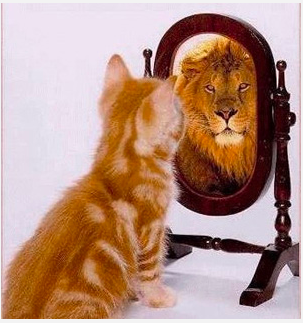
Scientific Materialism is the assumption that particle Physics is the foundation of reality, and that our ideas are simply products of material processes. Empirical Idealism doesn't deny the existence of a real world, but reasons that all we can ever know about that hypothetical reality is the mental interpretations of sensory percepts. Platonic Idealism (Myth of the Cave) calls those interpretations illusions, and asserts that true Reality is equivalent to an idea in the mind of God. Enformationism is compatible with both views, depending on your perspective.
http://blog-glossary.enformationism.info/page11.html
Ideality :
In Plato’s theory of Forms, he argues that non-physical forms (or ideas) represent the most accurate or perfect reality. Those Forms are not physical things, but merely definitions or recipes of possible things. What we call Reality consists of a few actualized potentials drawn from a realm of infinite possibilities.
1. Materialists deny the existence of such immaterial ideals, but recent developments in Quantum theory have forced them to accept the concept of “virtual” particles in a mathematical “field”, that are not real, but only potential, until their unreal state is collapsed into reality by a measurement or observation. To measure is to extract meaning into a mind. [Measure, from L. Mensura, to know; from mens-, mind]
2. Some modern idealists find that scenario to be intriguingly similar to Plato’s notion that ideal Forms can be realized, i.e. meaning extracted, by knowing minds. For the purposes of this blog, “Ideality” refers to an infinite pool of potential (equivalent to a quantum field), of which physical Reality is a small part. .
http://blog-glossary.enformationism.info/page11.html
-
Presuppositions
No. I actually agree with you, that the job of science is to test & "prove" hypothetical (philosophical) conjectures & factoids, in order to turn them into reliable & settled knowledge that can be used to predict the course of Nature. Unfortunately, scientific "facts", while temporarily "adequate for some particular task", remain subject to change over time. The scientific "facts" of Newton are now referred to as "classical physics", because they have been found to be inadequate at the quantum scale of reality.↪Gnomon
Philosophy doesn't "disagree" with science (or history) over "the facts" because science (or history) provides philosophy with "the facts". You and I, however, disagree over whether or not philosophy determines "facts" – I say philosophy doesn't, and only proposes ideas about or interpretations/evalutations of facts (as well as other ideas and interpretations). Only idealists seem to conflate ideas with facts so promiscuously and then leap to the conclusion that "philosophy is a/the science". For me, a realist, philosophy is not theoretical or a science. (Witty). — 180 Proof
So, Scientists "prove" philosophical hypotheses with practical tests, turning some of them into pragmatic theories. But then, Philosophers put some of those useful "facts" under a mental microscope, to discover the logical cracks in the facts. Einstein was a theoretical physicist, which is basically a philosopher who focuses on physics instead of meta-physics. He was once asked, "where is your laboratory?", and simply held up a pencil. By merely using imagination & math, he was able to turn classical physics on its head.
As the quote below asserts, Philosophers study "relations of (metaphysical) ideas", while Scientists study "matters of (physical) fact". When the two professions work together, human understanding progresses. Therefore, I also disagree with your denigration of philosophical reasoning, in that theoretical Philosophy is an integral part of practical Science :nerd:
Factoid : an assumption or speculation that is reported and repeated so often that it becomes accepted as fact.
Facts :
The word “fact” is used in at least two different ways. In the locution “matters of fact”, facts are taken to be what is contingently the case, or that of which we may have empirical or a posteriori knowledge. Thus Hume famously writes at the beginning of Section IV of An Enquiry concerning Human Understanding: “All the objects of human reason or inquiry may naturally be divided into two kinds, to wit, Relations of Ideas and Matters of Fact”.
Physics Needs Philosophy / Philosophy Needs Physics :
Philosophy has always played an essential role in the development of science, physics in particular, and is likely to continue to do so. ___Carlo Rovelli, theoretical physicist
https://blogs.scientificamerican.com/observations/physics-needs-philosophy-philosophy-needs-physics/
Philosophy may be called the "science of sciences" . . . .As a whole, philosophy and the sciences are equal partners assisting creative thought in its explorations to attain generalising truth.
https://www.researchgate.net/post/Philosophy_and_Science_what_is_the_connection
Gnomon

Start FollowingSend a Message
- Other sites we like
- Social media
- Terms of Service
- Sign In
- Created with PlushForums
- © 2026 The Philosophy Forum