
-
The allure of "fascism"
The masses have always been ruled by Fascists of some kind : Kings, Emperors, Lords, Dictators, WarLords, etc. But in order to placate the sheep, the shepherd always has to appeal to popular sentiments, even as he panders to their real needs (bread & circuses). Messy Democracy and confusing Pluralism don't seem to appeal to the "little" people they propose to serve. :smile:*Fascism might appeal to popular sentiments, by focusing on perceived social ills such as crass or vapid "consumerism/materialism". — IvoryBlackBishop
The Machiavellian Leader : The Machiavellian is exploitative, competitive, and selfish.
https://link.springer.com/chapter/10.1057/9780230281226_6
Note -- sound like anyone you know?
Fascism : a governmental system led by a dictator having complete power, forcibly suppressing opposition and criticism, regimenting all industry, commerce, etc., and emphasizing an aggressive nationalism and often racism.
https://www.dictionary.com/browse/fascism
Again -- sound familiar? MAGA : Make American (Plutocracy) Great Again
Pluralism vs Totalitarianism : http://www.bothandblog.enformationism.info/page6.html -
Incomplete Nature -- reading group
I don't know about "Neo-Kantian", but I now know something about "Aboutness". :joke:I have a feeling this is going to end up being neo-Kantian, but I'm happier with it than the last book I read on this topic, which was an evolutionary angle on the emergence of consciousness. — frank
The Power of Absence : In order to establish the plausibility of metaphysical causality, Deacon had to weed-out unwarranted assumptions of both physicalism and materialism.
http://bothandblog4.enformationism.info/page17.html -
Humanism gives way to misanthropy
"Hell is other people" ___SartreMisanthropy, the desperate realisation that all we have to work with is each other. — Banno -
Quantum Physics and Philosophy
Never Mind. Sorry my philosophizing got your scientific rigor riled-up. But your topic sounded like it was right down my metaphysical alley. :cool:If you are trying to cast doubt on senses and empiricism then you don't have any grounds for trying to tie quantum physics with metaphysics — Darkneos -
Quantum Physics and Philosophy
That's OK. I get the "Physics is Truth" treatment a lot, when I discuss Metaphysical topics. I'm familiar with the Materialist worldview of most Physicists. And that's OK, as long as they are doing Empirical Science. But when physicists cross-over into Metaphysics, they become speculative Philosophers.I'm not trying to shut the conversation down, I was replying specifically to posts about what physicists say and how physics is taught. — Mijin
For example, Einstein's early theories of "curved space" sounded like nonsense. But eventually, physicists were forced by the evidence to accept the weird notion of space-time imagined metaphorically as an immaterial "fabric". Idealistic Metaphysics is necessarily discussed in metaphors & analogies of "real" (i.e. concrete) objects. That's because abstract notions have no matter for the 5 senses to relate to. Only the sixth sense of Reason can imagine such "unreal" (i.e. metaphysical) things as ideas & concepts.
Einstein's Metaphysics : A knowledge of the historic and philosophical background gives that kind of independence from prejudices of his generation from which most scientists are suffering.
https://www.spaceandmotion.com/metaphysics-albert-einstein.htm
Fabric of Space-Time : The mass has got to curve spacetime, but it isn't actually a fabric: it's simply the nothingness that makes up the empty Universe itself.
https://www.forbes.com/sites/startswithabang/2018/08/11/ask-ethan-is-spacetime-really-a-fabric/?sh=5c47c36097fc
Don't worry about it. The remark was directed to those who think of Mathematical Fields as-if they are clouds, or oceans, of minuscule material particles, rather than of statistical mathematical "points", or "excited states" in "state space". Those abstract immaterial "points" are metaphorical, not physical. :smile:I can't parse this question. Seems you are saying both groups are aware of wave particle duality but tend to have a preferred description. Even assuming you're right about that...I don't see any conflict or inconsistency. — Mijin
State : State is a general word, often with no concrete implications or material relationships:
Fields : QFT treats particles as excited states (also called quanta) of their underlying quantum fields, which are more fundamental than the particles.
https://en.wikipedia.org/wiki/Quantum_field_theory
What Are Quasiparticles?: The Real “Fake” Particles of the Universe : https://www.youtube.com/watch?v=sC8Qym570m8 -
A hybrid philosophy of mind
Sorry I'm late to the party. Looks like you are being unfairly accused of Magic & Mysticism. I can relate.In this thread I will lay out a hybrid philosophy of mind: one that is eliminativist (nothing has a “mind”) in one sense, panpsychist (everything has a “mind“) in another sense, and emergentist (only some things have a “mind”) in another sense. — Pfhorrest
Your hybrid theory pretty much sums up my view. You and I are coming at this question from different directions, but seem to have met in the middle. We use different terminology, but come to similar conclusions. My custom coinages and usages are defined in the Enformationism Glossary.
http://blog-glossary.enformationism.info/
Mind is a “substance” only in the sense of Spinoza's "Universal Substance", and Aristotle's notion of "Hylomorphism" : Matter + Form (Essence). Hence, Brain + Mind.my physicalist ontology, which straightforwardly rules out the possibility of mental substances, and it is only in that sense that my philosophy of mind is “eliminativist”: — Pfhorrest
Strong Emergentism sounds like Holism, as defined by Jan Smuts. And the mechanism of that seemingly “sudden” emergence is the topic of physical Phase Transition. We know it happens, but not the intermediate steps, from water molecules to ice crystals."strong"emergentism holds some wholes to be truly greater than the sums of their parts, and thus that when certain things are arranged in certain ways, wholly new properties apply to the whole that are not mere aggregates or composites of the properties of the parts. — Pfhorrest
"Holistic thinking (in a broad sense) is currently aligned with systems theory in opposition to reductionist approaches, " https://www.tandfonline.com/doi/abs/10.1080/00359198709520121?journalCode=ttrs20
“Arranged in the right way” is what I call "Enformed". The “many details” are stages of enformation that occur as Energy causes physical patterns to change. Some of those changes are thermal, as in thermodynamics. But some result in different physical forms, as in liquid to solid transitions. The “magic” is simply the flow of enforming energy from one pattern of relationships to another. That pattern (form) change is what we call "Causation".consciousness as we ordinarily speak of it is something that just comes about when physical things are arranged in the right way. — Pfhorrest
Yes. The "precursor" of Consciousness is Universal (general) Information which begins as amorphous mental concepts (Plato's Forms) and then becomes physical Enformation in the process of Creation (Big Bang). Since I am not aware of any plausible scientific theory to explain the pre-creation source of Information, I adopted the Religious notion of an eternal BEING with the power to create new beings (G*D). I have no personal experience with that abstract Potential, so it's just a hypothesis to explain the data of the Real World. Enformation (e.g. DNA) is present in the "stuff" (matter) of which humans are built.So when it comes to phenomenal consciousness, either it is wholly absent from the most fundamental building blocks of physical things . . . or else it is present at least in humans, as concluded above, and so at least some precursor of it must be present in the stuff out of which humans are built, — Pfhorrest
I find the notion of sub-atomic particles possessing the attribute of human-like Consciousness, to be absurd. So I prefer to call that proto-mind, simply the "power to Enform" -- to cause Change (energy) -- which causes Emergence (significant change), which ultimately results in suitably complex physical formations as, A> Living Organisms (biological behavior); B> single-cell Experience of environment (touch, proto-experience); C> gradually increasing scope of Awareness (sentience): D> the extension of Aboutness (meaning), and E> finally producing the feedback loop of Self-Awareness, that we know as animal Consciousness. When that level is reached, it gradually expands its sphere of awareness to include Abstractions, which is a key feature of Human Consciousness.Panpsychism most broadly defined says that everything has a mind, . . . proto-experientialism — Pfhorrest
"Phenomenal Consciousness" (inter-relations between phenomena) may be prefigured in the mathematical “relationships” or “links” between imaginary “nodes” in a mathematical field, or between actual physical objects.But in saying that everything has phenomenal consciousness, — Pfhorrest
Yes. A rock is impacted by energy from the environment, and is changed slightly in response, for example, absorbing heat. But that kind of enformation is fleeting and trivial, unless it melts the rock into magma ( a phase transition; a new form or state). By contrast, a human experience is recorded as a memory (en-forms, engrams), which is translated into "first-person" meaning (knowledge), and may then be exported to other humans in words (symbolic information).but that first-person experience needn't amount to much if the thing having the experience is so simple as a rock or atom or electron. — Pfhorrest
I too, think of Reality as a universal Information network, with physical objects at the nodes, and inter-relationships (energy, forces) as the links. But each object (holon) is a network in itself.with the nodes in that web being the objects of reality, each defined by its function in that web of interactions, — Pfhorrest
The only “supernatural thing” in my worldview is whatever preceded the Big Bang as the First Cause, which is literally, and by definition, super-natural. The Cause of something new cannot be its own Effect.but then I also don't think supernatural things are possible or even coherent, — Pfhorrest
Yes, but it's hard to draw a hard line between primitive “experience” and sophisticated “awareness”. Presumably a single-cell organism is defined by having some distinguishing membrane between Self and Environment. But that would be the extent of its self-awareness. Humans, on the other hand, can picture themselves in relation to a much larger context, even a cosmic stage.But "minds" in a more useful and robust sense . . . as subjects have an experience that is heavily of themselves as much as it is of the rest of the world. — Pfhorrest
Yes. That's the problem for those who identify Mind with brain states. Mind is a function of brain states, but a function is the product, not the mechanism itself. The map is not the territory.I hold a view called functionalism, which holds that a mental state is not strictly identical to any particular physical state, — Pfhorrest
In my thesis, I call that universal functionalism EnFormAction : the act of Enforming (verb), and the state of being Informed (noun)."functionalist panpsychism". — Pfhorrest
Yes. A function is described in a map as a set of relations between This and That (ordered pairs). The relationship pattern is the meaning of the map.I hold that the function of an object, the mapping of the inputs it experiences to the behaviors it outputs, — Pfhorrest
"A function is a relation for which each value from the set . . . the first components of the ordered pairs is associated with exactly one value from the set of second components of the ordered pair."
I would limit “sentience” to the physical senses, one of which is the sensation of Pain. But the ability to differentiate Reality (as-is) from Ideality (as-if) is a later development of Mind, probably following the emergence of Self-consciousness.The first of these important functions, which I call "sentience", is to differentiate experiences toward the construction of two separate models, one of them a model of the world as it is, and the other a model of the world as it ought to be. — Pfhorrest
Those abstract “patterns” are what is known as Information. The ability to interpret those abstractions into personal meanings, and to use that knowledge for self-interest is the beginning of Intelligence. To use that knowledge for broader interests is the beginning of Wisdom.Sensations are the raw, uninterpreted experiences, like the seeing of a color, or the hearing of a pitch. When those sensations are then interpreted, patterns in them detected, identified as abstractions, that can then be related to each other symbolically, analytically, that is part of the function that I call "intelligence" — Pfhorrest
"An information pattern is a structure of information units like e.g. a vector or matrix of numbers, a stream of video frames, or a distribution of probabilities. "
Sapience = Wisdom. Self-reflective awareness : to put the Self into a larger context.That reflexive function in general I call "sapience", — Pfhorrest
Note -- The kind of discriminating judgment that few animals possess, and even few homo sapiens exercise to its full extent.
Indicative = symbolic; semiotic.an experience taken as indicative, interpreted into a perception, and accepted by sapient reflection — is what I call a "belief". — Pfhorrest
Interpretation = convert abstract information into pertinent personal meaning
Belief = acceptance of interpretation as useful to Self, or as part of personal Worldview -
Quantum Physics and Philosophy
Sorry Darkness. I don't believe in extreme philosophical Solipsism, as you imply. But then, Descartes' radical skepticism began from that starting position. He concluded that all else is uncertain to some degree. So, the point of his philosophy was to determine -- via reasoning from that foundation of certainty -- what was believable. Once underway though, most philosophers abandon that radical attitude and adopt a more pragmatic view.I know enough about philosophy to know that you are essentially trying to argue for solipsism. — Darkneos
Apparently, from previous comments, you doubt that even You have a Mind! But, you seem to act as-if you are certain of your own mental/brain powers -- whatever you call them. Do you believe that other people have similar faculties? On what empirical basis? Do you know anything for sure, outside the direct experience of your own mind/brain/senses? On what empirical basis? Have you directly experienced all the "facts" of Science, or do you accept the testimony of those who have personal (solipsistic) experience with the pertinent experiments?
Do you believe that a few of the posters on this forum have reasoning abilities equivalent to your own? Are you sure of that? Or is it just an inference based on your own solipsistic experience? Speaking of Empiricism, do you believe in the "Uncertainty Principle" of the Quantum foundation of Reality? :joke:
Solipsism : Solipsism, in philosophy, an extreme form of subjective idealism that denies that the human mind has any valid ground for believing in the existence of anything but itself.
Uncertainty Principle : https://en.wikipedia.org/wiki/Uncertainty_principle
Note -- Does the "Observer Effect" imply Solipsism?
The Philosophical Uncertainty Principle : The PUP establishes that: “It is impossible to know if some observation, measure or perception corresponds in fact to reality”.
http://www.genismo.com/englishtext_07.htm
Of Superposition and Solipsism : https://prizedwriting.ucdavis.edu/superposition-and-solipsism-survey-quantum-mechanical-approaches-addressing-%E2%80%9C-hard-problem%E2%80%9D
Radical Empiricism : a philosophical doctrine put forth by William James. It asserts that experience includes both particulars and relations between those particulars, and that therefore both deserve a place in our explanations. In concrete terms: Any philosophical worldview is flawed if it stops at the physical level and fails to explain how meaning, values and intentionality can arise from that.
https://en.wikipedia.org/wiki/Radical_empiricism -
Quantum Physics and Philosophy
Ha! I could match your snarky remark with : "your posts are like someone who doesn't understand Philosophy . . ." But I won't. :joke:Your posts are like someone who doesn't understand Quantum physics trying to explain what it is. — Darkneos -
Quantum Physics and Philosophy"Waves, particles, fields - how they can be consolidated in the mind, now there's a challenge for metaphysics."
Some scientists and philosophers think that "The Holy Trinity" of quantum phenomena are reducible to pure Mathematics. And some think that Mathematics is Metaphysics. Personally, I think that they all boil down to Ideal Platonic Information (Forms). That is a Metaphysical concept, but not necessarily a Mystical notion. Regarding Metaphysics, I am like the Argentine writer, Jorge Luis Borges : "Attracted by metaphysics, but accepting no system as true . . ." :smile:Think of this as a secular counterpart to The Holy Trinity: Father, Son, and Holy Ghost - all are one and there may be Christian mystics who can envision the three as one imaginary entity. — jgill
"Bohr regarded the "duality paradox" as a fundamental or metaphysical fact of nature."
https://en.wikipedia.org/wiki/Wave%E2%80%93particle_duality
Mathematical Metaphysics : https://plato.stanford.edu/entries/platonism-mathematics/
Waves, Particles and Fields : https://www.amazon.com/Waves-Particles-Fields-Introducing-Quantum/dp/0367198789 -
Quantum Physics and Philosophy
Sorry. I don't understand the question. Unless you are inadvertently referring to my Enformationism hypothesis. From that perspective, "waves, particles, fields" are various forms of fundamental Information : the power to enform; to create and to change. Moreover, everything in the natural world is a specific form of that general enforming power -- which you may be more familiar with in the form of Energy : the power to cause change.So how would you visualize them being one (imaginary) thing? — jgill
For the science behind that theory, you can refer to the website & blog. Mental Information is indeed imaginary : images & meanings created by the brain in the form of abstract mental patterns. But physical Information is what we call Matter : concrete enformed stuff. These notions may sound far-out, but they are integral to the cutting-edge science of Information Theory. :nerd:
Information Realism : https://blogs.scientificamerican.com/observations/physics-is-pointing-inexorably-to-mind/
Energy :
Scientists define “energy” as the ability to do work, but don't know what energy is. They assume it's an eternal causative force that existed prior to the Big Bang, along with mathematical laws. Energy is a positive or negative relationship between things, and physical Laws are limitations on the push & pull of those forces. So, all they know is what Energy does, which is to transform material objects in various ways. Energy itself is amorphous & immaterial. So if you reduce energy to its essence of information, it seems more akin to mind than matter. I call that creative energy : EnFormAction.
http://blog-glossary.enformationism.info/page8.html
Information :
* Claude Shannon quantified Information not as useful ideas, but as a mathematical ratio between meaningful order (1) and meaningless disorder (0); between knowledge (1) and ignorance (0). So, that meaningful mind-stuff exists in the limbo-land of statistics, producing effects on reality while having no sensory physical properties. We know it exists ideally, only by detecting its effects in the real world.
* For humans, Information has the semantic quality of "aboutness" , that we interpret as meaning. In computer science though, Information is treated as meaningless, which makes its mathematical value more certain. It becomes meaningful only when a sentient Self interprets it as such.
* When spelled with an “I”, Information is a noun, referring to data & things. When spelled with an “E”, Enformation is a verb, referring to energy and processes.
http://blog-glossary.enformationism.info/page11.html
Note : Regarding the existence of imaginary things : Photons are the closest to bits of physical energy we know of. But on Quora, someone asked : "do photons actually exist?', and a physicist replied :
"Well, on the one hand, photons most certainly produce observable effects, and that would seem to indicate that they exist. . . . On the other hand, photons cannot be associated with certain fundamental properties that we would expect any physically existing object to possess."
https://www.quora.com/Do-photons-actually-exist/answer/Armin-Nikkhah-Shirazi?ch=99&share=421fcb4e&srid=ozk3M -
Quantum Physics and Philosophy
There's no metaphysical mystery to such immaterial notions : they are all imaginary. :wink:Waves, particles, fields - how they can be consolidated in the mind, now there's a challenge for metaphysics. — jgill
"Imagination is more important than knowledge. For knowledge is limited, whereas imagination embraces the entire world, stimulating progress, giving birth to evolution." ___Einstein
Imagination : the faculty or action of forming new ideas, or images or concepts of external objects not present to the senses.
PS__"not present to the senses" = non-empirical; theoretical; meta-physical -
Quantum Physics and Philosophy
I'm sorry you feel that way. It's difficult to have a dialog with a mindless zombie. :joke:Mind does not exist, neuroscience killed dualism there. Qualia from what I have heard is a meaningless attribute that caries no real worth. — Darkneos
If you are a practicing Physicist, Chemist, or Biologist, you may have no practical need for Qualia, or Mind. If you are non-empirical Psychiatrist or Sociologist, you do need the concept of "Qualia", although you might call it by a different name. If you are any of the above though, why are you posting on a worthless Philosophy forum? Do you enjoy wasting your time on meaningless drivel? Or, do you "feel" duty-bound to set us errant "Mystics" straight?
For the record, I am not a Mystic in any sense. I have no Religion, and belong to no Cult. I don't believe in spooky ghosts or disembodied spirits, or mindless zombies. But I do believe that the immaterial Mind is the Function of the material Brain. It's what brains do. Brain functions are defined in terms of Qualia : what it feels-like to experience the world. If the Mind does not exist, then Brains are useless lumps of meat. I assume that you have a Brain, but based on your comments, I'll have to take you at your word, that you don't have a Mind. :cool:
Mind : the element of a person that enables them to be aware of the world and their experiences, to think, and to feel; the faculty of consciousness and thought.
The mind is the set of faculties including cognitive aspects such as consciousness, imagination, perception, thinking, intelligence, judgement, language and memory, as well as non-cognitive aspects such as emotion and instinct. ___Wikipedia
Note : is this what you believe does not exist? Or is the spiritual Soul that you deny? If the latter, I'd have to agree with you. In place of the ancient notion of "Soul", I prefer the concept of "Self-image", which exists as an immaterial pattern of neural activity. What substance are Faculties & Functions made of? In what sense do such non-entities exist?
Faculty : A faculty refers to any of your mental or physical abilities. If you lose your faculties, you are powerless.
Function :
1. the kind of action or activity proper to a person, thing, or institution; the purpose for which something is designed or exists; role.
2. Function, in mathematics, an expression, rule, or law that defines a relationship between one variable (the independent variable) and another variable (the dependent variable). -
Quantum Physics and Philosophy
I'm not proposing that philosophers start meddling in Physics, but that they stick to their specialty : Metaphysics. Besides, if it's "nothing, why are we still debating Metaphysics after all these millennia? Is it possible that there is more to reality than Physics? What does modern philosophy do, if not Meta-physics? If it's useless, why are you posting on a Philosophy forum, instead of a Physics forum? Apparently, some philosophers on this forum are motivated by Physics Envy.If we started allowing metaphysics into quantum physics we will get the same thing that metaphysics has yielded for the past thousand years, nothing. — Darkneos
https://en.wikipedia.org/wiki/Physics_envy
Could it be because Physics, after 5 centuries, still has not found the key relationship between Mind & Matter, or between Quantitative Substance & Qualitative Attributes, or between the Potentiality of Invisible fields & the Actuality of tangible objects? Could it be because Physics has atomized the world down to sub-atomic "particles" that are described as a "virtual" essence or simulation? Maybe it's because Physics has found that the foundation of the world is Mathematical instead of Material? Or that Gravity is no longer a physical Force, but a metaphysical mathematical "curvature" of empty space? If Quantum Physics, only statistically real, is not downright "spooky", as Einstein called it, it is literally Meta-Physical : beyond the scope of classical Physics. Yet, it remains within the scope of modern Philosophy. :nerd:
Metaphysics : Metaphysics is the branch of philosophy that examines the fundamental nature of reality, including the relationship between mind and matter, between substance and attribute, and between potentiality and actuality.
https://en.wikipedia.org/wiki/Metaphysics
Virtual :
1.The adjective "virtual" is used to describe something that exists in essence but not in actuality.
2. Computer science : a simulation of reality.
3. Physics : a virtual particle is a transient quantum fluctuation that exhibits some of the characteristics of an ordinary particle, while having its existence limited by the uncertainty principle.
Physics : relating to things perceived through the senses as opposed to the mind; tangible or concrete.
Note : Quantum Physics is neither concrete, nor perceivable by the five senses. It is conceivable only in the Mind, and describable only in mathematical language.
Does Science Need Metaphysics? : Science is anti-metaphysical. It doesn't care about the ultimate nature of what it is observing and measuring. Its models, its particles, forces, and fields, are not models of fundamental reality. They are useful abstractions that provide a common language for discussing relationships and measurements nothing more.
https://broadspeculations.com/2020/04/05/does-science-need-metaphysics/
"Where our scientific knowledge is insufficient and where theological answers fail to compel
and convince us, philosophy remains a useful endeavor."
___Ethan Siegel, astrophysicist, -
The Philosopher's Dilemma - Average People Being Disinterested In Philosophical Discussion.
A few people with degrees in philosophy make their living by offering Philosophical Counseling. But their professional niche is very small compared to Psychological Therapists, Religious Counselors, and Mystical Psychics. If you are in a large city, it might be worth looking into as a paid vocation. :smile:What do both of you think about therapy/advice to others about life and philosophy? — The Questioning Bookworm
Philosophical Counseling : https://en.wikipedia.org/wiki/Philosophical_counseling -
Quantum Physics and Philosophy
Yes. I'm aware that most physicists don't do metaphysics. But philosophers do. And this is a philosophical forum, is it not?. So, why not consider Metaphysical interpretations of Quantum Theory? Classical physics was turned upside-down by quantum queerness. That's because the substructure of reality was no longer viewed as solid little balls of stuff. The foundations of Reality are now described as invisible formless Fields of abstract intangible mathematical Information. As noted in my post above, those waving fields of nothingness cannot be seen in microscopes, but only in the form of abstract equations.And there is some relevance to my tangent here, in that modern physicists don't focus too much on metaphysical claims of what something "really" is. — Mijin
So, if physicists now think of particles as continuous waves in "fields" (wholes), why do some on this forum insist on referring to waves-in-an-empty-ocean as "parts" (particles)? A Field is sometimes defined as a "physical quantity", but it's actually a Quality, quantified in terms of metaphysical numbers (what color is four?). Quantum phenomena such as Entanglement are Holistic, not particularistic. I suspect that even analytical physicists are human, and can't relate realistically to amorphous generalities. Besides, they need measurable specifics (countable things) in order to do their math.
If philosophers, including us amateurs, are not allowed to focus on "metaphysical claims", what's left for us to argue about : second principles? :cool:
Metaphysics : the branch of philosophy that deals with the first principles of things, including abstract concepts such as being, knowing, substance, cause, identity, time, and space.
Ontology : the branch of metaphysics dealing with the nature of being.
Ontic : relating to entities and the facts about them; relating to real as opposed to phenomenal existence.
Note : Ontic investigations ask "what something really is". Particles are "phenomenal" (appearances), while Fields are "noumenal" (fundamental). Perhaps, both are "Real", but viewed from different perspectives.
According to Kant, it is vital always to distinguish between the distinct realms of phenomena and noumena. Phenomena are the appearances, which constitute the our experience; noumena are the (presumed) things themselves, which constitute reality.
http://www.philosophypages.com/hy/5g.htm -
Quantum Physics and Philosophy
If the number "four" is not a Metaphysical Object, does that mean it's a Physical object? If so, what is it's Being, Existence, and Reality? Are "concepts" Real or Ideal? Is Mathematics "fundamental" or trivial? :smile:Again no. Also I wouldn't argue that four is a metaphysical object, it's a concept. — Darkneos
Metaphysics is a branch of philosophy exploring the fundamental questions, including the nature of concepts like being, existence, and reality.
https://www.wikiwand.com/en/Category:Concepts_in_metaphysics
Note :not exploring mystical questions -
Quantum Physics and Philosophy
GMBAGnomon, you remind me of the adage, "if someone ascribes an attribute to a system that is not in that system, the person ascribing is most likely very far from understanding that system."
Metaphysics is something I don't understand. I don't even have a remotely useful concept of the concept. So I leave it like that. I don't go comparing metaphysics to thought, to consciousness, to QM, to miracles, because I don't have a working concept of what metaphysics is.
I think those who don't quite have even a rudimentary knowledge of QM or even of classical phyisics, ought not to take ownership of physics, and declare how QM is an explanation to non-phyisics phenonmena. — god must be atheist
I know that was a put-down. But, are you seriously implying that -- in your professional opinion -- Quantum phenomena do not belong in the Metaphysical "system". Apparently, you think I'm talking about Mysticism. But I'm simply following the lead of some professional Physicists and Information Theorists. So, I would agree that Quantum Fields do not belong in the Mystical system, But it does fall into the category of pure theoretical Mathematics, which is metaphysical, in the Aristotelian sense.
On a philosophical forum, you should "understand" Metaphysics, because it's the only part of ancient philosophy that has been left by "hard" empirical Scientists to feckless Philosophers, and to "soft" theoretical Physicists, such as Einstein. Even the big "E" couldn't reconcile his post-classical theories with the spooky empty-space-warping phenomenon of gravity.
Maybe the definition below will help you to understand Meta-Physics as Aristotle intended, not as "idle speculation" -- as attributed by some hard-nosed modern Materialists. Note the distinction between empirical "perception" and theoretical "conception". If you are thinking in terms of "classical physics", you are behind the eight-ball -- which is actually a hypothetical "wave" in a non-fluid immaterial field. :joke:
The Metaphysics of Quantum Mechanics : Quantum mechanics, like any physical theory, comes equipped with many metaphysical assumptions and implications. The line between metaphysics and physics is often blurry, but as a rough guide, one can think of a theory's metaphysics as those foundational assumptions made in its interpretation that are not usually directly tested in experiment.
https://link.springer.com/chapter/10.1007/978-3-540-70626-7_119
https://link.springer.com/article/10.1007/s11245-015-9344-1
Difference Between Metaphysics & Quantum Physics : Is quantum physics a metaphysics?
Although metaphysics and quantum physics deal with the scholarly examination of the surrounding world, the two approach the subject from two different disciplines, namely philosophy for metaphysics and hard science for quantum physics.
https://sciencing.com/use-plancks-constant-2378.html
Note : how "hard" is an invisible intangible Field that only exists in the imagination of a theoretical physicist?
Meta-physics :
The branch of philosophy that examines the nature of reality, including the relationship between mind and matter, substance and attribute, fact and value.
1. Often dismissed by materialists as idle speculation on topics not amenable to empirical proof.
2. Aristotle divided his treatise on science into two parts. The world as-known-via-the-senses was labeled “physics” - what we call "Science" today. And the world as-known-by-the-mind, by reason, was labeled “metaphysics” - what we now call "Philosophy" .
3. Plato called the unseen world that hides behind the physical façade: “Ideal” as opposed to Real. For him, Ideal “forms” (concepts) were prior-to the Real “substance” (matter).
4. Physics refers to the things we perceive with the eye of the body. Meta-physics refers to the things we conceive with the eye of the mind. Meta-physics includes the properties, and qualities, and functions that make a thing what it is. Matter is just the clay from which a thing is made. Meta-physics is the design (form, purpose); physics is the product (shape, action). The act of creation brings an ideal design into actual existence. The design concept is the “formal” cause of the thing designed.
5. I use a hyphen in the spelling to indicate that I am not talking about Ghosts and Magic, but about Ontology (science of being).
http://blog-glossary.enformationism.info/page14.html
Is Math Metaphysical? : http://www.askphilosophers.org/question/24527 -
Wondering about free will and consequentialism
Morality is not an arbitrary choice, but a deliberate decision to act in the interest of others. A freewill Agent acts in self-interest. A Moral Agent acts in Other's interest. :smile:Your position seems compatible with free will allowing an arbitrary choice between options. But how does morality become involved? — RolandTyme -
Quantum Physics and Philosophy
OK. But it's still Metaphysics. :cool:All particles are described as waves. — Kenosha Kid -
Quantum Physics and Philosophy
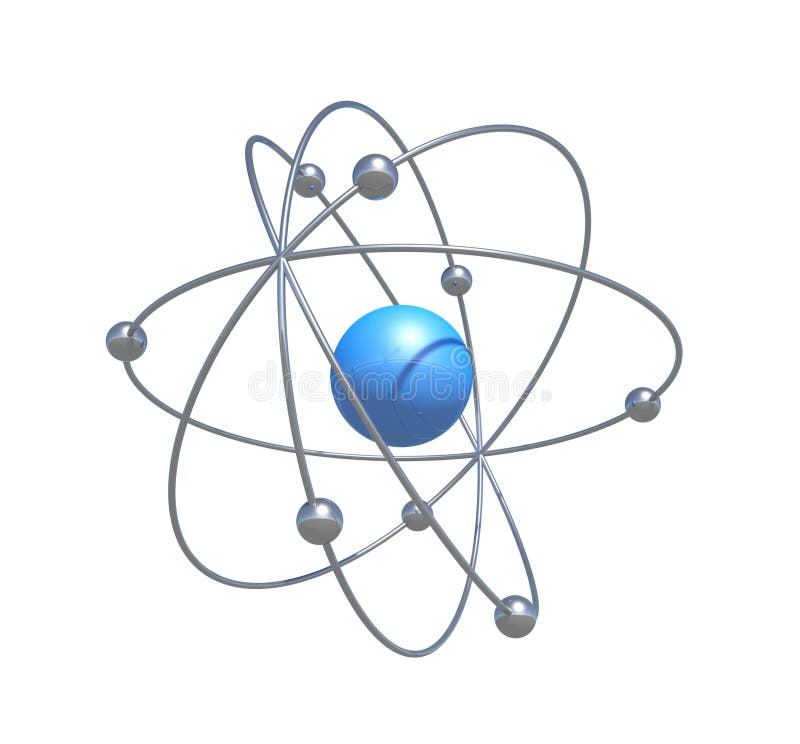
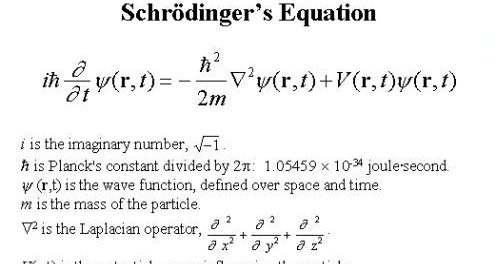
They may be described mathematically as waves, but they are portrayed graphically as balls. That's because the human mind can only imagine metaphysical abstractions as symbolic concrete images. It's a semantic difference, but applicable to this topic. Can you imagine the mathematical number "four" as a physical object? No, because it's a metaphysical object, for which we have names, but no realistic images. :joke:All particles are described as waves. — Kenosha Kid
Note: One of the numbers in the Schrödinger equation is imaginary.
-
Quantum Physics and Philosophy
If the thing studied is not physical, what is it if not meta-physical? :smile:As much as those who study Metaphysics WANT to believe that QM opens that door, they will be sorry to see it does not. — Darkneos
Non-physical : not tangible or concrete.
Definitions from Oxford Languages
Metaphysical : highly abstract, subtle, or abstruse.
philosophy of mathematics is concerned with problems that are closely related to central problems of metaphysics and epistemology.
https://plato.stanford.edu/entries/philosophy-mathematics/ -
Quantum Physics and Philosophy
That's what I said. A "field" is an abstract mathematical definition, not a physical object in the traditional sense. A "model" is an abstraction from physical reality, and can be studied only mathematically, not physically. :nerd:But others accept the fact that they consist of nothing more than abstract virtual mathematical information. — Gnomon
This is still debated but the answer seems to be no, they are made of fields. — Darkneos
Quantum Field Theory : QFT is used in particle physics to construct physical models of subatomic particles and in condensed matter physics to construct models of quasiparticles.
https://en.wikipedia.org/wiki/Quantum_field_theory
Quasiparticle : emergent phenomena that occur when a microscopically complicated system such as a solid behaves as if it contained different weakly interacting particles in vacuum.
https://en.wikipedia.org/wiki/Quasiparticle
Quasi- : seemingly; apparently but not really.
Definitions from Oxford Languages -
Quantum Physics and Philosophy
They still call it the Wave Function "of a particle". So, it seems that most physicists still treat holistic quantum level wave functions as-if they are tiny balls of stuff.Even so, most quantum physicists continue to "interpret" photons as-if they are petite balls of solid stuff. — Gnomon
They absolutely do not. — Kenosha Kid -
Quantum Physics and Philosophy
Sure, I'm sure, because I read it in Wikipedia. :nerd:Materialistic Science — Gnomon
You're awfully certain that there is such a thing. — magritte
Scientific Materialism : https://en.wikipedia.org/wiki/Scientistic_materialism
Materialism : Philosophy
the doctrine that nothing exists except matter and its movements and modifications. -
There is definitely consciousness beyond the individual mind
CathyI think what the challenge is here is in trying to converse more generally in a forum very saturated with nominalists who only want to converse in particulars. — Mapping the Medium
I must have missed this topic 10 months ago. I'm sorry you have been getting the "religious nut" treatment on the forum. I think you are correct about the predominance of Nominalists, who may also be Materialists and Atomists. But in order to converse with them, you will need to try to speak their language, which may not include much Piercean metaphysics.
Although I have no formal philosophical or scientific training, my mature thinking is more grounded in Pragmatic (William James) Materialism, as opposed to the Spiritualism of my youth. That may be why my attempts to read Pierce, and to follow your threads, tend to bog-down. Many of the words used are not in my vernacular vocabulary. For example, his "Synechism" (continuous) seems to be close to my understanding of Holism --- as originally defined by Jan Smuts in terms of Evolution, not as loosely used by New Agers. So, even though most posters are not interested enough to read voluminous links, It's OK to link to "expert" definitions as an extension of your personal opinions. But your key point must be made in the current post.
Another loaded word that gets gored in this forum is Consciousness, especially "Universal Consciousness" and "Panpsychism". That's one reason I try to avoid those latter terms. Instead of implying that every atom in the world has a human-like perspective, I say that serious scientists are coming to the conclusion that mundane Information is universal. And Consciousness is a later emergent development in the evolution of fundamental Information.
Personally, I am not so sure that human-like Consciousness is universal. But since planet Earth is over-populated with inter-communicating conscious creatures, some have speculated on the emergence of a Global Mind. It's a neat idea, but I don't know how to communicate with such a being. Plus, taking into consideration the chaos of the constituents, the whole system (Gaia?) might be half-crazy. :nerd:
“The beginning of wisdom is the definition of terms.” ___ Socrates?
Holism : https://www.philosophybasics.com/branch_holism.html
Ubiquitous Information vs Universal Consciousness : http://www.bothandblog.enformationism.info/page13.html
Note : a non-expert opinion
Is Information Fundamental? : https://www.pbs.org/wgbh/nova/article/is-information-fundamental/ -
Quantum Physics and Philosophy
There is a good reason why philosophers are intrigued by Quantum Theory : Theory, per se, is informed metaphysical speculation, as opposed to practical physical research. And Metaphysics is the residue of ancient Philosophy that was left behind by Materialistic Science for "feckless" philosophers to play with. For several centuries, Materialism was the dominant worldview for scientists. But after quantum queerness emerged from slicing atoms into sub-atomic "particles", the foundation of Atomism/Materialism as a worldview was called into question.then I see someone trying to apply the principles or certain interpretations to philosophy such as this: — Darkneos
Even so, most quantum physicists continue to "interpret" photons as-if they are petite balls of solid stuff. But others accept the fact that they consist of nothing more than abstract virtual mathematical information. This means that they are studied in terms of Metaphysics, rather than of material Physics. And that opens the door to philosophical speculation, which would never have been taken seriously before spooky Quantum Nature became the dominant theory of Reality. :smile:
Metaphysics :
1. the branch of philosophy that deals with the first principles of things, including abstract concepts such as being, knowing, substance, cause, identity, time, and space.
2. abstract theory with no basis in reality.
(i.e material reality) -
Intelligence And Evolution! Partners/Rivals?
Yes, I think "outlier" is more descriptive of the significance of the human mind, abruptly emerging in the midst of plodding Darwinian evolution. I agree with your intention, but I was thinking of "discontinuity" in terms of gaps. A "spike" is still continuous with the rest of the curve. But an Outlier is an integral part of the curve that is so far from the norm, that it is unpredictable and surprising --- something to be explained by Intention rather than Inertia. Evolution seems to be continuous, but it's occasionally punctuated by sudden unforeseeable emergent phenomena, including Life & Mind.Really? Which other animal has a language as sophisticated like ours, . . . The "discontinuity" in the IQ graph of all animals I was referring to? I don't know if there's a better descriptor than "discontinuity". . . . . I suppose "outlier" is a better word. — TheMadFool
My Cosmic Progression Chart illustrates the sudden upswing of evolution after the emergence of Life and Mind, especially the human mind. In the graph, evolution is continuous, so there is no miraculous gap to insert a soul into a living creature (a la Adam). Instead, the miracle is at the beginning, where there is a gap between nothing and something -- between eternity and space-time. Apparently, all future developments were inherent (potential) in the original program. :smile:
Outlier : An outlier is an observation that lies an abnormal distance from other values in a random sample from a population.
Punctuated Evolution : https://en.wikipedia.org/wiki/Punctuated_equilibrium
Cosmic Progression : http://bothandblog3.enformationism.info/page28.html
Note 1 : the graph can be enlarged by clicking in the image.
Note 2 : the curve is smooth because it was not intended to portray every punctuation.
Note 3 : click the red "here" to see comparable evolutionary progression graphics. -
What are the best arguments for and especially against mysterianism?
I don't think of G*D as an emotional humanoid person. So, I doubt that he-she-it would be offended by any slight or major disrespect. But I also don't think of G*D in terms of human-like Consciousness. Instead, my thesis is that Information (the ability to enform, both mental & physical) is the essence of our world, and of G*D. The power to Enform includes, but is not limited to, Consciousness : the power to know. In my thesis, G*D -- being ALL -- is not only the Sculptor (the Enformer), but the Clay or Marble (Substance) of universe, as in Spinoza's god-model. Just as Einstein's Energy is also Mass, G*D is both MInd & Mattter. Of course, this is just a philosophical hypothesis, not a religious faith. :cool:No disrespect was intended. What was intended was for you to consider the possibility of an infinite consciousness, and whether this violates any conceptions of God. — Pop
Universal Substance : https://iep.utm.edu/spinoz-m/
Note : Spinoza lived in the 1600s. So he was unaware of Evolution, of Big Bang theory, and of Information theory. So, my hypothesis includes all of the above, in addition to the notion of god as embodied in the world as the creative power of EnFormAction.
EnFormAction :
Ententional Causation. A proposed metaphysical law of the universe that causes random interactions between forces and particles to produce novel & stable arrangements of matter & energy. It’s the creative force of the axiomatic eternal deity that, for unknown reasons, programmed a Singularity to suddenly burst into our reality from an infinite source of possibility. AKA : The creative power of Evolution; the power to Enform; Logos; Change.
http://blog-glossary.enformationism.info/page8.html -
What are the best arguments for and especially against mysterianism?
Yes. Modern science has expanded the range of our senses, via artificial sensors, beyond the comprehension of earlier generations. But, we still understand that new information in terms of our inherited five basic senses. So, the only direction in which to find novel sensations is via the sixth sense of Reason, which allows us to infer and seek-out un-fore-known possibilities. This is not natural evolution, but artificial evolution. Yet, who knows where that accelerated process might go? And, how can we speak intelligently of the unknowable? :smile:Ok, I will ask you other simpler things. Do you think evolution will bring us new senses? If yes, can those senses be something that we cannot comprehend right now? — Eugen
'Whereof one cannot speak thereof one must be silent' ___Wittgenstein -
What are the best arguments for and especially against mysterianism?
I think the most general cause is BEING : the power to exist. Once existence is established, then other attributes can be inferred. And I'm convinced that the First Cause of our world was necessarily Intelligent and Conscious, because there can be nothing in the Effect (the Creation) that was not already, at least potentially, in the Cause (Creator). Since that First Cause had the power to create space-time from a speck of condensed Potential (the Singularity), I assume that the First Cause must also encompass all space & all time -- in other words : Infinite & Eternal.What if the original cause is consciousness, and the ultimate effect is consciousness? And what If consciousness is infinite? — Pop
That description sounds suspiciously like some concepts of a world-creator deity. So, for my thesis, I grudgingly call it "G*D", to imply divinity without attempting to define the undefinable. I think ancient sages described their primitive concept of the First Cause in terms of their limited contemporary knowledge of reality (Science). Today, we have expanded our knowledge to the cosmic horizon. But we still are not able to encapsulate the infinitude of BEING in any language. So, a modicum of Intellectual Humility should restrain us from trying to define, or to speak for G*D --- whatever you imagine he-she-it to be. :cool:
The effect is nothing but the cause in different form : https://www.indiapost.com/the-effect-is-nothing-but-the-cause-in-different-form/ -
Intelligence And Evolution! Partners/Rivals?
I agree with your general thesis " that intelligence is a favorable evolutionary development in organisms and that it gives its possessor an edge in the competition". But I don't think there is a "discontinuity" between animal and human intelligence. The evolution of intelligence seems to be a continuum, with no Gap to be filled with divine intervention. On the other hand, there is a distinction in human intelligence that makes a difference in successful reproduction. Human dominance over all other creatures makes us stand-out against the background of clever-but-limited solutions to the evolutionary algorithm.There's a clear discontinuity in the intelligence spectrum separating humans from the rest of the the animal kingdom. — TheMadFool
That "distinction" can be described in several ways, but I think it comes down to what IQ researchers call "General Intelligence" or "the G factor". Most animals are specialists, and their brains are well adapted to their narrow species niche in the eco-system. But humans have been able to adapt to every niche in this world, and is on the verge of attempting to inhabit exotic worlds, such as the Moon and Mars. So, highly-evolved space-faring aliens might recognize their kinship with the dominant animals on this blue ball. :smile:
Human vs Animal Intelligence : http://www.aboutintelligence.co.uk/why-humans-more-intelligent-animals.html
Humans not smarter than animals, just different : https://phys.org/news/2013-12-humans-smarter-animals-experts.html
The G Factor : https://www.verywellmind.com/what-is-general-intelligence-2795210 -
Intelligence And Evolution! Partners/Rivals?
I think my alien would also note that earthly Intelligence is a spectrum, and not confined to a single species. For example, crab-like creatures are so successful for their scavenger vocation, that the crab-form has evolved several times. They are only as intelligent as necessary for their niche.In order to drive home the point, imagine you're an alien visitor to earth and you observe that among the 8.7 million species on earth only 1 has intelligence. Would you think intelligent life is a success or a failure? — TheMadFool
Evolution is a heuristic procedure, and chooses the "fittest" from among many options, and to fit many niches. But is that process homing-in on a single trait, like general Intelligence? Or is adaptive intelligence merely one step on the stair to ultimate fitness success? Fit for what? :smile:
Crabs evolved 5 times : https://en.wikipedia.org/wiki/Carcinisation -
What are the best arguments for and especially against mysterianism?
I thought this topic was about Mysterianism. But, you want to limit the scope of "understandable' to biological beings? In any case, if an abiotic deity could understand even that-which-is-not-understandable . . . now that would be a mystery! :joke:No, I do not think it implies that. I think a true God can understand everything, not only everything understandable. — Eugen
Does "we" include any hypothetical inhabitants of Mars? Does superior understanding require bigger brains, and top-heavy heads? Does size matter for minds?my question could have been ''can we understand everything understandable?'' — Eugen
Would "we" include even earth-bound silicon life-forms (computers, robots, cyborgs)? Current artificial intelligences (AI) are pretty dumb, compared to human understanding, except for their speed in calculation. But faster calculation would not necessarily include superior understanding. The Martin Gardner quote above gave his opinion about computer understanding. For him the mystery was about Consciousness (the ability to know) in general.
Are you assuming that "superior minds" would have solved that known-unknown? Is your topical question about the limitations of natural evolution to create not only conscious beings, but ever-increasingly intelligent entities? If so, you will quickly cross-over into the realm of science-fiction, where boundless Intelligent Clouds of Energy sometimes reach god-like knowingness.
My Enformationism thesis offers a more realistic opinion on that subject : the creature will never be as intelligent or knowledgeable as the unknown Creator. So, the original Cause is more of a mystery than the ultimate Effect. :cool:
New mysterianism : a philosophical position proposing that the hard problem of consciousness cannot be resolved by humans. The unresolvable problem is how to explain the existence of qualia (individual instances of subjective, conscious experience).
https://en.wikipedia.org/wiki/New_mysterianism
The Q continuum : He is an extra-dimensional being of unknown origin who possesses immeasurable power over time, space, the laws of physics, and reality itself, being capable of altering it to his whim. Despite his vast knowledge and experience spanning untold eons (and much to the exasperation of the object(s) of his obsession), he is not above practical jokes for his own personal amusement, for a Machiavellian and manipulative purpose, or to prove a point. He is said to be almost omnipotent, and he is continually evasive regarding his true motivations.
https://en.wikipedia.org/wiki/Q_(Star_Trek)
Brain Size : In healthy volunteers, total brain volume weakly correlates with intelligence, with a correlation value between 0.3 and 0.4 out of a possible 1.0. In other words, brain size accounts for between 9 and 16 percent of the overall variability in general intelligence.
https://www.scientificamerican.com/article/does-brain-size-matter1/
The Singularity : Once the Singularity has been reached, Kurzweil says that machine intelligence will be infinitely more powerful than all human intelligence combined.
https://en.wikipedia.org/wiki/The_Singularity_Is_Near
PS___Sorry! I got carried-away with this open-ended question . . . . . . . -
What are the best arguments for and especially against mysterianism?
Do you think it's possible for a "superior" alien species in our physical universe -- or even in a forever multiverse -- to be Omniscient? That's what "everything understandable" implies. Personally, I doubt that any physical being -- who is limited by the laws of Nature, such as the light speed barrier to communication -- could know all (near infinite) possibilities, let alone understand them. That's why I refer to the hypothetical Being, who created our world from scratch -- not as a Darwinian species -- but as "G*D". That's a Creator whose laws are encoded in Nature, instead of stone tablets.''Everything understandable'' is more like a difference between us and a superior species if that exists. — Eugen
If you want to go beyond the physical & mental limits of our space-time world, in search of a "superior species", that hypothetical race of beings may not have the same sense of time that we measure by counting Moon cycles. So a timeless singular-or-plural Omniscient Entity would be equivalent to Western (Abrahamic) concepts of a Creator (Elohim or Yahweh). Or, If you prefer a self-existent physical Multiverse -- does it qualify as a collective being or species? -- to be responsible for the Big Bang -- it too would have to possess most of the attributes of an eternal deity.
Among those "divine" properties, we would necessarily have to include the mind-power of Intention (Will), since that teleological property has emerged in our own species in our own world. Would that kind of (super-natural) "superior being" answer your original question? :smile:
Intention : Doing something for a reason involves a belief about one's reason for doing it that constitutes intention in action. And prospective intention, or intention for the future, involves a belief about what one is going to do and why.
https://www.google.com/search?client=firefox-b-1-d&q=intention+philosophical+meaning -
Have we invented the hard problem of consciousness?
No. The problem of explaining the emergence of immaterial processes --- such as Life, Mind, & Consciousness --- was inherent in the theory of Materialism. That notion was based on the observation that physical Effects usually had prior physical Causes. So, it was just common sense to conclude that even meta-physical aspects of reality should be reducible to physical causes. Unfortunately, no one has ever found the missing link between Matter and Mind. This glaring gap in cause & effect may be why Plato concluded that ultimate Causes (Forms) were not physical, but meta-physical : i.e. Ideal.Have we invented the hard problem of consciousness? — Beautiful Mind
I have come to believe that the "missing link" in the emergence of non-physical phenomena -- such as the invisible Mind -- is the meta-physical process of En-formation : creation of novel forms of being. It's analogous to the mysterious emergences that physicists call "Phase Transitions". My odd notion of EnFormAction is derived in part from Shannon's theory of abstract Information (1s & 0s), and partly from the Quantum queerness of Virtual states of being. I have a thesis to explain how I came to such an un-real worldview. It combines elements of Realism with Idealism. :smile:
Hume on Causation : Natural relations have a connecting principle such that the imagination naturally leads us from one idea to another.
"And what stronger instance can be produced of the surprizing ignorance and weakness of the understanding than [the analysis of causation]?…so imperfect are the ideas we form concerning it, that it is impossible to give any just definition of cause,. . ."
https://iep.utm.edu/hume-cau/
Information :
Claude Shannon quantified Information not as useful ideas, but as a mathematical ratio between meaningful order (1) and meaningless disorder (0); between knowledge (1) and ignorance (0). Hence, that meaningful mind-stuff exists in the limbo-land of statistics, producing effects on reality while having no sensory physical properties. We know it exists ideally, only by detecting its effects in the real world.
For humans, Information has the semantic quality of "aboutness" , that we interpret as meaning. In computer science though, Information is treated as meaningless, which makes its mathematical value more certain. It becomes meaningful only when a sentient Self interprets it as such.
When spelled with an “I”, Information is a noun, referring to data & things. When spelled with an “E”, Enformation is a verb, referring to energy and processes.
http://blog-glossary.enformationism.info/page11.html
Enformationism : http://enformationism.info/enformationism.info/ -
What are the best arguments for and especially against mysterianism?
Humans, with their unique knowledge of Physics and Practical Mathematics, have come to the understanding that our world has not always existed, but had a definite beginning. Presumably, ants don't understand such abstract concepts, so remote from their experience. But since humans can conceive of a beginning of Being, should they also be able to understand the mystery of what, if anything, existed before the beginning --- before physical space-time being? Obviously, empirical science is of no help for such questions, because its methods only apply to things & events occurring after the mysterious emergence of space-time from who-knows-where-&-when. It's as-if such a priori knowledge is in a separate book of information, and written in an un-known tongue.my question could have been ''can we understand everything understandable?'' — Eugen
But some thinkers have employed their reasoning abilities to Theoretical Mathematical Logic, that at the time had no "known" practical application. Its only known value was the aesthetic of pure logic, But eventually, even some of those un-real abstractions have been "applied" to previously un-imagined zones of speculative Surreality, such as String Theory. So, it seems that we can "know", via theoretical reasoning, some concepts that lie beyond the range of unaided human senses. Does "everything understandable" imply everything logical, whether empirical or not?
There's no guarantee that we could theoretically come to know "everything". But it suggests that we should not dismiss un-proven theories out-of-hand. They may be glimpses of future knowledge. For example, Darwin's theory of Evolution sounded absurd to most of his contemporaries. Even Darwin had no idea how the process of evolution itself began to evolve. If he had knowledge of the Big Bang, would he have reconsidered the Genesis account of special creation? Perhaps as creation via evolution? :smile:
Theoretical Mathematics : Theoretical mathematics is the study of abstract mathematical structures which form the basic framework for the rest of the mathematical sciences.
https://math.asu.edu/research/theoretical-mathematics
Note: TM is "pure" or "non-empirical" logical reasoning apart from real-world applications & evidence. It's logic for the sake of Logic.
Sur-reality : having the disorienting, hallucinatory quality of a dream; unreal; fantastic:
Literally : "super", "above", "hyper", plus "real" : the world knowable to the physical senses.
Out of Hand : a concept that has not yet been "grasped", understood. -
What are the best arguments for and especially against mysterianism?
Yes. Hoffman has taken a bold step in the direction of answering the "hard question". His notion that Mind is fundamental is part of the answer. But my own thesis goes one step further, to analyze Mind & Matter into the same universal stuff : Information. This doesn't mean that everything in the world is conscious, but instead that the potential for consciousness is inherent in every part of reality --- that everything is enformed, with its own characteristic logical structure.Hoffman does not have the problem of how to get from matter to mind, because in his view, the mind is fundamental, not a result of the matter, and the question of qualia is irrelevant in this case because it is like you're asking why does God have these properties. This is a form of idealism, and there's no hard problem of consciousness in idealism. — Eugen
I won't go into the details here, but some physicists have expanded the role of Information, from mere fodder for computers, to the essence of everything : the Qualia (properties; logical structure) that make a thing a knowable object. In their theories though, it's abstract Mathematics that is fundamental. Moreover, in Shannon's theory of Information, every Thing and every Concept can be distilled down to Information, represented by 1s and 0s in a computer. But math is basically Logic without words. Logic is the invisible structure that binds things together in recognizable forms. Logic is embodied in all things.
And where on Earth do we find Logic? It's everywhere. Yet the ability to "see", to "know" Logic, the essence of Meaning, is found only in Minds, primarily human minds. So, it's reasonable to conclude that the immaterial Logical structure of our world is conceived by a higher Mind, a "divine" Mind. You can call it the "Great Mathematician", if you want to personify that mysterious creative enforming Mind. Just don't call it "God", if you want to be taken seriously on a philosophical forum. :joke:
Information :
Knowledge and the ability to know. Technically, it's the ratio of order to disorder, of positive to negative, of knowledge to ignorance. It's measured in degrees of uncertainty. Those ratios are also called "differences". So Gregory Bateson* defined Information as "the difference that makes a difference". The latter distinction refers to "value" or "meaning". Babbage called his prototype computer a "difference engine". Difference is the cause or agent of Change. In Physics it’s called "Thermodynamics" or "Energy". In Sociology it’s called "Conflict".
Fundamental Information : https://www.pbs.org/wgbh/nova/article/is-information-fundamental/
To Enform : 1. to form, to fashion, to create
Form : 1.shape, configuration, structure, manifestation.
The Form that a thing takes is how we know what it is.
Plato's Forms are ideas or concepts that define what a thing is, its properties or qualities. Matter is simply the clay that is enformed by design.
PS___Realism has a "hard problem" accounting for Consciousness and Qualia. But Idealism means that material reality is made of abstract Information (icons, symbols), just as Hoffman suggested. But, don't tell anybody --- they'll either think you're crazy, or that we are trapped in the Matrix. -
Microcosm and Macrocosm
Yes. My Enformationism thesis has a Matrix theme. But, it's just a metaphor. Our common reality is as Real as it gets. :smile:Have you entertained the idea that we could be living in a simulation? — Brian the wise -
What Do You Want?
That's because your heart's desire is not expressed in concise words, but in ineffable feelings.You don't know what you want. Neither do I. — Hippyhead
The Buddha knew what you want : the unobtainable. Which is the cause of your suffering.
"Ah, but a man's reach should exceed his grasp. Or what's a heaven for?"
___Robert Browning
Ineffable : too great or extreme to be expressed or described in words.
Want :
1. have a desire to possess or do (something); wish for.
2. a lack or deficiency of something. -
What Do You Want?
That admission dates you. I, too, am an elderly Lane lover. Where can I find a virtual Diane? When Actual is not possible, Virtual may be better than nothing. :joke:Sure, I like to joke about dating Diane Lane, — Hippyhead
Gnomon

Start FollowingSend a Message
- Other sites we like
- Social media
- Terms of Service
- Sign In
- Created with PlushForums
- © 2026 The Philosophy Forum