
Comments
-
But philosophy is fictionThanks. Is dramatising an issue what makes fiction successful in telling truths? — Tom Storm
Parables and fables are specifically designed for the purpose of providing truths. But the same can be said of more extensive works. And that holds not just for literature, but other forms of art.
And greater truths can derived from reality, as in the sort of truth and the prundity of meaning you may receive from experiencing a great success, failure, attending a funeral, a wedding, a childbirth, or seeing a sunrise.
If the world is imbued with meaning, no matter where you look, meaning well beyond the literal recitation of the facts can be found.
But this is the question of whether the meaning is in the thing or whether we're just programmed to find meaning where there is none.
It is true that we don't stare at castles and see random clouds, but we do stare at random clouds and see castles. That might be enough for some to deny the deeper meaning is real, but only projected, but I go with the opposite: that the deeper meaning is there in everything, available to be discovered if we only look hard enough. -
But philosophy is fictionWhat kind of truth do we encounter in fiction - do you have an example? — Tom Storm
To Kill a Mockingbird, for example. -
But philosophy is fictionUnlike poetry, which expresses heightened feelings and ideas through rigorous play with ambiguities, philosophy strives for clarity and precision in non-fallacious expressions of aporia or ideas; and yet like poetry, philosophy is not propositional (i.e. does not make empirical or formal claims) but instead is, IME, reflectively performative – in sum, consisting of proposals (e.g. suppositions, norms, interpretations, distinctions, criteria, etc). — 180 Proof
This better describes what analytical philosophy in particular aspires to achieve, but not necessarily continental philosophy.
To the point though, philosophy strives to achieve truth, which can be revealed in all sorts of ways, not excluding through openly fictional writings. -
Why are you here?I was actually recruited here by an international search committee to provide insight and hope for a troubled world. I've not disappointed.
-
Free Speech and TwitterI would argue that North Korea has very different reasons for banning western media. The US is not banning specific messages, it's banning a specific platform. — Echarmion
There are a number of concerns about TikTok that do make it different (like concerns that is being used to track user's locations and invade their privacy), but some are the same.
From https://www.npr.org/2022/11/17/1137155540/fbi-tiktok-national-security-concerns-china:
"They also worried about potential abuses of TikTok's algorithm, and specifically that it could "be used to subtly indoctrinate American citizens" by censoring some videos and promoting others."
This is to say they don't want the Chinese government to have the right to speak to American citizens in it own terms, which is to specifically declare that some sorts of speech cannot be spoken for the danger it imposes. And I think most would agree that we shouldn't allow our free speech rights the power to destroy us (the idea that the US Constitution is not a suicide pact) by allowing foreign governments to distribute their propaganda on US citizens. I compare this modern Tik Tok issue to the days when enemy propaganda leaflets would be dropped from airplanes.
But to say that we're blocking speech due to the message it imposes directly conflicts with the notion that we should allow everyone to speak freely because eventually truth will prevail.
There's also a new enemy of free speech, that works in an entirely different way: the targeted lie. We're now able to handcraft lies for the people most likely to believe them. The liar is no longer obligated to keep their story straight. They can sell a dozen different stories to different people. — Echarmion
I think that's right, which is the result of greater access to mass media, now that everyone has a computer and can post. When mass media was in the hands of the very few, there was more of an agreement to abide by journalistic ethics, which were emphasized to those studying to become journalists, to now that no longer being the agreement.
Twitter has shown that the DNC and Biden Campaign were given control of the message to disseminate, which is no different than when we learned that Sean Hannity of FoxNews was directly communicating with the Trump campaign and offering advice to them during the Capitol riot. The distinction between journalism and marketing is now forever blurred. -
Free Speech and TwitterThis brings this issue back up: https://www.npr.org/2022/12/15/1142828852/tiktok-senate-federal-ban-state-agency-governors
The US government getting involved in the suppression of free speech from TikTok on the grounds it is being used maliciously by the Chinese.
Is this not logically equivalent to the North Koreas banning Western media, with the only distinction that we trust our governments to ban but not other ones?
Is the rule that US citizens have a right to hear only from those designated safe? -
Why Science Has Succeeded But Religion Has FailedThey are counterexamples to your comments about "religion." This means your criticisms are not of religion but of particular religions.
23% of believers in God don't subscribe to the tenants of a particular religious doctrine, meaning we have millions of unaffiliated theists that avoid your silly criticisms.
https://www.pewresearch.org/religion/2018/04/25/when-americans-say-they-believe-in-god-what-do-they-mean/
You just hold firm to your untenable position that theism is a monolithic, unnuanced belief system. It's just factually incorrect. -
Why Science Has Succeeded But Religion Has FailedOf the extant major world religions, I don't know of one which is not. Which religion do you mean? — 180 Proof
For example:
https://en.wikipedia.org/wiki/Reform_Judaism
https://en.wikipedia.org/wiki/Unitarianism
https://en.wikipedia.org/wiki/Buddhism
This should get us started. -
Why Science Has Succeeded But Religion Has FailedWell I think finding one's own meaning in one's life is the proper use of one's life. Religion, no matter how its personalistic, is always, in essence, totalitarian – often infantilizing – with it's ready-made, handed down from on high, canonical "meanings". — 180 Proof
Alright, so you stand opposed to the totalitarian, infantalizing, ready-made religions. What about those that are not? -
Why Science Has Succeeded But Religion Has FailedNone of those pretend to be scientific, but are just people, like you, offering their opinions.
-
Why Science Has Succeeded But Religion Has FailedThe Islamic theocracy in Iran continues to demonstrate its willingness to murder its own citizens to protect the theocracy they impose on their population.
I don't blame all muslims or all the tenets of Islam, for the actions of the nefarious group in power in Iran. I merely cite their actions as an example of what those who manipulate theism and theists can achieve. I know that there are counter claims from theists about the nefarious actions to be found in secular governments. We need to have sufficient checks and balances against all manipulations of human primal fears, theistic, political and social. — universeness
You stand opposed to state sponsored murder as a means of population control, you don't blame the average citizen for the acts of their brutal government, and you also stand opposed to secular governments that do evil?
What is your stance on mothers and puppies? Are you in favor of those?
Based upon the controversial statements you made about evil, I bet you stand in favor of good things. I just bet you do. -
Why Science Has Succeeded But Religion Has FailedI cannot imagine that I am the first person who has introduced you to the idea that all theism is fear based. It's an ancient posit. — universeness
And yet you offer no cite to this ancient doctrine and ignore all the cites set forth in the Wiki article specifically on the point of psychology of religion. Again, you're making a generalized empirical claim regarding the cause of religiosity and going so far as to say there is no nuance among individuals, but that each and every religious person is there from fear alone.
Everyone at the services I attend seem pretty chill, but maybe they're scared shitless and I don't know it. -
Why Science Has Succeeded But Religion Has FailedI must have missed the lines in my bible "In the beginning was the unknowable" or "The unknowable alone is Holy", etc. — 180 Proof
I've never come from a position of literalism, nor from a position that the Bible is the revealed word of God. Are we really again going to trot out the attacks on the fundamentalists?
If you're interested in specific biblical theologies regarding the unknowability of God, take a look at Rambam's 3rd Article of Faith as it relates to the inability to compare God to anything, therefore making him unknowable. https://web.oru.edu/current_students/class_pages/grtheo/mmankins/drbyhmpg_files/GBIB766RabbLit/Chapter9Maimonides13Princ/index.html and https://aish.com/48942416/.
This response is not to suggest any specific accuracy in the Bible, but to respond to your suggestion that the Bible has not been interpreted as you've indicated. The unknowability of God is part of the biblical tradition.
I am also aware of the first line of John which has always been cryptic to me which states that "In the beginning was the word," with "the word" being a translation of the Greek "logos" which references simply order or meaning, making it vague at best.
This is consistent with probably the best translation of the first lines of the Hebrew bible (coming from Professor Richard Friedman): "In the beginning of God's creating the skies and the earth - when the earth had been shapeless and formless, and darkness was on the face of the deep, and God's spirit was hovering on the face of the water, God said "let there be light,."
This again describes God as an organizing force of a pre-existent universe. Again, not a terribly clear notion, and I think consistent with the unknowable.
And of course the Trinity, which the Catholic Church declares an eternal mystery, some suggesting that expressing an understanding of it is heresy.
At any rate, I'm not sure what you want to discuss, the OP as it relates to the failure of Christianity to blossom in the East, whether religious people believe only to find refuge from their fear, to discuss how you've interpreted your Bible versus how others have, or to suggest that science has empirically provable cosmological claims and that's what separates it from religion.
To the extent it matters, I've noted that the use of religious texts to determine facts about the physical world is not a useful endeavor. Finding meaning in one's life, for me, is the proper use of religion. I don't know how you use science for that, but if you do, good for you. But, to the extent you want to argue literalism, that's not interesting. -
Why Science Has Succeeded But Religion Has FailedThat just reads like sour grapes on your part. I know you cannot provide me with 'proof.' I only require more convincing/compelling claims than those you have attempted so far. My 'assumption,' is supported by your own words: — universeness
Sour grapes refers to the development of a negative attitude due to an inability to obtain something actually desired. You can feel free to read the parable.
My reference to the stupidity of the current line of discussion doesn't relate to my inability to obtain the delicious grapes you offer (whatever that inapt metaphor might mean here), but upon the idea that you throw out an amateurish, baseless, speculative, uninformed, and entirely unscientific theory and then you seek disproof, as if that's where the onus lies.
If you think the primary driver of religious belief is fear, then perhaps do some research on that subject and show me your studies. It would seem that if you advocate for a scientific perspective, you'd rely upon science for your claims. Here's a place you might want to get started: https://en.wikipedia.org/wiki/Psychology_of_religion
I would rather read your viewpoints rather than those of 'William James.' — universeness
What you'd rather do is drone on about some theory you arrived at while sitting in your recliner petting your cat and not be burdened by the extensive discussion that preceded your thinking about it. If we can't get beyond the question of whether you have randomly hit the nail on the head when you declared religiosity only arises as a byproduct of fear, it seems we're years away from advancing anywhere close to the current state of the debate to where something interesting might be revealed. -
Why Science Has Succeeded But Religion Has FailedI appreciate that but I reject it, as you have not convinced me that your faith is not fear based. — universeness
Yeah, but this is where the conversation unfortunately gets stupid, with you positing a baseless theory and then awaiting disproof of it.
You're not asking for a justification for faith. You're asking for me to disprove your false assumption that I have a need to cure my anxiety that you don't, and then I'm supposed to take that seriously, and then I'm to convince you that your random speculation is false.
There are pragmatic bases for faith, and I have brought them up in prior posts. You can take a look at William James' "A Will to Believe" if you'd like. There is something there worthy of philosophical debate there, unlike here. -
Why Science Has Succeeded But Religion Has FailedI think it does, under the wise suggestion of 'be prepared!'
It's your primal fear of the 'alpha male.' Your world is not under collapse only if you comply with what you perceive sustains it and part of that IS your faith that the 'alpha,' has your best interests at heart. — universeness
I don't find this psychoanalysis at all useful. It's based upon knowing close to nothing about me, your having no expertise in the matter, confirmation bias, and projection. It's just your way of saying you don't think religious views are rational, so there must be an emotional component, and that emotion must be fear. All I can tell you is that you're wrong as it applies to me.
Why do you thin god created the dinosaurs of the many many creatures that existed before homo sapiens? — universeness
To believe there is a purpose for everything but to not know the ultimate purpose is no more fatal to that position than is it to believe that everything has a cause but to not know what that first cause was.
I don't deny there was a big bang that represents the first cause, but I do deny there is true coherence to the theory that there can be a first cause when the scientific method requires that all events have causes. This is simply to say that inability to offer fully coherent theories of cosmology from either a religious or scientific view are necessarily going to be lacking. -
Why Science Has Succeeded But Religion Has FailedWhen you are really scared, do you ask your religious beliefs to help you? — universeness
That's the whole "there are no atheists in foxholes" thing. I don't know that I fall back on religion when things go bad as much as I try to figure out a way to make things better. But sure, I might resort to reliance upon religious views to sustain me should my world begin to collapse, but that hardly explains why I would hold religious views when my world is not under collapse.
There are no religious scriptural references to events from the Proterozoic up until way past the time of the first Homenids. God is a very recent invention. — universeness
And there is no literature indicating that people loved one another during those periods, so we must assume the lack of written documentation means love is a new invention. Or maybe writing was a new invention. That's option B. Or maybe there was writing to that effect, but those writings have been lost to time. That's option C. Or maybe primitive peoples didn't use writing to preserve the historical record. That's option D. Or maybe all of the above. That's option E. -
Why Science Has Succeeded But Religion Has FailedScience offers an unbias search for truth imo. Religion offers comfort to help to sate primal human fear. — universeness
It depends upon the person and the religion. My religious views aren't in place as an anxiety medication that you happen not to need.
I personally don't use my religion to answer questions about how the world physically works. I've candidly not ever turned to my religious leaders to figure out how to start repair my car, build a house, to cure me of an illness, or of any other scientific inquiry.
If not for the fundamentalists that provide an easy target for atheists to ridicule for their insistence that world was created in 6 days only for it to be flooded and annihilated of all life but for those animals protected on the Ark, we'd not have to continuously have these conversations about how religion is in battle with science. -
Why Science Has Succeeded But Religion Has FailedQuite right! Religion has always just assumed – canonized – "objective reality", which is its most profound failing. — 180 Proof
It's not a failing. It's an admission that the foundational elements of reality are unknowable, and you either start with Cartesian doubt that ultimately leads to solipsism, or you accept something as being an objective reality that is knowable, as opposed to noumenal. -
Why Science Has Succeeded But Religion Has Failed
Religion doesn't empirically "find," to be sure, but it does assert objectives truths. This is unlike science which does not assert objective truth. The concept of a non-relativistic reality is incoherent in a scientific model.It has failed to find objective reality, as the OP makes clear. — Art48 -
Why Science Has Succeeded But Religion Has Faileda Christian forum I frequent, the question was raised as to why Christianity has failed to spread across India and further Eastward. Here is my answer.
Gordon,
What you describe as “The abject failure of Christianity to break into India, expand, and continue Eastward” can be explained by comparison with the spectacular expansion of Western science throughout the world. Science offers objective truth; religion offers comforting fictions. — Art48
Your response is inadequate. The question was not why religion never found its way to India, but why Christianity didn't. If religion had not found its way to India (which is a false hypothetical), I suppose you could speculate that it was because science offered adequate explanation.
The problem is that there is religion in India, so the reason they've not accepted Christianity but they have accepted Hindu has nothing to do with science.
It's like asking why the Saudis reject Christianity. It's certainly not because they have found science and secular humanism satisfactory. -
Free Speech and TwitterI came upon this in a very different context, but it struck me as applicable:
The real struggle is not between East and West, or capitalism and communism, but between education and propaganda.
Martin Buber
His using education as the antonym to propoganda is clarifying. The absolutist free speech we demand appears in academic settings where there is a bona fide effort at extending our education, but maybe less so elsewhere. -
Anti-SchizophreniaI agree with @Shawn. It seems the OP is equating schizophrenia with doubt and then saying Descartes and those that followed him were anti-schizophrenic because they tried to resolve that doubt.
Schizophrenia isn't describable as a disorder that causes great doubt. It's a complex psychiatric disorder, where there may be varying degrees of hallucinations and paranoia, some of which the person may know aren't real.
Descartes' demon wasn't the creation of paranoid schizophrenic. He didn't run helplessly in fear of pursuit. He didn't wear a tin foil hat or look beneath his bed for demons. It was a thought experiment. -
Free Speech and TwitterIf it is the case that 'people' are prone to being convinced to do bad things by speech acts, even when those speech acts are well countered by contrary voices, then I'm struggling to see how these same people can be convinced to use censorship in a socially responsible way.
...Oh, hang on... I get it. The people doing the censorship are just better people because they're probably middle class and have a university degree... Yep, all makes sense now. As you were... — Isaac
The comments I'm making aren't controversial. The reason marketing and advertising work is because it's possible to convince people to do things they otherwise wouldn't. A course in advertising would not entail just telling the students to tell the truth because it is truth that convinces.
The US prohibits governmental censorship, so the role of the censor falls upon the free market, and it censors extensively. Right now the right is up in arms because it is learning Twitter did as the DNC asked it. Previously the left was up in arms when it learned that Hannity had a direct line to Trump's campaign staff. The news we get is the news they decide to tell us for whatever ulterior motive might exist.
The question is who you trust with the responsibility of correctly informing the citizens. Is it the government, the middle class with degrees, or whoever has the most power to control the private press, whether that be the gizzilionaire who can purchase the outlet outright, the former president, the current president's campaign leaders, or whoever else might be able to win the political battle to control it?
If you suggest average Joe has any ability to be meaningfully heard without concern of some sort of censorship from some authority regardless of what he says, that's never been the case. There are things I cannot say here, on Twitter, on Facebook, or pretty much anywhere that will not result in a rebuke from the market. And when I say "rebuke," I don't mean they'll just embarrass me with the truth of what they said and leave my position in shambles, but they will cancel me. My job, my reputation, and whatever else they can damage, they will. It is not just about winning the war of ideas. It is about winning a political battle and who controls what.
It's not as Mill suggests, nor which you seem to want to adopt, which is that society sits at an academic table and debates ideas, with all concurring when the truth is said, and through this point/counter-point, the truth emerges and from that truth another truth then emerges. If it were, I'd agree that only those fearful of the truth of their position would try to gag other members at this hypothetical table.
The force of one's position and what causes its acceptance is not truth. If it were, we'd not be having this debate. -
Free Speech and TwitterI say criticism, and you immediately think of racism? — Tzeentch
I offered a counter-example to your specious claim that it is only those fearful of the validity of their claims who wish to suppress their opponents. As if the reason I don't want racist speech on Twitter is because I'm secretly fearful that the racists are correct.
The ability to persuade someone does not hinge upon the veracity of the statements, as if we live in world where justice always prevails. History is replete with examples of bad people convincing people to do bad things.
To the extent we can reduce the impact of those who wish to spread their hate to avoid future acts of hate, I see as a good thing. It's not as if one suddenly commits a racist act without preceding that with racist speech and thoughts. -
Free Speech and TwitterIf we are to learn that Twitter openly assisted the Biden campaign, and this outrages us, what do we about this: https://www.cnn.com/2022/04/29/politics/hannity-text-messages-meadows-trump-white-house/index.html?
-
Free Speech and TwitterAversions to criticism are only held by people who know their ideas are flawed. — Tzeentch
That's just false speculative psychoanalysis. Aversion to racist rhetoric is fear of eventual oppression. That people speak of the evil they intend to impose is a reality, and stopping it makes sense. It's for that reason Musk censored Kanye. -
The ineffableWhat if language is less like a mail system, more like a construction site. What if instead of passing thoughts from one private mind to another, we use language to build thoughts, together, in a shared space. — Banno
If think the analogy correct, but I'm not sure it solves our ineffablity problem. Your statements are created by you and experienced by me, just as I experience your gesture, your clothes, the tree outside.
We both look at the same tree. I see X and you Y. I trust X and Y are very similar, but experiences are complex and filled with perspective, opinion, emotion, variations in our perceptability, and even the lingering taste of the morning's breakfast. There aren't raw data to be received all the same.
So you tell me about the tree, I liken those comments to my prior perceptions, and we share in the exercise of communication, which certainly does create within me a perception, perhaps a partially accurate sketch of your perception.
If that's sufficient for you to avoid a charge of ineffability, then we have a resolution. I'd contend though that it invokes an indirectness of the object to the perception, and doesn't work under a direct realism stance. In fact, it extend indirect realism to communicative events.
That takes us back to noumena and phenomena, which necessarily demands ineffablity. The object can't be known for what it is. The tree is an object as much as a proposition about an object is an object, both subject to interpretation, and neither coherently standing alone as a desipherable noumenal thing.
That is, I can't know what the tree objectively is and I can't know what you're talking about in an objective way. -
Free Speech and Twitterhaven't said anything about prohibiting speech. — Tzeentch
So then government sponsored propoganda is acceptable free speech, even though it is a characteristic of totalitarian regimes? -
The ineffableAKA - atheism leads to nihilism? — Tom Storm
Just that at some basic level, theistic or not, you're not going to get any where starting with Cartesian doubt. So posit what you need to and build from there, but don't get bogged down with criticisms of eventual solipsism. Just proclaim you take as a given that you're not the only mind in the universe deceived into thinking there are other ones.
Call it faith, pragmatism, foundationalism or whatever, but at a basic level you've got to just accept certain things as givens. -
The ineffableDid it have a good cover — Tom Storm
Meh.
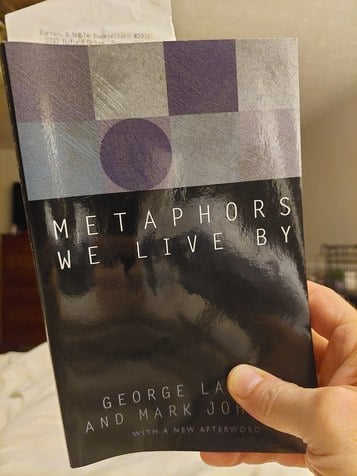
What do you make of the criticism that if words are metaphors we risk slipping into solipsism? — Tom Storm
That I can't know the specific contents of other minds doesn't mean I only know of my own mind.
I would agree with the observation that ultimately, with enough questioning of fundamental beliefs and given assumptions, that soliipsism, meaninglessness, and moral relativism eventually follow. Poetically speaking, all roads out of Athens lead to solipsism. All roads out of Jerusalem, to meaning. -
The ineffableOk, so how does this differ from, say, talking about a tree? Can you convey a tree by talk? — Banno
To convey indicates the transporting of my thought to your thought, a metaphorical movement through space, akin to a mail delivery, and of course that cannot be done actually. That is why it's ineffable, and that is why we talk "about" things. Aboutness (a part of intentionally) would be the mental state and the word ithe speaker's representation of the mental state. What is conveyed is my word representation to be compared to your word representation, which offers you an opportunity to see what my experience is like, but not what it is.
https://plato.stanford.edu/entries/intentionality/ -
The ineffableam very tempted with the notion that words are metaphors and I know you have already stated this leads to solipsism. — Tom Storm
Lakoff's "Metaphors We Live By" makes this point, a book I've both seen and read.
Prose differs from poetry in form, not substance. -
The ineffableAnd yet we do talk about them. — Banno
Because "about" means concerning or referencing, but doesn't mean conveying, which would mean transferring actual content. -
Free Speech and TwitterWe wouldn't want nazis controlling our government under the excuse they're only nazis when they're not in office. — Tzeentch
If Musk uses Twitter to spread Aryan supremecy, is that speech prohibited propoganda only if he associates with an established political movement, but not if he's just speaking his individual mind?
Seems all sorts of arbitrary distinctions being drawn here? -
Free Speech and TwitterNot surprising, no. Just more proof that governments shouldn't be trusted, especially not with the power to limit free speech. — Tzeentch
It wasn't the government. It was the opposition party.
There's no evidence Twitter was coerced. If they did delete tweets, it's because they were aligned.
Doesn't Twitter have the right to its own opinion? -
Free Speech and TwitterMaybe at some point he'll realize these sorts are not worth pandering to. — The Baden
He won't act from conscience. He'll count beans. If removal of the post will increase profits, that's what he'll do. It has nothing to do with consistent application of standards, good citizenship, or anything beyond gaining the best return on investment. -
Free Speech and Twittersuppose I disagree on the interpretation here by taking the free market speaking freely to be a form of free speech. — the Baden
My suggestion wasn't so much about non-person speech (like in corporate giving being a form of speech), but in stating that the speech limitations existing in the US are those dictated by economics. That is, we can openly be racist and scream it from the rooftop, but only if we own that rooftop. The regulations against hate speech result from media outlets refusing to publish it because publication will damage the publisher's profitability.
Speech is not absolutely free as long as there is a punitive response to certain speech, and it's false to claim that who imposes the punishment is what determines if the punishment is meaningfully restrictive to that freedom.
That is, if my racist rants result in Musk taking down my posts, how is that a more free system than the government taking down my posts?
Hanover
Start FollowingSend a Message
- Other sites we like
- Social media
- Terms of Service
- Sign In
- Created with PlushForums
- © 2026 The Philosophy Forum