
Comments
-
Joe Biden (+General Biden/Harris Administration)
More precise would be to talk of Democrats trying to adapt to a neoliberal global economy.Clinton and Obama were neoliberals as well, yes. — Xtrix
But are they really Reaganites? Did they have the same discourse? Rosy small government speak?

Harry S. Truman, October 10th 1952.Don't forget socialism. — James Riley
HA! That's perfect, @James Riley, absolutely perfect. -
Joe Biden (+General Biden/Harris Administration)
Yes, he (and Trump) are old. But then again, Americans just love old people as their leaders. For some unknown reason.I mean, it seems highly probable that any of the several other centerists candidates would be President right now if they had been given similar support. What makes Biden the one? — Count Timothy von Icarus
I think the main thing is that when we know that Biden won't be running again (and let's remember, this is his FIRST year), he will automatically get to be the lame duck. People simply will be looking past him for the next candidate making Biden a somewhat semi-lame duck. -
Joe Biden (+General Biden/Harris Administration)
Neoliberalism real fascism? That's too thick. (And how Reaganite were Clinton and Obama?)Compare to the last 40 years of neoliberal Reaganite policies. You'll find the real fascism there. — Xtrix
Fascism is just a meaningless derogatory adjective then. There with communism (for some). -
CryptocurrencyHi @TheQuestion, there has been a long debate about cryptocurrencies started four years ago in 2017 and many have been active on this front (the thread is 12 pages). Usually when the prices have gone lower the debate has faded away and the thread hasn't been used for months.
There's a somewhat "philosophical" debate about it.
Link to the Forums thread about the cryptocurrencies -
Joe Biden (+General Biden/Harris Administration)
Well, a lot can happen in American politics by 2024. Yet again, some people even now seem to live in the 2016 elections.The only thing that would be a surprise is if all of what you just said was not the case. — StreetlightX
If you pin your hopes on that...More likely he'll die from a heart attack because of his fast food diet. — Wheatley
Let's not forget that the nausea in US politics isn't only because of Trump. -
Joe Biden (+General Biden/Harris Administration)According to a poll, 44% of Democrats wants somebody else than Joe Biden to run in the next Presidential elections. That's somber news for Joe.
Then for the ugly side of the poll:
Half of Republicans, however, said former President Donald Trump has a better chance of winning in 2024 than any other GOP candidate on the ticket.
Another 35 per cent said they think someone else would have a better shot at winning the White House in 2024 than Trump and 14 per cent of Republicans and right-leaning voters said they are unsure.
So, Trump against somebody in 2024... oh what a rosy picture I can make in my mind about that! The US happily coming together again to decide an honorable leader for their country.
(Likely they won't name the campaign this, but it's likely how it would feel to the supporters:)

-
Parmenides, general discussionWould have loved to read Zeno's book.
After all, now we read the story from the writings of those who opposed the ideas, even if (hopefully) treated them respectfully. But it still begs the question if Eleatic School's view is represented in a negative light or some interesting view is not discussed. That Zeno came up with the problem of mathematical limits (or the infinitesimal) is no small matter. Starting from an indivisible atom has it's obvious problems as is putting natural numbers as basis of all mathematics.
And still, we take infinity as an axiom and yet these questions are raised for example in this Forum thousands of years afterwards. -
When is a theory regarded as a conspiracy?Even if intelligence services do have active measures and are active in "information warfare", the popularity and mind set of conspiracy theorists are far more abundant and popular to view this phenomenon as something instigated for intelligence services. Add there political parties and other political pressure groups and you have a better picture of the landscape.
Yet part of it emerges from the desire to basically have a community. If your views make you ostracized or even laughed upon, what better way to find similarly thinking companions from the internet! The "conspiracy theorist" often has this idea of people that oppose or who are indifferent of their theories as being "sheeple", the ignorant masses successfully controlled by the puppet masters, while they are part of the small crowd that has "seen the light". In a way, it works like a religious cult sometimes. And for the true conspiracy theorist that someone busts the myth in your supported theory, especially in the media, just shows how large the ominous conspiracy is and how much the "powers in be" are willing to silence their opposition.
Add to the picture how partisan the modern media can be (that makes it nearly similar to what the media was like in the 19th Century), and it's no wonder people are so suspicious that even whacky conspiracy theories take ground. -
When is a theory regarded as a conspiracy?
Of course there are the definitions found in any dictionary that show what is meant by the words.
But that isn't what makes conspiracy theories so interesting, the secret plots to do harm or something unlawful. It isn't the interesting issue here. It is more about a public narrative where some ideas and theories are accused to be conspiracies. It is a public narrative where conspiracy theories are promoted and some politicians accept them on face value... at least publicly. Naturally conspiracies do happen, but I guess it is far more usual that something is accused to be a conspiracy theory as to ridicule and critique it. Conspiracy theorists, as we all know, aren't held in respect and the definition has an obvious negative view. And, it should be mentioned, there really is a lot of goofy theories that stay in the media limelight.
As @SpaceDweller referred to "information warfare" and "psychological warfare", I would refer also simply to "populism". Note that populism doesn't mean something popular, but a specific viewpoint of there being the bad elite and on the other hand the ordinary (good) people.
And populism, both right-wing or left-wing, is the environment where conspiracy theories prosper as the populism basically is in the end a conspiracy theory: a conspiracy of the elite to disregard the common people. -
Brexit
Well, they were not so incompetent to lose the elections. Which likely they can thank the opposition.I do think though that there we’re issues with high rates of immigration between 2004 and 2016 and this made it easy for UKIP to employ xenophobia. However there were solutions to this issue without leaving the EU, but it would require competent government to achieve it. Tory incompetence wasn’t up to the job. — Punshhh
If someone can be gloomy it is Tony Blair and the Blairites, who are (I guess?) still bitterly opposed in the labor party. So bitterly opposed, that the Labor lost the election when by all means it should have won. As if social democracy that speaks to the masses and wins elections is so bad. But of course, idealists don't care about what other people think, because they are right and everybody else is wrong.
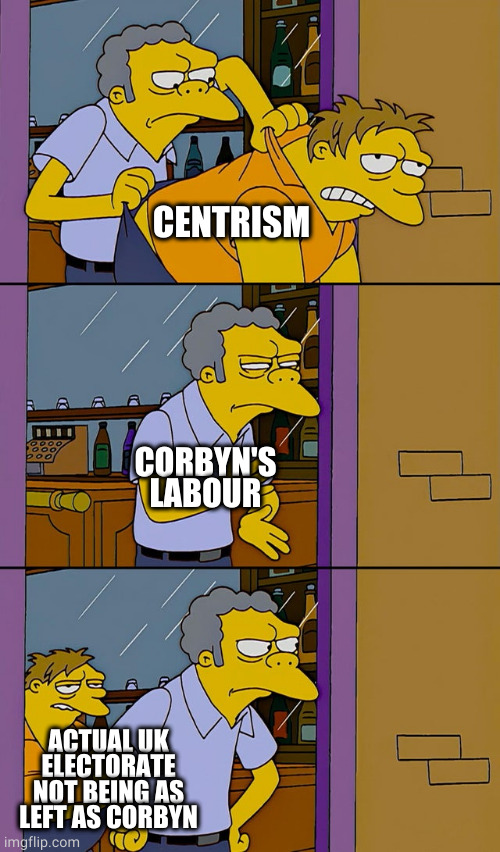
Of course, now it's other people in the leadership of the Labour party.

-
Joe Biden (+General Biden/Harris Administration)
Is it as bad your country?Yeah gee it's not like I talk about it all the time yeah real underestimating. — StreetlightX
You do have more parties than the US with labor party and even a green party. -
Joe Biden (+General Biden/Harris Administration)
Oh, you think that Americans could talk about the Democrats and Republicans together as an entity? Hah! Hard for others too.A nice merged one on conservative American Imperial leaders would be cool. — StreetlightX
You underestimate how successful the two parties have been in establishing a partisan divide between them. -
COP26 in Glasgow
It's more that people are taught to look at the future negatively and critically. Being optimistic sounds too much as being care free and not being worried about future. It isn't politically correct.You couldn't do an optimistic scifi movie nowadays. Nobody would believe it. — Olivier5
Hence Science Fiction is the best window for the feelings of the day when they were written or filmed. People show actually better the "signs of the times" with Scifi than with anything happening at the present.
It is an interesting point. Just look at the Star Trek movies and series of today and compare it to the original series (or even to the Next Generation). Not much if anything to do with the vision of Gene Rosenberry nowdays. Of course the optimism before the oil crisis is totally understandable. I remember the makers of the absolutely brilliant 60's movie, 2001: A Space Odyssey, did emphasize in an interview that they wanted the movie to be as realistic in describing the technology. If you make a simple extrapolation of the advances is space technology from the 1960's to the next 40 years with looking how the exploration of space advanced from the 1920's to the 1960's, it seems totally possible and realistic.
What the scifi-movies don't understand is the presence of history even in the future and that once a technology has advanced to some level, it remains so as there is no need to improve it. -
COP26 in Glasgow
Indeed. And if it is an international program with many countries participating, it will take a lot of bureaucracy also.If you plan x time for doing something, it will take x time (and then some) to do it. — baker
For example, the ITER-project, the International Thermonuclear Experimental Reactor, a project on fusion energy, was basically started at 1985 by Reagan and Gorbachev, which replaced the Intor-project of 1979. One participating country has even collapsed during the time the project has gone on...
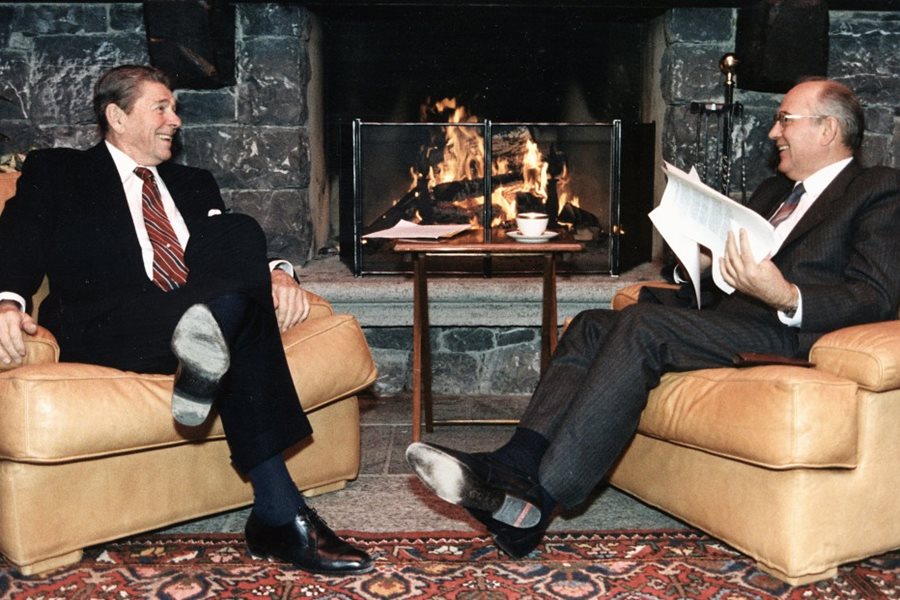
So, hope they finally get the project done I guess. Completion of the reactor is planned to happen in 2025.

-
COP26 in Glasgow
Oh yes, the horror, the horror... :razz:So you were exposed to books critical of the US as a kid? Shocking! I don't know how you managed to survived such deep narcissic wound. — Olivier5
And how will the future generations do in America with the US?
I think there is an obvious difference in what is said in a childrens book and what is taught at school. At least here.Climate change was already well studied and non-controversial when I was at school, in the 1970s and 80s. It was not propaganda at all; on the contrary, its denial was propaganda and still is. — Olivier5 -
COP26 in GlasgowWell, they do have anxieties about these issues, rightly so, and our inaction fuels these anxieties. Kids never fully trusted grown-ups, but now they have a very good reason to feel betrayed by grown-ups. Their future is sacrificed on the altar of the Almighty Dollar, Molloch style. — Olivier5
I remember from my childhood what kind of bullshit propaganda was fed to us as children by the "progressive" environmentalists. My educative parents bought these children books for me warning of the perils of pollution, as environtalism was known back then. Of course the real hysteria back then in the 70's and especially 80's was nuclear war and oh boy, did they want to scare us children with that. Those images of burn victims from Hiroshima did look scary for a young boy. And of course, that the US had dropped the atomic bombs wasn't forgotten, Oh no! (Somehow the "progressive" forgot the Soviet Union from the equation) I remember that in my childhood I got very confused and negative image of the US, thanks to leftist progressives in the media and the educational sector. There was hardly anything positive about the US in the media, while Soviet Union was promoted and talked with respect. But then I got the chance to be in the US and wow! It was so different from the depiction given by the leftists. Seattle Washington was a very nice place with friendly people and I really enjoyed a lot my time there, which made my country to look gloomy and an unhappy place with rather unfriendly people.
But coming back to the environmental educative books for children. First it was condescendingly naive, of course, as the target audience were simple children. There were the evil corporations billowing smoke because, they just were to billow perilous smoke and chemicals to the environment, and the solution given in the book was to put filters on the smokestacks and dig the ugly factories underground. Perhaps the filters part was true. But then as now, the real evil was capitalism, especially American capitalism.
The propaganda seems to continue with a similar tone as back then. -
COP26 in GlasgowIt's not the politicians who are making the difference. And not those apocalyptic whiners or those that the media has lifted on a pedestal to preach about climate change with religious fervor using the new lithurgy like you mentioned.
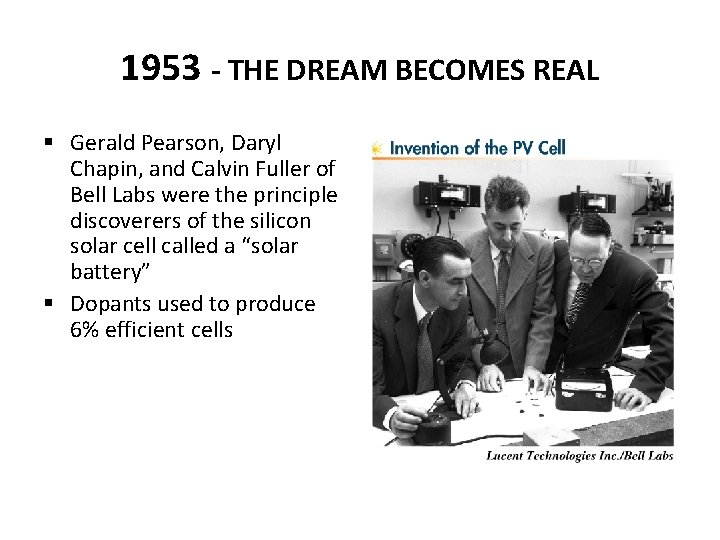
True change happens from the masses of people that we do not know or hear about. The engineers, the scientists, the inventors and those leading the companies and research groups making the change. Those doing the real answer of humanity to the problem are unknown to us and perhaps history will remember them later. We just assume our leaders are so important because they say they are.
-
COP26 in Glasgow
Well Bitter, I think you are the age that remembers the 1970's quite well.If it takes 50 years (a more manageable period for massive global change) we will end up far overshooting the deadline when helpful changes could be made. — Bitter Crank
A lot has changed in the World since the 1970's, so a lot can change also in the next 50 years. Even more quicker. We likely won't be seeing the 2070's, but I'm still optimistic. In general. -
Donald Trump (All General Trump Conversations Here)When interviewed in MSNBC, a D.C. Policeman Michael Fanone said it well:
"I don't believe Donald Trump was responsible for bringing us to where we are at, the divisiveness that exists in our country. He just exploited it for his personal gain."
Fanone had a lot of trouble to hide his disgust on how the police is drawn to partisan politics. He clearly understood he was on MSNBC and hence being an object to that (even if not so openly as he would be at Fox). Yet he couldn't restrain himself from bunching up those that either assaulted him and his fellow officers with or under a "Blue lives matter flag" and those that are against the police, until they personally need them.
And of course it isn't just the Metropolitan Police. The FBI got the first political pummeling with it's director trying unsuccessfully to do his job and first ended up being the villain first to the Democrats and then immediately afterwards to the Republicans. Funny how instantly the accusations changed and nobody remembered what had been said just couple months ago. Then came absolute mess that happened in the Justice Department in general during the Trump administration. And in the last occasion, it was the armed forces and the chairman of the Joint Chiefs of Staff, that was hurled into the limelight of partisan politics with having to answer a phone call of Nancy Pelosi (and, of course, the phone call went public).
Yes, I personally think the Trump Presidency was a disaster. But this disaster is continuing and spreading and as Fanone remarked, not just because of Trump. The divisiveness isn't going away, it's the new thing in town. Alex Jones, even if barred from mainstream media, has become mainstream in US politics as conservative politicians have surrendered to the conspiracy crowd. Yet if the voters were alienated from the political leadership, likely now the discontent is spreading to crucial parts of the government itself. At least officer Fanone didn't hide his distaste of American politics in the following interview.
-
To What Extent Does Philosophy Replace Religion For Explanations and Meaning?
One key issue in Christianity is that it was adopted by an existing Empire, finally accepted by the ruling class. I think this is the reason why just so much of philosophy of Antiquity is embraced in Christianity. Christianity just swam into existing institutions and society without breaking it. After all, the last existing organizational remnant of the (West) Roman Empire lives on with the Papacy and the Catholic Church. (They still use sometimes Latin, don't they?)The origins of Western religion is interesting and I am sure that Greece was central, but it is probably extremely complex. — Jack Cummins
Would have been a bit different if Jesus has had a similar career as Prophet Mohammad: raising an army an conquering his own Christian turf.
I think the down-to-Earth problem is that a person like Dawkins has gotten quite enough of hate mail from Christian fundamentalists that he has become bitter and simply has no respect for religious people, which make his views about them condescending. When it comes to religion, Dawkins is ready for the fight, ready to defend his precious science from creationists. I assume if the topic would be some new breakthroughs in science or interesting theories, he would be far open to discussion. And of course, Dawkins can pick from a multitude of lunatic holy-rollers. It tells something about the public discourse in the Anglosphere. I think Dawkins sees religion as a threat or at least a nuisance to science, and of course his personal experience likely has had an effect on him.The irony is that Dawkins’scientistic approach to empiricism makes his thinking religious in a broad sense. If a belief system is ‘delusional’ , an existential ‘falsehood’, that implies a correct truth, and the scientistic way of thinking puts scientific method in the privileged role among all the cultural disciplines of arbiter of truth as ‘correctness’. — Joshs
Here in my little country a similar debate between science and religion was started with a professor of astronomy (and a populizer of science) and a local bishop. But it simply didn't catch on in the same way. The professor, an atheist, didn't have to be defensive at all or explain his views just why he is an atheist (Finns aren't very religious, thanks to Lutheranism being a state religion). The bishop had no problems with modern science and was very informed as an academic. Basically neither of them irritated the other side and in the end you had a friendly and respectful exchange of views...which is boring for others than those deeply interested in the subject (and philosophy). -
Donald Trump (All General Trump Conversations Here)
Who cares if povetry at the global level has gone down. It's still me myself and I just hidden in the outrage against the filthy rich, somebody else.I am less pessimistic. Not all is well, by no means, but not all is terrible either. Never before did so many people enjoy a comfortable life. We have miracles at our disposal people 100 years ago could only dream about. — Tobias -
COP26 in Glasgow
Finger pointing doesn't work. It only irritates people. The blame game is simply stupid. Far more important is a) change in energy policy and b) invest in R&D and changing infrastructure & power production into non-fossil fuel alternatives. And I'll just repeat it once again: to counter climate change, it is the top 10 largest economies that matter and that growth in the developing countries happens with using non-fossil fuel energy. That is possible when renewable energy continues to get the investment as it has gotten as already the prices have dramatically dropped. Little countries don't matter so much.The US is in no position to pat themselves on the back or point the finger at India or China. Such a thing is ridiculous as China is around on par with the UK AND has the ability to make sweeping changes overnight due to their authoritarian regime. — I like sushi
That the carbon emissions in the US are decreasing is in my view a good thing.
As I in the other Climate Change mentioned, the role of energy policy can be seen from the example of France or Sweden. France consumes electricity 10th most in the World, but in carbon dioxide emissions the country is at number 19. Reason: France depends a lot on nuclear energy. Sweden's electricity consumption is 28th largest, however in carbon emissions the country is at 63rd place.
(One of the worst ways to produce electricity, but in many places the only solution: using personal power generators that run on diesel & gas. Yet in many countries the only way to get reliable power. Nigeria has more power generators than cars.)

-
COP26 in GlasgowThe poll results are not very encouraging. — TheMadFool
Think of the encouraging aspect of the poll. Nobody has answered "Don't care". -
COP26 in Glasgow
?India are not major contributors to the problem yet. — I like sushi
In reality total emissions matter, not per capita emissions. In fact having lower per capita missions means basically that these countries are even more important: they can easily increase their emission if and when the economy grows. It's the US and Europe where per capita emissions can fall.
The 20 countries that emitted the most carbon dioxide in 2018 (total)
1 China 10.06GT
2 United States 5.41GT
3 India 2.65GT
4 Russian Federation 1.71GT
And here's the US per capita carbon dioxide emissions. It's already happening in the US and Europe, the decrease of per capita emissions. India and China are really what we the World should focus on.


-
To What Extent Does Philosophy Replace Religion For Explanations and Meaning?There was a time I believe when western philosophy declared truth (verum), good (bonum), beauty (pulchrum) as the primary objectives of (doing) philosophy. — TheMadFool
Apart from the postmodern nonsense, I think those objectives still are present in philosophy. And I should note, even if I'm not an expert on the field, that Eastern philosophy has similar ideas too. Harmony and all that. Of course Eastern philosophy has an even more direct link to religion than it's Western counterpart.
Perhaps just your average teacher of philosophy doesn't dare to say the above. because everything "Western" should be bad as we ought to be "critical", right? -
Philosophical videosAnother quality BBC Documentary: Genius of the Modern World - Friedrich Nietzsche
-
Philosophical videosPlease continue. — TheMadFool
Incompleteness. Math has a fatal flaw. Veritasium. I liked it. — GraveItty
Dangerous Knowledge.

I know.
A lot will hate this BBC documentary about Mathematics, the foundations of Math and the incompleteness results, but it's a great series to watch. Not your boring math lecture. If you aren't so familiar with Cantor, Gödel, Turing or Boltzmann. Now perhaps not an "Eureka!" moment, but something very pleasing to watch after reading books about the subject. It's in five part at dailymotion. The link for the first episode below:
https://www.dailymotion.com/video/xdoe8u -
COP26 in GlasgowCarbon Footprint per capita (I wasn't talking money). — I like sushi
Ah! Well, with more prosperity, India could truly modernize it's infrastructure. India is the third largest consumer of electricity and about 80% of it's electricity production comes from fossil fuels. As being so big as it is and having such potential, the climate change fights front line is in India. For 1 million not to die of starvation annually, I think it would be a good thing. -
To What Extent Does Philosophy Replace Religion For Explanations and Meaning?
Exactly, and far more useful for us than only being objective.Being normative is natural. — James Riley
Add to this that things are very complex in reality. You can have good intentions while the outcome can be harmful.Another example, perhaps less emotionally charged: often, a given species will overpopulate within an environmental preserve, and authorities are forced to cull the population in order to preserve the biological stability of the particular environment in question. These animals are killed for absolutely no other reason than that, meaning than for the success of the species within that environment. Normally, the purposeless killing of an animal is considered a moral "wrong", but under such particular circumstances it is considered a morally "right" act. In other words, the "mores" in question are not absolute. — Michael Zwingli -
To What Extent Does Philosophy Replace Religion For Explanations and Meaning?
Yes. As I've said earlier, moral philosophy is for a reason a different branch of philosophy than let's say logic.If you have to "say it like that" for it to appear as an objective truth, then you simply highlight it's inherent subjectivity, do you not? — Michael Zwingli -
To What Extent Does Philosophy Replace Religion For Explanations and Meaning?
Unfortunately the thing is that we have to face and answer questions on how things ought to be (as many times not deciding is one fateful decision). That's normative, not objective.The only objective view is the one that sees everything we do as natural. — James Riley -
COP26 in GlasgowI think you'll find in terms of poverty China and India are miles apart. — I like sushi
And what has been the reason why people aren't dying of famines in China anymore and why they are miles apart?
Economic growth.
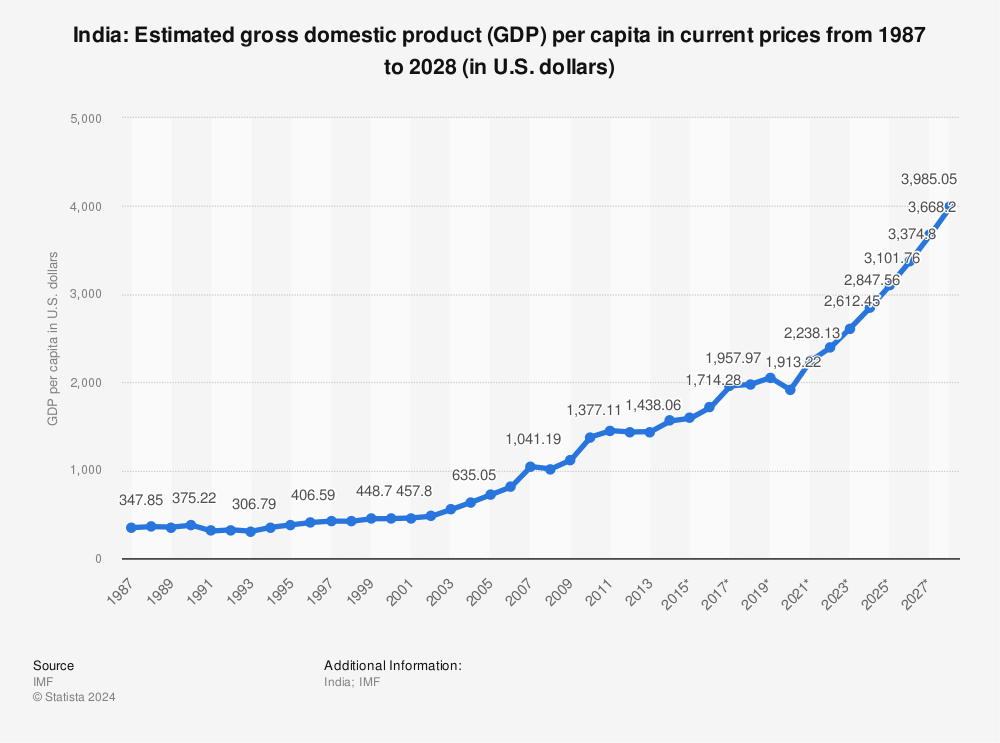
I wouldn't say that. India has finally started to grow. Thanks goes to abandoning socialist policies and embracing globalization.Per capita India is nothing. — I like sushi
(one statistics, with rosy forecasts. But notice that it's per Capita, so population growth is noted here)
A smart thing would be to give aid for India to use renewables and non fossil fuel alternatives in it's buildup of energy production and veer off from coal. A good way to understand just where the problem lies in the use of coal power can be seen from this interactive map "Carbon Brief". -
To What Extent Does Philosophy Replace Religion For Explanations and Meaning?Why, you think moral questions are easy and self-evident? Or that what you or I think are obviously the correct answers? Or just you?
Ok.
So an easy universal issue is that killing other people is wrong. Huge agreement with that, when we say it like that. But how about self-defense? When is it morally right to use lethal force for self defense?
Is it right or wrong to kill other animals? Is it harmful that human society has advance from the hunter gatherers to what we are today? A lot of species have died and there's global warming, yet for "human ecology" our way to mold this planet to serve us has been a great success story. Or how about issues with sex? Or substance use? Abortion?
All those issues that we now see as 'political' and where we see 'cultural divides' emerging on how people answer them. -
COP26 in Glasgow
Nice way to say this very important aspect. Yet do notice the huge political implications: modern agriculture is simply industrialized agriculture. It doesn't create jobs, the vast majority of those farmers and peasants (and their children) have to find work in other sectors. Subsistence farming has to go, it only extends povetry as in a prosperous country a subsistence farmer is the poorest of the poor.An agricultural revolution that can be exported to poorer nations would be ideal so anything in that area would be a useful focus imo. — I like sushi
Not an easy issue to handle, that's for sure.
One thing is for certain. I DO NOT think anyone should be bullying countries like India. They have problems of their own and it is delusional to expect them to starve their people to death (more than they are already). — I like sushi
So would bullying China then help more? I doubt it, especially when the country is suffering from blackouts. In fact, bullying Americans and Europeans hardly improves anything. Some like that some Greta Thunberg climbs on the podium to chasten the grown ups for not doing much doesn't help (ohhh...we are so bad). As explained well, a lot of the summit will be one huge theater piece.
What I think the most important is to hurry up technological change and simply make renewable energy simply cheaper than fossil fuels. That's the real change.And HURRY UP. If you don't change your lifestyle, you won't have a life of any style. — unenlightened
You see, the problem is that poor countries cannot implement technological change, but prosperous countries can. They can invest in research & development of new eco-friendly tech and make the leap from the fossil fuel economy. Hence you have to have more prosperous countries, not less of them. And since at least for a while the global population is growing, or economies should grow (or we will have huge tragedies in the future). Unfortunately this thinking goes against the moral vision that prosperity is bad, globalization is bad, we should repent at our sin of consumerism... -
To What Extent Does Philosophy Replace Religion For Explanations and Meaning?Even though it is a demonstrable objective fact that Earth is round (i.e. an oblate spheroid), it is not universally accepted to be so (e.g. "flat earthers" à la creationists). Same for the sustainability (praxes) of human ecology as the objective basis for ethical naturalism (which includes my '(aretaic) negative utilitarianism', etc). — 180 Proof
Did I understand you correctly that you argue that the sustainability of human ecology is the objective basis for morals, what is right or wrong?
That seems more like a tautology, which doesn't help much. It isn't simply that some people are ignorant to the facts that we have disagreement just what is good for the "sustainability of human ecology" and what isn't. People who might disagree with you and me on some moral principles aren't simply "flat earthers" who are or want to be ignorant about facts. These things are inherently subjective.
Moral philosophy, just as aesthetics (or would it be axiology in general) simply are in a different than logic, cosmology, etc. -
To What Extent Does Philosophy Replace Religion For Explanations and Meaning?
You might be on to something here. I think it is socially important to have those 'natural grounds' to moral norms that you talk about. Even philosophers try this and make the case for humanism. Religion of course has either gods or a god as the 'natural grounds' for moral norms. Moral norms and what is right and wrong have to be universally accepted in order for a society to work. Religions try to enforce those codes of conduct.cults alike were built on – with myths / mysteries even occulted – our species eusociality: that the natural grounds from moral norms are derived via (ecology-/culture-sensitive) defeasible reasoning. — 180 Proof
Which actually just shows that there's no objective answer, no logical deductive reasoning for such a subjective issue. -
To What Extent Does Philosophy Replace Religion For Explanations and Meaning?Metaphysics is beyond our reach. Yet metaphysics isn't totally unimportant. And so aren't the things that are subjective to us. What is good and what is bad, just or unfair, morally right and morally wrong. We cannot get an purely objective answer to these questions deducted from some logic. Yet we have had religions to answer these (and philosophy). If people have seen the answers to be good for a long time, no need to discard them because they are old views.
Yet some things do change in thousands of years, so part we can leave to it's own I guess. -
To What Extent Does Philosophy Replace Religion For Explanations and Meaning?They somehow see it as a taboo matter, imo at least. — dimosthenis9
It's not only the atheists. Simply Western democracies who want to uphold freedom of religion and be multicultural (in the positive way) don't simply want to brandish the religious aspects of their heritage. Or especially admit how their core values are partly Christian values. But we cannot escape our history.
Just look at the national flags of the Nordic countries. Do note the symbolism.
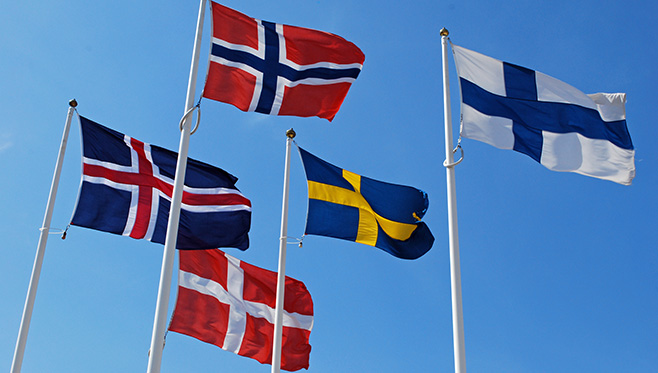
And when we enlarge this view to especially Muslim countries, the link between religion and the state is even more obvious and totally clear. Prophet Muhammad was a ruler of the Ummah and caliphs were the political successors to Muhammad. State and religion do go hand in hand. -
Donald Trump (All General Trump Conversations Here)
Ah, everything is happening because of the two-party system.It seems to me, though, that you may miss the sheer size of the US and its history of having mostly two and only two major parties, third-party candidates only occasional spoilers. A metaphor, if you will: European parties seem to us to be relatively small and agile, like small sailboats in a regatta, close-hauled into the wind, watching the tell-tales and coming about as the wind shifts, or running with the wind, watching to avoid an accidental jibe - in any case with an aspect of active sport, albeit however serious. — tim wood
Actually, the two party situation and that one party can have it all, both the Presidency and the control of the both houses of the Congress, is the structural reason for the "poisoning" of US politics.
First of all, naturally when there are only two parties, coalition governments don't happen. This is one of the most fundamental reasons why the parties can be so estranged from each other: they don't have to be team players. A strong third party would change this. Multiparty politics can at times town down the vitriolic rhetoric as you cannot portray the other party as dangerous madmen and then make a coalition party with them. It's true that multiparty party system can be as bad as the US system, but usually they work a bit better.
Second, you basically have a centrist party and a right-wing party. The left has not been there for a long time in US politics. Some will think it's a blessing, others as the reason for all the problems. Nevermind the democratic socialists like Bernie and AOC, they are in the DNC only to gather the leftist youth vote in a country that never has experienced true leftist policies. In a similar manner "the religious right" is close the GOP, but hardly makes a dent in true politics like a real religious party would make. Now the American voter might notice how limited actually the options are, so it's crucial for both parties to portray the other party as these dangerous loonies who will destroy utterly everything if they get into power. It's to get the voter at least to pick the less worse option. I would emphasize that it's crucial for any democracy to work that all major political stances are represented, because otherwise this leads to voter alienation, which is harmful. When there is no party that many people can find to represent their views, things get ugly. Democracy doesn't work, it doesn't feel at all to work for you. So hell with it, is a typical answer then. That's how the poisoning spreads.
The third crucial thing for the biparty system to survive is that they have convinced that "primaries" are part of the democratic system. The idea that change can be done through changing the political party itself. Actually Donald Trump did breathe a lot of life to this as the old GOP elite did lose it's grip of the party (and basically made it leaderless, as Trump is an orator, not a leader). The DNC with it's superdelegates etc. has been able to handle the theater better with great actors like Bernie understanding their role and sticking to the script.
Finally, the fourth reason is that the two parties have successfully discouraged the American voter of thinking that he or she can really instantly change the political landscape. That this could actually be done quite quickly, if there would be the will. No, this isn't understood. What is thought is that third parties won't work, they will spoil the chances of the "reasonable" candidate, and that it's impossible to gather root support emerging in all of the states. I know this apathy. Finns thought the same way for a long time also, that no new parties can have the ability to emerge. That people will vote for the old parties...because they have voted for the old parties. Well, of course, suddenly there was the anti-intellect people's choice party, the True Finns, which even in it's political statement describes itself of being 'populist'.
So...we got that too. :roll:
ssu

Start FollowingSend a Message
- Other sites we like
- Social media
- Terms of Service
- Sign In
- Created with PlushForums
- © 2026 The Philosophy Forum