
Comments
-
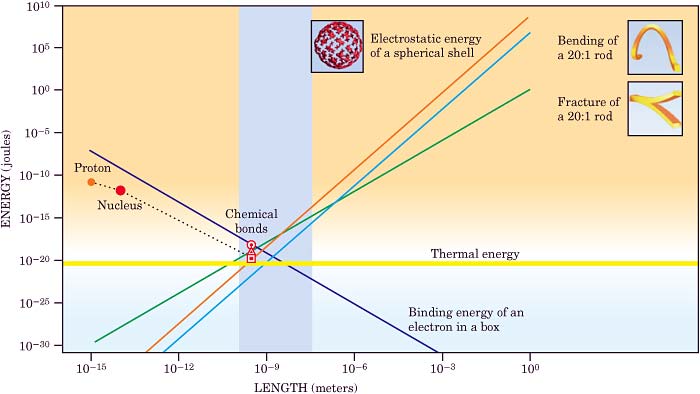
Intentional vs. Material Reality and the Hard ProblemTry http://rpdata.caltech.edu/publications/Phillips2006.pdf
Phillips, R., & Quake, S. (2006). The Biological Frontier of Physics Physics Today 59
-
Intentional vs. Material Reality and the Hard ProblemDenigrating what I say because I am a theist is an instance of the genetic fallacy, verging on ad hominem. — Dfpolis
But you called naturalism vague and irrational without good justification. And as a theist, you have yet to show that you are willing to deal with the metaphysical problems of theism rather than just cherry-pick naturalistic science that you can bend towards the support of a theistic conclusion.
I simply do not see the abstract and limited consideration of data on which natural science is (rightly) based as rational grounds for the a priori of logical possibilities -- which is what metaphysical naturalists do. Their blindness with respect to their to the fundamental assumptions, their preference for the a priori over the a posteriori, and their unwillingness to consider fully what is logically possible run counter to the entire scientific mindset. — Dfpolis
That may be true of some naturalists perhaps - the scientistic and reductionist type who are monists or eliminativists. But I am arguing for the systems science/holist/process metaphysics/philosophical naturalism tradition - the one that follows on from Aristotle and Peirce in particular.
So maybe you are just unfamiliar with that distinction? Systems thinkers are holistic naturalists and not reductionist naturalists. Hence the semiotic twist which recognises that things like finality and meaning are part of nature too. The goal becomes to give a fully scientific account of that.
You have your project. I can have mine. My claim is that a systems naturalism is what modern science now clearly supports. Whereas religious belief still makes bad metaphysics.
While I agree that the mind does a great deal of modelling, I think it is an error to think of mind primarily as a modelling process. — Dfpolis
If you have thought about it so deeply, you could then quickly explain why.
The Peircean position would be that mindfulness does reduce to the absolute generality of a sign relation. Even the Cosmos is built of regulative habit. So the active interaction is the primary one. A contemplative or self-reflecting consciousness would be a secondary "luxury" that emerges with systems complexity. And psychological science says the self-aware human mind, with its inner world of thoughts and plans, is still primarily an active rather than a passive modelling relation.
Psychological science did go through its Cartesian era - cogsci back in the 1970s in particular. But now it has moved on to an embodied, enactive, ecological paradigm. The mind is understood as a semiotic relation rather than a computational representation. The world has moved on, thankfully.
There are integral human beings which have material and intentional operations -- operations describable by physics and operations that are not. I have given my reasons for holding that there are human operations not describable by physics. You have chosen not to rebut any of them. Instead, you are making dogmatic and unsupported claims as though I had not made my case. — Dfpolis
I haven't rebutted that point as it is the point I explained. As my approach to naturalism is semiotic, it fits my metaphysics that our abstract accounts of reality must arrive at this essential duality of matter and information. Or as I would prefer to say, local degrees of freedom and global constraints. And in fact, as I keep saying, physics now supports that duality. Indeed, it has discovered the basis for it.
It all starts with the complementarity of information and entropy built in at the Planck scale. Context and event become indistinguishable at the microlevel. So the basis of a semiotic division - one that can develop thermally with Cosmic cooling and expansion - is a modern empirical discovery. You can't now do metaphysics and ignore that fundamental finding.
Information is context - the downward causation that bears down with a degree of certainty to shape material events. And entropy is local disorder or the degrees of uncertainty that then, in mirror fashion, are the creative grain of spontaneity which give something undirected to be shaped and woven into a developing history.
A similar empirical revolution is now unfolding in the biophysics of life and mind. In just the past 10 years, we have learnt how the quasi-classical nanoscale is a special convergence zone - analogous to the Planck scale - where the kind of semiotics that underpins biology can get its foothold. Molecular machines can exert their regulative stability on the thermal storm of chemical entropy. An informational context - as provided by DNA - can actually switch the wild energies of that scale and keep it directed towards the building of larger scale structures.
So my metaphysics arises out the scientific revolutions that continue to roll. I've come round to Peircean semiotics because that is how the science has panned out. I didn't start with a view and then choose my evidence to fit.
No, meaning need not result in action. Meaning is found in theoretical reflection as well as in practical reasoning. What action results from being able to distinguish essence and existence, or knowing that we cannot prove the consistency of arithmetic? — Dfpolis
You are talking about minds at the top of the food chain. As a philosophical naturalist, my argument is developmental and evolutionary.
So I am saying, sure, we have a modern cultural tradition - an attitude that arose in the philosophy of Ancient Greece - where the human mind is understood as essentially contemplative. As Plato said, look inwards and the enlightened mind will simply remember the realm of ideas. We celebrate this rather mystic and passive notion of mindfulness, putting it above the pragmatic kind of thought that is in fact the basis for our everyday, rather habitual and uncontemplative, being in the world.
But that is easy to see as a traditional cultural prejudice, not a view of mindfulness that psychological science would support.
So meaning remains founded in the ideas or theories that we would be willing to act on - stake our lives on if necessary.
Sure, philosophy, maths, poetry, and all other kinds of "contemplative" thought are good habits to cultivate. They are socially supported because historically they generate pragmatic social value. We pay folk to reflect in theoretical fashion ... because we get stuff like new technology and better ways of organising society as a practical outcome.
So the meaningfulness of theoretical reflection is ultimately pragmatic. It comes back eventually to its social utility, even if it can be a very long return journey with any number of sidetracks and dead-ends.
The angle of your argument is always to take the complex extreme of mindfulness and present it as the monistically simple starting point. As with Socrates, the philosopher becomes then top of the tree. The end of a journey is made the beginning.
I - as a naturalist - prefer to travel back to the root. And biosemiotically, that would be the nano-scale machinery that regulates the thermal blizzard we call the chemical basis of life. I can see the "mind" at work there - the active downward causation of organismic purpose and plan.
And thus there is both a basic duality - of information vs matter - plus its integration, as a living sign relation. We never get into the Platonic or Cartesian binds that are fuel for transcendent theistic arguments. That bad metaphysics gets cut off at the pass. Just as much as this triadic systems view also cuts off the bad metaphysics of monistic scientism at the pass. -
Intentional vs. Material Reality and the Hard ProblemIt seems to me that the meaning of a sign is information it evokes in the mind of the recipient. — Dfpolis
This is a passive/substantive notion of "mind". And it might fit a dyadic Saussurian notion of semiotics. But I prefer a triadic Peircean approach that fits the modern neurocognitive understanding of "mind" as an active process - an embodied modelling relation.
So the emphasis shifts to how intentionality actually engages with materiality. There is nothing much going on unless an idea is acting causally with material effect. There has to be that connection - that aspect of reality covered by finality or downward causation where purposes constrain the free play of material events.
Semiotics only makes physicalist sense if the ultimate goal - of information being used to regulate physical flows - is kept firmly in the foreground of the metaphysics. So there is no passive "recipient" - the Cartesian ghost in the machine. Semiotics is just about habits of interpretance. A sign is informational in that it acts like a logic switch to release a developed pattern of regulative behavior. Meaning is not evoked. It is meaningful action which is evoked.
To talk about meaning in and of itself in this kind of passive/substantive way would be an example of the fallacy of misplaced concreteness. Meaning is just a willingness to act in response to a sign. And the fact that some habit of interpretance is meaningful remains forever open to emprical correction. The consequences of acting in a habitual way either reinforce or weaken the habit in question.
So again, a triadic or enactive semiotics closes the supposed explanatory gap. It divides the world cleanly into the two parts of the information and the matter, the constraints and the degrees of freedom, the downward acting formal/final causes and the upwards constructing material/efficient causes. Then it also does the other thing of showing how what gets separated then becomes connected by an actual relation, a functional process.
It is the hylomorphic story. But updated by a clearer modern understanding of the science of semiosis. We now get the trick of how codes - like genes, neurons, words and numbers - can anchor the self-organising complexity of semiotic systems like life and mind. -
Intentional vs. Material Reality and the Hard ProblemNaturalism is a vaguely defined and, in my considered and elaborated view, irrational movement motivated by an a priori prejudice against what its proponents call "spooky" realities. — Dfpolis
A theist would say that. But scientific naturalism accepts the empirical evidence that life and mind evolved and so there are good grounds to expect nothing spooky or transcendent going on. That then leads to an appreciation of a systems approach anchored in the immanence of Aristotelian four cause thinking.
Call that vague and irrational if you like. Sounds more like classical metaphysical thought ... before the church got hold of it ... to me. -
Intentional vs. Material Reality and the Hard ProblemFor instance, the intelligible aspect of the voice as opposed to its arbitrary sound. — sign
That is why the semiotic approach would be that of a triadic relation. The marks serve to mediate between the meanings and the world.
So the word “chair” is merely a syntactic token. It is information in the sense that it is a mark that can be crisply distinguished from other marks, like “cheer” or “hair”. There are simple objective and physical differences in the sign. But what the sign then mediates is an understanding of a constraint on material possibility. It stands for a habit of interpretation with a physical reality in that only something that serves a chair-like purpose with its chair-like form can be accepted as a proper instance of a chair.
So the essence is that there are two worlds in interaction. The meanings or intentionality exist only because there is a material world that would give them a role to play. And what makes this possible is the sign, the mark, that can act rather unphysically as a logical switch. Information can be stored because marks can be unambiguously distinguished.
From a material point of view, this is a complete accident. As scratches on paper, it is meaningless whether the word is chair or cheer. And by that being maximally a material accident, it can conversely be the least accidental distinction underpinning a system of interpretance. It is the lack of meaning in one sense that opens the door to absolute meaningfulness in another.
This aspect of language use or semiotic codes is both obvious and yet not much appreciated. It shows why mind and world are in fact connected by a radical kind of disconnection. The accidents of the one can be the necessities of the other.
So this thread makes the usual fuss about an explanatory gap. But it is how nature arrives at a strong disconnect between the accidental and the necessary that explains the fact that life and mind are even possible. The degree of the disconnection is how minds, as models of reality, can stand apart so as to regulate the accidents of that reality, applying their own intentionality to that world.
Again, dualities only speak to the easily appreciated fact of a strong disconnect. The next step is to understand how the disconnect is the basis of the resulting more complex modelling connection. It is the triadic modelling relation which returns us to a physical naturalism. -
Intentional vs. Material Reality and the Hard ProblemSo, we have to look beyond physicality to understand information, and so the intentional realities that are essentially dependent on information. — Dfpolis
As a result, we can maintain a two-subsystem theory of mind without resort to ontological dualism. — Dfpolis
Alternatively, information and matter make a pretty sound modern naturalism. What can be dubbed the pan-semiotic approach.
Where we make a huge ontological mistake is to abstract the "mental" as a simple. A basic kind of substance or stuff. Mindfulness is instead a complex process. It arises as an elaboration of a semiotic modelling relation - the capacity for information to act as an enduring constraint on material instability. A system is mindful when it is regulating its material world - the world of fluxes and entropic flows. Intentionality is just this in spades. It is the evolution of a nervous system that can accumulate the memory, the habits, the plans, the information, to channel materiality towards the maintenance of living and knowing form.
So while it is commonplace to set up physicalism in strawman fashion as a brute materialism, in fact science has moved on to a systems understanding of materiality in which information plays the role of developmental constraints. History accumulates to regulate material instability. And this is just as true of the thermal cooling of the Cosmos that produces the current material reality of atoms and particles as the way the dirt of a landscape is the memory channeling the flow of a pattern of waterways, or a nervous system comes to encode a "selfish" set of regulatory habits and intentions.
Ontology does have to wind up with the ultimate simplicity of a dualism. A substantial monism (like everything is matter, or everything is mind, or even everything is information) can't work. It is the sound of one hand clapping. We always have to have a pair of ontic abstractions that reduce reality to some kind of orthogonal pairing. A dichotomy or opposition of parts.
But then that sets up an explanatory gap unless the two parts make a unity of opposites. The two abstract simplicities we extract from our experience of the world must make a properly matched duo - connected by being in a reciprocal or inverse relation. They must each be each others logical extreme in a formal sense. And that way, they then can be both ultimately simple and also in the kind of interaction that produces the more complex world we experience. There can be the actuality of the system - the triadicy of a hierarchical organisation.
Information and matter produce this kind of composite ontology if materiality is understood as a radical instability. Just action or fluctuation without shape or form. And then that gives information its physicality. It becomes the part of the equation which is the accumulation of events, the forming of a history or memory which then impinges on the material energies of the present as a constraining context.
It doesn't take much. If you have wax, you also have the possibility of the mark, the imprint, the sign. A little bit of material stability brings with it a little bit of informational memory. A history can start to build. The organisation of a world can begin. A past can start to constrain the present in ways that limit material possibilities and so anticipate a particular structured future.
Again, this is true of Cosmos that is locked into an entropic dissipative gradient - cooling and expanding its way to a Heat Death - as of a river snaking its way across a plain, as of a nervous system building up a rich modelling relation with its world.
So it is time to dump the theistic metaphysics. It is just substance dualism-lite to talk about information in contrast to matter ... if matter is not also re-imagined in its modern form of radical instability. Action without direction, or flux and fluctuation.
To still speak of the material aspect of being as a stuff with inherent properties is the strawman. It fails to keep up with modern physics. We now take a structural approach to particle physics where particles are stabilities only to the degree that instabilities have been contextually suppressed or thermally decohered.
Materiality has a new (pan-semiotic) ontology. And that makes a rehashed substance dualism old hat. -
Idealism vs. Materialism...a general difference to what? — Harry Hindu
To the emergent macroproperties. -
Idealism vs. MaterialismIn other words, it ceases to exist. — Harry Hindu
No. It reaches an equilibrium state where the continuing dynamic change ceases to make a general difference.
You would still call yourself actually you each morning even though, for instance, all your microtubules creating the cytoskeleton of your cells will have fallen apart and rebuilt a few times during the night. -
Idealism vs. MaterialismOne person's regulation is another person's freedom, and so it is with bullshit. — Janus
Hence the wisdom of collective rationality as epistemic best practice. If we agree how to measure something, then we can lift ourselves out of our individual ignorance.
No such unambivalent definition of what constitutes doing philosophy is universally accepted; — Janus
Sure. Philosophy would appear more tolerant. And having been pushed to the sidelines by the overwhelming success of scientific/pragmatic rationalism, it may indeed have turned to celebrating whatever social kudos it can cling on to. Flirting with irrationality and romanticism is a traditionally approved alternative. Academics can wander off and play that game too.
But when it comes to metaphysics, anything else but a pragmatic systems approach is going to be a waste of time.
the minimum requirement is that you provide argument or explanation for what you want to assert or even what you merely want to allow as a possibility, and that your argument or explanation not be self-contradictory. — Janus
But this is just aping the form of reasoned thought. By failing to agree on acts of measurement, you are just going to risk producing theories that are "not even wrong".
You seem happy with dualism and so you won't be too troubled that you are arguing for an epistemology that holds up a lack of interaction between the self and the world as an acceptable thing. It seems fine that a mind would invent a few syntactical rules and spin out the resulting logical patterns in "non self-contradicting" fashion. That's all minds do. Noodle away without a worldly purpose.
But consistent with my own meta-metaphysics, I insist on the primacy of there being some damn global point to the exercise. And acts of measurement - the ability to read the truths of the world in terms of a rational language of signs - is that bridge of interaction that connects our minds to reality.
The specificity of the measurement is what anchors the generality of the conception. Anything else is mindless free-wheeling.
Of course, metaphysics has its sacred spot at the centre of knowledge as it is focused on rational generalisation. It is always seeking to broaden the space of our conceptions. And thus metaphysics is still valuable to the degree it can be applied to the current frontiers of scientific thought. Especially in terms of mathematical explorations, we can hope to free-form our way beyond what we currently can conceive to measure.
Scientific advance is sold as working the other way round. First the troubling data, then the sweeping theoretical insight. But philosophy of science has exposed how much it is the other way around. A lot of practical difficulties with current theory has to accumulate. Then we notice that the facts never did exactly fit. And we are able to notice this having some even more general conception ... together with the even more highly specified measurements that the conception entails.
These days physics has boiled down to the measurement of entropy. And even information.
What we think we are measuring says everything about how we are conceiving reality. And this rolling revolution of thought is being advanced by scientists. When it comes to free-wheeling metaphysics, they are the least constrained by traditional thinking.
Lovers of the poetic can moan all they like, but metaphysics just ain't their strength. That kind of creativity is about the social and cultural sphere. And to the degree it can express concrete theories of how to live, then it gets tested by folk who try to live that way.
Does thinking like hippy, for instance, work as a social formula, a self-organising and self-perpetuating form of life? Does thinking like an existentialist, a romantic, a punk, or whatever? It does all come back to pragmatics even there. -
Idealism vs. Materialism"Must be regulated" for what or whose purpose? — Janus
So as to close the loop of reason and stop the endless torrent of bullshit that otherwise tends to flow. -
Idealism vs. MaterialismPeople may be divided into two primary groups; those who have (or allow themselves to have) such feelings, imaginations and intuitions and those who don't. ... It's all pretty subjective really! — Janus
What about those of us who believe that it being so subjective is the reason why the freedoms of the imagination must be regulated by the discipline of acts of measurement?
Peirce, after all, was the founder of Pragmatism. We conjecture and then we test. It works out pretty well as history has shown.
I think mind or spirit is usually imagined (to reverse Peirce's metaphor) as a kind of effete matter, an attenuated ineffectual matter that, because it is not governed by physical laws, cannot have physical effects. — Janus
That's exactly what you want to avoid. You must arrive at a duality that retains an interaction - which is indeed being generated from the start by that interaction.
So if you employ any form of words that arrives at a conclusion of two disconnected realms, you already know you took a wrong turn. You have managed to trip yourself up along the way.
The right approach is always a reciprocal relation, and hence dialectical or dichotomistic. The weakening of the one aspect is by definition the strengthening of the other.
You could argue that the discrete is "maximally effete continuity". But then also that continuity is "maximally attentuated discreteness". Thus each pole is linked to the other by the third thing of a spectrum. You can have strong continuity to the degree you can have weak discreteness, and vice versa.
This makes perfect sense for robust metaphysical dichotomies, like discrete~continuous, flux~stasis, chance~necessity, matter~form, and so on.
But it fails for mind~matter. And that is telling. It means a wrong turn got made and we should simply give up a dichotomy that doesn't actually work as a dichotomy should.
Now self~world can work as a dichotomy - one describing the epistemology of neurocognition, for example. We experience the world as "other" to precisely the degree that we also experience "being a self". All day long, we can be so engrossed in the flow of the habitual that the distinction is highly situated an enactive. We can chew our food, not bite off our tongue, and never see any big deal. While at other times we can step back and think about ourselves as "conscious beings" in a "material world", or some similar culturally-useful, socially-pragmatic, dichotomy.
But standard issue dualism - the theistic kind - has just failed as metaphysics because it made a very wrong step and wound up with a disconnected pair of parallel realms.
This doesn't say there is some actual hard problem that must confound science and everyone else. It just says you guys did some bad metaphysical modelling. For social reasons, you pushed a line that broke the sound rules of systems thinking. Go back and start again. Look for the triadic complexity which allows two poles to be each others' "other" in transparent and obvious fashion. -
Idealism vs. MaterialismIf it doesn't matter what we call the primary substance, then why the debate for the past 1000 years? — Harry Hindu
The debate here is really whether substance is primary or emergent. I am saying monism doesn't work, and neither does dualism. The simplest possible workable metaphysics is triadic - the kind in which substantial being, or actuality, is emergent from a developmental process of becoming.
And this kind of self-organising systems approach is what we find as our best current scientific answer. Aristotle got it early on. Peirce picked up the threads in a modern way. And science makes sense of both mind and matter in terms of self-organising systems these days.
It seems to me that the debate stems from our preliminary assumption of dualism and is solved through the realization of monism. — Harry Hindu
You are trying hard to make monism work. And it kind of does work if the "one thing" is the idea of a developmental process in which a fundamental instability becomes emergently self-regulating so as to produce comparatively stable being.
So there is one basic thing. Nature. The cosmos. Physical existence. But it is a systemic process. A logic of development and emergent order. And it thus has an irreducible complexity that can be most simply described in terms of three moving parts. In other words, the form of a hierarchy.
Jumping ahead to the physics, this is exactly how the science has panned out. You can see it everywhere. The Planck scale is defined by just three constants - c, G and h - bound in reciprocal relations to breath measurable existence into space, time and energy. The cosmos is described in terms of its triadic hierarchical structure - a quantum microscale, a relativistic macroscale, and then the good old solid and substantial classical scale that emerges between these two systematic limits.
The very shape of physics expresses a triadic metaphysics.
So the big mistake is to look for a monism without internal complexity. The simplest possible metaphysics that makes sense in actual descriptions of the world is a monism - a presumption of a closed system with all its causality bound up within itself - in which there are enough internal parts in play to explain the emergence of complex stable structure. And hierarchical organisation is the simplest model of a complex system.
Once you can count to three in metaphysical terms, then dualism or twoness becomes a lot less psychologically threatening to your worldview. You get to have your monism - a monism of one world - but a monism with the necessary complexity to describe a world with internal systematic order and a history of growth and development. Ie: The story modern science again tells since the discovery of the Big Bang~Heat Death developmental arc of our own universe.
So as Peirce laid it out so nicely, existence is a tale of three developmental stages.
You have the primacy of a Firstness or Vagueness - the chaotic initial conditions that is a realm of fluctuations without order or dimension, and thus a state of maximum possible symmetry (or sameness, or indifference - the two being synonymous).
Then if you have a symmetry which is a state of maximal disorder, then you can have the symmetry-breaking which is the phase transition to some new state of regulating order. You have Secondness or duality in which an asymmetry breaks out, allowing the new thing of relationships. You have the emergence of a globally regular difference between parts and wholes, figures and grounds, events and contexts.
Or in terms of Big Bang physics, you get the symmetry-breaking in which local microscopic particles are reacting energetically with each other within the background of a relatively thermally empty spacetime vacuum. You get that vital distinction between events and contexts which yield the further thing of some actual possibility of a history. The past becomes a thing as an accumulation of all the little accidents that define the present. The future also becomes a thing as all the little accidents or degrees of freedom that remain unconstrained and so living possibilities - actions to be dissipated.
In short, from the total disorder of a vagueness, we get the emergence of a dualistic difference between the many aspects of being. There is the concrete difference between the past and the future, the void and its events, the laws of physics and the accidents provided by degrees of freedom.
And because all these "dualities" are actually asymmetries - the product of taking possibilities to their opposing or reciprocal limits - they are really nascent hierarchical structure. As the universe expands and cools, it becomes ever more cleanly separated into its local play of hot events against an empty and inactive void. The bland radiation bath of the Big Bang clears to become a structure of moving particles in a spacetime vacuum.
The classical realm that we then see as substantial is the bit that emerges right in the middle - where enough crud gets lumped together in a shared inertial frame to lose its quantum indeterminacy and behave how we expect canonical substance to behave. Gas clouds can gravitationally clump to form fusion stars. Stars become factories of heavy atoms. Crud at a higher level of self-stable organisation, which eventually gets clumped into planets and spawns further developmental possibilities like symbolically structured life and mind.
So monism - if it is understood in the usual reductionist fashion of finding something primary, a material root to existence - is always going to fail. It didn't ever work as metaphysics. And science has proved it fails as an approach to modelling nature.
The first step out of monism was always dualistic in being some kind of ur-story of reciprocality or symmetry breaking. You need two to tango. And that is why metaphysics was born out of the logic of dialectical reasoning. The modern scientific understanding of existence got going once metaphysics had nutted out all the useful dialectical distinctions - the unities of opposites - like atom~void, discrete~continuous, matter~form, flux~stasis, chance~necessity, one~many, mind~world, and so on.
The mistake then is get stuck with this oppositional stage of metaphysical thought - to do what these kinds of threads always do and obsess about "fixing things" by getting back to some kind of monism. Or worse yet, to enshrine a dualism of substances.
So if the metaphysics winds up in an opposition of the ideal and the material, then the choices are a) argue for materialism, b) argue for idealism, c) argue for the separate and disjoint reality of both of these realms of being.
But all this is standard issue "theology". A legacy of the scientific revolution colliding with the Church. Folk took sides on something 600 years ago and have not escaped the confines of that debate ever since.
There was always another alternative - the one that the Ancient Greeks already expressed and which modern science has again arrived at. And this is the triadic or hierarchical systems view. Existence is a process. Systematic order is what naturally develops from unbound chaos. We now have testable mathematical models of this kind of reality creating organisation. The emergence of substantial being via phase transitions or symmetry-breaking is just a routine thing for scientific theory these days.
So maybe we have the odd thing of modern science - as a systems view - clashing culturally with the received "classical materialist" physics that has become the new folk orthodoxy. Materialism has become the secular theology. Everyone then wants to show they are on the right side by "eliminating" anything that questions their ardent monism. It becomes impossible to understand the scientific revolution that took place in the 20th century because they are still locked in mental combat with 16th century theological doctrine. -
Idealism vs. MaterialismYes. Dualism arises out of materialism by treating the mind as another kind of substance or stuff. Consciousness would be a property of that substantial being. So the hardening of opinion around the one led to a matching hardening of opinion about the other.
As you know, I would take a process view of both the mind and the matter. So some kind of duality is inevitable. But a hylomorphic one gets so many things right in in fact being triadic. It is about the interaction in which the substantial emerges from formal constraints on material freedoms.
That rather nicely confounds modern folk metaphysics in making the material aspect of things as immaterial as possible - a naked freedom - and the formal aspect of things is then the most substantial in being the structure that puts a limit, and thus gives concrete shape, to those material freedoms. -
Idealism vs. MaterialismI'm surprised you're responding without answering questions you've been asked. — Terrapin Station
But I told you. Until we get to the bottom of how little you have learnt on the issue over these past 45 years, where could one even start? -
Idealism vs. MaterialismWhy not type something about "constraints" now? — Terrapin Station
Lets not run before we can walk, eh. -
Idealism vs. MaterialismHow about answering the question instead of posturing? (And will you believe me when I say I'm surprised if you never answer the question?) — Terrapin Station
Did you want me to move your fingers for you as you type "hylomorphism" into Google? :razz:
You are the one posturing with your claims of 45 years of "formal" philosophical training. And I have been explaining as we have been going along. So your problem if none of this rings a bell. -
Idealism vs. MaterialismFirst I'm not even using the term "substantial being" am I? And I wouldn't. What in the world is that term saying that "matter" doesn't say? — Terrapin Station
I've been studying philosophy for 45 years now, and I have a "formal" background in it. — Terrapin Station
So in those 45 years, did you ever actually bone up on basic Aristotelian metaphysics? Seems not. -
Idealism vs. MaterialismWhat I posted.
Substantial being can't be just matter, or just form. And yet the folk position is that matter just IS substance and form ISN'T substantial. -
Idealism vs. MaterialismSo then my view isn't "the folk position. — Terrapin Station
Yep. Your position is that you back two contradictory positions without apparently realising it. -
Idealism vs. MaterialismIn other words you cannot. Saying a concrete thing was a bottle is just as aspectual as saying it is glass. — Heiko
Hence hylomorphism. Sure.
The thing is - the bit that actually interests me - is that we can talk very clearly about the formal aspect of substantial being, but it all goes very shifty as we try to drill down into the material aspect of substantial being.
Glass is just informed substance. Bottles are one of those possible forms. The silca molecules composing the glass are just another deeper level of informed substance. Silicon and oxygen can compose other possible forms. Particle physics tells us that the electrons and quarks composing the silicon and oxygen atoms are yet again just informed substance - localised excitations in a quantum field or frustrations in a vacuum condensate.
So for the materialist, it is turtles all the way down. Yet materialists don't seem to think they have a problem. -
Idealism vs. MaterialismIf It's "the usual folk metaphysics" and there's supposedly a problem with it, there would need to be a good argument for whatever the problem is supposed to be. — Terrapin Station
Correct.
Why would you be trying to contrast them or say that one is more fundamental? They're inseparable and incoherent without the other. — Terrapin Station
Again correct.
So the problem remains that you don't see the contradiction between the two statements.
Substantial being can't be just matter, or just form. And yet the folk position is that matter just IS substance and form ISN'T substantial. :chin: -
Idealism vs. MaterialismMatter may not actually be as it appears to us. — Harry Hindu
Sure. If we redefine matter as idea, I guess problem solved?
What are you talking about? -
Idealism vs. MaterialismEasy. You show that "bottle" is an idea that can be imposed on other materials, like plastic or metal. And you can show that "glass" is what you are left with once you melt your bottle to a liquid puddle.
-
Idealism vs. MaterialismYou know to put bottles into a glass-container, no? — Heiko
I can't make sense of this. -
Idealism vs. MaterialismToo muchI'm not using the term in an unusual way. — Terrapin Station
Too true. That is the problem. You are content with the usual folk metaphysics.
Re hylomorphism, matter necessarily has form. Form isn't something separate. — Terrapin Station
So if matter can never lack form, then ontically, what is matter in contrast to form? What could define it as fundamental?
I ask the question even though I know you will only talk past it. -
Idealism vs. MaterialismA bottle can easily be just glass... — Heiko
I don't think you are really thinking about what you are saying. If it is "just glass" then how is it "a bottle"?
You can separate the formal and material causes of substantial being. So you can point to the form - the bottle - and you can point to the matter - the glass. But then you are losing sight of the thing you thought you were talking about - substantial being - in saying the form "just is" the matter. Hey presto! -
Idealism vs. Materialismbut all ideas are composed of matter is what a realist would say. — Harry Hindu
A naive realist. -
Idealism vs. MaterialismAgain, there's a standard definition a few posts up. — Terrapin Station
But I asked if you could supply your own. Interesting that you won't.
Chairs and tables are matter. — Terrapin Station
This is an example of the confusion I was hoping you would clarify.
Is it true that chairs ARE matter? Or that chairs are comprised of matter? Or indeed that a chair is an idea we impose on matter?
If you are arguing for an Aristotelian position on substantial being, then all three of these statements work as different aspects of the same metaphysical package.
But I doubt you have any desire to endorse hylomorphic thinking. So how can a chair BE matter, as you state? -
Idealism vs. MaterialismNo. I was responding to someone who seemed to think that matter referred to something only microscopic. — Terrapin Station
So then, if matter isn't about a microscopic vs macroscopic distinction, how are you defining matter exactly?
...even though b is comprised of a. — Terrapin Station
So can the macroscopic stuff "comprise" the microscopic stuff just as well as the other way round?
Are you arguing for a top-down relationship as well as a bottom-up one in your understanding of materiality? -
Idealism vs. MaterialismWait--why would we be saying that either the particles or combinations of them are not matter? — Terrapin Station
You said they were not matter, implying matter was something else beyond particles and objects. I was trying to unearth the folk notions that you are probably relying on there.
The failure of that kind of materialism was exposed by Aristotle. Nature needs to be understood through the lens of ontic structuralism or hylomorphism. But still, folk notions of matter continue to rule for everyday pragmatic reasons. -
Idealism vs. MaterialismIt's not as if quarks and leptons and protons and neutrons etc. are matter, but when they're in larger combinations--including rocks and shoes and trees and buildings and mountains and planets, it's no longer matter. — Terrapin Station
If the particles aren't matter, and the combination of particles are not matter, then what is matter?
I'll answer. The usual folk notion is that matter is a stuff, a substance - physical being. So it is a material suitable for construction. It exists in stable located fashion, occupying space and time. It has stable inherent properties. And it is suitable for turning into mixtures or combinations of greater complexity. It is pliant in some regard while also being stiff enough to maintain its identity as a part of some composition.
In short, this deep ontological question is normally approach from the shallow end of the pool where a human-centric set of concerns is uppermost in our minds. We are looking out into the world for stable, yet plastic, building materials. The kind of stuff that we can form into arbitrary objects like a chair or table. And atomism arose as a metaphysics to support that constructive mindset. It made sense that the base of a substantial reality would be little bits of ur-stuff acting and reacting with each other in an a-causal and thoughtless void.
So in summary, it has to be stable stuff that can be plastically re-shaped into stable forms. Materialism is the ontology of mankind the builder. That is the pragmatically useful way of understanding nature ... so it must be true. :lol: -
What does impairment of ToM suggest about the personal subpersonal divide?Also, what is your take on what this suggests about the personal/subpersonal divide (If there are any possible connections to be made)? — rei
Again, to me, this is just cogsci types talking past the social psychology. If you think that the brain is divided into a rational part and an emotional part, then this is the kind of explanatory construct you arrive at.
As if humans evolved to be logical!
From a social psychology perspective, we would start by recognising the human mind is a culturally evolving thing. Language opened the door to a narrative structuring of our thoughts and feelings. That was a totally new habit of self-regulation, which is its own story.
And then when it comes to the biological bit of the personal/subpersonal story, there is a second big difference that comes into play - the distinction between attentional/voluntary behaviour and habitual/automatic behaviour. You get two distinct levels of processing that are in "opposition" - or rather, which functionally divide the world into that which we already know and don't need to think about, and that which is novel and needs some kind of pause to consider.
So the personal/subpersonal divide collapses at least two critical distinctions into the one. Cogsci generally assumed that human consciousness was some kind of biological phenomenon. And assumed that rational thought was the big step up from emotional reactions.
Again, if you start out from the wrong worldview, you will come out with dumb theoretical constructs. And cogsci - at its philosophy of mind end - just knew bugger all about either the sociology or neurobiology of the thing it was meant to be talking about.
This doesn't apply to its early greats, like Ulric Neisser, of course. But it did apply to the computer scientists and philosophers who were the hangers-on. And it did eventually infect the medically-minded neuroscience community too - as doctors likewise have a culture of treating bodies as machines. -
What does impairment of ToM suggest about the personal subpersonal divide?would like to talk about what this lack of regular functioning ToM suggests? — rei
You could perhaps make a comparison with Body Integrity Identity Disorder. One would not likely want to talk about their ' impaired theory of body' but their experience of some part of their body as 'other'. One could likewise talk of the schizophrenic as experiencing part of their mind as 'other'. Thus it would be more an impairment of identity than of theory of mind. — unenlightened
I agree with @unenlightened. Schizophrenia makes more sense at this general level of impairment. A self~world distinction is more basic than the self~other selves distinction. So ToM capabilities rely on the more general ability to form those kinds of psychic boundaries. And that is what is impaired.
The whole ToM bandwagon was always pretty hokey. It arose more from the need of cognitive scientists to locate the "module" that made humans distinctively self-conscious. So big hopes were placed on a small thing. ToM was going to be "the big secret" explaining why we feel aware.
Thus any cite of ToM becomes a red flag. It betrays an agenda.
Of course - as social primates evolved to have the large brains necessary for empathy and complex models of social relations - we certainly do have a natural capacity for understanding that other minds have their own point of view. We conceptualise others as social actors along with ourselves.
But in neuroanatomical terms, this isn't some special module. It is just more cortical/voluntary control over the existing limbic structures. It is an expansion of cortical plasticity which allows more sophisticated modelling and planning to constrain emotional behaviour.
And it is that kind of executive control complexity that gets compromised in schizophrenia. If ToM features as a symptom, it is because social regulation is what folk get most judged on. We are collectively sensitive to it being even slightly off. If that same person is having all sorts of weird sensory issues and feelings of depersonalisation, we can afford to ignore it to the degree it has no impact on the smooth workings of society. -
SensesI can’t follow what you are agreeing or disagreeing with. But one of the points I am emphasising is that it is this very distinction - the one between a subjective self and objective world - that is at the heart of sensation-making. The difference between the two is what we work to achieve.
So we assign hues to “the world”. They are seen as “out there”. But we know they are psychological constructs. And that should give the game away.
Yellow is one of the four primary colours. And yet we don’t even have a “yellow” receptor that could fire in seeing that particular frequency. Instead yellow is the opponent channel for blue that is concocted by a balance of red/green cone opponency. Primates added back a third cone pigment as they became diurnal creatures, and used this shortcut to fill in with a virtual fourth pigment.
Moral is that colour perception presents us with an ecologically useful view of the world. It was never about evolving to represent the “physical reality”. -
SensesWhat I do disagree with is your proposal that that is all that we make. — Harry Hindu
Which I never said. So get it right.
I said there are differences that make a difference distinguished from differences that don’t. So in gestalt fashion, sensation starts with that conceptual, figure-ground, symmetry breaking. And thus sensation is evolutionarily self centred or semiotic from the get-go. The differences either matter or don’t matter to some embodied self.
You have been nitpicking away because you never paused to listen. -
SensesAre we now talking about the natural as opposed to the artificial or the supernatural? And if you are conceiving of some fundamental unity, how does that relate to the OP discussion about the sensation of a world of differences?
-
SensesYet a cat is similar to a dog. They are both mammals. — Harry Hindu
Sure. We pay attention to the differences that matter and are indifferent to those that don’t. Thanks for confirming this applies to any level of acts of categorisation. -
SensesCategories are different groups of similar items. — Harry Hindu
Categories are differences that make a difference by grouping the differences that don’t make a difference.
A cat is different from a dog. A cat is indifferently a Persian or a Siamese. So as I say, the ur differencing is the attentional one that self interestedly sees an object against a backdrop. That perceives life semiotically in terms of signal found in noise.
apokrisis

Start FollowingSend a Message
- Other sites we like
- Social media
- Terms of Service
- Sign In
- Created with PlushForums
- © 2026 The Philosophy Forum