
Comments
-
Do science and religion contradict
Just to mention from the OP. In Bacon's time people were religious. Rarely were people atheist. That science and atheism would hold hands came only far later.Men who were incredibly influential in science like Roger Bacon were active participants of the church. — Isaiasb
How?Science disproves God. — praxis
Science is objective. Religion is subjective. I think even in Antiquity people made the difference of the Mind and reasoning and the heart and issues of belief. The Bible (just to give one example of how one religion approaches this) is pretty clear about this difference. Or is it that to find Jesus you have to use your brain and think? -
Israel killing civilians in Gaza and the West BankSomething that makes Israelis angry: Egyptian intelligence services warned about Hamas being up to no good.
(The Times of Israel) Mounting questions over Israel’s massive intelligence failure to anticipate and prepare for a surprise Hamas assault were compounded Monday when an Egyptian intelligence official said that Jerusalem had ignored repeated warnings that the Gaza-based terror group was planning “something big” — which included an apparent direct notice from Cairo’s intelligence minister to the prime minister.
The Egyptian official said Egypt, which often serves as a mediator between Israel and Hamas, had spoken repeatedly with the Israelis about “something big,” without elaborating.
He said Israeli officials were focused on the West Bank and played down the threat from Gaza. Prime Minister Benjamin Netanyahu’s government is made up of supporters of West Bank settlers who have demanded a security crackdown there in the face of a rising tide of violence over the last 18 months. -
Israel killing civilians in Gaza and the West Bank
You understand how hollow that sounds. Perhaps Hamas destroys the Israeli nuclear and chemical weapons deterrence totally and defeats militarily the IDF, then they could start negotiations about all of the borders, not just what about West Bank and Gaza based on the UN decisions done on the subject or the Oslo Accords.Recognising the state of Israel to them means recognising sovereignty over land that they believe ought to be subject of negotiations in its entirety. — Benkei
I think the kill-all-Isrealites-including-the-babies Hamas fighters have done their share to raise support for Likud. Both get strength from each other.In my view Likud is the singlemost largest obstacle to peace. — Benkei
I personally despise both Bibi and the Hamas leadership. Neither are for peace and both are a result of the development. We have come a long way from the Oslo peace process that started after the Cold War ended. -
Ukraine Crisis
I think he won't be able to stay quiet, hence we will hear about it.BTW, what would Putin, the "Russian security concerns" whiner, suggest to address Israeli security concerns? — neomac -
Israel killing civilians in Gaza and the West Bank
In war people rally around their politicians, at the start, typically. And likely Fatah approval is very low: after all, they have had to run a country, not just fight another one now.No. That's high. How in the world do you interpret those numbers as low? — flannel jesus
But here just as naturally as Israelis want their politicians to give hell to the evil city and the human animals after the terrorist attacks, so will Palestinians support anybody that makes any opposition to Israel. Palestinians were big fans of Saddam Hussein when he lobbed Scuds into Israel when his army was annihilated in the Kuwaiti desert. -
Israel killing civilians in Gaza and the West Bank
So low?
I mean, too bad for the 42% that now have fear for their lives and their family, as the terrorists have achieved in making a terrorist attack and they have to pay for it. And in the West Bank the majority seem to be supportive of al Fatah.
A lot of Americans also support Trump, but I wouldn't go so far that American = Trump supporter.
Just as many Israelis don't like Bibi's policies either. -
Israel killing civilians in Gaza and the West Bank
If that would be true, how would Fatah then have power in the West Bank? Ought to have been overthrown, if the Palestinians so ardently believe in Hamas and the delusional dream of them destroying Israel.Majority of Palestinians support Hamas, which lists in its charter a goal of eradicating the Jews entirely. — flannel jesus -
Israel killing civilians in Gaza and the West Bank
Again in my opinion, wrong.Majority of Palestinians don't seem to want it. — flannel jesus
I think the majority of both Israelis and Palestinians would want peace and accept a two state solution. Especially surprisingly many Israelis have totally clear and reasonable understanding of the conflict.
But on both sides have religious zealots that are against it. So against, that one Israeli Prime Minister was killed for making peace. Just as the Egyptian president was gunned down for the same reason. And not only them, but then there are the crazy Christian idiots, who believe that Israel is somehow this holy enchanted nation that has to be supported. And because of them, the US is a staunch ally of Israel. Yet for Bibi and the Hamas terrorist leaders the perpetual war is actually how they stay in power.
Bibi on the two-state solution:
Netanyahu has never been a full-throated supporter of a two-state solution, weaving in and out of different definitions of what that would mean. But in recent years he’s settled on the idea that he’d be open to a Palestinian state - as long as it has no military or security power, an arrangement that would have no parallel among modern sovereign states.
And then he continues to settle the occupied territories, just like with "Trump Heights" on the Golan Heights.
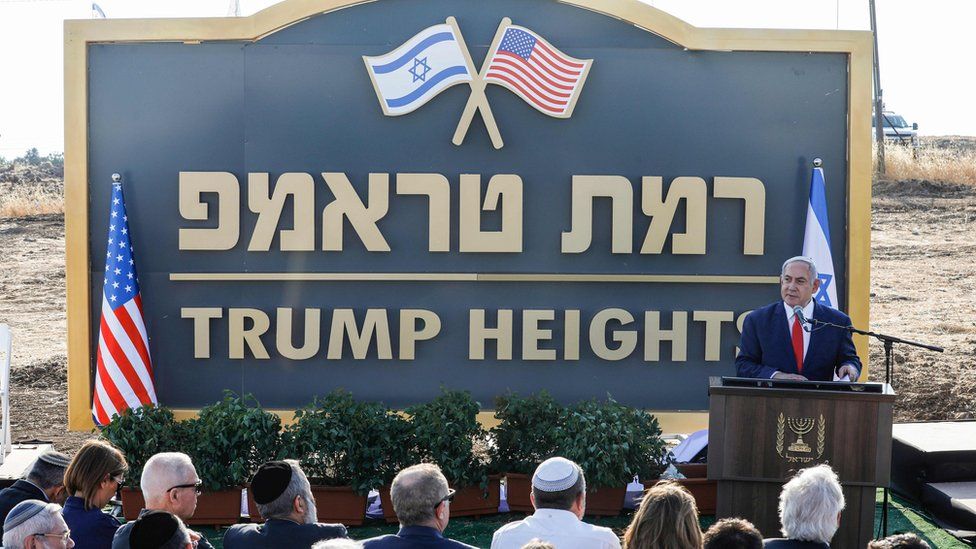
-
Israel killing civilians in Gaza and the West Bank
Wrong, Hannover.I don't think there's ever been a Palestinian leader who was truly ready to recognize Israel's right to exist or who thought they could survive politically if they agreed to a two state solution. — Hanover
Mahmud Abbas of Fatah (the guy succeeding Jasser Arafat) has consistently made the case for the two-state solution.
Abbas:
Only a two-State solution, living side by side and in peace and security, and with Jerusalem as a capital of both, will bring a just and lasting peace to Israelis and Palestinians and to the entire region.
And why this isn't possible?
Hannover, here Bibi and Hamas are the ones who don't want a two state solution. "Strongmen" want war. -
Israel killing civilians in Gaza and the West Bank
Yes, I think there is an agreement that one motivation for Hamas to do this was the warming or Saudi-Israeli ties. If Saudi-Arabia would recognize Israel, there wouldn't be any major players vouching for the Palestinians.True. I was referring to tit for tat between Republican and Loyalist paramilitary groups actually. But I should have made that clearer. — Baden -
Ukraine CrisisSo!
Putins wrath finally for joining NATO?
HELSINKI (AP) — Damage to an undersea gas pipeline and telecommunications cable connecting Finland and Estonia appears to have been caused by “external activity,” Finnish officials said Tuesday, adding that authorities were investigating.
Finnish and Estonian gas system operators on Sunday said they noted an unusual drop in pressure in the Balticconnector pipeline after which they shut down the gas flow.
The Finnish government on Tuesday said there was damage both to the gas pipeline and to a telecommunications cable between the two NATO countries.
Good that we got in and weren't left hanging like Sweden. :smile: -
Israel killing civilians in Gaza and the West BankExactly. Of course I would say that the leadership of Hamas thinks far more like Bibi Netanyahu. That with talk you won't achieve peace. Appeasement is failure. Hence the stand of Hamas that Israel shouldn't exist.
With the exception that the UK forces, now in hindsight calling a spade a spade and acknowledging that they did fight an insurgency war in Northern Ireland, never applied artillery and fighter bombers to take out homes of suspected IRA leaders. (Although at times they had to resort to supplying their bases with helicopters.) They even have clearly also acknowledged the proxy role that the unionist/loyalist paramilitaries had at times. Yet Thatcher after herself being targeted in a bombing never started a "war" against IRA in the way Isreal (or the US) do. Even if with the Falklands case she did so.This whole brutal mess reminds me of the tit-for-tat killings in Northern Ireland towards the end of the troubles. Both sides degraded themselves utterly. — Baden
Even if there were indeed excesses and unlawful actions, the UK usually treated IRA members are criminals, that should be tried in the judicial process.
But then the British can keep their cool. The Israeli's as people typically in the Middle East, don't. -
Israel killing civilians in Gaza and the West Bank
They don't have to be bled dry. Perhaps the final solution type of answer wouldn't be so great in the minds of Israelis when they have other options.The two-states solution had been made de facto impossible already. It's a good distraction though as everybody can pretend they're still in favour of peace. Which they are but only after the West Bank and Gaza have been bled dry and there's no such thing as a Palestinian any more. — Benkei
If Bibi can call Gaza "the evil city" and the Israeli defence minister calling Hamas fighters "human animals", I'm sure that the present policy to keep Palestinians as 2nd class citizens that are violated as being a security threat in the open prison type conditions will endure. There's enough horrific stories on the Israeli side for Bibi and others simply to say "we cannot make peace with people that don't want peace, but want us dead."
Hence Hamas is the more preferable representative for Palestinians than the West Bank Palestinian authorities. -
Israel killing civilians in Gaza and the West Bank
What is your reasoning to argue that? I think of only a political blessing or perhaps Hezbollah showing "solidarity".The scale and organisation of the attacks seem to suggest some kind of foreign backing. — Tzeentch
I would be very sceptic of the American accusations that Iran is behind this, that somehow this wouldn't be possible for Palestinians to do themselves. There is many reason why the US (and Israel) want to get Iran being the culprit behind this.
The news has said about hundreds of Hamas fighters infiltrating to Israel. That's basically a battalion or two. And note that these happened in small teams. No combined arms, basically. That is something you can organize. For me it looks like an attack that Palestinians could well have planned themselves. If they would have sunk an Israeli missile boat on the Mediterranean, that would surely reek of Iran arming Hamas (just like the Houthis did in Yemen sinking a Saudi warship). Or that they would have had the ability to target specific targets in Jerusalem, Beersheba or Tel Aviv (like military HQs, important structures, Bibi Netanyahu's home). That didn't happen either.
It is quite possible for them to do this as they got tactical surprise. That surprise simply because they had never done this kind of operation. However, it has been estimated that Hamas has had about 10 000 - 14 000 rockets in stock.
Now the IDF is reporting to move four divisions of reservists to Gaza to join already 35 battalions already there. Now the border with Israel is only 51 kilometers (and with Egypt Gaza strip has 11 kilometers).
And btw, the Egyptian response to the war:
Egyptian President Abdel Fattah al-Sisi and Turkish counterpart Tayyip Erdogan called on Hamas and Israel to immediately end violence and protect civilians.
If Netanyahu starts pushing Palestinians in the Gaza strip into the Egyptian desert, that might raise tensions to a different level with Egypt. -
Israel killing civilians in Gaza and the West Bank
How does that really help? The assumption that Egypt or any other national entity coming to assistance is highly unlikely, basically only theoretical. Hezbollah boasts having 100 000 personnel, but even that is estimated lower. It has already done it's "solidarity" rocket attack.The assumption is that Hamas has foreign backing. — Tzeentch
You talked about many hundreds of thousands to be trained. The amount of 50 000 is likely the upper limit, actually, and more probable is that we are talking about 40 000 fighters that the Izz ad-Din al-Qassam Brigades have. In the conditions of Gaza, even to train and arm 40 000 is a big achievement. Gaza is blockaded, surveyed and constantly attacked as above stated. Organizing an effective military under those conditions is difficult.
(Just to give context, in Finland (5,5 million) about 70% of males get military training amounts to a theoretical reserve (all of those, between 18-60 years) of 700 000. The actual reserve that can be adequately armed is 350 000 by an industrialized country. Israel with a larger population (9,7 million of whom 7 million are Jews) and also compulsory service has 400 000 reservists 400 000.)
And that foreign backing can basically only smuggle weapons into Gaza by tunnels. They aren't smuggling people out and in from Gaza to train them at least in the numbers you are talking about.)
(Israeli soldier in one tunnel in the Gaza strip tunnels.)

-
Israel killing civilians in Gaza and the West Bank
Uuhh.... you do understand that arming half a million people, and training half a million people cost enormous mounts of money and you have to have huge resources. Organizing half a million people into a fighting force is an big issue. And Hamas or the Palestinian authority don't the capability to train and arm such forces. Remember that they have had to do everything under the surveillance of Israel.Honestly, a force of 300,000 against 2,000,000+ Palestinians (lets say 500,000 military age males) who have nowhere to run to, and are possibly quite well-armed and prepared to conduct an insurgency? I wouldn't be loving my odds if I were the Israeli general in charge. Not to mention the situation on the West Bank, the Lebanon border and with regards to outside actors like Iran. — Tzeentch
Hamas has military of what, 50 000 at tops? And the rest can throw rocks as in the old times. Hezbollah has in Lebanon perhaps 75 000 in all. They boast to have 100 000. But they aren't in an prison camp like Hamas. In Gaza they don't have had the ability to train large forces as a sovereign country could do with it's armed forces. -
Israel killing civilians in Gaza and the West Bank
That would be a Russian solution, yes. Russians don't say to Ukrainians that they are going to destroy this certain building, so keep clear...Right, if they wanted to kill a bunch of people they could lob artillery shells with impunity and do that from saftey. — Count Timothy von Icarus
Of course the current Hamas can be weakened. But simply there is the next generation waiting to stand in the boots of their fathers.I'm skeptical of their ability to actually remove Hamas during a siege though, but if they are able to dominate enough of the city, forcing Hamas to "blend in" without offering heavy resistance over wide areas, that's another blow to their legitimacy. It says they exist less as the army and government they want to be seen as. — Count Timothy von Icarus

Or hope that for the next 20 years or so, the Palestinians won't have the ability as they have now.I would imagine the calculation is that, if they can inflict these psychological losses on Hamas and kill enough of their membership, it might collapse. — Count Timothy von Icarus -
Israel killing civilians in Gaza and the West Bank
Egypt:Now you can educate: have any of Israel's neighbors ever offered peace or reversed their desire to annihilate the Israeli state and the people in it? — tim wood
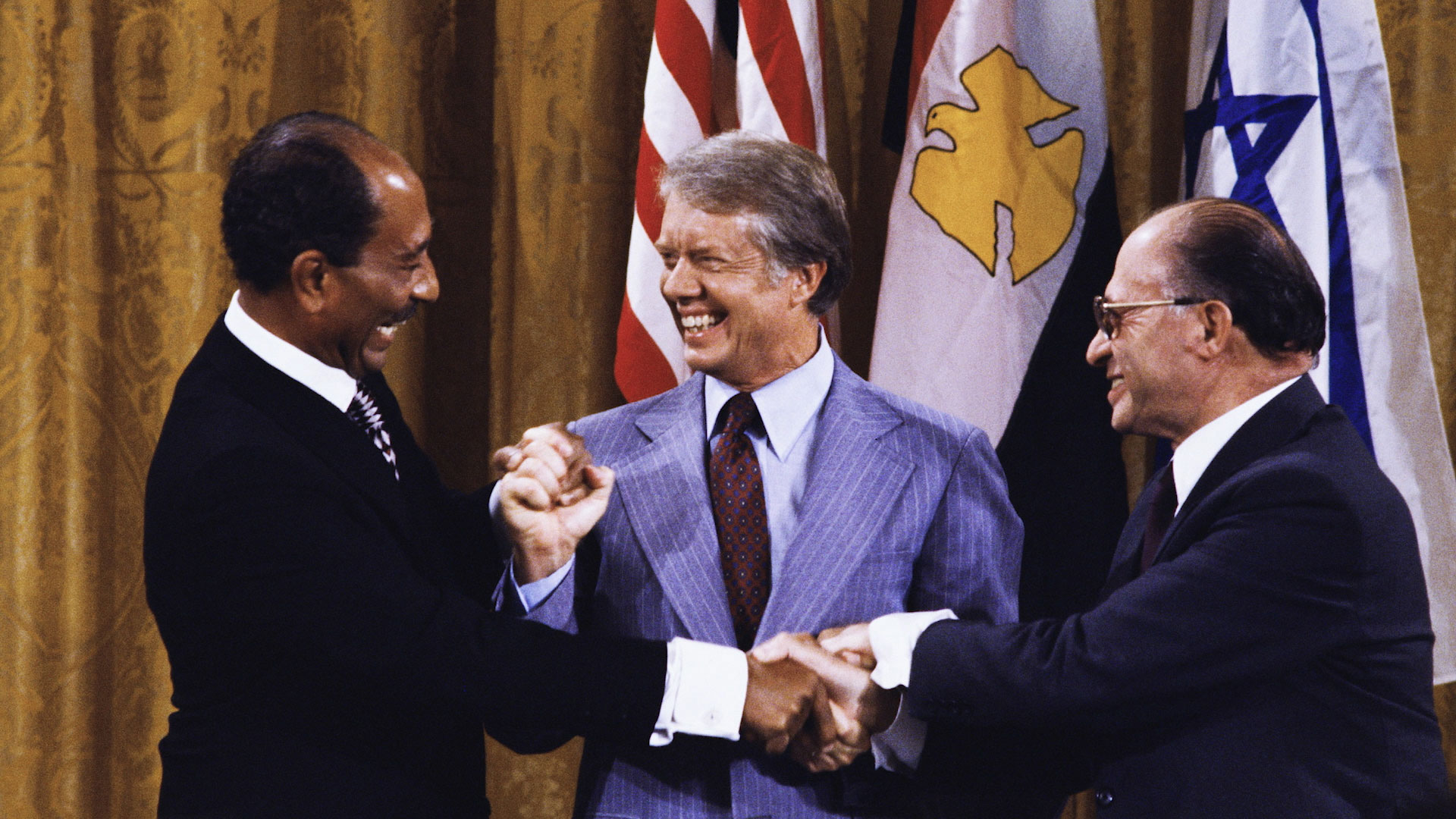
Jordan:
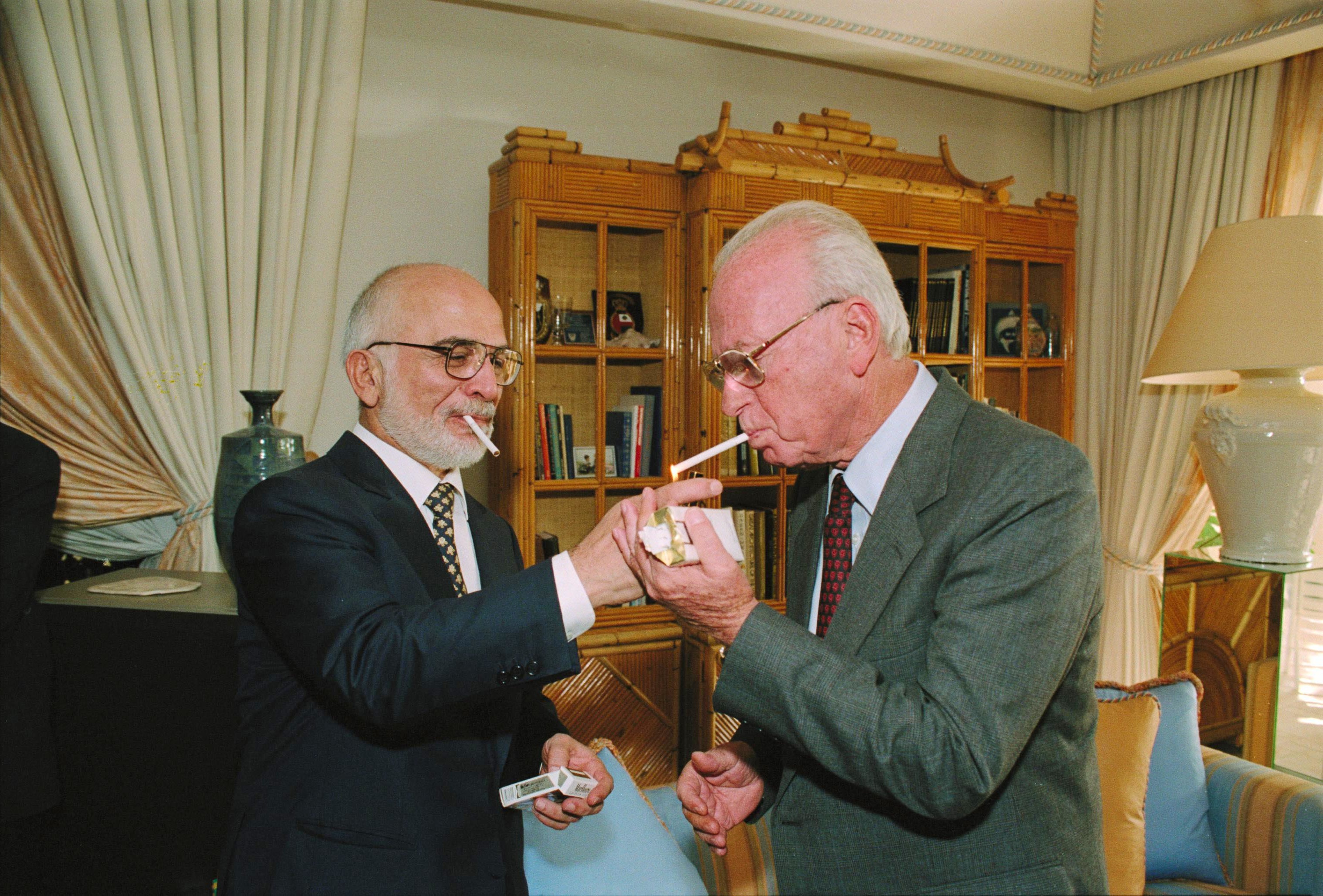
Even Trump's Abraham accords, remember?

And moreover, Israel has no worries as it has a nuclear deterrence. And it's neighbors don't. -
Israel killing civilians in Gaza and the West Bank
Bibi and the Israeli leadership understands that for now they will have the support of those that will support them, but that can change if some "final solution" type razing to the ground is implemented. One thing is rhetoric, another thing is implementin strategies that the Roman Army or the Soviet Army in Afghanistan implemented. They do understand that in the prison camp called Gaza, people don't have anywhere to go in the end. Yet you have a 300 000 strong force, which the majority is land forces. Gaza is small: it's 40 kilometers wide and only 6 kilometers deep. Yes, even 100 000 troops are a large force on that kind of area.Gaza will basically be razed to the ground. People will start starving in about two weeks. — Benkei
You can go literally check every building and shed there and then have the forces quite close. With a force of 100 000 you have basically one soldier watching over 20 Palestinians. Naturally it doesn't go like this, but it just shows the contrast here. (For example to Ukraine)
Because at some death toll that support that people have for Israelis will turn if the death toll of Palestinians goes very much up. -
Israel killing civilians in Gaza and the West Bank
I think they might intervene, if Iran intervenes. Or who knows, make a "pre-emptive" attack on Iran or Hezbollah. Of course it's a way to show support to Israel, which is the most likeliest reason: put a carrier close to Israel, send them more weapons.US to send aircraft carrier to Mediterranean to support Israel. Who do they think they are fighting, China? This is the world's largest prison. It would be comical if it were not absolutely tragic and disgusting. — Manuel
Israeli Defense Forces mobilizing 300 000 reservists. That's basically the Israeli armed forces making a general mobilization and putting it's strength to wartime strength. Israel has 460 000 reservists, so basically this is all but the second tier replacements. This also has severe effects on the economy with hundreds of thousands of male workers being out from their civilian work and in the military. Hence this kind of mobilization cannot go for years, it has to be an operation that is counted in weeks and months.
Hence it can possibly be a dramatic closure or occupation of the Gaza Strip. At least for the declaration that Hamas has been destroyed. There is at least plentiful footage of the atrocities that Hamas has done, hence why not start a war in a closely inhabited urban area where over 2 million live?
The real worry if this escalates even more. Unlikely, but a possibility. That if it goes so well with destroying Hamas, how about a rematch with Hezbollah too? The 2006 left a sour taste afterwards for Israel. -
Israel killing civilians in Gaza and the West Bank
Or perhaps Hamas could get much restock and replenishment for attacking Israel. Unfortunately many good meaning initiatives have backfired. Basically you have to have truly strong politicians that can make peace in the Middle East. Far more easier it is to be there a hawk.I think this is right. It's a high price to pay in terms of lives, but it's a desperate situation. Ironically, I do believe that if the blockade on Gaza was lifted and the people there had a decent life, violence would go way down. Collective punishment just leads to retaliation. — Manuel
And it hasn't been an all out war. Israeli's do understand that opinion is on their side when Hamas kills civilians. But that can change if the death toll rises to Ukrainian levels in Gaza. Hence still the Israeli Defence Forces do often announce what buildings they are going to destroy (and give minutes for people to evacuate them).
Both understand the punitive nature of the game of escalation: if let's say Hezbollah attacks with mortars, Israel counter-attacks with artillery. If Hezbollah attacks with longer range rockets, Israel does airstrikes. And note I think this has just happened in Lebanon. Hezbollah did strike Israel, but obviously hadn't planned a major assault (otherwise they just lost the crucial moment of surprise). But they don't want to stay as indifferent, hence I can believe the Hezbollah leader that said they did the attack out of solidarity. If they continue fighting, then it's different.
If Hamas really has thought this out, it should have trained well for the natural response from the IDF. To go and kill a lot of civilians will simply make the IDF make at least a punitive operation into Gaza. Now if you now have new tricks in your sleeve (drones, well trained forces, huge IED effort done), then it is a genuine plan (at least purely militarily). If the this was it just, then it was more of a political move. Because this is the time when poorer Hamas could use the advancement of drones etc. to their advantage. The IDF itself is very accustomed to using drones: basically the Bekaa Valley "turkey-shoot" of the Syrian Air Force in the 1980's and the destruction of the heavy air defenses in the valley was much because of extensive use of drones by the Israeli Air Force. But drones aren't yet used in infantry warfare, as they are started to be used in Ukraine. -
Israel killing civilians in Gaza and the West BankHaaretz says that over 600 Israelis have been killed.
Let's see where that number goes to (up or down). But the reality is that Israel was caught surprised just like 50 years ago.At least 600 Israelis have been killed since Saturday morning's surprise attack by Hamas, with over 2,000 wounded and dozens of civilians and soldiers being held hostage in Gaza.
/i.s3.glbimg.com/v1/AUTH_da025474c0c44edd99332dddb09cabe8/internal_photos/bs/2023/O/e/sdLSWrQ52pc67YGBvhzg/104585795-editors-note-graphic-content-topshot-the-bodies-of-killed-civilians-lie-covered-in-the.jpg)
One Israeli civilian in the BBC commented that she was among people close to the Gaza border and she had to flee for her life among others as Hamas soldiers picked them by shooting from two sides. As obviously the purpose of the infiltration attacks have been to cause as much mayhem as possible, the gained tactical suprise has made this quite successful. And as someone already commented, these methods just work for those that are against talks with the Palestinians. Like Bibi himself.
Bibi's response is pure Netanyahu: he is already talking about the "evil city" and how people in Gaza should leave (Uh, were?) and that this will be a long war.
Just as with Americans or with any people, I wouldn't say that people like "Israelis" hold one belief. If you think that Americans are polarized with Trump supporters and liberals, then with Israelis it is as worse or even worse.My belief is that the Israelis want peace and their enemies do not. — tim wood
The question is what kind of peace? Peace with whom now? For politicians like Bibi it is an eternal struggle because on the other side there are terrorists. Hezbollah and Hamas are the perfect bad guys, because you can literally show them targeting civilians.
The problem here is that there indeed have been Israeli prime ministers and politicians who have truly worked for peace (and then got shot Jewish zealots for that). Unfortunately the withdrawal from Lebanon didn't secure peace, the vacuum just created a place for Hezbollah to fire rockets into Israel. And this is what Bibi argues makes the peace-mongers to be so wrong. -
Israel killing civilians in Gaza and the West Bank
And actually on purpose.Yep, I should've added that they likely have more than one type of missile, but they tend to be rudimentary. — Manuel
Israeli anti-missile systems are top of the line (not only Iron Dome, but Arrow and David's Sling), hence the way simply is to saturate their ability to shoot down them by launching a mass of rockets. And here the tactical surprise (which is now obvious that Hamas had) helps this.
They have planned for this for a long time. And now it seems to be right, add to the timing the 50th year anniversary of the Yom Kippur war (and the ugly surprise that was for Israel).Today's attack on Israel likely has been in preparation for much longer than the Judicial scheme has been stirring things up, but Jewish social unrest in Israel was certainly a help to Hamas. — BC
Hamas is something in a similar situation of the Taleban: there was no way to challenge the enemy (the US) with trying to fight a conventional war, hence fight a war with less tech than more of it. Less radio and electronic equipment that can be found. For the Taleban it was simply to a) exist and endure and b) use IEDs and make it difficult for the US and Afghani troops to operate freely.
I think for Hamas the idea may be the same: by launching this attack, they note to their people and to the World that they exist. Now for them it's only the part of enduring the Israeli counterattack. Because ending the open prison of Gaza for Bibi will be a very costly thing, hence likely they will make this retaliatory operation and possible free or get freed the prisoners.
On the Israeli side there are lot's of questions of how the so able intelligence service didn't anticipate this attack. And the last major operation, the 2006 Lebanon war wasn't a success and didn't meet it's objectives.
I think the reason is obvious: Israelis aren't defending their country from an enemy that could destroy their nation. They are defending their country from basically terrorist attacks. The combined conventional armies of Egypt and Syria could have beaten Israel if had they been more professional and better trained (which is extremely hard for a developing country). Both in the Six Day War and in Yom Kippur, the threat was there. Hezbollah in Lebanon and Hamas in Gaza aren't an existential threat for Israel, and that has an effect on moral: you are more concentrated on not having losses than you are on fighting the enemy and taking the objective. It's noted that in the 2006 Lebanon war when Israeli troops got casualties the attack many times stopped and turned into an evacuation operation. -
Israel killing civilians in Gaza and the West Bank
Better to call it a family of different kinds of rockets. Qassam is just one specific rocket, one little one. Qassam-A I think is bigger. There are other rockets too.They're called "Qassam rocket" and the cost ranges from $300-800 — Manuel


What Hamas lacks is simply target acquisition, even if it can have drones. To have a system like the US M270 MLRS (or the M-140 Atacms), you have to need the targeting information. Israeli technology is on a totally different level here. Remember that Hamas operates out of a prison camp and it doesn't have any "safe haven" to train it's troops and safely build and test it's weapon systems. Yet with presumably Hezbollah/Iranian/Syrian support, it can have more advanced weapon systems. In truth these are few if any, and likely more of Israeli propaganda. -
Who owns the land?
It has been 319 years under British rule. Yet above all, the treaty of Utrecht signed it to the crown of Great Britain for "perpetuity" in 1714. And that "perpetuity" has kept as Spain has seen it not worthy of a war with the UK about it.The years passed by, and most of the Spaniards no longer care about Gibraltar because we understand it has always been English. — javi2541997
We too have no interest of the lands we lost in WW2. All the people were relocated to other parts of Finland and everybody understand that Russia won't give up a place inhabited by Russians now for 79 years. It only a sleazy way to get votes of older ex-Karelians that a politician upholds the idea of somehow negotiating these lands back. So we too have accepted that former Finnish lands aren't anymore Finnish.
It hasn't been so in Russia. And especially for Putin, for whom the collapse was an traumatic experience. Why Putin refers to the greatest tragedy is simply that it was Russia itself that wanted the break up of the Soviet Union. And once Russia was against the Union, there wasn't anything support the union. Once the August coup of 1991 happened, they didn't catch Yeltsin (likely was drunk somewhere) and finally (a sober) Yeltsin then made the famous talk on top of a tank. And that was it. The armed forces broke up into different sides and later the coup (which would be more correctly an autocoup) fell. It would be if all the states that make the US would simply reject the current Federation and leave a President and Congress in charge of just Washington DC.

The continuation of the union in the form of CIS never happened. Yet because the Soviet Union simply dissolved, for Putin it was a huge error or something that could be corrected. The real tragedy is that here the war that the last Soviet leadership prevented has now being fought by soldiers that were born later than the dissolution of the Soviet Union.
Why the Soviet Empire collapsed: If Russia wasn't for the continuation of the union, who would be?
Both Ceuta and Melilla have been around in antiquity. Ceuta was only conquered by Portugal in 1415. Although then I assume it was the Marinid dynasty controlling Morocco. But of course 600 years of control of a city is something. Nearly as long as the Moors controlled southern Spain.On the other hand, Ceuta and Melilla were never part of Morocco, but Portugal. — javi2541997
Typically people want to find the "correct peace" which is most advantageous for their country, but I still insist it's the last peace treaty or the last recognition of independence, that actually matters. -
Donald Trump (All General Trump Conversations Here)
Well, what you forgot is his brilliant achievements on the foreign policy aside.- Did the miners go back to work? No.
- Did the wall get built? No.
- Was the swamp drained? No.
- Did the USA win the trade war with China? No.
- Did the US economy boom? No.
- Did his peace plan bring peace to the Middle East? No.
- Did he resolve the Iran question? No.
- Did the US get an infrastructure renewal program? No.
- Did North Korea de-nuclearise? No. (In the aftermath of Trump's "negotiations", they actually accelerated their strategic weapons development program).
- Did the US get a new health-care program? No. (For four years he promised "we'll have something for you in the next few weeks" and, after four years, nothing. Squat).
Mind you, there were some positive achievements:
- Did moving the embassy to Jerusalem increase tensions in the ME? YES!
- Did his trade wars against China and the EU increase consumer prices in the US? YES!
- Did his trade wars against China and the EU reduce US export trade? YES!
- Did his abandonment of the Iran treaty grant Iran a de-facto license to resume nuclear development? YES!
So it isn't all negative.
- The surrender of Afghanistan to the Taliban in the Doha Agreement (Yes, the Taliban promised not to attack the US!)
- The Abraham accords (YES, Bahrain, the UAE, Morocco, Sudan normalized their relations with Israel and promised not to attack it!) -
Israel killing civilians in Gaza and the West Bank
Aparently an elder women of a family, being paraded in a golf cart. See video below, 2:48Another massacre... Hamas has hostages this time, I've read. — Manuel
Yes, but in all the paragliding troops into Israeli settlements, the home made unguided rockets fired into Israel and armed men literally walking to Israel is a sign how weak the Palestinians are. But that's not the way they are going to be portrayed in US media. Of course the special forces mission to liberate the pensioner will be portrayed as a sweeping victory (if the granny is gotten alive). How many Palestinian families are taken out doesn't matter.
The hardliners are indeed happy. Negotiation is weakness, there is no other solution than perpetual war. Because such a weak enemy, confined in prison settlements, the death toll isn't too high for ordinary life to go on... with some fighting every once in a decade. -
Who owns the land?
No, no no! It doesn't go like that.The Western world does not want to recognise the sovereignty of Russia in those 'disputed' lands because they do not respect the Russian constitution when — javi2541997
The Western world either doesn't want to recognize the sovereignty of Spain over Gibraltar or the sovereingty of Morocco over Ceuta and Melilla. The reason simply is that they have recognized the sovereignty of UK, Spain and Morocco. Period. If Spain writes in it's constitution where it states that Gibraltar is Spanish territory or Morocco proclaims that Ceuta and Melilla are integral parts of Morocco, that doesn't matter. It's simply bitching about territory. Because the UK hasn't given Gibraltar back to Spain and you haven't handed over Ceuta and Melilla to Morocco, both countries aren't giving up their territory. Go then and fight the UK or have Morocco capture Ceuta and Melilla. And guess what! It's extremely likely that "The West" wouldn't recognize the either invasions as lawful and would likely support the claim of the previous holder of these territories.
Just look at what kind of limbo it has been for the area formerly called "Spanish Sahara" (since 1884) and now called Western Sahara and it's occupation by Morocco in 1976. Morocco fought the Ifni war with Spain and then with Mauritania got the deal with Spain with the Madrid Accords. Yet several countries don't recognize Morocco's claim on West Sahara and the US only accepted the Moroccan claims tunder Trump's administration after Morocco normalized relations with Israel (the Abraham Accords). So yes, you can haggle a deal and get recognition. (Just like (surprise surprise) Cuba, North Korea and Syria have recognized the annexations of Ukraine that Russia has done.)
Hence Russian constitution itself doesn't matter. Heck Russian's can write in their constitution whatever they want! It matters what has been recognized by others! And when Russia and others have recognized the sovereignty of Ukraine, that's it. That's the end of the marriage. And one side cannot afterwards just start backtracking the whole thing, that actually they didn't have a divorce. Or it was unlawful. The merit of these accusations have gone after not only Russia recognized the sovereignty of Ukraine, but reaffirmed it later in the Budapest memorandum.
Thus it is now an aggressive expansion and an attack on a sovereign state. No way over it. -
Joe Biden (+General Biden/Harris Administration)
I guess being partisan is the trend now.e's a ignorant blowhard and diehard partisan. — Wayfarer
So Trump is young???I really, really wish Biden would have stepped down. It seems the height of hubris for him to run again at his age, with his abysmal approval ratings, — Count Timothy von Icarus
Anyway, it's actually the problem of parties that they don't have good people in the wings growing up. Isn't the geriatric leadership of the both parties obvious case of this? It should be.
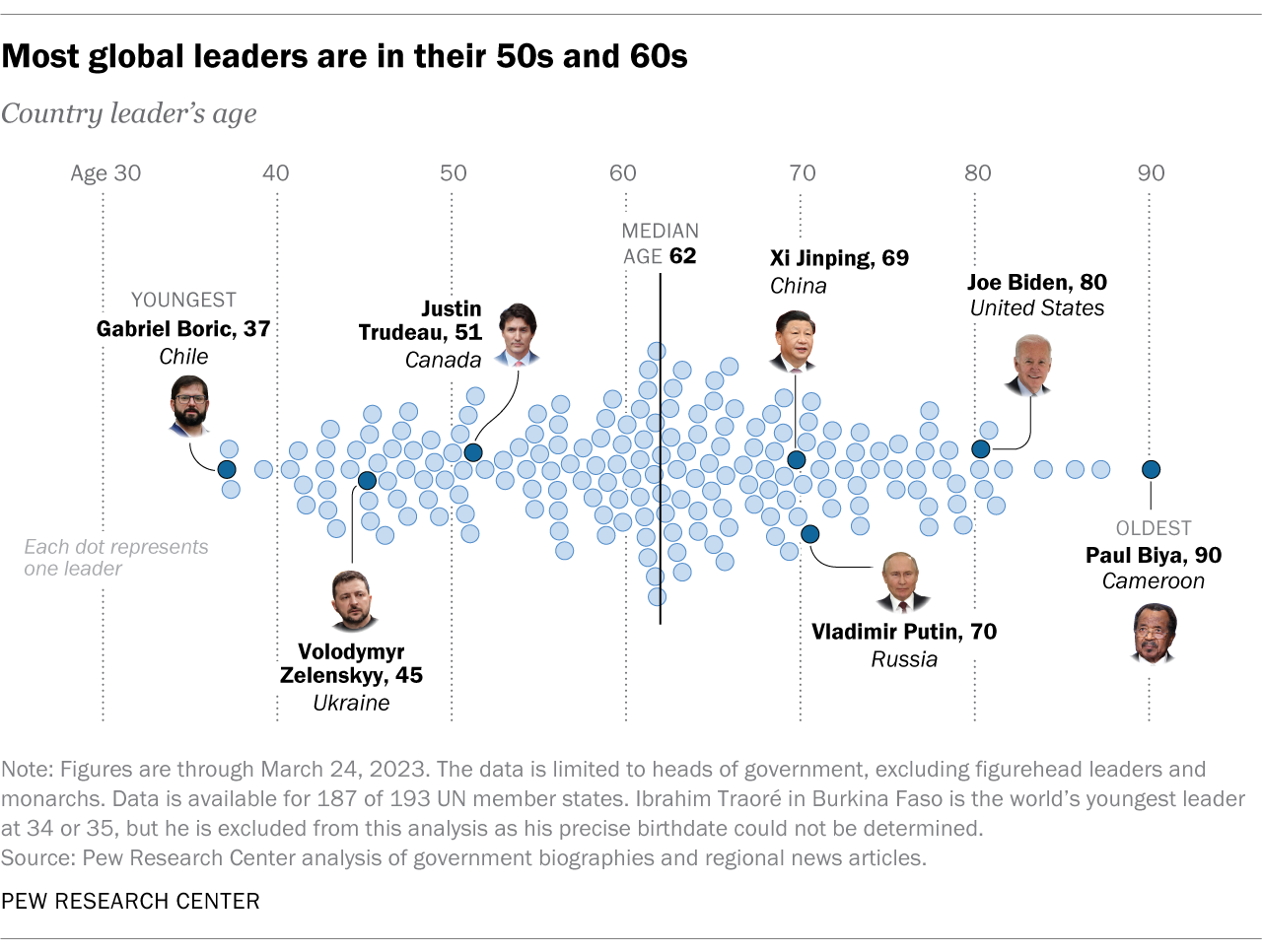
Democracies ought not to be dependent of one man.The whole last 8 years has turned me sour on presidential term limits. Obama would have won against Trump in a landslide. — Count Timothy von Icarus -
Israel killing civilians in Gaza and the West Bank
Just to give perspective, during the Yom Kippur war Israel lost 2800 dead, Egypt 5000 to 15000 and Syria about 3000 dead. That is a pale comparison to the war in Ukraine. But then again, Yom Kippur war went on for only two weeks and five days.A pale echo of a previous successful surprise attack on the eve of a Jewish religious holiday. The 1973 offensive began 50 years ago to the day (Yom Kippur instead of the end of Sukkot due to how the holidays float around). — Count Timothy von Icarus
I think in all of the conflicts in Israel starting from 1948 less people have in all died than in Finland lost servicemen during WW2. Or the number is equal. Hence in actuality and it is very grim to say it, but these conflicts haven't been so bloody that people would really feel sick of the wars as happened in Europe after the Word Wars.
I agree.The military situation is hopeless for the Palestinians. — Count Timothy von Icarus
Yes. It is interesting to see what is the reaction of a) The Palestinian authority in the West Bank, b) Hezbollah and Iran, c) The Arab states.Their leadership is far more fractured than in 1973. — Count Timothy von Icarus
The last Isreali-Lebanon war is a good example of this. Actually it didn't go so well for the Israelis as Hezbollah had finally trained it's forces with the emphasis on lower rank officers and NCO's taking the inititiative. This might really be the issue, to be the king of the rubble, as you said. The reason is that both side in the end are accustomed to fighting a limited war. As I stated earlier, there's no reasonable "final solution" type of course for Netanyahu to take (to end this conflict). Especially with Netanyahu being Netanyahu.I've long come to the conclusion that a lot of attacks on Israel are more about infighting between Palestinian groups, jockeying for position, then a pursuit of long term independence goals, a sort of focus on being king of the rubble. — Count Timothy von Icarus -
Israel killing civilians in Gaza and the West Bank
I don't think that this powder keg will blow out in one huge fireball, it will just continue to rattle and fizz and produce a lot of smoke for a while. Why?One can only hope that this powder keg doesn't finally blow, but even so I don't think it's a matter of 'if' but a matter of 'when'. — Tzeentch
Isreal as enjoying near total dominance of the battlefield isn't actually threatened by Hamas. Hamas in Gaza isn't a threat for Isreal. The only fear (in my view) is that a "strongman" Israeli leader decides it once and for all to end the prison camp called Gaza. Because, why not. But what then?
Now Gaza has been this camp where Israeli security has manned the walls around it, but the inmates have been in charge. In order to take Gaza back would be immensely costly operation. And then what? Have Israeli army patrol the streets? The previous uprisings are costly and basically demoralizing for an army that previously had these astonishing victories in conventional warfare against it's neighbors.
And there isn't Azerbaijani solution for Gaza as for Nagorno-Karabakh. Or would you empty 2,3 million people from the Gaza prison and through the to the West Bank? Or just push them to Egypt? Dramatic solutions are very likely out of the question as Israeli economy is dependant on Global trade and actually the trade with Palestine (West Bank and Gaza) is important. Israel could easily face sanctions from the EU and China if it takes drastic measures that are similar to ethnic cleansing.
Hence the more likely outcome is a military bombing campaign and limited assaults on Hamas infrastructure to tone down the ability for Hamas to fire the rockets. And hope that the media finally forgets the issue (as it usually does). To contain it.
The real question is if Palestinians in the West Bank or Hezbollah in Lebanon would come to the help of Hamas. That's an interesting question.
Israeli television's version of the attack:
An Al-jazeera's version:
-
Who owns the land?
Yet before this it had already attacked Ukraine and annexed territory and fought a war against Ukraine. Whenever the proxy fighters were losing, Russian army intervened. Well before the 2022 invasion.As I said - and at least this has been proved - Russia warned the Western world that approaching that much to their territory would be a red flag. Then, NATO and Ukraine - other parts implacated too - didnt care. — javi2541997
And not only was Russia making ultimatums about approaching their territory, it was also questioning the sovereignty of other countries by seeking a veto in NATO membership and declaring that that new eastern NATO should dissolve their security arrangements. This was simply out of the question for these countries and showed Sweden and Finland the writing on the wall. All this was to get an illogical reason for a bellicose attack on Ukraine to deal with it once and for all and get the Novorossiya into Russia, something that Putin had talked and wanted so much.

But of course people can opt for the whimsical "Nato made Russia do it" option, which the new territorial annexations should show to be a bogus reason.
(Yet we have been through this for over an year in the Ukraine thread.)
But coming back to this thread:
Land is basically owned by sovereign states, which control the area and can make up the laws there.
This ownership is basically depended on everyone else recognizing this ownership and thus also recognizing this state's soveireignty over the territory and it's people.
Hence sovereignty and recognition of this sovereignty are simply the political and legal foundations of owning land.
Because otherwise ownership of land is a murky difficult problem. Yes, this makes it a worthwile discussion on a Philosophy Forum, but any other idea for legality of ownership is problematic.
As an (very small) landowner myself, it's the goddam piece of paper and data in the various registries in the government that makes me own the small summer place and it's surroundings. It's that legal contract that is important. That my great grandparents built the house, that I got from my grandparents, that I've spent all my childhood and adulthood there when possible (and my children are now enjoying the same thing on holidays) are a side issue. How can I have any right to that small patch of land otherwise? It's going to be still there when I die and was there before me (although a part of it was under the sea in the Middle Ages and earlier as the land has risen here).
And there's an example of the importance of institutions. If someone could just bribe a judge and come to me with a piece of paper which states that he actually owns the place, or that there wouldn't be any official recongized documentation, that would make my ownership quite unsure.
In a way this is true for independent states too: if their neighbors and the World community accepts their sovereignty, there's no problem. If it is questioned, if part's of the territory are disputed, then you have problems. Yet in the same way it is about recognition and a legal framework. -
Israel killing civilians in Gaza and the West BankAnd as @Manuel two years ago at the OP of this thread stated: "Here we go again". No need for a new thread about the issue.
Seems like the Palestinians in the prison camp called Gaza have made a new prison riot (Operation Al-Aqsa Flood) to make their case. The latest build up of rockets are fired Can have become as a surprise to Israel. And the rest likely is a rerun of we have seen again and again. So waiting now for the Israeli inevitable Israeli response.


-
Who owns the land?
The conflict itself is part of one's identity for many. That's the problem.On the other hand, since when police officers - or public workers in overall - have been covered by the government? It will be a difficult situation, but with some differences, because the new generations of N. Ireland haven't been raised at the core of the conflict. They are the sons and daughters of the 1998 Belfast agreement. I don't think they would be as violent as their parents or grandparents. — javi2541997
It's like for a Palestinian living somewhere else than Palestine or Israel, the Nakba is something that makes you a Palestinian. It's not that you are of Palestinian ancestry, but now you are a citizen of country X, but you are a Palestinian and you are a refugee expelled from your home. You cannot brush away from it or let just time heal, when you
Here's a good present documentary about North Ireland. Even if it can be said it's pro-Republican and views that Brexit gives hope for unification, never underestimate the youth:
And furthermore, the paramilitaries do exist in the North Irish community. They won't go simply away. The UK truly has to alienate the Unionists / Loyalist that they really start hating Queen and Country. A lot more than just Brexit have to be done.
Perhaps to me and you it would be equivalent of that the Civil Wars our grandparents endured never went away: that your cities would be separated by walls where on one side would live the Republicans and on the other side the Nationalists, and in my country the division would be between the Reds and the Whites. There would be gangs around who would say that they are either fighting for the Republican and Nationalist cause and I would have here gangs of the Reds and the Whites. And there would be murals everywhere remembering the fallen and these two societies would go to different schools. That would really, really suck. But so it does in Northern Ireland. In that kind of environment, it's difficult to put the past away, because the past is upheld and cherished as part of your identity who you are. -
Who owns the land?It's the unfortunate reality which we try to hide in our hypocrisy. After all, don't we live in the 21st Century?
-
Joe Biden (+General Biden/Harris Administration)I'm not familiar with Jim Jordan.
So why would he be a bad choice?
(If you have enough time to enlighten a foreigner on this subject, I'd be happy.) -
Joe Biden (+General Biden/Harris Administration)
Usually they are required far more earlier than anticipated.Actually I believe the next debt limit vote is not required until 2025 — Wayfarer -
Who owns the land?
There are political ones. And in war, one side can win the other. It's a very effective way to end the problematic situation.Are there any geopolitical / moral / philosophical rules (or mechanism) that could allow us to resolve these situations? — EricH
Actually, we saw on problematic area gotten "solved" just a short time ago. With a quick decisive military attack Azerbaijan has taken over Nagorno-Karabakh and there is no Republic of Artsakh anymore. The Russia peacekeepers didn't lift a finger and Armenia didn't come to help as they already had lost the last war. Armenia should be the ally of Russia, but being an ally of Russia doesn't mean the same thing at all like being a NATO member.
Refugees from Nagorno-Karabakh arriving in Armenia.

Nearly the entire ethnic Armenian population has left Nagorno-Karabakh, as the first United Nations mission arrived in the largely deserted mountainous region on Sunday.
Stephane Dujarric, the spokesperson for the UN secretary general, said the United Nations team on the ground, the first UN mission to the region in 30 years, would “identify the humanitarian needs” both for people remaining and “the people that are on the move”.
Many of the Armenians who fled Nagorno-Karabkah said they felt the international mission’s visit came too late, after Azerbaijan reclaimed the area in a lightning military operation last month.
And that's the solution. You may not find it nice, I don't either, but that's how many times in history these things go down. -
Who owns the land?
Does the Irish government it really want to deal with the Ulster Loyalists? Protestants are still majority in Northern Ireland and the country is still very segregated. When high walls separate communities, there isn't much social cohesion.ssu, of course, Ireland wants Ulster back to theirs. — javi2541997

Perhaps the majority wouldn't take up arms, but all it has to be is a few. How many dead Irish policemen or Irish military servicemen who now are enjoying a safe career is Northern Ireland worth? Or you think that the loyalist paramilitaries will just accept Irish rule after all the fighting? All it takes is a small cabal who know how to make bombs and there's blood on the streets of Dublin.
Secondly, Northern Ireland is the poorest part of the UK. And the Irish enjoy a higher GDP per capita than the UK. Hence Northern Ireland will be a huge drain of welfare payments from Ireland.

More civilized than Turkey and Greece, I guess. But yes, one of NATO's reasons to exist is it's first article. Something we still do need in Europe.EricH said that at least they are not chucking missiles at each other. They are both members of NATO, and civilised countries which prefer to resolve the conflicts diplomatically. — javi2541997
Yes. And the next generations can romanticize the past "Troubles".It is a question of identity! — javi2541997 -
Joe Biden (+General Biden/Harris Administration)
I agree with you.I think it's going to be a complete fiasco. — Wayfarer
The way it's going I really think they will let the US have a default. The theatre has perhaps been played so many times that some people will say let's get on with it.
Of course, as it's the US, nobody will call it what it actually is, a debt default. And likely when the markets start to howl too lowd, then something will be done. Only through a crisis will anything be done.
ssu

Start FollowingSend a Message
- Other sites we like
- Social media
- Terms of Service
- Sign In
- Created with PlushForums
- © 2026 The Philosophy Forum